When a woman has a crush on a man, she often drops subtle, cute hints rather than confessing directly. Unfortunately, many men miss these clues due to social conditioning. On Reddit, user u/Jason-iscool asked, “Women of Reddit, what hints have you given to your crush that they missed?” Thousands of women chimed in with their sweet and hilarious stories.

Representative Image Source: Pexels | mattycphoto
Representative Image Source: Pexels | Mattycphoto

From baking cookies to outright invitations, women shared the subtle “hints” they left for their crushes. When these obvious clues went unnoticed, it often resulted in hilariously awkward encounters. Here are 20 of the funniest stories.
Representative Image Source: Pexels | rdne
Representative Image Source: Pexels | Rdne

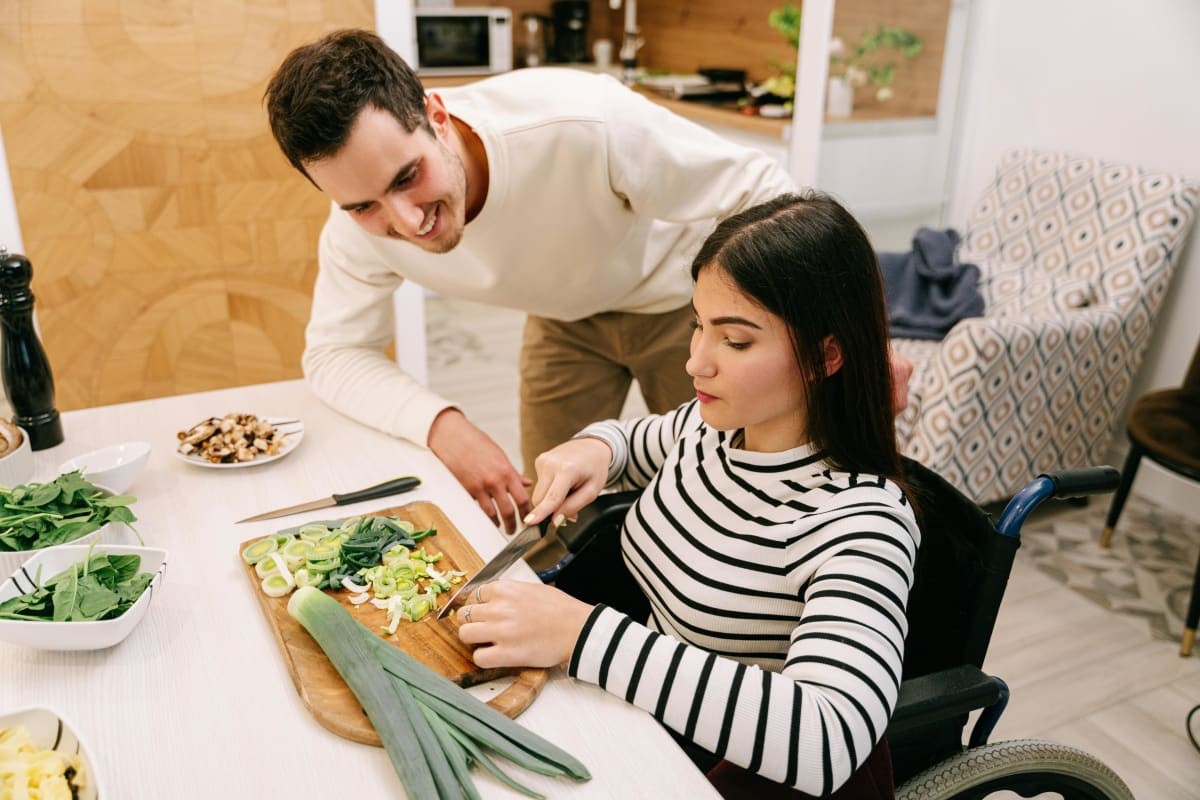
1. When she helps you with the cooking 

My mother-in-law met my father-in-law when they both worked at a pizza place as teenagers. She was really into him so she’d go in on her nights off ‘to help slice tomatoes and onions’ and dropped hints to him for MONTHS but he never picked up on any of it. One night she’d brought Hershey kisses and went to put them in the cooler, and asked if he’d like his kisses cold. He said ‘Actually, I prefer warm kisses,’ so she said ‘Okay,’ and kissed him. That was when he realized she liked him. She blushes when she tells the story, as she admits that was very unlike her but her gut said to go for it. They’ve been married for 40 years. – u/nikkomus
Representative Image Source: Pexels | ivan samkov
Representative Image Source: Pexels | Ivan Samkov

 2. When she snuggles with you at a movie

We snuggled all night watching a movie together. Then, when he went to leave, I tried to kiss him goodbye, but he rejected and drove away. Dejected, I went back to my room to sulk. He calls me 10 minutes later asking to meet me outside. I get outside and he shouts in disbelief, “Wait, were you trying to kiss me? Does that mean you like me?” – u/changminny. 

Representative Image Source: Pexels | tima miroshnichenko
Representative Image Source: Pexels | Tima Miroshnichenko

3. When she flirts with you in a bar

I bartended and I waved the tab of a regular and when I told him his drinks were on me- he made the joke, “Bet you say that to all the pretty girls.” I said, “Drinks are only waved for hot people the bartender has a crush on,” and he looked so confused and said he was “honored to be the exception to that rule.” – u/littlebluebird555 


via GIPHY


4. When she asks you for a kiss

I once asked a guy if I could kiss him (we had been hanging out in a way that was conducive to that) and he said yes. I kissed him. It was great. But then we just parted ways in a natural way. Three days later, this man calls me all shocked that I was hitting on him. He told a friend about the interaction and they had to point it out. Sir… I literally kissed you. – u/imfiremario. 

Representative Image Source: Pexels | mart production
Representative Image Source: Pexels | Mart Production

5. When she invites you to an event

Not a woman, but a girl I worked with had given hints, such as hugging me sometimes. One day, we were discussing the state fair, which was coming up. Here’s the following conversation.
Her: The state fair’s coming up. I love the state fair!
Me: Yeah, me too!
Her: I really wish I had someone to go with.
Me: Yeah, same.
Her: …
Me: …Well, good luck! I hope you find somebody to go with!
I have worn the crown as the Lord of Idiots. – u/djd33j 

Representative Image Source: Pexels | dtanpt
Representative Image Source: Pexels | Dtanpt

6. When she asks you out on a date

“Hey, I really like you. Wanna go out on a date some time?” This man thought I was joking. It wasn’t until he talked about it with his friends that they made him see what I thought was a pretty direct hint – u/imgursextraupvote


via GIPHY


7. When she asks you to accompany her to the prom

I literally asked him to prom and he said yes. Ten minutes later he asks me if his friends can come too. – u/dry_adeptness5405

Representative Image Source: Pexels | budgeron bach
Representative Image Source: Pexels | Budgeron Bach

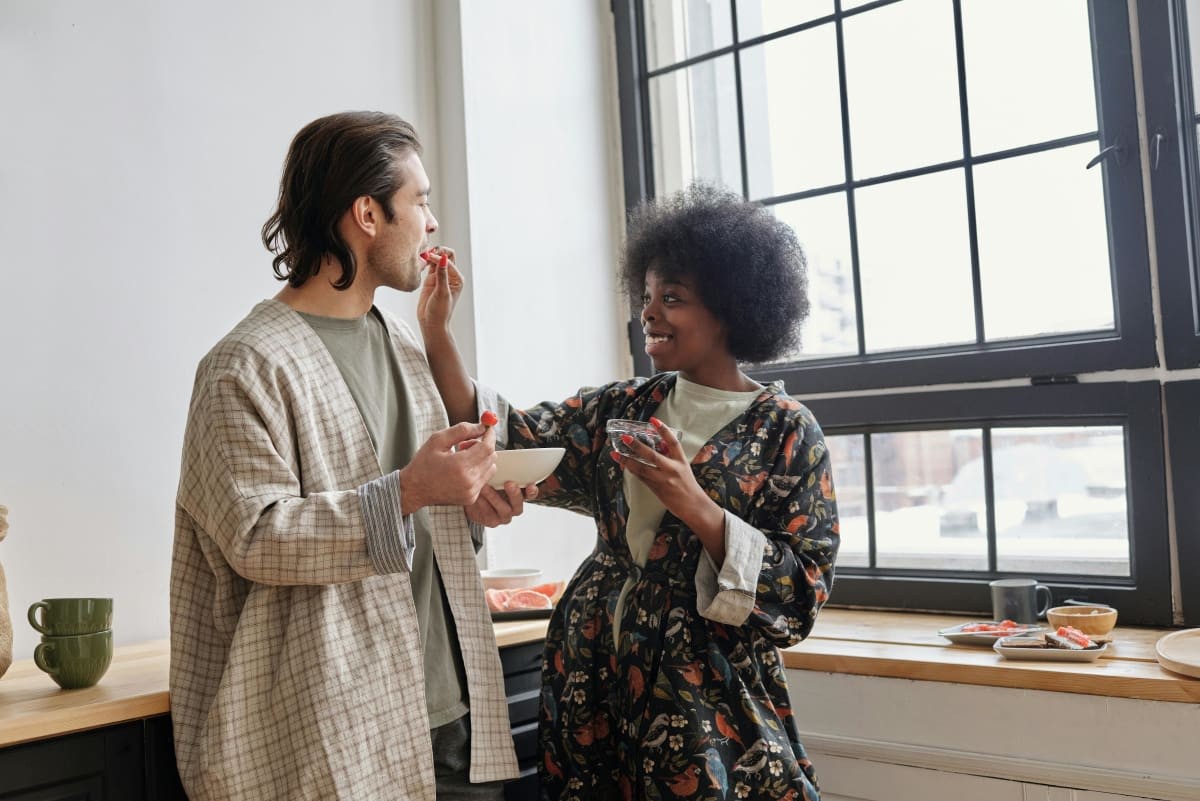
8. When she invites you on a coffee date

Literally two weeks ago, I invited my crush to go to for a coffee date and walk along the beach which I thought was the most obvious date arrangement. I got there first and even texted him what his coffee order was so it was ready when he got there. We sat super close on the coffee bar, had good conversation and I kept leaning into him, laughing at all his jokes. 20 mins into the cute coffee date he saw two of his friends come in and grab a coffee and were going for a walk and so he invited them to walk with us from the coffee show. Little did I know, I would be fourth wheeling for an hour long walk on our first date, listening to the three boys talking about sport somehow. We got back to our cars after the walk and I gave him a lingering hug goodbye before he went back to his friends to chat again. A week later he texted me to ask if I wanted to ‘Come for a coffee and walk with him and the boys’. I THINK I’M ONE OF THE BOYS NOW. LOL. – u/ennstarrr 
Representative Image Source: Pexels | jack sparrow
Representative Image Source: Pexels | Jack Sparrow

9. When she insists on sharing a blanket

My now wife and I were at a friends for a kick back. It was time to go to bed and we were not going to drive home as we both had a drink or two. There was only one blanket. I let her have the blanket and the bigger couch. It took an hour for me to understand that she kept offering to share the blanket and the biggest couch in a non platonic way. I kept saying it was fine and I was comfortable where I was. If she had given up and stopped trying to convince me that we could share the blanket, I would have no idea where we would be lmao. – u/ubertwinkle 


via GIPHY


10. When she secretly glances sideways at you

Had this happen at a concert I played at. Background vocalist was crushing on the synth player and glanced at him during a riff. He turned to me nearly in tears and went, “She knows I played that wrong. I forgot to turn off the transpose.” She then looked at him again and he went, “Oh no, she must think I suck.” He left without even looking her way and then the next day, she told me, “I don’t think he likes me I looked at him and he put his head down and walked away.” – u/datdominican 

Representative Image Source: Pexels | dewey gallery
Representative Image Source: Pexels | Dewey Gallery

11. When she asks you about her looks

Not sure if he missed it or he straight up curved me. I recently got new glasses and I was asking everyone’s opinion on them, so I sent him a pic of me wearing the glasses and a very short, tight, red crop top…he just said, “I’ll check it out later.” – u/glad-paramedic-6888 

Representative Image Source: Pexels | vera arsic
Representative Image Source: Pexels | Vera Arsic

12. When she asks you to show her the stars

After I met my now husband, one time I bumped into him on his run. I came to say hi and he said he went on a run to see the stars, because they were very visible that day and there was some rare event. So naturally, I was like, “Wow I have to see, can you show me?”
Him: Not much too see actually
Me: Ok, but still, can you at least show me good spot for watching
Him: I don’t think my spot is that special. I’m gonna go so good luck with the star gazing.
Welp, after that it was very hard to convince me he was into me, because I was sure, he was just making fun out of the fact that I am so obviously into him. –  u/legal-reach-question 


via GIPHY


13. When she asks you to teach her something

We were in a youth camp and he knew how to play pool, I didn’t know how to play pool so I asked him to teach me, so I had him for 5 days of that camp, teaching me how to hold the cue stick and how to hit the balls. One night the camp leaders sent us to sleep early, but many of the young campers taking advantage of the fact that the leaders were asleep threw a party, my crush went to play pool and I went down in my pajamas (t-shirt and shorts) to play with him, I already understood how to play but I started to use the cue stick wrong so that he could help me hold it better from behind. I was there for an hour until the leaders discovered everything and sent us to sleep. I always was the most obvious person on the planet, I didn’t know how to hide how much I liked him but 2 years later, in 2018 I told him that I was in love with him and he looked surprised, he told me that he didn’t know that I liked him… when I told my friends they didn’t know whether to make fun of him or hit him. – u/messy_heart_97 

Representative Image Source: Pexels | mikhail nilov
Representative Image Source: Pexels | Mikhail Nilov

14. When she dresses in sexy clothes

Once I surprised my husband, by wearing fancy lingerie when he came home. I told him I left a surprise in the fridge for him, and said flirtily that I was going upstairs to the bedroom. I waited… and waited… and… waited. Came downstairs to see what the delay was…My husband saw a can of whipped cream with a winky face on it, thought “What a treat!” cut up some strawberries to eat with it, and was sitting on the couch happily playing a video game and eating his whipped cream and strawberries. – u/quartzmaya

Representative Image Source: Pexels | olly
Representative Image Source: Pexels | Olly

15. When she offers her help in finding something

My roommates and I received a plate of cookies from our neighbor. Two days later, after a night out at the bars, she asked my roommate for the plate back. The conversation went as follows: Her: Can I get that plate back? Him: I don’t know where it is. Her: Can we look for it? Maybe it’s in your bed. Him: I think I’d know if there was a plate in my bed. Her: (silence and confused looks) We still laugh about it to this day. – u/purdue_chip


via GIPHY


16. When she asks to join in your volunteering

I once went to the store after a volunteer shift (I work with animals in my free time so I was in uniform) and the really cute cashier started asking me all about it. She was interested in joining and all that. Like 5 minutes of talking. She asked for contact info, so of course I have her my 75 year old bosses email. Few weeks later, I run into her again and basically the same thing happens, she still hadn’t reached out to my boss, but I tell her she be a great fit and it would be nice working with her. Rinse and repeat for the 3rd time and I still didn’t get it. I finally realized after she quit what was going on. – u/sonofnothing93

Representative Image Source: Pexels | olly
Representative Image Source: Pexels | Olly

17. When she invites you to her house

I looked back on my younger years and missed slot of ques. For example, met girl in psychology class and we studied hung out etc. One day out of the blue she asked to come over to my house, I said ok. She gets there we having laughs then she wants to take shots, and just any shots body shots … lol needless to say I didn’t get the signs and asked of she wanted McDonald’s hahah! – u/omnigear

Representative Image Source: Pexels | karolina grabowska
Representative Image Source: Pexels | Karolina Grabowska

18. When she bakes cookies for you

So this was a few years ago. I was talking to my friend, and we made plans to go on a walk around the park because it was chill and a good way to forget about college crap going on. We got there, and she just said out of nowhere: “Oh, I made you some cookies. I remembered you saying they were your favorite” And I was like, “Hell yeah. I got cookies.” Turns out she was into me. Took me months to figure out, but it worked out. We get married next year. – u/taco_monkey_0 


via GIPHY


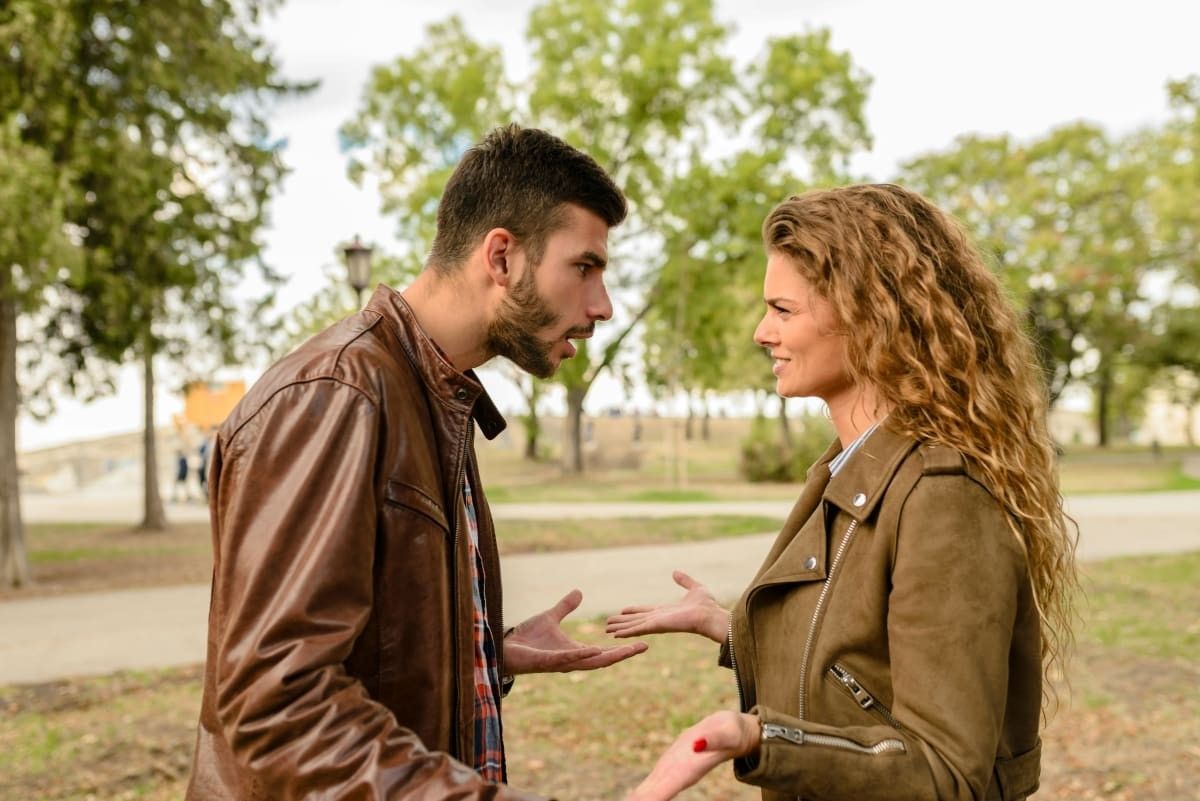
19. When she asks you about your plans 

We were walking out of work together and I said “What’re you doing tonight?” to which he responded, “Probably just going to get a beer down the street.” I replied, “Oh, that sounds like fun. I have no plans and I’m hungry, I don’t know what I’m going to do.” He responded: “Oh, well, good luck with that!” And got in his car and drove away. I later asked him what happened that night, and he said he sat alone at the bar freaking out, wondering if that was a hint or not. This was nearly 4 years ago, and we’re getting married this September. – u/joashro 
Representative Image Source: Pexels | vera arsic
Representative Image Source: Pexels | Vera Arsic

20. When she compliments your looks

I still remember in college a female student lamenting to me how hard it is to find dates with nice decent guys who treat you like the way you treat women. So I suggested some guys we both knew. She said things like no, someone more your height, your hair color, etc. I kept thinking geez I am probably like the only guy on this planet that fits the bill. Anyway I dropped her off, I hear her say, ‘oh Jesus Christ’ as she slams my car door. A year later it was like, oh she meant me ask her out. I don’t have a lot of regret over it. She could have just come out and suggested it instead of playing 21 questions. – u/carljustcarl 

Representative Image Source: Pexels | cottonbro
Representative Image Source: Pexels | Cottonbro

  • Parents, let your kids eat as much candy as they want – less restriction could help reduce the urge to overeat
    Candy becomes less special when it’s not a ‘bad’ food you can’t have. Peter Muller/Connect Images via Getty Images

    Assistant Clinical Lecturer in Kinesiology, Nutrition, and Health, Miami University

    Kids and candy are a classic pairing. From trick-or-treating to Easter baskets, to local parades and birthday parties, it can feel like kids are almost always bringing home another bag of treats. But while these holidays and events may be exciting for kids, they often end with parents dreading what comes next: negotiations around how much candy to consume.

    As a registered dietitian and mom of three, I understand the stress that comes with wanting to encourage healthy food choices without removing all the fun of childhood traditions. I also believe the answer to this dilemma may be simpler than the familiar back and forth of “Just one more piece of candy!” and “Haven’t you had enough already?”

    Research suggests that by managing the candy inventory less and encouraging more autonomy around sweets, parents can help their kids practice tapping into their hunger and fullness cues, promoting a healthier relationship with food over time.

    Making food moral

    There is no question that some foods have greater nutritional value than others. A piece of cake – carrot cake included – will never provide the vitamins and minerals of a large garden salad. As a result, people often categorize different foods as “good” or “bad.”

    The tendency to place food in two polarizing buckets can affect everything from what foods you purchase at the grocery store to the language you use to describe food. The problem is, “good” and “bad” are moral concepts. When morality is consistently applied to food, a person’s relationship to food can become complicated. Instead of viewing food as fueling, it can become a measuring stick for whether your food choices are something to feel proud of or guilty about.

    When a person’s inner monologue about food is preoccupied with whether it is good or bad for their health or diet plan, food choices can become less about enjoyment and more about their willpower to make the “right” decision at the grocery store and at mealtimes. Any guilt or shame that comes from this evaluation can spill over into what foods are served freely at home and which are restricted.

    Restriction leads to overeating

    The idea of food restriction often sounds punishing. For parents and others who take care of children, food restriction often may simply be an attempt to limit sugary foods and introduce more fruits and vegetables.

    But for kids, restricting certain foods may lead them to become preoccupied with those foods. They may be nagged by the knowledge that the foods adults often call “bad” are also the ones that are really delicious. What started as a simple candy rule can continue to influence a child’s relationship to food and eating long after the treats are gone.

    Person holding a gummy bear and signing 'one' at a child with their hands on the top of their hand in protest or disappointment
    Restricting certain foods can lead to increased preoccupation with those very foods. Oscar Requejo/iStock via Getty Images Plus

    Parents often approach food restriction in two different ways. In overt food restriction, kids are aware that their parents or guardians are limiting access to specific foods because they can see it or are told specific foods are off limits. In practice, this might mean the kids know candy is in the house but stored out of reach in the kitchen cupboards. Parents or caregivers who practice covert food restriction, on the other hand, may choose to not buy bags of candy at all in order to encourage more balanced food choices.

    Research suggests that overt restriction can unintentionally increase kids’ interest in those restricted food items. That preoccupation may mean the child has a more difficult time listening to their fullness cues when presented with those foods. If bags of candy are usually stored out of reach, it may be tempting to eat more than just a few pieces when access is finally granted – and they may completely ignore any signs that their body is full.

    Intuitive eating for kids

    Incorporating neutral language about food at mealtimes and encouraging kids to eat according to their own hunger and fullness cues can help them build trust in their bodies and improve family connection at the table. Taking the pressure off finishing all the food on the plate can instead place emphasis on savoring the sensory experience of each bite.

    Eating according to internal cues is one part of intuitive eating, which aims to increase a person’s trust in their own body to signal when to start eating and when to stop. Kids can also benefit from this same framework, with some age-appropriate modifications.

    The Satter Division of Responsibility in Feeding provides a simple, research-based approach to feeding kids in a way that avoids power struggles between kids and caretakers at the table. Developed by the Ellyn Satter Institute, a nonprofit focused on improving people’s relationship to food, the goal of the framework is to introduce intuitive eating in a kid-friendly way. When providing food through this approach, parents decide when and what food is served, while kids are in charge of deciding what and how much they eat from their plates. The emphasis is on helping kids eat according to their internal cues without pressuring them to eat specific foods.

    Three children sit around table of food outside
    Giving kids more autonomy in what they eat during meals is a way of practicing intuitive eating. Michael H/DigitalVision via Getty Images

    Candy can be a part of the menu rotation in this feeding framework. Repeatedly exposing kids to a variety of foods, including sugary treats outside of special holidays or events, means no food becomes emphasized for being better or worse than another food – it is all simply food.

    This approach can shift the conversation to how different foods affect their bodies in different ways: Some food – like candy – makes them run super fast, some foods grow their muscles, while other foods keep their eyes strong.

    Building healthier relationships with food

    Regularly using neutral language to describe food and exposing kids to a variety of foods helps reduce the power that sugary treats have over their appetites. This doesn’t mean birthday cake, doughnuts and candy will no longer taste delicious. It simply means children can rest assured they will see their favorite treats again without the added urge to overconsume them.

    If you’re interested in exploring how intuitive eating principles could change your child’s or your own relationship with food, here are a few practices you can try at home:

    Involve children in menu planning and grocery shopping. Let your kids pick a treat to add to a few meals each week, and serve the treat with the rest of the food on the menu for that day. Presenting all food items at the same time on the plate – versus saving a dessert or treat for after the meal – visually reminds everyone that food does not have to be earned. Rather, each food nourishes their bodies in different ways.

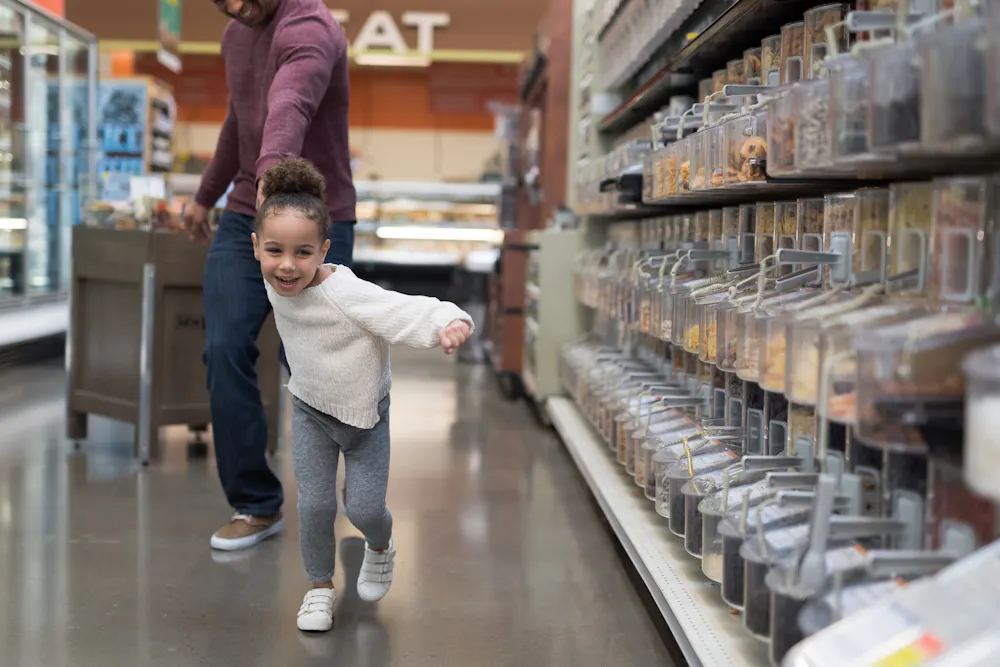
    Smiling child dragging smiling adult by the hand to bulk food shelves in grocery store
    Try giving kids a say on what you pick up during grocery trips. FatCamera/E+ via Getty Images

    Avoid commenting on what your kids eat. It can be tempting to praise a child when they choose to take a bite of the broccoli you’ve been encouraging for weeks. Praising kids for eating certain foods versus others can create a food hierarchy, leading them to think about food as a way to earn a reward instead of fueling their body.

    Challenge your own relationship with food. Do you eat when you are hungry and stop when you are full? Do you restrict your own food cravings as a punishment, or do you struggle to control yourself when eating a treat you love? Kids are always watching, and your own food behaviors often speak louder than words.

    Consider letting your kids indulge for a day. In my own family, I don’t limit how much candy my three kids eat on Halloween night. I won’t lie – they usually eat quite a bit. When they mention a stomachache afterward, we talk about how eating a lot of candy can make their bodies feel – without adding judgment. Their interest typically fades over the next few days while we continue to offer a piece of two with meals. Eventually the extras become props for elaborate trick-or-treat pretend play.

    One day or evening of holiday eating does not define their health, but fun memories with friends and families can last a lifetime. So let them eat … candy!

    This article originally appeared on The Conversation. You can read it here.

  • Why do I talk in my sleep? A sleep psychologist explains
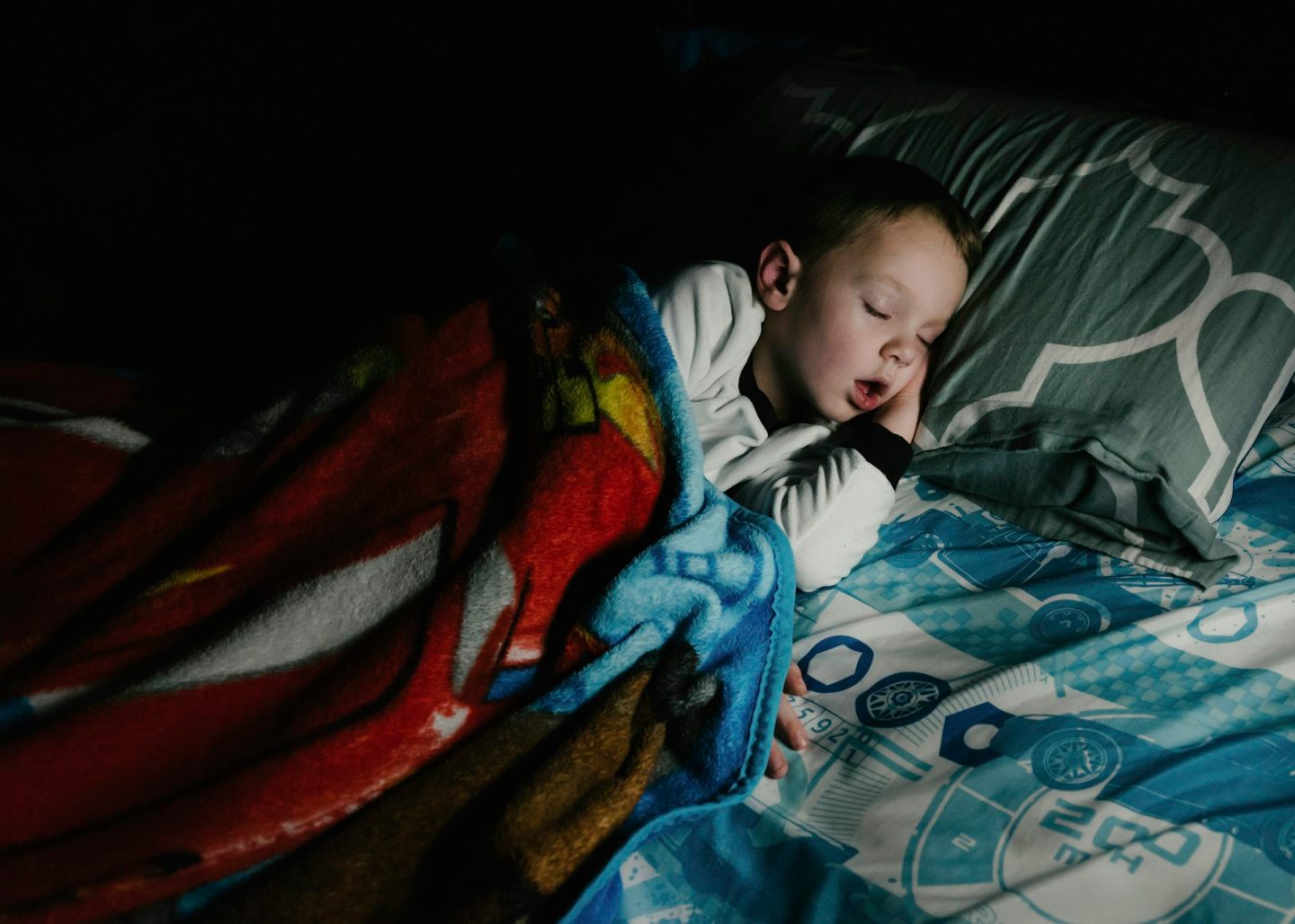
    Talking in your sleep is more common in children than adults. Cavan Images via Getty Images
    ,

    Why do I talk in my sleep? A sleep psychologist explains

    Your brain can keep chatting after you’ve called it a night.

    Professor of Psychology, Mississippi State University

    Everyone sleeps, but not everyone understands much about sleep. One of my favorite parts of being a sleep psychologist is that when people hear what my job is, they always have tons of questions, like why do we need to sleep? Why do we dream? Do dogs dream? I get that one a lot, and the answer is yes!

    Sometimes people want to chat about their sibling they share a room with who mumbles nonsense out loud all night long. Or maybe they’ve been teased themselves after delivering a complete but one-sided conversation while fully asleep at a slumber party.

    I’ve studied sleep for almost two decades, and I’m still not tired of discussing different aspects of it, especially what are called parasomnias: things your body does or your mind goes through while you’re asleep, such as nightmares, sleepwalking or talking in your sleep. Most are common and completely harmless; they only count as a disorder when they happen so often that they cause real problems.

    What’s happening while you’re asleep

    Sleep is not one single thing; you go through several stages of sleep every night.

    About a quarter of your sleep is what’s called REM sleep, short for rapid eye movement. This is the stage when most dreams, especially the vivid ones, happen.

    Non-REM sleep, which includes the deeper stages of sleep, usually takes up between 75% and 80% of your night. It is an important stage of sleep where your body really throttles down, allowing it to rest and repair itself.

    Doctors refer to these stages all together as your sleep architecture. People go through cycles of these stages roughly every 90 minutes each night. Non-REM sleep makes up more of your sleep right after bedtime, and then REM becomes a higher proportion of sleep in the early morning hours.

    kitten lying on its back asleep with paws up, tucked under a sheet
    Many animal species also need plenty of shut-eye to stay healthy. Waitforlight/Moment via Getty Images

    All mammals, from mice to cats to elephants, appear to sleep in some form or another. Researchers have found sleep is important for many things. When you’re asleep is when a lot of your memories get strengthened so they’ll last long term. Sleep is when growth typically happens in kids, and it is one of the times when your immune system is most active.

    Sleep is an important time for your brain and body to recharge and take care of themselves. Doctors recommend that teens get 8-10 hours of sleep per night, and even more for younger kids: 10-13 hours for little kids ages 3-5, and 9-12 hours for bigger kids ages 6-12.

    Talking out loud while you’re asleep

    Even though someone who is asleep may look pretty much shut down for the night, their brain is not turned off. Different parts of the brain are active doing different things during different parts of the night.

    Scientists think that sleeptalking happens when the parts of the brain responsible for language and speech are active while other parts of the brain that would typically prevent your mouth from physically talking are asleep.

    For the most part, sleeptalking is not even words. Usually it’s mumbles, laughs or whispers. If a sleeptalker does use language, it is most commonly the word “no” – that’s about 5% of all words that are said while asleep. If the sleeptalker is saying words, they’re often questions and sometimes profanity. Rarely are the things sleeptalkers say polite, and often it sounds like they’re having a conflict with someone.

    Sometimes it can sound like the sleeptalker is having a real conversation, pausing to allow the other person to speak – even if there’s no one else in the room. Researchers suspect you might be overhearing one side of a verbal exchange from a sleeptalker’s dream. What a sleeptalker is saying out loud during REM sleep matches what they’re dreaming about at that moment about 80% of the time, according to studies in sleep labs.

    man in bed lifts eye mask and looks quizzically over at woman asleep in eye mask
    A sleeptalker is far more likely to speak gibberish than a real secret. megaflopp/iStock via Getty Images Plus

    You may be able to actually interact with someone who is sleeptalking; researchers have found that roughly half the time a sleeptalker will respond to a spoken question or statement. But don’t get excited that you can get someone to spill their secrets or reveal something they don’t want to. There’s no scientific evidence of this happening.

    There is not a ton of research on sleeptalking yet, but it appears that this phenomenon can happen in any stage of sleep. Studies do suggest there are differences between the sleep of people who sleeptalk and those who don’t. For instance, one study found that sleeptalkers get more than an hour and a half less sleep per night and roughly half as much REM sleep as nonsleeptalkers.

    Why do people talk in their sleep?

    The best explanation we have for sleeptalking is that the brain does not fall asleep all at once, and for some people the areas responsible for sleep remain active longer than the parts that help keep them quiet.

    This phenomenon is fairly common, with over two-thirds of people sleeptalking at one time or another. It isn’t something to be concerned about if it has happened to you, though it does increase your likelihood of experiencing other parasomnias such as sleepwalking.

    Sleeptalking is far more common in childhood. Researchers don’t fully understand why, but we do know that children have more of what’s called slow-wave non-REM sleep. The proportion of slow-wave sleep you have each night declines as you grow older, so it is possible that less sleeptalking comes with this change in sleep architecture.

    Looking at the big picture, sleeptalking is considered normal. But if you’re bothered by it – or by other parasomnias, such as sleepwalking, night terrors or bed-wetting – remember, they all become less common as you grow up. And there are treatments you can get from a sleep psychologist like me.

    One last tip: Scientists do know that sleeptalking, as well as several other parasomnias, is more common when you’re overtired. So, the next time you talk in your sleep, you’ll know that it’s nothing to worry about, but perhaps a sign that you need to catch up on some extra zzz’s when you can.

    This article originally appeared on The Conversation. You can read it here.

  • We paid college students about $5 a night to sleep at least 7 hours – and their grades quickly improved
    Photo credit: iStock via Getty Images Plus – Half of surveyed college students said they go to bed after 1 a.m., on average.
    ,

    We paid college students about $5 a night to sleep at least 7 hours – and their grades quickly improved

    A university experiment tested whether small, immediate rewards could help students follow through on their intentions to get more rest.

    Paying college students about US$5 a night to sleep seven hours got them a quarter more nights of adequate sleep – and better grades.

    That is what we found in a study we published in July 2026.

    We gave more than 1,100 undergraduates at University of Pittsburgh a Fitbit – a wearable activity tracker that looks similar to a watch – and an app that sent bedtime reminders and morning feedback. We randomly chose 468 students and paid them about $5 for every night they slept at least seven hours, over the course of four weeks. We verified how much they slept using the device they wore.

    The students were about 19 years old, on average, and half of them were first-year students. Roughly 72% of them were women. About 55% were white, 28% Asian, 9% Black and 4% Hispanic.

    Our study shows that offering an immediate financial reward can help students meet a seven-hour sleep goal, and that those effects can persist up to a month beyond when the students are paid.

    Not just a student problem

    About one-third of American adults sleep less than seven hours a night, and a similar share say they wish they slept more. Among adolescents and young adults, roughly two-thirds routinely fall short of getting seven hours of sleep a night – the amount of shut-eye that health authorities recommend.

    One prominent sleep researcher has called sleep deprivation the most prevalent high-risk behavior.

    Short sleep is linked to obesity, diabetes, high blood pressure, heart disease, stroke and early death.

    Irregular sleep predicts mortality risk even more than sleep duration does. Sleep loss shows up in decision-making, even when it comes to issues like whether people vote.

    Students are running on empty

    Before we changed anything, the average student in our study slept 6.6 hours a night.

    Half were going to bed after 1 a.m. on average – a quarter after 2 a.m.

    Students got the recommended seven hours of sleep on a typical weeknight on only 43% of their nights, and more than 85% fell short at least once a week.

    They also did not know how much sleep they were getting. Two-thirds told us they usually slept seven hours – the trackers showed only about one-third of students slept that much on even three nights out of five.

    And 94% said their ideal night of sleep was longer than the one they were getting.

    What the money bought

    The 468 students we offered nightly payments reached seven hours of sleep on 26% more nights than 380 students who were not offered the money. That is a large shift for a group in which fewer than half were hitting the mark to begin with.

    Students receiving the monetary incentive slept 19 more minutes per school night, roughly the difference between closing the laptop at 11:40 p.m. or at midnight.

    Among students receiving the payment incentive, their GPA rose by about 0.08 points that semester – roughly a quarter of the gap between students who arrived with above-average and below-average high school grades.

    Once the payments stopped after four weeks, students who had received the money were still sleeping about eight minutes longer per night for the remaining three to four weeks of the study. The effect was smaller than during our study, but our findings suggest that some of the change in sleep habits persisted for up to a month after the end of the incentive.

    The effects of the intervention on sleep and GPA were largest among first-term freshmen, whose routines are not yet necessarily fixed.

    Rewards work – if they come right away

    Timing mattered too: Delivering the payment as a lump sum at the end of the semester, rather than every morning, produced only about two-thirds of the effect on sleep.

    The effects of the intervention on GPA faded over a couple of academic terms. Grades remained higher in the following semester, but two semesters later we could no longer detect an effect.

    Bedtime reminders and morning feedback on their own – with no money attached – had little effect. Students who received them slept only marginally more. The problem was not motivation: Nearly all said they wanted more sleep than they were getting. The challenge was following through on that intention night after night.

    Investing in sleep

    Our results show that universities should look at how the environment they create fosters or discourages good sleep habits.

    Late evening deadlines to submit assignments and early classes can both make it harder for students to get enough sleep. Changing some of these features costs little compared with many academic support programs, and it may be worth testing alongside other interventions aimed directly at students.

    Reminders and feedback might also work better if they change over time, rather than becoming familiar and easy to tune out.

    Very few universities or students treat sleep as part of an investment in education, or ask whether the schedules and incentives schools create make adequate sleep harder. Our results suggest they should.

    This article originally appeared on The Conversation. You can read it here.

Explore More Health Stories

Health

Why do I talk in my sleep? A sleep psychologist explains

Health

We paid college students about $5 a night to sleep at least 7 hours – and their grades quickly improved

Health

Could you survive The Oregon Trail? An emergency medicine doctor offers tips on how to not die in the great outdoors

Health

Your cells keep a record of every workout you’ve ever done – and those gains persist even after a break from exercise