Chinese President Hu Jintao’s making his first state visit to the Obama White House at a time when the American economy—and American schools—are feeling left behind by the growing economic superpower. Now a story out of Columbus, Ohio, about the Gahanna-Jefferson School District’s Chinese language and culture program spotlights the revival of “Red Scare” fears—all because China’s helping pay part of the program’s cost.

At a time when many American school districts are busy cutting foreign language offerings, the Chinese government is contributing $30,000 to Gahanna-Jefferson’s four-year-old program. It’s a fraction of the cost—the U.S. government is ponying up the rest of the $1 million needed to run the initiative, which teaches Mandarin and Chinese culture to 350 students.


In the hopes of easing American-Sino rivalry and fostering cultural understanding, the nonprofit Asia Society has helped the Chinese government set up similar “Confucius Classrooms” at more than 60 schools across the country. But, according to critics, the Chinese government’s financial involvement puts American students at risk of being indoctrinated into communism.

Former Hacienda La Puente Unified Schools superintendent John Kramer said his Southern California district turned down being a part of the Confucius Classroom network. “The objection was not to the teaching of a foreign language,” says Kramer. “The problem here was the culture portion and the involvement with the Chinese government.”

Kramer says concerned community members worried about “communist propaganda” being taught in schools. Gahanna-Jefferson mom Mandy Aldis doesn’t understand the communism fears. Aldis moved within the Gahanna-Jefferson school boundaries specifically for the district’s Chinese language program. “We feel very lucky that we have this. I say it’s just like math, English, art—it’s as important as anything else,” she says.

Her son, Andrew Aldis, says that taking Chinese expands his cultural understanding of the most populous nation on the planet, and it’s expanding his career opportunities. “I’d have potential to get a job doing translating or interpreting, maybe work for the State Department,” he says.

Andrew Aldis and his mom are on the right track. In the mid 1990’s, I taught English in Guangzhou, China, to elementary students as young as six. It was clear that in China, educating kids so that they were employable on a global scale trumped any concerns over Western teachers indoctrinating students in the ways of democracy. Speaking English and understanding American culture was seen as essential to the future—and that was 15 years ago before “Made in China” became truly ubiquitous.

Apparently, parents in Hacienda La Puente Unified are more concerned about communism than their kids being successful in a future where China’s a major player.

Gahanna-Jefferson officials say that the Chinese government doesn’t send materials with the teachers providing instruction. In other words, learning from a native Mandarin Chinese teacher about China’s 5,000 year-old history doesn’t automatically ignite a desire to don a Mao suit. It may, however, make a student more employable. Let’s hope that officials in La Puente Hacienda get a clue about the difference.
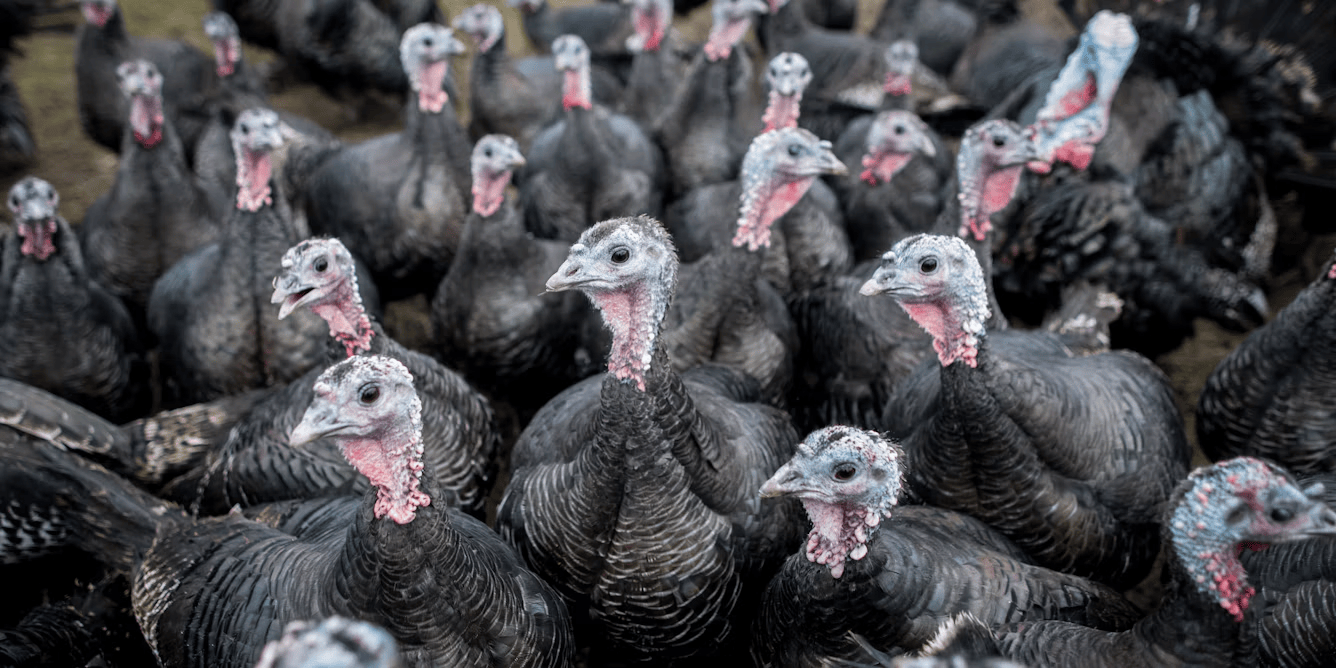

photo (cc) via Flickr user sarspri

  • Talking turkey! How the Thanksgiving bird got its name (and then lent it to film flops)
    Photo credit: E4C via Getty Images – Not everyone is a fan of Turkey Day.
    ,

    Talking turkey! How the Thanksgiving bird got its name (and then lent it to film flops)

    From Thanksgiving dinner to Hollywood disasters, this bird’s name has quite a history.

    Professor of English, Rutgers University – Newark

    “Meleagris Gallopavo Day” is a bit of a mouthful. Which may be why this Thanksgiving, most people will opt for the less ornithologically precise “Turkey Day.”

    And just as turkey is a versatile meat – think of those leftover options! – so too is the word “turkey,” which can refer to everything from the bird itself to a populous Eurasian country to movie flops.

    As a scholar who studies word origins, I love “talking turkey” – not only how the bird came to be named, but also how the word has evolved over time. But let’s start with what has become the centerpiece of most Thanksgiving Day dinners.

    The North American turkey – the kind that many families will be carving up this Thanksgiving – was being domesticated in Mexico some 2,000 years ago.

    Europeans glimpsed their first turkeys around 1500, when Spanish explorers arrived in the Americas and brought them back to the mother country. By the 1520s, turkeys were being bred in Spain, and soon the delicacy was appearing on rich people’s tables across Europe.

    Oh, dinde!

    But what to call the new import? Europeans in the New World were overwhelmed by the new plants and animals they saw, and often used familiar names for unfamiliar species. The Spanish, for instance, thought turkeys looked like peacocks, so they used the Spanish word “pavos.” The French called them “poules d’Indes,” or Indian chickens, later shortened to “dinde.”

    To the English, the newly discovered American birds looked like the guineafowl – a bird native to Africa but which was introduced into Europe by Arab and Turkish traders in the 14th and 15th centuries.

    And it is this point in the story that the modern-day turkey gets its name.

    The Ottoman Empire was then at its height. Ethnic Turks, based in Constantinople (now Istanbul), ran the empire that spanned the Near East, Middle East and North Africa. As a result, to many Europeans, anyone from “the East” was a “Turk.”

    Because Ottomans dominated trade in the eastern Mediterranean, a lot of produce coming to Europe was seen as “Turkish.” So a precious stone from Persia was named “Turkey stone,” and the French version of that name, “pierre turquoise,” gave us the word “turquoise.”

    In the same way, African guineafowl, introduced by Turkish traders, became a “turkey-cock” or “turkey-hen.” Over time, this was shortened to just “turkey.”

    Now that’s a feast!

    For as long as the New World turkeys have been in Europe, they’ve been featured in celebratory meals. The English word first appears in print in an account of a banquet hosted by politician John Prideaux in 1555: The menu included 38 red deer, 43 pheasants, 50 quince pies, 63 swans, 114 pigeons, 120 rabbits, 840 larks, 325 gallons of Bordeaux wine and “Turkies 2. rated at 4s. a piece.”

    History’s most famous turkey dinner, though, was served in Plymouth Plantation in 1621, as 50 Pilgrims who survived a year of brutal hardship joined 90 Native Americans for a three-day feast. Turkey wasn’t the only dish being served. Writing in his History of Plymouth Plantation, Governor William Bradford noted that Native Americans brought “codd, & bass, & other fish,” and others brought “water foule” and venison. But he was especially impressed with the “great store of wild Turkies.”

    The bird has become so associated with harvest-time celebratory dinners that we’ve been calling Thanksgiving “Turkey Day” since at least 1870.

    Meanwhile, the word has continued to find new uses, showing up with dozens of meanings. In 1839, the Southern Literary Messenger – a magazine edited by Edgar Allen Poe – reported on a new kind of dance, called the “turkey-trot” from its jerking motions.

    In 1920, New York’s Department of Health reported that “Some addicts voluntarily stop taking opiates and ‘suffer it out’ … which in their slang is called taking ‘cold turkey.‘”

    The turkey’s reputation for stupidity prompted other meanings. The legendary gossip columnist Walter Winchell told readers of Vanity Fair in 1927 about some new showbiz slang: “‘A turkey,’” he reported, “is a third rate production.”

    Since then, movies that flop with the critics or at the box office have been called turkeys.

    Another disparaging sense arrived in the 1950s, when turkey became a name for “a stupid, slow, inept, or otherwise worthless person.” That, in turn, probably led to the rise of the “jive turkey,” which first showed up in African American speech in the early 1970s, defined by slang lexicographer Jonathon Green as “an insincere, deceitful, dishonest person.”

    Jive or straight talking?

    And what about “talk turkey”? Well, that can mean quite contradictory things.

    One dictionary from 1859 defines it as “To talk in a silly manner, talk nonsense.” A similar meaning is attached to another turkey-related word, “gobbledygook.”

    Another definition found in the 1889 “Americanisms, Old & New” had “talking turkey” meaning “To use high-sounding words, when plain English would do equally well or better.”

    The most familiar meaning of “talking turkey,” in which it is a stand-in for “straight talk,” is often said to come from a once popular joke. A white man and an American Indian, the story goes, spend a day hunting together and manage to bag a turkey and a somewhat less bountiful buzzard. The devious white man proposes a “heads-I-win-tails-you-lose” division of the spoils. “I’ll take the turkey, and you the buzzard,” he says, “or, if you prefer, you take the buzzard, and I’ll take the turkey.” The frustrated American Indian replies – usually in some version of would-be comic pidgin English – “You talk all buzzard to me, and don’t talk turkey.”

    Those who study word histories are skeptical of stories like this, since most are invented after the fact. More likely, “talk turkey” came from pleasant conversation at Thanksgiving dinner, or maybe negotiations between Native Americans and European colonists over the cost of poultry. Whatever the origin, though, when we “talk turkey,” we’re engaging in the kind of straightforward, honest speech the scheming hunter denied his hunting partner.

    This article originally appeared on The Conversation. You can read it here.

  • Why do I talk in my sleep? A sleep psychologist explains
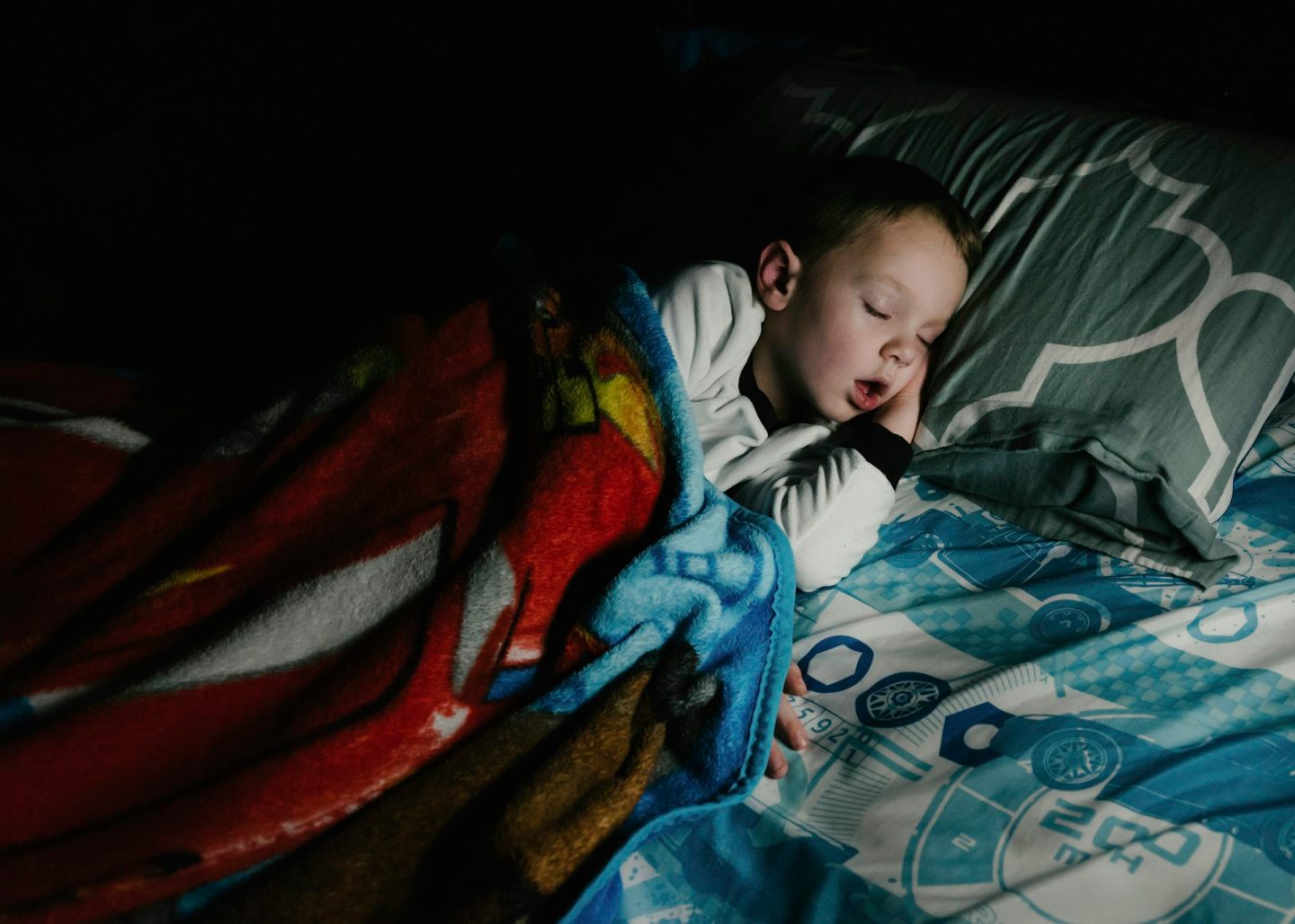
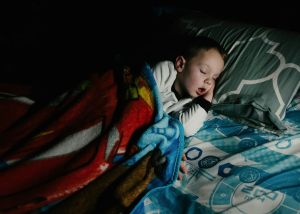
    Talking in your sleep is more common in children than adults. Cavan Images via Getty Images
    ,

    Why do I talk in my sleep? A sleep psychologist explains

    Your brain can keep chatting after you’ve called it a night.

    Professor of Psychology, Mississippi State University

    Everyone sleeps, but not everyone understands much about sleep. One of my favorite parts of being a sleep psychologist is that when people hear what my job is, they always have tons of questions, like why do we need to sleep? Why do we dream? Do dogs dream? I get that one a lot, and the answer is yes!

    Sometimes people want to chat about their sibling they share a room with who mumbles nonsense out loud all night long. Or maybe they’ve been teased themselves after delivering a complete but one-sided conversation while fully asleep at a slumber party.

    I’ve studied sleep for almost two decades, and I’m still not tired of discussing different aspects of it, especially what are called parasomnias: things your body does or your mind goes through while you’re asleep, such as nightmares, sleepwalking or talking in your sleep. Most are common and completely harmless; they only count as a disorder when they happen so often that they cause real problems.

    What’s happening while you’re asleep

    Sleep is not one single thing; you go through several stages of sleep every night.

    About a quarter of your sleep is what’s called REM sleep, short for rapid eye movement. This is the stage when most dreams, especially the vivid ones, happen.

    Non-REM sleep, which includes the deeper stages of sleep, usually takes up between 75% and 80% of your night. It is an important stage of sleep where your body really throttles down, allowing it to rest and repair itself.

    Doctors refer to these stages all together as your sleep architecture. People go through cycles of these stages roughly every 90 minutes each night. Non-REM sleep makes up more of your sleep right after bedtime, and then REM becomes a higher proportion of sleep in the early morning hours.

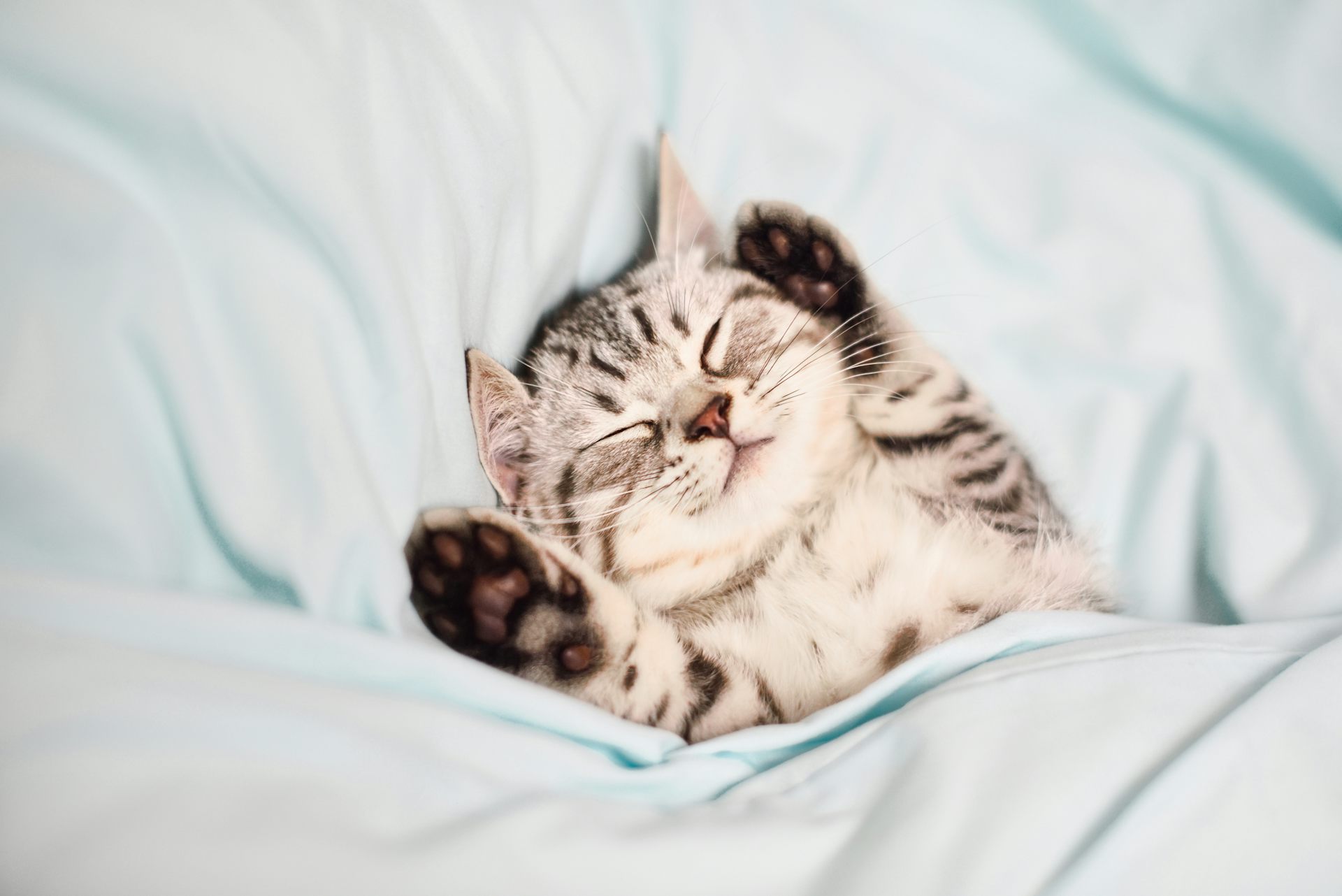
    kitten lying on its back asleep with paws up, tucked under a sheet
    Many animal species also need plenty of shut-eye to stay healthy. Waitforlight/Moment via Getty Images

    All mammals, from mice to cats to elephants, appear to sleep in some form or another. Researchers have found sleep is important for many things. When you’re asleep is when a lot of your memories get strengthened so they’ll last long term. Sleep is when growth typically happens in kids, and it is one of the times when your immune system is most active.

    Sleep is an important time for your brain and body to recharge and take care of themselves. Doctors recommend that teens get 8-10 hours of sleep per night, and even more for younger kids: 10-13 hours for little kids ages 3-5, and 9-12 hours for bigger kids ages 6-12.

    Talking out loud while you’re asleep

    Even though someone who is asleep may look pretty much shut down for the night, their brain is not turned off. Different parts of the brain are active doing different things during different parts of the night.

    Scientists think that sleeptalking happens when the parts of the brain responsible for language and speech are active while other parts of the brain that would typically prevent your mouth from physically talking are asleep.

    For the most part, sleeptalking is not even words. Usually it’s mumbles, laughs or whispers. If a sleeptalker does use language, it is most commonly the word “no” – that’s about 5% of all words that are said while asleep. If the sleeptalker is saying words, they’re often questions and sometimes profanity. Rarely are the things sleeptalkers say polite, and often it sounds like they’re having a conflict with someone.

    Sometimes it can sound like the sleeptalker is having a real conversation, pausing to allow the other person to speak – even if there’s no one else in the room. Researchers suspect you might be overhearing one side of a verbal exchange from a sleeptalker’s dream. What a sleeptalker is saying out loud during REM sleep matches what they’re dreaming about at that moment about 80% of the time, according to studies in sleep labs.

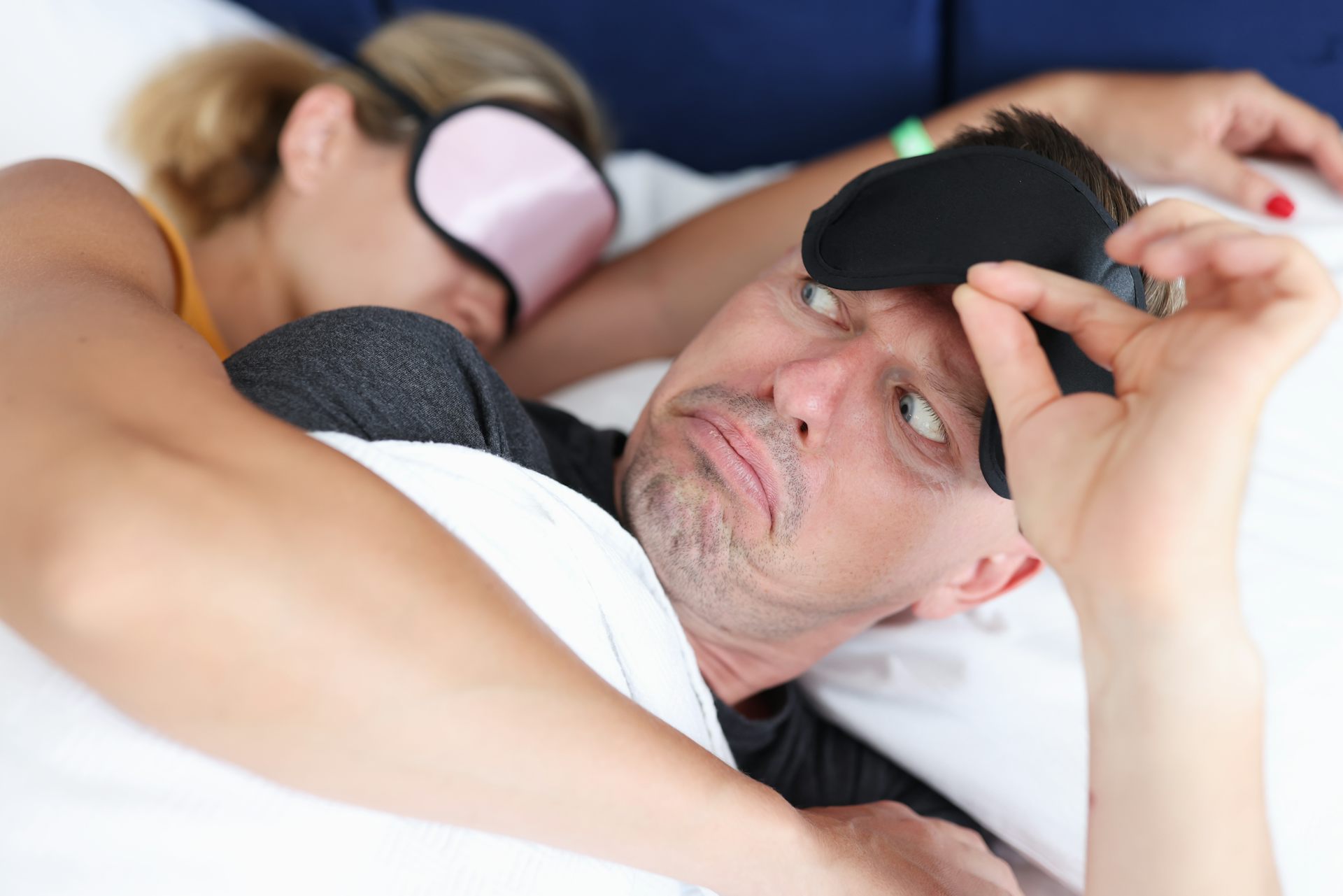
    man in bed lifts eye mask and looks quizzically over at woman asleep in eye mask
    A sleeptalker is far more likely to speak gibberish than a real secret. megaflopp/iStock via Getty Images Plus

    You may be able to actually interact with someone who is sleeptalking; researchers have found that roughly half the time a sleeptalker will respond to a spoken question or statement. But don’t get excited that you can get someone to spill their secrets or reveal something they don’t want to. There’s no scientific evidence of this happening.

    There is not a ton of research on sleeptalking yet, but it appears that this phenomenon can happen in any stage of sleep. Studies do suggest there are differences between the sleep of people who sleeptalk and those who don’t. For instance, one study found that sleeptalkers get more than an hour and a half less sleep per night and roughly half as much REM sleep as nonsleeptalkers.

    Why do people talk in their sleep?

    The best explanation we have for sleeptalking is that the brain does not fall asleep all at once, and for some people the areas responsible for sleep remain active longer than the parts that help keep them quiet.

    This phenomenon is fairly common, with over two-thirds of people sleeptalking at one time or another. It isn’t something to be concerned about if it has happened to you, though it does increase your likelihood of experiencing other parasomnias such as sleepwalking.

    Sleeptalking is far more common in childhood. Researchers don’t fully understand why, but we do know that children have more of what’s called slow-wave non-REM sleep. The proportion of slow-wave sleep you have each night declines as you grow older, so it is possible that less sleeptalking comes with this change in sleep architecture.

    Looking at the big picture, sleeptalking is considered normal. But if you’re bothered by it – or by other parasomnias, such as sleepwalking, night terrors or bed-wetting – remember, they all become less common as you grow up. And there are treatments you can get from a sleep psychologist like me.

    One last tip: Scientists do know that sleeptalking, as well as several other parasomnias, is more common when you’re overtired. So, the next time you talk in your sleep, you’ll know that it’s nothing to worry about, but perhaps a sign that you need to catch up on some extra zzz’s when you can.

    This article originally appeared on The Conversation. You can read it here.

  • Too many males to choose from can overwhelm female frogs – and change who gets to mate
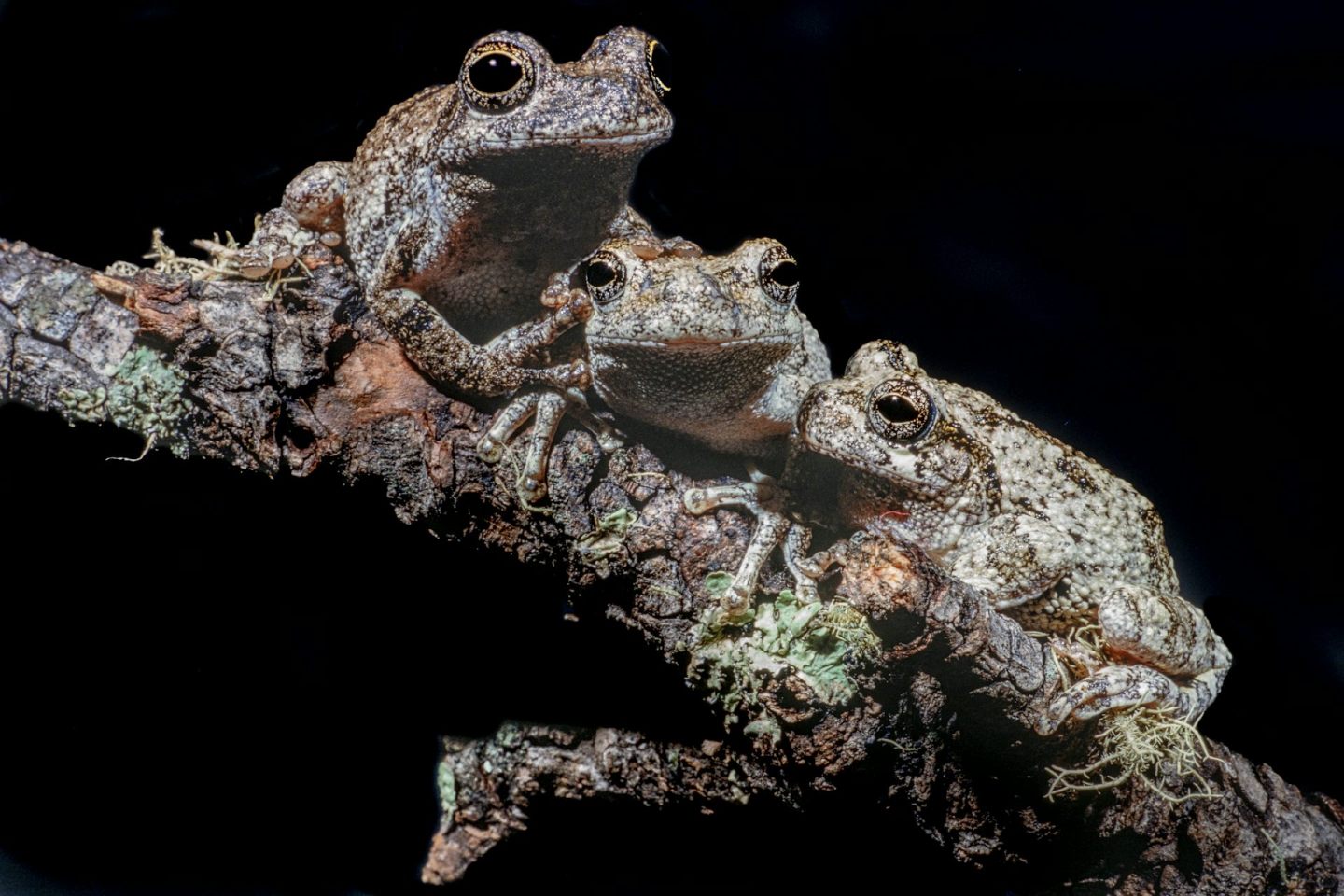
    There can be too many frogs in the dating pool. R. Andrew Odum/Photodisc via Getty Images

    Assistant Professor of Ecology & Evolutionary Biology, University of Tennessee; Smithsonian Institution

    If you’ve ever felt overwhelmed by menu options at a restaurant, cereal varieties at the grocery store or potential partners while scrolling through dating apps, you’ve experienced choice overload.

    People aren’t the only ones to have trouble making decisions when confronted with many options simultaneously. In our new study published in the journal iScience, my colleagues and I found similar effects of choice overload in female gray tree frogs when faced with too many calls from males looking for love.

    Scientists have observed many species having similar decision-making problems when experiencing choice overload. But we know little about how these kinds of cognitive constraints affect animals in natural settings.

    Indecision on the frog dating scene

    The gray tree frogs we focused on live in wooded areas near sources of water in North America. During the mating season, males gather in choruses and call to attract mates. Females pick mates based on several call attributes, including call length. Longer calls are more attractive.

    For our experiment, we captured 60 female tree frogs from breeding choruses in East Tennessee and brought them into our lab. Then we played recorded mating calls for each female, giving her a choice between one long, attractive “target” call and one, three or seven shorter, less attractive “distractor” calls.

    In the wild, a tree frog breeding chorus can include dozens or even hundreds of calling males. In our lab setup, the calls played sequentially, so they never overlapped.

    Females would hop toward the speaker broadcasting the call she preferred. As the number of distractor calls increased, females got worse at picking the attractive call, took longer to decide, and were more likely to defer choosing within the 10-minute window altogether.

    Black and white aerial view of a circular area with a white star in the middle
    View from above of the frog test arena, where researchers would place a female frog in the center and then play various male mating calls from speakers placed around the perimeter. Jessie Tanner

    Cognitive confusion

    Because we eliminated call overlap entirely, we know this decline wasn’t due to what researchers call energetic masking. That’s the well-documented problem of overlapping signals impairing an individual’s ability to detect and discriminate a signal from noise.

    Biologists have long known that female preferences can weaken in choruses and have usually assumed the explanation is energetic masking: Too many overlapping signals create a challenge for the frogs’ perceptual systems. In other words, they can’t detect or discriminate individual calls.

    Instead, our study shows that a female’s own cognitive limits can make it hard for her to select her preferred mate. The challenge comes from too many males to choose from, not being unable to hear the males clearly.

    When females can’t make the optimal choice

    Call traits are linked to offspring fitness in gray tree frogs. If females have trouble recognizing the calls they prefer in a real chorus, they aren’t able to pick the mates with the best genes to pass on. They may end up mating with males they would otherwise reject. These males with less going for them then pass on their less desirable traits, which could have negative consequences for the offspring.

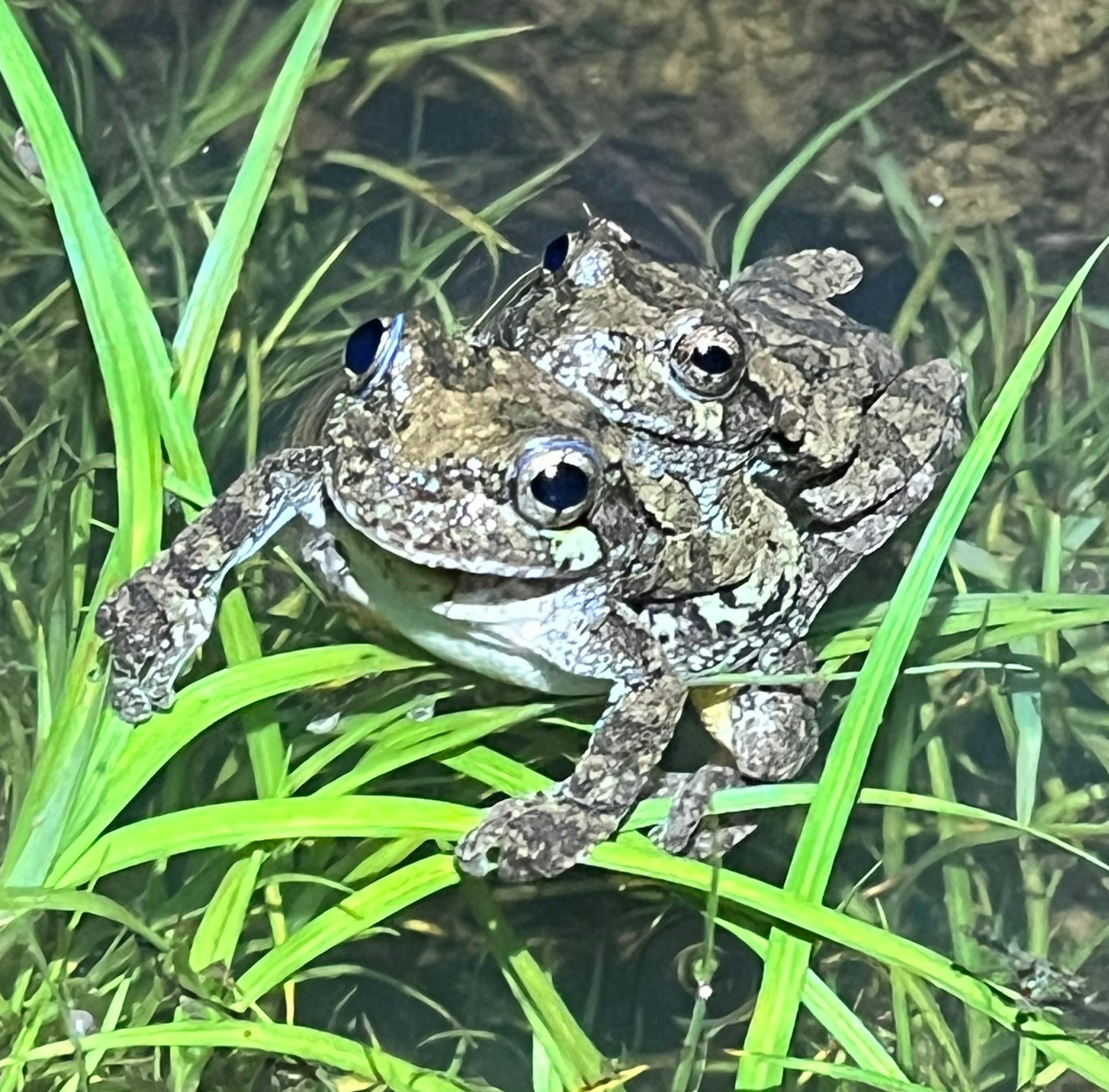
    Smaller frog on top of larger frog with grass blades around
    Females’ cognitive overload could be an opportunity for males who might not otherwise get a chance to mate. Jessie Tanner

    Our finding raises the possibility that males could exploit this cognitive limitation in females. Less attractive males might do better by joining bigger choruses, where the sheer number of competitors makes it harder for females to discriminate against them. Conversely, more attractive males may benefit from calling in smaller groups, or even in isolation. My colleagues and I hope to investigate some of these possibilities soon.

    More options, more opportunities … to a point

    We ran our experiments in a simplified lab arena, which allowed us to isolate choice overload from other effects. We removed the real-world clutter of overlapping calls, vegetation and risk from predators that females would face in an actual pond. We also limited female choice to eight calls, though frogs may hear even more in natural settings.

    The next step in this research is figuring out how much choice overload matters in a real chorus, where calls do overlap, and where sensory processing and cognitive processing are probably both at play. We’re particularly interested in seeing whether, in natural choruses, decisions do take longer and females really end up mating with less preferable males.

    Choice overload isn’t unique to frogs, or even to mate choice. Researchers have seen bees choosing among flowers, ants comparing potential nest sites and mosquitoes selecting egg-laying sites all making worse decisions as the number of competing options increases. And recent research on field crickets and tree frogs has found similar patterns in these animals as they pick mates based on their calls.

    Together, this growing body of evidence suggests that cognitive constraints are a general feature of animal decision-making.

    This article originally appeared on The Conversation. You can read it here.

Explore More Stories

Society

I research play – and here’s why recess is much more important than just a fun break

Society

Remote work made these colleagues more open with each other, not less

Society

Dog parks are an antidote to the isolation and divisions that social media can fuel

Health

We paid college students about $5 a night to sleep at least 7 hours – and their grades quickly improved