It’s a gray Sunday morning in London’s trendy Shoreditch district, and street artist eL Seed has inadvertently found himself working a nine-to-five job.

These certainly aren’t normal hours for the renowned French-Tunisian creative, whose work graces walls, bridges, rooftops, and other structures and surfaces on nearly every continent. Though eL Seed normally splits his time between Paris and Dubai, he’s in London to paint a large mural commissioned by the British Council for the Shubbak festival, a celebration of contemporary Arab culture. The production team is pacing nervously, worried he won’t finish by his deadline.


There are other complications, too: Storm clouds are hanging low in the sky, eL Seed has a flight out of Heathrow Airport in less than 24 hours, and he couldn’t work through the previous evening as he usually does, due to a queue for the nightclub below crowding his workspace.

“I usually don’t work like this, within these strict hours,” he says with a resigned smile. “But if it rains, I’ll just wear a plastic bag and get it done somehow.”

This tireless work ethic has taken eL Seed far. Combining Arabic calligraphy with graffiti—spawning his hybrid “calligraffiti” style—he has gained international acclaim and painted everywhere from Paris’ famous Pont des Arts bridge to disenfranchised townships in South Africa. Through a mixture of commissioned work and self-funded creative projects, he taps into being a “third culture kid”—growing up in suburban Paris, he spoke French to his parents, who replied to him in Arabic—to inform his work. While he began painting at a young age, he only learned to properly read and write Arabic when he was 18. As a calligrapher he is entirely self-taught, which is largely unheard of in the ancient Arab tradition.

“My art is just the projection of what I am. I wouldn’t be doing what I do if I was just born in Tunisia,” eL Seed says frankly. “In France, they make you feel like you can only be French, but in my case—my face doesn’t look French, my name doesn’t sound French—you have this crisis of identity. That’s what prompted me to learn Arabic, to get back to my roots.”

The British production manager uneasily tracking eL Seed’s progress on this Sunday morning turns away journalists scheduled to interview him (including me), claiming it would be detrimental to interrupt his creative process. The artist, he firmly insists, is at work. But eL Seed, ever gracious, rebuffs the idea that I’m hindering his progress. “Please come back,” he writes apologetically via a WhatsApp message a few minutes later. “He is not the one who gets to decide that.”

Despite his renowned reputation, there is a palpable humility to eL Seed evident not only in his demeanor and impeccable manners, but also in his work. He doesn’t sign his pieces—“as soon as I leave, the wall’s not mine anymore”—and firmly rejects the media’s tendency to depict him as being instrumental in the 2011 Tunisian revolution, which sparked the Arab Spring.

“I’ve read articles creating this fake romance around me saying ‘eL Seed, the painter of the revolution,’” he says, rolling his eyes at the notion. “I was not there. People died for that, and I was not a hero in Tunisia, so I don’t want to be portrayed as that. I had painted in Tunisia before the revolution, but I didn’t for a while afterwards because, for me, it was too opportunistic.”

Though eL Seed’s work is tied to a strong sense of Islamic and Arab identity, which he describes using words like “deep, rich, and intense,” it manages to transcend the language and the region that it’s from.

Removing thick black latex gloves to scroll through his phone, eL Seed pulls up a music video of a famous Brazilian musician performing atop one of his pieces in the favela of Vidigal in Rio de Janeiro. He says that when he painted a Brazilian poem translated into Arabic on the white rooftop without permission, he had no idea what the response would be.

“I came home, and had a bunch of notifications on my phone, and one Brazilian photographer saying, ‘This morning when I came to the favela, I found this beautiful piece made by an unidentified artist. Thank you for beautifying my building.’ Turns out it was actually an art school that he was building in the favela.”

Whether eL Seed’s pieces are adorning a favela or London’s hippest neighborhood, there are four elements to each of his works. The first are the words, which he puts a lot of thought into and are very location-specific. For the mural in London, it’s a quote from John Locke: “It is one thing to show a man that he is in error and another to put him in possession of the truth.” The second is the visual scale, composition, and beauty of the piece, which anyone can appreciate whether they speak Arabic or not. The third is the artwork’s placement—his choice to display it in a small town in Tunisia, for example, rather than in a gallery in Manhattan—which allows it to be simultaneously democratic, accessible, and ephemeral. The last step is the work’s journey through social media channels, as people all over the world can not only see and share his work, but join in on the experience of translating and contemplating the literal meaning of the piece.

When these four layers of eL Seed’s work coalesce, they invite viewers to connect to a culture that, given today’s headlines, is as often misunderstood as it is marginalized. In that sense, eL Seed isn’t just creating art—he is offering an alternative entry point into the culture and belief system that is central to his identity. Ever humble, he says the intrinsic allure of the ancient tradition of calligraphy does a lot of that work for him.

“I feel like there is a kind of universal beauty in the Arabic script that reaches your soul before it touches your eyes,” he says. “People come here, they don’t even know what is written, but they know that this is Arabic because of the shape of the letter and so they can appreciate it and connect to it.”

  • People are cheering woman’s refusal to accept the latest trend in hotel bathrooms
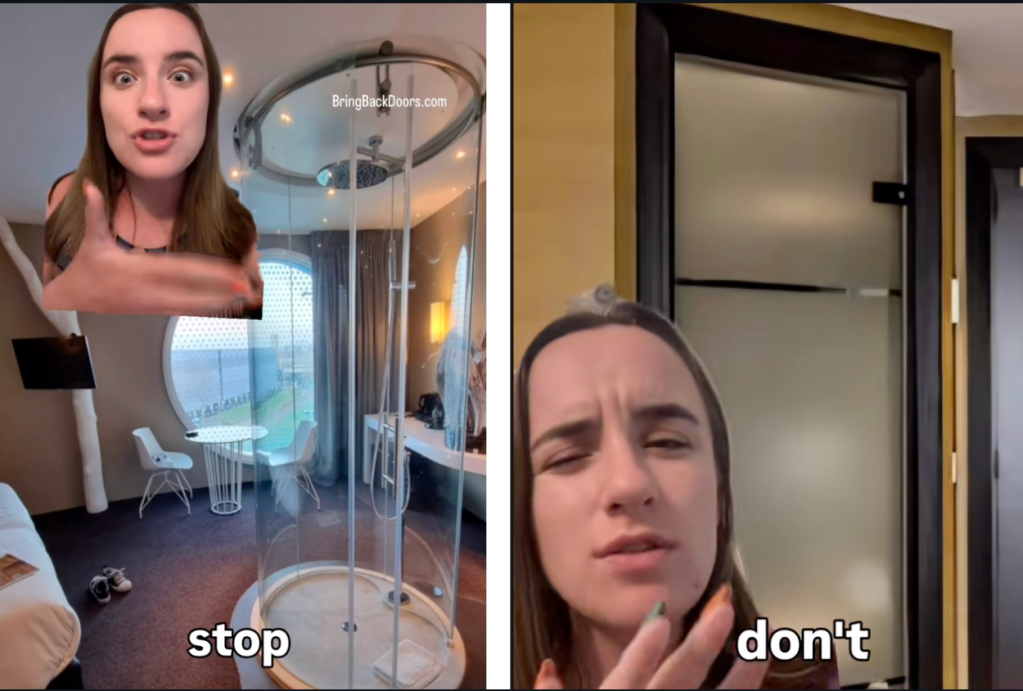
    Sadie has declared war on non-private hotel bathrooms.Photo credit: @bring_back_doors

    People are cheering woman’s refusal to accept the latest trend in hotel bathrooms

    “I HATE how hotels started thinking going to the bathroom is a shared experience.”

    It can be frustrating seeing change for change’s sake in the world. To be more specific, changes that are said to be done in the name of innovation and design, but are in truth ways for companies to save a buck.

    One example that is getting attention is the bathroom doors in hotels… or the lack thereof, actually. One TikToker has had enough and has taken it upon herself to save regular bathroom doors in hotels and to point out why open-space bathrooms and glass doors just don’t cut it.

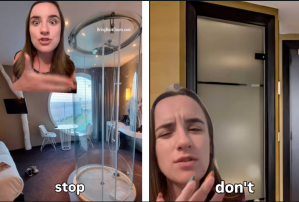
    On her @bring_back_doors TikTok account, Sadie has a collection of videos highlighting the flaws in hotel bathroom designs, with the most prominent being the lack of a regular door to the bathroom. In one viral TikTok, Sadie discussed a hotel that reached out to her, explaining that they have “foggy” glass doors to their bathroom to provide privacy. She was quick to point out that it still doesn’t provide adequate privacy. “Yes you can see through these,” Sadie said, adding that “glass doors do not close properly.”


    @bring_back_doors

    Hotel name: Alexander Hotel, Noordwijk aan Zee, Netherlands I need to be clear. Glass doors are not private. And making them foggy does not make them private. I am once again sitting here saying screw you to all bathroom doors that are not solid and close fully. And I am providing alternative hotels with guaranteed doors at bringbackdoors.com Check your hotels door situation before you book or risk your privacy. Door submitted by @mmargaridahb, DM me to submit your own bad doors. #bathroomdoors #hotel #travel #fyp Bathroom doors | bathroom design | hotel design | bad hotel design | travel fail | travel memories | travel inspo | door design | hotels with privacy

    ♬ original sound – Bring Back Bathroom Doors

    The comments rallied behind Sadie’s bathroom-door crusade

    The commenters joined in with Sadie, demanding the return of solid, closing, and lockable doors to bathrooms in hotels:

    “I HATE how hotels started thinking going to the bathroom is a shared experience.”

    “I hate how you can’t turn the bathroom light on without disturbing the other person in the room.”

    “The foggy ones are almost worse, you just get a hazy fleshy silhouette hunched over on the crapper like some kind of sack of ham.”

    “I just don’t get it, NOBODY wants this, even couples. I won’t be more likely to book two separate rooms for me and my friend/sibling/parent, I’ll just book another hotel.”

    “Love this campaign, I do not want a romantic weekend listening to the other person poo.”


    @bring_back_doors

    Hotel Names⬇️⬇️ Citizen M South Hotel (first pics) and Fletcher Hotel (third pic) both in Amsterdam. As part of this project, I’ve been emailing hotels around the world to put together an easy to reference list for people to find hotels with guaranteed doors at BringBackDoors.com And I did notice that in Amsterdam a lot of hotels were saying they don’t have doors. It wasn’t the worst city (that honor goes to Barcelona, so far I’ve only found TWO that have said yes to all doors), but it was still bad. Then I went into the comments. And kept getting people mentioning these hotels in Amsterdam. And I realized that clearly the city has a designer or architect on the loose who has a thing for test tubes. It’s horrible. Luckily, I was able to find 6 hotels in Amsterdam that all have bathroom doors in every room and have them all listed on BringBackDoors.com These hotels were submitted by so many people I couldn’t name them all. But to submit your own bad hotel bathroom send me a DM with hotel photo, name, and location! #hotel #bathroom #hoteldesignfail Bathroom doors | hotel bathrooms | hotel privacy | no privacy | travel problems | hotel issues | travel | hotel design | hotel design fail | hotel designers | design fail | hotel concept | bathrooms | Citizen M | Hotel Fletcher | Hotels in Amsterdam | Visit Amsterdam | Amsterdam

    ♬ original sound – Bring Back Bathroom Doors

    A great way to save a buck—er, I mean, ‘create a modern look’

    As many commenters asked, why do hotels have glass doors — or, worse, no doors at all—in their bathrooms? Well, this has been a growing trend in modern hotels over the past decade as a means to create a sleek aesthetic and to allow glass partitions to bring more daylight into otherwise darker sections of the room.

    At least that’s what’s being promoted to the customer. In reality, skimping on solid doors for glass ones or none at all gives the illusion that the room is bigger than it is while requiring fewer building materials. It does bring in more daylight, but mostly with the hope that you’ll cut down on electricity use for lights in an otherwise enclosed space. These reasons are also why some hotels don’t have solid walls around their bathroom areas at all.

    TikTok · Bring Back Doors

    TikTok u00b7 Bring Back Doors www.tiktok.com


    Tired of the lack of privacy? Check out the database

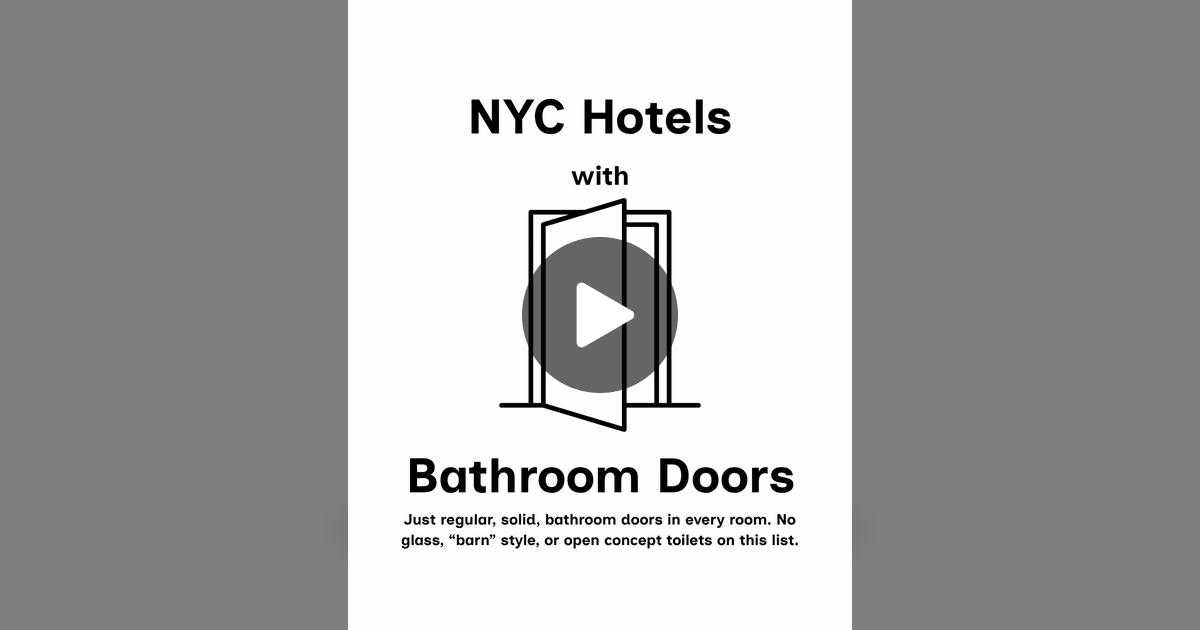
    To combat this trend, Sadie has developed a database at bringbackdoors.com for her and her followers to report which hotels have true, solid, private bathrooms in their accommodations and which ones do not, so people can properly plan where to stay and have true privacy during their most vulnerable moments.

    “I get it, you can save on material costs and make the room feel bigger, but what about my dignity?,” Sadie wrote on her website. “I can’t save that, when you don’t include a bathroom door.”

    Over time, the hope is that sanity and dignity can be restored as hotels realize that their glass “features” don’t have any real benefit when they don’t allow basic privacy.

  • MIT’s super-fast camera can capture light as it travels
    ArrayPhoto credit: assets.rebelmouse.io

    MIT’s super-fast camera can capture light as it travels

    It has a resolution rate of one frame per trillionth of a second.

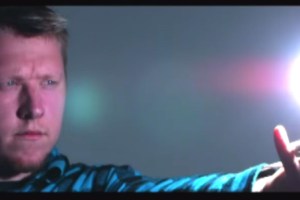
    A camera developed at MIT can photograph a trillion frames per second. Compare that with a traditional movie camera which takes a mere 24. This new advancement in photographic technology has given scientists the ability to photograph the movement of the fastest thing in the Universe, light. In the video below, you’ll see experimental footage of light photons traveling 600-million-miles-per-hour through water.

    The actual event occurred in a nano second, but the camera has the ability to slow it down to twenty seconds. For some perspective, according to New York Times writer, John Markoff, “If a bullet were tracked in the same fashion moving through the same fluid, the resulting movie would last three years.”


    It’s impossible to directly record light so the camera takes millions of scans to recreate each image. The process has been called femto-photography and according to Andrea Velten, a researcher involved with the project, “There’s nothing in the universe that looks fast to this camera.”


    This article originally appeared seven years ago.

  • Kelsey Wells’ Side-By-Side Photos Prove That Weight Doesn’t Equal Health
    ArrayPhoto credit: assets.rebelmouse.io

    It’s super easy for most people to get hung up on the number on their scales and not how they actually look or, most importantly, feel. People often go on diets in hopes of reaching an ideal weight they had when they graduated high school or got married, but they’re often disappointed when they can’t attain it.

    But a set of photos by fitness blogger Kelsey Wells is a great reminder for everyone to put their scales back in storage. Welles is best known as the voice and body behind My Sweat Life, a blog she started after gaining weight during pregnancy. To lose the weight, she started the Bikini Body Guide (BBG) training program and after 84 weeks she shared three photos on her Instagram account that prove the scale doesn’t matter.

Explore More Design Stories

Design

People are cheering woman’s refusal to accept the latest trend in hotel bathrooms

Design

MIT’s super-fast camera can capture light as it travels

Articles

Kelsey Wells’ Side-By-Side Photos Prove That Weight Doesn’t Equal Health

Articles

No one noticed what this woman was staring at when they chose her for their label