ProPublica is a nonprofit newsroom that investigates abuses of power. Sign up to receive our biggest stories as soon as they’re published.

The coronavirus entered Milwaukee from a white, affluent suburb. Then it took root in the city’s black community and erupted.

As public health officials watched cases rise in March, too many in the community shrugged off warnings. Rumors and conspiracy theories proliferated on social media, pushing the bogus idea that black people are somehow immune to the disease. And much of the initial focus was on international travel, so those who knew no one returning from Asia or Europe were quick to dismiss the risk.


Then, when the shelter-in-place order came, there was a natural pushback among those who recalled other painful government restrictions — including segregation and mass incarceration — on where black people could walk and gather.

“We’re like, ‘We have to wake people up,’” said Milwaukee Health Commissioner Jeanette Kowalik.

As the disease spread at a higher rate in the black community, it made an even deeper cut. Environmental, economic and political factors have compounded for generations, putting black people at higher risk of chronic conditions that leave lungs weak and immune systems vulnerable: asthma, heart disease, hypertension and diabetes. In Milwaukee, simply being black means your life expectancy is 14 years shorter, on average, than someone white.

As of Friday morning, African Americans made up almost half of Milwaukee County’s 945 cases and 81% of its 27 deaths in a county whose population is 26% black. Milwaukee is one of the few places in the United States that is tracking the racial breakdown of people who have been infected by the novel coronavirus, offering a glimpse at the disproportionate destruction it is inflicting on black communities nationwide.

In Michigan, where the state’s population is 14% black, African Americans made up 35% of cases and 40% of deaths as of Friday morning. Detroit, where a majority of residents are black, has emerged as a hot spot with a high death toll. As has New Orleans. Louisiana has not published case breakdowns by race, but 40% of the state’s deaths have happened in Orleans Parish, where the majority of residents are black.

Illinois and North Carolina are two of the few areas publishing statistics on COVID-19 cases by race, and their data shows a disproportionate number of African Americans were infected.

“It will be unimaginable pretty soon,” said Dr. Celia J. Maxwell, an infectious disease physician and associate dean at Howard University College of Medicine, a school and hospital in Washington dedicated to the education and care of the black community. “And anything that comes around is going to be worse in our patients. Period. Many of our patients have so many problems, but this is kind of like the nail in the coffin.”

The U.S. Centers for Disease Control and Prevention tracks virulent outbreaks and typically releases detailed data that includes information about the age, race and location of the people affected. For the coronavirus pandemic, the CDC has released location and age data, but it has been silent on race. The CDC did not respond to ProPublica’s request for race data related to the coronavirus or answer questions about whether they were collecting it at all.

Experts say that the nation’s unwillingness to publicly track the virus by race could obscure a crucial underlying reality: It’s quite likely that a disproportionate number of those who die of coronavirus will be black.

The reasons for this are the same reasons that African Americans have disproportionately high rates of maternal death, low levels of access to medical care and higher rates of asthma, said Dr. Camara Jones, a family physician, epidemiologist and visiting fellow at Harvard University.

“COVID is just unmasking the deep disinvestment in our communities, the historical injustices and the impact of residential segregation,” said Jones, who spent 13 years at the CDC, focused on identifying, measuring and addressing racial bias within the medical system. “This is the time to name racism as the cause of all of those things. The overrepresentation of people of color in poverty and white people in wealth is not just a happenstance. … It’s because we’re not valued.”

Five congressional Democrats wrote to Health and Human Services Secretary Alex Azar, whose department encompasses the CDC, last week demanding the federal government collect and release the breakdown of coronavirus cases by race and ethnicity.

Without demographic data, the members of Congress wrote, health officials and lawmakers won’t be able to address inequities in health outcomes and testing that may emerge: “We urge you not to delay collecting this vital information, and to take any additional necessary steps to ensure that all Americans have the access they need to COVID-19 testing and treatment.”

Milwaukee, one of the few places already tracking coronavirus cases and deaths by race, provides an early indication of what would surface nationally if the federal government actually did this, or locally if other cities and states took its lead.

Milwaukee, both the city and county, passed resolutions last summer that were seen as important steps in addressing decades of race-based inequality.

“We declared racism as a public health issue,” said Kowalik, the city’s health commissioner. “It frames not only how we do our work but how transparent we are about how things are going. It impacts how we manage an outbreak.”

Milwaukee is trying to be purposeful in how it communicates information about the best way to slow the pandemic. It is addressing economic and logistical roadblocks that stand in the way of safety. And it’s being transparent about who is infected, who is dying and how the virus spread in the first place.

Kowalik described watching the virus spread into the city, without enough information, because of limited testing, to be able to take early action to contain it.

At the beginning of March, Wisconsin had one case. State public health officials still considered the risk from the coronavirus “low.” Testing criteria was extremely strict, as it was in many places across the country: You had to have symptoms and have traveled to China, Iran, South Korea or Italy within 14 days or have had contact with someone who had a confirmed case of COVID-19.

So, she said, she waited, wondering: “When are we going to be able to test for this to see if it is in our community?”

About two weeks later, Milwaukee had its first case.

The city’s patient zero had been in contact with a person from a neighboring, predominately white and affluent suburb who had tested positive. Given how much commuting occurs in and out of Milwaukee, with some making a 180-mile round trip to Chicago, Kowalik said she knew it would only be a matter of time before the virus spread into the city.

A day later came the city’s second case, someone who contracted the virus while in Atlanta. Kowalik said she started questioning the rigidness of the testing guidelines. Why didn’t they include domestic travel?

By the fourth case, she said, “we determined community spread. … It happened so quickly.”

Within the span of a week, Milwaukee went from having one case to nearly 40. Most of the sick people were middle-aged, African American men. By week two, the city had over 350 cases. And now, there are more than 945 cases countywide, with the bulk in the city of Milwaukee, where the population is 39% black. People of all ages have contracted the virus and about half are African American.

The county’s online dashboard of coronavirus cases keeps up-to-date information on the racial breakdown of those who have tested positive. As of Thursday morning, 19 people had died of illness related to COVID-19 in Milwaukee County. All but four were black, according to the county medical examiner’s office. Records show that at least 11 of the deceased had diabetes, eight had hypertension and 15 had a mixture of chronic health conditions that included heart and lung disease.

Because of discrimination and generational income inequality, black households in the county earned only 50% as much as white ones in 2018, according to census statistics. Black people are far less likely to own homes than white people in Milwaukee and far more likely to rent, putting black renters at the mercy of landlords who can kick them out if they can’t pay during an economic crisis, at the same time as people are being told to stay home. And when it comes to health insurance, black people are more likely to be uninsured than their white counterparts.

African Americans have gravitated to jobs in sectors viewed as reliable paths to the middle class — health care, transportation, government, food supply — which are now deemed “essential,” rendering them unable to stay home. In places like New York City, the virus’ epicenter, black people are among the only ones still riding the subway.

“And let’s be clear, this is not because people want to live in those conditions,” said Gordon Francis Goodwin, who works for Government Alliance on Race and Equity, a national racial equity organization that worked with Milwaukee on its health and equity framework. “This is a matter of taking a look at how our history kept people from actually being fully included.”

Fred Royal, head of the Milwaukee branch of the NAACP, knows three people who have died from the virus, including 69-year-old Lenard Wells, a former Milwaukee police lieutenant and a mentor to others in the black community. Royal’s 38-year-old cousin died from the virus last week in Atlanta. His body was returned home Tuesday.

Royal is hearing that people aren’t necessarily being hospitalized but are being sent home instead and “told to self-medicate.”

“What is alarming about that,” he said, “is that a number of those individuals were sent home with symptoms and died before the confirmation of their test came back.”

Health Commissioner Kowalik said that there have been delays of up to two weeks in getting results back from some private labs, but nearly all of those who died have done so at hospitals or while in hospice. Still, Kowalik said she understood why some members in the black community distrusted the care they might receive in a hospital.

In January, a 25-year-old day care teacher named Tashonna Ward died after staff at Froedtert Hospital failed to check her vital signs. Federal officials examined 20 patient records and found seven patients, including Ward, didn’t receive proper care. The report didn’t reveal the race of those whose records it examined at the hospital, which predominantly serves black patients. Froedtert Hospital declined to speak to issues raised in the report, according to a February article from the Milwaukee Journal Sentinel, and it had not submitted any corrective actions to federal officials.

“What black folks are accustomed to in Milwaukee and anywhere in the country, really, is pain not being acknowledged and constant inequities that happen in health care delivery,” Kowalik said.

The health commissioner herself, a black woman who grew up in Milwaukee, said she’s all too familiar with the city’s enduring struggles with segregation and racism. Her mother is black and her father Polish, and she remembers the stories they shared about trying to buy a house as a young interracial couple in Sherman Park, a neighborhood once off-limits to blacks.

“My father couldn’t get a mortgage for the house. He had to go to the bank without my mom,” Kowalik said.

It is the same neighborhood where fury and frustration sparked protests that, at times, roiled into riots in 2016 when a Milwaukee police officer fatally shot Sylville Smith, a 23-year-old black man.

And it is the same neighborhood that has a concentration of poor health outcomes when you overlay a heat map of conditions, be it lead poisoning, infant mortality — and now, she said, COVID-19.

Knowing which communities are most impacted allows public health officials to tailor their messaging to overcome the distrust of black residents.

“We’ve been told so much misinformation over the years about the condition of our community,” Royal, of the NAACP, said. “I believe a lot of people don’t trust what the government says.”

Kowalik has met — virtually — with trusted and influential community leaders to discuss outreach efforts to ensure everyone is on the same page about the importance of staying home and keeping 6 feet away from others if they must go out.

Police and inspectors are responding to complaints received about “noncompliant” businesses forcing staff to come to work or not practicing social distancing in the workplace. Violators could face fines.

“Who are we getting these complaints from?” she asked. “Many people of color.”

Residents have been urged to call 211 if they need help with anything from finding something to eat or a place to stay. And the state has set up two voluntary isolation facilities for people with COVID-19 symptoms whose living situations are untenable, including a Super 8 motel in Milwaukee.

Despite the work being done in Milwaukee, experts like Linda Sprague Martinez, a community health researcher at Boston University’s School of Social Work, worry that the government is not paying close enough attention to race, and as the disease spreads, will do too little to blunt its toll.

“When COVID-19 passes and we see the losses … it will be deeply tied to the story of post-World War II policies that left communities marginalized,” Sprague said. “Its impact is going to be tied to our history and legacy of racial inequities. It’s going to be tied to the fact that we live in two very different worlds.”

Update, April 3, 2020: This story has been updated to reflect that Illinois and North Carolina are breaking coronavirus cases down by race.

This article originally appeared on ProPublica. You can read it here.

  • Screen time guidelines for kids and adolescents have shifted as research paints a more nuanced picture
    Photo credit: PeopleImages/iStock via Getty ImagesWhat kids are doing on tablets seems to matter more than how long they use them.

    Concerns surrounding young people’s screen time are widespread.

    Australia became the first country to ban social media for users under 16 in December 2025, and DenmarkFrance and the U.K. have since announced similar restrictions to begin this year.

    In the U.S., as of mid-2026, more than 30 states have passed laws banning or restricting cellphones in K–12 classrooms; in 2023, the U.S. surgeon general issued a formal advisory on social media and children’s and adolescents’ mental health; and bestselling books tell parents that smartphones are “rewiring” their children’s brains.

    These concerns and policies are part of a quickly changing national and international conversation around how young people spend time on screens and its relationship to their overall health and development. My reading of the mounting research on this issue across disciplines is that the popular narrative blaming screens and smartphones for an adolescent mental health crisis runs well ahead of the current evidence.

    I study adolescent digital media use and its influence on social, emotional and academic outcomes. A growing body of research suggests that one-size-fits-all solutions are not the answer and that managing appropriate use of digital media needs to take into account a child’s developmental milestones, how parents and adults around them use media, and the ways kids use it to connect and learn with friends and family.

    Screen time: From monolith to multifaceted

    Wide adoption of digital media and the internet broadened the range of experiences young people could have online. At the same time, the digital age introduced newfound uncertainties. As with the advent of radio, comic books and arcades, adults worried about how children might interact with or be affected by internet use.

    In response, the American Academy of Pediatrics first recommended in 1999 that parents and caregivers keep children under 2 away from screens. In the decades since, professional guidance largely treated children’s media use as a behavior to be mitigated.

    Policies introduced by the academy in 2013 and 2016 continued to advise that school-age kids and adolescents – those ages 5 to 18 – be restricted to no more than two hours of “entertainment” screen time a day. The goal was to curb risks associated with heavy media use, among them disrupted sleep, online safety, cyberbullying and physical inactivity.

    Originally created for young people’s engagement with stationary media that tend to be confined to one room or context – for example, watching television – these hourly limits became outdated with the integration of smartphones and other digital devices into everyday life. Compared with watching television, online media was far more difficult to track and define, and more nuanced in its use.

    Developmentally beneficial activities such as educationsocializing and leisure have come to rely on the internet to extend and maintain face-to-face connections. Remote schooling and social distancing during the COVID-19 pandemic only accelerated this digitization of daily life.

    In my view, adopting strict time limits and restrictions could pose risks to children’s well-beingautonomy and development, for example, by harming adolescent self-esteem.

    The latest guidelines

    In January 2026, the American Academy of Pediatrics retired its decade-old framework that had largely organized its advice around hourly screen limits. The new policy statement on children, adolescents and digital media diverges from this blanket approach. Instead, it suggests parents consider the larger picture in which this media use exists rather than lumping all screen use together.

    Similar to the World Health Organization’s 2019 guidance for children under 5, the American Academy of Pediatrics still advises that parents avoid screen media for children younger than 18 months. This recommendation is largely because extended use by children by themselves can be problematic for many young children, crowding out important developmental milestones.

    Both the World Health Organization and the American Academy of Pediatrics also recommend that when children under 24 months use screens, they should be limited to content and devices that encourage children and caregivers to interact. For ages 2 to 5, screen time – including TV and interactive apps on devices – may be extended to more solo use, provided it’s high-quality digital media designed around learning goals in mathematics and reading. But recreational use should be limited to roughly an hour per day.

    For school-age children and teens, the newest guidance has begun to step away from fixed screen time limits and asks families to weigh online activity in the context of everyday life.

    Doing so recognizes that a child’s digital experiences are shaped by diverse factors rather than the hours spent online. Current guidelines call on caregivers to distinguish among types of media, from television and social media to video games and interacting with artificial intelligence chatbots. They also call for taking into account a child’s individual characteristics, such as their interests and personality, family members’ own use of screens, and the type of content children are spending time on.

    Rethinking screen time

    Moving beyond strict screen time limits includes questioning the kind of digital activities kids and adolescents participate in. Do the activities encourage time spent interacting with others online, which can help young people develop important skills and competencies?

    Scrolling an algorithm-based, auto-playing video feed likely does not equate to the same opportunities as video-chatting with friends, creating digital art or working with teammates in a multiplayer game. Research suggests these different uses relate to development in different ways and can help kids develop varying skill sets pertaining to everyday life and schooling.

    Indeed, a large review of current research found that young people who take part in a range of digital activities, such as browsing the web, online gaming or interacting on social media, show positive associations with social connection, identity exploration, civic participation and learning.

    A woman and two small children look at tablet screen
    Parental involvement in young children’s screen time has developmental benefits. Cultura Creative/Tetra images via Getty Images

    Using these guidelines at home

    The current evidence suggests parents and caregivers are best positioned to be digital instructors. Cutting children off altogether can carry its own risks for social and emotional development. Caregiver mediation of children’s screen time can produce widely different outcomes and effects, depending on whether the guidance is supportive or controlling.

    Considering your own digital media use is the first step: Are family members engaging in problematic or heavy media use that children in the household might emulate? What applications and uses are most common in the family, and what positive or negative effects might they have, depending on the child’s age? How could these digital activities be safely integrated with other everyday experiences to increase their benefit for children? Conversely, what online time might be better spent on face-to-face experiences?

    The American Academy of Pediatrics’ Family Media Plan tool turns these ideas into concrete questions. For example, it recommends working out what each child needs from digital technology, what activities screens might be crowding out, and where their family or household can build in screen-free time. The recommendation is to talk with each child about why they are drawn to particular apps or online activities, what they encounter while browsing, and what might be lost when kids bring phones to gatherings such as mealtimes.

    The debate over young people’s screen time is not going away. But the most up-to-date guidelines, and the growing body of research behind them, make a strong case for a more holistic approach. The guidelines treat digital media as a complex, diverse and evolving environment that children need to learn to navigate in the digital age. The risks and rewards depend, as with any developmental setting, on the child, the content and what online time might be crowding out.

    This article originally appeared on The Conversation. You can read it here.
  • ER doctor and mom sets the record straight for parents of kids with e-bikes and e-scooters
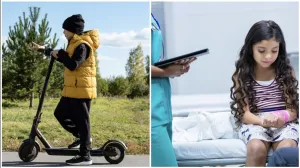
    Photo credit: CanvaA boy rides an e-scooter, left, while a girl is examined in an emergency room.

    An emergency room doctor and fellow mom has been noticing a troubling trend: Many parents are giving their kids something more powerful than bicycles to get around the neighborhood. As a result, she’s seeing more children come into the ER with injuries sustained in e-bike and e-scooter crashes. She recently went online with a plea to parents and young riders.

    Dr. Meghan Elizabeth Beach Martin, known online as Dr. Beachgem, posted a video in her scrubs discussing her concerns after seeing so many children come into the hospital with e-bike injuries during the summer months. She’s worried that too many kids and parents don’t understand the proper safety precautions. As a mother herself, she even questions why children are allowed to ride these devices at all.

    In the video, the doctor explains that some e-bikes can reach speeds of up to 28 mph. She says that if an e-bike goes any faster than that, it’s technically classified as a motorcycle. At those speeds, she regularly sees children with traumatic injuries and broken bones after hitting bumps, cracks in the road, or other vehicles. Many of them aren’t wearing helmets or protective pads, and some are even riding barefoot, making their injuries even more severe. Martin’s video has gained traction on Reddit and elsewhere online.

    E-bikes and e-scooters, examined

    Martin isn’t the only professional seeing a growing problem. The American College of Surgeons reports that there are more than 20,000 e-bike-related injuries each year. Meanwhile, a University of California, San Francisco study found that e-bike injuries doubled annually from 2017 to 2022. The same study found that e-scooter injuries increased by 45% each year during the same period.

    Before riding an e-bike, it’s important to follow proper safety procedures. Make sure you and your child understand your area’s laws regarding e-bikes, including any minimum age requirements. Always wear a helmet and other protective gear when riding. Consider choosing an e-bike with safety features such as motor-interrupt brake levers and disc brakes. These are just a few of the many safety tips experts recommend.

    The U.S. Consumer Product Safety Commission has similar safety tips for e-scooter riders. Wearing a helmet is one of its top recommendations, along with taking other basic precautions. The agency also recommends checking the brakes before riding and slowing down for bumps, cracks, and other road hazards.

    The vast majority of e-scooters and e-bikes are designed for only one rider, so avoid doubling up. Although laws vary by state and locality, wearing more protective gear is always the safer choice. Riders should also review local e-bike and e-scooter laws to make sure they are operating the vehicles safely and legally.

    A little research goes a long way toward making sure you and your children can ride safely. It’s also important for parents to understand that many e-bikes and e-scooters can travel at speeds that make them very different from a traditional bicycle. The last thing you want is for you or your child to become another emergency room statistic.

  • May cause joy: The full-spectrum health benefits of dance 
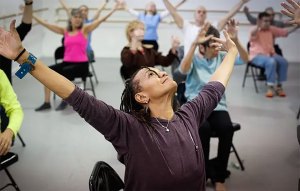
    Photo credit: Amber Star Merkens // Dance for PDView of upturned face of Black woman with her arms extended, leading a chair dance class with lots of seniors sitting in the background extending their arms in the same motion.
    ,

    May cause joy: The full-spectrum health benefits of dance 

    Michaela Haas for Reasons to be Cheerful When musician David Byrne, the founder of Reasons to be Cheerful, performed at the sold-out Dolby Theatre in Los Angeles last fall, the entire crowd was on its feet for almost the entire show. They danced enthusiastically for nearly two hours straight, feeling a kind of unfiltered joy that’s…

    Michaela Haas for Reasons to be Cheerful

    When musician David Byrne, the founder of Reasons to be Cheerful, performed at the sold-out Dolby Theatre in Los Angeles last fall, the entire crowd was on its feet for almost the entire show. They danced enthusiastically for nearly two hours straight, feeling a kind of unfiltered joy that’s rare to access in everyday life. 

    The experience was a reminder of a long-dormant love of dance. The following month brought a sign-up for “Groove Therapy” with local dance teacher Leah Lynn. The youngest in our group is 16, the oldest over 70. Every Saturday, the class plays out a verb each participant brings to class — release, gather, resist, invite — translating abstract intentions into motion. It sounds faintly ridiculous. It is also disarmingly effective. Within minutes, something shifts. Stress loosens. Then for the next hour, the group learns hip-hop shuffles and swings their hips to Kool & the Gang or Beyoncé. The class ends with the same feeling each time: exhausted and exhilarated.

    The dance classes provoked such a profound shift in mood as well as in the body that it was worth finding out if there was more to it.

    High-angle view of a room full of people dancing while in folding chairs.

    Modern research is now increasingly suggesting that dance is medicine, a deeply effective intervention for physical, cognitive, and emotional health.​ Behind the feel-good performance lies hard science. On a purely physical level, dance improves cardiovascular fitness, strength, and coordination. In a longitudinal study, seniors who took part in regular dance training fell less often and were described as “physically better off and mentally fitter” than those in the control group. 

    Though the body benefits are impressive, the neurological ones are what make scientists lean forward. Dancing activates a wide network: auditory pathways, visual and motor cortex, the amygdala, and, above all, the somatosensory cortex and networks that keep track of where your body is in space. Each change in rhythm or melody is processed in milliseconds and translated into new steps, adjustments, and expressions, a form of real-time “multitasking” that pushes the brain harder than many other sports.​

    Nobody understands this better than the dozen people who gather for David Leventhal’s class at a dance studio in Brooklyn. Though it’s cold outside, Leventhal is conjuring a beach. “Visualize what that warmth feels like,” he says, brushing his hands over his arms as if applying sunscreen. “Can we take those waves in different directions, just like they do in the ocean?” Around him, a dozen bodies begin to ripple to the tune of the pianist in the room. Arms slice, float and curl through the air. For a moment, the bare white room is less clinic than coastline.

    A woman in a black-and-white striped shirt stands, swinging her arms in front of a group of people in different colored shirts also dancing with their arms raised.

    Leventhal, who danced for 13 years with the Mark Morris Dance Group, has spent the last quarter century leading a different kind of choreography: Dance for PD, a program for people living with Parkinson’s disease. 

    What began in Brooklyn in 2001 now reaches more than 30 countries and roughly 500 communities. Across the room, people who arrived with their shoulders slightly caved inward now stand taller. They trace arcs through space, step through a tango phrase, and turn what might otherwise register as tremor into jazz hands.

    A woman wearing a yellow shirt with raised hands dances palm-to-palm with a person sitting across from her in a Dance for PD program.

    Participants in the program, which was created by the Mark Morris Dance Group and the Brooklyn Parkinson Group, routinely report better balance, more confidence walking, and a renewed sense of self. But just as often, they mention something less clinical and more essential: joy.

    “I sometimes cannot walk, but I can dance,” participant Cyndy Gilbertson said in the documentary Capturing Grace. “The music leads, in other words; it’s not my brain telling me to take a step.” 

    You don’t need a severe diagnosis to benefit from dance. “Dance has been part of our human culture for millennia,” Leventhal points out. “It’s how we communicate, how we express emotion, how we find each other, how we build community.” Across cultures, from Indigenous North American traditions to Māori and Pacific Islander practices, dance has also long been intertwined with healing.  

    A woman in the Dance for PD program wearing an orange shirt dances from a chair in the foreground, while others are visible behind her doing the same.

    Over time, this seems to change the brain’s structure. A German study that followed older adults in a dance program for more than a year reported increases in gray matter volume and synaptic density in regions important for memory and executive function, along with preserved cognitive performance over five years of follow-up. The researchers found that dancing appeared to build “cognitive reserve” and was “the best prevention” against age-related cognitive decline in their cohort, with dancers showing a statistically lower risk of dementia than nondancers.​

    Those findings dovetail with a widely cited observational study: People who danced more than once a week had a 76% lower risk of developing dementia than those who danced less often, an association reported as stronger than that seen with many popular “brain games.”

    “It’s a full-spectrum activity,” Leventhal explains. “It engages the body, cognition, emotion, and social connection — all supported by music.”

    A man wearing a brown shirt extends his arms forward in a pose while sitting on a chair as part of a Dance for PD program.

    The real power, he argues, lies in the overlap. “The benefits come from the synergy among those domains.”

    A person wearing a light blue shirt in the foreground with many people in the background all doing chair dance.

    That synergy matters especially for Parkinson’s, which affects motor control, cognition, emotional expression and social engagement. Many people withdraw from public life as symptoms progress. “The beauty of this art form,” Leventhal says, “is that it’s a full-spectrum intervention for a full-spectrum condition.”

    In a large meta-analysis of 55 randomized controlled trials in Parkinson’s disease, dance emerged as the most effective of nine exercise interventions for improving balance in that analysis, outperforming even advanced rehabilitation technologies. Styles like tango, waltz and foxtrot have been shown to improve gait speed and reduce falls.  

    While there is no cure for Parkinson’s, some early research suggests that dance can slow down the progression significantly for some people. “It’s early evidence,” Leventhal says carefully. “But exercise may be one of the only disease-modifying approaches we have.”

    “Our auditory cortex synchronizes with the motor cortex,” Leventhal explains — a mechanism particularly relevant in Parkinson’s, where internal rhythm is disrupted by dopamine loss. External rhythm can step in as a kind of substitute metronome. “It creates a roadmap,” Leventhal says. “Someone described it as a red carpet rolling out in front of them.” For people who struggle to initiate movement, that cue can be transformative, enhancing neuroplasticity — the brain’s ability to form new connections. 

    “Novelty is huge,” Leventhal says. “New patterns, new music, new movement.” But novelty alone isn’t enough. “When something is also meaningful to you — when it connects emotionally, that’s when the brain is really activated.”

    Side view of two people, one wearing orange and the other lavender, with joined hands swinging their arms as they dance, with many participants in the background also dancing.

    Another, more practical advantage: People keep coming back. Some participants have been dancing with Leventhal for over 16 years. People are welcome at all stages of Parkinson’s. Some arrive in a wheelchair, others have recently been diagnosed. “If people can get to class, they stay,” Leventhal says. 

    That kind of adherence is rare in exercise programs, especially for chronic conditions. The reason, again, circles back to neuroscience. Motivation is tied to dopamine, the very neurotransmitter depleted in Parkinson’s. Apathy is common. Getting on a treadmill can feel like scaling a wall. Dance, by contrast, lowers the barrier.

    “The combination of music, social interaction, and movement is highly motivating,” Leventhal says. “Some people come to see their friends and stay for the movement. Some come for the music.” 

    Two people wearing blue shirts, a young woman on the right next to an older man, make expressive faces with their arms raised in a Dance for PD program.

    And one more factor he considers crucial: “We don’t treat people as patients,” he says. “You’re a dancer. You’re learning a craft.”  

    People lined up two-by-two dancing as they walk toward the camera.

    When we move rhythmically, stress hormones like adrenaline and cortisol decline while the brain’s own reward chemicals — endorphins, dopamine, serotonin — surge, a set of “pleasure cycles” documented by researchers at Aarhus University who studied how music and synchronized movement generate feelings of social bonding and euphoria. 

    For people living with depression, anxiety or trauma, dance offers something more subtle: a way back into the body. According to a 2024 review, dance can be more effective in alleviating depressive symptoms than any other form of exercise. Where distress constricts expression, dance expands it. 

    Elderly male Dance for PD participants extend their arms and legs while sitting on a chair.

    Plenty of workouts happen with headphones and in isolation. Dance, by contrast, almost always involves connecting with others. Social neuroscientists have shown that moving in synchrony with others increases liking, trust, and willingness to help. “We entrain to each other,” Leventhal says. “And that raises empathy, connection.” 

    For people with Parkinson’s, the stakes are higher than mood or fitness. The disease is the fastest-growing neurodegenerative condition in the world. By the time it is diagnosed, estimates suggest that roughly 70% of dopamine-producing cells are already lost. 

    Which makes timing critical. “We want people to start earlier,” Leventhal says — not just to maintain function, but to build skills and resilience before symptoms advance.

    At the end of Leventhal’s class, the participants play an imaginary volleyball game, batting an invisible ball through the air. “We won, you won, we all won!“ Leventhal cheers, and all arms lift in victory.

    This story was produced by Reasons to be Cheerful and reviewed and distributed by Stacker.

Explore More Health Stories

Health

Screen time guidelines for kids and adolescents have shifted as research paints a more nuanced picture

Care

ER doctor and mom sets the record straight for parents of kids with e-bikes and e-scooters

Health

May cause joy: The full-spectrum health benefits of dance 

Research

Why we crave company