This summer, as I listened to the unbridled joy of children playing outside my window, I read a New York Times article about first graders being placed in “Gift of Time” summer schools. For nearly 12 percent of first graders in East Ramapo, New York, summer break means being held back and receiving a “gift” of tutoring, with an extra order of tutoring on the side. Somehow, we are to believe that this will help slower children catch up.Except they can’t catch up. When they return to school in the fall, according to the Times article, they’ll be segregated in their own small classes made up of other kids deemed “low-performers.” At an age when children should be falling in love with learning, these children will be labeled, shamed, and tracked. Such practices have been discredited by a substantial body of research (if not common sense) and yet more and more schools across the country are implementing similarly punitive practices. Schools are seeing recess eliminated, electives are being cut, and teachers are insulted by the prospect of having their career and income threatened by their students’ scores on a single multiple-choice test. All in the name of No Child Left Behind, a mathematically impossible piece of federal education legislation, which requires all of the nation’s schoolchildren to be above the mean on standardized tests by 2014.Our schools may very well be in crisis, but not for the reasons bandied about in the press. The crisis is not based on teacher pay, lack of accountability, or a lack of rigor. The problem is that we do not create productive contexts for learning in which the needs of each child are met as their talent, interest, curiosity, and passion are amplified. The last thing we need is another sweeping top-down reform. In fact, it is my belief that the dominant solution to any educational challenge will be wrong and make the problem worse.The tragedy of No Child Left Behind, and the private and public efforts to undo its damage, is that not every child is given the chance to achieve her full potential in a caring, creative, dynamic, and intellectually rich environment. And in the absence of ongoing classroom innovation and grassroots advocacy, NCLB has taken over.These days, anyone who attended school is an expert in education and everybody has a plan to “fix” the public schools-the philanthropist, the businessman, the bureaucrat, the politician. For ages, business leaders and politicians have wanted to privatize the entire system and let the marketplace sort things out-as it did with Enron, Chinese pet food, or oil prices. Now, they’re taking control of schools through philanthropy. Parents of means, meanwhile, are opting out in record numbers, sending their children to private schools, or charter schools, or are homeschooling them. Indeed, as the federal government has steadily eroded public support for the public school system, through propaganda and failed policies, children are the collateral victims. The winners of the school wars remain uncertain; the losers can be found in almost any classroom.Of course, none of this is altogether new. People have been trying to fix schools for as long as schools have existed, but the tone shifted in 1983, when the Reagan administration published “A Nation at Risk: The Imperative for Educational Reform.” The report began with alarming rhetoric not heard since Sputnik: “The educational foundations of our society are presently being eroded by a rising tide of mediocrity that threatens our very future as a Nation and a people.””A Nation at Risk,” which claimed that educational issues presented a threat to our very freedom, changed the tenor of educational discourse. “If an unfriendly foreign power had attempted to impose on America the mediocre educational performance that exists today,” the report said, “we might well have viewed it as an act of war.” For an administration committed to eliminating the Department of Education, these predictions of an imminent apocalypse were the tool of choice to reshape the educational system.But it wasn’t until the first President Bush that the government made a serious push for help from the private sector. Bush thought business leaders might be able to help fix public schools by running them more like businesses. So in 1989, he asked the Business Roundtable (300 CEOs and governors) to try to reform education, since governors and CEOs-administrators all-share similar temperaments and a desire to impose top-down policies. Armed with corporate war chests and support from governors, the Roundtable’s influence met little resistance.Uninterested in the complexities associated with teaching and learning, the Business Roundtable demanded that state legislatures impose “outcome-based education,” “high expectations for all children,” “rewards and penalties for individual schools,” and “greater school-based decision making.” In order to enforce and measure these voluminous imperatives, standardized testing would be required. It sounds familiar now-these are the core tenets of NCLB-but at the time, the idea of applying the rules of business and competition to education was relatively new.These efforts fuelled the higher-standards movement. It’s hard to argue against raising educational standards, but imposing uniform curricula and teaching practices leads to a paradoxical lowering of standards.The Business Roundtable continued thinking about education through Clinton’s two terms-eight years during which nothing lasting changed the course of education reform-until today. Even though the public has lost some interest in buying what they were peddling, the damage wrought by the Roundtable persisted: Standards, and the measuring of standards, ruled all.

Quote:
It is my belief that the dominant solution to any educational challenge will be wrong and make the problem worse.

Rod Paige, George W. Bush’s first Secretary of Education, took his post after being the superintendent of the Houston Independent School District, where he presided over the “Houston Miracle” in the 1990s. Paige, who wrote his doctoral thesis on the reaction time of offensive linemen in football, was responsible for a remarkable increase in student test scores and a substantial reduction in the dropout rate across the Houston schools. Except that the test scores were cooked and the dropout reduction was the result of at-risk students disappearing from his district like Brazilian street children.The Houston Miracle soon became the model for the massive, standards-based No Child Left Behind Act, enacted in 2001. NCLB represented the most radical federal education initiative in history, passing easily in Congress with bipartisan support. Even today, both presumptive presidential candidates intend to keep the law in place, albeit with amendments.As it stands, NCLB requires continuous improvement in academic achievement. At-risk children failing to make adequate progress are subjected to an extra helping of the very same instruction that has already proven ineffective. Electives are taken away, while teachers in “low-performing” schools are given scripted curricula with ambitious titles like “Success for All!” A teacher in Miami might be greeted by a lesson in mid-November that requires them to read, “Brrr! It’s cold outside today. I wonder what the temperature is? Maybe it will snow.” But nothing is more central to NCLB than standardized tests.When most of us were children, we took standardized tests once a year for a few half days. The tests were a temporary distraction intended to offer one indicator of progress or aptitude. A teacher’s reputation or salary was not at risk; administrators didn’t feel compelled to cheat; and third graders certainly didn’t vomit on the test booklet. (Some NCLB tests actually come with instructions for what to do when a student hurls on a test.) When a child comes home from school, parents don’t ask, “Which quartile toward annual yearly progress were you in?” They ask, “What did you do today?” Since knowledge is a consequence of experience, it’s critical that children be engaged in learning activities that nurture their soul, expand their interests, build upon personal talents, and challenge their thinking. But today’s standardized tests-proudly called “high-stakes” by their proponents-trump all else. The theory behind the tests seems to be analogous to the theory that taking a sick patient’s temperature every seven minutes will cure him.Students in some cities and states can spend months each year engaged in test-taking. That does not include the incessant preparation for those tests. Just a few years ago, policy leaders would say, “Don’t teach to the test,” since it makes the results less valid and detracts from the richness of classroom activity. All of that has changed. Today politicians are unapologetic when they say, “Of course you should teach to the test! How else are you going to raise test scores?”It has long been said that voters hate Congress, but like their own representative. The same is true for schools. Parents hate schools, but they love their child’s school. This affection for neighborhood schools may help explain why previous efforts to revolutionize public education have failed: People felt that in general something needed to be done, but their schools were doing just fine.But NCLB’s shame, blame, and name-calling, accompanied by a steady stream of negative media accounts, miserable children, and low test scores, may finally push parents past the breaking point. A loving parent cannot help but be concerned by constant, very public reports of their children failing and their school underperforming. Perhaps the singular accomplishment of NCLB is the erosion of community support for public education. If parents do not trust their school, they are likely to withdraw their support and seek private alternatives. And that’s exactly what they’re doing. Homeschooling and private-school enrollment are on the rise; there are more charter schools than ever. And when that many people withdraw from thinking about and participating in the school, things go downhill even more quickly.With the business community, politicians, and parents hysterical about public schools, the conditions are right for something really big to happen. But major changes in schooling are costly and require bold leadership. A bake sale isn’t going to do the job. And so, over the past decade, two billionaires have stepped onto the scene. Taking it upon themselves to rescue public schools from teachers, administrators, parents, organized labor, and even democracy itself, Bill Gates and Eli Broad are turning public-primarily urban-education upside down.The philanthropic work of the Bill and Melinda Gates Foundation in the areas of health, education, and poverty is well documented, and Bill Gates’s generosity is unprecedented. The foundation’s well-intentioned investments in public education have not been particularly destructive or effective. Although they have spent more than a billion dollars to date on school-reform initiatives, the foundation’s grants-given to wildly conflicting models of education and primarily focused on making schools smaller-have been met with mixed success.More intimate schools with smaller class sizes are good for kids, who get more attention from teachers, form closer social bonds, and don’t get lost in the crowd. However, you cannot change just one variable in a system this complex and expect total transformation. Also, despite the enormous benefits of small schools, there are consequences as well. It may be impossible to maintain electives, extracurricular activities, sports, or student diversity in small schools. A 2006 Business Week article detailed how a Denver high school known for its award-winning choir crumbled when students were dispersed to three different “small” schools within the building. Surely, the program could have been preserved even when the school was divided, but the Gates Foundation says it doesn’t like to meddle. Additional focus and oversight by the foundation might ensure that the public schools to which it grants money actually improve.

Quote:
It’s hard to argue against raising educational standards, but imposing uniform curricula and teaching practices leads to a paradoxical lowering of standards.

Eli Broad, a Los Angeles billionaire, is another kind of philanthropist. Broad funds a narrower range of interventions and has demonstrated less willingness to experiment than Gates. Broad’s efforts advance a very specific model: top-down school management based on business principles. Over the first five years, Broad has committed over $500 million to his notions of school reform. He even runs an academy that trains school leaders in precisely this kind of management.Broad’s money supports more standardized testing, a longer school day, scripted curricula, merit pay, the replacement of school administrators with managers, support of charter schools, and mayoral control. In Broad’s worldview, incentives drive everything, including education. The annual Broad Prize for Urban Education gives a total of $1 million dollars to five urban school districts that do the most to raise student test scores. The award also grants college scholarships to students in the district. That sort of money and the press it attracts has a domino effect: All of a sudden, others want to get tough and adhere to the Broad manifesto, too.In 2002, Mayor Michael Bloomberg and his newly appointed schools chancellor, Joel Klein, seized control of New York City’s public schools, disbanding local school boards and reducing community involvement. Under Klein and Bloomberg, test scores may have risen, but chaos has ensued as the organizational structure of the district changes continuously. Now, policies similar to Broad’s educational blueprint are being followed in the city’s public schools. Last year, New York City earned the coveted Broad Prize.Broad and his followers also embrace charter schools. Charters are quasi-public schools that receive public funding but don’t have to play by the same rules; they have more latitude than public schools, including the freedom to use different curricula, employ non-credentialed educators, change the school calendar, ban unions, and be selective in student enrollment. In some cities, affluent parents use the charter laws to create private schools with public money. In others, like the New City Schools in Long Beach, California, innovative educators with a coherent vision of edu-cation teach in ways they believe will benefit children in their community.It is natural for parents to want the best for their children. Unfortunately, the charter laws may create greater educational inequity-rich, involved parents get their kids into the best charter schools, leaving only the poor students behind in the slowly deserted public schools. This forced choice could be avoided if every school was shaped by its teachers, parents, and community, with all children free to attend the school best-suited to their needs or interests. For example, the Montclair, New Jersey, public schools have experienced decades of success with mandatory school choice. Each elementary school is distinct and parents are required to choose the best option for their child.Broad recently gave a total of $23.3 million to two charter-school umbrella groups, the Knowledge Is Power Program and Aspire, to open 17 new charter schools in Los Angeles this fall. KIPP is known for its uniforms, longer days and school year, Saturday sessions, strict rules, and lots of homework. Supporters hail this formula as a boon to Angelenos, citing the schools’ remarkable success at raising test scores. Critics, meanwhile, fear that students who don’t get with the program quickly enough will vanish. Regard-less of whether these schools offer solutions to the challenges of urban education or not, opening so many of them so quickly may be considered reckless and surely dispenses with public involvement.In a new twist on the public-charter debate, Broad and his colleagues have also convinced school districts to hand over public schools to private or nonprofit charter-management companies. These companies are given the use of public facilities and get to run what are essentially private schools in them. That not only removes a public resource from the community, but also gives a handful of charter providers a hefty advantage over the community-based charters. With a little imagination, it’s easy to guess where this is headed.Traditionally, corporate philanthropy in education consisted of a speaker on career day or sponsorship of a softball team. I’m all for generosity, but I’m also for accountability. And I wonder, to whom are the Gateses and the Broads of the world accountable? They were not elected or even appointed, but their money is changing the ways public schools operate. They may do this for altruistic reasons, but what is a citizen’s recourse if their ideology harms children? And, worse, what happens if a billionaire finally throws up his or her hands and publicly exclaims, “Even I can’t fix the public schools”? Our schools may not be able to survive the sudden cash withdrawal-or the backlash.One way to navigate this new era of “giving” is by asking a simple question: Would these folks send their own children or grandchildren to their “reinvented” schools? Is a steady diet of memorization, work sheets, and testing the sort of education the children they love receive? Of course not. If affluent children enjoy beautiful campuses, arts programs, interesting literature, modern technology, field trips, carefree recess, and teachers who know them, I suggest that we create such schools for all children. What’s good for the sons and daughters of the billionaires should be good enough the rest of the children, too.Amending No Child Left Behind won’t fix these problems. Neither will asking the billionaires and businessmen to try to be a little more careful with our children’s education. These solutions filled the void we created with our own apathy and complacency. And we are not powerless to reverse the recent trends and make public schools wondrous learning environments for all children.But in order to achieve such equity of opportunity, parents need to be vigilant and take a stand. Parents can go to back-to-school night this fall. If the science lab contains no equipment, they should demand to know why and not wait patiently while the district hopes they forget. If their first grader was excited about going to school, but by the third day cries hysterically and says, “The teacher hates me,” his concerns should be taken seriously. If their kid’s school is test-obsessed, parents should let teachers and administrators know that they expect more of an education. If every parent was vocally fighting for the best public schools for their children-instead of some of the most involved and caring opting out in disgust-the government would be forced to listen.Because despite their flaws, inequities, and shortcomings, public schools are an American treasure owned by the citizens, and we should treat them as a public trust.
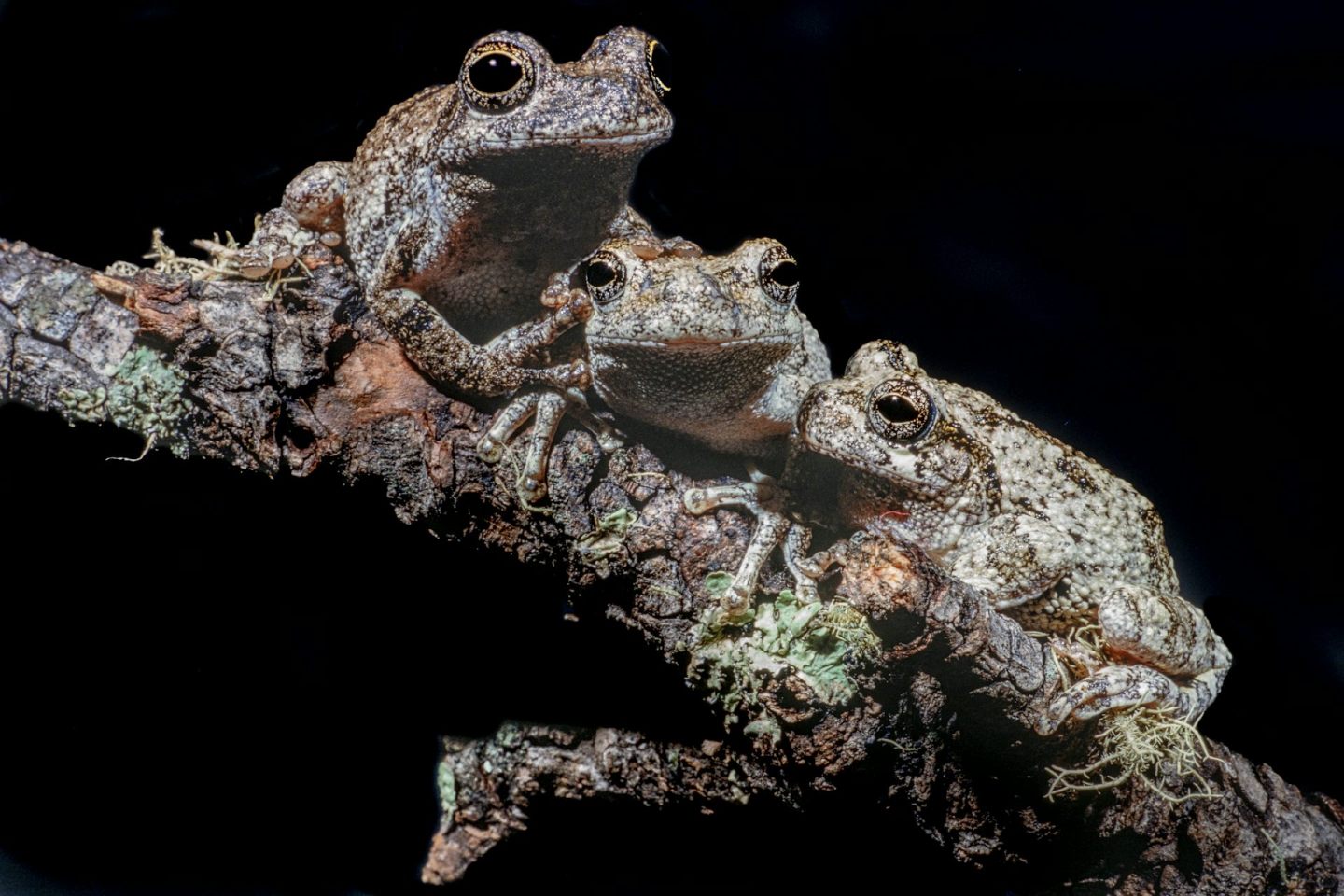

  • Too many males to choose from can overwhelm female frogs – and change who gets to mate
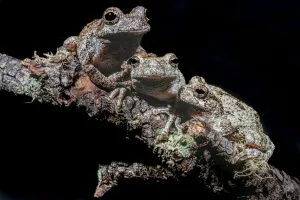
    There can be too many frogs in the dating pool. R. Andrew Odum/Photodisc via Getty Images

    Assistant Professor of Ecology & Evolutionary Biology, University of Tennessee; Smithsonian Institution

    If you’ve ever felt overwhelmed by menu options at a restaurant, cereal varieties at the grocery store or potential partners while scrolling through dating apps, you’ve experienced choice overload.

    People aren’t the only ones to have trouble making decisions when confronted with many options simultaneously. In our new study published in the journal iScience, my colleagues and I found similar effects of choice overload in female gray tree frogs when faced with too many calls from males looking for love.

    Scientists have observed many species having similar decision-making problems when experiencing choice overload. But we know little about how these kinds of cognitive constraints affect animals in natural settings.

    Indecision on the frog dating scene

    The gray tree frogs we focused on live in wooded areas near sources of water in North America. During the mating season, males gather in choruses and call to attract mates. Females pick mates based on several call attributes, including call length. Longer calls are more attractive.

    For our experiment, we captured 60 female tree frogs from breeding choruses in East Tennessee and brought them into our lab. Then we played recorded mating calls for each female, giving her a choice between one long, attractive “target” call and one, three or seven shorter, less attractive “distractor” calls.

    In the wild, a tree frog breeding chorus can include dozens or even hundreds of calling males. In our lab setup, the calls played sequentially, so they never overlapped.

    Females would hop toward the speaker broadcasting the call she preferred. As the number of distractor calls increased, females got worse at picking the attractive call, took longer to decide, and were more likely to defer choosing within the 10-minute window altogether.

    Black and white aerial view of a circular area with a white star in the middle
    View from above of the frog test arena, where researchers would place a female frog in the center and then play various male mating calls from speakers placed around the perimeter. Jessie Tanner

    Cognitive confusion

    Because we eliminated call overlap entirely, we know this decline wasn’t due to what researchers call energetic masking. That’s the well-documented problem of overlapping signals impairing an individual’s ability to detect and discriminate a signal from noise.

    Biologists have long known that female preferences can weaken in choruses and have usually assumed the explanation is energetic masking: Too many overlapping signals create a challenge for the frogs’ perceptual systems. In other words, they can’t detect or discriminate individual calls.

    Instead, our study shows that a female’s own cognitive limits can make it hard for her to select her preferred mate. The challenge comes from too many males to choose from, not being unable to hear the males clearly.

    When females can’t make the optimal choice

    Call traits are linked to offspring fitness in gray tree frogs. If females have trouble recognizing the calls they prefer in a real chorus, they aren’t able to pick the mates with the best genes to pass on. They may end up mating with males they would otherwise reject. These males with less going for them then pass on their less desirable traits, which could have negative consequences for the offspring.

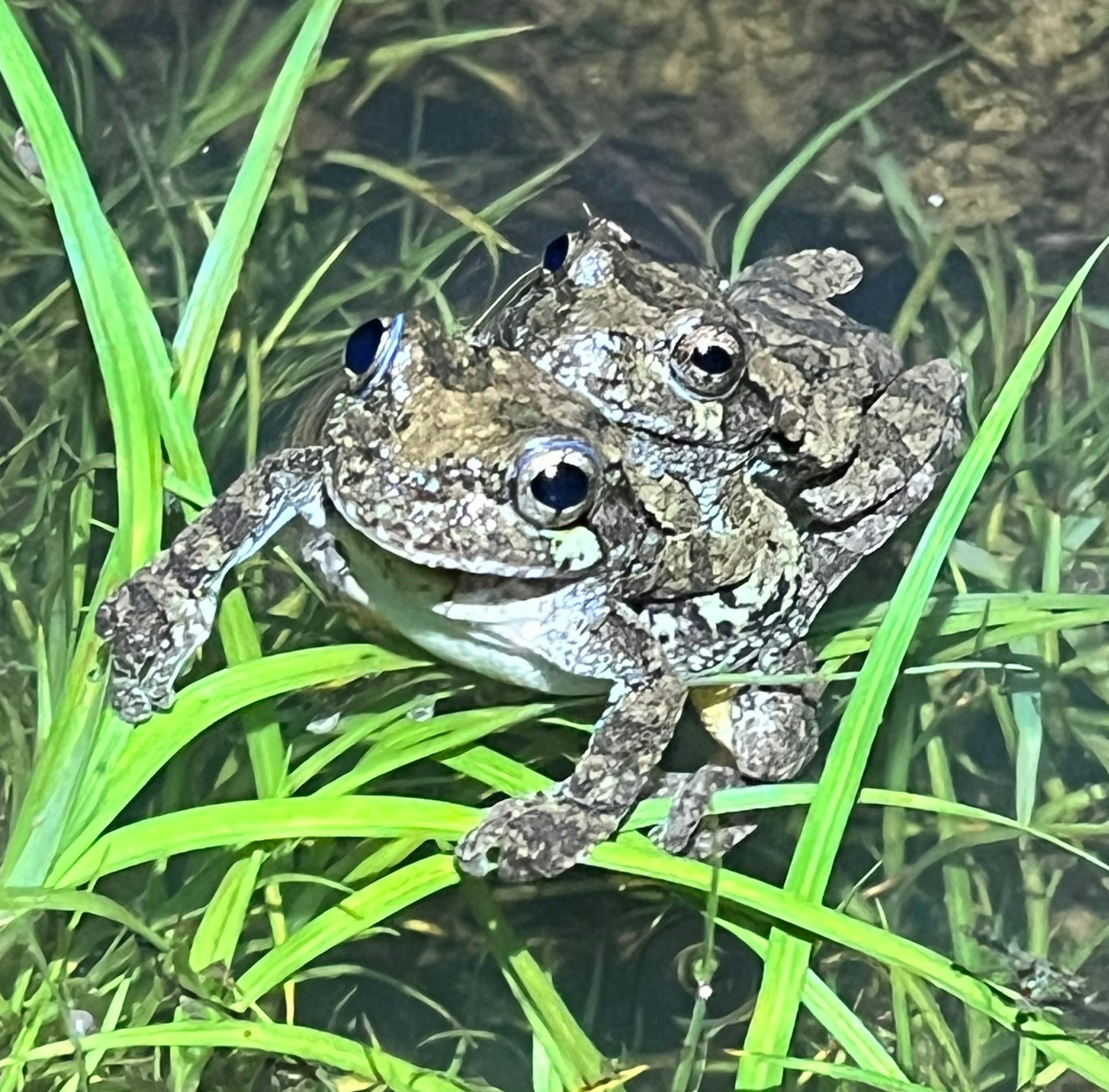
    Smaller frog on top of larger frog with grass blades around
    Females’ cognitive overload could be an opportunity for males who might not otherwise get a chance to mate. Jessie Tanner

    Our finding raises the possibility that males could exploit this cognitive limitation in females. Less attractive males might do better by joining bigger choruses, where the sheer number of competitors makes it harder for females to discriminate against them. Conversely, more attractive males may benefit from calling in smaller groups, or even in isolation. My colleagues and I hope to investigate some of these possibilities soon.

    More options, more opportunities … to a point

    We ran our experiments in a simplified lab arena, which allowed us to isolate choice overload from other effects. We removed the real-world clutter of overlapping calls, vegetation and risk from predators that females would face in an actual pond. We also limited female choice to eight calls, though frogs may hear even more in natural settings.

    The next step in this research is figuring out how much choice overload matters in a real chorus, where calls do overlap, and where sensory processing and cognitive processing are probably both at play. We’re particularly interested in seeing whether, in natural choruses, decisions do take longer and females really end up mating with less preferable males.

    Choice overload isn’t unique to frogs, or even to mate choice. Researchers have seen bees choosing among flowers, ants comparing potential nest sites and mosquitoes selecting egg-laying sites all making worse decisions as the number of competing options increases. And recent research on field crickets and tree frogs has found similar patterns in these animals as they pick mates based on their calls.

    Together, this growing body of evidence suggests that cognitive constraints are a general feature of animal decision-making.

    This article originally appeared on The Conversation. You can read it here.

  • Why do frozen turkeys explode when deep-fried?
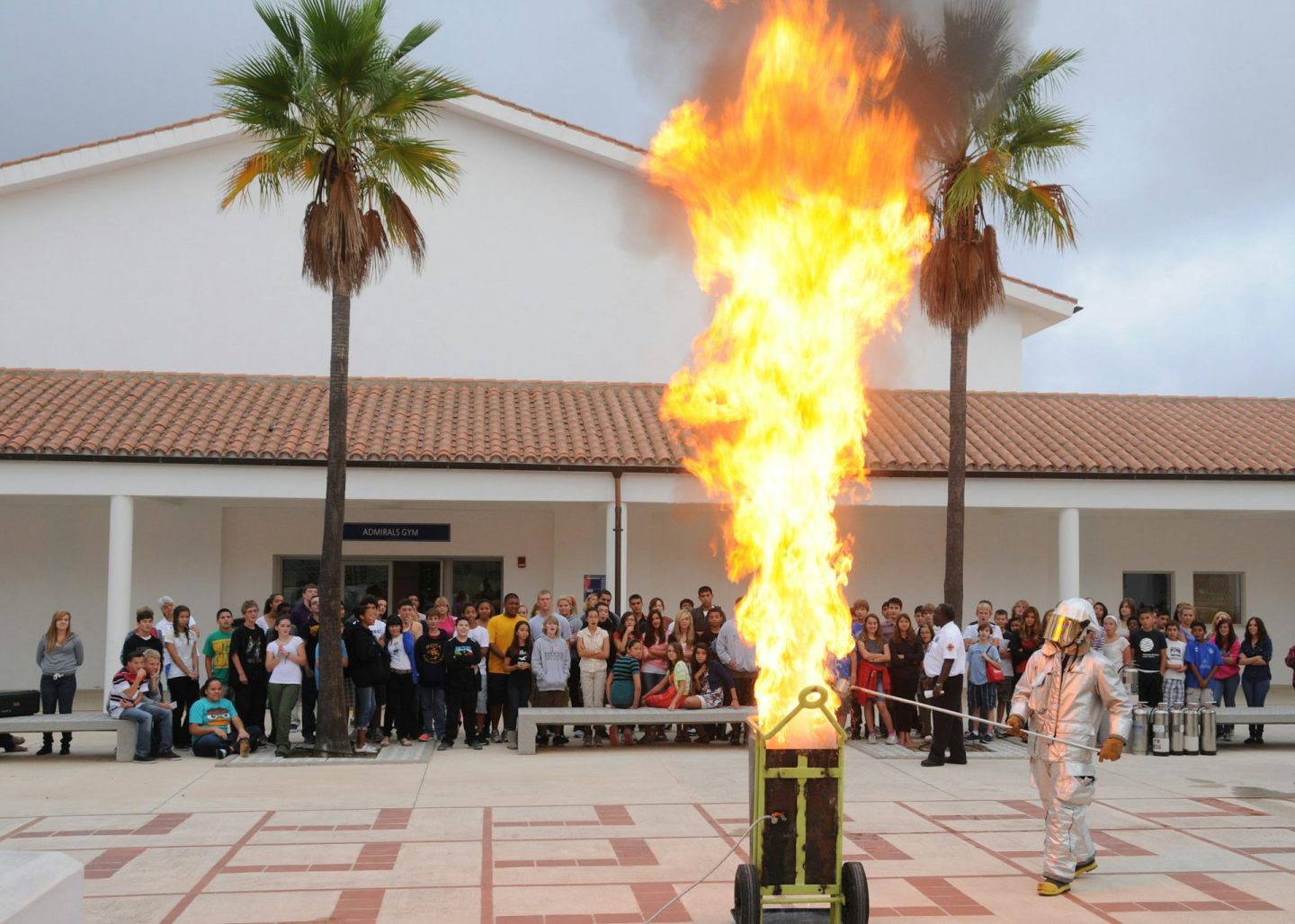
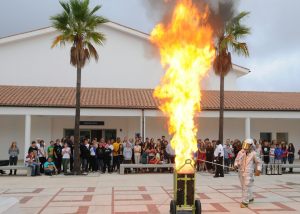
    When water and boiling oil mix, the result can be explosive, as seen in this demonstration. U.S. Navy photo by Mass Communication Specialist 2nd Class Travis Alston/Released via Flickr
    ,

    Why do frozen turkeys explode when deep-fried?

    A holiday kitchen disaster comes down to some powerful chemistry.

    Associate Professor of Chemistry, University of Richmond

    Deep-frying a turkey is a great way to get a delicious, moist meal for Thanksgiving. But this method of cooking can be a very dangerous undertaking.

    Every fall, millions of dollars of damage, trips to the ER and even deaths result from attempts to deep-fry turkeys. The vast majority of these accidents happen because people put frozen turkeys into boiling oil. If you are considering deep-frying this year, do not forget to thaw and dry your turkey before placing it in the pot. Failure to do so may lead to an explosive disaster.

    What is so dangerous about putting even a partially frozen turkey in a deep-fryer?

    I’m a chemist who studies plant, fungal and animal compounds and have a love of food chemistry. The reason frozen turkeys explode, at its core, has to do with differences in density. There is a difference in density between oil and water and differences in the density of water between its solid, liquid and gas states. When these density differences interact in just the right way, you get an explosion.

    A cup filled with a layer of oil sitting on top of a layer of water.
    If water and oil are in the same container, the denser water will sink to the bottom. Daniel Merino, CC BY-ND

    Understanding density

    Density is how much an object weighs given a specific volume. For example, imagine you held an ice cube in one hand and a marshmallow in the other. While they are roughly the same size, the ice cube is heavier: It is more dense.

    The first important density difference when it comes to frying is that water is more dense than oil. This has to do with how tightly the molecules of each substance pack together and how heavy the atoms are that make up each liquid.

    Water molecules are small and pack tightly together. Oil molecules are much larger and don’t pack together as well by comparison. Additionally, water is composed of oxygen and hydrogen atoms, while oils are predominantly carbon and hydrogen. Oxygen is heavier than carbon. This means that, for example, one cup of water has more atoms than one cup of oil, and those individuals atoms are heavier. This is why oil floats on top of water. It is less dense.

    While different materials have different densities, liquids, solids and gases of a single material can have different densities as well. You observe this every time you place an ice cube in a glass of water: The ice floats to the top because it is less dense than water.

    When water absorbs heat, it changes to its gas phase, steam. Steam occupies 1,700 times the volume as the same number of liquid water molecules. You observe this effect when you boil water in a tea kettle. The force of expanding gas pushes steam out of the kettle through the whistle, causing the squealing noise.

    Frozen turkeys are filled with water

    A man in a fire suit placing a turkey in a fryer.
    Deep-frying a turkey can be safe as long as the turkey is thawed and dried. YinYang/E+ via Getty Images

    Frozen turkeys – or any kind of frozen meats, for that matter – contain a lot of ice. Raw meat can be anywhere from 56% to 73% water. If you have ever thawed a frozen piece of meat, you have probably seen all the liquid that comes out.

    For deep-frying, cooking oil is heated to around 350 degrees Fahrenheit (175 C). This is much hotter than the boiling point of water, which is 212 F (100 C). So when the ice in a frozen turkey comes in contact with the hot oil, the surface ice quickly turns to steam.

    This quick transition is not a problem when it happens at the very surface of the oil. The steam escapes harmlessly into the air.

    However, when you submerge a turkey into the oil, the ice inside the turkey absorbs the heat and melts, forming liquid water. Here is where the density comes into play.

    This liquid water is more dense than the oil, so it falls the bottom of the pot. The water molecules continue to absorb heat and energy and eventually they change phases and become steam. The water molecules then rapidly spread far apart from one another and the volume expands by 1,700 times. This expansion causes the density of the water to drop to a fraction of a percent of the density of the oil, so the gas wants to quickly rise to the surface.

    Combine the fast change in density together with the expansion of volume and you get an explosion. The steam expands and rises, blowing the boiling oil out the pot. If that weren’t dangerous enough, as the displaced oil comes into contact with a burner or flame, it can catch fire. Once some droplets of oil catch on fire, the flames will quickly ignite nearby oil molecules, resulting in a fast-moving and often catastrophic fire.

    Every year, thousands of accidents like this happen. So, should you decide to deep-fry a turkey for this year’s Thanksgiving, be sure to thoroughly thaw it and pat it dry. And next time you add a bit of liquid to an oil-filled pan and end up with oil all over the stove, you’ll know the science of why.

    This article originally appeared on The Conversation. You can read it here.

  • I’m an artist who works with glass – here’s how the physics and chemistry of glassblowing work
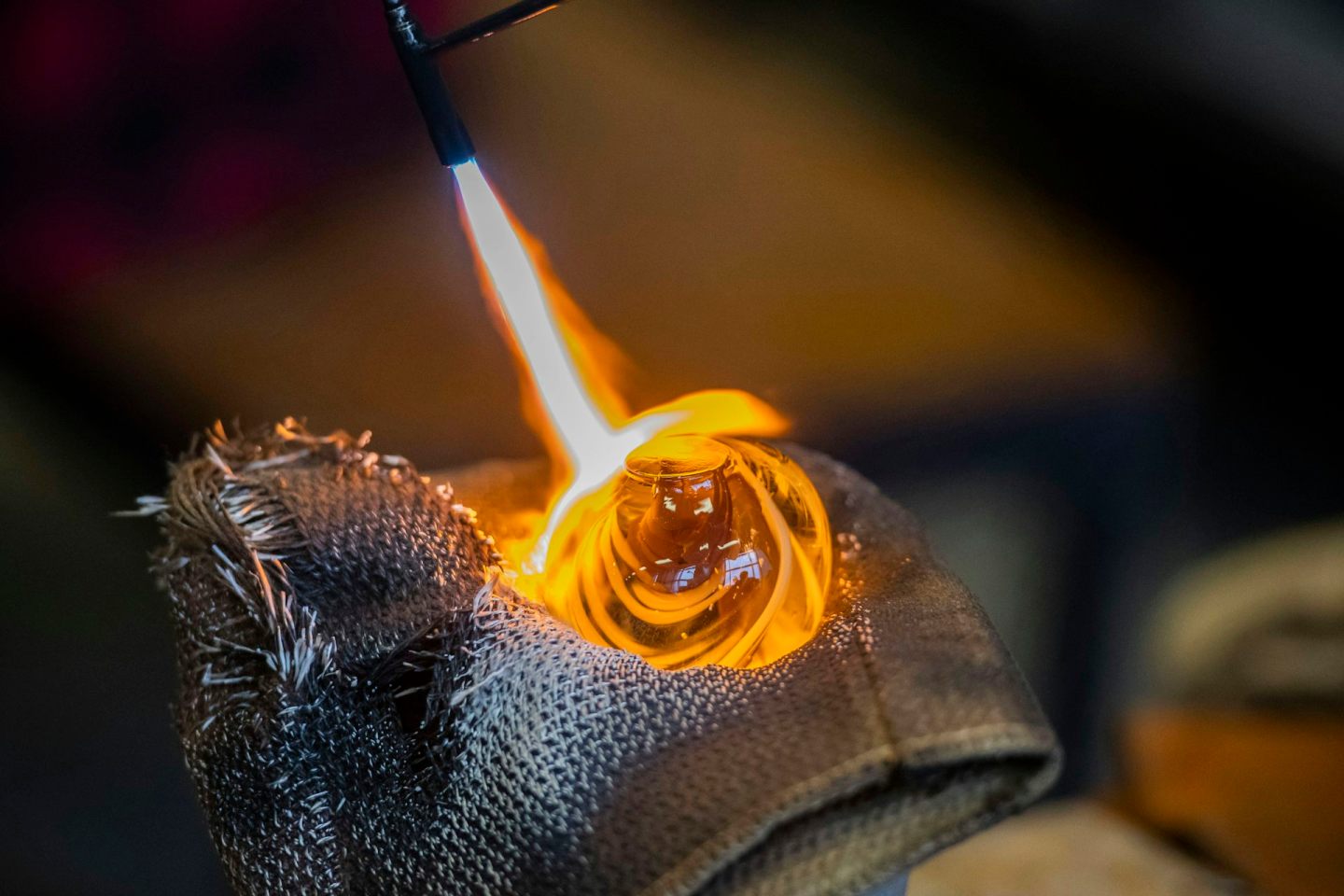
    Artists physically work with glass in its molten state at the Glass Hot Shop at the Rochester Institute of Technology. Carlos Ortiz/RIT
    ,

    I’m an artist who works with glass – here’s how the physics and chemistry of glassblowing work

    Making a simple tumbler takes heat, teamwork and a surprising amount of science.

    Lecturer of Art, Rochester Institute of Technology

    Glass as a material is full of contradictions. Depending on the form and use, glass can be fragile or strong, opaque or transparent, rough or smooth. The studios my colleagues and I teach and learn in, as glass instructors, echo this abundance of physical opposites. These environments are simultaneously immersive, complex, seductive and demanding.

    When the studio is in action, you might hear glass breaking, hot metal being quenched in water, glassblowing pipes rolling on the workbench rails, and some good tunes on the stereo. You might smell hot beeswax and burning newspaper. You might feel a bit of waste glass under your shoe or the intense heat from the furnaces and a breeze from a well-placed fan. Glassblowers learn to listen, to feel and to find some focus within and among the kinetic.

    The constant stimuli of the glass studio may not seem anything like a sterile science lab, and yet glass artists need to accrue knowledge of physics and chemistry to achieve any kind of control with this dynamic material. They must choose a material with the desired properties and during the process judge factors such as heat and malleability.

    Glass as a material

    At Rochester Institute of Technology, where I help run the glass program, we primarily use two types of glasses. In our hot glass studio we melt “soft” glass. This glass is specifically formulated to be melted in a furnace and used by the glassblower. It’s a combination of fine mesh silica sand, soda ash and lime, with small amounts of a few additional ingredients that keep the glass beautiful when it’s at its top temperature of 2,200 degrees Fahrenheit (1,204 degrees Celsius).

    In our flameworking studio, we use a borosilicate glass. You might recognize this glass as the brand Pyrex made in Corning, New York. This is a super heat-resistant glass. It melts at a higher temperature than soft glass and arrives to our students in preformed rods that they can melt and shape by torch in our flameworking studio. The differences in chemistry really change how these glasses look and behave.

    Two pyrex measuring cups
    Pyrex cookware is made out of a specially formulated, heat-resistant type of glass called borosilicate. Picofluidicist/Wikimedia Commons

    Glass, from a material science perspective, is categorized as an amorphous solid, meaning that glass’s molecules are arranged in a near-random pattern and there is no sharp melting point. Rather, glass gradually softens over a wide temperature range.

    Gathering glass

    Once you’ve adjusted to the chaos of the studio, it’s time to start working.

    We have two furnaces in our hot glass studio, where we work with soft glass, so anytime during the school year there is between 700 to 1,200 pounds of glass. It’s kept in the furnace at its molten state (2,200 degrees F or 1,204 degrees C), ready to be gathered and transformed.

    An artist puts a pole with molten glass on the end into a circular furnace
    Glass artists heat up their glass in a furnace so that it’s molten and easy to mold. AP Photo/Keith Srakocic

    When we work with the material, transforming it with tools and breath and heat, it needs to be kept in a workable heat zone – probably between 1,100 and 2,000 F (593 and 1,094 C). When the glass dips below that range, we perceive it as solid, though at the molecular level it is still dynamic and acting more like a liquid.

    To make anything – a sculpture, a tumbler, a celestial magical orb or a pumpkin – you start by gathering glass out of the furnace on a metal rod. Once you’ve gathered your glass, you start making decisions.

    An artist standing by a bench covered in metal tools holds a long pole with an orb of molten glass at the end. In the background is a furnace.
    An artist works in the Glass Hot Shop at RIT. When glass is in its molten state, the artist can shape it and blow into it. Elizabeth Lamark/RIT

    You might ask yourself: What tools do I need to begin to shape and transform this glass into the object I have in mind? If you wait too long and the glass begins cooling down, you’ll need to reheat it to reintroduce malleability, allowing you to continue working it without breaking it.

    A big part of glasswork is moving between the reheating chamber and the bench, where the artist uses tools to move and stretch the molten glass into the desired shape. You’ll need to alternate between these two stations many times.

    Glassblowing is a team activity. I have physical and intellectual support from my colleagues: breath from their lungs, protection from the heat, additional bits of glass brought from the furnace to add to my object. We almost never work alone.

    So, say I want to make a very basic clear tumbler. This is a simple conceptual object – utilitarian, domestic and intimate. It is also a tricky one to make well: too heavy and it feels bad in the hand, too thick at the lip and it dribbles when you drink, too thin at the bottom and it will break before it is complete.

    Maybe I want to design it so it is slightly conical: wider at the bottom than the top, so it’s less likely to tip over. Maybe I want it to have a little indent for the user’s thumb as a gentle invitation to her hand. First I make my design: I draw it. I share it with my team so they can predict the process and the object’s needs. Then we begin.

    Working with physics

    I gather glass out of the furnace, let it cool a bit, then introduce a bubble in the glass by blowing into the pipe, the hollow rod that attaches to the object I’m making. I reheat, sit at the bench and begin to shape the glass using both gravity and the Jills, a cooling and shaping tool. The Jills is kind of like a large pair of tongs. It hasn’t changed much in design for 2,000 years.

    A glass artist holds an orb of glass with tongs and heats it up with a torch.
    Glass artists use a variety of tools to shape their work. AP Photo/Gerry Broome

    I ask for some air from my teammate, and she blows into the pipe while I’m shaping the glass. The bubble transforms into a pill shape, slightly wider at the bottom. I constrict the area right in front of the pipe. I’m focusing on shape and heat, taking care to not let the glass get too cold. If the glass drops to about 1,000 F (538 C), it enters a danger zone. If it’s not yet finished, it needs to be warmed up in the reheating chamber; or if it is done, put away in a kiln to cool slowly.

    If glass cools too quickly, the molecules freeze into a chaotic pattern, which causes stresses that result in fracture. To combat this volatility, when the glass object is done and ready to be cooled, we place the object in an annealer: a kiln set to a resting temperature of 930 F (500 C).

    This temperature is like a Goldilocks zone for our glass: It’s not so hot that the glass will deform, but not so cool that the glass will stress and break. Once the kilns are full, a computer guide takes them down to room temperature over about 10 hours.

    As I continue to work on my cup, I get more heat, focusing on the very end of the bubble – the part that will be the base of the cup. I then sit down and have another member of my team flatten the bottom with a wooden paddle while I tool the glass with the Jills to keep its shape. The cycle continues on and on.

    The process is quick, but also there are so many little steps that it would take nearly a full-length book to describe them all. When asked how long it takes to make a tumbler, I’ll often answer, “About 10 years or 10 minutes, depending on how you think about time and material knowledge.” This is both glib and true. Glass demands attention, dedication and a willingness to make connections between physics and chemistry and your observable experiences. It is a highly challenging and equally rewarding material to work with and alongside. I count myself very lucky.

    This article originally appeared on The Conversation. You can read it here.

Explore More Stories

Society

Dog parks are an antidote to the isolation and divisions that social media can fuel

Health

We paid college students about $5 a night to sleep at least 7 hours – and their grades quickly improved

Science

Tiny backpacks reveal the secret, sometimes circuitous migrations of small songbirds

Science

Why fall yard care could start with doing less – but not nothing