Our oceans have a plastic problem. While it’s difficult to put a 100% accurate number on it, scientists estimated about 4.8 to 12.7 million metric tons of plastic waste entered the ocean in 2010 alone according to the journal Science. This issue has caused scientists and engineers to create a boat-barge in Los Angeles that skims the to gobble up the plastic we leave behind.
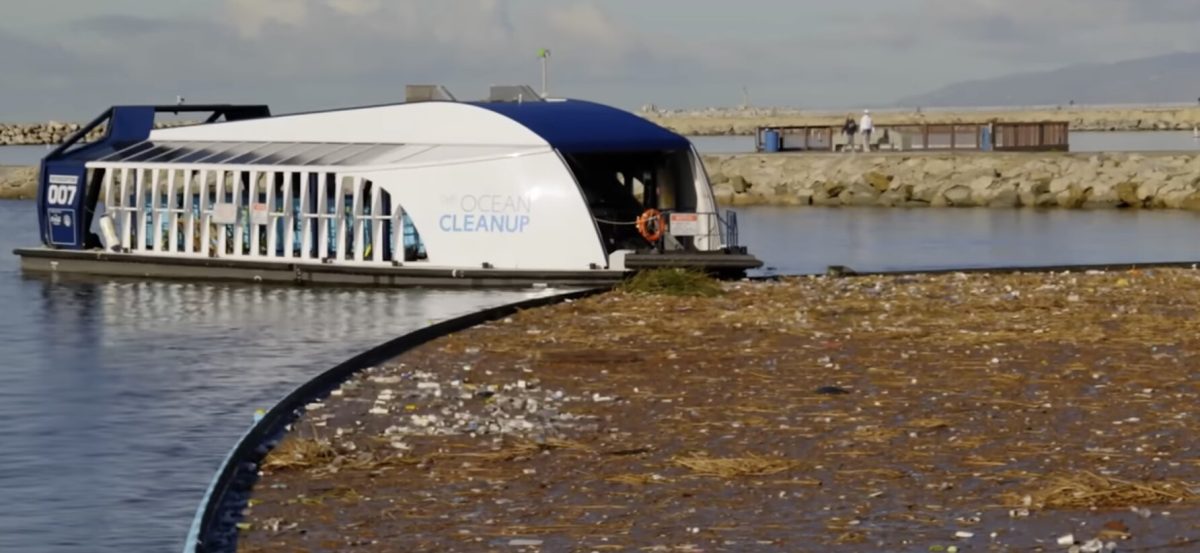
Devised by the non-profit Ocean Cleanup organization, the garbage-gulping Interceptor boat-barge is actually a smaller platform nestled within a larger boat. A floating barrier moves collected trash into the device onto a conveyor belt. An automatic shuttle then collects the trash from the conveyor to send it to a separate barge where there are six dumpsters to hold it. The solar-powered system can hold up to 20,000 lbs. of garbage. The trash is then separated into different categories (plastics, metal, etc.) so they can be disposed of responsibly.
Catching ocean trash from the source
Ocean Cleanup hopes to make a dent cleaning the Great Pacific Garbage Patch in the Pacific Ocean. However, they decided to first attack the plastic ocean problem at its source: rivers. When it rains, a lot of trash from the hills and valleys washes down into the nearest river. While there is significant ocean trash taken from beaches, they have found that the lion’s share of garbage that floats into our oceans actually comes from rivers and tributaries that lead into it. Essentially, the plan is to get ocean trash before it even enters the ocean.
“We have to turn the faucet off before we can scoop the ocean, or else all we’re doing is taking out legacy trash to replace it with new trash,” James Patterson, the operations manager of Ocean Cleanup said to The Guardian. “Before you can clean out the Great Pacific Garbage Patch, you really need to turn off the source.”
How the Interceptor is helping Los Angeles and beyond
There is an Interceptor already doing its work at the mouth of Ballona Creek in Culver City, California. Since 2025, the Interceptor has prevented 143,710 lbs. of trash from entering the ocean via the creek. As a bonus, the Interceptor’s trash sweeping has lowered government budgets for beach grooming. Since there is less trash, the beach doesn’t need to be cleaned as often.
There are two more Interceptors planned to be at the mouths of the San Gabriel River and the Los Angeles River. This can help clean up the rivers for the upcoming 2028 Summer Olympics for aquatic events.
There are currently 21 Interceptor systems throughout the globe. Countries using them include Indonesia, Vietnam, Jamaica, Guatemala, the Dominican Republic, and Malaysia.
If this is an issue that speaks to you, you can help even if you don’t live near an ocean. There may be a nearby river or creek that could benefit from volunteer cleanups. Do some research to find an organization near you to volunteer. If you can’t locate one, groups like River Cleanup can help you organize your own group. Much like how a small drop contributes to a large ocean, a small pick-up can make a big difference.