
Learning Facilitator for Online Master of Business Administration, Boston University

For all the talk about generational differences at work, some of the biggest differences show up in surprisingly ordinary moments.

Take being late for work. A Gen Z employee in her 20s I spoke with works at a small, locally owned café and restaurant run by an older Gen X owner. When she realized she was going to be late one day, she texted him. He was frustrated. To him, being late was serious enough to warrant a phone call, and a text felt too casual and impersonal.

She saw the exact same interaction very differently.

“He’s super busy, so I felt a call was going to take up too much time,” she told me. “So I texted. I thought it was more considerate.”

Both thought they understood what respectful workplace communication looked like. They just had completely different definitions of it.

I study workplace culture and communication, and I see this type of misunderstanding as increasingly common in multigenerational workplaces. And this is becoming more pronounced as Gen Z moves further into the workforce. The oldest members of Gen Z are now approaching 30, while the youngest are in college and high school.

What’s distinctive about the older members of Gen Z is that many went through college, internships or their first jobs during the COVID-19 pandemic, when much of our communication moved online and masks often covered half our faces. And there’s a new twist now, as artificial intelligence changes how we communicate all over again.

The result isn’t necessarily that Gen Z employees communicate better or worse with their bosses and colleagues than previous generations did. I argue that they have simply learned to do so in a very different environment.

When a text means something more

The café example is an easy one to dismiss as younger workers preferring texting and feeling that phone calls are for important occasions only.

But that misses what I think is the more interesting point: The employee wasn’t trying to avoid her boss. She thought she was respecting his time.

For her boss, by contrast, the phone call itself carried meaning. It communicated that she understood the seriousness of being late.

Neither one had explained that expectation to the other.

Managers shouldn’t assume employees attach the same meaning they do to a particular form of communication. If being late requires a phone call, they need to say so. A two-minute conversation about expectations can prevent both people from walking away from an interaction believing the other was disrespectful.

Another common stumble concerns openness, which might feel like oversharing.

One Gen Z worker I spoke with had recently started a job at a large New England company in a blue-collar industry. He was struggling with severe anxiety and decided to tell his baby boomer manager. The manager was sympathetic, but also uneasy.

“It made me feel uncomfortable, if I’m being honest,” the manager told me. “I didn’t want to downplay his anxiety, but I’m not sure I needed to know.”

That distinction matters. His reaction wasn’t that anxiety wasn’t real or that his employee should simply get over it. But he questioned how much of it belonged in their professional relationship.

Many older workers learned that professionalism is about setting clear boundaries between personal and professional life. Members of Gen Z are coming of age during a period when conversations about mental health and personal well-being are considerably more public. What feels like honesty to one person can feel like oversharing to their boss.

This doesn’t mean that managers have to become therapists, and employees don’t have to disclose everything happening in their lives. But both may need to recognize that their comfort level around disclosure isn’t universal.
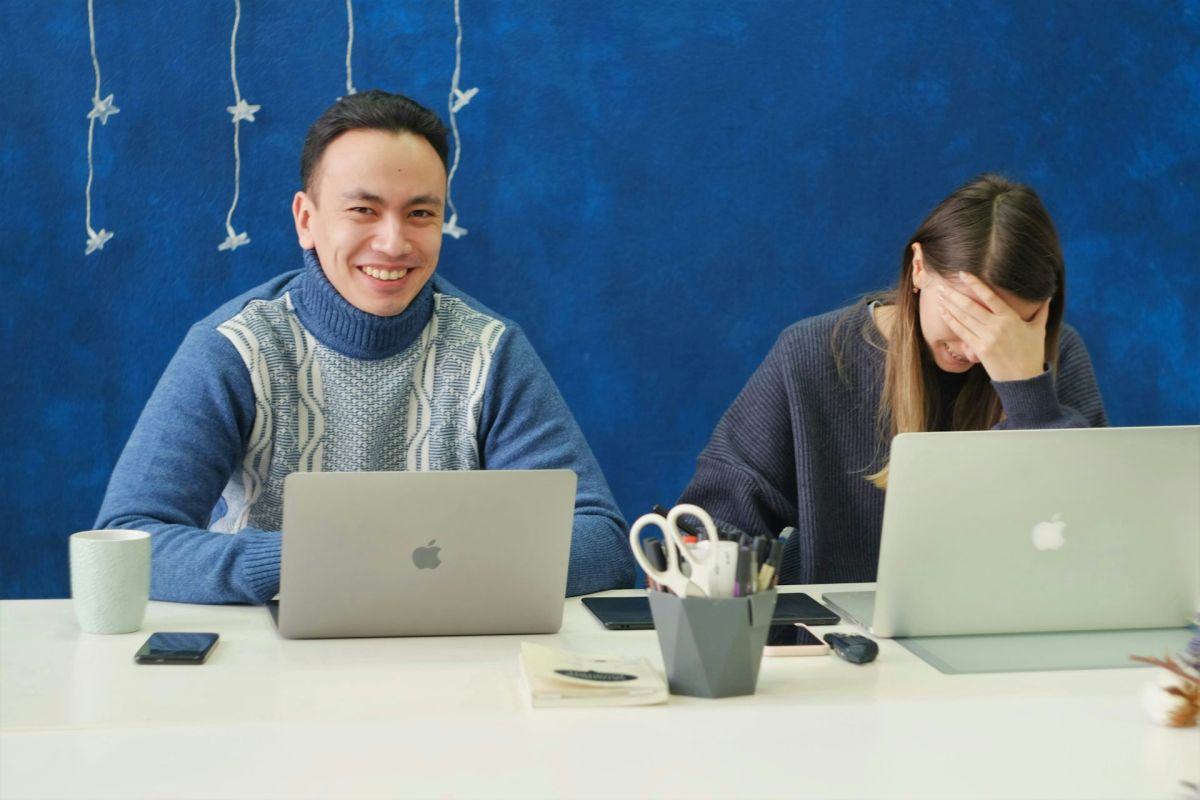
One young worker in a white and blue sweater grins while his colleague, a woman with long hair, puts her head in her left hand.
What younger workers may see as honesty could be seen as oversharing by older colleagues, who tend to keep more boundaries over personal information. Aleksandra Sapozhnikova on Unsplash, CC BY

Learning to read a room when the room disappeared

Some workplace communication is never spoken at all. Think about how people traditionally learned to read a room. They watched faces around a conference table. They noticed a change in a manager’s tone. Someone caught them after a meeting and quietly explained what had just happened.

Now think about someone who was 18 or 19 in 2020.

At exactly the age when many young people would have been developing these skills in college, internships and early jobs, the room disappeared. Classes went online. Internships became remote. When people returned in person, masks sometimes made facial communication more difficult.

That doesn’t mean members of Gen Z can’t read facial expressions, but we should be careful about assuming everyone had the same opportunities to learn the unwritten signals of professional life. If feedback matters, I believe managers should say it. A disappointed expression on a Zoom call is a poor substitute for a conversation.

I thought that was understood

Imagine a manager telling a young employee: “I need this by Friday.” The employee sends it back at 4:30 p.m. that Friday afternoon. The manager is annoyed because they intended to review it that morning, make changes and send it along to someone else.

The employee is equally confused. The deadline was Friday, and they met it.

This deadline mismatch gets at something I have repeatedly encountered in my research with Gen Z workers. In a survey I conducted of 250 Gen Z professionals across industries, clear structural expectations emerged alongside fairness and empathetic engagement as recurring themes.

If an employee wants clarity, it shouldn’t automatically be confused with hand-holding. An employee can want autonomy and still want to know exactly what success looks like. “Friday” and “Friday by 10 a.m. because I need three hours to review this” communicate very different expectations.

Artificial intelligence may make this issue even more important. We can now produce polished emails, summarize meetings and generate information faster than ever. But more communication does not guarantee more understanding.

I believe that may be the larger lesson for every generation working together. We tend to mistake the workplace norms we learned for common sense. They aren’t. They were taught to us by the workplaces, technologies and moments in history in which we began our careers.

Gen Z is learning theirs in a very different world. This article originally appeared on The Conversation. You can read it here.

  • I research play – and here’s why recess is much more important than just a fun break
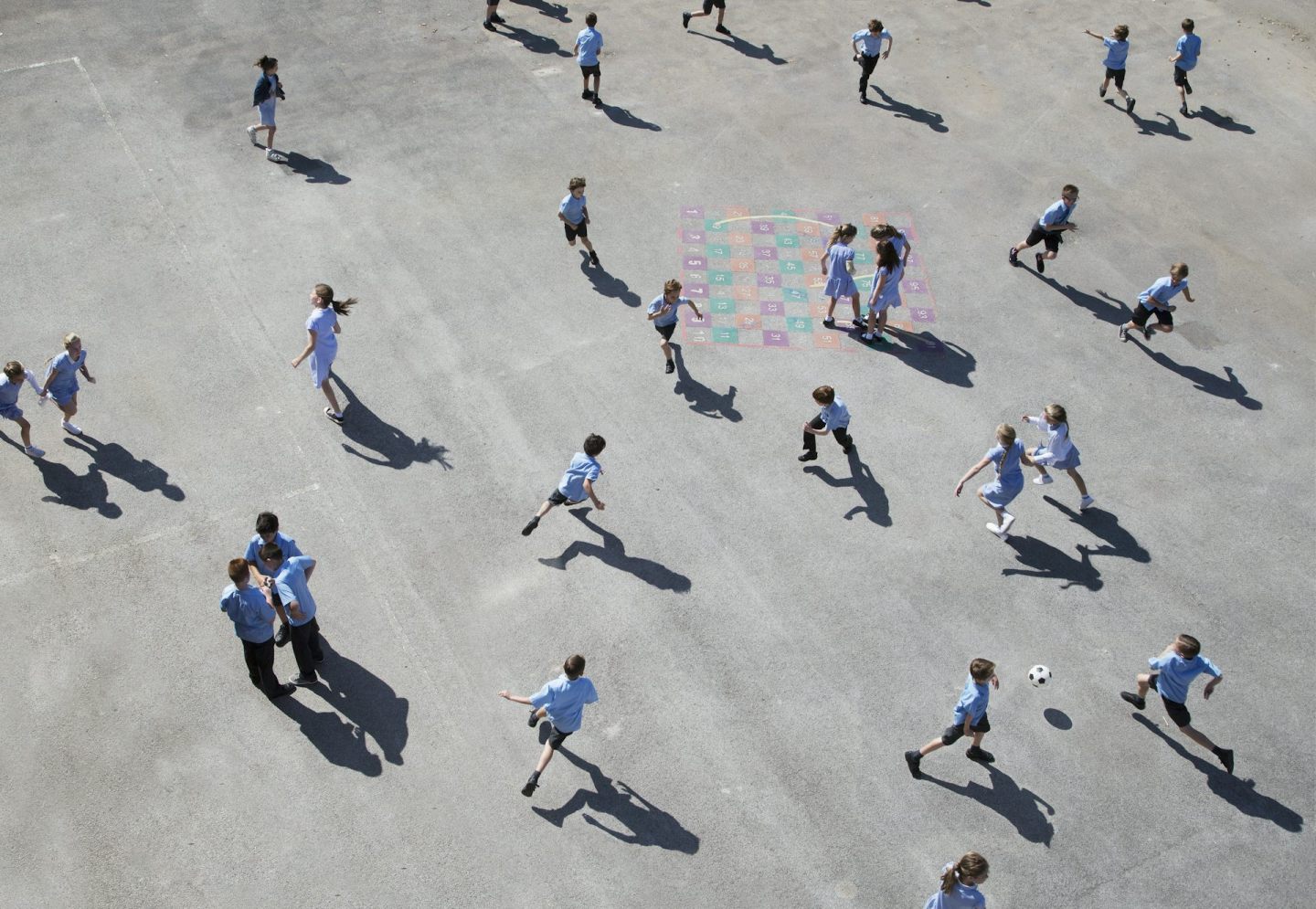
    The amount of time children spend at recess varies considerably. Dan Kenyon/Stock Photos via Getty Images

    Professor of Education, Harvard University

    School recess has long been considered a standard part of children’s education in the United States. But it’s more than just a fun break from sitting at a desk.

    Daily recess is necessary for supporting young children and adolescents’ learning, as well as their physical and mental health.

    It’s so important that the American Academy of Pediatrics notes that reducing the amount of time set aside for playing, running and exploring in order to fit in more academic work could actually be counterproductive.

    But in recent decades many schools have cut back on recess, which many states do not require.

    As a scholar who researches childhood play, I have studied and witnessed the benefits of play in children’s lives, including the significant social, emotional and cognitive impacts it has on students’ overall well-being.

    A group of children play and hang from monkey bars in a yard.
    Most states do not require that schools have recess every day. John P Kelly/Stone via Getty Images

    The many benefits of recess

    The U.S. Centers for Disease Control and Prevention recommends that children and adolescents get at least 60 minutes of physical activity per day.

    The CDC also defines recess as a “regularly scheduled period in the school day for physical activity and play that is monitored by trained staff or volunteers.”

    Recess can look different across various schools – while some kids play outside on play structures or in grassy fields, others might play indoors during inclement weather.

    Research also shows, for example, that children living in lower-income communities have fewer opportunities than their peers in higher-income communities to play outside.

    Unlike physical education classes or participating in organized sports, recess gives students the time to engage in physical activity and interact with their peers however they like.

    This time for unstructured play can offer much-needed relief from the mental focus that students need to maintain throughout the school day. It can also support their cognitive development and overall emotional and physical well-being.

    Research also consistently shows that giving children breaks each day for recess has immense benefits for their mental health and the executive functioning skills that support academic achievement.

    This includes benefits for students’ focus and creativity, as well as their memory and executive function.

    Some states, but not all, require recess

    Most states do not mandate that schools have recess every day or spell out a minimum amount of time students must spend moving their bodies.

    A 2025 report from the Johns Hopkins Bloomberg School of Public Health found that 11 states have laws addressing school recess. This ranges from Arizona’s requirement for 40 minutes of daily recess to Georgia, Indiana and Kentucky all requiring recess, but with no minimum duration.

    Massachusetts is one of the nearly 40 states without any laws regarding recess time. A recent article in The Boston Globe reported schools in Cambridge having 25 minutes of recess, while other schools across the state had only 15 minutes per day.

    Overall, there has been an uptick in state legislation aimed at preserving mandated daily school recess time, thanks partly to a new parent-led advocacy group called Say Yes to Recess. This group is pushing for schools across the country to provide a minimum of 60 minutes of protected school recess time each day.

    Started by three Tennessee moms, Say Yes to Recess has also helped advocate for Tennessee legislation that increased the state’s mandated daily school recess time from 15 to 40 minutes in July 2025.

    A moving target

    During the 2001-02 school year, elementary school students from 349 school districts spent on average 36.8 minutes per day at recess.

    By 2025, the CDC found that students were spending 27 minutes on average in recess each day.

    It’s also hard to track how much physical activity students get at school because public school districts and private schools often do not record and report this information.

    While the benefits of recess are not just isolated to young children, a 2026 international study showed that the amount of daily recess time across U.S. schools declines from a mean of 39.3 minutes per day for 6- to 7-year-olds to 24.5 minutes per day for 12- to 18-year-olds.

    Making way for play

    I conducted research at the Project Zero research center for creativity, ethics and the arts at Harvard University and highlighted the significance of play and the arts within urban public schools.

    This 2024 study showed how play with materials supports both children’s and teachers’ creative learning. As someone who designs and studies children’s play spaces, I worry about what could happen if schools continue to reduce school recess because of staffing issues, budget cuts or prioritization of students’ preparation for high-stakes tests focused solely on literacy and numeracy.

    Research shows that this trend of not prioritizing recess could have significant effects on children’s and adolescents’ mental health, cognitive development and overall enjoyment of school.

    A group of teenagers are seen sitting together on benches outside of a red brick building.
    Older children and teenagers also benefit from getting regular breaks from the academics of a school day. Maskot/Digital Vision via Getty Images

    School are well intended but under strain

    The decline in time for recess comes at a moment when many schools and districts are under increasing pressure as a result of declining student enrollment, pressure to meet state learning standards and budget cuts.

    For some schools, reduced staffing and the costs of maintaining outdoor play equipment to meet safety requirements have made it difficult to offer school recess.

    For other schools, an assumption that more time for instruction equals a higher-quality education may be driving decisions to minimize or eliminate time for unstructured play.

    Another factor that influences recess is when schools deny students recess time as a form of punishment – a policy that some scholars and educators are trying to block through legislation.

    As childhood health, social and cognitive research demonstrates, the amount of time school recess is given matters in children’s development as whole human beings. I believe it is up to schools, districts and parents to advocate for and ensure children’s right to protected school recess time every day.

    This article originally appeared on The Conversation. You can read it here.

  • Remote work made these colleagues more open with each other, not less
    Many employees see having the freedom to work from home as a benefit. DigitalVision/Getty Images
    ,

    Remote work made these colleagues more open with each other, not less

    A study following one company’s shift out of the office found an unexpected benefit in the glimpses colleagues got of one another’s lives.

    Assistant Professor of Management and Organizations, Boston College

    If you need to participate in video meetings for work, you’ve probably experienced more than one disruption, whether it’s kids darting around or home renovation noise.

    Meetings that use Zoom and similar software are a fixture of remote work, which surged during the COVID-19 pandemic and remains prevalent. As of August 2026, 36% of American workers in management, professional and related occupations did at least some of their work from home, according to the U.S. Bureau of Labor Statistics.

    I’m a management scholar who studies how, when and where people work. Before the pandemic began, I was studying a professional services company. That made it possible for me to follow how its staff transitioned from primarily working in person to mostly remote through 2024, which gave me more insight into how remote work has changed people’s lives.

    The study included 275 interviews and about 330 hours of observation. Most people in the groups I followed ended up working from home four or five days a week, joining meetings by video. What I found was the opposite of what I expected.

    Learning more about colleagues

    Rather than pulling colleagues apart, remote work brought them closer and made them more willing to be open with one another. The findings were peer-reviewed and will be published in an upcoming issue of the management journal Organization Science.

    Before the shift to remote work, I assumed – consistent with the predictions made by many prominent researchers of workplace relationships – that moving people out of the office would break down social connections. But I was wrong.

    In the office, before the shift to remote work, I found that people primarily viewed one another as work colleagues rather than whole people. Reflecting this relationship, workers sometimes said they felt uncomfortable sharing with one another aspects of their lives that might limit their ability to do work.

    For example, one worker I interviewed, Patrick, was afraid to tell his colleagues he could not work late one night because he was helping his mom. All the names I’m mentioning are pseudonyms to protect the privacy of the people involved and their employer.

    “Even though you didn’t sleep last night, you’re expected to show up and smile and be fine,” said Tamara, an exhausted parent with two young children, when she was still commuting regularly to the office.

    Surprisingly, people told me that they learned a lot more about one another once they began to work remotely instead of being together in an office. During my research, I heard about children yelling in the background and pets wandering in front of cameras. A spouse arriving home from work stopped to say hello on screen.

    In team chat channels, people posted photos of their children, their animals and the meals they had cooked.

    “Everyone has noises in the background, or they have something going on or whatever, and so we get to know each other quicker and on a deeper level than we would otherwise,” Tamara told me. In some cases, this increased sense of closeness happened to people who had known each other for years prior to switching to remote work.

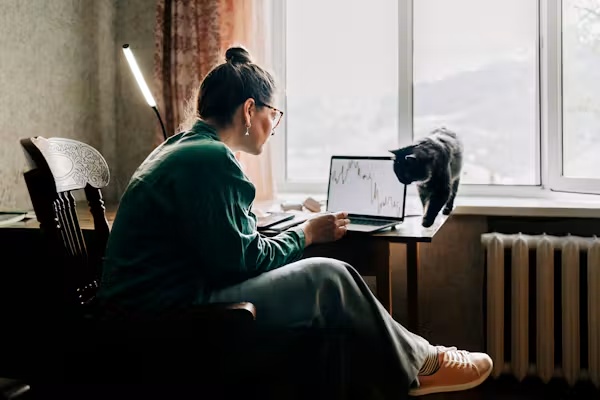
    Woman works from home with a candlestick chart on laptop and cat on her desk.
    When you’re a remote employee, you may get more quality time with your pets. Moment/Getty Images

    Growing psychological safety

    Psychological safety is the sense that you can take an interpersonal risk at work, such as admitting a mistake, asking for help or raising a problem, without being judged negatively.

    Decades of management research tie psychological safety to important outcomes for both workers and organizations, including learning, creativity and speaking up.

    Over time, working remotely seemed to improve psychological safety for many of these co-workers.

    People became “less afraid to talk about the interface of their personal and professional lives,” Leah said. Before, she added, no one would have volunteered that a breakup was affecting them and that they needed a day off to decompress.

    After the company went remote, people told me they felt more comfortable sharing their own challenges as they tried to juggle their work and the challenges they faced in their personal lives.

    Supporting work and nonwork activities

    And as people started sharing these problems with their co-workers, they also told me they felt as if they could then better support one another.

    When one worker’s father fell ill, his colleague, Brooke, took over the tasks the two had planned to do together.

    “I’m just going to take this over for you right now,” Brooke told him. “And then, whenever you can, come back and swoop in.”

    The colleague was able to dedicate time to caring for his father. And importantly, because help circulated this way, Brooke said, a task no longer “stopped dead in the water” when one person could not get to it.

    This deeper collaboration did not seem to come at the expense of getting tasks completed. As an employee I’m calling Charles explained, having co-workers sharing details about their personal lives has “helped us to work more effectively in a lot of ways.”

    Crucially, these improvements were experienced by people with many different living arrangements – young and old, those with and without kids or partners, men and women. And these benefits were positively reinforcing. For instance, sharing more meant learning more about others, which further reinforced psychological safety.

    My findings suggest that remote work can be a benefit that employers and employees may overlook. Rather than treating time out of the office as a cost to social connection among employees, they might treat it as a way to grow personally and get to know co-workers better.

    This article originally appeared on The Conversation. You can read it here.

  • Dog parks are an antidote to the isolation and divisions that social media can fuel
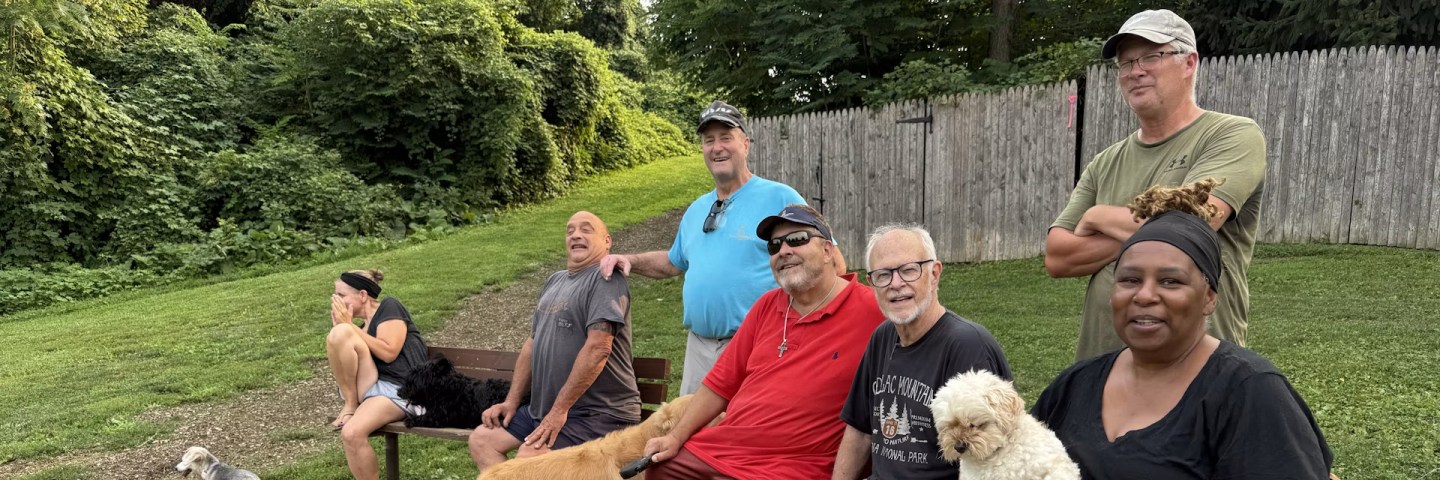
    A group of regulars meet at the Harford dog park in Radnor, Pa. Kevin B. Johnson, CC BY-NC-SA
    ,

    Dog parks are an antidote to the isolation and divisions that social media can fuel

    A shared patch of grass can bring people together across differences, one ordinary encounter at a time.

    Professor of Pediatrics, Biomedical Informatics and Science Communication, University of Pennsylvania

    The case against social media has gotten so well rehearsed that most people can easily merge it into ordinary conversation: It makes people lonely. It sorts them into camps. It hands them a room full of people who already agree with them and calls that a community.

    I’ve given this speech myself, with feeling, having read my phone notifications in the host’s powder room 11 minutes earlier.

    I am a pediatrician, health communicator and researcher at the University of Pennsylvania, and diagnosing is in my blood. Two decades of research, a surgeon general’s advisory on loneliness and Meta’s recent settlement of up to US$17 billion, pending court approval, all describe the same thing. What we recite are the symptoms. The more interesting question is what these symptoms diagnose.

    Simply put, our dependency on social media creates a deficiency disease. It’s not something toxic we’re ingesting; it is something our lives online have stopped us from receiving.

    I figured out that cost while standing in a field in Harford Park with a dog leash wrapped around my ankles.

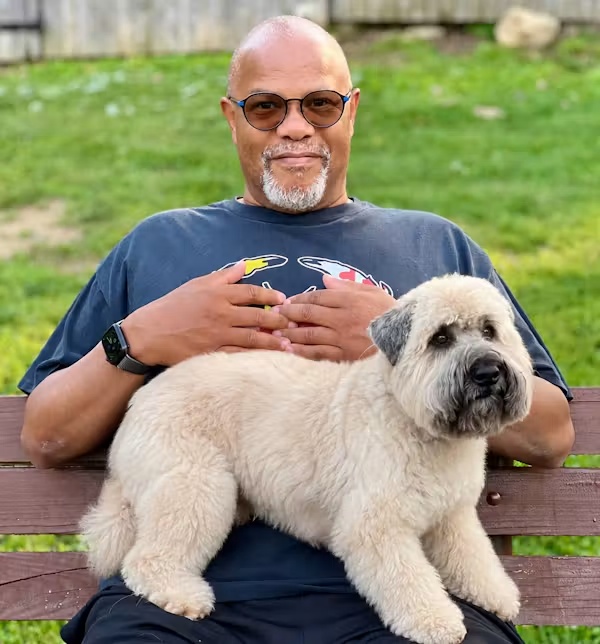
    A man in sunglasses sits on park bench with small white dog standing on his lap
    The author sits with Chaz, his soft-coated Wheaten Terrier. Kevin B. Johnson, CC BY-NC-SA

    A corner bar without the alcohol

    Harford Park in Wayne, Pennsylvania, is 30 acres of rolling grass and mature trees the township designated for off-leash dogs in 1997.

    I go most afternoons. So do the same 15 or 20 people, which is how I ended up tangled in someone else’s very long leash on a Tuesday, concentrating hard enough on my own feet that I stopped talking and just listened.

    Two conversations were running at once. In one, a regular who is having a rough year was getting gently harassed about the weight he’d put on against his doctors’ advice — first by me, then by three other people who piled on uninvited. In the other, someone was arguing about Dr. Anthony Fauci, and the regulars chimed in on both sides. Gossip, complaints and dogs greeting dogs became the backdrop.

    As I worked to free my ankles, it clicked: The dog park, like the local knitting club or the Saturday pickleball group, does the job a corner bar used to do. There are regulars and running jokes, and once a person is known, a spot in the conversation is reserved for them.

    What makes these places work is that a shared focus on one small part of a life opens into something fuller. Regulars may share a taste in dog breeds or beer, but they are not colleagues, political soulmates or relatives. They differ on favorite restaurants, income, age, religion, values and beliefs. They are together because a golden retriever and a nervous rescue mutt need to run in the morning, and there is a field nearby.

    Chance encounters can increase empathy

    Sociologist Ray Oldenburg called places like this third places and defined them as “public places that host the regular, voluntary, informal, and happily anticipated gatherings of individuals beyond the realms of home and work.” Oldenburg noted the erosion of places that once manufactured accidental encounters, such as main streets, neighborhood pubs, general stores and even the drugstore soda fountain.

    Off-leash parks have been among the fastest-growing amenities in U.S. city park systems for two decades. A study in the Journal of Urban Affairs found dog park users reported higher social capital and neighborhood cohesion.

    The park is not a utopia. It’s a corner bar without the booze.

    Thomas Pettigrew and Linda Tropp’s meta-analysis of 515 studies provides the best evidence for why these accidental connections matter. They found that contact between groups generally reduces prejudice, but the quality and circumstances of that contact matter. The more interesting finding came later, when they tested how it works: The effect runs less through learning facts about the other group than through reduced anxiety, more empathy and more perspective.

    That is exactly what the park does. The man I disagree with about nearly everything hasn’t changed his mind, and neither have I. What changed is that his politics is now maybe the eighth thing I know and appreciate about him, behind his dog’s bad hip, his sense of humor, the awful year he had and his love of what Philadelphians call “wooder ice.”

    That shift, from opinions to a person, is why “just show people the other side” keeps failing online. When sociologist Christopher Bail and colleagues paid Republicans and Democrats to follow bots representing the views of the opposite party on Twitter, the Republicans came out substantially more conservative than they went in. Democrats shifted slightly left, though not significantly. Exposure to opinions is not the same thing as exposure to a person. The feed gave people arguments. The corner bar gives people other people.

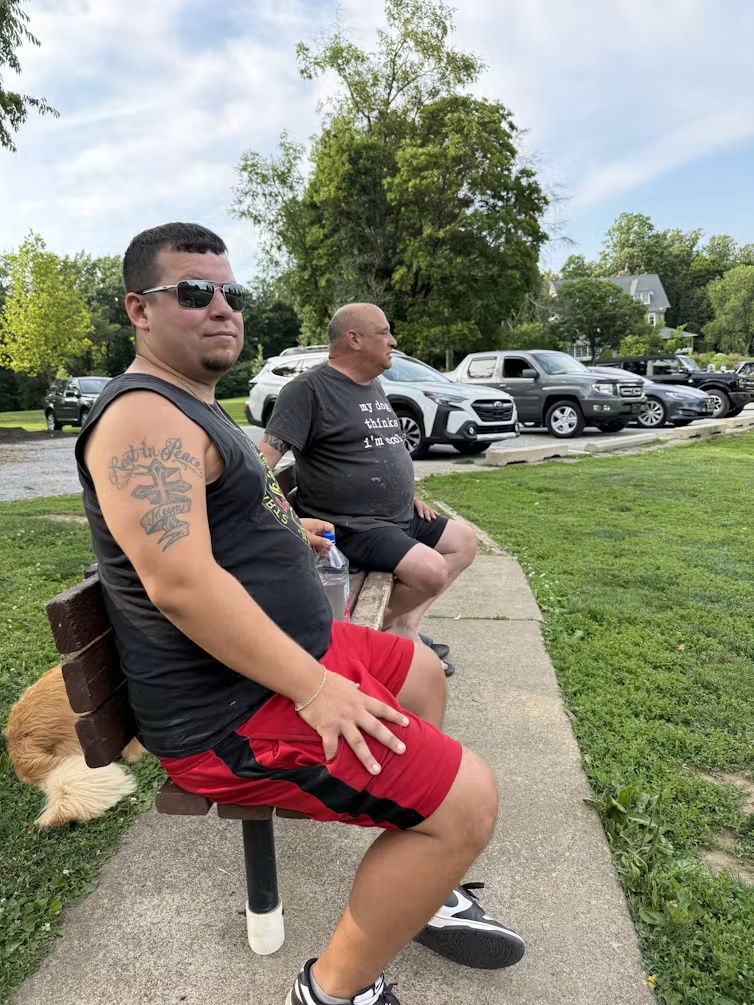
    Two men sit on park bench with a dog behind them
    A dog park is a third place, like the neighborhood corner bar, where dogs instead of alcohol serve as a social lubricant. Kevin B. Johnson

    Making room for tolerance and trust

    If the places people gather shape their health, as a growing body of research suggests, then the shift from communities set by geography to communities assembled by algorithm creates a slow burn of intolerance and mistrust.

    There are now decades of research on social media and anxiety, and a growing body of experimental work about what algorithmic curation does to what people see. Almost none of it treats the encounter pattern as a health exposure.

    Social platforms have mastered what German American sociologist Herbert Gans called selective homogeneity. They sort people by interests, identities, tastes and grievances, then make it easy to stay among people who feel familiar.

    They are like virtual Levittowns – the postwar suburban developments outside Philadelphia, among other places in the Northeast, where thousands of identical houses went up on farmland and were sold to buyers screened by price. In early Levittowns, covenants barred Black families outright.

    In 1958, Gans moved into a Levittown in New Jersey and stayed two years doing research on its residents. He found that although original settlers and those who moved in by choice were happy, their rebellious teenage offspring, who had the fewest places to go and the least to do in those communities, were not.

    This was an early, real-life sorting of the type that algorithms would make all too common 60 years later.

    By contrast, repeated, low-stakes, in-person contact like the interactions between regulars at a dog park or corner bar creates room for tolerance and trust. People come back. They notice an absence. They share attention around a task, a place or a dog, rather than around presenting themselves or defending a position.

    Deficiency diseases are easily treatable. Nothing has to be taken away; instead, something has to be given back.

    Read more of our stories about Philadelphia and Pennsylvania, or sign up for our Philadelphia newsletter on Substack.

    This article originally appeared on The Conversation. You can read it here.
Explore More Society Stories

Society

Dog parks are an antidote to the isolation and divisions that social media can fuel

Society

Generous paternal leave policies improve maternal and newborn health, family finances and workplace equality

Work

New York passes SAFE for Kids Act to protect children from social media addiction

Public Good

Oakland officials open ‘play-lending library’ to offset the cost of equipment for youth sports