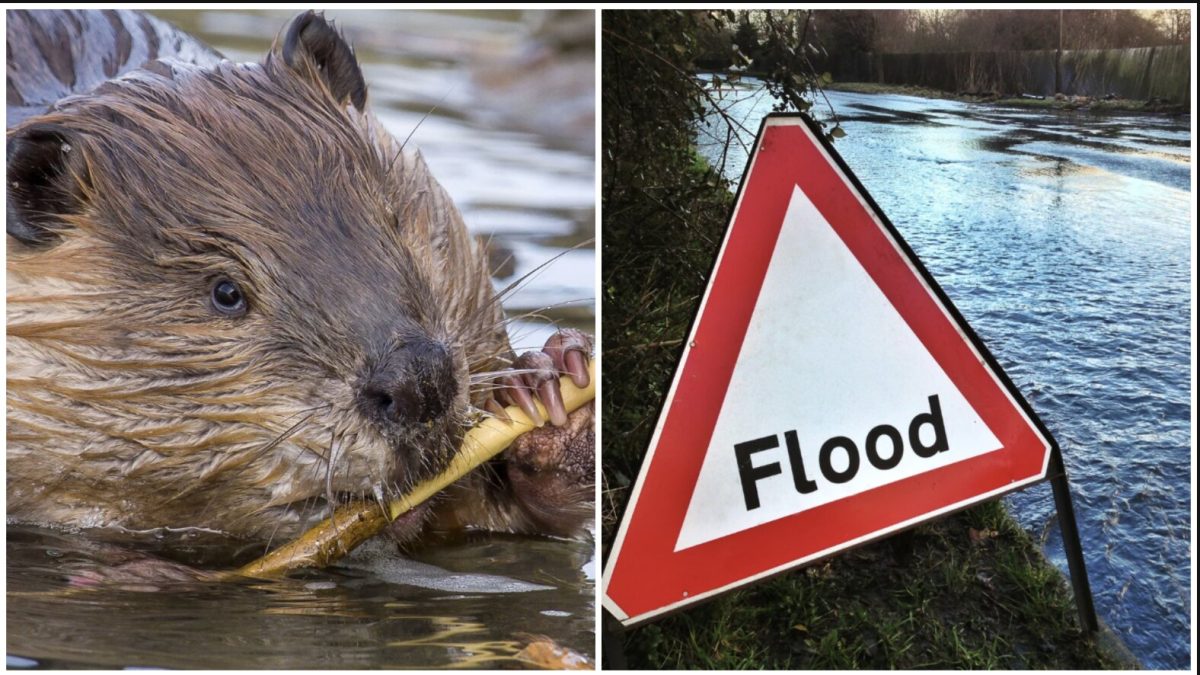
West London’s Greenford Tube station had an ongoing problem. Due to climate change, the station would often flood during heavy rains. The rain would cause a nearby creek to overflow, flooding the ticket office and beyond. But in 2023, officials tried a natural method to help offset the flooding. All they had to do was bring back a vanished species to the area: beavers.
A family of five beavers was released through the Ealing Beaver Project to act as “nature’s engineers” and help solve London’s flooding problem. Within weeks, the beavers built a dam in the creek, causing it to pool into a pond. Along with that, the beavers created new pathways and tributaries that further diverted water from the main creek. The small group of beavers not only built seven dams in their first year but also expanded biodiversity near populated areas.
The combination of rerouting water and felling trees has brought new animals and species into the area. Some of the new additions inhabiting the creek are freshwater shrimp, two types of bats, a rare brownstreak butterfly species, and eight new species of birds. A whole new nature preserve is forming remarkably close to urban areas. In fact, the beavers are working just 100 meters behind a McDonald’s.
What happened to the original beavers?
The whole project is addressing the changing climate, but also undoing another man-made issue. The Eurasian beaver had been hunted to extinction in England and Wales more than 400 years ago. At the time, beavers were a valuable source of meat, fur for coats, and castoreum. Castoreum is a secretion from beavers that was used to enhance perfumes and flavor food. Had beavers still thrived, one could argue that the climate change-related flooding might not have occurred in the first place.
The Ealing Beaver Project is one of several efforts to bring beavers back to the United Kingdom. One of the first attempts to repopulate beavers occurred in Scotland, where Norwegian beavers were introduced to Inverness-shire. Norwegian beavers were chosen because scientists determined they were the most genetically similar to the extinct U.K. beaver population.
This beaver introduction hasn’t just solved a climate-related flooding problem, but it has also brought other benefits. Visitors and residents enjoy the newly biodiverse nature reserves by going on “beaver safaris” to see the creatures at work in person. Then there is the obvious benefit of the beavers solving these flooding problems effectively free of charge.
Beavers are an international solution
The U.K. isn’t the only place using beavers to address climate issues. Beavers were brought in to create dams and conserve river water during droughts in Utah. Similarly, beaver reintroduction into California’s streams and rivers was so beneficial that it was codified into state law.
This shows that something as funny-looking as a swimming rodent with buck teeth and a paddle tail can make a huge difference in whether a place has enough natural water or too much. Humans just have to give a dam about them.