
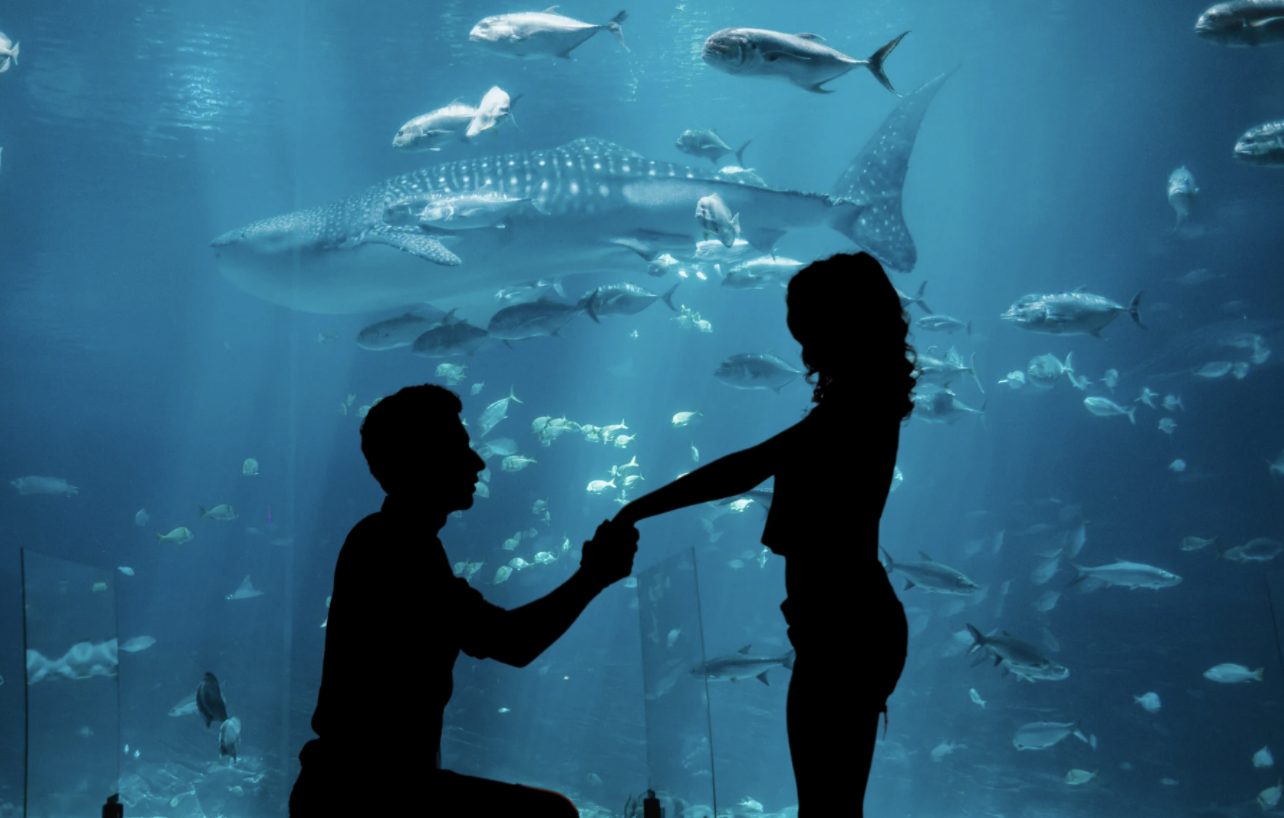
When Olivia Walsh posed for a photo with her boyfriend, Gavin Hulberg, at the Georgia Aquarium, she thought she was just capturing a sweet memory. Instead, she found herself in the middle of a scene that would soon take over the internet thanks to a very nosy guest.

Gavin, with help from aquarium staff, had secretly planned to propose right in front of the beluga whale tank. As he got down on one knee, a whale named Qinu swam into view.

The 16-year-old marine mammal paused right at the glass and appeared to drop her jaw in shock.

@withlovebyliv

I’ve been interning with the beluga training team for the last 3 months so this was the most thoughtful way he could’ve done it 🥺 #georgiaaquarium #belugawhale #proposal ♬ original sound – withloveliv

The Internet Reacts

The moment was caught on video, and when Olivia shared it on TikTok, the comment section exploded. It looked exactly like the whale was gasping at the size of the ring.

“The most perfect proposal I could’ve asked for,” Olivia wrote.

Viewers immediately anthropomorphized the whale’s hilarious expression.

“The beluga NEEDS to officiate the wedding now,” one user joked.

Another simply commented: “The beluga: :O”

Even the official Play-Doh account chimed in to insist that the whale deserved a wedding invite.
beluga whale, proposal, Georgia Aquarium, viral video, engagement
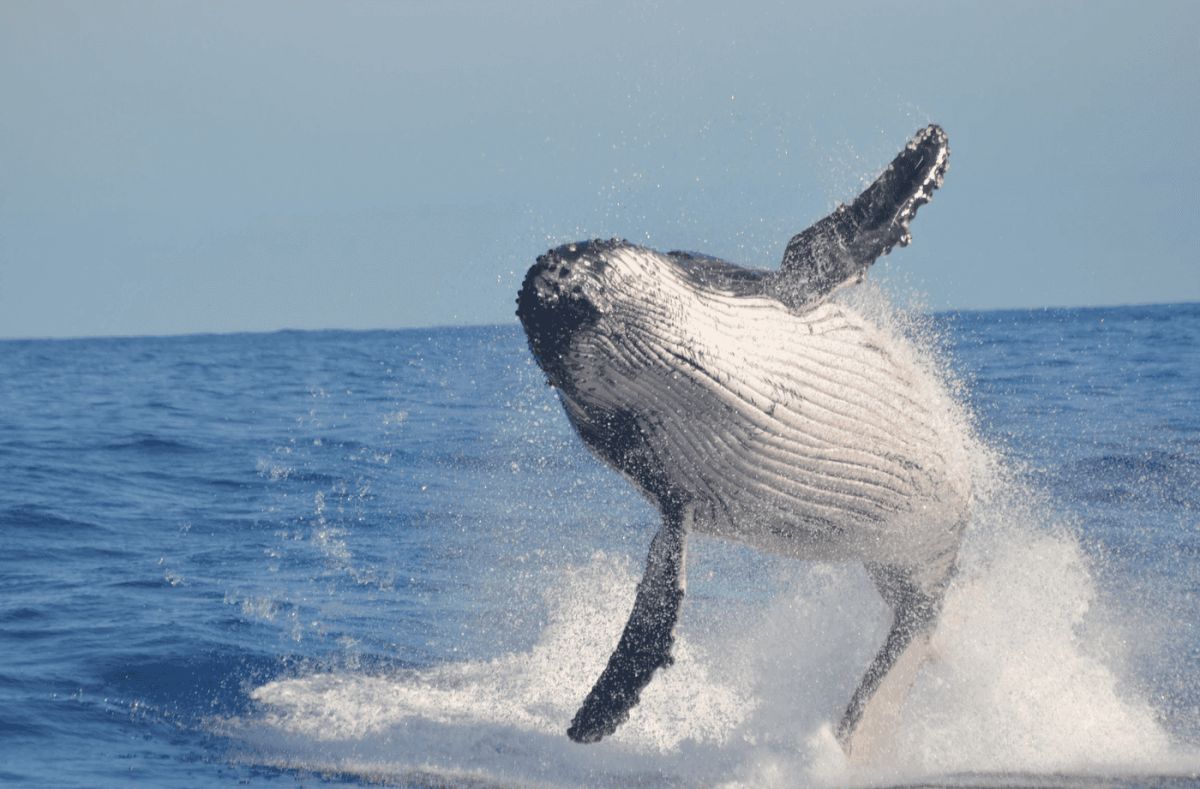
A beluga whale frolicking in the ocean Canva

The Science Behind the Face

According to People, Qinu’s involvement wasn’t a planned stunt. Katie Lorenz, the associate curator of mammals and birds at the Georgia Aquarium, confirmed that the reaction was entirely natural.

“Qinu’s behavior at the window was her own,” Lorenz said. “She was not intentionally trained to have any type of reaction.”

Unlike many other whales, belugas have unique physical characteristics that allow for this kind of “human” expression. They have a flexible neck and unfused cervical vertebrae, which allows them to nod and turn their heads.

Furthermore, their “melon” (the rounded forehead) is flexible and capable of changing shape, which often makes them appear to be smiling or making faces.

A Special Connection

The moment was even more poignant because Olivia wasn’t just a random visitor. She had actually been a beluga whale training intern at the aquarium for the past three months.

“My fiancé is the most thoughtful person,” she wrote in a reply. “He knows how much I’ve loved working with the whales and truly made it the most special moment.”

The Conversation

Of course, viral videos involving captive animals often spark debate. Some commenters questioned the ethics of keeping an animal like Qinu in a tank.

“Nothing cute or adorable about these sentient creatures being kept confined in glass houses for human amusement,” one user wrote.
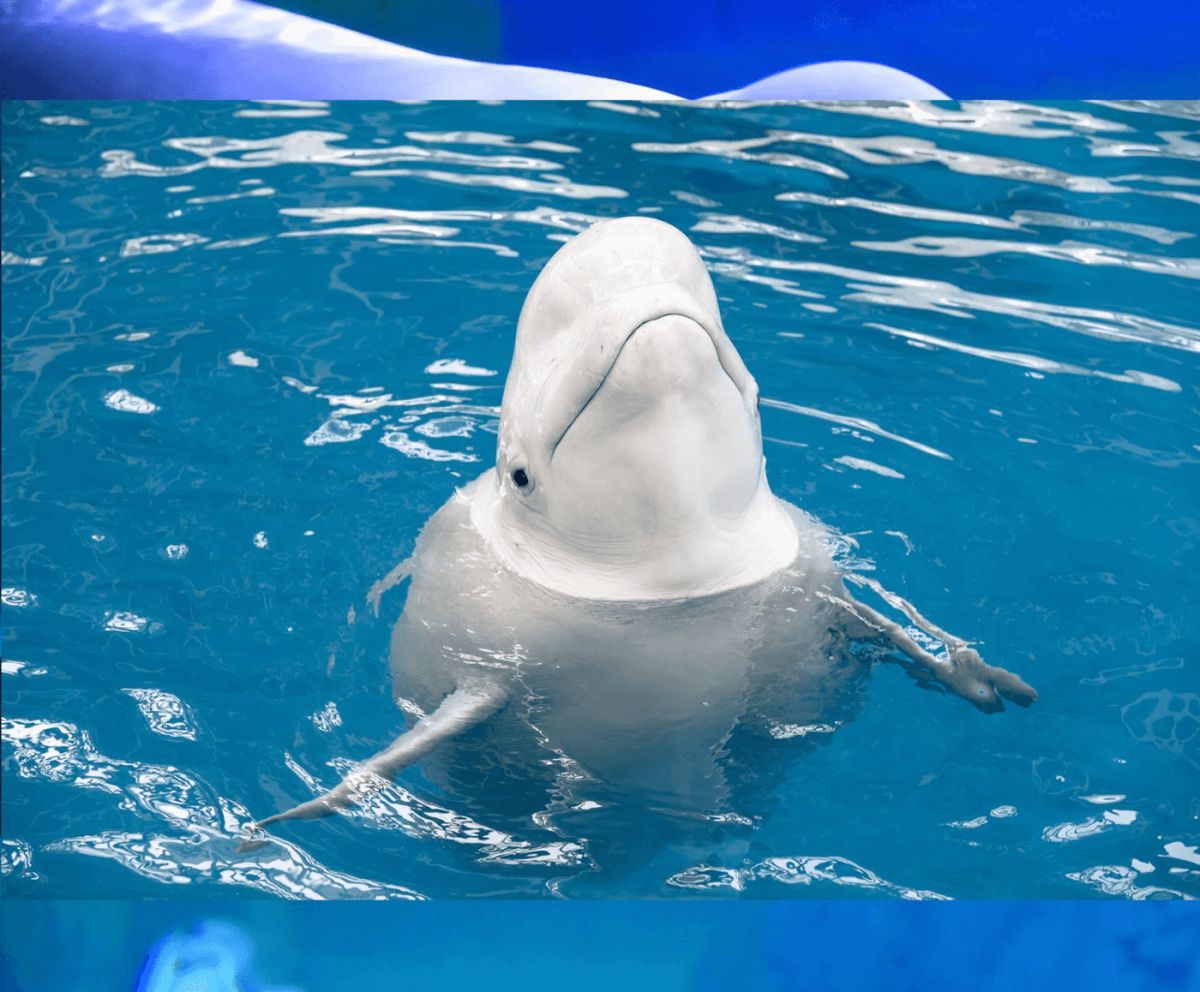
beluga whale, proposal, Georgia Aquarium, viral video, engagement
A beluga whale pops up from the water. Photo credit: Canva

However, for the vast majority of viewers, the video was a moment of pure joy. The clip has racked up over 7 million views on TikTok alone, and Qinu has officially become the internet’s favorite wedding crasher.

For those who want to see more of the star, the Georgia Aquarium maintains a live beluga cam where fans can check in on Qinu. As for the happy couple, they now have a proposal story that is going to be very hard to top.

This article originally appeared last year. It has been updated.

  • How dolphins communicate – new discoveries from a long‑term study in Sarasota, Florida
    Bottlenose dolphins are social creatures that use whistles and clicks to communicate with each other.Photo credit: Brookfield Zoo Chicago’s Sarasota Dolphin Research Program, taken under NMFS MMPA Scientific Research Permit

    Human fascination with bottlenose dolphins goes back thousands of years, at least as early as Greek mythology.

    But it wasn’t until the 1960s that methodical research into dolphin communication began. Scientists like John Lilly and the husband-and-wife team of Melba and David Caldwell tried various experiments to decipher the sounds dolphins can make.

    The Caldwells figured out a way to record isolated animals in human care. They discovered that each individual dolphin communicated mostly with one unique whistle, which they called the “signature whistle.” Researchers now know that these whistles convey identities much like human names do. Dolphins use them to stay in touch with each other in their murky habitat, where vision is limited. It’s like announcing “I’m over here!” when someone can’t see you.

    This discovery is foundational to my own research. I’ve been studying communication in wild dolphins since the mid-1980s, when I joined my mentor Peter Tyack in documenting signature whistles in wild dolphins for the first time. Our team’s research focused on a resident community of free-ranging bottlenose dolphins in waters near Sarasota, Florida, where I continue to work today.

    This collaborative study, led by Randall Wells of Brookfield Zoo Chicago’s Sarasota Dolphin Research Program, involves numerous researchers from a variety of institutions, who study different aspects of dolphin biology, health, ecology and behavior. Begun in 1970, this is the longest-running research project on a population of wild cetaceans – whales, dolphins and porpoises – in the world.

    Each dolphin has distinctive markings on its dorsal fin. Experienced researchers can sometimes identify them by sight in the field, and they photograph them to confirm their identity in the lab.
    Each dolphin has distinctive markings on its dorsal fin. Experienced researchers can sometimes identify them by sight in the field, and they photograph them to confirm their identity in the lab.Photo credit: Photo by Brookfield Zoo Chicago’s Sarasota Dolphin Research Program, taken under NMFS MMPA Scientific Research Permit

    Recording and observing

    Researchers know the age, sex and maternal relatedness of almost all of the approximately 170 dolphins in the Sarasota community. This depth of knowledge provides an unprecedented opportunity to study communication in a wild cetacean species.

    The dolphins in the Sarasota project are periodically subject to brief catch-and-release health assessments, during which researchers, including me, briefly handle individual dolphins.

    Our team attaches suction-cup hydrophones directly onto each dolphin’s melon – that is, its forehead. We then record the dolphins continuously throughout the health assessments, taking notes on who is being recorded when, and what is happening at the time.

    This is how my colleagues and I were able to confirm that wild dolphins, like captive animals, produced large numbers of individually distinctive signature whistles when briefly isolated from other dolphins. Through observations and recordings of known free-swimming dolphins, we were further able to confirm that they produced these same signature whistles in undisturbed contexts.

    We have organized these recordings into the Sarasota Dolphin Whistle Database, which now contains nearly 1,000 recording sessions of 324 individual dolphins. More than half of the dolphins in the database have been recorded more than once.

    We identify each dolphin’s signature whistle based on its prevalence: In the catch-and-release context, about 85% of the whistles that dolphins produced are signature whistles. We can identify these visually, by viewing plots of frequency vs. time called spectrograms.

    Spectrograms of signature whistles of 269 individual bottlenose dolphins recorded in Sarasota. Figure created by Frants Jensen, with sound files from Laela Sayigh
    Spectrograms of signature whistles of 269 individual bottlenose dolphins recorded in Sarasota. Figure created by Frants Jensen, with sound files from Laela Sayigh

    Signature whistles and ‘motherese’

    The Sarasota Dolphin Whistle Database has proved to be a rich resource for understanding dolphin communication. For instance, we have discovered that some calves develop signature whistles similar to those of their mothers, but many do not, raising questions about what factors influence signature whistle development.

    We have also found that once developed, signature whistles are highly stable over an animal’s lifetime, especially for females. Males often form strong pair bonds with another adult male, and in some instances, their whistles become more similar to one another over time. We are still trying to understand when and why this occurs.

    Dolphin mothers modify their signature whistles when communicating with their calves by increasing the maximum frequency, or pitch. This is similar to human caregivers using a higher-pitched voice when communicating with young children – a phenomenon known as “motherese.”

    Also similar to humans is how dolphins will initiate contact with another dolphin by imitating their signature whistle – what we call a signature whistle copy. This is similar to how you would use someone’s name to call out to them.

    Our team is interested in finding out if dolphins also copy whistles of others who aren’t present, potentially talking about them. We have seen evidence of this in our recordings of dolphins during health assessments, which provide a rare context to document this phenomenon convincingly. But we still have more work to do to confirm that these are more than chance similarities in whistles.

    Shared whistle types

    Another exciting development has been our recent discovery of shared whistle types — ones that are used by multiple animals and that are not signature whistles. We call these non-signature whistles.

    I could hardly believe my ears when I first discovered a repeated, shared non-signature whistle type being produced by multiple dolphins in response to sounds we play back to them through an underwater speaker. We had previously believed that these non-signature whistles were somewhat random, but now I was hearing many different dolphins making a similar whistle type.

    Our team originally had been using the playbacks to try to determine whether dolphins use “voice cues” to recognize each other – similar to how you can recognize the voice of someone you know. Although we found that dolphins did not use voice cues, our discovery of shared non-signature whistle types has led to an entirely new research direction.

    The author listens to dolphin whistles on a boat in Sarasota. Jonathan Bird from the film 'Call of the Dolphins'/Oceanic Research Group, Inc.
    The author listens to dolphin whistles on a boat in Sarasota. Jonathan Bird from the film ‘Call of the Dolphins’/Oceanic Research Group, Inc.

    So far, I’ve identified at least 20 different shared non-signature whistle types, and I am continuing to build our catalog. We are hoping that artificial intelligence methods may help us categorize these whistle types in the future.

    To understand how these shared non-signature whistle types function, we are carrying out more playback experiments, filming the dolphins’ responses with drones. We’ve found that one such whistle often leads the dolphins to swim away, suggesting a possible alarm-type function. We have also found that another type might be an expression of surprise, as we have seen animals produce it when they hear unexpected stimuli.

    More difficult, more interesting

    So far, the main takeaway from our experiments has been that dolphin communication is complex and that there are not going to be one-size-fits-all responses to any non-signature whistle type. This isn’t surprising, given that, like us, these animals have complicated social relationships that could affect how they respond to different sound types.

    For instance, when you hear someone call your name, you may respond differently if you are with a group of people or alone, or if you recently had an argument with someone, or if you’re hungry and on your way to eat.

    Our team has a lot more work ahead to sample as many dolphins in as many contexts as possible, such as different ages, sexes, group compositions and activities.

    This makes my job more difficult – and far more interesting. I feel lucky every day I am able to spend working on the seemingly infinite number of fascinating research questions about dolphin communication that await answers.

    This article originally appeared on The Conversation. You can read it here.

  • Scottish children are helping penguins find mating partners with these tiny, painted stones
    Scottish kids are helping penguins get a date.Photo credit: Edinburgh Zoo on Instagram
    ,

    Scottish children are helping penguins find mating partners with these tiny, painted stones

    “I would cry if a penguin picked MY pebble 😭 It’s a life goal”

    During mating season, male gentoo penguins are tasked to find pretty and smooth rocks to present to prospective mates. This is meant as a gesture to woo them and to be used to build a nest with them, too. Well, this season, the penguins at the Edinburgh Zoo in Scotland got some help.

    Kids being supported by the Edinburgh Children’s Hospital Charity gathered together to paint pebbles with vibrant colors for the penguins. The hospitalized children do this every year with the first stone traditionally placed in the penguin enclosure. The children often watch a livestream of the gentoo penguin enclosure to see the penguin pick their favorite rocks that they’ve painted.

    Commenters sound off on the penguins’ pebbling

    The Edinburgh Zoo posted this year’s pebbling pickings on Instagram, delighting the commenters:

    “I would cry if a penguin picked MY pebble 😭 It’s a life goal lol.”

    “This is just brilliant! How wonderful to see a creative health initiative that actively connects the children with a purpose like this!”

    “This is heartwarming ❤️❤️❤️”

    “This is brilliant for the penguins and the children! Can’t wait to see the beautiful nests.”

    “My grandson painted a pebble he’s hoping it gets picked.🤞🤞🤞”

    “Penguin pebble pilfering season is upon us! So pleased it makes so many people (and penguins) happy.”

     “Oh no, now I’m questioning if penguins have favourite colours.”

    “Any that aren’t picked would make an awesome rock garden that kids visiting the zoo could pick from!!”

    “This is the cutest thing I have seen probably ever.”

    Pebbling practices for human relationships

    As mentioned, this mating ritual called “pebbling” is a gesture made by male penguins to their mate to not just build a nest. It’s their version of saying, “I saw this and I thought of you.” In fact, psychologists and couples therapists recommend adopting a version of pebbling for human relationships.

    Now to “pebble” in dating or married relationships doesn’t literally mean giving your partner rocks (unless they’re a geologist that would love that sort of thing). For humans, pebbling your partner means to share or give a small gift like a flower, toy, or object that has some meaning to one or both of you. It doesn’t always have to be a gift either, but it could be a photo, social media post, or a meme you can text them. It’s essentially anything that conveys “I saw this and thought of you” in order to showcase affection to them and initiate closer conversations.

    Pebbling isn’t just for romantic couples either. Many autistic people find it more difficult to navigate socially due to high anxiety, sensory sensitivities, or having trouble interpreting social cues. By texting a GIF to a friend, giving a small flower to their parent during a walk, or other such pebbling, it allows some autistic people the ability to communicate their affection and connection without the pressure of using words.

    Whether it’s a colorful rock or something else, pebbling can be a valid form of communication between friends, partners, or potential mates. It all depends on who you choose to build a nest with.

  • Scientists have created a leather clothing alternative made entirely from mushrooms that looks and feels like the real thing
    Left: Mushrooms. Right: A model dressed in a leather jacket.Photo credit: Canva

    Austria’s scientists have created a leather made from mycelium. Growing mushrooms in low-oxygen chambers allows researchers to craft an alternative material that feels and looks like traditional leather. The finished textile is strong, flexible, and even fire-resistant.

    Manufacturers grow the material instead of harvesting it from animals. After it reaches the desired thickness, they apply non-toxic enzymes to keep it fully biodegradable. The vegetative part of the fungus grows into a dense mat over a matter of days. Above all, it avoids the environmental impact of traditional leather production.

    Alternative leather made from mushrooms

    This is not science fiction; fungal fabric has grown from a curiosity into reality. A 2025 report listed the benefits of mushroom leather as having a lower carbon footprint. It begins with a substantial reduction in water use. Growing mushrooms, compared to raising cattle, requires a fraction of the water.

    Secondly, the product breaks down naturally without microplastic contamination. Using enzymes that cross-link the fibers results in a material free of blended toxic materials.

    Moreover, by creating the right environment—a low-oxygen chamber with a nutrient-rich substrate—the mushroom mat can be grown in a matter of days.

    Lastly, mushroom leather is naturally fire-resistant. There’s no need for harmful chemicals to treat the textile. In addition, clean up requires mild soap and lukewarm water.

    A 2026 study in ScienceDirect confirmed the fungal mycelium as an eco-friendly alternative to traditional and synthetic leathers. It demonstrates structural integrity and favorable thermal stability.

    fungus, clothing materials,  environment, biodegradable, non-flammable, dense mat
    Mushroom leather.
    Photo credit: ThamaraGroenleer/ Wikimedia Commons

    Is the public ready for vegan leather?

    People have conflicting thoughts, as seen in the comments on the Instagram post. Some individuals are excited and encouraged by the possibilities. Others, however, are less impressed:

    “I’m ready for it. How do we buy it?”

    “Make it affordable and common!”

    “As long as the final product keeps being painted and coated with chemicals, the purpose of the product is merely green washing.”

    “bio degradable? sorry your shoes were eaten by mold after the rain.”

    “Where we can buy this leather?”

    “Unless we’re talking about aprons/gloves for welders or blacksmiths (which is a fairly niche market), flammability isn’t something most people that wear leather are concerned about.”

    fashion, sustainable materials, clothing, vegan leather, eco-friendly
    Materials and scissors.
    Photo credit: Canva

    Fashion looks for sustainable, yet affordable materials

    Fashion leaders are looking to incorporate more sustainable fabrics into their creations. A 2025 post on Open Forem explored material choices for leading industry fashion designers in 2025. For example, more familiar textiles like polyester, organic cotton, and wool made their traditional rounds. But there was an effort to use plant-based leathers, too.

    Mushroom mycelium leather was a hot choice for its low environmental impact, its short creation time, and its customizable texture and thickness.

    Other exotic materials included banana fibers, seaweed-based fabrics, and Piñatex, a natural, low-impact textile made from pineapple leaf fibre. Designers fashion the plant-based material into vegan handbags, shoes, and wallets.

    A 2026 article in Vogue revealed that Gucci seeks more sustainable ways to produce leather products. The luxury brand began a campaign for vegan alternative leather back in 2021.

    Despite commercial adoption remaining somewhat limited, mushroom leather continues to attract attention for its eco-friendly production and versatility. Grown on agricultural waste while remaining fully biodegradable are cornerstones of this remarkable material.

    You can watch this TED Talk on fashion made from mushrooms:

Explore More Science Stories

Science

Probability underlies much of the modern world – an engineering professor explains how it actually works

Science

Researchers capture sperm whales headbutting on camera, validating what sailors have said for centuries

Exploration

Study reveals startling truth: Intelligence lowers our empathy toward other people

Technology

Tech company helps dementia patients live independently with memory-prompting smart glasses