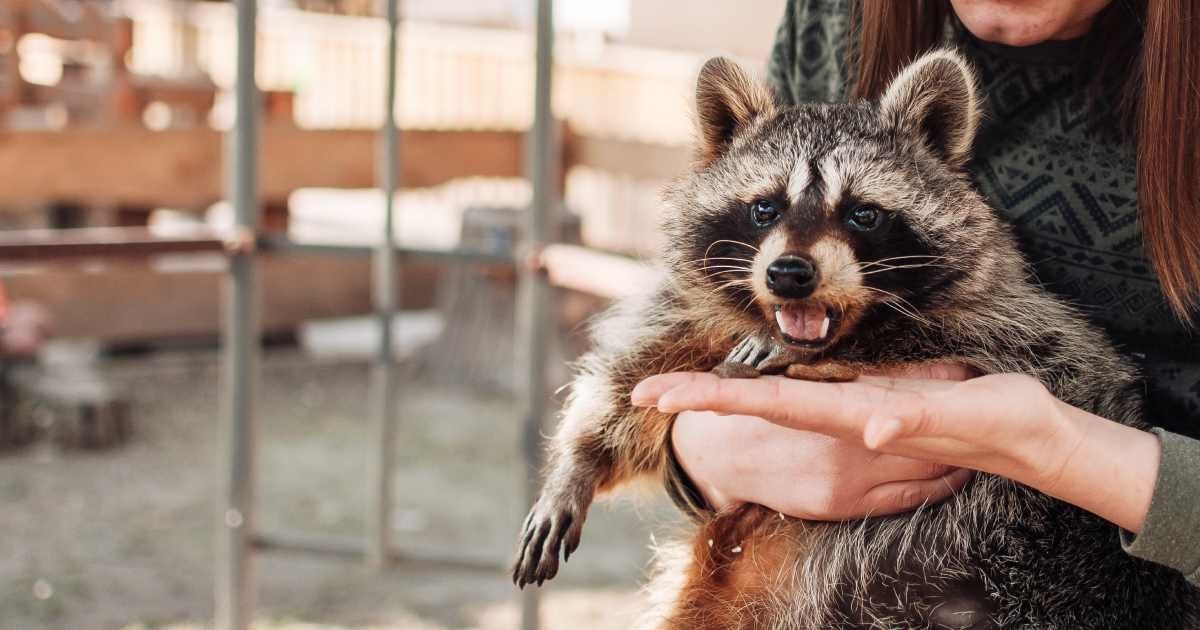
The word “raccoon” comes from the Powhatan term “aroughcun,” meaning “animal that scratches with its hands.” Known for their dexterous paws and mischievous reputation, raccoons are often seen as tricksters. But this one-month-old baby raccoon wasn’t causing any trouble the day she fell from a treetop being cut down by woodcutters.

This was way back in 2014. The furry baby fell down into the backyard of Rosie Kemp. Kemp and her daughter Laura Young took the baby in their loving embrace and hoped to see her mother coming to take her away. But when hours went by and the raccoon’s mom didn’t show up, they figured out that she was an orphan.

They initially contacted the Bahamas Humane Society, but when the organization was unable to take in the injured raccoon, Laura and her husband William decided to adopt her. “They were unable to take in an orphaned raccoon,” Young told CBS News. “So, with the guidance of friends who have had experience with raccoons, we cared for her.”


It took nearly a month for the baby raccoon to heal her injured leg, after which the Young’s family named her “Pumpkin.” Over time, Pumpkin formed a close bond with the two pet dogs of Young, Toffee and Oreo. Young created an Instagram page by the name of “Pumpkin The Raccoon,” and the page currently has reached a whopping 1.1 million followers. With this page, Pumpkin emerged as a superstar public figure and social media celebrity. On this page, Young usually posts endearing pictures of Pumps living a pampered life in their Bahamian cottage. The pictures were so captivating to the audience that Pumpkin was once featured on the cover of Garden & Gun magazine. These bonny photographs of the toddler raccoon included Pumpkin and Oreo taking naps together, playing in the backyard, relaxing on the couch and more likewise.


From dipping into turquoise swimming pools to climbing on the kitchen countertop to grasp a cup of coffee, from nibbling pancakes with maple syrup to cuddling in cozy blanket covers, from smelling pepperoni off a cold pizza to munching biscotti biscuits and enjoying avocado, people enjoyed seeing the entertaining and playful gestures of the black-white-grey nocturnal animal. “She is so wonderful and highly intelligent and always very entertaining,” Young described to CBS News. “She is a cheeky little thing, but we love her dearly.”


Fast forward to a year, in a sad note posted on July 7, 2021, Young wrote that her young pet was suffering from an illness and she had to say goodbye to her. “One day in October, when Pumpkin came in and plopped her large bottom on the sofa with me I thought perhaps one of the huge military helicopters flying over gave her a fright. After that hour she jumped down and went for a drink of water and I prepared her supper. That’s when the vomiting started. She had never done that before. After an hour of observing her, I called her vet and she came over. We both agreed she had probably eaten something foul and it wasn’t agreeing with her. She gave her a shot to settle her stomach. However, something just wasn’t right. She didn’t seem herself at all. She seemed tired and drained. She was refusing dinner, and every time she drank any water she would throw up.”


In the following posts, Young described that there was a giant mass in Pumpkin’s stomach. A surgery was carried out to remove this mass. However, unfortunately, the vet told her that the mass was too big and recommended that the raccoon needed to be let go. Young posted about this in part four of “Saying Goodbye” posts. In October 2019, Young declared that her beloved raccoon died at the age of five. “She really was more than just my pet. Those first few hours after we said goodbye to her were daggers to my heart, but now I am able to glance up at that empty cupboard space and smile and remember her fondly.”


Later on, Young penned a book titled “The Raccoon Who Thinks She Is A Dog,” describing her experiences with Pumpkin. As for the Instagram page “Pumpkin The Raccoon,” Young has decided to continue it in dedication to her beloved pet. Through this page, she regularly raises donations for charities and organizations like World Central Kitchen, Bahamas Humane Society and more.


This story originally appeared eight months ago. 

  • How birdwatching makes your brain stronger and healthier
    A birdwatching hobby could help keep the brain healthy into old age.Photo credit: Canva

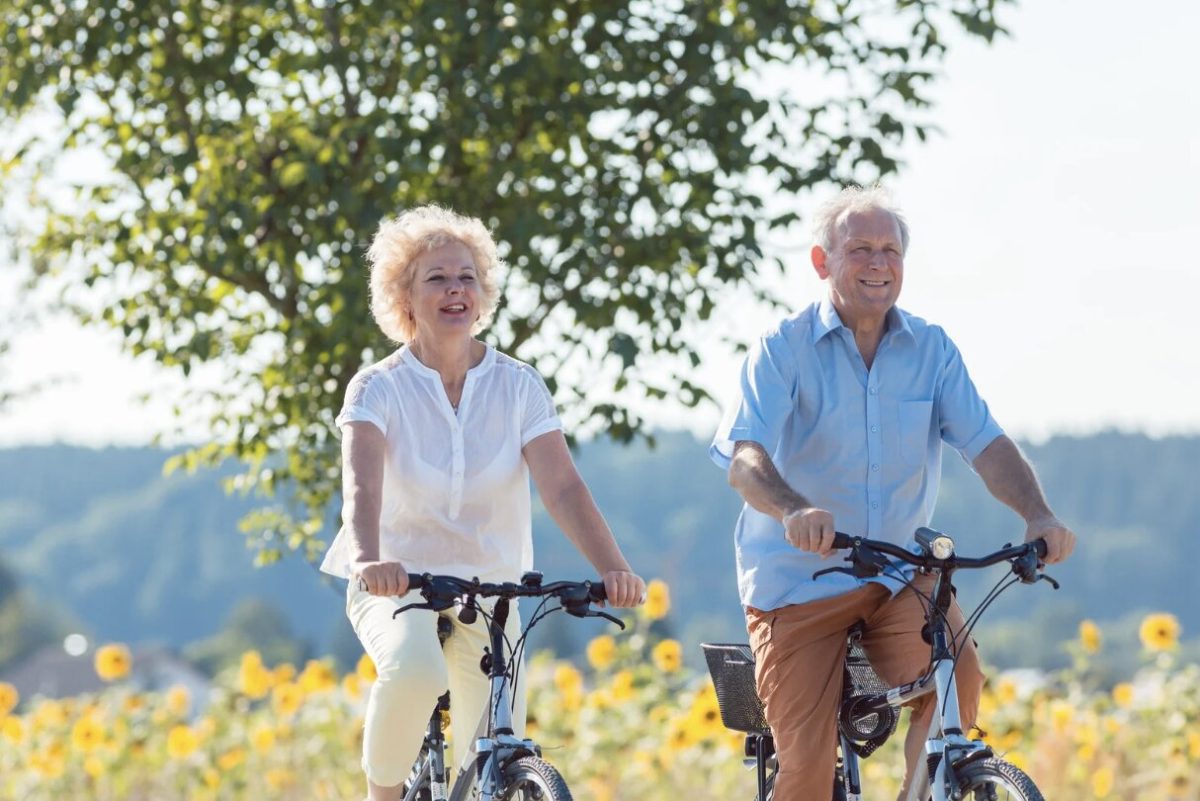
    Birdwatching, or “birding,” is a calm hobby that many people, especially older adults, tend to gravitate toward. It allows people to increase their knowledge and appreciation of our feathered friends flying above us. It can also, according to a published study, help maintain brain health as we age.

    A Canadian study of adult birdwatchers with varying levels of experience found something interesting: the brains of more seasoned birdwatchers had denser areas related to perception and attention than those of novices. This density was also present in older participants.

    @todayshow

    It turns out birding might be good for the brain! A new study published in the Journal or Neuroscience says birdwatching can improve attention and perception. Al shares more about his hobby, and Craig shares a hilarious story about the time he caught Al talking to the birds at his bird feeder. 🐦 #AlRoker #Birding

    ♬ original sound – TODAY Show – TODAY Show

    Compared to their less experienced counterparts, expert birdwatchers also showed increased activity in three brain regions when identifying non-local birds: the bilateral prefrontal cortex, bilateral intraparietal sulcus, and right occipitotemporal cortex. These regions are involved in attention, memory, object identification, and visual processing.

    This suggests that taking up birdwatching could help maintain brain function and encourage neuroplasticity as we age. That makes sense, given how mentally engaging birdwatching can be.

    “[Birding] combines fine-grain identification, visual search and attention to the immediate environment and sensitivity to motion, pattern detection, building these elaborate conceptual networks of different related species,” said Erik Wing, a research associate at York University in Toronto and lead author of the study, according to NBC News

    @birdladydrin

    Reply to @narielthetrue They’re getting used to me!!! 💕 #birdladydrin #facefeeder #chickadee #birdwatching #fyp

    ♬ Funny Song – Sounds Reel

    Should birdwatching be a part of senior living?

    Caregivers for seniors can vouch for birdwatching as a brain-stimulating activity for older adults.

    Debra Maddox, director of community relations at Springs Ranch, a memory care senior living center in Colorado Springs, Colorado, tells GOOD that birdwatching has become a regular part of their clients’ activities and care.

    “Because many of our residents who are living with dementia enjoy birdwatching, last summer, we installed a wild bird sanctuary outside our dining room windows,” said Maddox. “Since then, watching the various bird types has become a popular activity enjoyed by residents, families, and team members.”

    “The activity offers sensory stimulation, promotes relaxation, and provides opportunities to reminisce, all of which are especially meaningful for those living with memory loss,” added Maddox. “Additionally, when our residents and their families birdwatch together, they connect on a unique level and discuss what they see outside.” 

    A geriatrician weighs in on birdwatching

    Dr. Manisha Santosh Parulekar, a geriatrician at Hackensack Meridian Health, confirmed the potential brain benefits of birdwatching to GOOD.

    “[Birdwatching] is a mentally stimulating activity that can be as simple or as challenging as you choose to make it, from identifying common backyard birds to learning complex bird songs and migration patterns,” said Parulekar. “Research has shown that learning new, cognitively demanding skills can enhance memory function in older adults.”

    Parulekar added that birdwatching can help an older person’s brain for reasons outside of the actual activity.

    “Furthermore, hobbies like birdwatching can become a meaningful part of one’s daily routine, providing a sense of purpose and accomplishment,” she said. “It can also be a social activity, connecting you with a community of fellow enthusiasts and warding off the loneliness and depression that can contribute to memory loss. Consistently engaging in such purposeful activities is a powerful, evidence-based strategy for lowering the risk of dementia and extending your ‘healthspan,’ the years you live without chronic disease or disability.”

    While evidence can’t prove that birdwatching prevents cognitive decline, it’s helpful to know that staying active and participating in hobbies like this can help our brains “stay in shape” as we grow older and wiser.

  • Oxygenating hydrogel and a tiny battery may heal chronic wounds and transform recovery
    Cream on a young girl’s burn.Photo credit: Canva
    ,

    Oxygenating hydrogel and a tiny battery may heal chronic wounds and transform recovery

    Self-oxygenating gel could save limbs, heal chronic wounds, and grow organs.

    Researchers at the University of California, Riverside created a new gel that oxygenates and regenerates damaged tissue. By attaching a tiny battery about the size of a hearing aid, the gel becomes an electrochemical device capable of healing previously unhealable wounds. This breakthrough oxygenating hydrogel could reshape tissue restoration and address challenges across multiple conditions.

    Some injuries develop complications and never fully heal. Without sufficient oxygen reaching the deeper layers of the skin, these wounds remain inflamed and never receive the medication needed to heal.

    medicine, medical professionals, wound, nurse
    A medical provider treats a wound.
    Photo credit: Canva

    Researchers create oxygenating hydrogel

    People suffering from chronic wounds—injuries that haven’t healed for over a month—face the risk of potential amputation. In the absence of oxygen, bacteria continue to flourish and the deepest layers of tissue worsen instead of rebuilding—a condition known as hypoxia.

    The 2026 UC Riverside study described a soft, flexible gel containing a nontoxic, antibacterial liquid and water. When an electric current travels through the hydrogel, the water molecules split, releasing a steady trickle of healing oxygen. By placing the gel-and-battery system into an absorbent patch, the hydrogel can be replaced as needed.

    Iman Noshadi, an associate professor at UC Riverside who led the research team, described the problem this way:

    “There are four stages to healing chronic wounds: inflammation, vascularization where tissue starts making blood vessels, remodeling, and regeneration or healing. In any of these stages, lack of a stable, consistent oxygen supply is a big problem.”

    medicine, medical challenges, hypoxia, tissue damage
    Hypoxia is a medical term that means low oxygen levels in the body’s tissues.
    Photo credit: Canva

    A steady flow of healing oxygen

    A 2024 study published in Oxford Academic revealed that hypoxia is a natural part of the healing process. In the early stages, it helps wounds form and promotes cell migration. However, chronic hypoxia in long-term wounds harms immune function and limits tissue regeneration.

    There are significant benefits to using the oxygenating hydrogel. First, the gel adapts to a wound’s specific shape. By seeping into small gaps, it reaches areas where oxygen levels drop and infection risk is highest. Second, it delivers a continuous flow of oxygen that can last up to a month. Because tissue regrowth can take weeks, brief oxygen spikes don’t solve hypoxia. With controlled oxygen release, cells that were once unstable can begin to regrow.

    science, oxygen, periodic table, chemical elements
    The chemical element oxygen.
    Photo credit: Canva

    Oxygenating hydrogel has future applications

    One of the major challenges in organ-growing research has been oxygen supply.

    A 2025 study by researchers at Stanford University revealed that a lack of internal blood vessels limits oxygen delivery to growing cells. As a result, engineered tissues have restricted growth and never reach full maturity. Another 2025 study by a team at the University of Tokyo attempted to mimic the placenta to enhance liver growth, again aiming to counter the challenges posed by hypoxic conditions.

    Noshadi believes the gel could be a “bridge to creating and sustaining larger organs for people in need of them.”

    Whether scientists are trying to heal chronic wounds or grow fully functional organs, the challenge often comes down to oxygen. Innovations like oxygenating hydrogel aim to solve this problem. By delivering oxygen exactly where it’s needed, the technology could become a turning point—transforming stalled healing and organ engineering into life-changing medical breakthroughs.

  • Husband discovers his wife’s early-morning alarm habit was secretly ruining his sleep every day
    (L) A woman sleeps soundly; (R) A man can't fall asleepPhoto credit: Canva

    He thought he was just tired from a busy schedule. His wife needed to be up by 6:30 a.m. His own alarm didn’t go off until 7:45. The gap seemed manageable. Then he looked at her phone.

    Under the username u/Cautious-Extreme-208, the man posted to social media on February 11, 2026, explaining what he found: not one alarm, but a chain of them, programmed at five-minute intervals from 6 a.m. to 6:45 a.m. Nine separate alarms. Each one nudging him slightly further from sleep before he had any reason to be awake. He called the screenshot he shared the “dark truth” behind his wife’s morning routine. The post has since been deleted, but not before Newsweek picked it up and the comment section filled with people saying some version of the same thing: same. Same house, same problem.

    A 2025 study from Harvard Medical School and Brigham and Women’s Hospital, published in Nature, analyzed more than 3 million nights of sleep data from users of a sleep monitoring app and found that more than half of all sleep sessions, 55.6%, ended with a snooze alarm. The average snoozer hit the button 2.4 times per morning, for a total of about 11 minutes of fragmented half-sleep. The researchers described frequent snooze alarm use as a potential marker of poor sleep health overall, and recommended that people set their alarm for the latest realistic wake time rather than building in a buffer of repeated alerts.

    sleep health, relationships, habits, science, mental health
    A frustrated man suffers from insomnia. Photo credit: Canva

    The logic makes sense once you understand what the alarm is actually interrupting. Sleep in the final hour or two before waking tends to include some of the most important rest your brain gets, the kind that consolidates memory, processes emotion, and leaves you feeling human. Every alarm that fires before you need to be up pulls you partially out of that state. Not enough to wake you, but enough to disrupt it. Multiply that by nine alarms over 45 minutes and you have a pretty efficient system for making two people feel worse than they should.

    That said, the science isn’t entirely one-sided. A 2024 study published in the Journal of Sleep Research found that for habitual late sleepers, a brief snooze period of around 30 minutes actually improved cognitive performance on rising compared to an abrupt awakening, and helped prevent being jolted out of the deepest stages of sleep. The key word there is brief. A single snooze as a gentle transition is a different thing from a 45-minute chain of beeps every five minutes.

    Back on Reddit, the responses ranged from sympathetic to practical. u/One_Anything_2279 related immediately, joking about his own earlier-rising wife: “I hope she doesn’t find this and think this is my post.” u/Tempyteacup was blunt about the habit: “genuinely really bad for your sleep,” they wrote, recommending one alarm set for the time you actually need to get up. u/RefuseMysterious513 mentioned using apps that require solving a math problem before the alarm stops, a trick that forces full wakefulness. u/MJR-WaffleCat kept it simple: phone across the room.

    None of those solutions address the underlying issue, which is that two people sharing a bed with an hour-plus difference in their wake times are always going to need some negotiation. The alarms are almost beside the point. What the post really captured is the small, daily math of living with another person’s schedule, and how much it costs you in sleep before you even realize it’s happening.

    This article originally appeared earlier this year.

Explore More Health Stories

Health

New research says that if you want an entrepreneur to be successful, tell them they will fail

Well-being

These seven simple phrases could be the secret to deepening trust and romance in your relationship

Health

New Chinese study suggests meat eaters are more likely to reach 100 than people on plant-based diets

Health

Whether it’s yoga, rock climbing or Dungeons & Dragons, taking leisure to a high level can be good for your well-being