Every evening, when it’s time to kick back after a busy day seeing patients, pain management physician Daniel Cartledge of Delray Beach, Florida, relaxes in a comfortable club chair and turns on his NERVANA, a device with earbuds that’s both a music player and a transcutaneous vagal nerve stimulator. More plainly, the earbuds send gentle electrical pulses, synced with the listener’s playlist of choice, through the ear to one of the most critical regulatory nerves in the body.


For Cartledge, using the NERVANA “takes away the background noise in my brain,” he says. “I feel relaxed and focused.” Along with his heart-surgeon brother, Richard, he developed the NERVANA, available to consumers in 90 countries. Cartledge’s invention is just one of a new wave of vagus nerve stimulators currently being studied or already in use, offering a variety of applications across a diverse range of ailments, from autoimmune diseases and depression to epilepsy and digestive disorders like Crohn’s.

Vagus in Latin means wandering, and that’s exactly what the vagus nerve does as it passes through the major organs. Originating in the brain stem and extending all the way down to the colon, the nerve regulates many important bodily functions. As part of the parasympathetic nervous system, often referred to as the “rest and digest system,” it can calm you down, and is responsible for that pleasant feeling of satiety and sedation after eating. It also helps regulate heart rhythm.

[quote position=”left” is_quote=”true”]Our nerves speak an electrical language, and they use that language to talk directly to cells.[/quote]

Vagus nerve stimulation (VNS) has been associated with many benefits, such as improved memory, immune function, sleep, and mood, as well as higher levels of growth hormone. VNS may also help tame inflammation, allergic responses, and tension headaches. There are over 30 clinical trials underway on the vagus nerve, many of which are testing for the success or failure of noninvasive stimulation gadgets like the NERVANA.

Here, a quick review of bioelectronics with great promise for several chronic conditions:

Rheumatoid Arthritis

An implantable device that stimulates the vagus nerve has been shown to improve rheumatoid arthritis, a painful autoimmune disease in which inflammation damages joints. Powerful medications can help tame the disabling pain and swelling of rheumatoid arthritis, often by quelling the production of an inflammatory molecule called TNF (tumor necrosis factor). In a 2016 study of 17 patients, a stimulation device was implanted and then activated and deactivated on a set schedule for 84 days. Several patients that had failed to respond to multiple medications had a strong response to the vagus nerve stimulator. TNF production was significantly inhibited, and no serious side effects were noted.

“This is more than a vagus nerve story, more than a TNF story, and even more than a rheumatoid arthritis story,” says one of the study’s authors, Kevin Tracey, M.D. of the Feinstein Institute for Medical Research in Long Island. “The big story here is that you can start with a molecular target such as TNF, and rather than screening or devising drugs to reduce it, you can target that molecule by using an electronic device.”

One might wonder, how does a device that stimulates a nerve manage to treat an autoimmune disease? Tracey points out that our nervous system has evolved to coordinate information from all the body’s cells in order to regulate them and keep them healthy. “Our nerves speak an electrical language, and they use that language to talk directly to cells,” he says.

The study needs to be repeated in a large group of patients in order to definitively prove its efficacy and ensure its safety, but Tracey believes that similar devices may eventually be used in a range of diseases involving inflammation—from hypertension to diabetes to inflammatory bowel disease.

Epilepsy, Depression, and Pain

An implantable device that stimulates the nerve has been shown to help prevent or reduce epileptic seizures, reduced by up to 40 percent, allowing patients to reduce their medication dosages. Surgically implanted devices last up to 10 years, though a new noninvasive device—the wearable ear electrode NEMOS—has been approved in Germany, Austria, and Italy for treating epilepsy, depression, and pain. Like NERVANA, NEMOS stimulates the vagus nerve through the ear, where a branch of the nerve surfaces in front of the ear canals.

In one study of 48 volunteers, which was double-blind placebo using either a sham device or NEMOS, active treatment reduced deep tissue pain as well as the perception of pain from mechanical stimulation. In another study of 10 epileptic patients with seizures that were not responsive to medication, vagus nerve stimulation for nine months reduced frequency of seizures in five patients. Major depressive disorder has also proven responsive; a study from Harvard Medical School and the China Academy of Chinese Medical Sciences found that patients who received real vagus nerve stimulation via an ear electrode showed significant improvement in depression, while those who received sham treatment did not improve.

Migraines

More than 28 million Americans suffer from migraine headaches, and nearly three-quarters of those are women. A double-blind placebo clinical trial of a vagus nerve stimulator called NET-1 demonstrated significant reduction in the frequency and intensity of migraines. Two subsequent three-month studies also showed significant improvement. Other studies on migraine and vagus nerve stimulation also demonstrated improvement. The device has since been improved and modified and is now called NET-1000. Both the NET-1000 and a NET-3000 device are available in the United States without any attached medical claims of safety or efficacy. A different version, the NET-2000, has received FDA approval as a Class III device by prescription only for indications of depression, anxiety, and insomnia.

[quote position=”full” is_quote=”true”]Rather than devising drugs to resolve a medical issue, you can use an electronic device.[/quote]

“There has been over thirty years of research on vagal nerve stimulation,” says Cartledge. And though his device makes no medical claims, and Cartledge does not use the NERVANA when treating his pain patients, he has been impressed with the effectiveness of “ear electroacupuncture” in his fibromyalgia patients. It turns out that some ancient ear acupuncture points, demonstrated to be effective for pain and constipation, overlap with the vagus nerve’s path. So we’ve been stimulating the vagus nerve without actually naming it for centuries—often without the help of a device.

Another gadget-free method for vagus nerve stimulation involves meditation: A 2013 study found that vagus function increased with a regular meditation practice. Study participants were randomly assigned to either a group that generated positive emotions via loving-kindness meditation or to a control group that did not meditate. Those who repeated silent phrases such as “May you feel safe, may you feel happy, may you feel healthy, may you live with ease” experienced a surge in vagal tone, as well as improvements to health throughout the body.


  • Experts say you can ‘talk’ to someone using your eyebrows regardless of language or culture
    You say more with your eyebrows than you probably realize.Photo credit: Canva

    In order to communicate and read others effectively, people need to pay attention to others’ body language and their words. Of course, it’s not always easy to decipher. People can interpret body language very differently from one another, but some physical signs are universal (like a smile). However, more than just smiles are universal. New research suggests that, regardless of culture or language, understanding can be found in our eyebrows.

    Communication expert Vanessa Van Edwards shared how important eyebrows are for conveying and interpreting curiosity, engagement, and interest. Van Edwards explains that raising our eyebrows comes from humans wanting to widen their eyes to visually get a closer look at something. This behavior has since translated into nonverbally communicating the same thing in conversations. Seeing a person raise both eyebrows indicates that the conversation is in your favor. If their eyebrows are neutral or furrowed, you may want to make pivots or switch topics.

    @vvanedwards

    The Eyebrow Cue You’ve Been Ignoring

    ♬ original sound – Vanessa Van Edwards

    According to psychologist Dane Archer, as quoted by the Los Angeles Times, eyebrows are especially revealing. The eyes, brows, and forehead tend to show more authentic expression and are less performative than the lower half of the face. “If we are trying to mask our feelings, we do it with our lower face,” Archer said. “The upper face is under a little less control.”

    These aren’t the only experts vouching for the importance of eyebrows in human communication. A 2025 study at the Max Planck Institute for Psycholinguistics found that eyebrows were essential for signaling problems of understanding. An audience member raising or furrowing their eyebrows can indicate to a speaker whether listeners understand or need more information.

    A speaker can tell how they’re being received by reading their listeners’ eyebrows. Either the audience is tracking with them, or the speaker needs to elaborate on a point. If a listener furrows their eyebrows and the speaker notices, they can pivot mid-speech to provide a clearer example. Once eyebrows return to a neutral position—or signal understanding—the speaker can move on.

    According to research from the Max Planck Institute for Psycholinguistics, eyebrows are “initiating repair during conversation” to fix any misunderstandings on the fly.

    Researchers say this eyebrow movement isn’t just helpful for verbal communication, it also plays an important role in sign language. In American Sign Language, furrowed eyebrows while signing indicate that someone is requesting information. When asking a question, ASL users rely on brow movement to signal whether the question is genuine or rhetorical.

    While eyebrows primarily help keep sweat out of our eyes, psychologists argue there are other reasons we have them. Eyebrows are key factors in how humans evolved for communication, helping us express emotion to one another without words.

    This helps explain why expressions conveyed through eyebrows are nearly universal, regardless of differences in culture or language—and, in some cases, even species. Domesticated dogs, for example, have evolved prominent inner eyebrows that help them communicate more effectively with humans.

    The next time you’re conversing with someone, it’d be worth looking at their eyebrows to see what they’re truly saying back to you.

  • How birdwatching makes your brain stronger and healthier
    A birdwatching hobby could help keep the brain healthy into old age.Photo credit: Canva

    Birdwatching, or “birding,” is a calm hobby that many people, especially older adults, tend to gravitate toward. It allows people to increase their knowledge and appreciation of our feathered friends flying above us. It can also, according to a published study, help maintain brain health as we age.

    A Canadian study of adult birdwatchers with varying levels of experience found something interesting: the brains of more seasoned birdwatchers had denser areas related to perception and attention than those of novices. This density was also present in older participants.

    @todayshow

    It turns out birding might be good for the brain! A new study published in the Journal or Neuroscience says birdwatching can improve attention and perception. Al shares more about his hobby, and Craig shares a hilarious story about the time he caught Al talking to the birds at his bird feeder. 🐦 #AlRoker #Birding

    ♬ original sound – TODAY Show – TODAY Show

    Compared to their less experienced counterparts, expert birdwatchers also showed increased activity in three brain regions when identifying non-local birds: the bilateral prefrontal cortex, bilateral intraparietal sulcus, and right occipitotemporal cortex. These regions are involved in attention, memory, object identification, and visual processing.

    This suggests that taking up birdwatching could help maintain brain function and encourage neuroplasticity as we age. That makes sense, given how mentally engaging birdwatching can be.

    “[Birding] combines fine-grain identification, visual search and attention to the immediate environment and sensitivity to motion, pattern detection, building these elaborate conceptual networks of different related species,” said Erik Wing, a research associate at York University in Toronto and lead author of the study, according to NBC News

    @birdladydrin

    Reply to @narielthetrue They’re getting used to me!!! 💕 #birdladydrin #facefeeder #chickadee #birdwatching #fyp

    ♬ Funny Song – Sounds Reel

    Should birdwatching be a part of senior living?

    Caregivers for seniors can vouch for birdwatching as a brain-stimulating activity for older adults.

    Debra Maddox, director of community relations at Springs Ranch, a memory care senior living center in Colorado Springs, Colorado, tells GOOD that birdwatching has become a regular part of their clients’ activities and care.

    “Because many of our residents who are living with dementia enjoy birdwatching, last summer, we installed a wild bird sanctuary outside our dining room windows,” said Maddox. “Since then, watching the various bird types has become a popular activity enjoyed by residents, families, and team members.”

    “The activity offers sensory stimulation, promotes relaxation, and provides opportunities to reminisce, all of which are especially meaningful for those living with memory loss,” added Maddox. “Additionally, when our residents and their families birdwatch together, they connect on a unique level and discuss what they see outside.” 

    A geriatrician weighs in on birdwatching

    Dr. Manisha Santosh Parulekar, a geriatrician at Hackensack Meridian Health, confirmed the potential brain benefits of birdwatching to GOOD.

    “[Birdwatching] is a mentally stimulating activity that can be as simple or as challenging as you choose to make it, from identifying common backyard birds to learning complex bird songs and migration patterns,” said Parulekar. “Research has shown that learning new, cognitively demanding skills can enhance memory function in older adults.”

    Parulekar added that birdwatching can help an older person’s brain for reasons outside of the actual activity.

    “Furthermore, hobbies like birdwatching can become a meaningful part of one’s daily routine, providing a sense of purpose and accomplishment,” she said. “It can also be a social activity, connecting you with a community of fellow enthusiasts and warding off the loneliness and depression that can contribute to memory loss. Consistently engaging in such purposeful activities is a powerful, evidence-based strategy for lowering the risk of dementia and extending your ‘healthspan,’ the years you live without chronic disease or disability.”

    While evidence can’t prove that birdwatching prevents cognitive decline, it’s helpful to know that staying active and participating in hobbies like this can help our brains “stay in shape” as we grow older and wiser.

  • Oxygenating hydrogel and a tiny battery may heal chronic wounds and transform recovery
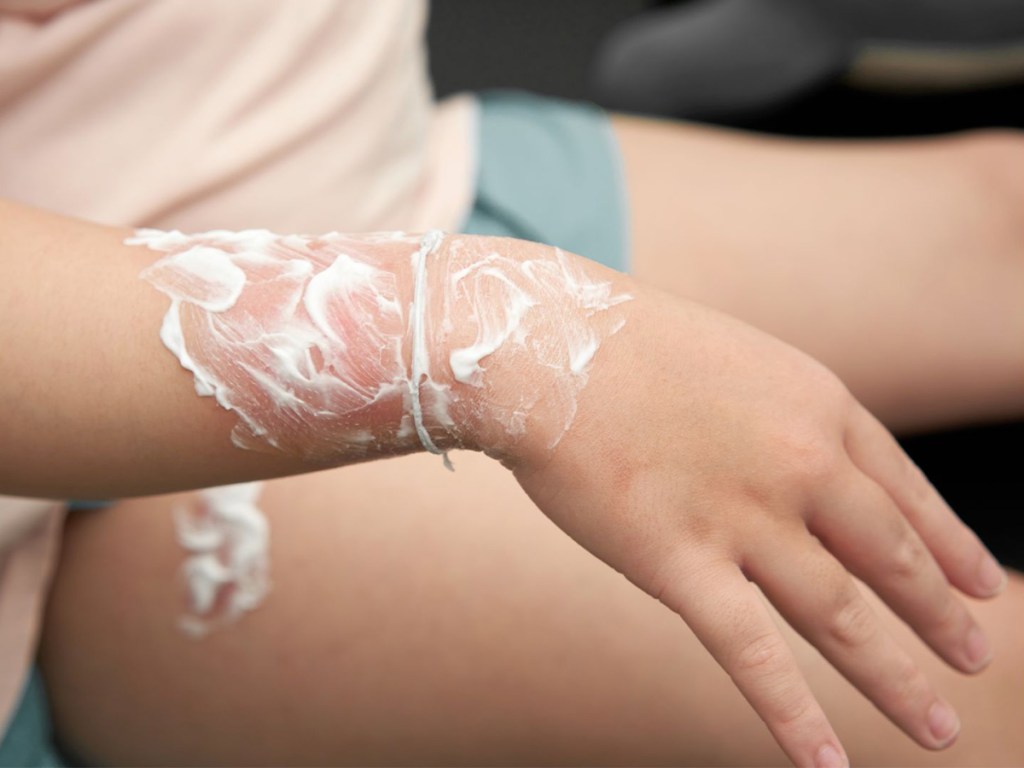
    Cream on a young girl’s burn.Photo credit: Canva
    ,

    Oxygenating hydrogel and a tiny battery may heal chronic wounds and transform recovery

    Self-oxygenating gel could save limbs, heal chronic wounds, and grow organs.

    Researchers at the University of California, Riverside created a new gel that oxygenates and regenerates damaged tissue. By attaching a tiny battery about the size of a hearing aid, the gel becomes an electrochemical device capable of healing previously unhealable wounds. This breakthrough oxygenating hydrogel could reshape tissue restoration and address challenges across multiple conditions.

    Some injuries develop complications and never fully heal. Without sufficient oxygen reaching the deeper layers of the skin, these wounds remain inflamed and never receive the medication needed to heal.

    medicine, medical professionals, wound, nurse
    A medical provider treats a wound.
    Photo credit: Canva

    Researchers create oxygenating hydrogel

    People suffering from chronic wounds—injuries that haven’t healed for over a month—face the risk of potential amputation. In the absence of oxygen, bacteria continue to flourish and the deepest layers of tissue worsen instead of rebuilding—a condition known as hypoxia.

    The 2026 UC Riverside study described a soft, flexible gel containing a nontoxic, antibacterial liquid and water. When an electric current travels through the hydrogel, the water molecules split, releasing a steady trickle of healing oxygen. By placing the gel-and-battery system into an absorbent patch, the hydrogel can be replaced as needed.

    Iman Noshadi, an associate professor at UC Riverside who led the research team, described the problem this way:

    “There are four stages to healing chronic wounds: inflammation, vascularization where tissue starts making blood vessels, remodeling, and regeneration or healing. In any of these stages, lack of a stable, consistent oxygen supply is a big problem.”

    medicine, medical challenges, hypoxia, tissue damage
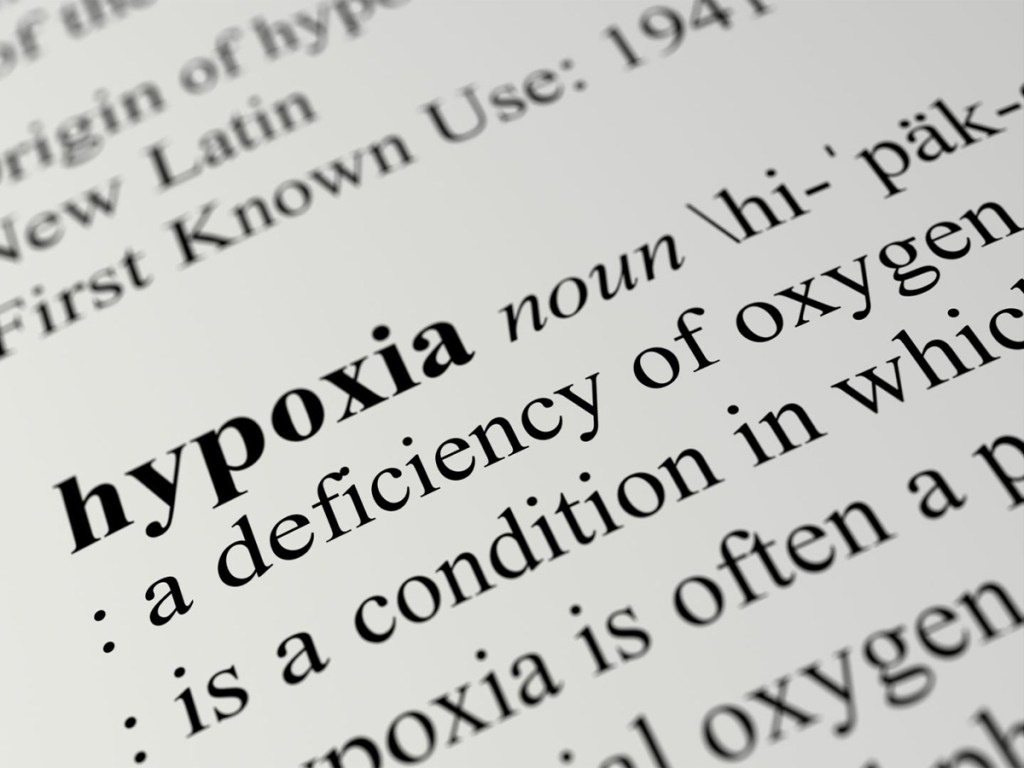
    Hypoxia is a medical term that means low oxygen levels in the body’s tissues.
    Photo credit: Canva

    A steady flow of healing oxygen

    A 2024 study published in Oxford Academic revealed that hypoxia is a natural part of the healing process. In the early stages, it helps wounds form and promotes cell migration. However, chronic hypoxia in long-term wounds harms immune function and limits tissue regeneration.

    There are significant benefits to using the oxygenating hydrogel. First, the gel adapts to a wound’s specific shape. By seeping into small gaps, it reaches areas where oxygen levels drop and infection risk is highest. Second, it delivers a continuous flow of oxygen that can last up to a month. Because tissue regrowth can take weeks, brief oxygen spikes don’t solve hypoxia. With controlled oxygen release, cells that were once unstable can begin to regrow.

    science, oxygen, periodic table, chemical elements
    The chemical element oxygen.
    Photo credit: Canva

    Oxygenating hydrogel has future applications

    One of the major challenges in organ-growing research has been oxygen supply.

    A 2025 study by researchers at Stanford University revealed that a lack of internal blood vessels limits oxygen delivery to growing cells. As a result, engineered tissues have restricted growth and never reach full maturity. Another 2025 study by a team at the University of Tokyo attempted to mimic the placenta to enhance liver growth, again aiming to counter the challenges posed by hypoxic conditions.

    Noshadi believes the gel could be a “bridge to creating and sustaining larger organs for people in need of them.”

    Whether scientists are trying to heal chronic wounds or grow fully functional organs, the challenge often comes down to oxygen. Innovations like oxygenating hydrogel aim to solve this problem. By delivering oxygen exactly where it’s needed, the technology could become a turning point—transforming stalled healing and organ engineering into life-changing medical breakthroughs.

Explore More Health Stories

Health

Oxygenating hydrogel and a tiny battery may heal chronic wounds and transform recovery

Health

Husband discovers his wife’s early-morning alarm habit was secretly ruining his sleep every day

Health

New research says that if you want an entrepreneur to be successful, tell them they will fail

Well-being

These seven simple phrases could be the secret to deepening trust and romance in your relationship