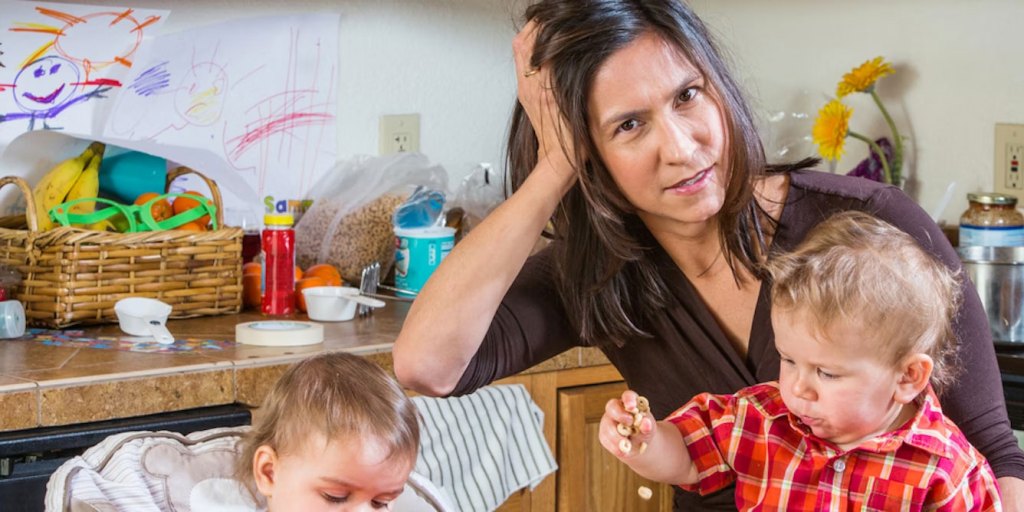

Even armed with a Ph.D. in developmental psychology, I remember the frightening first moments after bringing my newborn daughter home from the hospital. I wasn’t sure what to do – and not at all confident that I was capable of being the parent she needed me to be. Every little decision about feeding and caring for this helpless human seemed momentous and fraught with anxiety. What if I don’t make it a full year of breastfeeding? Should I turn off the TV whenever she is in the room to avoid passive screen exposure? Is it OK for her to enter full-time day care at five months?

Popular press accounts of parenting and child development research were not particularly helpful, either. Even though as a scientist I knew better, the way the research was translated for the public lacked nuance and easily penetrated my vulnerable state of mind. I fretted that my daughter’s formula consumption would result in lower IQ. I worried that if I was too tired to read to her one evening before bed, she would never learn to read. And, since she’s started elementary school, I have slipped numerous times and called her “smart” instead of more appropriately praising her effort, as so many articles advise.

My personal experiences as a parent are in part why I study the experiences of other parents. In my New Parents Project, an ongoing longitudinal study of nearly 200 dual-earner couples who welcomed their first children in 2008-2009, I have tried to measure this “parenting perfectionism” – that is, holding oneself to impossibly high standards for parenting, and, perhaps even more important, believing that others hold you to impossibly high standards for parenting.

Pressure to be perfect

Mothers – even those in dual-earner families – not only bear the brunt of parenting responsibilities, but also experience the strongest pressure to be perfect parents.

In the latter half of the 20th century, at the same time mothers entered the workforce in greater numbers, norms for mothering evolved toward an “intensive mothering” ideal. This norm dictates that mothers’ parenting should be time-consuming, emotionally absorbing and guided by expert advice. This pressure is particularly intense for middle-class mothers, who may practice a childrearing style called concerted cultivation, an approach identified by Annette Laureau in the early 2000s. This style focuses on deliberately providing children with experiences and activities that will help them develop their intellectual and social skills.

Middle-class parents, especially those toward the upper end of the socioeconomic spectrum, have the human capital resources – time and money – to practice concerted cultivation and do so to ensure their children’s future success.

Social media = stress.
Social media = stress. Mother with laptop via www.shutterstock.com.

Striving for perfection can harm parenting

The quest to be a “perfect” mother may actually harm a mother’s parenting. In my lab’s research on new parents, we found that mothers showed less confidence in their parenting abilities when they were more worried about what other people thought about their parenting.

The popularity of social media has likely exacerbated this phenomenon because parents can look at what other parents are doing – even in ostensibly private moments – and judge themselves in comparison. In fact, recent research has linked greater Facebook use to feelings of depression due to the way individuals tend to compare themselves to others. In my own research, when we asked new parents about their Facebook use, mothers who were more frequent visitors to the site and who managed their accounts more frequently reported higher levels of parenting stress.

The irony is that in seeking perfection in parenting, parents are less likely to actually parent effectively. Worrying about what others think of their parenting saps mothers’ confidence, leading them to experience parenting as less enjoyable and more stressful. When faced with inevitable parenting challenges, mothers with lower confidence and more parenting stress give up more quickly.

Put the laptop down and stop worrying.
Put the laptop down and stop worrying. Mother and child via www.shutterstock.com.

So what does a ‘good’ parent look like?

There may be disagreement among child development experts about issues such as screen time or sleep routines, but there is striking agreement about the key elements of “good” parenting, even if consensus is less likely to make headlines than the latest parenting controversy.

Good parenting has a lot more to do with the “how” than the “what.” Good parents are those who are sensitive to their children’s needs, and “in tune” with their children such that they are able to adjust their parenting as children develop and desire greater independence. Children thrive when their parents are consistent, warm, hold high expectations for children’s behavior, explain the reasons behind their rules and negotiate when appropriate.

Greater stress about parenting further depletes parents’ psychological resources, which may in turn affect their ability to adapt to the changing needs of their children and regulate their own emotions and behavior when parenting their children.

In other words, when you lack confidence and feel chronically stressed about parenting, it is hard to be sensitive, warm and consistent. You are more likely to yell when you intended to explain calmly to your toddler to stop banging her plate on the table for the millionth time. You may find yourself mentally “checked out” when your baby looks at you and gurgles or when your tween wants to tell you all about the latest Disney channel sitcom. You may give in to your preschooler’s endless demands for more Pokemon cards.

So this Mother’s Day, don’t sweat the small stuff. Remember that the big picture is what is important. Be aware that what other mothers post on Facebook may not represent the reality of their parenting experiences any more than it represents yours. View the latest sensational headline about parenting with a skeptical eye. Today – and every day – the best gift you can give yourself and your children may be permission to be imperfect.

This article originally appeared on The Conversation. You can read it here.
  • Are women board members risk averse or agents of innovation? It’s complicated, new research shows
    Photo credit: Fang Xia Nuo/Getty ImagesThe number of women on S&P 500 boards has increased in recent years.
    ,

    Are women board members risk averse or agents of innovation? It’s complicated, new research shows

    Board diversity can fuel patents or temper risk, depending on the stakes.

    Do women board members make a company more innovative or risk averse? The answer is both, according to our recent study. It all depends on how the company performs relative to its goals.

    Professors Małgorzata SmulowitzDidier Cossin and I examined 524 S&P 1500 companies from 1999 to 2016, measuring innovation through patent activity. Patents reflect both creative output and risk-taking. They require significant investment in novel ideas that might fail, disclosure of proprietary information and substantial legal costs. In short, patents represent genuine bets on the future.

    Our findings revealed a striking pattern. When companies performed poorly in relation to their goals, they produced fewer patents after more women joined their boards.

    However, companies exceeding their performance targets saw increased patent output as their number of women directors grew. Similarly, when companies were financially flush, there were more patents generated when their boards had more women.

    The situation changed when we examined radical innovations, those patents in the top 10% of citations. For these high-risk, high-reward innovations, the risk-averse effect of women board members dominated.

    When a company’s performance fell below aspirations, there were fewer radical innovations as its board gained female members. We found no corresponding increase in radical innovations when performance exceeded goals.

    One finding surprised us. We predicted that boards with more women would reduce innovation when companies approached bankruptcy. Instead, it was the opposite: Boards with more women actually increased patent output as bankruptcy loomed. This suggests that women directors may fight harder for a company’s survival through innovation when facing existential threats.

    Why it matters

    Between 2000 and 2024, the number of women on S&P 500 boards increased from 27% to 34%. But previous research has painted conflicting pictures on the effect that women board members may have. Some studies showed that women reduce corporate risk-taking, while others demonstrated they increase innovation and creativity. Our work suggests both perspectives are correct under different circumstances.

    For companies and regulators pushing for greater board gender diversity, this research provides practical guidance. Companies performing well can expect increased innovation by adding women to their boards. These directors can bring diverse perspectives, improved decision-making and better resource allocation that translate into more patents.

    Conversely, poorly performing companies can expect boards with more women to focus on stability over risky innovation. This isn’t necessarily negative.

    Research shows that banks led by women were less likely to fail during the financial crisis, and companies with more women directors experience less financial distress. Reduced innovation during tough times may reflect prudent risk management rather than risk aversion.

    Traditional theories predict that poor performance triggers risky searches for solutions. But boards with more women appear to prioritize organizational survival over uncertain innovation when performance suffers. They may assess that failed innovation attempts could worsen an already precarious situation.

    This research also speaks to the “glass cliff” phenomenon, where women often join boards during crisis periods. Our findings suggest these directors may bring exactly what struggling companies need: careful risk assessment and focus on survival rather than potentially wasteful innovation spending.

    What still isn’t known

    We measured innovation through patents, but many innovations never become patents. How women directors affect other forms of innovation – such as copyrights, trade secrets and first-mover advantage – remains unclear.

    What are the mechanisms driving the differences? Do women directors actively advocate for different innovation strategies? Do they change board discussion dynamics? Do they influence CEO and management team decisions indirectly? Future research needs to open the “black box” of boardroom decision-making.

    Finally, the long-term consequences need examination. We measured patent output, but not whether the patents translated into commercial success or competitive advantage. Understanding whether the innovation patterns we documented ultimately benefit company performance would provide crucial insights for decision-makers.

    This article originally appeared on The Conversation. You can read it here.
  • Cashiers share the 10 craziest, most bizarre customer interactions they’ve ever had
    Photo credit: CanvaTwo cashiers behind the counter at work.

    Many people have been a cashier at a business at some point in their lives. In fact, the U.S. Bureau of Labor Statistics says there are over three million cashiers working in the country today—and they all have stories. If you’ve ever worked behind the register, you might have some stories, too. Annoying stories about customers who irritated you, yelled at you, or were just jerks. Or positive stories like the time a customer bought you a coffee or offered a, “Have a nice day!” every time they showed up. Then, there’s the other category: the odd stories.

    For every hundred stories of an angry customer who brought an expired coupon or a customer that kindly bought the groceries of the person in line behind them, there is one bizarre tale from the world behind the counter. It could be a case of an odd but happy happenstance, over-the-top bad customers, acts of heroism, or just plain weird interactions that aren’t typically a part of a cashier’s day-to-day experience.

    Here are ten of the most bizarre cashier stories that folks have shared on Reddit and other spots online:

    10 of the Weirdest Cashier Stories

    1. The money spit

    “Worked in a small corner shop, after a longish wait in line, the guy had apparently become so bored that he’d decided to put all his loose change in his mouth. When it was his turn he looked really embarrassed and sheepish when he spit all of it out into his hand. I was disgusted on various levels. The only upside was that it was the exact amount.”

    2. “Please do not give your cat a can of Red Bull for breakfast.”

    “A woman comes in wanting to feed her cat raw food. I explain how you can buy X or Y brand, but you need to buy specific supplements because there isn’t any taurine in it (a needed nutrient for heart/eye health in cats). She pauses a moment before asking, ‘Like in Red Bull?’

    ‘Yeah, similar.’

    ‘So I can just like…open a can of Red Bull on it?’

    ‘…No. Please do not give your cat a can of Red Bull for breakfast.’”

    “She left without buying anything because it would be ‘too hard.’” 

    @hunni.hanni21

    If you have any crazy retail stories like this I’d love to hear them and know that we’re all in this crazy world together ? #retail #petstore #crazystory

    ♬ original sound – hunni.hanni21

    3. How mom met grandad

    “Not me, but my mom worked at a grocery store for a few years. There was this strange older man who would come in a few days a week. He would walk over, pick a book up off the shelf, and just stand there reading for countless hours, only to eventually leave before closing without purchasing a thing. He came in fairly often to read, and everyone thought it was odd, but they just ignored him as he wasn’t causing any harm.”

    “Fast forward a year or two, my mom met my dad and they started dating. After they dated for a while, my mom finally went over to meet my dad’s parents, and as it turns out, that strange man that stood there reading for hours on end in the middle of the aisle? Well, he was soon to be my mom’s father in law, and is now my grandfather.”

    4. A sticky situation at a phone shop

    “A guy walked in and was very unhappy that he used up all of his mobile data while streaming movies tethered to his TV. This was back in 2014 or so, high data plans for this kind of thing were expensive and he had a contract with only a few gigs of data on there for about £15 per month or so with just a SIM plan… When he came in, he demanded more data or a cancellation of the contract and we had some policy for stores that meant cancellations could only go through the customer service line so we couldn’t help with that anyway. But he realized that we couldn’t just refresh his data or give him more for free so he literally pulled out a tube of super glue and poured it all over his hand and stuck it to the card machine.”

    “He said, ‘As you can see, I am not leaving this store until this is resolved.’”

    “We were amazed at the guy to be honest, so we unplugged the card machine and he walked out with it, still stuck to his hand with security.”

    5. A literal nothing burger

    “When I worked at a fast food restaurant, a girl came up and very smugly ordered a burger without the meat, bread, ketchup, mustard, or pickles. That’s right. She ordered a few pieces of lettuce and a couple slices of tomato. No matter the rationale, I hate her. She could have bought a head of lettuce and a tomato for the same price at a grocery store.”

    6. The friendly thieving tourist

    “I worked at a hotel in Oregon and some guy came in and got a room. He is staying for about a week so he asks about some sights around the city/little shops for souvenirs. We told him some and gave him some maps so he wouldn’t get lost. Over the course of the next few days he goes to these places and always reports back, which isn’t too strange because we gave him the recommendation so it was nice to hear he enjoyed it.”

    “The day he is supposed to check out, I come into work to see the police and my manager talking. I come to find out that this guy has not only gone to each place, but robbed each place and has been using the hotel as a base of operations. Because I have had a good relationship with the guy, I was tasked with going up and knocking on his door for a ‘wellness check’ before he checked out. When he answered the door, the police pushed me out of the way and tackled the guy to the ground. He was stashing the money in the ceiling above the bathtub. He was cooperative with the officers and didn’t seem too upset about being caught, even thanked us for his stay as they were walking him out.”

    7. “Act like you’re my mom, this lady is following me.”

    As reported in Amplify Upworthy, a ten-year-old boy was being followed by a stranger. Afraid that he could be abducted, the boy ran into a local shop that he recognized. He walked up to the 17-year-old cashier and asked her to “Act like you’re my mom, [because] this lady is following me.”

    The cashier, named Hannah, played along and got between the woman and the boy, and was able to shut and lock the door to the shop. This quick action kept the boy safe and scared off the stranger. Definitely not the typical work day for Hannah.

    8. Which fabric is the best against wrinkles and death rays?

    “Let’s just skim over the guy who bought about 10 yards of black fabric, all different kinds (cotton, felt, etc.), and when I (trying to make pleasant conversation while cutting) asked what he was doing with all that black fabric, he explained that the black fabric absorbed the death rays that THEY were aiming at him. He was experimenting with different kinds of fabric to see if one had better absorbency. Oookay.”

    9. They didn’t appreciate “pyramid power”

    “A guy comes in wearing a wire pyramid on his head and proceeds to lecture the cashier, the bagger, and other customers in line on pyramid power. He kept talking about how wearing the pyramid made him smarter, but apparently it didn’t make him smart enough to realize everyone thought it looked ridiculous and we were all trying our best not to laugh in his face.”

    10. The day Dillons employees became duck chaperones

    “I was a cashier at a Dillons grocery store in the Bible belt when I was a kid. One day a woman came up to my counter and, in a quiet voice, said, ‘Excuse me, you’ve got some ducks out in the parking lot. Um, they’re mating, and everyone can see it.’”

    “I didn’t know what the f**k she was talking about, so I just kinda joked about it being that time of year or something, but she continued. ‘Everyone can see what those ducks are doing, you need to send someone out there right now.’ The lady was serious. She wanted an employee to go outside and c**kblock a duck so kids wouldn’t know what banging was. I rolled it to my supervisor, who sent a cartpusher to make the lady feel better and ruin some ducks’ big day.” 

    This article originally appeared last year. It has been updated.

  • Want to reconnect with someone but aren’t sure what to say? Try this simple, no-risk way to reach out.
    Photo credit: CanvaA woman smiles as she looks at her phone.

    As time flies, relationships can naturally change and fade. Often, you mean to send a text or make a call, only to look up and realize it’s been two years since you last communicated with that person. So how do you reconnect without making it weird?

    Sara Sutton, the founder of FlexJobs and a networking expert, shared a simple, 10-word message that can help create reconnections: “You crossed my mind, and I wanted to say hi.”

    Sutton believes this straightforward message works whether you’re trying to reconnect with a colleague for professional reasons or rekindle a faded friendship.

    @keannasdigitaldiary

    like we’ve changed but we haven’t really

    ♬ bless the telephone – melo

    The message may seem too simple for some, but that’s the point. It’s simply a statement of fact: you’re thinking of the person. Offering a simple “hello” also acknowledges them without adding pressure to respond.

    An invitation, not an interruption

    People typically feel good when they know they’re being thought of, and this message offers a way to express that without making things awkward. It also avoids any sense of manipulation or pressure to respond. It puts the ball in their court to say thanks, reply and re-engage, or simply let it lie. In any case, you’ll likely get a sense of whether the person genuinely wants to reconnect.

    It can still feel awkward to reconnect with someone, even if the “You crossed my mind, and I wanted to say hi” message works. Plus, not every relationship is equal. Your connection with this person may have ended with unresolved conflict or lingering feelings.

    Other ways to reconnect

    Fortunately, there are other approaches if you want to rekindle a friendship. If it’s been a while since you last spoke, you might start by sending a friend request and a message on social media. You could also share a photo of the two of you and say, “Came across this and wanted to say hey,” or something similar. If you have a shared interest, such as having been teammates in college, you might reference a recent article about the team you both played for.

    With former colleagues, you may not have their personal contact information or feel comfortable using it after such a long time. Experts suggest using LinkedIn for initial contact, since that’s the platform’s purpose. Alternatively, sending a festive email during the holiday season with a quick reminder of who you are (“Happy holidays from your former cubicle mate at [Company]”) can help break the ice.

    @wallstreetjournal

    What’s the best way to reconnect with a former colleague? Host/Producer: @juliamunslow Reporter: Ray A. Smith #careers #jobadvice #network #wsj

    ♬ original sound – The Wall Street Journal – The Wall Street Journal

    Whatever method you choose, it’s best to make it easy for the other person to respond quickly, if they choose to. Make no mistake: initiating a reconnection can still feel awkward. But it’s likely the other person hasn’t reached out for similar reasons. At worst, they’ll feel good knowing you thought of them and move on. At best, they’ll thank you for taking the first step to reconnect.

Explore More Society Stories

Society

Are women board members risk averse or agents of innovation? It’s complicated, new research shows

Society

Cashiers share the 10 craziest, most bizarre customer interactions they’ve ever had

Society

Want to reconnect with someone but aren’t sure what to say? Try this simple, no-risk way to reach out.

Society

A farmer caught a person dumping 421 tires on his land and his response is legendary