In a town hall meeting that included students, faculty and campus employees, University of Missouri President Gary Forsee floated the idea of a so-called “no-frills degree.” The four-campus university system is merely musing about the idea of adding a three-year degree option as a means of saving some costs, says an AP report. The governor of Missouri announced earlier this year that he was trimming the schools’ budgets by a total of $50 million.European schools already churn out graduates in three years, and a tiny minority of American universities, such as Bates College in Maine, Ball State University in Indiana, Hartwick College in upstate New York, and Lipscomb University in Tennessee, are already experimenting with it.In a piece in Newsweek, Sen. Lamar Alexander (R-Tenn.), former education secretary under George H.W. Bush, former president of the University of Tennessee, and former Tennessee governor, wrote about the advantages of shifting to a three-year system. Students can save up to 25 percent in tuition costs. The university saves some costs, as well, and can use more of its resources year-round (since a summer or two is usually required); a former president of George Washington University in Virginia estimates that the vast facilities of a college go unused for half of the year.Of course, that may mean more work for the faculty and less revenue for the school, as an emeritus professor of Harvard told The Washington Post. Also, there are arguments about the “college experience” getting shortchanged by being cut by 25 percent.Is this as a viable way to save costs for schools? If you could go back and do it again, would a shorter, more intense college experience appeal to you?
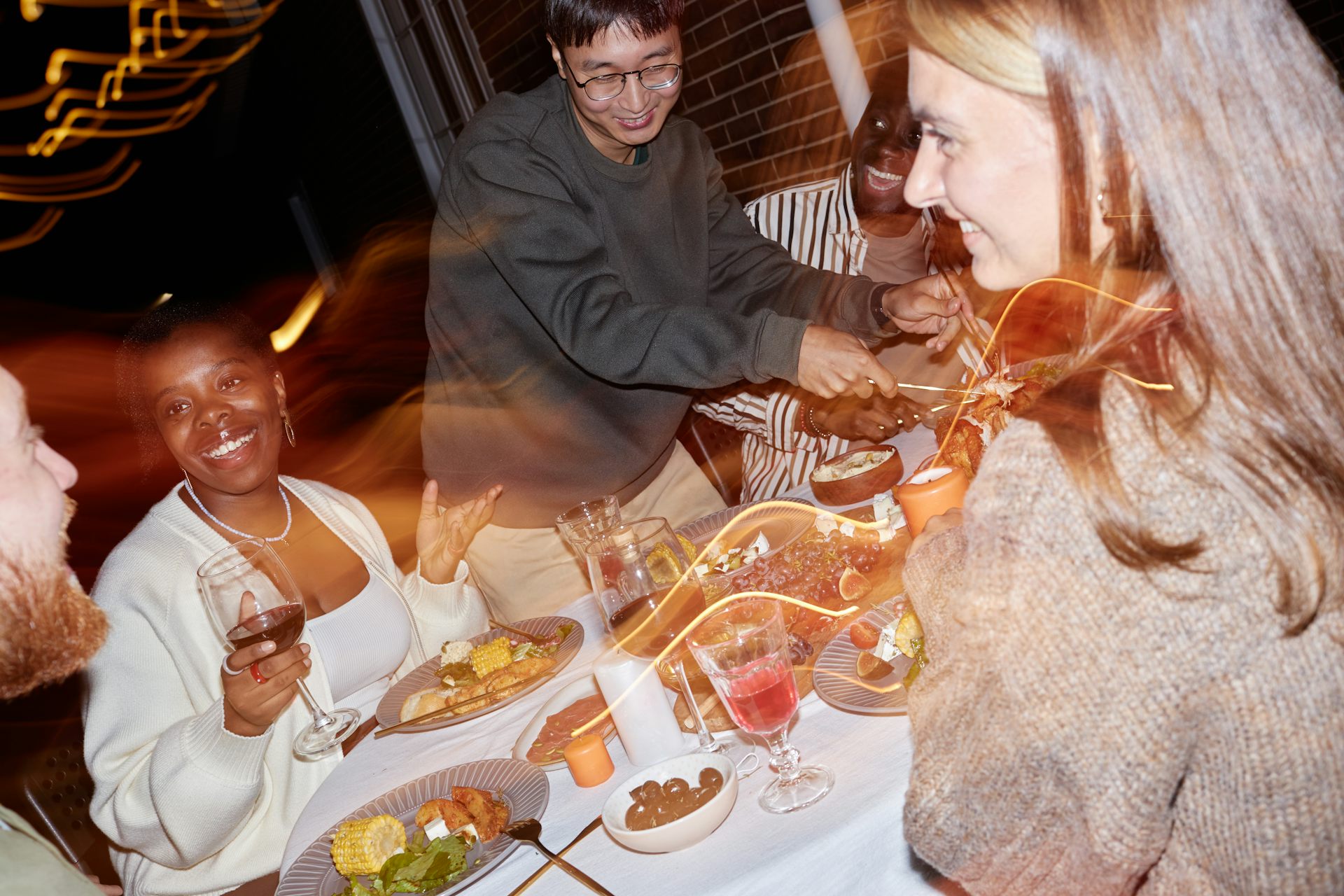
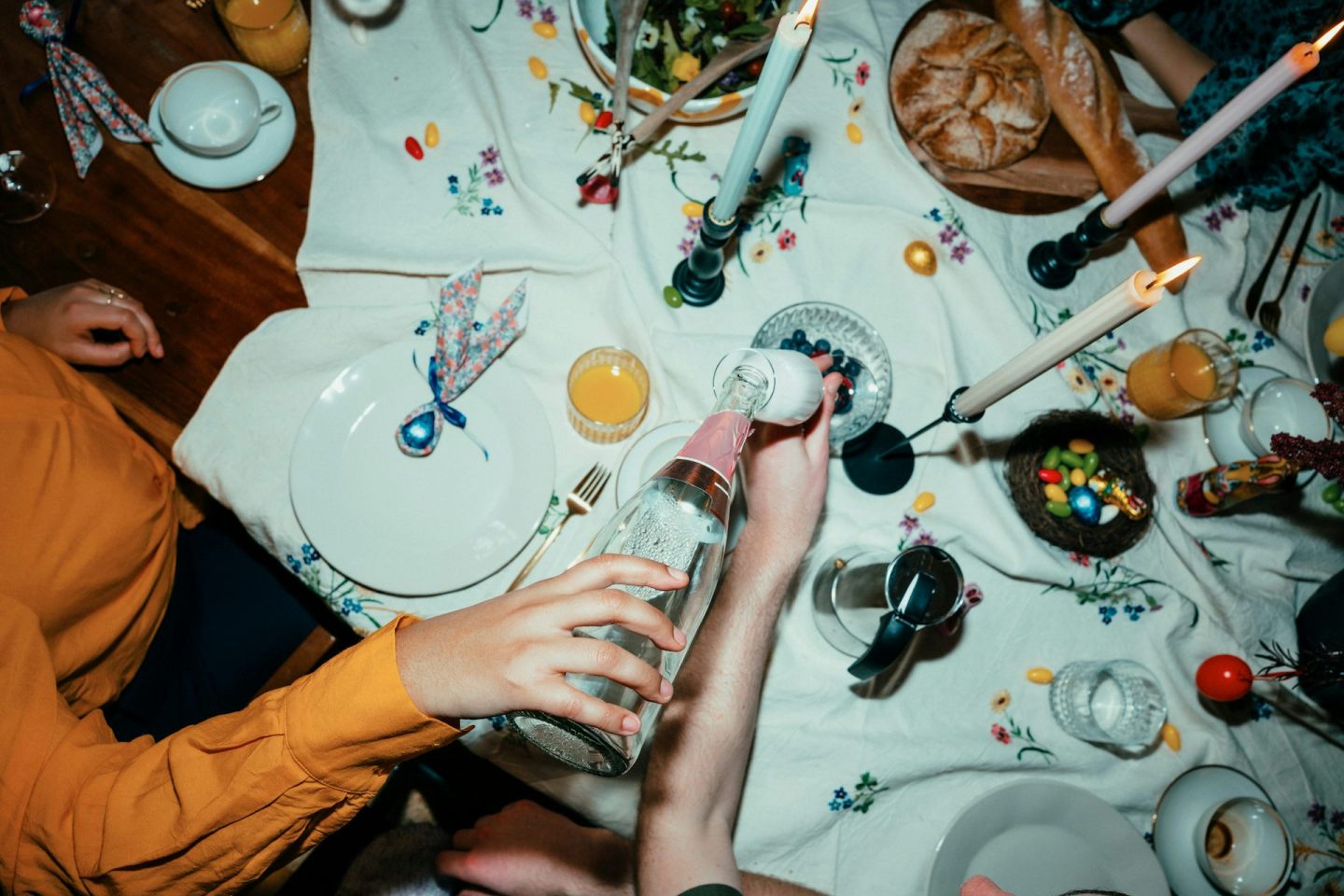
While “Friendsgiving” is a modern term, people have been gathering with friends for centuries. (Alina Rudya/Bell Collective/DigitalVision via Getty Images)
Research Associate for the Center for Regional Agriculture, Food, and Transformation, Chatham University
One of my favorite holiday memories is of a Friendsgiving my husband and I hosted in our tiny two-bedroom house in Atlanta. We didn’t have a dining room. We barely had space to fit a foldout table in the living room. I think one of us sat in an office chair because we didn’t have enough seating. But having our friends gather in our home, no matter how small, made me feel proud.
I planned the menu for weeks, shopped for groceries far in advance, and spent days prepping. As a young adult hosting my first holiday, I felt a lot of pressure to get it right. But I also reveled in the freedom to make it what I envisioned. I deviated from traditional family dishes, made impressive magazine cover desserts, and bought linens and dishware to create a tablescape.
While I knew I couldn’t recreate the grandness of my grandma’s family gatherings, I wanted this one to reflect my taste.
My inclination to host a gathering that honors the holiday while making the presentation my own may feel familiar. While many people grow up with certain familial obligations around holidays, entrance into adulthood may grant you some liberties from them, or at least some agency on whether to participate in the production of the event.
If you’re looking to assert that agency, Friendsgiving is the perfect holiday.
As a food studies scholar researching how food traditions are shared and preserved, I am interested in the idea of a holiday that centers friends over kin. I think this is why Friendsgiving, a term that emerged only in the early 2000s even though people had been participating in the concept long before, endures as a sanctified gathering.
Not your grandma’s dinner party
Modern American dinner parties still have roots in the Victorian era, when a formal gathering was steeped in etiquette and tradition to demonstrate class and propriety and to create social connections to improve one’s status. And while some form of social connection is still likely the main reason for gatherings today, dinner parties can take on many forms, often with the intention of sharing the labor involved.
In her book “Eating Together: Food, Friendship, and Inequality,” sociologist Alice P. Julier interviewed people of various classes, ages, incomes, sexualities, ethnicities and genders about mainly non-kin gatherings around food. Different forms of gathering require different amounts of labor – sometimes paid labor – and the labor between couples and friends is often negotiated. But she found that women often still took on the bulk of the work in the planning, communication or execution of an event.
Within these circumstances, the women often navigated this labor in ways that worked for them or fit their ideas around work, femininity and hospitality. As a young woman, I wanted to emulate the holidays I had experienced, hosted by my mother and grandmother, and was happy to take on the labor involved. However, the beauty of a Friendsgiving is that this labor can be shared and divided in accordance with capacity.
Friends who don’t enjoy cooking can provide drinks or snacks, while those – like me – who spend their days scouring food magazines can try out a new recipe. The key is being honest about the time and money you are able to spend and fit the gathering to the needs of the group.
No one’s 20s and 30s look the same. You might be saving for a mortgage or just struggling to pay rent. You could be swiping dating apps or trying to understand childcare. No matter your current challenges, our Quarter Life series has articles to share in the group chat, or just to remind you that you’re not alone.
A Friendsgiving is the opposite of established kin-keeping traditions. It gives the opportunity to gather with found family, and while the reason for gathering is established, the form is malleable.
Many people choose a potluck-style as a way of sharing the burden for what can be a labor-intensive meal. Others choose to do away entirely with what is considered the “traditional” meal and showcase foods from their own culture or a cuisine they enjoy.
Friendsgiving dinners may be less traditional than family gatherings, more potluck-style and with a wider variety of dishes. SeventyFour/iStock via Getty Images
As a parody of a holiday, Friendsgiving gives participants permission to make the holiday their own and be as playful as they wish. So, if I burn my miso butter corn casserole, no one will be disappointed, because they’ve never tasted it before anyway.
How to host a successful Friendsgiving
While playing with form and bucking traditional structure can be rewarding, there are some things you may want to keep in mind to have a successful Friendsgiving.
In her book “The Art of Gathering: How We Meet and Why it Matters,” author Priya Parker advises anyone planning a gathering to be specific about purpose. This will help decide the form of the event and whom to invite.
Is this a casual gathering with friends? Is fellowship or food more important? Are you hoping to try a recipe your family would never approve? Be specific about your own expectations before you start planning.
The Emily Post Institute, which promotes etiquette and offers resources for a variety of social situations, recommends being flexible with the menu. This is especially important for a potluck-style gathering. As a host, you may want to assign dishes to guests to ensure a balanced meal without eight desserts. If you have the gumption, however, you can throw caution to the wind and see what happens.
It is also important to keep dietary restrictions in mind to make sure everyone feels included and has something to eat.
Make a plan for heating or reheating. The oven is prime real estate during Thanksgiving. You may want to tell guests to bring their dish already cooked to avoid playing oven Tetris.
Finally, tell guests to bring Tupperware. There will be leftovers, and I have found that nothing is better than creating a second plate to take home and heat up the next day.
Alice P. Julier, a professor of food studies at Chatham University, assisted with the writing of this article.
Fellow, Center for Humanistic Inquiry, Amherst College
It’s the day after Thanksgiving, the tryptophan has worn off, and there are towers of Tupperware filled with turkey, stuffing and potatoes in your fridge.
If you rely on your microwave, you might simply resign yourself to eating the same meal, over and over again, until the leftovers run out.
But you don’t have to get stuck in a cycle of nuke and repeat. This Thanksgiving, take inspiration from the French, who saw leftovers as an outlet for creativity.
My research on the history of French home cooking reveals how restyling dinner scraps first became fashionable more than a century ago.
Reheating ‘with art and discernment’
In 19th-century France, leftovers were a way of life for the lower classes.
In the countryside, the broth from the evening beef stew would become the basis of breakfast the next morning. In cities, street hawkers known as “arlequins” purchased dinner scraps from restaurants and rich households to resell them to the poor. For these Frenchmen and -women, repurposing previous meals wasn’t about style but survival. Because of their association with poverty, leftovers were stigmatized up until the late 19th century.
But by the turn of the 20th century, it had become hip to whip something up with the remains from last night’s meal.
In 1892, French chef Alfred Suzanne wrote that “there are dishes which, when reheated with art and discernment, transformed with taste and presented in an appetizing manner… can be as good as, if not better than, the first time they are served.” In the preface to his encyclopedic cookbook, “150 Ways to Accommodate Leftovers,” the former chef to British royalty declared that the “deep-seated prejudice that many people have” against leftovers was “an error.”
Suzanne’s colleagues and culinary connoisseurs concurred. French food critic Fulbert-Dumonteilpraised the chef for explaining “all the ingenious and charming ways to restore mutilated bits and pieces from epic feasts” and turn “cumbersome remains” into something that delights the palate.
Marketing to the masses
Why did “leftovers” make the leap from insipid plates peddled by “arlequins” to inspired dishes perfected by culinary artists?
In 1882, France’s new republican government passed legislation mandating education for all children ages 6 to 13. Many public schoolchildren came from the lower and lower-middle classes, and educators designed home economics lessons with this in mind. Girls learned how to preserve and prepare their leftovers safely, nutritiously and economically. They were also taught that their talent for accommodating leftovers was a reflection of their thrift and resourcefulness – the markers of middle-class French femininity.
As the percentage of literate females spiked in France, the publishing industry pounced on this potential market. The late 19th century saw more and more domestic manuals aimed at “ménagères” – wives and mothers from the working and lower-middle classes. Many guides featured a chapter on fixing leftovers, while some, such as “100 Ways to Accommodate Leftovers” and “The Art of Accommodating Leftovers, Dedicated to Those of Meager Means,” made revamping remains their central focus.
France’s top chefs join in
In the 1890s top chefs also started to contribute recipes to domestic cooking magazines. This genre of culinary literature proliferated in the late 19th century during a period of rapid growth for the popular press.
Chefs wanted to appeal to a wide audience, and their contributions ranged from columns on economical cooking to instructions for assembling “pièces montées,” which are elaborate edifices made of confections. Many of these journals designated a special section for accommodating leftovers, with titles like “Utilizing Leftovers” and “Delicious Ways to Accommodate the Scraps.”
The repetitive nomenclature belies the range of the recipes printed under these rubrics. Some were simple and modest and reflected the original rationale for leftovers, which was economical.
For example, a July 1907 recipe for “Lisette’s Cake” in the magazine Family Cooking offered a sweet solution for yesterday’s bread. The cook needed only to soak the loaf in sweetened milk, strain the mixture through a fine sieve, add two eggs and bake in the oven for 20 minutes.
But some recipes got complicated and costly. Family Cooking also published a leftovers recipe for “Veal à la Russe,” which required, in addition to veal chops, a quarter pound of butter, anchovies, tomato coulis, jus and truffles for garnish. The Cordon Bleu Magazine suggested repurposing leftover pheasant in a way that required an hour of boiling in fine demi-glace and two hours of cooling on ice, before being pureed by hand, seasoned, molded and fried.
Such recipes would hardly qualify as time- or cost-saving. But practicality wasn’t the only point anymore. Scholars have shown how women at the turn of the century read popular and prescriptive literature as a “form of escapism” that encouraged them to “fantasize” about what modern domestic life could be.
By turning leftovers into an art form, early home cooking magazines inspired a modern generation of home cooks to be creative and think critically about cooking. And they left their legacy to us and our leftovers.
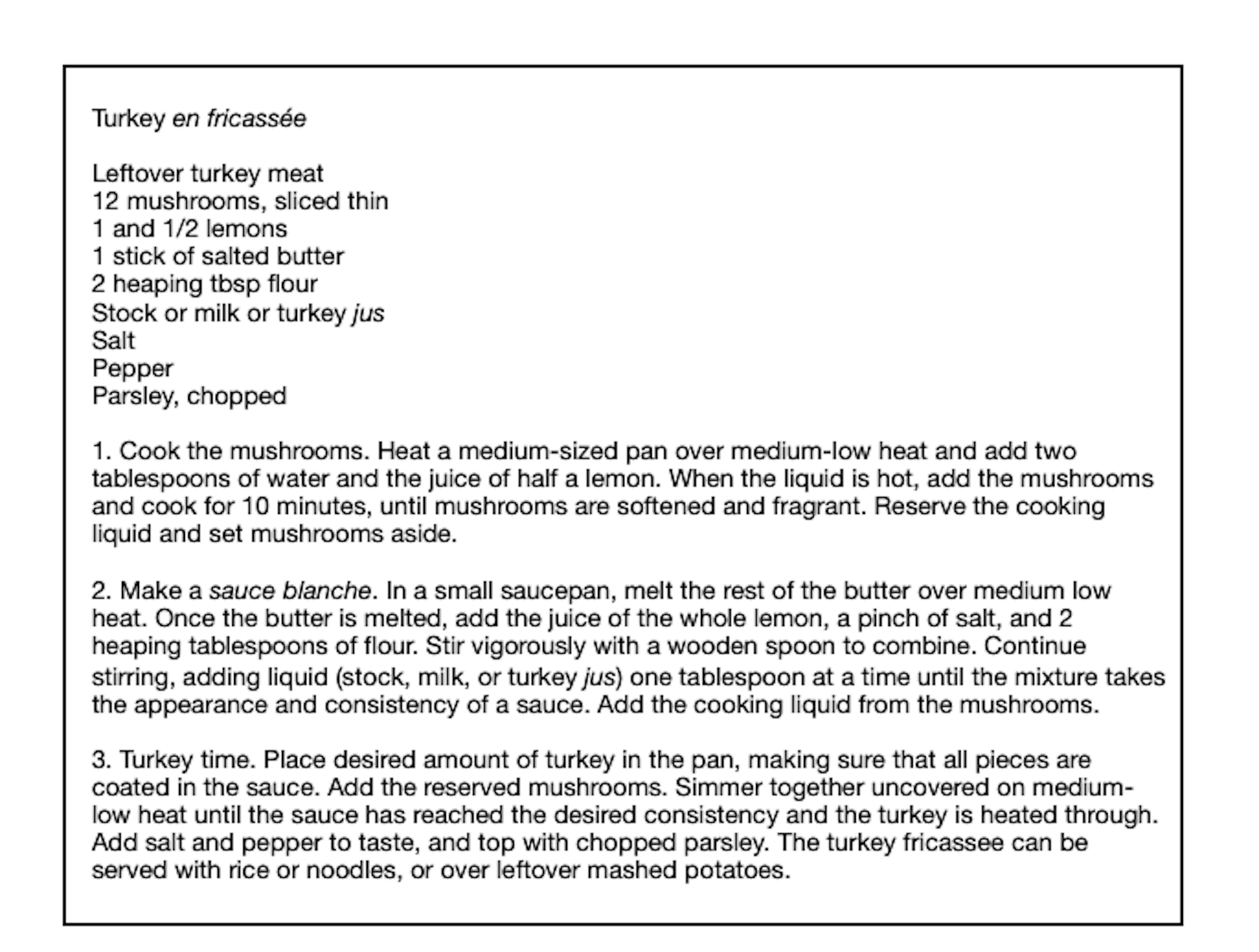
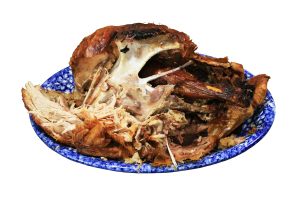
So this year, instead of scraping together another tiresome turkey sandwich, try adapted from Alfred Suzanne’s “150 Ways to Accommodate Leftovers.”
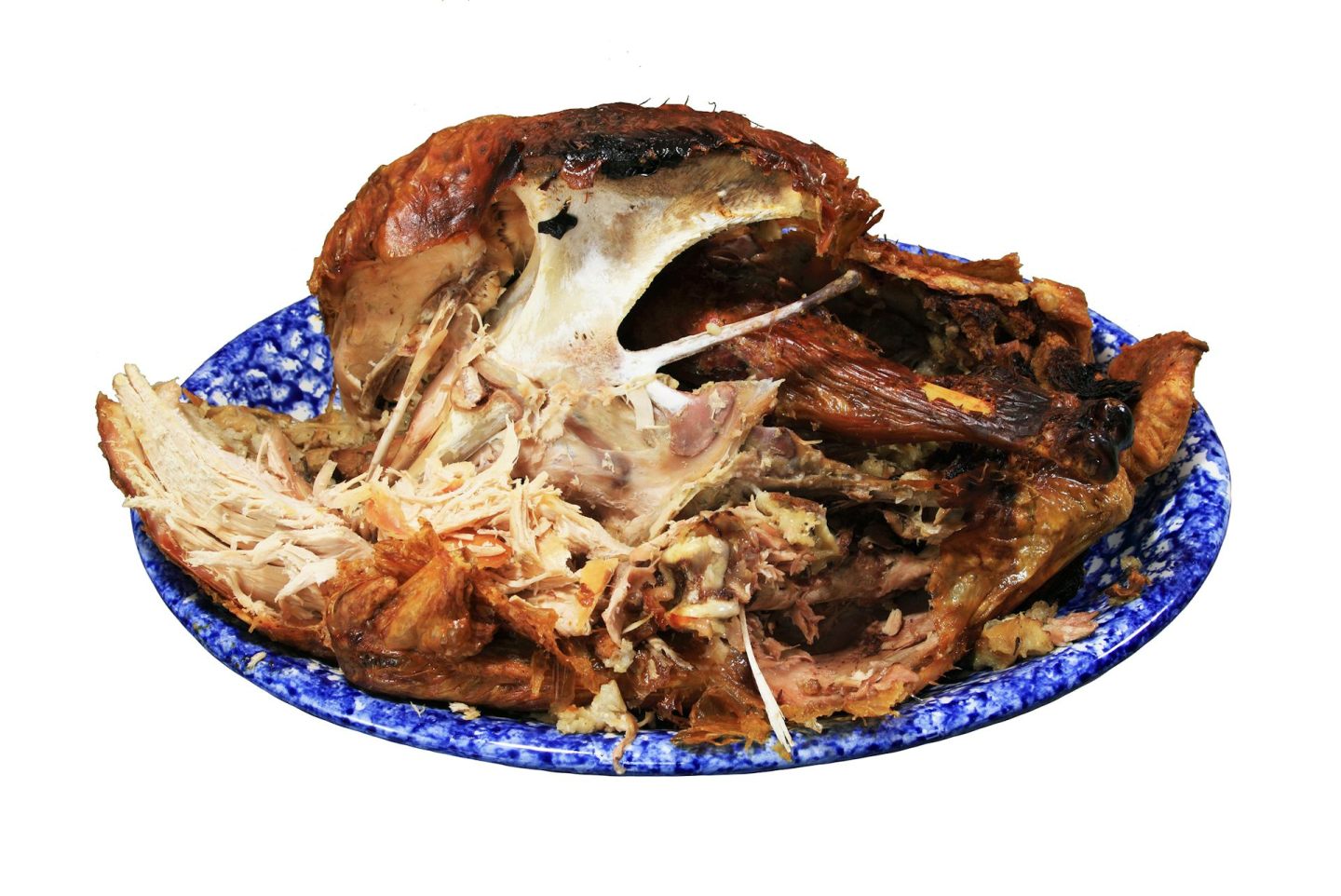
A leftover turkey recipe adapted from Alfred Suzanne’s ‘150 Ways to Accommodate Leftovers.’ Samantha Presnal, Author providedThis article originally appeared on The Conversation. You can read it here.
At the end of “Over the River and Through the Wood” – Lydia Maria Child’s classic Thanksgiving poem – the narrator finally gets to his grandfather’s house for Thanksgiving dinner and settles down to eat.
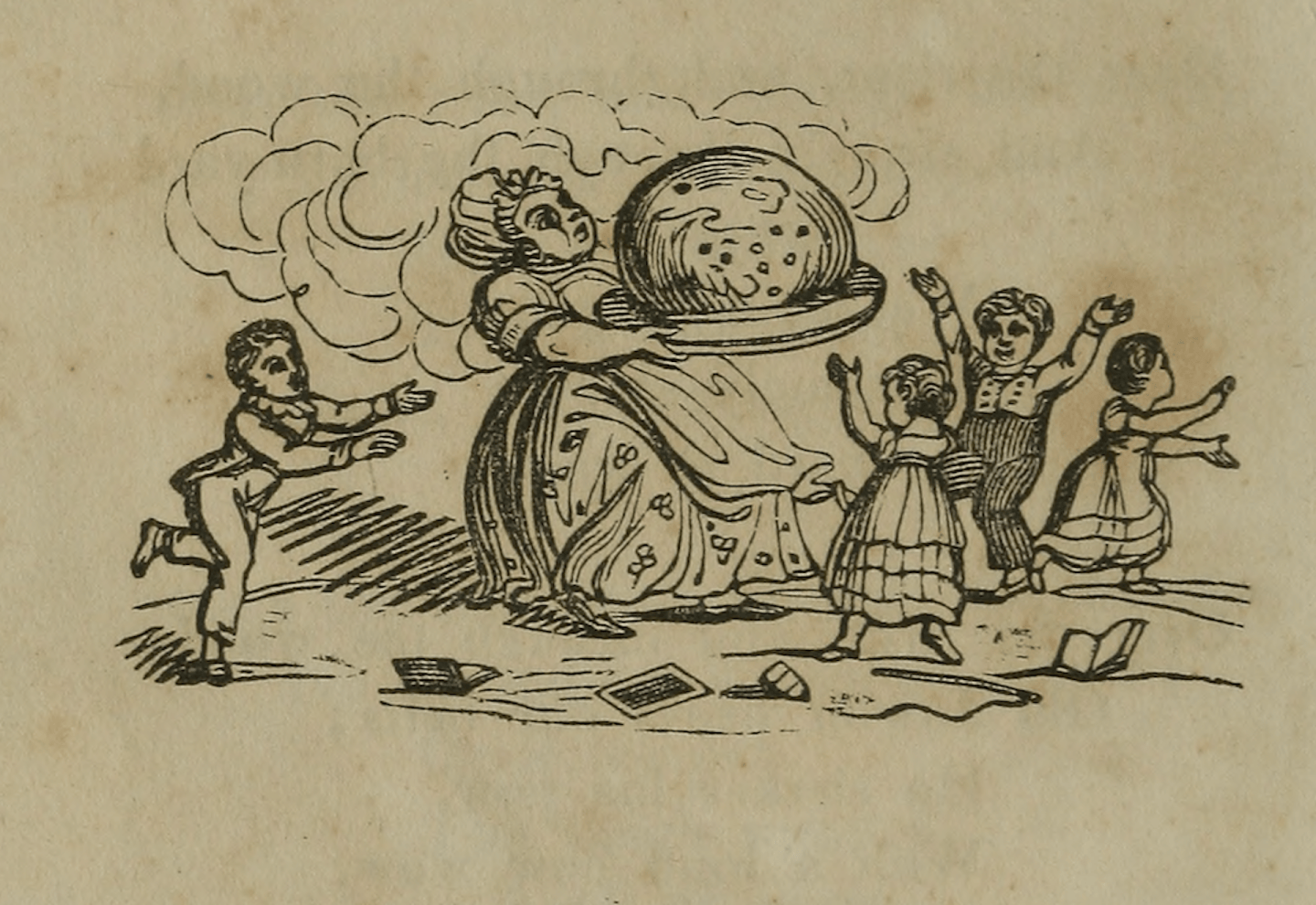
“Hurrah for the fun!” the small boy exclaims. “Is the pudding done? Hurrah for the pumpkin pie!”
Pumpkin pie sounds familiar, but pudding? It seems like an odd choice to headline a description of a Thanksgiving dinner. Why was pudding the first dish on the boy’s mind, and not turkey or stuffing?
When Americans today think about pudding, most of us think of a sweet dessert, heavy on milk and eggs: rice pudding, bread pudding, chocolate pudding. Or we might associate it with Jell-O pudding mixes. (When I was a child in the 1980s, I loved making pudding by shaking Jell-O instant pudding powder with milk in a plastic jug.)
For the most part, though, Americans today don’t think much about pudding at all. It’s become a small and rather forgettable subcategory.
That’s a dramatic change from the mid-19th century, the period when Child wrote “Over the River and Through the Wood” and when Thanksgiving became a national holiday under President Lincoln. Back then, virtually every American cookbook had a chapter devoted to puddings (sometimes two or three).
Pudding was important in Child’s poem because, when she wrote it, pudding was such an important part of American cuisine.
From small budgets to banquets
It’s not clear what kind of pudding Lydia Maria Child had in mind for her Thanksgiving poem because it was a remarkably elastic category. Pudding was such an umbrella term, in fact, it can be hard to define it at all.
Americans ate dessert puddings we would recognize today. But they also ate main course puddings like steak and kidney pudding, pigeon pudding or mutton pudding, where stewed meats were often surrounded by a flour or potato crust. Other puddings had no crust at all. Some, like Yorkshire pudding, were a kind of cooked batter. There were also green bean puddings, carrot puddings and dozens of other vegetable varieties. Puddings could be baked or steamed or boiled in a floured cloth.
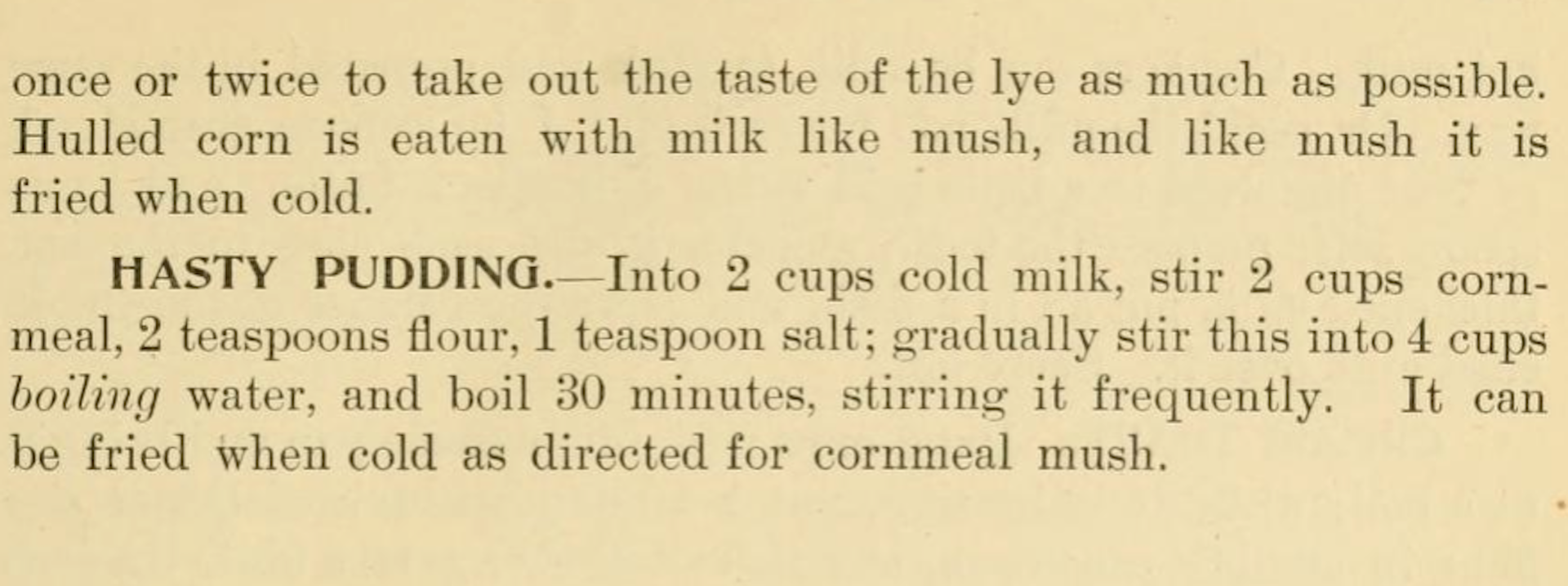
Then there were other dishes called puddings that didn’t bear any resemblance whatsoever to what we mean by that word today. For example, apple pudding could be nothing more than a baked apple stuffed with leftover rice. Hasty pudding was essentially cornmeal mush.
A recipe for hasty pudding from ‘Smiley’s Cook Book and Universal Household Guide’ (1895). Library of Congress
Puddings were also hard to define because they were consumed in so many different ways. They could be sumptuous dishes, dense with suet and eggs, studded with candied fruits and drenched in brandy. Or they could be rich, meaty stews encased in golden pastry. In these forms, puddings appeared on banquet tables and as the centerpieces of feasts.
But puddings could also be much humbler. Cooks with small budgets valued them because, like soups, puddings could be made of almost anything and could accommodate all kinds of kitchen scraps. They were especially useful as vehicles for stale bread and leftover starches, and 19th-century Americans ate a wide variety made not just with bread and rice but with cornmeal, oatmeal, crackers and potatoes. Recipes with names like “poor man’s pudding,” “poverty pudding” and “economical pudding” reflect pudding’s role as a cheap, filling meal.
Food ‘experts’ exert their influence
So what happened to pudding? Why did this broad culinary category, a defining part of American cuisine for more than a century, largely disappear?
One reason was food reform. By the early 20th century, new knowledge about nutrition science, combined with an obsessive (but misinformed) interest in digestion, fueled widespread “expert” condemnation of dishes featuring a range of ingredients mixed together. This was due, in large part, to xenophobia; by then, many white Americans had come to associate mixed foods with immigrants.
Instead, reformers insisted with great confidence (but scant evidence) that it was healthier to eat simple foods with few ingredients: meals where meats and plain vegetables were clearly separated. People started to view savory puddings as both unhealthy and old-fashioned.
The unique prevalence and zeal of American food reformers in the early 20th century helps to explain why so many puddings disappeared in the United States, while they continue to be an important part of British cuisine.
By the mid-20th century, claims about the digestive dangers of mixed foods had been debunked. But a new kind of dish had since emerged – the casserole – which largely usurped the role formerly played by puddings. An elastic category in their own right, casseroles could also be made from almost anything and could accommodate all sorts of odds and ends. There were hamburger casseroles, green bean casseroles and potato casseroles.
At the same time, the food industry had reimagined pudding as a cloyingly sweet convenience food. Puddings made from supermarket mixes of modified food starch and artificial flavors became the only kind many Americans ever ate.
Most Americans today think of pudding as a cheap, sugary dessert.
The classic versions haven’t completely disappeared, however. On Thanksgiving, Americans are still more likely to eat 19th-century-style puddings than at any other time of the year. On some American tables, Indian pudding, sweet potato pudding or corn pudding make an annual appearance. Thanksgiving dinner isn’t the time capsule some people imagine, and most Thanksgiving menus today have hardly anything in common with the 17th-century Plymouth Colony meal they commemorate. But there are some culinary echoes from the 19th century, when the American national holiday officially began.