How can we convince people to treat each other better? The answer, in a word: chocolate. Parents have always used the treat to incentivize their kids’ good behavior. A recent experiment by a Danish chocolate brand appealed to the child in all of us by giving away its product in exchange for a pledge to do good.
The one-day-only pop-up “Generous Store” by chocolatier Anthon Berg forbade the use of money. Boxes of chocolates were marked with “price tags” containing promises like “talk nicely to your mother for a week” or “serve breakfast in bed to your loved one.” To complete their “purchase” on the shop’s iPad, customers were required to send their pledge to a friend on Facebook, to make sure they lived up to their end of the bargain. A promotional video by the company includes Facebook updates of content customers serving breakfast in bed and being nice people.
The project was motivated by the belief that “there is not enough generosity in people’s lives.” Arguably not enough chocolate either.
Assistant Professor of Ecology & Evolutionary Biology, University of Tennessee; Smithsonian Institution
If you’ve ever felt overwhelmed by menu options at a restaurant, cereal varieties at the grocery store or potential partners while scrolling through dating apps, you’ve experienced choice overload.
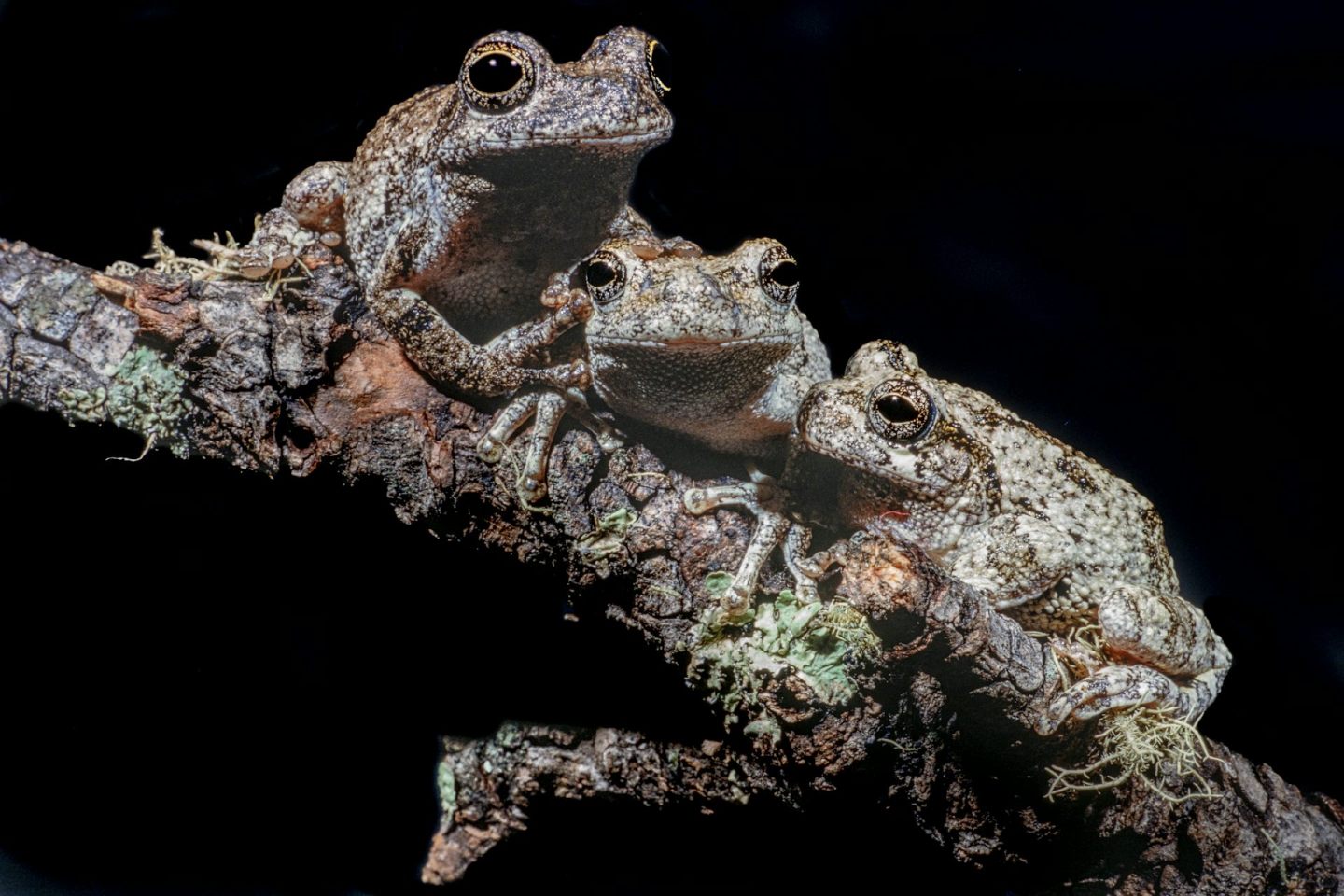
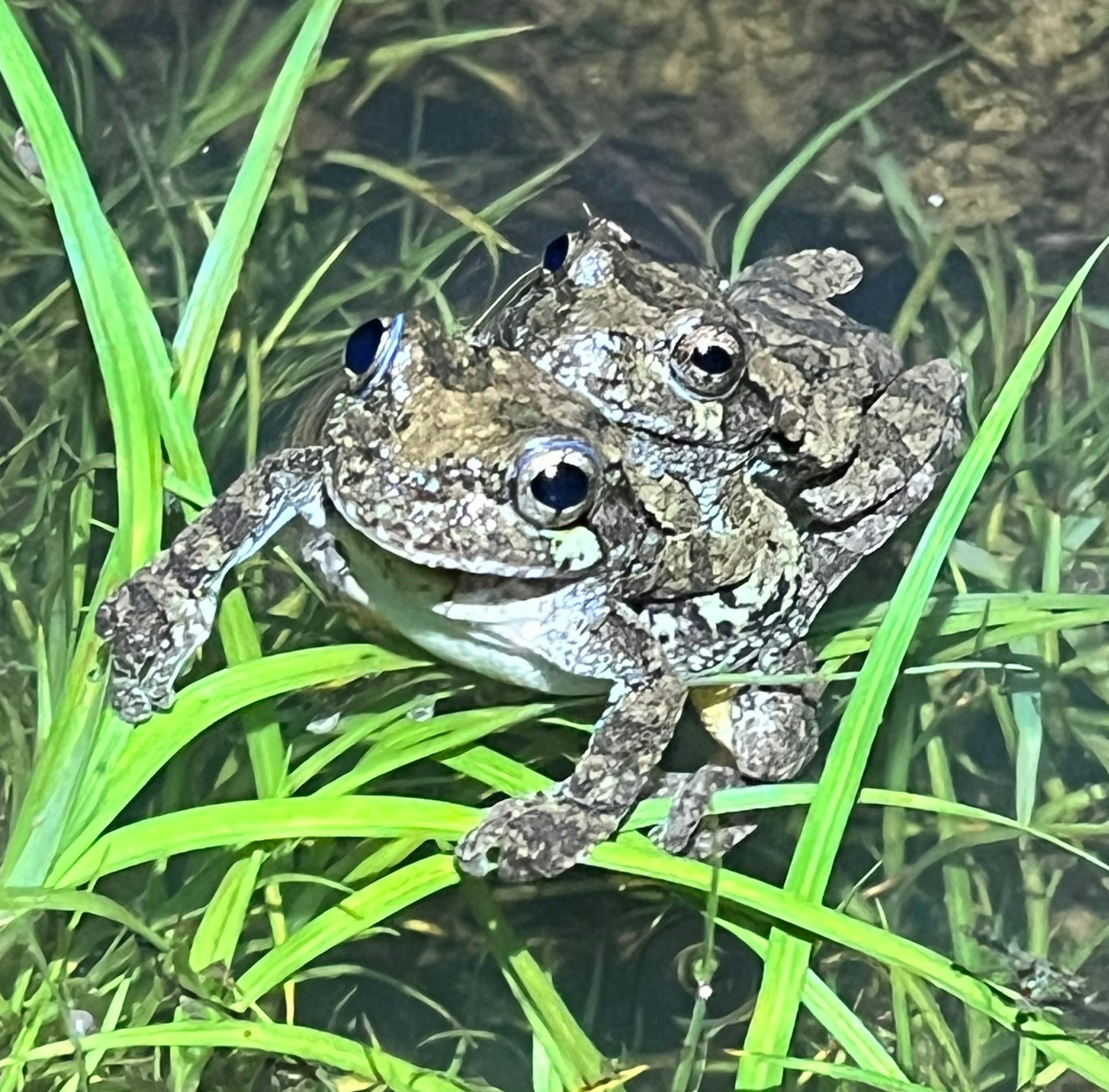
People aren’t the only ones to have trouble making decisions when confronted with many options simultaneously. In our new study published in the journal iScience, my colleagues and I found similar effects of choice overload in female gray tree frogs when faced with too many calls from males looking for love.
Scientists have observed many species having similar decision-making problems when experiencing choice overload. But we know little about how these kinds of cognitive constraints affect animals in natural settings.
Indecision on the frog dating scene
The gray tree frogs we focused on live in wooded areas near sources of water in North America. During the mating season, males gather in choruses and call to attract mates. Females pick mates based on several call attributes, including call length. Longer calls are more attractive.
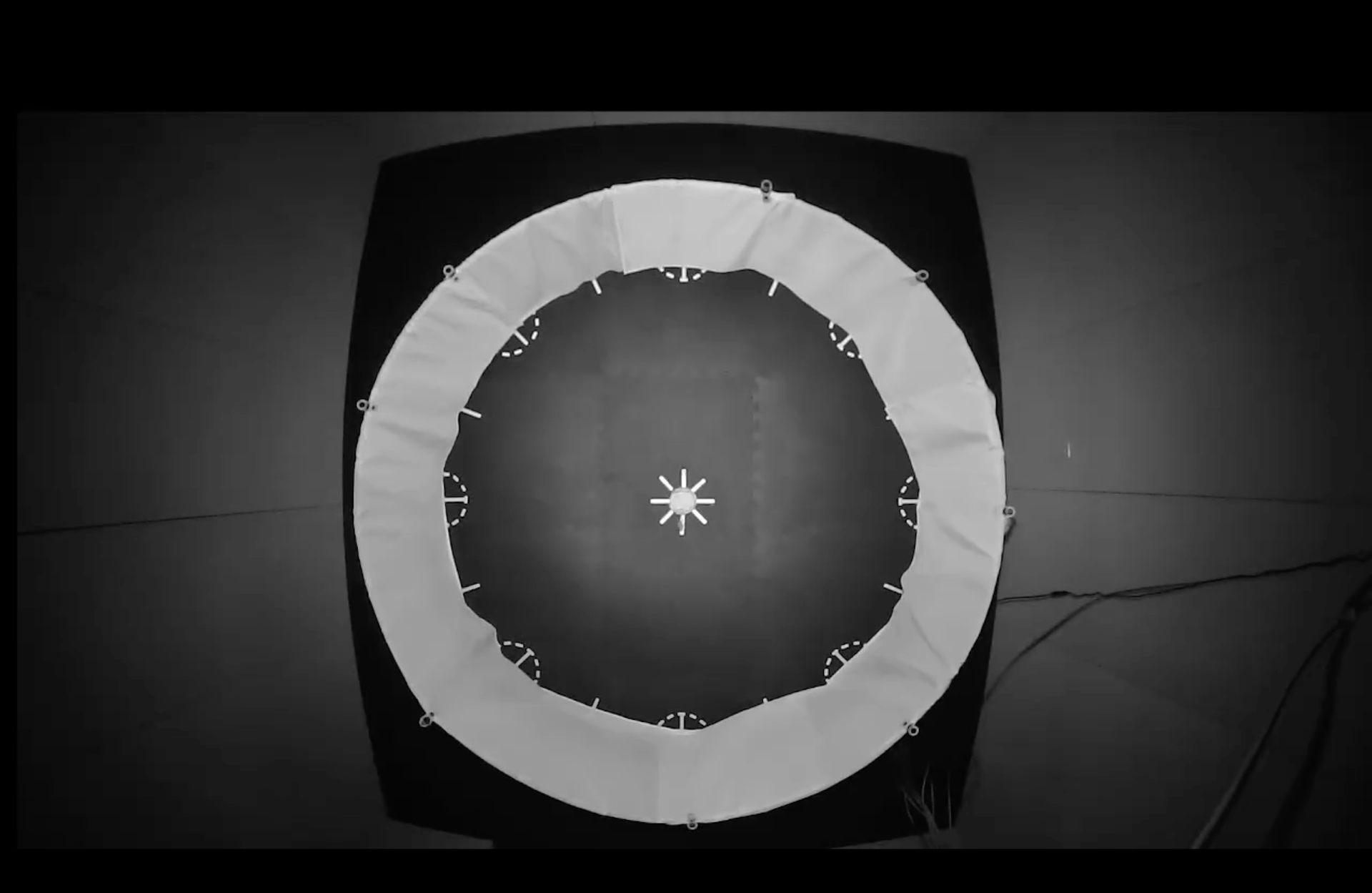
For our experiment, we captured 60 female tree frogs from breeding choruses in East Tennessee and brought them into our lab. Then we played recorded mating calls for each female, giving her a choice between one long, attractive “target” call and one, three or seven shorter, less attractive “distractor” calls.
In the wild, a tree frog breeding chorus can include dozens or even hundreds of calling males. In our lab setup, the calls played sequentially, so they never overlapped.
Females would hop toward the speaker broadcasting the call she preferred. As the number of distractor calls increased, females got worse at picking the attractive call, took longer to decide, and were more likely to defer choosing within the 10-minute window altogether.
View from above of the frog test arena, where researchers would place a female frog in the center and then play various male mating calls from speakers placed around the perimeter.Jessie Tanner
Cognitive confusion
Because we eliminated call overlap entirely, we know this decline wasn’t due to what researchers call energetic masking. That’s the well-documented problem of overlapping signals impairing an individual’s ability to detect and discriminate a signal from noise.
Biologists have long known that female preferences can weaken in choruses and have usually assumed the explanation is energetic masking: Too many overlapping signals create a challenge for the frogs’ perceptual systems. In other words, they can’t detect or discriminate individual calls.
Instead, our study shows that a female’s own cognitive limits can make it hard for her to select her preferred mate. The challenge comes from too many males to choose from, not being unable to hear the males clearly.
When females can’t make the optimal choice
Call traits are linked to offspring fitness in gray tree frogs. If females have trouble recognizing the calls they prefer in a real chorus, they aren’t able to pick the mates with the best genes to pass on. They may end up mating with males they would otherwise reject. These males with less going for them then pass on their less desirable traits, which could have negative consequences for the offspring.
Females’ cognitive overload could be an opportunity for males who might not otherwise get a chance to mate.Jessie Tanner
Our finding raises the possibility that males could exploit this cognitive limitation in females. Less attractive males might do better by joining bigger choruses, where the sheer number of competitors makes it harder for females to discriminate against them. Conversely, more attractive males may benefit from calling in smaller groups, or even in isolation. My colleagues and I hope to investigate some of these possibilities soon.
More options, more opportunities … to a point
We ran our experiments in a simplified lab arena, which allowed us to isolate choice overload from other effects. We removed the real-world clutter of overlapping calls, vegetation and risk from predators that females would face in an actual pond. We also limited female choice to eight calls, though frogs may hear even more in natural settings.
The next step in this research is figuring out how much choice overload matters in a real chorus, where calls do overlap, and where sensory processing and cognitive processing are probably both at play. We’re particularly interested in seeing whether, in natural choruses, decisions do take longer and females really end up mating with less preferable males.
Choice overload isn’t unique to frogs, or even to mate choice. Researchers have seen bees choosing among flowers, ants comparing potential nest sites and mosquitoes selecting egg-laying sites all making worse decisions as the number of competing options increases. And recent research on field crickets and tree frogs has found similar patterns in these animals as they pick mates based on their calls.
Together, this growing body of evidence suggests that cognitive constraints are a general feature of animal decision-making.
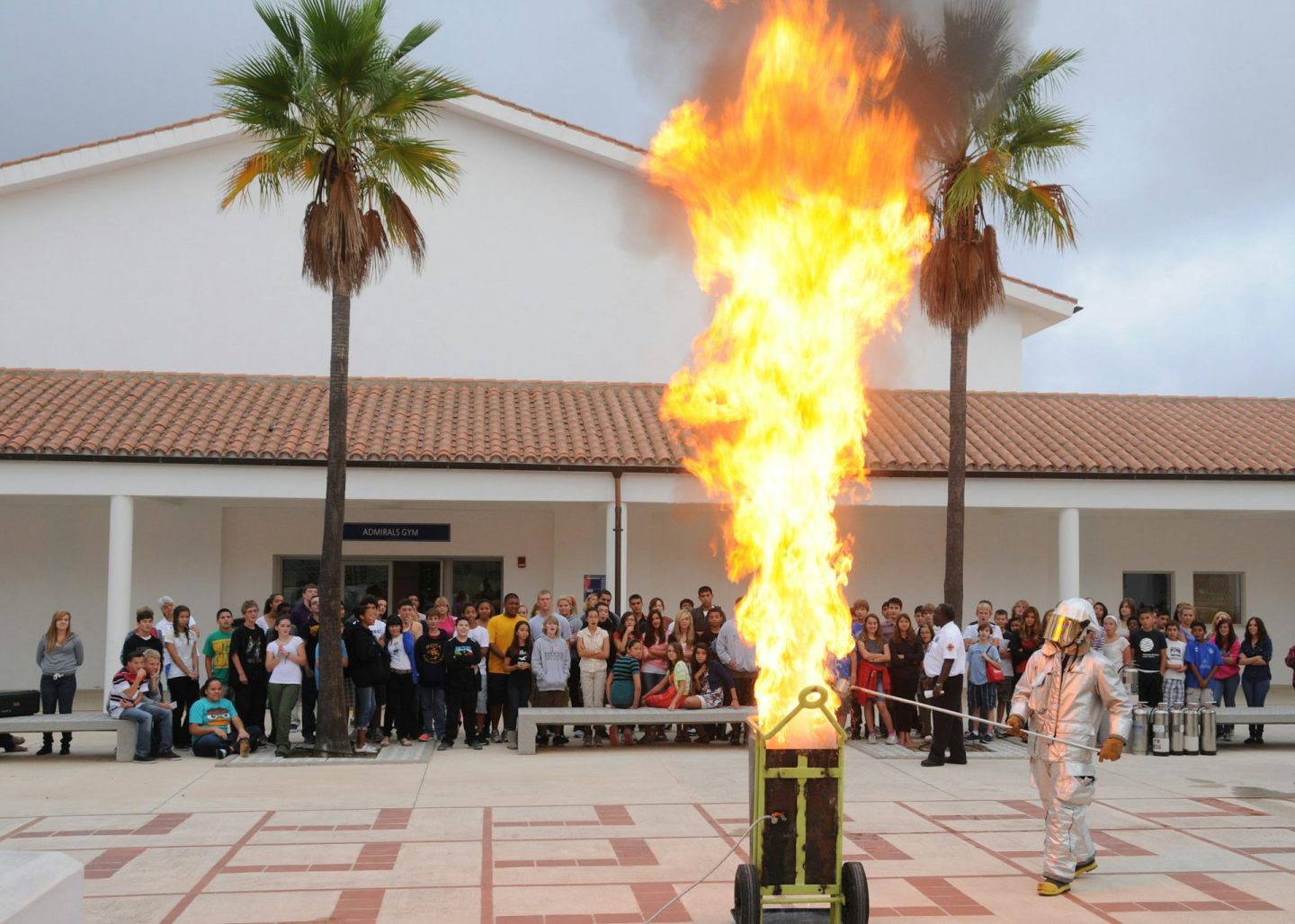
When water and boiling oil mix, the result can be explosive, as seen in this demonstration. U.S. Navy photo by Mass Communication Specialist 2nd Class Travis Alston/Released via Flickr
Associate Professor of Chemistry, University of Richmond
Deep-frying a turkey is a great way to get a delicious, moist meal for Thanksgiving. But this method of cooking can be a very dangerous undertaking.
Every fall, millions of dollars of damage, trips to the ER and even deaths result from attempts to deep-fry turkeys. The vast majority of these accidents happen because people put frozen turkeys into boiling oil. If you are considering deep-frying this year, do not forget to thaw and dry your turkey before placing it in the pot. Failure to do so may lead to an explosive disaster.
What is so dangerous about putting even a partially frozen turkey in a deep-fryer?
I’m a chemist who studies plant, fungal and animal compounds and have a love of food chemistry. The reason frozen turkeys explode, at its core, has to do with differences in density. There is a difference in density between oil and water and differences in the density of water between its solid, liquid and gas states. When these density differences interact in just the right way, you get an explosion.
If water and oil are in the same container, the denser water will sink to the bottom.Daniel Merino, CC BY-ND
Understanding density
Density is how much an object weighs given a specific volume. For example, imagine you held an ice cube in one hand and a marshmallow in the other. While they are roughly the same size, the ice cube is heavier: It is more dense.
The first important density difference when it comes to frying is that water is more dense than oil. This has to do with how tightly the molecules of each substance pack together and how heavy the atoms are that make up each liquid.
Water molecules are small and pack tightly together. Oil molecules are much larger and don’t pack together as well by comparison. Additionally, water is composed of oxygen and hydrogen atoms, while oils are predominantly carbon and hydrogen. Oxygen is heavier than carbon. This means that, for example, one cup of water has more atoms than one cup of oil, and those individuals atoms are heavier. This is why oil floats on top of water. It is less dense.
While different materials have different densities, liquids, solids and gases of a single material can have different densities as well. You observe this every time you place an ice cube in a glass of water: The ice floats to the top because it is less dense than water.
When water absorbs heat, it changes to its gas phase, steam. Steam occupies 1,700 times the volume as the same number of liquid water molecules. You observe this effect when you boil water in a tea kettle. The force of expanding gas pushes steam out of the kettle through the whistle, causing the squealing noise.
Frozen turkeys – or any kind of frozen meats, for that matter – contain a lot of ice. Raw meat can be anywhere from 56% to 73% water. If you have ever thawed a frozen piece of meat, you have probably seen all the liquid that comes out.
For deep-frying, cooking oil is heated to around 350 degrees Fahrenheit (175 C). This is much hotter than the boiling point of water, which is 212 F (100 C). So when the ice in a frozen turkey comes in contact with the hot oil, the surface ice quickly turns to steam.
This quick transition is not a problem when it happens at the very surface of the oil. The steam escapes harmlessly into the air.
However, when you submerge a turkey into the oil, the ice inside the turkey absorbs the heat and melts, forming liquid water. Here is where the density comes into play.
This liquid water is more dense than the oil, so it falls the bottom of the pot. The water molecules continue to absorb heat and energy and eventually they change phases and become steam. The water molecules then rapidly spread far apart from one another and the volume expands by 1,700 times. This expansion causes the density of the water to drop to a fraction of a percent of the density of the oil, so the gas wants to quickly rise to the surface.
Combine the fast change in density together with the expansion of volume and you get an explosion. The steam expands and rises, blowing the boiling oil out the pot. If that weren’t dangerous enough, as the displaced oil comes into contact with a burner or flame, it can catch fire. Once some droplets of oil catch on fire, the flames will quickly ignite nearby oil molecules, resulting in a fast-moving and often catastrophic fire.
Every year, thousands of accidents like this happen. So, should you decide to deep-fry a turkey for this year’s Thanksgiving, be sure to thoroughly thaw it and pat it dry. And next time you add a bit of liquid to an oil-filled pan and end up with oil all over the stove, you’ll know the science of why.
Lecturer of Art, Rochester Institute of Technology
Glass as a material is full of contradictions. Depending on the form and use, glass can be fragile or strong, opaque or transparent, rough or smooth. The studios my colleagues and I teach and learn in, as glass instructors, echo this abundance of physical opposites. These environments are simultaneously immersive, complex, seductive and demanding.
When the studio is in action, you might hear glass breaking, hot metal being quenched in water, glassblowing pipes rolling on the workbench rails, and some good tunes on the stereo. You might smell hot beeswax and burning newspaper. You might feel a bit of waste glass under your shoe or the intense heat from the furnaces and a breeze from a well-placed fan. Glassblowers learn to listen, to feel and to find some focus within and among the kinetic.
The constant stimuli of the glass studio may not seem anything like a sterile science lab, and yet glass artists need to accrue knowledge of physics and chemistry to achieve any kind of control with this dynamic material. They must choose a material with the desired properties and during the process judge factors such as heat and malleability.
Glass as a material
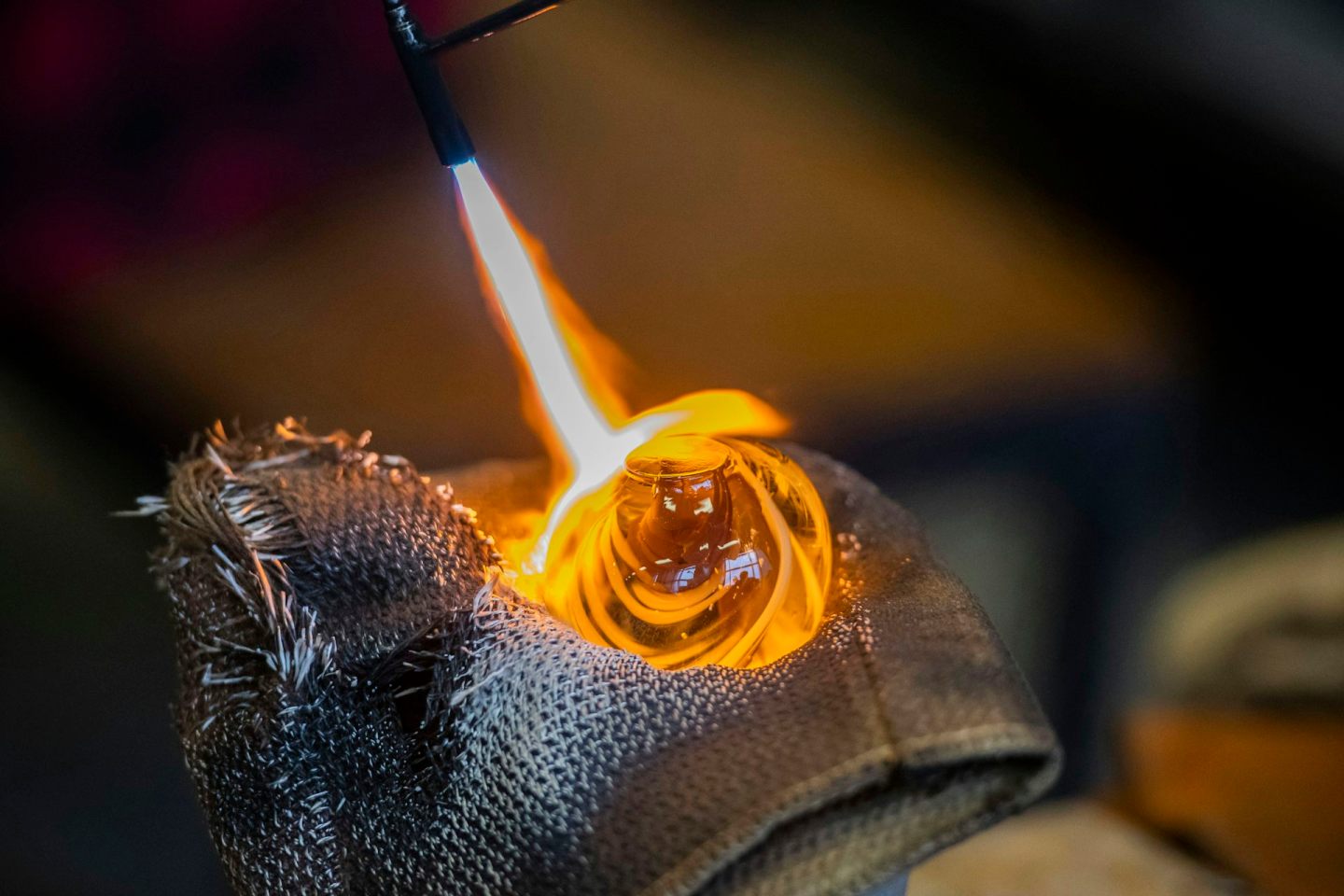
At Rochester Institute of Technology, where I help run the glass program, we primarily use two types of glasses. In our hot glass studio we melt “soft” glass. This glass is specifically formulated to be melted in a furnace and used by the glassblower. It’s a combination of fine mesh silica sand, soda ash and lime, with small amounts of a few additional ingredients that keep the glass beautiful when it’s at its top temperature of 2,200 degrees Fahrenheit (1,204 degrees Celsius).
In our flameworking studio, we use a borosilicate glass. You might recognize this glass as the brand Pyrex made in Corning, New York. This is a super heat-resistant glass. It melts at a higher temperature than soft glass and arrives to our students in preformed rods that they can melt and shape by torch in our flameworking studio. The differences in chemistry really change how these glasses look and behave.
Pyrex cookware is made out of a specially formulated, heat-resistant type of glass called borosilicate.Picofluidicist/Wikimedia Commons
Glass, from a material science perspective, is categorized as an amorphous solid, meaning that glass’s molecules are arranged in a near-random pattern and there is no sharp melting point. Rather, glass gradually softens over a wide temperature range.
Gathering glass
Once you’ve adjusted to the chaos of the studio, it’s time to start working.
We have two furnaces in our hot glass studio, where we work with soft glass, so anytime during the school year there is between 700 to 1,200 pounds of glass. It’s kept in the furnace at its molten state (2,200 degrees F or 1,204 degrees C), ready to be gathered and transformed.
Glass artists heat up their glass in a furnace so that it’s molten and easy to mold.AP Photo/Keith Srakocic
When we work with the material, transforming it with tools and breath and heat, it needs to be kept in a workable heat zone – probably between 1,100 and 2,000 F (593 and 1,094 C). When the glass dips below that range, we perceive it as solid, though at the molecular level it is still dynamic and acting more like a liquid.
To make anything – a sculpture, a tumbler, a celestial magical orb or a pumpkin – you start by gathering glass out of the furnace on a metal rod. Once you’ve gathered your glass, you start making decisions.
An artist works in the Glass Hot Shop at RIT. When glass is in its molten state, the artist can shape it and blow into it.Elizabeth Lamark/RIT
You might ask yourself: What tools do I need to begin to shape and transform this glass into the object I have in mind? If you wait too long and the glass begins cooling down, you’ll need to reheat it to reintroduce malleability, allowing you to continue working it without breaking it.
A big part of glasswork is moving between the reheating chamber and the bench, where the artist uses tools to move and stretch the molten glass into the desired shape. You’ll need to alternate between these two stations many times.
Glassblowing is a team activity. I have physical and intellectual support from my colleagues: breath from their lungs, protection from the heat, additional bits of glass brought from the furnace to add to my object. We almost never work alone.
So, say I want to make a very basic clear tumbler. This is a simple conceptual object – utilitarian, domestic and intimate. It is also a tricky one to make well: too heavy and it feels bad in the hand, too thick at the lip and it dribbles when you drink, too thin at the bottom and it will break before it is complete.
Maybe I want to design it so it is slightly conical: wider at the bottom than the top, so it’s less likely to tip over. Maybe I want it to have a little indent for the user’s thumb as a gentle invitation to her hand. First I make my design: I draw it. I share it with my team so they can predict the process and the object’s needs. Then we begin.
Working with physics
I gather glass out of the furnace, let it cool a bit, then introduce a bubble in the glass by blowing into the pipe, the hollow rod that attaches to the object I’m making. I reheat, sit at the bench and begin to shape the glass using both gravity and the Jills, a cooling and shaping tool. The Jills is kind of like a large pair of tongs. It hasn’t changed much in design for 2,000 years.
I ask for some air from my teammate, and she blows into the pipe while I’m shaping the glass. The bubble transforms into a pill shape, slightly wider at the bottom. I constrict the area right in front of the pipe. I’m focusing on shape and heat, taking care to not let the glass get too cold. If the glass drops to about 1,000 F (538 C), it enters a danger zone. If it’s not yet finished, it needs to be warmed up in the reheating chamber; or if it is done, put away in a kiln to cool slowly.
If glass cools too quickly, the molecules freeze into a chaotic pattern, which causes stresses that result in fracture. To combat this volatility, when the glass object is done and ready to be cooled, we place the object in an annealer: a kiln set to a resting temperature of 930 F (500 C).
This temperature is like a Goldilocks zone for our glass: It’s not so hot that the glass will deform, but not so cool that the glass will stress and break. Once the kilns are full, a computer guide takes them down to room temperature over about 10 hours.
As I continue to work on my cup, I get more heat, focusing on the very end of the bubble – the part that will be the base of the cup. I then sit down and have another member of my team flatten the bottom with a wooden paddle while I tool the glass with the Jills to keep its shape. The cycle continues on and on.
The process is quick, but also there are so many little steps that it would take nearly a full-length book to describe them all. When asked how long it takes to make a tumbler, I’ll often answer, “About 10 years or 10 minutes, depending on how you think about time and material knowledge.” This is both glib and true. Glass demands attention, dedication and a willingness to make connections between physics and chemistry and your observable experiences. It is a highly challenging and equally rewarding material to work with and alongside. I count myself very lucky.