
A recent study shows that people who daydream while they’re awake tend to have better recall of their sleeping dreams. In the article, Why Some People Remember Their Dreams (and Others Don’t)” on Studyfinds.org, the author shares that research conducted at the IMT School for Advanced Studies Lucca reveals the three main factors that predict how strong dream recall will be: “A person’s general attitude toward dreaming, their tendency to let their mind wander during waking hours, and their typical sleep patterns.”

Dreaming has always been an intriguing subject. Nearly every night, when most of us go to sleep, our minds just make us little movies and then push play. There are seemingly no editors. Why do we dream? How do we dream? Obviously, biochemically, we’re cycling through REM/deep sleep, and neurons are firing. But how often do we think about the fact that our surroundings affect our dreams?

Certified sleep coach Sarah Anderson shares in the blog, The Most Common Dream in Every Country, “Morning Life was curious about which dreams were most common in different countries around the world. So, we analyzed Google search data to see which dream symbols every country is searching for. And then we looked at what the most common dreams might mean.”
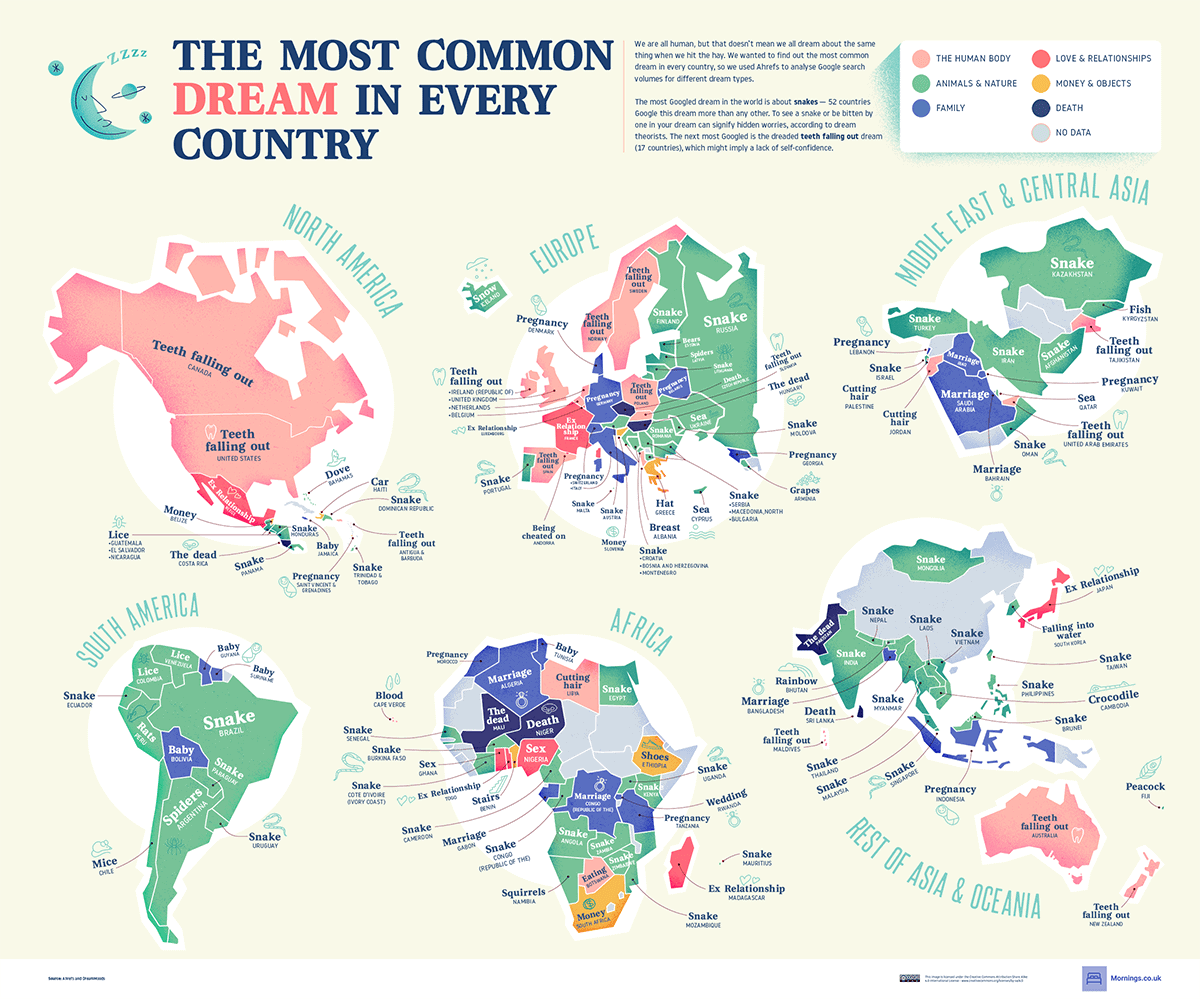
map of the world divided by the most common dreams in each location
Zomasleep.com zomasleep.com

Here are a few:

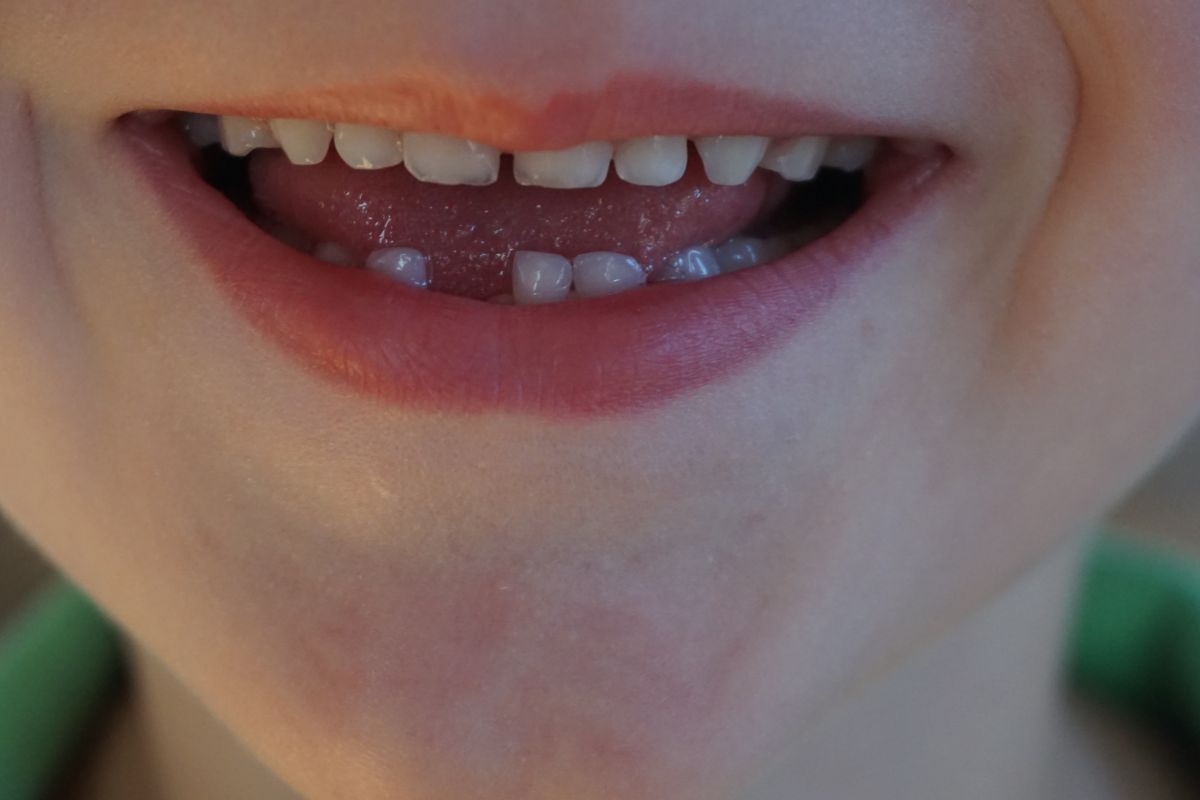
Teeth Falling Out

closeup of a child's smile missing teeth
Have you dreamt of your teeth falling out? pxhere.com


In the US and UK (and many other countries), crumbling teeth were the most common dream people Googled. Anderson added, “Both countries share snake dreams at number two. However, among terrifying snakes and spiders, the US dreams of ex-partners at number three—while Brits dream of hair.”

It should also be noted that if we’re doing top ten lists, the charts showed that “while Americans dream of vacations, bears, and being chased, Brits have pregnancy, birth, and fire on their (subconscious) mind.”
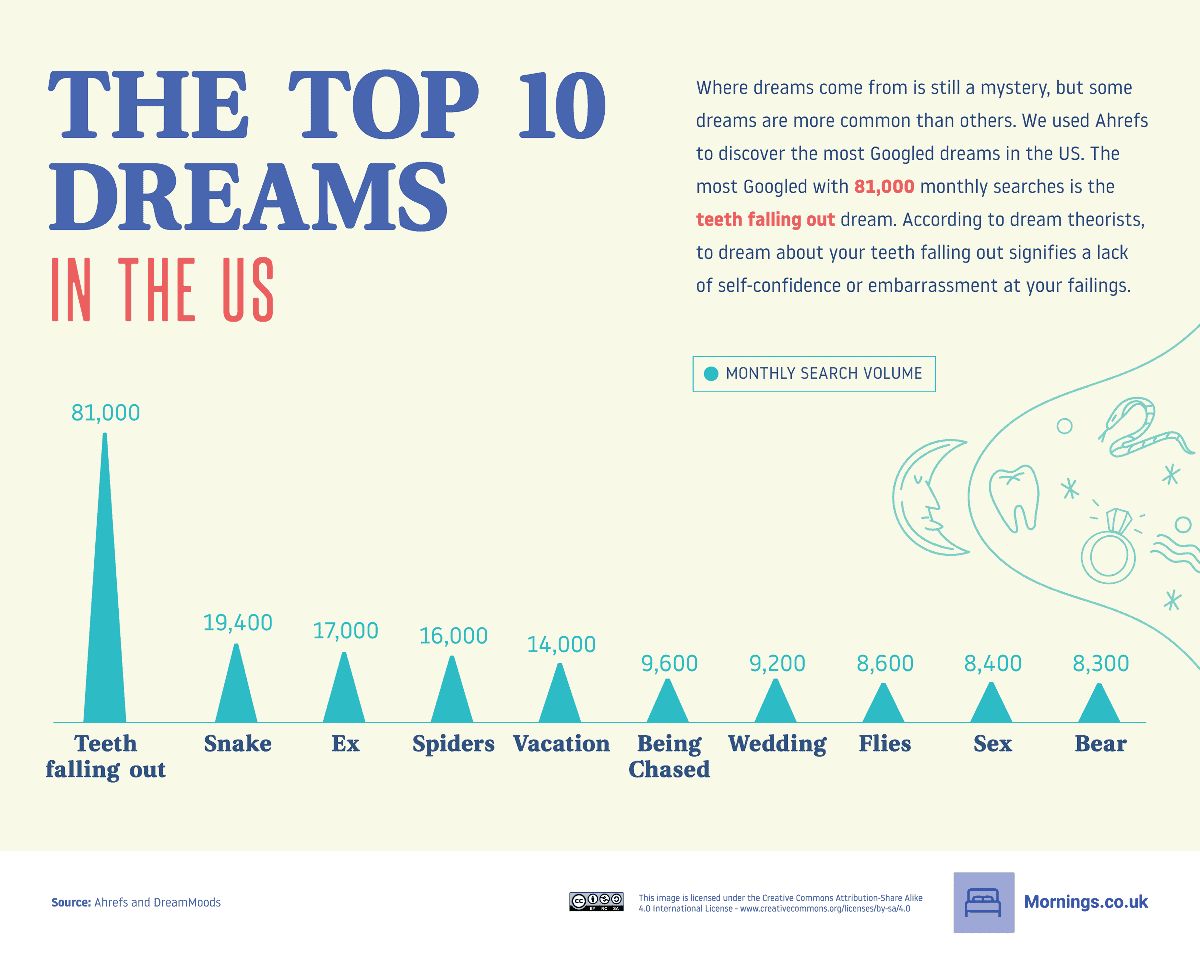
chart of the top 10 dreams in the US
Zomasleep.com zomasleep.com

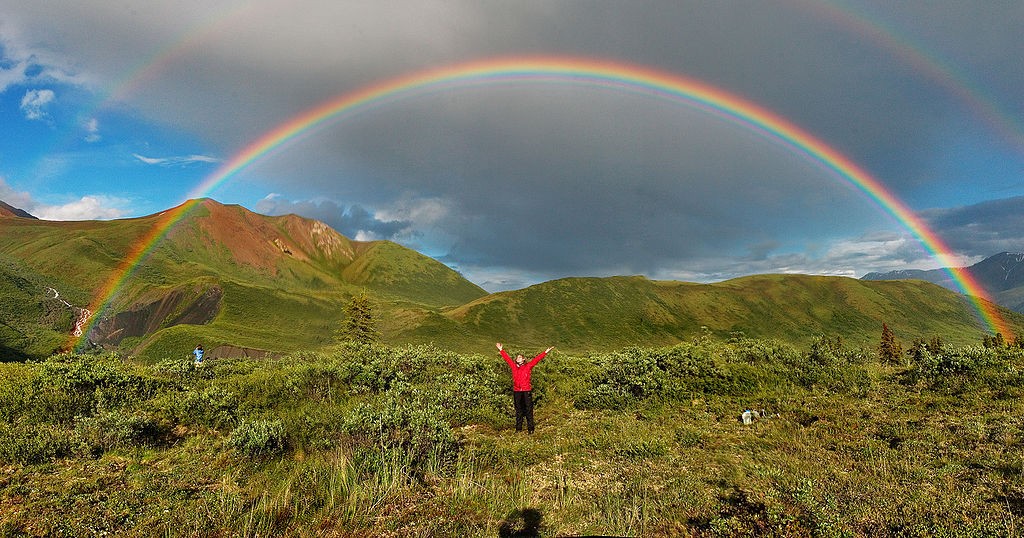
Rainbows and Sex

a double rainbow with a person in red standing in the middle raising their arms
Not sunshine and lollipops, but close! en.m.wikipedia.org


Not everyone has recurring nightmares. A few lucky residents of the world list much more positive common dreams in their number one spot. Bhutan, for example, has rainbows at the top of the list, while many in Ghana and Nigeria often report dreaming of sex.

The Ones Who Got Away


silhouette image of a woman sitting on a bench and a man walking away from her
Breakups are another common dream (or nightmare)u00a0for many. www.publicdomainpictures.net


In some places, like France and Japan, people might have more complicated dreams about their exes. (Who knows, this could also involve rainbows and sex.)

Hats and Birds
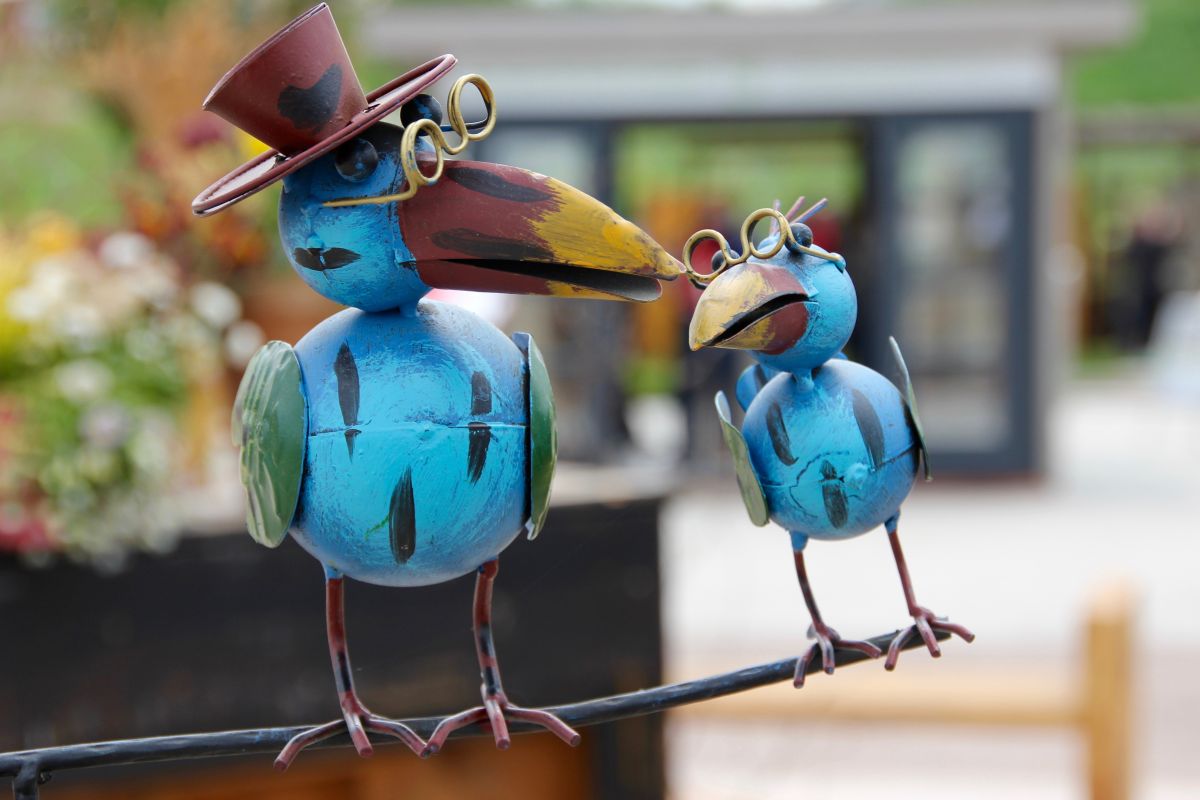
metalwork birds painted bright blue, green, red, and yellow wearing glasses and hats on a metal wire
Birds of a feather dream together? pxhere.com


Some countries have inexplicable reports of dreams in first place. In Greece, people commonly dream about hats. In Fiji, it’s peacocks!

But the Winner is…
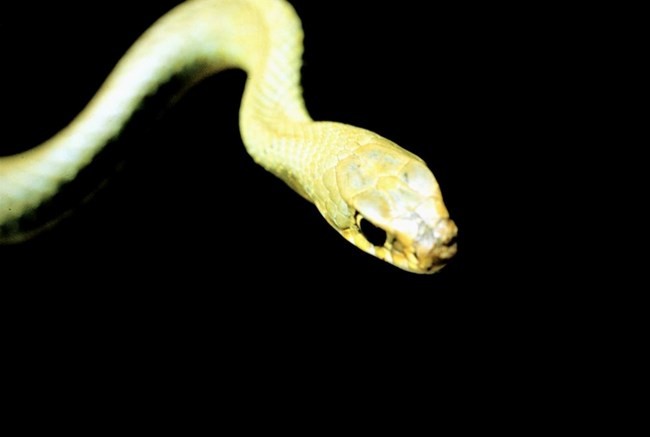
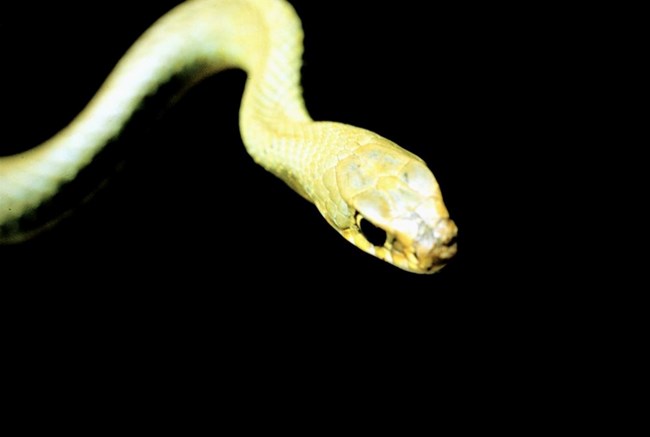
a yellow snake against a black background
Eastern Yellow-bellied Racer www.nps.gov


And the most common recurring dream according to the study is: snakes! Out of all the countries surveyed, 52 out of 147 had snakes at the top of their dream/nightmare lists. Anderson continued, “Snake dreams are particularly ‘popular’ across Eastern Europe and parts of Asia and Africa. The snake lends itself to symbolic interpretation, but in the case of some snake-inhabited localities, sometimes a snake is just a snake.”

Personally, my most common recurring dream is this: I’m back in high school, and it’s the day of the “big exam.” I’m circling the hallways but can’t remember where my class is. I CAN, however, remember that I completely forgot to study. I have this dream about once a month, and in it, I never do find that class.

  • How D.C.’s ‘humanure’ fertilizer creates lush gardens and big profits while improving the environment
    Photo credit: CanvaWhat you flush away could help your garden grow.

    The District of Columbia Water and Sewer Authority—now known as D.C. Water—has long provided water and sewer services to Washington, D.C. But for the past decade, the utility has also had an unexpected side hustle: turning human wastewater into fertilizer with flourishing results.

    At most wastewater treatment plants, flushed water is cleaned, while the remaining solid matter is hauled away for disposal. Over time, transporting and disposing of that waste can cost millions of dollars while increasing carbon emissions from the trucks carrying it. A decade ago, however, D.C. Water decided to invest in transforming the solid waste into “humanure” rather than throwing it away.

    Growin’ grass and makin’ gas

    At the end of the wastewater treatment process, the collected human waste solids are processed into biosolid fertilizer using technology developed by Norwegian company Cambi. The process doesn’t just produce high-quality fertilizer—it also generates biogas that can be put to good use.

    “So you get up to 40% more biogas,” Cambi CEO Eirik Fadnes said. “That biogas can be used to generate electricity to be used elsewhere in the wastewater-treatment plant or put on the grid and sold.”

    D.C. Water sells the biosolid fertilizer under the brand name Bloom, and it’s already proving to be a success. Bloom has been used throughout the Washington, D.C., area by customers including Catholic University, Mount Olivet Cemetery, and the Franciscan Monastery. It’s also used on numerous lawns, school grounds, community gardens, and golf courses.

    Success by the numbers

    The numbers underscore D.C. Water’s success. To date, nearly 400,000 tons of Bloom have been sold across Washington, D.C., Maryland, Pennsylvania, and Virginia, generating $13.6 million in revenue. D.C. Water originally estimated it would take 20 years for Bloom to pay off its investment. But thanks to strong demand from institutions, landscapers, and local garden centers, the utility is now on pace to recoup that investment in just 12 years.

    Bloom is also helping D.C. Water meet its environmental goals. By turning waste into a useful product instead of hauling it away for disposal, the utility has reduced its carbon footprint by roughly 50,000 metric tons of CO₂ emissions each year—the equivalent of taking more than 11,700 gas-powered cars off the road annually. The process also produces biogas, which can be converted into electricity to help offset the energy costs of wastewater treatment.

    Human waste works wonders

    None of this would matter if human biosolids weren’t effective at improving soil. “Humanure,” a term coined by Joseph Jenkins, refers to compost made from properly treated human waste. Because human feces can contain disease-causing pathogens, it must be handled carefully. After all, we call it “waste” for a reason.

    When human waste is composted correctly, naturally occurring microbes break down the organic material while generating enough heat to destroy harmful pathogens. Over time, the result is a nutrient-rich compost that can improve soil health. Some farmers even build specialized outdoor composting toilets to create humanure for use on their land.

    Should D.C. Water continue on this path of simultaneous profitability and environmental improvement, it’s likely other wastewater treatment plants will follow its lead.

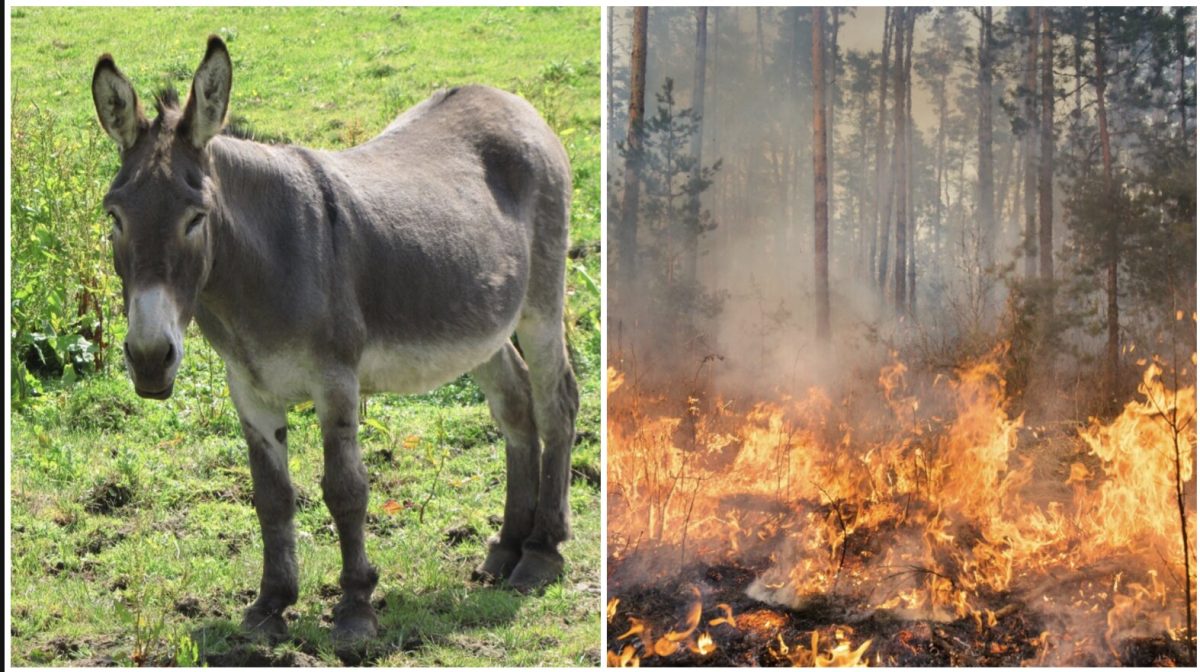
  • A Spanish park has been free of wildfires for over a decade thanks to 18 donkeys
    Photo credit: CanvaDonkeys and other livestock could help prevent mass wildfires.

    According to NASA, wildfires have doubled worldwide due to climate change. Throughout the globe, governments and environmentalists have been trying to find ways to curb the fires. One particular national park in Spain has found a solution that has been keeping them fire-free for over a decade: donkeys.

    Since 2014, the Firefighting Donkey Battalion unit consisting of 18 donkeys has been preventing wildfires in Doñana National Park in Doñana, Spain. The mission these donkeys do is simple: eat the dry brush that usually sparks and fuels wildfires. The donkeys spend up to seven hours a day using their voracious appetites to graze and clear a 130 by 50 feet area of dried grass, scrub, and other vegetation.

    Why donkeys?

    While humans can do this type of clearing out of dry brush, using donkeys for this work is arguably more effective. While it is a slower process, it is consistent and thorough. Donkeys are able to quietly patrol in areas that are inaccessible to vehicles. In exchange for the feasting, the donkeys get about eight gallons of water and rest. No money or fuel needed.

    The donkeys’ bodies are also pretty much built for this kind of environmental work, too. Their stomachs are built to eat the same rough and dry grass repeatedly without issues. These daily grazings slowly but surely remove potential origin sources for fires. As a bonus, the donkeys are naturally disposing of the dried vegetation whereas humans would have to find a different way to dispose of it.

    Having donkeys or other livestock graze in such areas was once more common in agriculture prior to modern farming. Some argue that the machinization of farming and urbanization have reduced the number of grazing animals. This in turn allows more vegetation growth that become dry spots for more wildfires to occur.

    The method expands

    This method has been so successful that other areas of Spain have adopted it. In 2020, Tivissa launched the Burros Bomberos project with three donkeys to so much success they’ve expanded. They now have 40 donkeys grazing and clearing nearly 400 hectares of land.

    The Andrea Association in Allariz uses a team of donkeys to clear and maintain nearly 1,000 hectares of a biosphere reserve. Using GPS to monitor the donkeys’ activity, the group of grazers travel 19 kilometers per day to feed. Similar initiatives have since started in Basque Country, Catalonia, and Galicia, too.

    Other ways to combat wildfires

    In the United States, California has been using goats in a similar function. The group Fire Grazers Inc. has been contacted throughout California to bring hundreds of goats to eat dried vegetation. Much like donkeys, goats are built to eat rough and dry brush. This includes certain plants such as star thistle that are painful for human hands to grab.

    It’s important to note that donkeys or other animals that eat dry scrub are the primary solution to wildfires. The same folks behind these initiatives also advocate proper forest planning and land management. This includes reducing the amount of easily flammable species of plants and trees such as pine. It takes thought, care, work, and maybe a bunch of donkeys to make a difference.

  • Spanish zoo study suggests that giraffes can do basic math
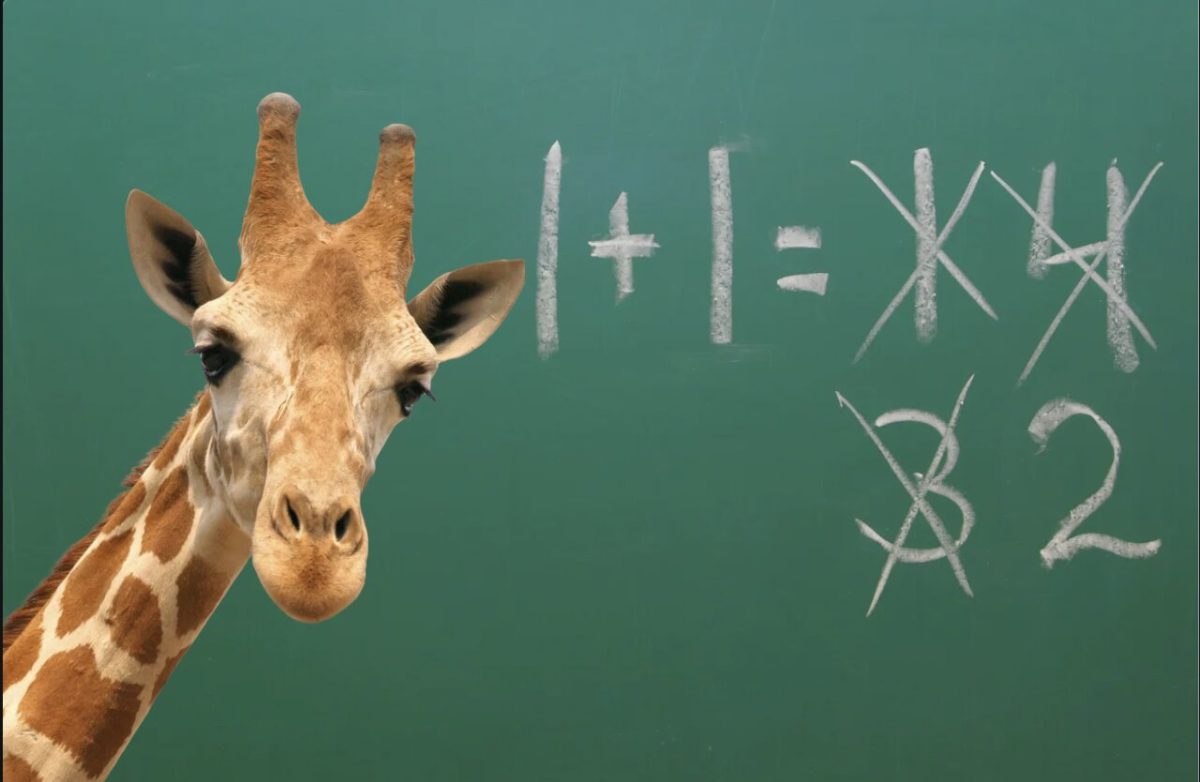
    Photo credit: CanvaA study is showing giraffes could be using math.
    ,

    Spanish zoo study suggests that giraffes can do basic math

    These hoofed mammals can understand addition.

    The results of an experiment done in a Barcelona zoo suggest that giraffes are capable of doing basic mathematics.

    A group of researchers from the University of Leipzig, the Max Planck Institute for Evolutionary Anthropology, and the University of Barcelona published their study observing four giraffes at the Barcelona Zoo. The experiment involved the giraffes observing containers that had different amounts of carrot pieces inside.

    How did this experiment work?

    The researchers showed each giraffe the two yellow containers and the amount of carrots within each one. After a few seconds, they closed the containers, keeping the carrots out of sight. They then showed each giraffe a green container which had extra carrots inside. Researchers took the carrot pieces from the green container and placed them into one of the closed yellow containers. They then let each giraffe independently choose which of the two closed yellow containers they preferred, without them seeing the total number of carrot pieces within each box.

    The results found the giraffes would choose the container that had the most carrot pieces around 68% of the time. This suggests to the scientists that the giraffes were mentally adding the carrots up in each container before making their choice. After all, there have been past studies suggesting that other hoofed mammals, such as horses, had similar capability of basic quantity tracking.

    The researchers did the experiment again. Only this time they subtracted the amount of carrots in each container. The giraffes were mostly unsuccessful at finding the container with the most pieces. So while giraffes showed signs of knowing addition, they don’t quite process all forms of arithmetic.

    Math = Survival

    Scientists believe that this understanding of addition helped giraffes survive in the wild. They cite that acacia trees, a dietary staple for wild giraffes, can be spread far apart in Africa. Being able to figure out which area has the most trees and the most leaves can help them decide where to graze next.

    Giraffes also live in flexible groups that often change in size. One grouping can mix in with another group and then branch off or away. This means that the giraffes often have to keep track of those currently within their group and surroundings to survive.

    Can other animals do math?

    Giraffes are just the latest animal species known to have some form of mathematical skill. Chimpanzees displayed similar abilities to count as giraffes in a similar experiment that involved them picking the bowl with the most chocolate pieces rather than carrots. Chickens and black bears also showed aptitude in quantity tracking, too. 

    Scientists theorize that most of the animals that can do this basic math through evolutionary survival. After all, the animal that can deduce where more food is tends to live longer.

    One species that displays remarkable mathematical ability are Tunisian desert ants. An observation of their navigational skills of finding their way to food and back to their nest suggests they use the sun as a compass in combination with mentally keeping track of the number of steps they take in a three-dimensional space. In short, these desert ants possess basic geometric and trigonometry skills.

    While you wouldn’t want wild animals to calculate your taxes, it’s interesting to see how rudimentary math is a language that goes beyond species.

Explore More Science Stories

Environment

How D.C.’s ‘humanure’ fertilizer creates lush gardens and big profits while improving the environment

Environment

A Spanish park has been free of wildfires for over a decade thanks to 18 donkeys

Science

Spanish zoo study suggests that giraffes can do basic math

Environment

Beyond birds and mice, free‑ranging cats eat a surprising number of insects