
As Americans increasingly report feeling overwhelmed by daily life, many are using self-care to cope. Conversations and social media feeds are saturated with the language of “me time,” burnout, boundaries and nervous system regulation.

To meet this demand, the wellness industry has grown into a multitrillion-dollar global market. Myriad providers offer products, services and lifestyle prescriptions that promise calm, balance and restoration.

Paradoxically, though, even as interest in self-care continues to grow, Americans’ mental health is getting worse.

I am a professor of public health who studies health behaviors and the gap between intentions and outcomes. I became interested in this self-care paradox recently, after I suffered from a concussion. I was prescribed two months of strictly screen-free cognitive rest – no television, email, Zooming, social media, streaming or texting.

The benefits were almost immediate, and they surprised me. I slept better, had a longer attention span and had a newfound sense of mental quiet. These effects reflected a well-established principle in neuroscience: When cognitive and emotional stimuli decrease, the brain’s regulatory systems can recover from overload and chronic stress.

Obviously, most people can’t go 100% screen-free for days, much less months, but the underlying principle offers a powerful lesson for practicing effective self-care.

A nation under strain

Americans’ self-rated mental health is now at the lowest point since Gallup started tracking this issue in 2001. National surveys consistently detect high levels of stress and emotional strain.

Roughly one-third of U.S. adults report feeling overwhelmed most days. Sleep disruption, anxiety, poor concentration and emotional exhaustion are widespread, particularly among young adults and women.

Chronic disease patterns mirror this strain. When daily stress becomes chronic, it can trigger biological changes that increase the risk of long-term conditions like heart disease and diabetes. The Centers for Disease Control and Prevention reports that 6 in 10 U.S. adults live with at least one chronic condition, and 4 in 10 live with multiple chronic conditions.

How people try to cope

Many Americans say they actively practice self-care in everyday life. For example, they describe taking mental health days, protecting personal time, setting boundaries around work and prioritizing rest and leisure.

The problem lies in how they use that leisure time.

Over the past 22 years, the U.S. Bureau of Labor Statistics’ American Time Use Survey has consistently found that watching television is the most popular leisure activity for U.S. adults. Americans spend far more time watching TV than exercising, spending time with friends or practicing reflection through activities like yoga. Other common self-care activities include watching movies and gaming.

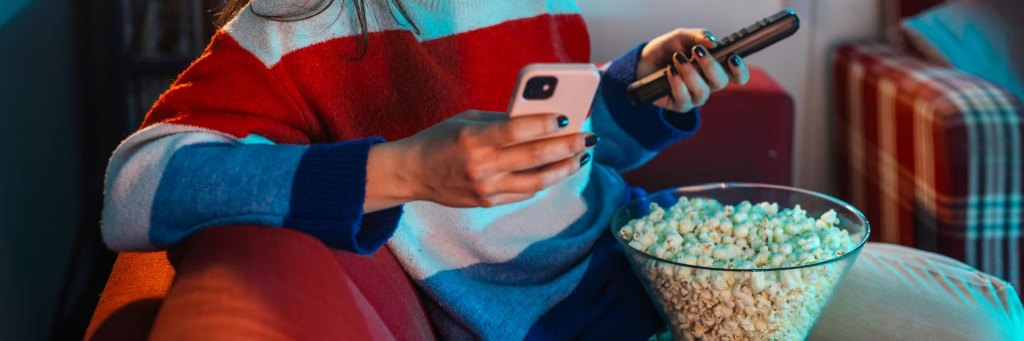
Modern leisure time increasingly includes smartphone use. Surveys suggest that mobile phones have become the dominant screen for many Americans, with adults spending several hours per day on their phones.

For many adults, checking social media or watching short videos has become a default relaxation behavior layered on top of traditional screen use. This practice is often referred to as second screening.

Although many people turn to screen-based activities to wind down, these activities may have the opposite effect biologically.

Why modern screen use feels different

Pre-internet forms of leisure often involved activities such as watching scheduled television programs, listening to radio broadcasts or reading books and magazines. For all of these pastimes, the content followed a predictable sequence with natural stopping points.

Today’s digital media environment looks very different. People routinely engage with multiple screens at once, respond to frequent notifications and switch rapidly between several streams of content. These environments continuously require users to split their attention, engage their emotions and make decisions.

This type of mental multitasking draws on the same neural systems people are often attempting to rest with leisure. The result is a far more fragmented and cognitively demanding environment than in the past.

Americans now spend approximately six to seven hours per day on screens across multiple devices. Splitting attention between more than one screen at a time, such as using the phone while watching television, is common. This juggling exposes peoples’ brains to multiple streams of sensory and emotional input simultaneously.

Survey data also suggests that Americans may check their phones roughly 200 times per day. In doing so, they repeatedly pull their attention back to screens during routine moments.

Modern digital platforms are designed to maximize engagement. Algorithms tend to prioritize emotionally arousing content, particularly anger, anxiety and outrage. These feelings drive clicks, sharing and time spent on platforms. Research has shown that this design is associated with higher stress, distraction and cognitive load.

When ‘rest’ doesn’t restore

Against the backdrop of daily hassles and competing demands, it can feel like relief to flip on the TV. Practices such as streaming or so-called bed-rotting – spending extended periods in bed while scrolling – often are framed as a form of radical rest or self-care.

Other common coping behaviors include leaving the television on as background noise, scrolling between tasks throughout the day or using phones during meals and conversations. These strategies can feel restful because they temporarily reduce external demands and decision-making.

However, pairing rest with screen use may undermine the very restoration that people are seeking. Digital media stimulate attention, emotion and sensory processing. Even while people are sitting or lying still, being onscreen can keep their nervous systems in a heightened state of arousal. It may look like downtime, but it doesn’t create the biological conditions for restoration.

How to wind down

Evidence suggests that mental relief comes not from adding new coping strategies, but from reducing the number of demands placed on the brain.

Here are some evidence-based strategies that support genuine restoration:

The goal is to intentionally reduce mental load, not to abandon all digital devices.

To improve well-being in our overstimulated society, it’s important to understand the difference between feeling as though you are unwinding and actually allowing your brain and body to recover. In my view, fewer screens, fewer inputs, fewer emotional demands and more protected time for genuine cognitive rest are important components of an effective wellness strategy.

This article originally appeared on The Conversation. You can read it here.

  • Antibiotic resistance could undo a century of medical progress – but four advances are changing the story
    Photo credit: wildpixel/iStock via Getty Images Plus Scientists are fighting back against antibiotic resistance with new strategies and tools.

    Imagine going to the hospital for a bacterial ear infection and hearing your doctor say, “We’re out of options.” It may sound dramatic, but antibiotic resistance is pushing that scenario closer to becoming reality for an increasing number of people. In 2016, a woman from Nevada died from a bacterial infection that was resistant to all 26 antibiotics that were available in the United States at that time.

    The U.S. alone sees more than 2.8 million antibiotic-resistant illnesses each year. Globally, antimicrobial resistance is linked to nearly 5 million deaths annually.

    Bacteria naturally evolve in ways that can make the drugs meant to kill them less effective. However, when antibiotics are overused or used improperly in medicine or agriculture, these pressures accelerate the process of resistance.

    As resistant bacteria spread, lifesaving treatments face new complications – common infections become harder to treat, and routine surgeries become riskier. Slowing these threats to modern medicine requires not only responsible antibiotic use and good hygiene, but also awareness of how everyday actions influence resistance.

    Since the inception of antibiotics in 1910 with the introduction of Salvarsan, a synthetic drug used to treat syphilis, scientists have been sounding the alarm about resistance. As a microbiologist and biochemist who studies antimicrobial resistance, I see four major trends that will shape how we as a society will confront antibiotic resistance in the coming decade.

    1. Faster diagnostics are the new front line

    For decades, treating bacterial infections has involved a lot of educated guesswork. When a very sick patient arrives at the hospital and clinicians don’t yet know the exact bacteria causing the illness, they often start with a broad-spectrum antibiotic. These drugs kill many different types of bacteria at once, which can be lifesaving — but they also expose a wide range of other bacteria in the body to antibiotics. While some bacteria are killed, the ones that remain continue to multiply and spread resistance genes between different bacterial species. That unnecessary exposure gives harmless or unrelated bacteria a chance to adapt and develop resistance.

    In contrast, narrow-spectrum antibiotics target only a small group of bacteria. Clinicians typically prefer these types of antibiotics because they treat the infection without disturbing bacteria that are not involved in the infection. However, it can take several days to identify the exact bacteria causing the infection. During that waiting period, clinicians often feel they have no choice but to start broad-spectrum treatment – especially if the patient is seriously ill.

    Close-up of two pill capsules inscribed AOMXY 500 in a blister packet
    Amoxicillin is a commonly prescribed broad-spectrum antibiotic. TEK IMAGE/Science Photo Library via Getty Images

    But new technology may fast-track identification of bacterial pathogens, allowing medical tests to be conducted right where the patient is instead of sending samples off-site and waiting a long time for answers. In addition, advances in genomic sequencingmicrofluidics and artificial intelligence tools are making it possible to identify bacterial species and effective antibiotics to fight them in hours rather than days. Predictive tools can even anticipate resistance evolution.

    For clinicians, better tests could help them make faster diagnoses and more effective treatment plans that won’t exacerbate resistance. For researchers, these tools point to an urgent need to integrate diagnostics with real-time surveillance networks capable of tracking resistance patterns as they emerge.

    Diagnostics alone will not solve resistance, but they provide the precision, speed and early warning needed to stay ahead.

    2. Expanding beyond traditional antibiotics

    Antibiotics transformed medicine in the 20th century, but relying on them alone won’t carry humanity through the 21st. The pipeline of new antibiotics remains distressingly thin, and most drugs currently in development are structurally similar to existing antibiotics, potentially limiting their effectiveness.

    To stay ahead, researchers are investing in nontraditional therapies, many of which work in fundamentally different ways than standard antibiotics.

    One promising direction is bacteriophage therapy, which uses viruses that specifically infect and kill harmful bacteria. Others are exploring microbiome-based therapies that restore healthy bacterial communities to crowd out pathogens.

    Researchers are also developing CRISPR-based antimicrobials, using gene-editing tools to precisely disable resistance genes. New compounds like antimicrobial peptides, which puncture the membranes of bacteria to kill them, show promise as next-generation drugs. Meanwhile, scientists are designing nanoparticle delivery systems to transport antimicrobials directly to infection sites with fewer side effects.

    Beyond medicine, scientists are examining ecological interventions to reduce the movement of resistance genes through soil, wastewater and plastics, as well as through waterways and key environmental reservoirs.

    Many of these options remain early-stage, and bacteria may eventually evolve around them. But these innovations reflect a powerful shift: Instead of betting on discovering a single antibiotic to address resistance, researchers are building a more diverse and resilient tool kit to fight antibiotic-resistant pathogenic bacteria.

    3. Antimicrobial resistance outside hospitals

    Antibiotic resistance doesn’t only spread in hospitals. It moves through people, wildlife, crops, wastewater, soil and global trade networks. This broader perspective that takes the principles of One Health into account is essential for understanding how resistance genes travel through ecosystems.

    Researchers are increasingly recognizing environmental and agricultural factors as major drivers of resistance, on par with misuse of antibiotics in the clinic. These include how antibiotics used in animal agriculture can create resistant bacteria that spread to people; how resistance genes in wastewater can survive treatment systems and enter rivers and soil; and how farms, sewage plants and other environmental hot spots become hubs where resistance spreads quickly. Even global travel accelerates the movement of resistant bacteria across continents within hours.

    Together, these forces show that antibiotic resistance isn’t just an issue for hospitals – it’s an ecological and societal problem. For researchers, this means designing solutions that cross disciplines, integrating microbiology, ecology, engineering, agriculture and public health.

    4. Policies on what treatments exist in the future

    Drug companies lose money developing new antibiotics. Because new antibiotics are used sparingly in order to preserve their effectiveness, companies often sell too few doses to recoup development costs even after the Food and Drug Administration approves the drugs. Several antibiotic companies have gone bankrupt for this reason.

    To encourage antibiotic innovation, the U.S. is considering major policy changes like the PASTEUR Act. This bipartisan bill proposes creating a subscription-style payment model that would allow the federal government up to US$3 billion to pay drug manufacturers over five to 10 years for access to critical antibiotics instead of paying per pill.

    Global health organizations, including Médecins Sans Frontières (Doctors Without Borders), caution that the bill should include stronger commitments to stewardship and equitable access.

    Still, the bill represents one of the most significant policy proposals related to antimicrobial resistance in U.S. history and could determine what antibiotics exist in the future.

    The future of antibiotic resistance

    Antibiotic resistance is sometimes framed as an inevitable catastrophe. But I believe the reality is more hopeful: Society is entering an era of smarter diagnostics, innovative therapies, ecosystem-level strategies and policy reforms aimed at rebuilding the antibiotic pipeline in addition to addressing stewardship.

    For the public, this means better tools and stronger systems of protection. For researchers and policymakers, it means collaborating in new ways.

    The question now isn’t whether there are solutions to antibiotic resistance – it’s whether society will act fast enough to use them.

    This article originally appeared on The Conversation. You can read it here.
  • HEPA air purifiers may boost brain power in adults over 40 – new research
    Photo credit: Jomkwan/iStock via Getty Images PlusAir pollution can negatively affect the brain.

    Using an in-home HEPA purifier for one month spurs a small but significant improvement in brain function in adults age 40 and older. That’s the result of a new study we co-authored in the journal Scientific Reports.

    HEPA purifiers – HEPA stands for high efficiency particulate air – remove particulate matter from the air. Exposure to particulate matter has been connected to respiratory and cardiovascular illnesses as well as neurological diseases such as Alzheimer’s and Parkinson’s. Environmental health researchers increasingly recommend that people use HEPA air purifiers in their homes to lower their exposure to particulate matter, but few studies have examined whether using them boosts mental function.

    We analyzed data from a study of 119 people ages 30 to 74 living in Somerville, Massachusetts. Somerville sits along Interstate 93 and Route 28, two major highways, resulting in relatively high levels of traffic-related air pollution. This makes it an especially good location for testing the health effects of air purifiers.

    We randomly assigned participants to one of two groups. One used a HEPA air purifier for one month and then a sham air purifier – which looked and acted like the real thing but did not contain the air-cleaning filter – for one month, with a month-long break in between. The second group used the real and sham purifiers in reverse order.

    After each month, participants took a test that measured different aspects of their mental capacity. The test probed people’s visual memory and motor speed skills by measuring how quickly they could draw lines between sequential numbers, and it tested executive function and mental flexibility by asking them to draw lines between alternating sequential numbers and letters.

    We found that participants 40 years and older – about 42% of our sample – on average completed the section testing for mental flexibility and executive function 12% faster after using the HEPA purifier than after using the sham purifier. That was true even when we accounted for factors like differences in the amount of time participants spent indoors, with either filter, as well as how stressful they found the test.

    This improvement may seem small, but it is similar to the cognitive benefits that people experience from increasing their daily exercise. While you may not experience a sudden increase in clarity from a 12% boost, preventing cognitive decline is vital for long-term well-being. Even small decreases in cognitive functioning may be associated with a higher risk of death.

    Why it matters

    Air pollution can negatively affect mental function after just a few hours of exposure. Studies show that air purifiers are effective at reducing particulates, but it’s unclear whether these reductions can prevent cognitive harm from ongoing pollution sources like traffic. Research has been especially lacking in people living near major sources of air pollution, such as highways.

    People living near highways or major roadways are exposed to more air pollution and also experience higher rates of air pollution-related diseases. These risks aren’t encountered by all Americans equally: People of color and low-income people are more likely to live near highways or areas with heavy traffic.

    Our study shows that HEPA air purifiers may offer meaningful health benefits under these circumstances.

    What still isn’t known

    Research shows that air pollution begins to affect cognitive function especially strongly around age 40. These effects may become increasingly prominent as people age.

    HEPA air purifiers may therefore be especially beneficial for older adults. Our study did not explore this possibility, as fewer than 10 of our 119 participants were over the age of 60.

    Also, our participants only used a HEPA air purifier for one month. It’s possible that longer durations of air purification may sustain or even increase the improvement in cognitive function we observed in our study.

    Finally, it is unclear exactly how air purifiers improve cognition. Some studies suggest that exposure to particulate matter reduces the amount of the brain’s white matter, which helps brain cells conduct electrical signals and maintains connections between brain regions. The brain regions most harmed by air pollution are the ones that control mental flexibility and executive function, the same domains in which we saw improvements in our study.

    We plan to study whether reducing particulate matter by using air purifiers is indeed protecting the brain’s white matter, and whether it could reverse some cognitive decline. We will explore that possibility by studying how levels of molecules called metabolites, which cells produce as they do their jobs, change in response to breathing polluted air and air cleaned by a HEPA filter.

    This article originally appeared on The Conversation. You can read it here.
  • Placebo effect can work as well as real medicine – but your body may need permission to use it
    Photo credit: Irina Marwan/Moment via Getty Images From empty pills to homeopathy to sham surgery, placebos have powerful effects on the body.

    The first time the placebo effect really got under my skin was when I read that roughly one-third of people with irritable bowel syndrome improve on placebo treatments alone. Usually this statistic is presented as a fascinating quirk of medicine. My reaction was anger.

    Humanity possesses an extremely effective treatment, with essentially zero side effects – and patients need someone else’s permission to use it.

    The placebo effect refers to the improvements in symptoms that patients experience after they’re given an inert treatment like a sugar pill. Driven by expectation, context and social cues rather than pharmacology, the placebo effect is often dismissed as all in the mind. But decades of research have shown it is anything but imaginary.

    Placebo treatments can trigger measurable changes in the brain, immune system and hormone function. In studies on pain, placebos cause the brain to release endorphins, the body’s natural opioids. In Parkinson’s disease, placebo injections increase dopamine activity in the brain. The placebo effect isn’t magic. It’s biology.

    Having spent nearly a quarter-century teaching evolutionary medicine, I’ve come to see placebos not as curiosities of clinical trials but as windows into how human biology responds to social signals. And it’s that relationship that is exactly what makes the placebo effect unsettling.

    Medicine works, even when it isn’t medicine

    The placebo effect is so reliable that researchers must account for it in nearly every clinical trial.

    When testing a new drug, scientists compare its effects to what patients experience on a placebo treatment like sugar pills, saline injections or sham surgery. If the drug doesn’t outperform the placebo, it rarely reaches the public. Placebo responses are common and powerful enough to rival active treatments.

    Even surgery isn’t immune to the placebo effect. In several well-documented studies of knee procedures, patients who received sham operations – incisions without the full surgical repair – improved almost as much as those who received the real procedure.

    Clinician in scrubs and gloves holding wrist of patient lying on a hospital bed
    The experience of going under the knife can itself be healing. Jacob Wackerhausen/iStock via Getty Images Plus

    Clearly something real is happening inside the body. But the strangest part of the placebo effect is not that it works. It’s what makes it work.

    The prescription of belief

    Placebo treatments tend to be more effective when delivered by credible authorities. Pills work better when prescribed by doctors wearing white coats. Expensive pills outperform cheap ones. Injections produce stronger responses than tablets.

    Some researchers have even removed the deception from placebo experiments entirely. In open-label placebo studies, patients are directly told they are receiving a placebo; and yet many still report significant improvement.

    But look more closely at how these studies are run. Patients are not simply handed a sugar pill and sent home. They receive an explanation from a clinician, in a medical setting, within a structured ritual of care: a context that may be doing much of the biological work.

    Even when the deception disappears, the social scaffolding remains. The permission to heal is still being granted by someone else.

    The placebo effect extends beyond the patient

    The placebo effect is often framed as something happening inside an individual. But it does not operate in isolation.

    Consider what happens in veterinary medicine. Dogs and cats cannot believe a treatment they’re given will work; they have no concept of receiving medication. Yet when owners and vets believe an animal is being treated, they consistently report improvements in pain and mobility that medical tests do not confirm.

    In one study of dogs with osteoarthritis, owners reported improvement roughly 57% of the time for animals receiving only a placebo.

    Dog resting head against person's arm while vet inspects a front leg
    Is Fido feeling better, or is the placebo effect working on you? Chalabala/iStock via Getty Images Plus

    The animals themselves may not have improved. But the humans caring for them perceived they had. The healing signal, it turns out, travels through the humans in the room.

    When healing makes things worse

    There have been times when going to the doctor made you less likely to survive. In the 19th century, mainstream medicine was built on bloodletting, purging and doses of mercury and arsenic – treatments that killed as often as they cured.

    Homeopathy emerged in the late 18th century precisely in this context. Its founder, Samuel Hahnemann, was a physician horrified by the harm the conventional medicine of his time was causing. His highly diluted versions of contemporary remedies did nothing pharmacologically. But they also did not kill people, which put them decisively ahead of the competition.

    Homeopathic patients not only survived but also reported dramatic recoveries from chronic ailments and acute infections alike. During the cholera epidemics of the mid-1800s, patients at homeopathic hospitals had lower death rates than those receiving standard care. Why was that?

    The standard cholera treatment of the era was aggressive and exhausting; for a disease that already caused massive fluid loss, doctors often prescribed further bloodletting, along with toxic purgatives such as calomel – a form of mercury – to “flush” the system. In contrast, homeopathic care involved extreme dilutions of substances in water or alcohol, effectively providing hydration and a calm, structured environment without the physiological assault.

    Death rates were lower not because homeopathy worked but because the placebo effect – combined with not poisoning patients – was more effective than the medicine of the day.

    Healing is not free

    The body needs resources to heal from injury and disease. Activating systems such as immune responses, tissue repair and inflammation at the wrong time can be dangerous.

    A full-scale immune response is metabolically expensive, with fever increasing metabolic rate by roughly 10% per degree Celsius rise in body temperature. Triggered at the wrong time, this can deplete critical energy reserves needed for immediate survival, such as escaping a predator. Furthermore, misplaced or overzealous inflammation causes collateral damage to healthy tissues, potentially leading to chronic dysfunction.

    Some researchers have proposed that placebo responses reflect a kind of biological health governor: a system that regulates when the body invests heavily in recovery. Cues from trusted individuals may be exactly the signal the body waits for before committing resources to recovery. A caregiver’s reassurance, a physician’s authority and the rituals of medicine may tell the body that conditions are finally stable enough to devote energy to healing.

    If that interpretation is correct, the placebo effect is not a trick of the mind. It is an ancient biological system responding to social information.

    Body under stress

    The placebo effect resembles another system people struggle with today: the stress response.

    Stress evolved to keep you alive in the face of acute danger – predators, famine, immediate physical threat. These days, this useful piece of biological engineering might fire when someone hasn’t replied to your email. The system that once saved people’s lives now makes many miserable over things that would have been unimaginable to their ancestors.

    You can talk back to the stress response, consciously reappraising the threat – in other words, reframing a looming deadline not as a catastrophe but as a manageable challenge – to help quiet it. But notice what you cannot do: You cannot simply decide to activate your placebo response. You cannot will yourself to release pain-relieving endorphins by believing hard enough in a sugar pill. For that, you still need the ritual, the white coat, the authority figure. You need someone else.

    The stress response, misfiring as it is, remains yours. The placebo response has been outsourced: not because it wasn’t always social, but because even now, people still can’t seem to access it on their own.

    The uncomfortable implication

    The placebo effect is not a trick of the mind. It is a feature of human biology that people have largely surrendered to whoever performs authority most convincingly.

    If belief can activate biological healing pathways, belief can also be manipulated. Charismatic figures, elaborate medical rituals and expensive treatments may produce real improvement in symptoms even when the underlying treatment is physiologically inert. That is how wellness culture works. It leverages the same social scaffolding of care to trigger the body’s internal pharmacy, regardless of whether the treatment itself does anything.

    The placebo effect is often celebrated as proof that the mind can heal the body. But I believe that may not be its most interesting lesson. It also reveals that human physiology evolved to take its cues from other people. Your brain, immune system and pain response are not isolated machines. They are deeply intertwined with social signals, expectations and trust.

    In a world filled with doctors, advertisements, wellness influencers and elaborate medical rituals, that insight is both fascinating and profoundly maddening. People are walking around with one of the most powerful healing systems ever documented locked inside them, and they can reliably access it only when someone in a position of authority gives them permission.

    This article originally appeared on The Conversation. You can read it here.

Explore More Health Stories

Health

HEPA air purifiers may boost brain power in adults over 40 – new research

Health

Placebo effect can work as well as real medicine – but your body may need permission to use it

Health

She called it a green flag when her date cooked a healthy meal for her. But then he explained which organ he was protecting.

Health

It’s a myth that baby boys are less social than girls – a new look at decades of research shows all babies are born to connect