
Concerns surrounding young people’s screen time are widespread.

Australia became the first country to ban social media for users under 16 in December 2025, and DenmarkFrance and the U.K. have since announced similar restrictions to begin this year.

In the U.S., as of mid-2026, more than 30 states have passed laws banning or restricting cellphones in K–12 classrooms; in 2023, the U.S. surgeon general issued a formal advisory on social media and children’s and adolescents’ mental health; and bestselling books tell parents that smartphones are “rewiring” their children’s brains.

These concerns and policies are part of a quickly changing national and international conversation around how young people spend time on screens and its relationship to their overall health and development. My reading of the mounting research on this issue across disciplines is that the popular narrative blaming screens and smartphones for an adolescent mental health crisis runs well ahead of the current evidence.

I study adolescent digital media use and its influence on social, emotional and academic outcomes. A growing body of research suggests that one-size-fits-all solutions are not the answer and that managing appropriate use of digital media needs to take into account a child’s developmental milestones, how parents and adults around them use media, and the ways kids use it to connect and learn with friends and family.

Screen time: From monolith to multifaceted

Wide adoption of digital media and the internet broadened the range of experiences young people could have online. At the same time, the digital age introduced newfound uncertainties. As with the advent of radio, comic books and arcades, adults worried about how children might interact with or be affected by internet use.

In response, the American Academy of Pediatrics first recommended in 1999 that parents and caregivers keep children under 2 away from screens. In the decades since, professional guidance largely treated children’s media use as a behavior to be mitigated.

Policies introduced by the academy in 2013 and 2016 continued to advise that school-age kids and adolescents – those ages 5 to 18 – be restricted to no more than two hours of “entertainment” screen time a day. The goal was to curb risks associated with heavy media use, among them disrupted sleep, online safety, cyberbullying and physical inactivity.

Originally created for young people’s engagement with stationary media that tend to be confined to one room or context – for example, watching television – these hourly limits became outdated with the integration of smartphones and other digital devices into everyday life. Compared with watching television, online media was far more difficult to track and define, and more nuanced in its use.

Developmentally beneficial activities such as educationsocializing and leisure have come to rely on the internet to extend and maintain face-to-face connections. Remote schooling and social distancing during the COVID-19 pandemic only accelerated this digitization of daily life.

In my view, adopting strict time limits and restrictions could pose risks to children’s well-beingautonomy and development, for example, by harming adolescent self-esteem.

The latest guidelines

In January 2026, the American Academy of Pediatrics retired its decade-old framework that had largely organized its advice around hourly screen limits. The new policy statement on children, adolescents and digital media diverges from this blanket approach. Instead, it suggests parents consider the larger picture in which this media use exists rather than lumping all screen use together.

Similar to the World Health Organization’s 2019 guidance for children under 5, the American Academy of Pediatrics still advises that parents avoid screen media for children younger than 18 months. This recommendation is largely because extended use by children by themselves can be problematic for many young children, crowding out important developmental milestones.

Both the World Health Organization and the American Academy of Pediatrics also recommend that when children under 24 months use screens, they should be limited to content and devices that encourage children and caregivers to interact. For ages 2 to 5, screen time – including TV and interactive apps on devices – may be extended to more solo use, provided it’s high-quality digital media designed around learning goals in mathematics and reading. But recreational use should be limited to roughly an hour per day.

For school-age children and teens, the newest guidance has begun to step away from fixed screen time limits and asks families to weigh online activity in the context of everyday life.

Doing so recognizes that a child’s digital experiences are shaped by diverse factors rather than the hours spent online. Current guidelines call on caregivers to distinguish among types of media, from television and social media to video games and interacting with artificial intelligence chatbots. They also call for taking into account a child’s individual characteristics, such as their interests and personality, family members’ own use of screens, and the type of content children are spending time on.

Rethinking screen time

Moving beyond strict screen time limits includes questioning the kind of digital activities kids and adolescents participate in. Do the activities encourage time spent interacting with others online, which can help young people develop important skills and competencies?

Scrolling an algorithm-based, auto-playing video feed likely does not equate to the same opportunities as video-chatting with friends, creating digital art or working with teammates in a multiplayer game. Research suggests these different uses relate to development in different ways and can help kids develop varying skill sets pertaining to everyday life and schooling.

Indeed, a large review of current research found that young people who take part in a range of digital activities, such as browsing the web, online gaming or interacting on social media, show positive associations with social connection, identity exploration, civic participation and learning.

A woman and two small children look at tablet screen
Parental involvement in young children’s screen time has developmental benefits. Cultura Creative/Tetra images via Getty Images

Using these guidelines at home

The current evidence suggests parents and caregivers are best positioned to be digital instructors. Cutting children off altogether can carry its own risks for social and emotional development. Caregiver mediation of children’s screen time can produce widely different outcomes and effects, depending on whether the guidance is supportive or controlling.

Considering your own digital media use is the first step: Are family members engaging in problematic or heavy media use that children in the household might emulate? What applications and uses are most common in the family, and what positive or negative effects might they have, depending on the child’s age? How could these digital activities be safely integrated with other everyday experiences to increase their benefit for children? Conversely, what online time might be better spent on face-to-face experiences?

The American Academy of Pediatrics’ Family Media Plan tool turns these ideas into concrete questions. For example, it recommends working out what each child needs from digital technology, what activities screens might be crowding out, and where their family or household can build in screen-free time. The recommendation is to talk with each child about why they are drawn to particular apps or online activities, what they encounter while browsing, and what might be lost when kids bring phones to gatherings such as mealtimes.

The debate over young people’s screen time is not going away. But the most up-to-date guidelines, and the growing body of research behind them, make a strong case for a more holistic approach. The guidelines treat digital media as a complex, diverse and evolving environment that children need to learn to navigate in the digital age. The risks and rewards depend, as with any developmental setting, on the child, the content and what online time might be crowding out.

This article originally appeared on The Conversation. You can read it here.

  • ER doctor and mom sets the record straight for parents of kids with e-bikes and e-scooters
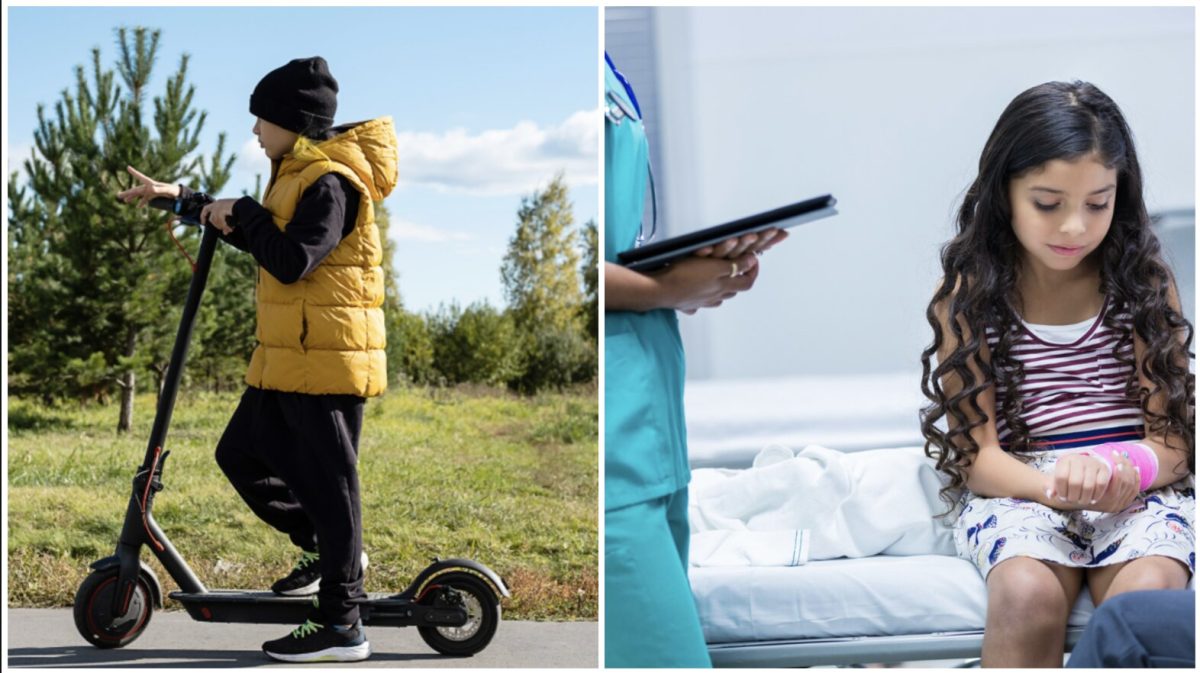
    Photo credit: CanvaA boy rides an e-scooter, left, while a girl is examined in an emergency room.

    An emergency room doctor and fellow mom has been noticing a troubling trend: Many parents are giving their kids something more powerful than bicycles to get around the neighborhood. As a result, she’s seeing more children come into the ER with injuries sustained in e-bike and e-scooter crashes. She recently went online with a plea to parents and young riders.

    Dr. Meghan Elizabeth Beach Martin, known online as Dr. Beachgem, posted a video in her scrubs discussing her concerns after seeing so many children come into the hospital with e-bike injuries during the summer months. She’s worried that too many kids and parents don’t understand the proper safety precautions. As a mother herself, she even questions why children are allowed to ride these devices at all.

    In the video, the doctor explains that some e-bikes can reach speeds of up to 28 mph. She says that if an e-bike goes any faster than that, it’s technically classified as a motorcycle. At those speeds, she regularly sees children with traumatic injuries and broken bones after hitting bumps, cracks in the road, or other vehicles. Many of them aren’t wearing helmets or protective pads, and some are even riding barefoot, making their injuries even more severe. Martin’s video has gained traction on Reddit and elsewhere online.

    E-bikes and e-scooters, examined

    Martin isn’t the only professional seeing a growing problem. The American College of Surgeons reports that there are more than 20,000 e-bike-related injuries each year. Meanwhile, a University of California, San Francisco study found that e-bike injuries doubled annually from 2017 to 2022. The same study found that e-scooter injuries increased by 45% each year during the same period.

    Before riding an e-bike, it’s important to follow proper safety procedures. Make sure you and your child understand your area’s laws regarding e-bikes, including any minimum age requirements. Always wear a helmet and other protective gear when riding. Consider choosing an e-bike with safety features such as motor-interrupt brake levers and disc brakes. These are just a few of the many safety tips experts recommend.

    The U.S. Consumer Product Safety Commission has similar safety tips for e-scooter riders. Wearing a helmet is one of its top recommendations, along with taking other basic precautions. The agency also recommends checking the brakes before riding and slowing down for bumps, cracks, and other road hazards.

    The vast majority of e-scooters and e-bikes are designed for only one rider, so avoid doubling up. Although laws vary by state and locality, wearing more protective gear is always the safer choice. Riders should also review local e-bike and e-scooter laws to make sure they are operating the vehicles safely and legally.

    A little research goes a long way toward making sure you and your children can ride safely. It’s also important for parents to understand that many e-bikes and e-scooters can travel at speeds that make them very different from a traditional bicycle. The last thing you want is for you or your child to become another emergency room statistic.

  • May cause joy: The full-spectrum health benefits of dance 
    Photo credit: Amber Star Merkens // Dance for PDView of upturned face of Black woman with her arms extended, leading a chair dance class with lots of seniors sitting in the background extending their arms in the same motion.
    ,

    May cause joy: The full-spectrum health benefits of dance 

    Michaela Haas for Reasons to be Cheerful When musician David Byrne, the founder of Reasons to be Cheerful, performed at the sold-out Dolby Theatre in Los Angeles last fall, the entire crowd was on its feet for almost the entire show. They danced enthusiastically for nearly two hours straight, feeling a kind of unfiltered joy that’s…

    Michaela Haas for Reasons to be Cheerful

    When musician David Byrne, the founder of Reasons to be Cheerful, performed at the sold-out Dolby Theatre in Los Angeles last fall, the entire crowd was on its feet for almost the entire show. They danced enthusiastically for nearly two hours straight, feeling a kind of unfiltered joy that’s rare to access in everyday life. 

    The experience was a reminder of a long-dormant love of dance. The following month brought a sign-up for “Groove Therapy” with local dance teacher Leah Lynn. The youngest in our group is 16, the oldest over 70. Every Saturday, the class plays out a verb each participant brings to class — release, gather, resist, invite — translating abstract intentions into motion. It sounds faintly ridiculous. It is also disarmingly effective. Within minutes, something shifts. Stress loosens. Then for the next hour, the group learns hip-hop shuffles and swings their hips to Kool & the Gang or Beyoncé. The class ends with the same feeling each time: exhausted and exhilarated.

    The dance classes provoked such a profound shift in mood as well as in the body that it was worth finding out if there was more to it.

    High-angle view of a room full of people dancing while in folding chairs.

    Modern research is now increasingly suggesting that dance is medicine, a deeply effective intervention for physical, cognitive, and emotional health.​ Behind the feel-good performance lies hard science. On a purely physical level, dance improves cardiovascular fitness, strength, and coordination. In a longitudinal study, seniors who took part in regular dance training fell less often and were described as “physically better off and mentally fitter” than those in the control group. 

    Though the body benefits are impressive, the neurological ones are what make scientists lean forward. Dancing activates a wide network: auditory pathways, visual and motor cortex, the amygdala, and, above all, the somatosensory cortex and networks that keep track of where your body is in space. Each change in rhythm or melody is processed in milliseconds and translated into new steps, adjustments, and expressions, a form of real-time “multitasking” that pushes the brain harder than many other sports.​

    Nobody understands this better than the dozen people who gather for David Leventhal’s class at a dance studio in Brooklyn. Though it’s cold outside, Leventhal is conjuring a beach. “Visualize what that warmth feels like,” he says, brushing his hands over his arms as if applying sunscreen. “Can we take those waves in different directions, just like they do in the ocean?” Around him, a dozen bodies begin to ripple to the tune of the pianist in the room. Arms slice, float and curl through the air. For a moment, the bare white room is less clinic than coastline.

    A woman in a black-and-white striped shirt stands, swinging her arms in front of a group of people in different colored shirts also dancing with their arms raised.

    Leventhal, who danced for 13 years with the Mark Morris Dance Group, has spent the last quarter century leading a different kind of choreography: Dance for PD, a program for people living with Parkinson’s disease. 

    What began in Brooklyn in 2001 now reaches more than 30 countries and roughly 500 communities. Across the room, people who arrived with their shoulders slightly caved inward now stand taller. They trace arcs through space, step through a tango phrase, and turn what might otherwise register as tremor into jazz hands.

    A woman wearing a yellow shirt with raised hands dances palm-to-palm with a person sitting across from her in a Dance for PD program.

    Participants in the program, which was created by the Mark Morris Dance Group and the Brooklyn Parkinson Group, routinely report better balance, more confidence walking, and a renewed sense of self. But just as often, they mention something less clinical and more essential: joy.

    “I sometimes cannot walk, but I can dance,” participant Cyndy Gilbertson said in the documentary Capturing Grace. “The music leads, in other words; it’s not my brain telling me to take a step.” 

    You don’t need a severe diagnosis to benefit from dance. “Dance has been part of our human culture for millennia,” Leventhal points out. “It’s how we communicate, how we express emotion, how we find each other, how we build community.” Across cultures, from Indigenous North American traditions to Māori and Pacific Islander practices, dance has also long been intertwined with healing.  

    A woman in the Dance for PD program wearing an orange shirt dances from a chair in the foreground, while others are visible behind her doing the same.

    Over time, this seems to change the brain’s structure. A German study that followed older adults in a dance program for more than a year reported increases in gray matter volume and synaptic density in regions important for memory and executive function, along with preserved cognitive performance over five years of follow-up. The researchers found that dancing appeared to build “cognitive reserve” and was “the best prevention” against age-related cognitive decline in their cohort, with dancers showing a statistically lower risk of dementia than nondancers.​

    Those findings dovetail with a widely cited observational study: People who danced more than once a week had a 76% lower risk of developing dementia than those who danced less often, an association reported as stronger than that seen with many popular “brain games.”

    “It’s a full-spectrum activity,” Leventhal explains. “It engages the body, cognition, emotion, and social connection — all supported by music.”

    A man wearing a brown shirt extends his arms forward in a pose while sitting on a chair as part of a Dance for PD program.

    The real power, he argues, lies in the overlap. “The benefits come from the synergy among those domains.”

    A person wearing a light blue shirt in the foreground with many people in the background all doing chair dance.

    That synergy matters especially for Parkinson’s, which affects motor control, cognition, emotional expression and social engagement. Many people withdraw from public life as symptoms progress. “The beauty of this art form,” Leventhal says, “is that it’s a full-spectrum intervention for a full-spectrum condition.”

    In a large meta-analysis of 55 randomized controlled trials in Parkinson’s disease, dance emerged as the most effective of nine exercise interventions for improving balance in that analysis, outperforming even advanced rehabilitation technologies. Styles like tango, waltz and foxtrot have been shown to improve gait speed and reduce falls.  

    While there is no cure for Parkinson’s, some early research suggests that dance can slow down the progression significantly for some people. “It’s early evidence,” Leventhal says carefully. “But exercise may be one of the only disease-modifying approaches we have.”

    “Our auditory cortex synchronizes with the motor cortex,” Leventhal explains — a mechanism particularly relevant in Parkinson’s, where internal rhythm is disrupted by dopamine loss. External rhythm can step in as a kind of substitute metronome. “It creates a roadmap,” Leventhal says. “Someone described it as a red carpet rolling out in front of them.” For people who struggle to initiate movement, that cue can be transformative, enhancing neuroplasticity — the brain’s ability to form new connections. 

    “Novelty is huge,” Leventhal says. “New patterns, new music, new movement.” But novelty alone isn’t enough. “When something is also meaningful to you — when it connects emotionally, that’s when the brain is really activated.”

    Side view of two people, one wearing orange and the other lavender, with joined hands swinging their arms as they dance, with many participants in the background also dancing.

    Another, more practical advantage: People keep coming back. Some participants have been dancing with Leventhal for over 16 years. People are welcome at all stages of Parkinson’s. Some arrive in a wheelchair, others have recently been diagnosed. “If people can get to class, they stay,” Leventhal says. 

    That kind of adherence is rare in exercise programs, especially for chronic conditions. The reason, again, circles back to neuroscience. Motivation is tied to dopamine, the very neurotransmitter depleted in Parkinson’s. Apathy is common. Getting on a treadmill can feel like scaling a wall. Dance, by contrast, lowers the barrier.

    “The combination of music, social interaction, and movement is highly motivating,” Leventhal says. “Some people come to see their friends and stay for the movement. Some come for the music.” 

    Two people wearing blue shirts, a young woman on the right next to an older man, make expressive faces with their arms raised in a Dance for PD program.

    And one more factor he considers crucial: “We don’t treat people as patients,” he says. “You’re a dancer. You’re learning a craft.”  

    People lined up two-by-two dancing as they walk toward the camera.

    When we move rhythmically, stress hormones like adrenaline and cortisol decline while the brain’s own reward chemicals — endorphins, dopamine, serotonin — surge, a set of “pleasure cycles” documented by researchers at Aarhus University who studied how music and synchronized movement generate feelings of social bonding and euphoria. 

    For people living with depression, anxiety or trauma, dance offers something more subtle: a way back into the body. According to a 2024 review, dance can be more effective in alleviating depressive symptoms than any other form of exercise. Where distress constricts expression, dance expands it. 

    Elderly male Dance for PD participants extend their arms and legs while sitting on a chair.

    Plenty of workouts happen with headphones and in isolation. Dance, by contrast, almost always involves connecting with others. Social neuroscientists have shown that moving in synchrony with others increases liking, trust, and willingness to help. “We entrain to each other,” Leventhal says. “And that raises empathy, connection.” 

    For people with Parkinson’s, the stakes are higher than mood or fitness. The disease is the fastest-growing neurodegenerative condition in the world. By the time it is diagnosed, estimates suggest that roughly 70% of dopamine-producing cells are already lost. 

    Which makes timing critical. “We want people to start earlier,” Leventhal says — not just to maintain function, but to build skills and resilience before symptoms advance.

    At the end of Leventhal’s class, the participants play an imaginary volleyball game, batting an invisible ball through the air. “We won, you won, we all won!“ Leventhal cheers, and all arms lift in victory.

    This story was produced by Reasons to be Cheerful and reviewed and distributed by Stacker.

  • Why we crave company
    Photo credit: Edward HopperEdward Hopper's Nighthawks painting from 1942, depicting lonely people around a diner.
    ,

    Why we crave company

    The brain treats connection like a basic need.

    Elizabeth Preston for Knowable Magazine

    To our human eyes, a mouse’s furred face doesn’t betray much emotion. But if you watch the body language of a mouse who’s reunited with one of her sisters after five days in a cage alone, you might suspect you know what she’s feeling.

    The formerly isolated mouse chatters in squeaks too high for a human to hear. She follows her sister, crawling beneath the other mouse’s body as if trying to get a hug. She looks like she’s feeling what you or I feel when meeting a long-lost friend or a family member — maybe with more sniffing.

    She looks like she’s been lonely.

    Loneliness isn’t just for humans, and neither are its harms. Knowable Magazine explored how over the past decade or so, some researchers have come to believe that an animal’s craving for the company of others isn’t just a preference, but a basic, deeply held need. When we don’t socialize enough, we feel the lack like hunger or thirst, they say. When we’ve had our fill of togetherness, we feel satisfied or quenched.

    The amount of socializing a creature needs may be particular to that species, and even to that individual. Scientists have found within-species social differences in birds, monkeys, fish and even cockroaches.

    Among humans, “you can feel lonely at a party, or you can feel fine alone in your office,” said Kay Tye, a neuroscientist at the Salk Institute for Biological Studies in California. Whatever the ideal degree of togetherness, Tye and others think that an animal’s need to balance time alone and time with others represents a kind of homeostasis: an equilibrium that’s critical for survival. Today, they are on a hunt to find where, in the brain, this equilibrium is controlled — and hoping their work will hold dividends for lonely humans.

    A range of socializing

    Beavers live with their immediate families. Starlings flock in huge murmurations. Adult male orangutans roam solo until it’s time to find a mate. What determines an animal’s ideal amount of socializing?

    Tim Clutton-Brock, an evolutionary biologist retired from the University of Cambridge, says several factors can push species to become more or less social as they evolve. One is the need to keep warm. Another is foraging: Does searching for food in a group make it easier for that animal to eat, or harder? What about predation — is there safety in numbers, or is it better to be alone and inconspicuous? Do females need help from others to raise their young?

    “Dealing with the neighbors” is also important, Clutton-Brock said. For example, the meerkats he studies in the Kalahari Desert live in territorial groups, and constant conflict means it’s better to live in packs. A wild meerkat who’s separated from the group is visibly distressed and looks around constantly. “They very clearly get extremely worried,” he said.

    Within each species, Clutton-Brock says evolution has probably allowed for a range of personality types around a certain species average. “There are costs to too much anxiety” about being alone, he said, “and costs to too little anxiety.” A species may do best with a mix of social styles.

    Whatever an animal’s right amount of social activity, research suggests there can be dire consequences to mental and physical health when it’s not met. People who are socially isolated, or feel lonely, die sooner. Poor social connections are linked to heart disease and stroke. Certain female rats, when housed alone, are more likely to develop cancer.

    Tye started investigating loneliness well before the pandemic brought the subject to the forefront. In 2016, she showed that certain neurons in the brain stem — the deepest, oldest part of the brain — are active in male mice who are isolated for a day and then meet another mouse. When scientists inhibited those neurons, the formerly isolated mice were more standoffish; when scientists activated the neurons, the mice were more eager to seek out company.

    The researchers realized they might be getting a glimpse, Tye said, of “the cellular substrate of loneliness.”

    In 2019, Tye and co-author Gillian Matthews proposed that those brain stem neurons are part of a system of social homeostasis. Like a thermostat, they theorized, a mouse’s brain senses how much company the animal has been getting, and measures that against an ideal. This ideal can also be called a set point. In the human body, for instance, the set point for temperature is around 37 degrees Celsius (98.6 degrees Fahrenheit); when humans deviate from that they’ll shiver or sweat. Likewise, the researchers suggested, the mouse’s brain drives its behaviors to maintain the right balance of social activity.

    The scientists hypothesized that other animals, including humans, share this system. Though it’s not easy to test such a thing in people, Tye did team up with a research group at the Massachusetts Institute of Technology for an experiment in which people sat alone in a room for 10 hours.

    Afterward, subjects reported craving social interaction. When they viewed pictures of people laughing together, their brains lit up in the same region as the brains of fasting subjects who viewed pictures of food: an area, also within the brain stem, packed with dopamine neurons that are involved in cravings.

    For more evidence that this craving is part of a true homeostatic system, Catherine Dulac, a neuroscientist at Harvard University and the Howard Hughes Medical Institute, looked in another part of the brain: the hypothalamus, a deep region just above the brain stem that houses control centers for hunger, thirst and our need for sleep. It calibrates each of these basic needs using a kind of neural thermostat — or, as Dulac likes to call it, a “bean counter.”

    In the case of hunger, for example, scientists have found one set of neurons within the hypothalamus that drives appetite and tells an animal to eat. A separate set of neurons drives fullness — what biologists call satiety — and tells the animal to stop eating. Dulac guessed that she’d find a similar system in the hypothalamus for loneliness, comprising two sets of neurons: “one that encodes the need” for company, she said, “and one that encodes the satiety.”

    In a study published in 2025, she and her colleagues isolated adult female mice for five days. On days one, three and five, each isolated mouse got to have a 10-minute visit with her sister. Peering inside the heads of the mice undergoing these separations and reunions, the researchers saw just what they were looking for: One cluster of neurons in the hypothalamus started firing when animals were isolated, and turned off when they were reunited. A second cluster of neurons did the opposite.

    What’s more, when scientists used a technical trick called optogenetics to artificially activate the separation neurons every time the animals entered a certain chamber, the mice avoided spending time there. That suggested that these brain cells, when activated, give the mice a bad feeling. “It’s unpleasant to be alone, in the same way it has been shown that it’s unpleasant to be hungry,” said Dulac, who co-authored an overview of social interaction as a fundamental need in the 2026 Annual Review of Neuroscience.

    But activating the opposite cells — the reunion neurons — led the mice to spend more time in the chamber. These cells are connected to the brain’s dopamine system, which doles out pleasure and rewards.

    Aside from making us feel good or bad, Dulac said, the hallmark of a homeostatic system is a “rebound” effect — the greater the deprivation, the more an animal needs to make up for it. When we’re parched, we drink more. And the researchers saw the same thing in their mice: The longer a mouse had been isolated, the more time she spent following, sniffing and squeaking to the other one.

    Dulac said that her findings in the hypothalamus and Tye’s in the brain stem probably represent different components of the same system. Other studies have found neurons in still more parts of the brain that may be involved.

    Like our appetite for food, the mechanism for social homeostasis may be distributed through many parts of the brain, Tye said. After all, our brain needs to detect the amount of socializing we’re getting, compare it to an ideal, and then drive our behavior so we get more or less company.

    The scientists also believe that the circuitry that senses and manages loneliness is likely to be similar in the human and rodent brains. Unlike our more recently evolved cortex, our deep brain regions look much the same as what’s inside a mouse’s head. A lonely human may be feeling the effects of wiring laid down long ago in our evolution.

    The importance of touch

    After studying female mice, Dulac has now turned to studying male mice, who have competing social motivators because they’re territorial toward other males.

    Tye, for her part, has begun to look at females after studying males. So far, she’s observed that they get more and more social over time — unlike the males, which become antisocial after two weeks in isolation and don’t seem happy when reunited with other mice. “It’s like avoidant, territorial, get-off-my-lawn vibes instead of wonderful-to-see-you-again vibes,” Tye explained. The scientists don’t yet understand this fundamental sex difference.

    Intriguingly, researchers have also observed an antisocial effect in human prisoners subjected to long-term solitary confinement. In addition to other psychological harms, prisoners may stop craving social contact and start to fear it.

    Besides attempting to understand the differences between chronic and short-term isolation, researchers are also trying to learn how creatures use their senses to gauge how much company they have.

    In Dulac’s experiments, vision didn’t seem to be necessary: Blind mice reacted to separation similarly to sighted mice. Nor did scent or sounds hold the answer: When mice were physically separated by a perforated divider within the same cage — so they could still hear and smell their companions — they reacted as if they’d been fully isolated.

    The only sense that seemed to matter was touch: The brush of another mouse’s body told mice they had a friend nearby.

    When the researchers lined a tube with soft cloth for mice to walk through, they saw that isolated animals preferred the soft tunnel to a hard one. Like a weighted blanket for humans, perhaps, the touch of the furry walls made the lonely mice feel a little better.

    Ishmail Abdus-Saboor, a neurobiologist at Columbia University’s Zuckerman Institute who studies touch and was a co-author on Dulac’s study, said the result didn’t surprise him. “It is consistent with touch being perhaps one of the most essential sensations for well-being,” he explained.

    The human sense of touch is not just one thing. Bodies have different pathways for processing different sensations, such as pain or itch — or social touches. Humans have specific neurons in the hairy parts of our skin, for example, that are activated by slow stroking. (Mice have related neurons.) And deep pressure, akin to a hug or a massage, activates a similar brain region to stroking touch.

    Abdus-Saboor is now working with naked mole rats in his lab. These quirky, colony-living rodents are both the world’s most social mammals and conspicuously cuddly. He hopes studying them will provide more answers about the connection between touch and sociality. He even thinks they might be better models than mice for social touch in humans, because their nearly hairless skin is more similar to ours than a mouse’s.

    Naked mole rats in their natural burrow

    These social touch neurons may carry signals from an animal’s skin to its brain that tell its bean counter it’s not alone, making the animal feel better. “If we can hijack this pathway, can this be used as a therapeutic to promote health and well-being? I think so,” said Abdus-Saboor, who wrote an overview of social touch research in the 2026 Annual Review of Neuroscience.

    Even before scientists use this research to develop new treatments, Dulac says it highlights the danger of solitary confinement in prisons. “When individuals are left alone, their brain is just sending this danger signal: ‘You should not stay alone,’” she said.

    Tye imagines that if scientists better understood the brain’s social bean counter, they could one day find a way to lessen the health effects of isolation. For now, she and her co-authors suggest that spending time in a variety of social settings is the best way to buffer yourself against discomfort.

    Before COVID-19, Tye recalls, she was always with other people. Then, “during the pandemic, I was alone a lot. And it was really stressful for me,” she said. She thinks that giving ourselves regular alone time, as well as time in small and large groups, can make us more tolerant of changes.

    Because we’re not rodents, we might be able to get our social needs met — at least partially — in ways that they can’t. We can connect with a loved one through a call or text. Still, Tye says, touch seems to be especially vital.

    Abdus-Saboor, who is married with two children, says he’s “very intentional” about touching his family: a supportive tap, a back rub. His kids are old enough to walk to school on their own, but he makes sure to check in before they go.

    “It’s like, ‘Let me get that hug before you leave,’” he said.

    This storywas produced by Knowable Magazineand reviewed and distributed by Stacker.

Explore More Health Stories

Research

Why we crave company

Research

Scientists find that Japanese frog gut bacteria destroys cancer tumors in a single treatment

Health

Nearly 20% of new moms have anxiety or depression, but a promising psychedelic treatment is on the horizon

Health

As a major heat wave grips the eastern US, here’s how to stay safe – and the heat stroke warning signs to watch for