People need to feel heard. Whether it’s an amicable debate or a heated argument, it can be frustrating when there doesn’t seem to be any resolution or when things get out of hand. You might feel even more flummoxed trying to find the right words, alter your tone, or manage your emotions mid-speech to make a connection, only to find that nothing is working.
At this point, you might not even feel like talking anymore, but worry that not saying anything could make the situation worse or give off the impression that you’re being cold or indecisive. However, psychologists, psychiatrists, therapists, and other professionals disagree.
Silence isn’t avoidance
“Silence isn’t avoidance—it’s engagement,” professional mediator and law professor Michael Aurit told GOOD. “It can confront conflict head-on, allow emotions to reset, and shine a light on what truly matters. In fact, silence may be the most underrated game-changer in conflict resolution.”
In leadership, silence isn’t weakness it’s wisdom. Every comment doesn’t require a response, and every challenge doesn’t deserve an immediate reaction. Silence gives you space to listen, process, and strategize. It helps you respond with intention instead of reacting from emotion. The next time you feel disrespected or pressured to “clap back,” remember: your silence can be the strategy that protects your energy & reputation, and increases your influence, Silence can position you for a bigger win #LeadershipTips#WorkplaceWisdom#ProfessionalGrowth#leadershiptiktok#coach#leadershipcoach#carconversations♬ original sound – thepeoplepowerproject®
Silence slows the world down
“In conflict, I think silence can be misunderstood,” psychiatrist Dr. Pamela Walters said to GOOD. “In psychiatry, I see how silence changes the emotional temperature in the room; it also slows the pace down and allows someone to feel that their words are landing, and gives both parties time to think rather than react.”
“Silence creates the space to truly listen,” behavioral specialist Aaron Mostin shared with GOOD. “Choosing silence, practicing active listening, and seeking to understand different perspectives are vital steps toward meaningful conflict resolution.”
While there is an art to it, these experts believe that silence can become a person’s superpower during conflicts when incorporated correctly and with the right intention. It can not only cool down a heated argument that has gone off the rails, but also make the person choosing silence appear more confident and in control, exuding a literal quiet charisma. If you’re struggling to find the right words, you’ll likely accomplish more and be heard more by being silent until the right words come. You’ll also be less likely to say something you’ll regret, too.
“Silence projects confidence and authority,” Aurit added. “A mediator’s calm, intentional silence communicates strength and steadiness. Clients often mirror that calm by taking a breath themselves. Even without a mediator, when one person attacks, and the other allows silence, it demonstrates confidence that they don’t have to respond.”
“There’s also something quietly powerful about not rushing to fill every gap. It can also make the other person more willing to reflect on what they’ve just said, sometimes even to reconsider their position,” added Dr. Walters. “When silence is intentional, it can be as eloquent as words, and it often means that when you do speak, your words carry greater weight.”
Silence isn’t just a great tool when conversations turn into fights, either. It can be a convenient option during moments when a person needs a shoulder to cry on or when one is mentally collecting information about a situation and wants all of the facts before voicing an opinion.
Void the silent treatment
Like with any superpower, silence can be used for bad purposes, too. The experts that reached out to GOOD, along with many of their colleagues, reiterate that silence isn’t the best strategy if it’s used to withhold information intentionally, outright avoid conflict, or in a passive-aggressive “silent treatment” fashion in which the expectation is for the opposite party to guess what you’re thinking, feeling, etc. Using silence in that way can often backfire by unnecessarily extending the conflict through miscommunication or breaking off clear communication entirely through stonewalling.
The next time you find yourself in an argument and it starts to roar into a fiery blowup, shut your mouth and listen. It might be the most powerful and effective response for both you and the other party, allowing you to return to the topic at hand with cooler heads, more informed words, and productive results.
Paying college students about US$5 a night to sleep seven hours got them a quarter more nights of adequate sleep – and better grades.
That is what we found in a study we published in July 2026.
We gave more than 1,100 undergraduates at University of Pittsburgh a Fitbit – a wearable activity tracker that looks similar to a watch – and an app that sent bedtime reminders and morning feedback. We randomly chose 468 students and paid them about $5 for every night they slept at least seven hours, over the course of four weeks. We verified how much they slept using the device they wore.
The students were about 19 years old, on average, and half of them were first-year students. Roughly 72% of them were women. About 55% were white, 28% Asian, 9% Black and 4% Hispanic.
Our study shows that offering an immediate financial reward can help students meet a seven-hour sleep goal, and that those effects can persist up to a month beyond when the students are paid.
Half were going to bed after 1 a.m. on average – a quarter after 2 a.m.
Students got the recommended seven hours of sleep on a typical weeknight on only 43% of their nights, and more than 85% fell short at least once a week.
They also did not know how much sleep they were getting. Two-thirds told us they usually slept seven hours – the trackers showed only about one-third of students slept that much on even three nights out of five.
And 94% said their ideal night of sleep was longer than the one they were getting.
What the money bought
The 468 students we offered nightly payments reached seven hours of sleep on 26% more nights than 380 students who were not offered the money. That is a large shift for a group in which fewer than half were hitting the mark to begin with.
Students receiving the monetary incentive slept 19 more minutes per school night, roughly the difference between closing the laptop at 11:40 p.m. or at midnight.
Among students receiving the payment incentive, their GPA rose by about 0.08 points that semester – roughly a quarter of the gap between students who arrived with above-average and below-average high school grades.
Once the payments stopped after four weeks, students who had received the money were still sleeping about eight minutes longer per night for the remaining three to four weeks of the study. The effect was smaller than during our study, but our findings suggest that some of the change in sleep habits persisted for up to a month after the end of the incentive.
The effects of the intervention on sleep and GPA were largest among first-term freshmen, whose routines are not yet necessarily fixed.
Rewards work – if they come right away
Timing mattered too: Delivering the payment as a lump sum at the end of the semester, rather than every morning, produced only about two-thirds of the effect on sleep.
The effects of the intervention on GPA faded over a couple of academic terms. Grades remained higher in the following semester, but two semesters later we could no longer detect an effect.
Bedtime reminders and morning feedback on their own – with no money attached – had little effect. Students who received them slept only marginally more. The problem was not motivation: Nearly all said they wanted more sleep than they were getting. The challenge was following through on that intention night after night.
Investing in sleep
Our results show that universities should look at how the environment they create fosters or discourages good sleep habits.
Late evening deadlines to submit assignments and early classes can both make it harder for students to get enough sleep. Changing some of these features costs little compared with many academic support programs, and it may be worth testing alongside other interventions aimed directly at students.
Reminders and feedback might also work better if they change over time, rather than becoming familiar and easy to tune out.
Very few universities or students treat sleep as part of an investment in education, or ask whether the schedules and incentives schools create make adequate sleep harder. Our results suggest they should.
If you grew up in the United States in the 1980s or ’90s, chances are you remember The Oregon Trail. For many like me, it was our first computer game and our first introduction to wilderness survival. We hunted buffalo, forded rivers, broke wagon wheels and, of course, learned about dysentery years before Google even existed, all while hoping our group would make it to Oregon City alive.
Lately, the game has found a second life. Nostalgic social media posts, memes and updated versions of the game have introduced The Oregon Trail to a new generation while reminding millennials just how unforgiving that grainy computer screen journey could be.
As a physician who specializes in emergency and wilderness medicine, I started thinking about how much of what the game taught me about surviving in the wilderness still applies today. After all, modern hikers and campers have access to tools the pioneers could never have imagined.
Surprisingly, I’d argue that more lessons from The Oregon Trail hold up than you might think.
Clean water is crucial
The Oregon Trail game made dysentery famous for an entire generation. Fortunately, advances in sanitation, hand hygiene and antibiotics have made large outbreaks like those that wagon trains and military camps experienced much less common, at least in the United States.
That doesn’t mean gastrointestinal illnesses have disappeared. Traveler’s diarrhea and cholera are still an important cause of illness around the world. Untreated water, poor hand hygiene and contaminated food can still derail any trip.
Simple habits such as purifying drinking water, washing hands before meals and after using the bathroom, and practicinggood camp hygiene remain some of the easiest ways to stay healthy outdoors.
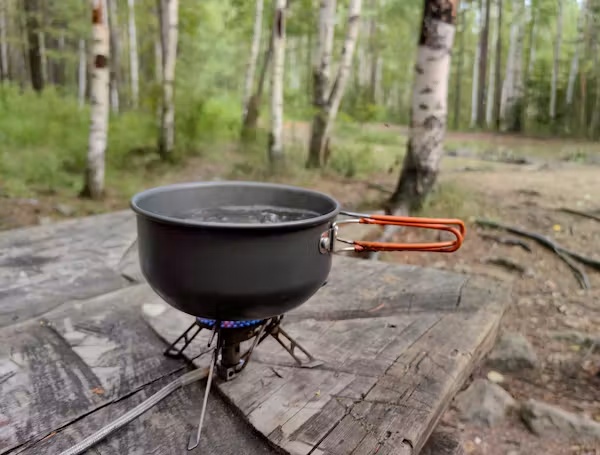
Water purification is important with wilderness travel in the United States and in many areas of the world. There are many easy and cost-effective ways to purify water, such as boiling, filtration and treating with chemical disinfectants. Each method has its benefits and downsides.
Boiling is often the most accessible method. While it can kill bacteria, viruses and parasites, it will not remove water contaminants such as heavy metals, including lead and arsenic, or industrial contamination such as pesticides. Consider boiling your water for at least one to three minutes, depending on your altitude, to purify it. Water filtration is an easy option for backpackers but is less effective at removing viruses.
You may no longer have to ford the river with oxen, but rivers, lakes and other bodies of water present unique hazards that outdoor adventure enthusiasts can overlook.
Moving water can be more dangerous than people realize. Even the best swimmers can drown in rip currents.
Cross bodies of water only when absolutely necessary. Avoid any water crossings after recent rainfall, as the water level often rises and the current can be faster and stronger. Submerged objects – rocks, fallen trees and other debris – as well as changing weather, flash flooding and strong currents can make crossing more dangerous.
It’s not just a broken wagon axle that can send a trip sideways. One thing The Oregon Trail captured well is how distancechanges everything. A sprained ankle in a city usually means an inconvenient trip home or to the doctor, but a sprained ankle 5 miles from the trailhead may mean that someone will need to carry you. The same is true for other common wilderness concerns, such as dehydration, heat illness, infections or even blisters.
Preparation is about packing a first aid kit and thinking ahead. Ask yourself what you would do if your hike took twice as long as expected or if you unexpectedly had to spend the night outside. Research your route and carry more food and water than you think you’ll need. Check the weather and be prepared for it to change, with extra clothing and options for rain.
No one tackled the Oregon Trail alone because it meant you would not survive. There is a lesson here in solo travel and solo mountaineering.
Traveling alone means that a minor injury such as a sprained ankle could mean crawling to the trailhead to call for help or waiting until you are identified as missing. If you cannot find someone to travel with you, provide an itinerary and travel location to a trusted person. Make sure they know when you should be returning and plan to check in. If you do not return as expected, they can call for help.
Respect the wildlife
Large animals still pose a threat across the country. While there may be fewer bison than previously seen on the Oregon Trail, animals in nature deserve respect.
No selfie is worth being attacked by a brown bear. If you see a dangerous wild animal, avoid approaching and immediately leave the area.
Venomous snakes are present throughout much of the United States and continue to cause significant injury and death around the world. If someone is bitten, please don’t try to cut the wound or suck out the venom. Instead, keep the person calm, minimize unnecessary movement, and focus on getting them to professional medical care. Antivenom is available in many major hospitals in the United States.
Even smaller and more docile animals such as deer and squirrels should not be fed. It is dangerous for an animal to get used to receiving food from humans. Additionally, animals carry diseases, such as rabies and leptospirosis, that can be fatal to people.
Don’t attempt to get close to any animals, no matter how calm or asleep the animal appears to be.
Technology is a backup, not a plan
One of the biggest differences between today’s outdoor adventures and those of the Oregon Trail is the ability to communicate.
Cellphones, GPS apps and emergency beacons have made it possible to call for help from places that were once completely isolated. However, while those devices are incredibly valuable, they shouldn’t encourage you to take bigger risks, as help may be far away, slow to arrive, and injuries in the wilderness can be fatal.
Travelers can use a smartphone with GPS capacity to avoid getting lost, but downloading any needed maps for offline use can help prevent lack of service from derailing your trip.
Additionally, an unlocked smartphone that isn’t restricted to one carrier is a great way to store and communicate critical data, such as travel plans and copies of your medical history.
The Oregon Trail travelers worried about river crossings, disease and harsh weather. Today’s hikers face different challenges depending on where they are.
Desert hikers may struggle with extreme heat and dehydration. Mountain travelers face rapidly changing weather, lightning and high altitude. And coastal explorers can face problems such as riptides, waves, cliffs and unexpected rocky surfaces.
Altitude illness is often unpredictable and can sneak up on you. Most people experience acute mountain sickness within 24 hours of ascent, developing symptoms such as headache, fatigue, nausea or problems with sleep. Any confusion, difficulty walking, shortness of breath or coughing up significant phlegm should prompt an immediate descent.
There are commonly used prescription medications to help prevent and treat altitude illness. The mountain will always be waiting for your next attempt.
Some lessons survive every software update
Part of what made The Oregon Trail game memorable is that every decision mattered. Success often depended less on luck than on planning ahead, and that lesson still applies.
When people ask me what one emergency medicine skill everyone should know before heading outdoors, my answer is usually preparation. Thoughtful planning prevents far more emergencies than any single piece of equipment.
For people who spend a lot of time outdoors, I also recommend taking a wilderness first aid course. These courses teach practical skills to provide medical care in a wilderness environment.
Nature is no less powerful or unforgiving than it was on the Oregon Trail, and treating it with respect is essential. Combining advances in modern medicine with thoughtful preparation helps stack the odds in your favor so that, just as every Oregon Trail player hoped, everyone in the party makes it to the end.
Have you ever taken months off training – maybe due to an injury, a new baby or crushing work deadlines – and come back convinced you were starting from zero?
Research from our team has some good news: At the cellular level, you probably weren’t.
We found that muscle and liver cells store memories fromevery training session in ways that may help improve endurance, control blood sugar levels and even slow weight regain after inactivity.
Use it or lose it? Maybe not
For most of the past century, long before fad diets and fancy workout trends took off, exercise was considered one of the most effective lifestyle changes to lower the risk of heart disease, Type 2 diabetes, several cancers and early death for people of all ages. But people typically understood exercise as something whose beneficial effects fade away over time: You use it or lose it.
When you stop training, your maximum oxygen uptake, muscle gains and insulin sensitivity drift back to where they started, often within weeks. Physical activity guidelines are built on this fact, which is why they emphasize consistency above all else.
Consistency, however, is a luxury that roughly 3 in 4 American adults aren’t able to enjoy. People can experience injuries, illness, pregnancy or jobs that limit their time for or ability to exercise. If adaptation really resets, every time you step into the gym would be as if you’ve never been there before. But that scenario doesn’t match what coaches and returning athletes typically describe: In practice, people who have trained before can get fit again faster than those who haven’t undergone similar training.
In recent years, however, scientists have started challenging the concept of “use it or lose it.” New research hints that your cells might keep a record of your training history so all of your gains are not completely lost.
More than muscle
We areexercise physiologists who study how cells remember exercise. Our lab and others have shown that the body is able to store a form of exercise memory across different organs.
To study how this exercise memory works, our team of researchers use an ON-OFF-ON exercise training protocol in mice, which involves an initial four- to eight-week training period, followed by detraining – a period of no exercise – and a second training bout. This method allows us to examine how cells form a memory of exercise, maintain a record of exercise through detraining, and recall memories of prior training when exposed again to exercise.
Using this strategy, our team found that skeletal muscle memory accelerates muscle growth. Compared to mice with no training history, mice who retrained grew bigger muscles, and the individual muscle fibers inside those muscles grew too. Larger muscle fibers meant that the working cells were themselves getting bigger, rather than the surrounding tissue.
Looking more closely at these muscle cells, we found that retrained muscle is better at matching energy production to demand – meaning, the muscles were better at drawing from energy stores when it’s needed most – and this ability persists without further exercise. This memory held even when the mice ate a high-fat diet, suggesting that prior training can still offer benefits even when diet is working against those gains.
Muscle isn’t the only body part that learns from exercise. Working muscle needs fuel, and the liver supplies it during and after training sessions.
My colleagues and I found that liver cells also store exercise memory and uses it to feed muscle more efficiently. In both mice and people who trained, stopped, then trained again, their livers released higher levels of a family of enzymes called carboxylesterases. These enzymes chop up lipids circulating in the blood, delivering fat in a form that muscle can take up and burn as it grows.
A record that outlives you
Recorded cellular memories of exercise may even be passed down to future generations.
In mice, we found that three to four weeks of maternal and paternal endurance exercise can have a lasting effect on their offspring. Compared to offspring born to sedentary parents, parental exercise granted protection against poor blood sugar levels and excess weight gain for an entire year after birth.
But there remains much to be discovered on how parents influence the health of their children and whether their lifestyle could provide a fitness advantage across generations.
Every cell remembers
Biology has traditionally granted memory to a short list of cells. Neurons store memory in the connections between them. Immune cells store memory so they can recognize pathogens faster and more strongly the next time they encounter them.
Researchers previously considered all other cells to be memoryless; a cell responds to a signal, then returns to baseline without keeping a record of that interaction. But that assumption is now coming apart.
Skin stem cells can keep a record of inflammation, allowing them to heal a new wound faster months later. Human fat cells keep a record of obesity that persists even after substantial weight loss, which may account for why you gain weight faster when switching back to a high-calorie diet – the so-called yo-yo effect.
We propose that every cell in the body remembers exercise, regardless of how little or how much someone trains. The question is how long these records are stored and whether researchers could prolong or expand each cell’s storage capacity. Better understanding of how cells learn and remember exercise, where they store memories and how those memories are preserved could help improve exercise guidelines for those who cannot exercise for prolonged or consistent periods of time.
To be clear, none of these findings are evidence for skipping the gym; nothing in our data suggests the effects of past training can substitute for present training. But there is hope that the work you put into getting in shape isn’t completely lost over time.
Somewhere, deep in your cells, there is a record waiting to be replayed the next time you lace up your running shoes, pick up a pair of dumbbells or want to fulfill a New Year’s resolution.