I am one of the 51 million people worldwide living with schizophrenia, diagnosed five years ago when I was 25 years old. Since then, I’ve been wrestling not only with the uncomfortable and often scary effects of the illness itself, but also with the often insensitive way people close to me—and in the culture at large—still view the illness. As of December, the Canadian Mental Health Association ranked schizophrenia as one of the “most stigmatized and misunderstood health issues.” It’s easy, though, to throw around words like “stigma” without appreciating what that means in daily life.

[quote position=”left” is_quote=”true”]Schizophrenia is loud. It is so, so loud.[/quote]


So here’s what it’s like: That news report about a mass shooting and—wait for it—the reporter with no psychology background or experience claiming that the killer has schizophrenia. Your friends on Facebook, swearing that the shooter absolutely has to have schizophrenia, because anyone who willingly shoots up a school must have something seriously wrong with them. It is your family, pointing a finger at you for getting all TMI on the internet. (Don’t you know, it’s nobody’s business what’s wrong with you?)

Of course, schizophrenia can also be a 10-year-long steady job and awkward giggles from your colleagues: “You can’t be schizophrenic, you seem so normal!”

Honestly, I think part of the problem is that other mental health disorders have celebrity advocates. Pop culture can do wonders. Bipolar disorder can claim Carrie Fisher and Demi Lovato. Depression and obsessive-compulsive disorder have Kristen Bell and Maria Bamford. But schizophrenia must make do with A Beautiful Mind’s John Forbes Nash Jr. and—for those in the know—Elyn Saks, two figures who have become cartoonishly exaggerated in the culture’s perception of them.

[youtube ratio=”0.5625″ position=”standard” ]

Schizophrenia isn’t about what you think it is (for example, I haven’t scrawled a bunch of complex mathematical equations on a window lately). It’s loud. It is so, so loud—the voices in your head and the voices outside your head and the typing of keys and the vibrations of phones and the TV and the brewing of coffee and the footsteps behind you. Does he need to follow so closely? I’m sorry, what did you just say? I was too busy listening to the voice telling me I’m a loser.

And my loud world can only be quieted with meds that can take two months to end up in my medicine cabinet because securing an appointment with my psychiatrist is such an ordeal. And those meds often end up causing acne or depression or diarrhea, or leave me barely able to function—let alone work efficiently. (Sometimes I need to sleep 12 hours and take two daytime naps just to stay alive.)

Ever since my diagnosis, I’ve dedicated myself to advocacy on behalf of those with schizophrenia. Many who, because they aren’t writers like me, don’t have a way to voice their experience or are too afraid to use it because they have been stigmatized to the point of personal bullying and assault, as Miguel Angel González-Torres laid out in his 2016 paper “Stigma And Discrimination Towards People With Schizophrenia And Their Family Members.” Yet, despite how often I try to educate others about my illness, I face daily comments like, “You don’t look schizophrenic; you’re too well put together.” I’m sorry, what do schizophrenics look like?

[quote position=”full” is_quote=”true”]I call myself schizophrenic. I don’t say that I’m a ‘person with schizophrenia.’ I want to directly own the disease that is part of me.[/quote]

It’s hard to be hopeful in the face of this kind of cumulative misunderstanding. But over time, I have found a few amazing people—still fewer than five, though—writing and talking about their experience living with the illness. I always try to respond to messages from people with schizophrenia, thanking me for my contribution to these people, or from their mothers, asking for help as their sons rot in prison for having a brain disease.

So on their behalf, I want to tell you: Not all schizophrenics are violent people. A lot of us work full-time jobs at Fortune 500 companies or write novels for fun and go out for coffee just like everyone else. In fact, violence committed by schizophrenic people makes up less than 10 percent of violent crimes. Schizophrenia is people who look like you and work like you and buy gifts during the holidays like you and kiss their loved ones at night like you, just trying so hard to live a happy, functional life. A life where we might be remembered as that neighbor who always said good morning or that author who poured her life out on the page.

A schizophrenic life. I call myself schizophrenic, by the way. I don’t say that I’m a “person with schizophrenia.” I want to directly own the disease as something that is part of me and that will never go away. It is not a crutch. My schizophrenia helps me be creative and find passion in the small victories. It makes me who I am, which means that it’s something to be thankful for.
  • 5 ways how stickers psychologically boost the lives of grown adults
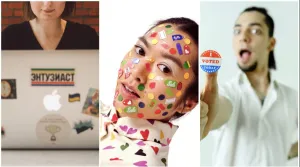
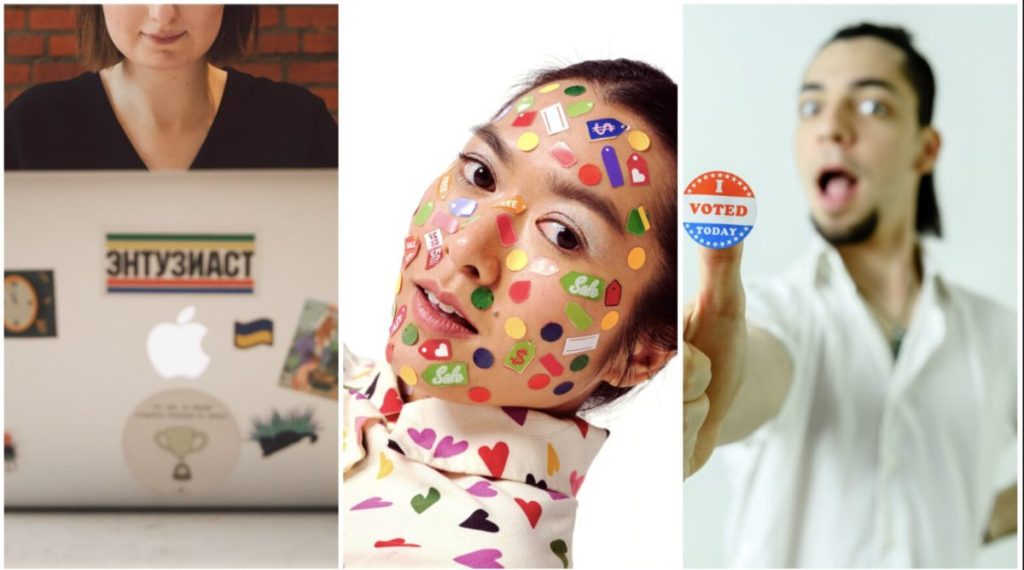
    Photo credit: CanvaStickers can be beneficial for adults as well as kids.

    We tend to associate stickers with childhood. As kids, we put them all over our rooms, furniture, books and notebooks, and wherever else our little hands could stick them. Yet, you have probably seen stickers being used and loved by adults as much, if not more, than kids. They can be found on water bottles, laptops, car bumpers, journals, and many other surfaces. You may even know an adult who uses a sticker chart like an elementary school kid does to keep track of their daily tasks. So, what gives?

    Why do adults love stickers? It turns out that there is psychology behind why many adults still love to stick stickers everywhere. Psychology professionals have reached out to GOOD to share some of the reasons why adult brains benefit from having and using stickers.

    Accountability awards

    Much like with children, many adults turn to stickers as an easy way to stay motivated to commit to a task or achieve a goal. While youngsters turn to sticker charts for reading goals or eating vegetables, adults can use them to motivate themselves to hit the gym or keep up with their budget. It may sound like an innocuous award, but that’s all it needs to be.

    “Small simple tokens or rewards like stickers often cause an instant dopamine rush that leaves us feeling a sense of joy or happiness even if it might be small or fleeting,” said psychology professor and licensed therapist Jillian Amodio

    “In my work as a psychologist, I often encourage clients to use sticker charts, simple grids where you put stickers up when you complete a task,” said registered psychologist Rod Mitchell. “I’ve had many clients who tried positive self-talk, only to find it slid off. Stickers worked for them.”

    It may sound immature on the surface, but what worked to establish good behaviors or habits as a kid can sometimes be just as effective for a grown-up.

    “I had one client who was very resistant to the idea, viewing it as childish,” Mitchell added. “He came back the following week and sheepishly told me that the sticker chart had worked like a charm.”

    Progress markers

    “In addition to creating a sense of accomplishment, seeing a sticker placed on a calendar, chart, or planner after achieving a goal can create a visual history of success,” said Dr. Lori Bohn, medical director at Voyager Recovery Center. “This history can motivate an individual to continue to work towards additional goals.”

    So the benefit of sticker charts isn’t just the dopamine rush, but encouragement. A person can look back at the progress they made, and any “failure” they see becomes an anomaly. It’s why many folks have created sticker charts for things as basic as eating healthy foods to more complex struggles like sobriety.

    “The stickers on the chart serve as small badges of who you are and what you did,” said Mitchell. “A client I had who was struggling to make time for his kids now looks back on a chart full of stickers and knows that he’s become the family man he wanted to be.”

    An easy form of expression

    Placing a sticker on a laptop or water bottle you use daily also allows us to express ourselves. That expression can be as insightful as a political message or as simple as “I like SpongeBob.” It can communicate to others what you’re all about without even speaking a word.

    “Stickers appeal to adults because they often offer an opportunity for self expression and trigger a sense of nostalgia,” said Amodio. “They can also serve social purposes when they speak to people who share similar interests, values, or devotion to a cause.”

    The same logic applies to why many people use digital stickers and emojis when texting or posting on social media.

    Psychologically instill civic duty

    So how powerful are stickers? According to extensive research, very. One sticker standout is they get people to the polls. The “I Voted” sticker folks receive after they vote is a great motivator. They allow folks to feel that dopamine hit after voting, while advertising to others to vote. Stickers can be a reward for voters, a reminder to those who plan on submitting their ballot, or provide FOMO (fear of missing out) to those who don’t vote.

    “It tells other individuals what the person did (voted), what the person values (voting), and what type of individual they perceive themselves to be (a voter),” said Dr. Bohn. “Social psychologists have shown that people are heavily influenced by social norms. In many cases, people rely on other people to help them understand if their behavior is acceptable or not.”

    It may feel like mental manipulation to get people to vote (because it is) but it’s important to note that the sticker doesn’t endorse any particular bill or candidate. It just endorses participation.

    Affordable artwork

    “Stickers are also visually appealing which creates a pleasurable response in the brain as well,” said Amodio.

    Stickers are used by adults because they like how they look. They’re an inexpensive and convenient form of artwork to display. They can easily be put in a book, on a wall, or most other surfaces. They don’t take too much space and are cheaper than paintings, sculptures, and other artwork.

    Many independent artists have turned their work into stickers. It’s a way to keep making a living while also making it affordable for people to purchase their art. Sticker art also benefits the brains of the artists and their supporters alike. It’s just like any other art piece you can display. 

    There are many valid and beneficial reasons why grown adults happily use stickers. The act as a boost, a motivator, and a way to express yourself in one. If you’re already a fan, keep on stickin’.

  • Student with severe facial burns from a frat house fire healed through new innovative treatment
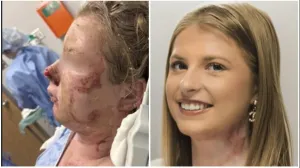
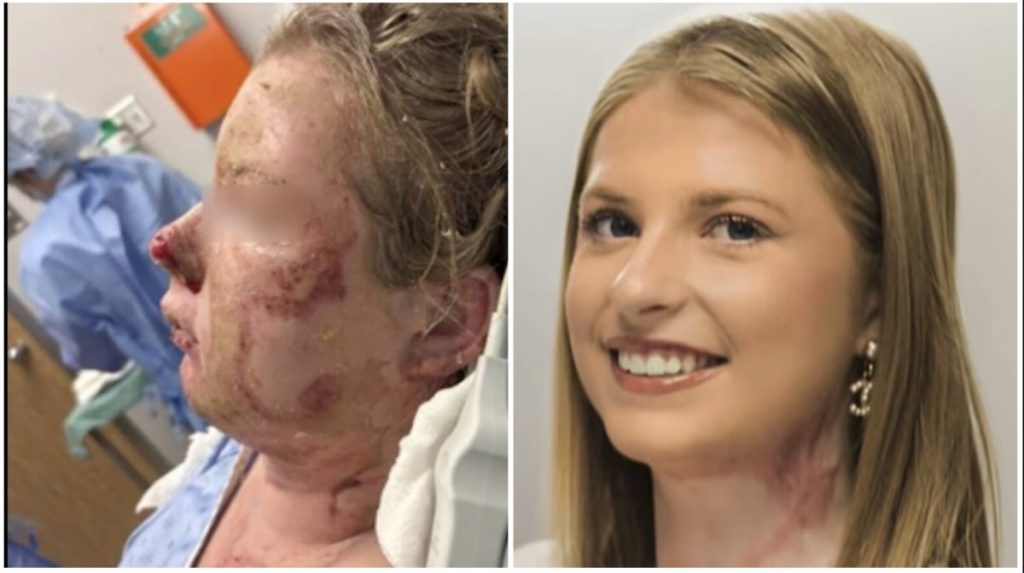
    Photo credit: Hamilton Health SciencesExosomes helped heal severe facial burns with less scarring.
    ,

    Student with severe facial burns from a frat house fire healed through new innovative treatment

    Exosomes could change how we treat various maladies and disease.

    A university student who suffered severe facial burns has remarkably healed thanks to what is being called a world-first biological treatment.

    On December 2, 2025, 18-year-old Kaitlyn Jeffrey was caught in a fire at the Pi Kappa Alpha frat house at Western University in Canada. The fire was caused after rubbing alcohol had been thrown onto a lit torch. Kaitlyn was one of the five people rushed to the hospital for injuries. She suffered serious burns after her face and hair had been set ablaze.

    A new treatment

    Usually, treatment for such burns would require a skin graft, but the burn unit at Hamilton Health Services wanted to try something different. While skin grafting is helpful, the end result isn’t always ideal. Skin grafting can be a slow process that ends with scarring and often a patch-like appearance on the patient.

    “My vision for Kaitlin was to avoid skin graft surgery to her face and neck at any cost,” said Dr. Marc Jeschke, medical director of the hospital’s regional burn program and vice-president of research and innovation at HHS. “You can do the best graft on the planet, but you won’t return the skin to normal.”

    With Kaitlyn’s and her family’s permission, Dr. Jeschke sent an urgent application to Health Canada for a new type of treatment. After Health Canada approved, the doctors proceeded to give Kaitlyn an exosome treatment for her facial burns. The results were a rousing success.

    What are exosomes?

    Exosomes, or extracellular vesicles (EcVs), are present in almost all cells, tissues, and body fluids. They’re tiny vesicles released naturally by nearly all types of cells, carrying proteins, lipids, and genetic material. They essentially carry these “packages” of material and send signals from one cell to another to regulate their behavior. They’re not only being tested for medical applications like this one, but are a part of a skin care trend as well. While exosomes had been studied for burn research, they haven’t been tested on humans before.

    One trillion exosomes were collected and injected into Kaitlyn’s injured areas over the course of two treatments. This helped her cells coordinate in rapidly healing and repairing her facial tissue. The treatments also significantly reduced inflammation. 

    Astounding healing and new possibilities

    After she had healed, Katilyn was amazed and grateful at the result.

    “It’s honestly a miracle,” she said. “Being injured in the fire has also had a deep impact on my mental health, and it’s something I’m continuing to deal with. But having such good results, particularly to my face, is helping me move forward.”

    Exosomes are still being researched for other potential medicinal applications. They are being tested to see how well they could modulate immune responses and deliver biomarkers. This could help combat cardiovascular disease, neurological disorders, and cancer among other ailments. Time and research will tell whether exosomes can help those patients like they helped Kaitlyn.

  • Social media before bedtime wreaks havoc on our sleep − a sleep researcher explains why screens alone aren’t the main culprit
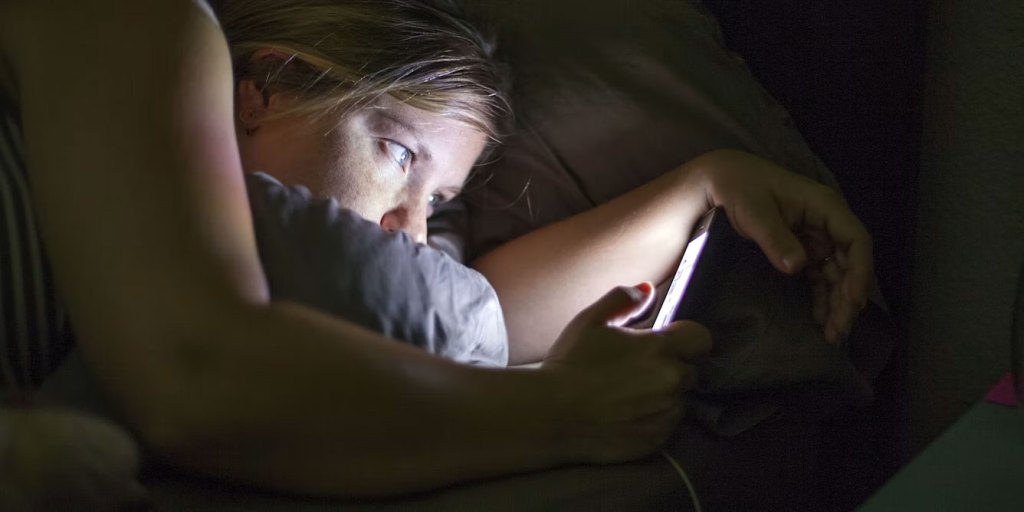
    Photo credit: Adam Hester/Tetra Images via Getty ImagesSocial media use before bedtime can be stimulating in ways that screen time alone is not.

    “Avoid screens before bed” is one of the most common pieces of sleep advice. But what if the real problem isn’t screen time − it’s the way we use social media at night?

    Sleep deprivation is one of the most widespread yet overlooked public health issues, especially among young adults and adolescents.

    Despite needing eight to 10 hours of sleep, most adolescents fall short, while nearly two-thirds of young adults regularly get less than the recommended seven to nine hours.

    Poor sleep isn’t just about feeling tired − it’s linked to worsened mental healthemotion regulationmemoryacademic performance and even increased risk for chronic illness and early mortality.

    At the same time, social media is nearly universal among young adults, with 84% using at least one platform daily. While research has long focused on screen time as the culprit for poor sleep, growing evidence suggests that how often people check social media − and how emotionally engaged they are − matters even more than how long they spend online.

    As a social psychologist and sleep researcher, I study how social behaviors, including social media habits, affect sleep and well-being. Sleep isn’t just an individual behavior; it’s shaped by our social environments and relationships.

    And one of the most common yet underestimated factors shaping modern sleep? How we engage with social media before bed.

    Emotional investment in social media

    Beyond simply measuring time spent on social media, researchers have started looking at how emotionally connected people feel to their social media use.

    Some studies suggest that the way people emotionally engage with social media may have a greater impact on sleep quality than the total time they spend online.

    In a 2024 study of 830 young adults, my colleagues and I examined how different types of social media engagement predicted sleep problems. We found that frequent social media visits and emotional investment were stronger predictors of poor sleep than total screen time. Additionally, presleep cognitive arousal and social comparison played a key role in linking social media engagement to sleep disruption, suggesting that social media’s effects on sleep extend beyond simple screen exposure.

    I believe these findings suggest that cutting screen time alone may not be enough − reducing how often people check social media and how emotionally connected they feel to it may be more effective in promoting healthier sleep habits.

    How social media disrupts sleep

    If you’ve ever struggled to fall asleep after scrolling through social media, it’s not just the screen keeping you awake. While blue light can delay melatonin productionmy team’s research and that of others suggests that the way people interact with social media may play an even bigger role in sleep disruption.

    Here are some of the biggest ways social media interferes with your sleep:

    • Presleep arousal: Doomscrolling and emotionally charged content on social media keeps your brain in a state of heightened alertness, making it harder to relax and fall asleep. Whether it’s political debates, distressing news or even exciting personal updates, emotionally stimulating content can trigger increased cognitive and physiological arousal that delays sleep onset.
    • Social comparison: Viewing idealized social media posts before bed can lead to upward social comparison, increasing stress and making it harder to sleep. People tend to compare themselves to highly curated versions of others’ lives − vacations, fitness progress, career milestones − which can lead to feelings of inadequacy and anxiety that disrupt sleep.
    • Habitual checking: Social media use after lights out is a strong predictor of poor sleep, as checking notifications and scrolling before bed can quickly become an automatic habit. Studies have shown that nighttime-specific social media use, especially after lights are out, is linked to shorter sleep duration, later bedtimes and lower sleep quality. This pattern reflects bedtime procrastination, where people delay sleep despite knowing it would be better for their health and well-being.
    • Fear of missing out, or FOMO: The urge to stay connected also keeps many people scrolling long past their intended bedtime, making sleep feel secondary to staying updated. Research shows that higher FOMO levels are linked to more frequent nighttime social media use and poorer sleep quality. The anticipation of new messages, posts or updates can create a sense of social pressure to stay online and reinforce the habit of delaying sleep.

    Taken together, these factors make social media more than just a passive distraction − it becomes an active barrier to restful sleep. In other words, that late-night scroll isn’t harmless − it’s quietly rewiring your sleep and well-being.

    How to use social media without sleep disruption

    You don’t need to quit social media, but restructuring how you engage with it at night could help. Research suggests that small behavioral changes to your bedtime routine can make a significant difference in sleep quality. I suggest trying these practical, evidence-backed strategies for improving your sleep:

    • Give your brain time to wind down: Avoid emotionally charged content 30 to 60 minutes before bed to help your mind relax and prepare for sleep.
    • Create separation between social media and sleep: Set your phone to “Do Not Disturb” or leave it outside the bedroom to avoid the temptation of late-night checking.
    • Reduce mindless scrolling: If you catch yourself endlessly refreshing, take a small, mindful pause and ask yourself: “Do I actually want to be on this app right now?”

    A brief moment of awareness can help break the habit loop.

    This article originally appeared on The Conversation. You can read it here.

Explore More Health Stories

Health

Social media before bedtime wreaks havoc on our sleep − a sleep researcher explains why screens alone aren’t the main culprit

Health

It’s more than OK for kids to be bored − it’s good for them

Care

A dementia patient and his wife got their lives back thanks to a ‘coat rack-like’ robot

Health

Who are hospital ethics consultants, and why should you care?