Now, more than ever, the institutions we’ve been taught to trust are taking advantage of us. In the face of a global pandemic, some students are being asked to return to in-person instruction as if nothing has happened, while others are being forced into awkward hybrid models and sub-par online platforms. To add insult to injury, those of us online are being asked to pay full price for a half-baked service, and we can’t do much about it. The college experience has been lost, along with all of the connections and resources that make a modern education what it’s supposed to be. But of course, the mounting expenses remain.


https://www.instagram.com/p/CDIMYiIht7_/


Universities planning any kind of “in-person” instruction push for plans that are unrecommended, unrealistic, and unsustainable. In Spring 2020, like most schools, business was running smoothly until the panic raced its way through the country faster than the virus. All schools were forced to close down and make an ungraceful switch to online instruction. In May, immediately following the campus closure, my school, the University of Portland announced plans for in-person instruction for the Fall semester of 2020.

Even in the worst of times, my university was staunch on their original plans. They told students that in-person/hybrid instruction took up every ounce of their time and effort. Yet, when involved in the creation of said plans, the lack of organization was shocking. There was never a backup plan. There was never an acknowledgment of what could be. There was only a desperate desire to convince students that in-person instruction was feasible.

As I spoke with faculty and administrators personally over the summer, their evaluations of the situation consistently contradicted that of the public plan. Most of whom I spoke to were in full confidence that an online switch was inevitable. The odd thing was when I spoke to friends, peers, and students from UP, none of them had a clue that an online transition was even possible. Every school-wide email throughout the summer spoke only of in-person instruction, leaving out any and all transparency to those that give thousands of dollars to this institution. It wasn’t until 3 days before our tuition deadline that the school announced a fully online pivot, while in tandem asking for full-priced tuition. This has sent each of UP’s 4,000 students into chaos as they struggle to salvage their plans and their money. My university waited until the last possible second to tell the truth to their students as they soaked up every dollar they could. Many other universities are attempting to do the same.

If your school is anything like mine, they are planning to charge full-priced tuition, or even increase it. My university has increased tuition a whopping 18% over the last four years, totaling an increase of over $7,500 per student. Such a drastic hike in prices is completely unacceptable in any case… yet during a pandemic, this is an example of systemic corruption. “Why are schools doing this?”, you might ask. The answer is one word: greed. Students want transparency; this should not be too much to ask for when they are expending tens of thousands of dollars each year to their university. After contributing so much to their institution, there is a clear expectation that students and their finances will be respected. The unspoken moral contract signed when a student commits to their school has been broken. Fraudulent behavior by universities will not be tolerated.

As an Executive Board member in my school’s Student Government, I have had the privilege of meeting with countless administrators and professors; most of whom agree that any form of in-person schooling will not be sustained for even 3 weeks, sending Universities into a frenzy similar to the traumatic chaos of COVID Spring 2020. This said, schools are knowingly stealing students’ money without an ounce of transparency.

Most institutions have an invoice tuition deadline in August, just days away. Many universities, like mine, are likely planning to charge full/increased tuition for this Fall for online education, without even an asterisk next to 2020. The full truth is hidden to the student populace.

Universities fully know that a 100% online switch is not only guaranteed, but inevitable. COVID-19 continues to surge and escalate around the US, as we are setting new records for deaths/cases daily. Colleges are aware of this and what it will do to their finances, yet, sadly enough, they care more about their wallets than the health of their students.

Blatant disregard for student well-being has been uncovered through COVID-19, and it seems that schools are likely to blame their students for the inevitable online switch. In an article published by The AtlanticThe Atlantic, students will “get infected, universities will rebuke them for it; campuses will close, students will be blamed.”1 There is no feasible way that students could be monitored for their behavior, no matter how careful the collective student body is. Universities are planning to put their students at risk in order to make their ends meet, and they are under the assumption that they can get away with it; which, terrifyingly enough, they most likely will.

It must be said that many universities function just like businesses. They provide jobs for thousands of employees, they donate to greater causes, and they offer services to their entire community. However, just like any other business, they should not be allowed to get away with scheming and conniving practices. College is already absurdly difficult to afford, and when those same institutions that charge thousands of dollars lie to their students, it turns educating into profiteering. I, along with many other students and university staff, cannot imagine a scenario where this “in-person/hybrid” model operates and achieves its intended purpose. It is too much to ask of students to decide between continuing their education like “normal” under unprecedented circumstances, and keeping themselves, their peers, and their loved ones safe. I hear every day that students have felt robbed of their money from colleges pre-pandemic, yet now that universities are making empty promises and spewing white lies, this by many students is considered theft of the highest degree. I understand schools need to keep tuition prices high to keep up with increasing housing prices and economic inflation, but now is not the time to play games with the financial status of thousands.

Students across the country that rely on their school for services such as housing, food, and healthcare access are now left wondering, what’s next? It disturbs me to know that universities would put their finances before the well-being of their community. Students are being treated like pawns in a chess match, and administrators don’t think they have the power to fight back. Now, students are left scrambling for answers. Those that have had their universities come out with honesty in this situation are scrambling to change their plans and figure out their next steps, with classes just weeks away. This leaves another group of students that blissfully believe their untruthful university, only to be ripped of all hope and tuition just weeks into the school year.

Many universities have largely untapped funds that are saved for emergencies or prominent projects, yet many of those same universities have not come out with plans to use those funds in what seems like a substantial emergency. In no way do I want to shut down any school, but I cannot stand idly by while students are getting ripped off left and right, not at all receiving what they set out to pay for. By refusing to lower tuition, universities are knowingly exacerbating the equity gap in today’s education system.

I find it wrong that universities feel that they can bleed the pockets of their students in the face of a global pandemic. Students pay for the experience, the activities, the events, the community: not just the education. To charge the full price for something the buyer did not intend to purchase is unethical. Colleges need to roll back any increases in their tuition, tap into their emergency funds, and lower the cost of tuition especially for those in financial distress.

To every student: this news is daunting, yet there is a better way forward and this is possible to navigate. I urge each affected individual to consider their options at hand. Reach out to your academic advisor and financial aid office to see what alternatives are available, and act accordingly.

I, for example, am planning to take part-time courses this semester, while working part-time. I am doing this because:

a.) I choose to save thousands of dollars.

b.) I cannot afford private school tuition for online classes.

c.) I refuse to let my University rob me of my money.

My decision is in no way a one-size-fits-all option, but it is possible for some. I am able to say that my scholarships and financial aid will stay intact due to my school’s policies, although I cannot say the same for others. This said, I highly encourage you to look at what is presented in front of you, and assess all your options. Reflect hard about if your school is being honest with you and question their motives. Evaluate what makes the most sense for you. You and your friends’ emotional and financial well-beings are at stake, at risk, and in the hands of your lying university. Take the power back.


“Drew Jones is a student and the Speaker of the Senate at the University of Portland. You can send feedback on his piece to his Instagram account here.

  • How couples divide chores may shape sexual desire in ways you wouldn’t expect
    Photo credit: CanvaPeople cleaning at home.

    As many couples aim for more equal partnerships, dividing responsibilities isn’t always straightforward. In households where both partners work full-time, figuring out how to share chores has become an important part of maintaining balance at home.

    A new study published in The Journal of Sex Research examined whether couples dividing household chores is linked to a woman’s sexual desire. The researchers found that the relationship between the division of household labor and sexual desire varies based on beliefs about gender roles.

    cohabitation, domestic labor, relationship satisfaction, desire
    A couple cleans together.
    Photo credit: Canva

    Household labor balanced against sexual desire

    This pattern has long been explained in narrow ways. Low sexual desire among women in long-term relationships is often treated as an individual issue: stress, relationship dissatisfaction, or hormonal changes. Instead, this study examined a broader social dynamic: how work is divided at home compared to perceptions of what that balance should look like.

    Focusing on two different survey samples, the researchers found that women generally reported lower sexual desire than men while also indicating that they perform more household labor than their male partners. Mothers who took on a greater share of household responsibilities reported the lowest levels of sexual interest.

    The study also examined the impact of benevolent sexism, which refers to beliefs that reinforce traditional gender roles, such as women as caregivers and men as providers. A couple’s attachment to these beliefs significantly influences how household labor and sexual desire are connected.

    dual income, inequality, romance, marriage
    A woman is cleaning while her child plays.
    Photo credit: Canva

    Belief systems sway the balance of sexual motivation

    Women who held more egalitarian beliefs and preferred equal partnerships reported the highest levels of sexual desire when chores were split evenly. But when they found themselves doing a greater share of the household labor, they reported the lowest levels of sexual motivation.

    For women who endorsed more traditional gender roles, the pattern was different. In those cases, taking on more household responsibilities was not associated with the same decrease in sexual desire.

    Leading the research was Alexandra Liepmann, a PhD student in the Department of Psychology and Neuroscience at the University of Colorado Boulder. “Although women who endorse more traditional gender roles may not experience these costs in their sexual desire for their partner when doing more household labor, they may still experience costs in their personal and professional lives,” Liepmann told PsyPost.

    partnership, couples, division chores, relationship satisfaction
    Husband and wife are working from home.
    Photo credit: Canva

    Studies that connect the dots

    Adding to the evidence of this imbalance was a 2023 study focused on the distribution of household labor. It found that many relationships still adhere to unequal standards for women’s responsibilities compared to men’s.

    Another 2023 study found that women’s sexual desire tends to be more sensitive to the context of a relationship, particularly how things are going at home. This supports the idea that a woman’s perception of expected equality can affect her level of desire.

    Taken together, these findings indicate that household labor and beliefs about fairness may directly affect sexual desire for some women. Couples who divide chores more evenly may experience better intimacy outcomes regardless of their personal beliefs about gender roles and responsibilities.

  • 59% of Americans worry about sunscreen chemicals. Only 32% understand how sunscreen works.
    Two persons applying sunscreen while sitting on a beach.

    Tiffany Miller for Melanoma Research Alliance

    Many Americans think of sunscreen at the beach. Fewer consider wearing it for the drive there. And many are questioning if they should wear sunscreen at all.

    These trends, uncovered in a new national survey from the nonprofit Melanoma Research Alliance (MRA), highlight a central challenge in skin cancer prevention.

    Skin cancer is the most common form of cancer in the United States, according to the CDC. Nine in 10 skin cancers, including melanoma, are linked to exposure to ultraviolet (UV) radiation, according to the MRA. Reducing exposure to UV radiation lowers the risk of skin cancer, making sunscreen a key part of prevention.

    A survey of 2,000 adults found that most Americans have a basic understanding of the risks of sun exposure, but that awareness doesn’t always translate into action. More than 8 in 10 recognize that spending long hours in the sun contributes to melanoma risk, yet roughly one-quarter say they rarely or never use sunscreen when spending time outdoors.

    Then there are those everyday moments that most people don’t recognize as risky. The light coming through the window over the sink. The short walk from the parking lot. The hour in the bleachers with the sun hitting one side of your face. A single sunburn can be dangerous, but it’s the accumulation of exposure over time that often drives risk.

    Sunscreen is widely recognized as an effective tool for skin cancer prevention, yet confusion and misinformation persist, especially on social media. Fifty-three percent of respondents say they have seen claims that sunscreen ingredients may be harmful. Fifty-nine percent say they are concerned about what’s in sunscreen, and 38% don’t believe sunscreen is safe and effective.

    An infographic on Melanoma Research Alliance's surveys on sunscreen facts and usage.

    Many Americans also say they aren’t sure how sunscreen works. Only about a third can correctly explain the difference between types of sunscreens, while a much larger share reports being unsure.

    Sunscreen works by absorbing or blocking UV radiation from reaching the skin, preventing DNA damage that can cause skin cancer. In the United States, the active ingredients in sunscreen undergo rigorous review by the Food and Drug Administration, which evaluates them as over-the-counter drugs. This drug-level standard requires extensive testing and contributes to a more limited set of approved UV filters compared with Europe, where sunscreens are regulated as cosmetics. The FDA is currently evaluating additional methodologies for assessing sunscreen ingredients, a process that could expand the number of approved UV filters available to U.S. consumers.

    All of this is unfolding during a period of real progress in melanoma research. While melanoma remains the deadliest form of skin cancer, more than 8,500 Americans are expected to die from it in 2026, roughly one person every hour, according to the American Cancer Society. Recent advances are improving outcomes for many patients with advanced disease, though approximately 50% of patients do not respond to current treatments, according to MRA, underscoring why prevention and early detection remain critical.

    Survey methodology: The Melanoma Research Alliance commissioned Atomik Research to conduct an online survey of 2,000 U.S. adults between March 27 and April 1, 2026. The sample is nationally representative based on gender, age, and geography. Margin of error: ±2 percentage points at a 95% confidence level. Atomik Research, part of 4media group, is a creative market research agency.

    This story was produced by Melanoma Research Alliance and reviewed and distributed by Stacker.

  • You know exercise is good for you – so why is it so hard to put it into practice?
    Photo credit: Jordi Salas/Moment via Getty ImagesResearch shows that doing exercise around other people improves your chances of sticking with it.
    ,

    You know exercise is good for you – so why is it so hard to put it into practice?

    Laura Baehr Physical activity is one of the most powerful health tools people have to improve mood, energy and sleep, even after just a few sessions. But the real superpower of an active lifestyle is what it can do for health and quality of life over time. Scientific evidence repeatedly demonstrates that physical activity reduces the risk of developing chronic conditions…

    Physical activity is one of the most powerful health tools people have to improve moodenergy and sleep, even after just a few sessions.

    But the real superpower of an active lifestyle is what it can do for health and quality of life over time. Scientific evidence repeatedly demonstrates that physical activity reduces the risk of developing chronic conditions such as heart disease, diabetes and even some cancers. Despite this, most Americans are not getting enough physical activity in their daily lives.

    So why are so few people physically active when the benefits are widely known?

    As a physical therapist and rehabilitation scientist who studies how to boost movement for people living with chronic conditions and physical disabilities, I spend a lot of time thinking about that question.

    The short answer is that understanding the importance of exercise usually doesn’t translate into exercising. Making it a part of your lifestyle requires believing you can do it and knowing you can do it.

    Exercise is a lifestyle choice that helps reduce the likelihood of developing a chronic illness. But the good news is that if you’re one of the 194 million Americans already living with one or more chronic illnessesbeginning or maintaining an exercise routine can slow the progression, reduce symptoms and improve health outcomes.

    Side view of active senior man with dumbbells exercising at health club.
    It’s never too late to reap the benefits of being active. Maskot/DigitalVision via Getty Images

    The difference between knowing and doing

    People are perpetually being sold on the benefits of physical activity, whether it’s from national healthcare organizations, their medical teams or social media influencers.

    But research is clear that education alone does not predict changes in behavior.

    Instead, shifting your beliefs about the barriers preventing you from exercise might actually be the key to get you moving more.

    In 1977, a psychologist named Albert Bandura proposed that the ability to perform a task even when it’s difficult – a concept called self-efficacy – is the most important personal characteristic that drives healthy changes in behavior.

    Half a century later, self-efficacy is still considered one of the most crucial personal factors for behavioral change when it comes to long-term physical activity. Researchers who develop and test exercise interventions, including me, evaluate novel tools and programs that are built to boost self-efficacy.

    Someone with high self-efficacy might say that they can get back to their exercise routine even if they miss a day. Or they might find a way to still exercise when they’re busy or tired. Someone with lower self-efficacy might be thrown off their routine if presented with the same obstacles.

    But how do you build this crucial trait and get moving more? A meta-analysis found that despite its importance, there is not one magic way to boost self-efficacy.

    That’s because people’s behavior is more complicated than individual factors alone. People and groups have varying needs and contexts that require tailored approaches.

    Smiling Black woman in swimsuit holding onto rails in indoor pool.
    Doing exercise you enjoy is one key to consistency. Luis Alvarez/DigitalVision via Getty Images

    Tips increase exercise self-efficacy

    Self-efficacy may be affected by multiple factors, but people can still apply techniques to boost their ability to start and stay with an exercise routine.

    Make it manageable. It may seem intuitive to set personal goals, but many of us aim too high and end up discouraged. Goals focused on weight loss, heart health or muscle strength are fine, but they can take a long time to achieve. Long-range goals don’t tend to be motivating in the difficult moments – like when you want to hit snooze but promised yourself that you were going to take a long walk before work.

    Instead, try short-term goal-setting – such as aiming to get a set number of lunchtime walks in during the workweek. This will move you toward your long-term goals, while making it easier to see and feel progress.

    In 2026, the American College of Sports Medicine refreshed its guidance on strength training, which represents synthesized findings from 137 systematic reviews and the first update since 2009. The biggest recommendation difference? Consistency matters more than specificity of strength programs. What that means is that doing any strength training has health benefits as long as it is the kind you will keep doing.

    Make it add up. The CDC’s recommended 150 minutes of aerobic activity is meant to be spread throughout the week – not done all at once. Research shows that small bursts of activity still have significant impacts on your overall health, and you’re much more likely to stick with them.

    Only have 15 minutes while your kid is asleep? Have a short exercise video or app cued up for nap time. Waiting for your next Zoom meeting to start? Climb your stairs once or twice. Microwaving your lunch? Hold on to the counter and lift and lower your heels until the timer goes off. Every little bit matters to your mind and body.

    Make it meaningful. Prioritize doing things you enjoy. The gym is not for everyone, and luckily this style of structured exercise is just one of many options for physical activity. Go bird-watching, join a gardening group, binge watch your favorite show on the treadmill. Any activity you do that uses energy is like dropping a coin into your weekly physical activity bank.

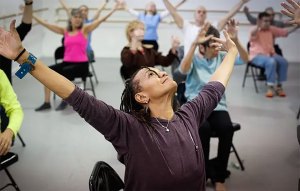
    Make it more fun. Choose to be around people who are already exercising – and who encourage you to do it, too. Research shows that people who are sedentary will increase their physical activity by socializing with someone who is active.

    Another study shows that older adults can tap into the energy of their peers during group exercise, helping to build self-efficacy. Exercising with others can even reduce social isolation and loneliness. As a bonus, choosing physical activities you enjoy can improve your mood and boost your confidence.

    Overcoming the hurdles

    These strategies come with a very important caveat: Increasing self-efficacy is empowering, but context also matters.

    Some structural barriers to physical activity are beyond the scope of our individual motivation. Researchers and health professionals know that lower socioeconomic statusdecreased neighborhood safety and lack of access to exercise programs make being and staying active even more difficult.

    But the thing to remember is that even small improvements can have big impacts. It is consistent practice – not perfection – that is key to reaping all the benefits physical activity has to offer.

    This article originally appeared on The Conversation. You can read it here.

Explore More Health Stories

Well-being

You know exercise is good for you – so why is it so hard to put it into practice?

Health

Photographic memory is a myth – here’s what research really says about remembering

Well-being

How workplace stress hijacks the nervous system to cause headaches − and a neurologist’s guide to managing them

Health

Pollen allergies are brutal this year – a doctor explains why, and how to find relief