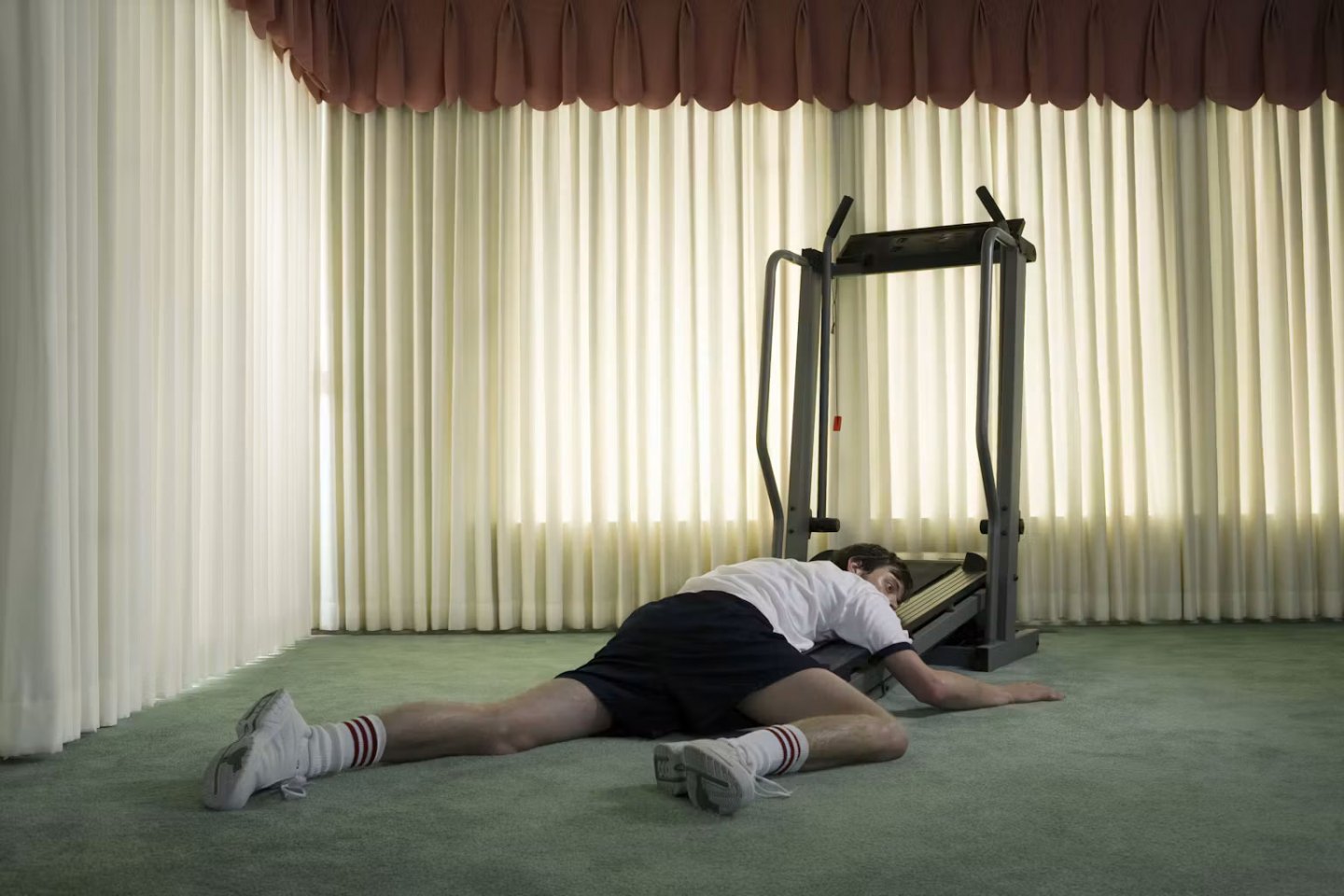
Some people fear a painful death after a prolonged battle with cancer. Others, when they envision the worst possible demise, picture a horrifying car crash. Me? There is nothing I fear more than the idea of dying at the gym. I can picture it too well: One minute, I’m on the elliptical, maybe a little sweaty and winded, but definitely alive. And the next, I’m slumped over the still-rotating pedals, Rihanna blaring in the background as a semi-circle of physically fit gay men look pityingly upon my prone body until it slides off the machine, motionless, and I am pronounced dead of an aneurysm or a heart attack. There is no dignity in dying in a sports bra.

I understand that this is a strange fear, even for a former nerd who barely survived high-school phys ed. But in light of the argument I’m about to make, let’s just consider it full disclosure. Because I’m here to suggest you stop going to the gym. That’s right!


Gyms are energy-sucking, disease-riddled, crowded, and often expensive. It’s an industry that exists because people pay a lot of money for the privilege of not meeting their personal health goals. (People overestimate the amount they’ll use their membership by as much as 70 percent.)

Exercise outdoors. Hiking. Jogging. Biking. Doing yoga in the park. There’s some evidence that an old-fashioned run burns more calories than the same mileage clocked on the treadmill. But, you protest, what about winter? What if I’m a woman who doesn’t feel safe running outside alone? What if my neighborhood doesn’t have any green space? Exercise in your own home. Find a workout DVD that fits your needs. Do a little living-room yoga.

Photo via (cc) Flickr user Sean Venn

We’re giving away $500 to put this challenge into action! Participate in the ‘Clean Up Your Act’ challenge on GOOD Maker here.

  • Your cells keep a record of every workout you’ve ever done – and those gains persist even after a break from exercise
    Photo credit: Williams+Hirakawa/The Image Bank via Getty Images – Your body retains the benefits of exercise even when you need to hit pause.
    ,

    Your cells keep a record of every workout you’ve ever done – and those gains persist even after a break from exercise

    New research suggests muscle and liver cells retain a memory of exercise, offering hope when injury or life interrupts a workout routine.

    Have you ever taken months off training – maybe due to an injury, a new baby or crushing work deadlines – and come back convinced you were starting from zero?

    Research from our team has some good news: At the cellular level, you probably weren’t.

    We found that muscle and liver cells store memories from every training session in ways that may help improve endurance, control blood sugar levels and even slow weight regain after inactivity.

    Use it or lose it? Maybe not

    For most of the past century, long before fad diets and fancy workout trends took off, exercise was considered one of the most effective lifestyle changes to lower the risk of heart disease, Type 2 diabetes, several cancers and early death for people of all ages. But people typically understood exercise as something whose beneficial effects fade away over time: You use it or lose it.

    When you stop training, your maximum oxygen uptake, muscle gains and insulin sensitivity drift back to where they started, often within weeks. Physical activity guidelines are built on this fact, which is why they emphasize consistency above all else.

    Consistency, however, is a luxury that roughly 3 in 4 American adults aren’t able to enjoy. People can experience injuries, illness, pregnancy or jobs that limit their time for or ability to exercise. If adaptation really resets, every time you step into the gym would be as if you’ve never been there before. But that scenario doesn’t match what coaches and returning athletes typically describe: In practice, people who have trained before can get fit again faster than those who haven’t undergone similar training.

    In recent years, however, scientists have started challenging the concept of “use it or lose it.” New research hints that your cells might keep a record of your training history so all of your gains are not completely lost.

    More than muscle

    We are exercise physiologists who study how cells remember exercise. Our lab and others have shown that the body is able to store a form of exercise memory across different organs.

    To study how this exercise memory works, our team of researchers use an ON-OFF-ON exercise training protocol in mice, which involves an initial four- to eight-week training period, followed by detraining – a period of no exercise – and a second training bout. This method allows us to examine how cells form a memory of exercise, maintain a record of exercise through detraining, and recall memories of prior training when exposed again to exercise.

    Using this strategy, our team found that skeletal muscle memory accelerates muscle growth. Compared to mice with no training history, mice who retrained grew bigger muscles, and the individual muscle fibers inside those muscles grew too. Larger muscle fibers meant that the working cells were themselves getting bigger, rather than the surrounding tissue.

    Looking more closely at these muscle cells, we found that retrained muscle is better at matching energy production to demand – meaning, the muscles were better at drawing from energy stores when it’s needed most – and this ability persists without further exercise. This memory held even when the mice ate a high-fat diet, suggesting that prior training can still offer benefits even when diet is working against those gains.

    Muscle isn’t the only body part that learns from exercise. Working muscle needs fuel, and the liver supplies it during and after training sessions.

    My colleagues and I found that liver cells also store exercise memory and uses it to feed muscle more efficiently. In both mice and people who trained, stopped, then trained again, their livers released higher levels of a family of enzymes called carboxylesterases. These enzymes chop up lipids circulating in the blood, delivering fat in a form that muscle can take up and burn as it grows.

    A record that outlives you

    Recorded cellular memories of exercise may even be passed down to future generations.

    In mice, we found that three to four weeks of maternal and paternal endurance exercise can have a lasting effect on their offspring. Compared to offspring born to sedentary parents, parental exercise granted protection against poor blood sugar levels and excess weight gain for an entire year after birth.

    Researchers have hypothesized numerous ways that prenatal exercise may affect offspring. For example, maternal exercise might allow offspring to spend more time developing in the womb or lead parents to producer higher quality milk.

    But there remains much to be discovered on how parents influence the health of their children and whether their lifestyle could provide a fitness advantage across generations.

    Every cell remembers

    Biology has traditionally granted memory to a short list of cells. Neurons store memory in the connections between them. Immune cells store memory so they can recognize pathogens faster and more strongly the next time they encounter them.

    Researchers previously considered all other cells to be memoryless; a cell responds to a signal, then returns to baseline without keeping a record of that interaction. But that assumption is now coming apart.

    Skin stem cells can keep a record of inflammation, allowing them to heal a new wound faster months later. Human fat cells keep a record of obesity that persists even after substantial weight loss, which may account for why you gain weight faster when switching back to a high-calorie diet – the so-called yo-yo effect.

    We propose that every cell in the body remembers exercise, regardless of how little or how much someone trains. The question is how long these records are stored and whether researchers could prolong or expand each cell’s storage capacity. Better understanding of how cells learn and remember exercise, where they store memories and how those memories are preserved could help improve exercise guidelines for those who cannot exercise for prolonged or consistent periods of time.

    To be clear, none of these findings are evidence for skipping the gym; nothing in our data suggests the effects of past training can substitute for present training. But there is hope that the work you put into getting in shape isn’t completely lost over time.

    Somewhere, deep in your cells, there is a record waiting to be replayed the next time you lace up your running shoes, pick up a pair of dumbbells or want to fulfill a New Year’s resolution.

    This article originally appeared on The Conversation. You can read it here.
  • Friendship is built over time, through ordinary moments – I teach lonely college students to notice them
    Nearly 6 in 10 college students said in 2026 that they felt lonely sometimes or always. Denis Novikov/iStock/Getty Images Plus
    ,

    Friendship is built over time, through ordinary moments – I teach lonely college students to notice them

    A college course explores how small, everyday interactions grow into lasting connections.

    Professor of Political Science and Director of the Center for Applied Civic Leadership, Coastal Carolina University

    The first skill I learned when I became a political science professor nearly 20 years ago was how to quiet a room full of chatty undergraduates.

    These days, I often walk into a silent room, with students staring at their phones and barely acknowledging the classmates beside them.

    As I read more about the United States’ loneliness crisis, I began noticing a version of it among my students.

    In a 2026 national survey of over 40,000 college students, nearly 6 in 10 said they felt lonely sometimes or always. At the same time, federal time-use data show that the share of Americans who socialized in person with family, friends or others on an average day fell from 38% in 2015 to 30% in 2025.

    Those and similar other studies capture a familiar contradiction seen on college campuses like my own: Many new students want close relationships, but feel anxious about initiating them and have had little practice sustaining them.

    I realized that my students rarely spoke to one another, and went entire semesters without learning their classmates’ names. Many students seemed unsure how to cross the few feet between them and their peers and make the social connection they craved.

    I designed a freshman honors seminar, “Friendship & Society,” around this uncertainty, combining the academic study of friendship with practical exercises in forming and sustaining it.

    Two women walk closely together down a stone path with red brick pillars on either side of them.
    College students in this class learn about how positive social interactions activate the brain’s reward system while isolation triggers a stress response. Klaus Vedfelt/Digital Vision via Getty Images

    Understanding friendship

    In this course, students examine how an initial exchange can develop into friendship through repeated contact and shared time, and why many potential connections never progress into a lasting friendship.

    They consider how friends help shape identity and memory, whether old friends are owed continued loyalty after their lives diverge and whether a friendship can remain meaningful after it ends.

    Students also look at how friendship can have strong effects on physical and mental health, making it what I believe is an overlooked public health issue. Friendships can also help shape people’s broader sense of belonging in a community, building the social trust that civic life depends on.

    Students test those questions through 10 “Friendship Practices,” a series of experiential activities I designed. Students are asked to share a meal with classmates or visit a public gathering place like a café or lounge to see how these settings can encourage conversation. During a “friendship safari,” small groups walk across campus, noting where conversations begin and where students pass one another without speaking.

    In private journal entries and submitted reflections, students record what they expected from each situation, and what happened when they tried to form connections. They make a short film telling a story of friendship on campus and end with a friendship memoir tracing how their own relationships and expectations changed during their first semester of college.

    Diving into friendship

    Students read “Stay True,” a memoir about a friendship between author Hua Hsu and his classmate Ken that shapes Hsu’s sense of himself long after his friend’s death.

    Neuroscientist Ben Rein’s book “Why Brains Need Friends” explains the biology of connection and isolation, and shows how positive interactions activate the brain’s reward system while isolation triggers a stress response.

    Students also read longform journalism, social science research, public health reports and political philosophy on aspects of loneliness. They also watch TED Talks and films that explore how a brief encounter with a stranger can, over time, become a friendship.

    Lessons learned

    Students learn that a friendship is built from countless moments that may feel meaningless while they are happening. An unremarkable meal, or a conversation that fills 10 spare minutes rarely feels consequential on its own.

    Over time, those moments build relational capital, meaning the shared trust and history friends can draw on when life becomes difficult or a disagreement needs repairing.

    That reserve reaches beyond a single relationship. Communities become more connected when people have accumulated enough ordinary experience together to trust one another and keep showing up.

    Four young women smile and pose as they lift one of the women, wearing a black graduation gown and carrying flowers, in the air.
    Individual, ordinary moments with peers over time can build and help form a friendship. Jeff Gritchen/MediaNews Group/Orange County Register via Getty Images

    By the end of the course, students can weigh different kinds of evidence about how friendships form, develop and sometimes fade. They also become better able to start a conversation, recognize which public spaces make it easier to meet and spend time with others, and identify habits that help relationships deepen over time.

    They finish with a clearer sense of how relationships take shape and how their own choices contribute to the communities forming around them.

    Uncommon Courses is an occasional series from The Conversation U.S. highlighting unconventional approaches to teaching.

    This article originally appeared on The Conversation. You can read it here.
  • Pope Leo XIV’s lung cancer highlights growing number of nonsmokers diagnosed with the disease – and younger people too
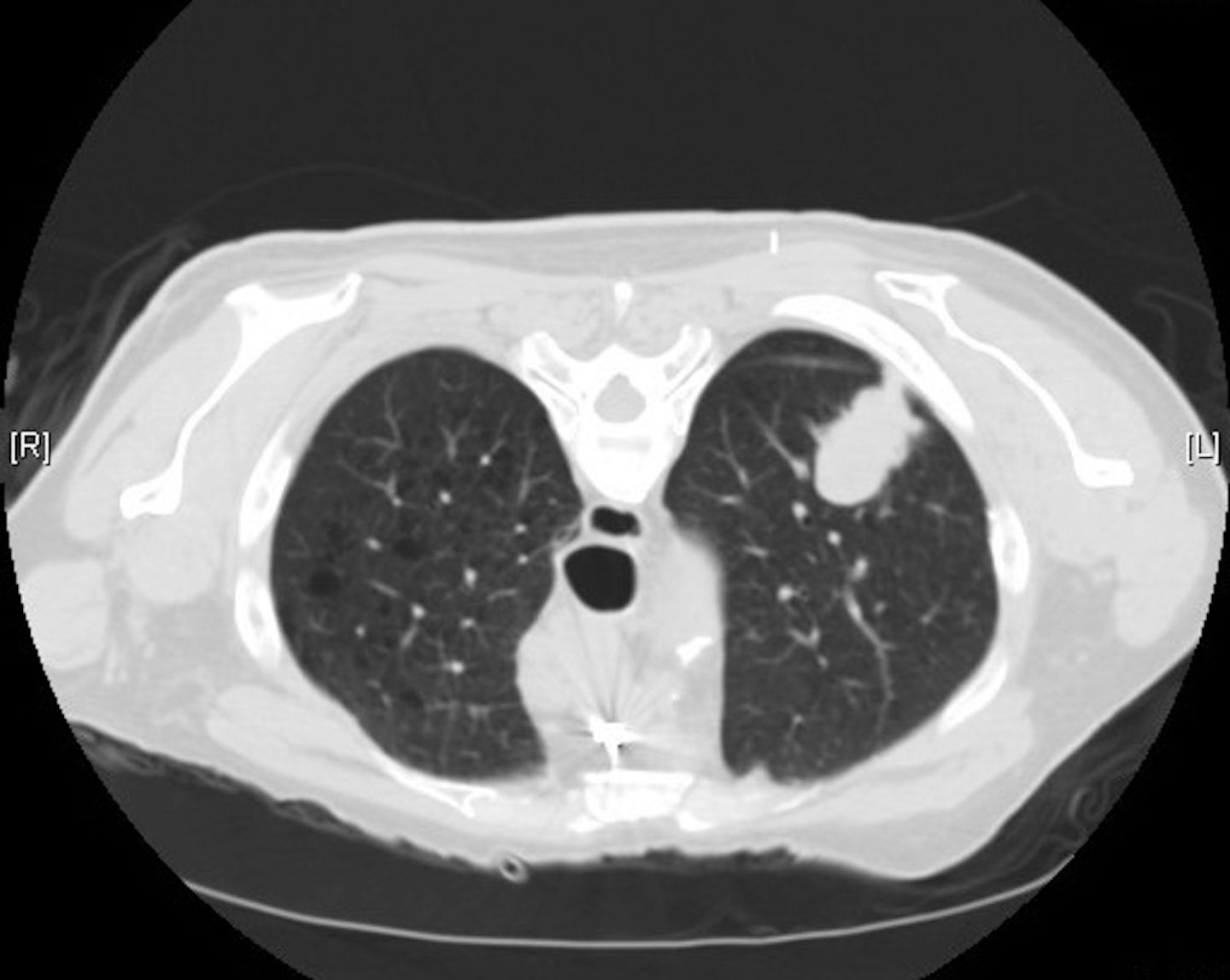
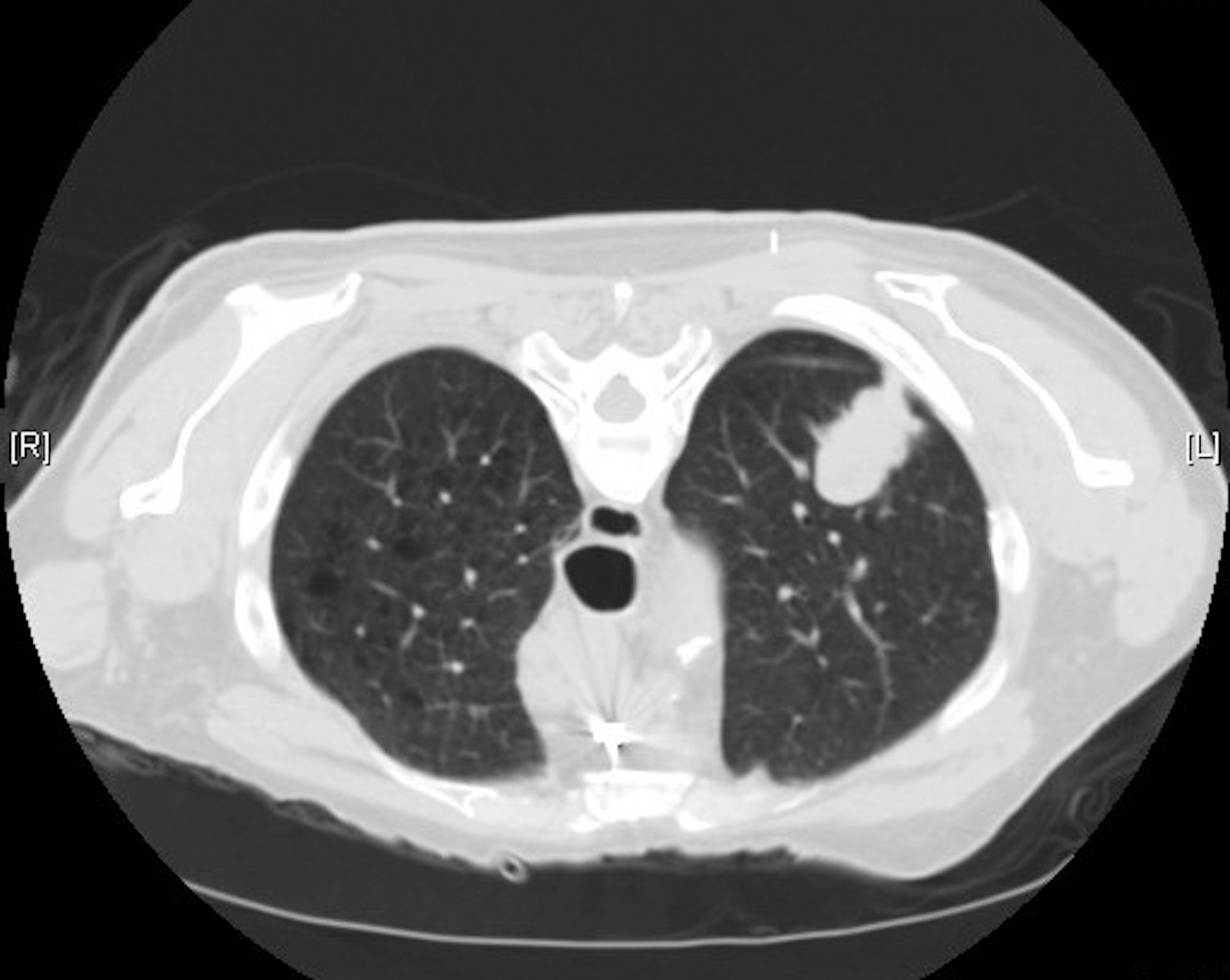
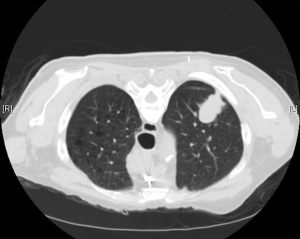
    A low-dose CT scan can help with early detection of lung cancer. In this image, the tumor is the white nodule in the upper right corner of the black space. Atlas of Pulmonary Pathology/Flickr, CC BY-SA
    ,

    Pope Leo XIV’s lung cancer highlights growing number of nonsmokers diagnosed with the disease – and younger people too

    Smoking isn’t the only risk factor, and screening can miss those who never smoked.

    When many people think of an average lung cancer patient, they often imagine an older man smoking. But the face of lung cancer has changed. Over the past 15 years, more women, never smokers and younger people are being diagnosed with lung cancer.

    In fact, lung cancer is the leading cause of cancer death among women, and more women die from lung cancer than breast, ovarian and colorectal cancer each year. The American Lung Association reports that while lung cancer rates have risen by 79% for women over the last 44 years, they decreased by 43% for men. And for the first time in history, there are more young women than men diagnosed with lung cancer.

    News about Pope Leo XIV’s lung cancer diagnosis on Oct. 13, 2026, sparked discussion about increasing rates of the disease among people who have never smoked. Leo reportedly is not a smoker. Potential causes for the disease include environmental exposures and genetics, and recognizing the diverse factors that can increase someone’s risk of lung cancer – regardless of their smoking history – is essential for timely and appropriate screening and treatment.

    Cancer that is found at the earliest stages, like that of the pope, can be treated with surgery and cured for both smokers and nonsmokers. The challenge is that people who have never smoked are not currently included in lung cancer screening guidelines, and tumors are often only found by chance.

    As a thoracic oncologist, I have seen many younger women and never smokers walk into my clinic with a new diagnosis of lung cancer. Particularly for never smokers, lung cancer is unexpected for both patients and their doctors, which can often lead to delays in diagnosis. Researchers have described this trend of increasing lung cancer rates among women in different parts of the world and are starting to understand why cases are on the rise.

    Lung cancer in women

    The first explanation of why rates of lung cancer in women have increased is that many started smoking later than men, pushing back their peak in smoking-related lung cancer diagnoses.

    Women also started smoking in the years when filtered cigarettes were most commonly used. This led to an increased risk of a type of cancer called adenocarcinoma due to the way cigarette filters distribute tobacco smoke to the outer parts of the lungs. Some studies suggest that women are more susceptible to the carcinogenic effects of exposure to tobacco and cigarette smoke, including second-hand smoke, and may develop lung cancer after fewer years of smoking compared to men.

    However, it is important to note that most people diagnosed today with lung cancer are not active smokers. About 20% of women with lung cancer have never smoked – higher than for men with lung cancer who’ve never smoked.

    Watch on  YouTube
    An increasing number of lung cancer diagnoses are among people who never smoked.

    Lung cancer risk factors

    Besides smoking and secondhand smoke, there are several other lung cancer risk factors. These include a family history of cancer and exposure to asbestos, radon and air pollution.

    Exposure to carcinogens in the workplace in the form of inhaled chemicals such as arsenic, beryllium, cadmium, silica and nickel is still a concern in some parts of the world. The potential lung cancer risk of e-cigarette and marijuana smoke is still under study but of potential concern.

    Recently, researchers have also found that genetics can play a role in lung cancer risk in some patients with a strong history of lung cancer. Studies of these families have helped identify potential susceptibility genes for lung cancer and environmental risk factors.

    Like BRCA1 and BRCA2 in breast cancer, alterations in genes that promote or protect against tumor development can contribute to lung cancer development. Researchers have yet to identify specific mutations that may predispose individuals to lung cancer. However, studying familial genetic predispositions can help elucidate how lung cancer develops and lead to new biomarkers for early cancer detection in high-risk groups.

    Lung cancer screening

    In 2021, the United States Preventive Services Task Force updated its lung cancer screening guidelines to include younger patients with less smoking history. Now, lung cancer screening is recommended for adults ages 50 to 80 who have smoked at least one pack per day for 20 years, current smokers and former smokers who quit smoking within the last 15 years. Women at risk for lung cancer can talk to their doctors about ordering a low-dose CT scan for lung cancer screening.

    Nationwide, more than 70% of eligible women undergo breast cancer screening but less than 6% of all eligible smokers pursue lung cancer screening. Researchers estimate that these new screening guidelines will increase the number of women eligible for lung cancer screening by 40% by including those at a younger age who have less smoking exposure.

    CT scan of lung adenocarcinoma
    A low-dose CT scan can help with early detection of lung cancer. In this image, the tumor is the white nodule in the upper right corner of the black space. Atlas of Pulmonary Pathology/Flickr, CC BY-SA

    Lung cancer diagnosis

    In recent years, increasing understanding of the genetic changes that can lead to cancer and how to harness the immune system to treat cancer has led to new targeted therapies and immunotherapies that have improved the prognosis of patients with lung cancer. Women tend to have a better lung cancer prognosis than men, especially if they never smoked and have tumors with molecular changes that can be treated with targeted therapies.

    However, lung cancer symptoms may go unrecognized in women. Symptoms of lung cancer can include coughing, shortness of breath, overwhelming fatigue and pain in the back, chest or shoulder, which could be confused for other ailments. Because women tend to be slightly younger when diagnosed than men, patients may be able to tolerate symptoms longer and delay seeking medical attention. Physicians also might not attribute these symptoms to lung cancer due to a patient’s younger age.

    Recognizing the early symptoms of lung cancer, expanding lung cancer screening eligibility and testing for genetic biomarkers to select the best therapy are some of the steps that could help address the global epidemic of lung cancer in women.

    This is an updated version of an article published on Feb. 1, 2023.

    Estelamari Rodriguez, Associate Director of Community Outreach in Thoracic Oncology, University of Miami

    This article originally appeared on The Conversation. You can read it here.

Explore More Stories

Society

Generous paternal leave policies improve maternal and newborn health, family finances and workplace equality

Health

Why does your brain mix up memories? A new study examines how memories are misplaced in your brain’s filing cabinets

Media

Boomers think these 7 habits make them polite but younger generations are begging them to stop

Technology

Only 17% of people can pass this 3-question IQ test on the first try. Can you?