Prompted in part by Annie Leonard’s new video “The Story of Bottled Water,” the International Bottled Water Association released a video of their own extolling the virtuous conduct of bottled water companies.

[youtube]https://www.youtube.com/watch?v=iExU-NT-RlA

It’s great that bottled water companies recycle and support environmental organizations, but that doesn’t change the fact that the core of their business is taking private control of a free public resource on which our lives depend, packaging it in disposable plastic junk, and selling it back to people at a huge profit.

But what about emergency provisions? From the press release that came with the video:

Floods, wildfires, hurricanes, tsunamis, earthquakes, terrorist attacks, boil alerts and other events often compromise municipal water systems. IBWA members contribute millions of gallons of water each year to the affected victims. Lifesaving bottled water cannot be available in times of pressing need without a viable, functioning industry to produce it.

I’m not sure we need a commercial bottled water industry to prepare for emergencies. Why can’t FEMA keep stocks of water on hand?


  • Pocket gardens: The tiny urban oases with surprisingly big benefits
    A pocket garden at Newark Beth Israel Medical Center in New Jersey.

    Matt Simon for Grist

    It’s not just easy to miss, but often downright hard to notice. A simple patch of greenery in a city may seem like a blip in the concrete jungle, but it’s an extremely powerful way to solve a bunch of problems at once: Studies have shown that green spaces improve urbanites’ mental health, make summers more bearable, and prevent flooding by soaking up stormwater.

    When these plots are planned — as opposed to letting vacant lots grow wild, which is valuable in its own right — they become extra powerful. You may have even enjoyed one without knowing it: the “pocket garden.” Tucked into spaces accessible to pedestrians, like sidewalks, hospital grounds, and campuses, they can be engineered to turn heat-absorbing concrete into air-cooling oases packed with vegetation and seating for people to escape the metropolitan bustle.

    “This increasing prioritization of creating green spaces in unexpected spots and underutilized spaces in communities is not only going to be making our communities more resilient, it’s going to be making people healthier,” said Dan Lambe, chief executive of the nonprofit Arbor Day Foundation, which promotes urban forestry. “A little bit of green goes a long way.”

    Pocket gardens aren’t gardens in the agriculturally productive sense, but ornamental grounds, Grist reports. (Though there’s nothing stopping a designer from adding a fruit tree or two.) Ideally, they’re host to native plant species, which bring several benefits. For one, they attract native pollinators like insects and birds, which get a source of food that powers them to go on and fertilize plants elsewhere, like crops in urban farms. And two, if the vegetation is adapted to a particular region or condition, it’s already used to the local climate — drought-tolerant varieties, for instance, won’t require as much water to survive. Furthermore, choosing native grasses that don’t need mowing can cut down on maintenance costs. And picking trees with big canopies will increase the amount of shade for people to use as refuge from the heat. (Sorry, palm trees, that means you’re disqualified.)

    Biodiversity — mixing tree species as opposed to planting 10 of the same kind — is key here. That attracts a broader range of pollinating animals, and builds resiliency into the system: If you only plant one variety of tree and a disease shows up, it can spread rapidly.

    And speaking of disease, trees have an additional superpower in their ability to scrub urban air of the pollutants that contribute to respiratory problems. In addition, the vegetation of a pocket park releases water vapor, bringing down air temperatures. This mitigates what’s called the urban heat island effect, in which cities absorb the sun’s energy all day and slowly release it into the night. Combined, reduced air pollution and temperatures improve public health.

    There’s also the harder-to-quantify bonus of people getting out of their cars and gathering in public spaces, no matter how diminutive. “It’s actually a transition toward the pedestrian — toward the person — and away from the vehicle,” said Eric Galipo, director of campus planning and urban design at the architecture firm FCA, which has integrated pocket gardens in its projects. “We may not spend as much time together as a society as we used to, and so these are great opportunities for that sort of connection to happen.”

    When the rains come, these verdant plots take on another role as an infrastructural asset. As the planet heats up, rainfall increases because a warmer atmosphere can hold more moisture. In response, cities like Los Angeles and Pittsburgh are getting rid of concrete to open up more green spaces, which absorb rainfall, allowing it to seep underground. This reduces pressure on sewer systems that are struggling to handle increasingly heavy deluges. These systems, after all, were designed long ago for a different climate than we’re dealing with today.

    When a city prioritizes green spaces, you can actually hear the difference. Barcelona, for instance, has been developing superblocks, which aim to improve city life by transforming car infrastructure into walkable spaces. That includes the development of “green axes” (the plural of “axis,” not the tool for chopping), full of vegetation and paths for strolling. A recent study found that after these spaces were pedestrianized and vehicles disappeared, average noise levels fell by 3.1 decibels. (For context, hearing a car traveling at 65 mph from 25 feet away would be 77 decibels.)

    While 3.1 may not seem like much, each increase of 10 decibels means a tenfold rise in loudness. And we have to consider not just the decibels but how the kind of noise changed as Barcelona developed green axes: Revving engines, honking horns, and even the occasional cacophony of a car accident were replaced with voices. As the built environment dramatically changed, so too did the way that folks on foot experienced their surroundings. “If people see green in general, the noise perception tends to change,” said Samuel Nello-Deakin, a postdoctoral researcher at the Autonomous University of Barcelona and lead author of the study. “You think that things are not as noisy as they actually are. So there’s also this interesting interaction, right, between sort of what you hear and what you see.” In addition, green spaces absorb city racket, keeping it from bouncing off of and between buildings and pavement, insulating residents from the din.

    With less commotion comes still more gains to public health. Noise pollution is an invisible crisis worldwide, as studies link the stress it causes not just to struggles with mental health, but physical problems like hypertension and heart disease. By contrast, pocket parks and other green spaces encourage people to ditch their cars and move their bodies. “There are also physical health benefits from walking, biking, and being outside that over a lifetime tend to have a cumulative positive effect on what our society spends in health care,” Galipo said.

    So as cities increasingly realize and utilize the power of greenery, the environmental, auditory, and social fabric of the urban landscape transforms. “There’s a gravity to this green space that brings people out,” Lambe said. “And all of a sudden, neighbors are connecting, generations are connecting, cultures are connecting. Trees are about the one thing that everybody can agree on.”

    This story was produced by Grist and reviewed and distributed by Stacker.

  • This elementary school banned screens in the middle of the year. Will it solve their reading crisis?
    Various books for middle graders.

    Lily Altavena for Chalkbeat

    Chromebooks are scattered all around the classrooms of Floyd M. Jewett Elementary School in Mesick, Michigan.

    Towers of them are teetering atop bookshelves. They’re piled up in corners of classrooms. They’ve even cropped up in one classroom’s dish rack.

    But there’s one place you won’t find them: in students’ hands.

    Last month, Mesick Consolidated Schools banned digital devices in its elementary school of about 250 students. The decision wasn’t an agonizing one. The ban came at astonishing speed, almost overnight, after a conversation between Mesick Superintendent Jack Ledford and Jewett Principal Elizabeth Kastl.

    Ledford recalled asking Kastl how much teachers read to students in grades K-5. And he recalled her reply: “That has almost vanished.” Kastl’s response helped seal the deal.

    Teachers had to have students off devices by the end of the week. School printers went into overdrive. Then the district went cold turkey, Chalkbeat reports.

    Mesick’s midyear ban underscores a growing backlash against screen time in school, a battle that parents and educators are taking up nationwide. Fears about digital devices’ impact on learning have fused with ongoing concerns about a multiyear decline in national test scores that predates the pandemic. A stream of government hearings, op-eds, and social media posts has only magnified the sense of urgency.

    Ledford and Kastl think the need for drastic action is warranted. About 18% of Jewett’s third graders scored proficient or higher on the state reading test last spring — half the state average and half what it was a decade ago.

    In Mesick, a rural town known for its annual mushroom festival, 66% of students are economically disadvantaged. The district has done all the “normal things” to improve persistently low reading scores, Ledford said, like switching to an evidence-based curriculum. But he now views screens as an adversary to learning.

    “When we’re competing with screens, we’re going to lose,” he said.

    But blanket bans at school won’t affect kids’ screen time at home. And research about how screens affect students is inconclusive, although it does suggest that teachers should exercise caution. Not everyone is convinced that a complete prohibition on screens is the best way to help struggling learners.

    Morgan Polikoff, a professor at the University of Southern California’s education school, said he understands the appeal of an all-or-nothing approach, but it avoids the reality that some technology does have a place in the classroom.

    “It’s like taking a hammer when you need a scalpel,” he said. “A lot of the use of technology in schools is not appropriate. But rather than sitting down and thinking about, ‘What are appropriate uses of technology in classrooms serving young children,’ this approach would just obliterate all uses.”

    Lawmakers in at least 16 states have proposed bills that would limit education technology in public schools, following a spate of state-approved cellphone bans for schools.

    Ledford said he’s been influenced by writers like Jonathan Haidt, a New York University psychologist who is a prominent supporter of school cellphone restrictions and has more recently criticized the proliferation of tech in education. At the same time, a mid-March visit to Mesick’s classrooms shows the ed-tech backlash can be somewhat divorced from the reality of a school day.

    For some at Jewett, the school day doesn’t feel that different. A few teachers said they hadn’t used screens very much. For others, the routine has changed substantially — and for the better, they believe, with students more engaged and learning less “gamified.”

    When asked about her school’s screen ban, a girl wearing a “Lilo & Stitch” shirt in an intervention class for struggling readers just growls. But her intervention instructor, Julie Kearns, said the students are simply adjusting.

    The student “definitely seems like she enjoys” reading a book more than wearing headphones and peering at a screen, Kearns said.

    As Kearns watched, the girl bounced in her chair while reading a passage about soccer.

    Why a school banished screens and bought books

    In classrooms, a screen ban for students doesn’t mean all screens are gone.

    One Friday in March, third-grade teacher Hanna Brechenser presented images on the Smartboard — the modern-day version of a projector — of Indigenous communities to help foster a classroom conversation. Teachers also still have desktop computers.

    This is Brechenser’s fifth year teaching and her second in Mesick. She said she had already tried to limit screentime in the classroom before the ban. Her class mostly used their Chromebooks a few times a week for a math fluency exercise and digital library access.

    Both Kastl and Ledford believe teachers may not have been aware of just how much of a crutch screens were in some classes.

    Mesick went 1:1 with students and devices around 2015, Ledford said, when schools were under pressure by tech evangelists and politicians to add more technology so students would be prepared for jobs in the digital world. That was the argument at the time, anyway.

    “I had started in my walkthroughs just noting, what are the students doing?” Kastl said. “More often than not, I was coming back with a list of students on devices. So the perception of how your day actually looks versus what we were seeing on the data piece are probably disjointed.”

    Mesick’s new policy has been helpful for Brechenser because she doesn’t have to police students so much on their devices.

    Brechenser’s students have physical books from the “Diary of a Wimpy Kid” series, “Twilight,” and “The Baby-sitter’s Club” stacked on their desks. That’s the other side of Mesick’s new screen ban: The district has set aside $30,000 for physical books to bulk up classroom libraries, along with beanbag chairs so students will have special spaces to read.

    Students adjusted quickly, Brechenser said. “At first, they were kind of shocked, but we just have a lot more silent reading time.”

    Still, it’s hard to miss signs of the amount of time students spend on screens outside of school: A “K-Pop Demon Hunters” water bottle. A Sonic the Hedgehog T-shirt. The image of a snake Brechenser put on the Smartboard prompted one student, Alaric, to say it reminded him of one in a “Harry Potter” movie he watched before school.

    Alaric, who’s 9, said he doesn’t really miss his Chromebook, though he’d been reading something on the online library he can no longer access thanks to the screen ban.

    He gets plenty of screen time at home playing Xbox, he said. He hasn’t thought about cutting down on that.

    “Because I love Fortnite,” he giggled.

    In reading instruction, students get a digital detox

    Where Mesick’s screen-free initiative feels most significant is in the 30-minute small group sessions for Jewett’s struggling readers.

    Mesick uses Read Naturally, an intervention program designed to build fluency. Before the screen ban, students would read a short passage aloud from a computer, then listen through bulky headphones as the software read the passage back to them. Students would then read the passage to themselves three times before reading it aloud again. Paraprofessionals would go from student to student to assist.

    Now, Sharon Brown and other literacy aides sit with their students and work through printed reading passages together. Brown can more easily point out when students stop tracking words with their fingers. She can help sound out words. Though she closely helped students on the computers, she finds herself more thrilled to engage this way, to see progress up close. This is why she is in education.

    “It’s our passion to sit and watch these kids go from struggling readers to eventually testing out … and not having to come back and see us,” she said.

    With one second grader, she has an engaging conversation about the reading’s topic, mammals, before they begin. He asks if a shark is a mammal and if it evolved from dinosaurs.

    Brown can see improvements, particularly with some of her first graders. Students are reading more words per minute, based on data they track every session.

    “They are so engaged,” she said. “It’s been amazing to us that we’re going, ‘Wow, this has actually been so fun.’”

    The way students use technology is an important consideration when thinking about limiting or banning screens, said Dr. Joanna Parga-Belinkie, a pediatrician and a spokesperson for the American Academy of Pediatrics.

    Educators and parents should focus on using technology in ways that are interactive and in group settings, instead of having students looking at screens on their own.

    “When you are focusing on screens and technology and the use of them you might be not focusing on human relationships,” she said.

    Samantha Daniels, the mother of three children in the district, said that last school year, some of the software the district used would offer students games if they read enough.

    She’d watch her son, a first grader, try to rush through the reading to get to the game. He struggled a lot with reading, becoming easily frustrated like many young readers.

    “It would be about getting to that, versus us enjoying what we’re reading and what we’re learning,” she said.

    But now, he’s starting to pick up books on his own.

    There are some difficult practical adjustments to a midyear change as big as this one. A lot of classroom resources are based online or have some kind of online component. Kastl asked teachers to stop using those components.

    Ultimately, every hour of screen time represented “an hour that we’ve lost direct teacher instruction where they’re actually getting that responsive feedback from a human,” Kastl said.

    “That’s when you move the needle.”

    Will eliminating screens help young readers?

    Ledford doesn’t think he’s taking a gamble by eliminating screens at the elementary school, even though students take state assessments on computers. He thinks it’s much easier to teach students technology skills than social skills.

    In fact, he already has plans to scale back technology use by older students, too.

    Ledford moved rapidly to ban screens, but he expects improvements in reading scores to happen more gradually. Still, he’s laser-focused on the connection between screens and literacy. To him, education should unlock the ability to read for students, because it affects everything else the district is trying to do for kids.

    “We’re failing in literacy,” Ledford said. “If we fail in literacy, how can we effectively teach science or social studies or any of the subjects?”

    Getting rid of screens will not solve all of Mesick’s problems, like a leaky roof or clapped-out HVAC system. Kastl has also observed a deeper potential issue: a drop-off in parent involvement after schools closed during the pandemic.

    In many cases, Kastl said, “Parents don’t know what actually happens inside their kids’ school building.”

    But parents know about the screen ban, and they’re excited about it. They’ve said they’ve noticed their children take more interest in reading.

    Kids are also socializing more during free periods, a bright spot for the principal’s son, Sam Kastl.

    Sam, 11, used to spend indoor recess — a regular occurrence in northern Michigan’s severe winters — playing games on his Chromebook. He thought the screen ban was “going to be annoying.” Classmates who used to ask him if his mom would declare a snow day started asking him to convince her to bring back devices.

    But those requests went away pretty quickly. Students now play board games together instead of games on their Chromebooks alone — just like how reading intervention students now study in a group instead of solo. Another student taught Sam how to draw. Everyone’s adjusted pretty well, from his vantage point.

    On the day Chalkbeat visited their school, Sam and his fifth-grade classmates built a fort out of blankets during class time. Then they climbed inside to read with flashlights.

    This story was produced by Chalkbeat and reviewed and distributed by Stacker.

  • ‘A study showed…’ isn’t enough – scientific knowledge builds incrementally as researchers investigate and revisit questions
    Photo credit: Jacob Wackerhausen/iStock via Getty Images PlusWhen you hear about some new research finding, consider how it fits into the context of other related studies.

    Your goofy but lovable cousin just told you that you should stop eating eggs because he read somewhere that a study showed they are bad for you.

    How much should you trust your relative on such matters? More importantly, how much should you rely on one newly published bit of research when deciding what to make for breakfast?

    To be clear, this is not an article about the health-promoting or health-torpedoing properties of eggs. It’s about how scientific knowledge is built piece by piece from many studies. What scientists know is refined over time as new results either do or don’t point to the same conclusion.

    I’m a geographer who’s been doing and teaching science for many decades, with a sideline of teaching and writing about how science is done. Many people, quite understandably, take a single experiment or study as the be-all and end-all of knowledge because that’s how research often is presented by the press or on social media. But the better way to approach new research is to find how it weaves together with other work on the topic to create big-picture understanding.

    Painting of18th C man in fancy dress standing by telescope and looking up at Moon in sky
    Science evolves over time as more data and discoveries refine scientific knowledge. Historica Graphica Collection/Heritage Images via Getty Images

    How science works

    Most research studies are undertaken either to fill a gap in our knowledge or to test an existing theory to see whether it deserves the confidence people have in it. After identifying the topic, scientists design a study to achieve those ends. They may run an experiment to learn more about how a chemical affects certain cells, for instance, or collect data in the field to track a natural phenomenon, such as how water temperatures affect hurricanes.

    Then the researchers submit their findings to a peer-reviewed journal, where other experts – the scientists’ peers – decide whether it’s quality research deserving of publication.

    Not all journals have rigorous peer review. Papers are highly unreliable if published by “paper mills” – journals that appear scholarly but will publish anything if the authors pay a fee.

    Peer review doesn’t guarantee that the conclusions are valid, but it increases the chances that they are. Individual papers might be wrong because of honest mistakes, such as unforeseen limitations in the experimental design or, rarely, from outright fraud.

    No scientific paper solves a problem once and for all. Neither does it negate all previous research. Well-done research contributes a bit to the scientific community’s understanding of a topic. The next, and crucial, step is putting individual studies in context with other research on the topic.

    Even if there is current consensus, a new study may reveal a weakness, and that could lead to more research to figure out what is more likely to be correct. Scientific knowledge is constantly being refined as new information comes to light.

    Adding more evidence bit by bit

    One question to ask as you consider a particular finding is whether it has been directly replicated, meaning other researchers repeated the experiment to see whether they got the same results. Unfortunately, replication is relatively rare in science; more common are similar studies using comparable data, different methods, or both.

    Your confidence can grow when scientists have performed a bunch of related research that’s gone through peer review, been published in scholarly journals and mostly points in the same direction. Of course, if they don’t agree, then your confidence should be weaker.

    Sometimes researchers may compile these comparisons in what’s called a systematic review. They may use statistical techniques to perform meta-analysis on data from many different studies at once. Generally speaking, the more good data used to test an idea, the better.

    An additional issue is how many studies have been done on a topic. There are thousands of studies on the causes of lung cancer, but there may be only one or two on how a couple of particular genes affect hair loss. Scientists’ confidence in what is known about lung cancer, then, is far greater than what is known about how those genes may have contributed to my baldness.

    Appreciating the strength of the evidence is as important as understanding the evidence itself.

    Get a helping hand

    The idea of expertise has fallen out of favor in some quarters. But experts are vital when it comes to understanding scientific issues. An expert in this sense is someone who has been immersed in the topic for years, knows how to evaluate the relevant studies, and, ideally, has done research on it.

    With such a background, an expert is a good judge of how likely any one study is to be wrong. Equally important, they also must try to control the all-too-human impulse to accept what they like and reject what they don’t.

    Unfortunately, most people rarely have direct access to experts. The next best thing is someone educated in the general topic – verifiably educated, not someone who browses the internet for a few hours.

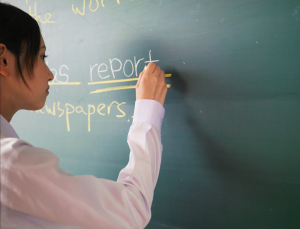
    Woman writing on the board while teaching a class to a group of people in white coats
    Healthcare professionals keep up with the scientific literature in their field so they can provide evidence-based, up-to-date care to patients. Hispanolistic/E+ via Getty Images

    Healthcare professionals who have years of training, clinical experience and requirements to keep up with the literature in their field can help you make good decisions based on new medical research. But be careful. You want to rely on someone who updates their recommendations as the state of scientific knowledge evolves, but not someone who latches onto every new outlandish discovery.

    In practice, some healthcare practitioners – hopefully a small minority – are not trustworthy on such matters. If someone is selling you something that sounds too good to be true, assume that it is. They may even have a financial or personal stake in their recommendation.

    Consider the source

    You should retain some skepticism about what you read in the popular press and even more about what you see on social media.

    A good journalist who knows how to assess new studies can act as a guide and help you understand scientific issues. You’re looking for journalists who can accurately and objectively report on new research and help put it in context with what else is known. Unfortunately, there is no list of good versus bad journalists, but general guidance is available, such as that from nonprofit journalism organization The Trust Project.

    Journalists who are well versed in how science works can also help you spot whether there are any conflicts of interest at play. Was that study that encourages staying energetic by eating a pound of candy a day sponsored by a snack food company? That would be a major red flag.

    I’m not saying that everyone needs to do a thorough literature review before speaking about a scientific issue or deciding whether to eat eggs a couple of times a week. But I do encourage you to adopt a little humility about what you know and understand, along with a realistic appreciation for the limits of both your own knowledge and what the scientific community understands.

    And definitely don’t make life-altering decisions based on an article describing one scientific study, even if your cousin tells you to.

    This article originally appeared on The Conversation. You can read it here.

Explore More Stories

Ideas

Homeowners swear by this simple ice cold hack that thoroughly makes your toilets cleaner

Ideas

Facebook group helps families without a ‘village’ find surrogate grandparents

Internet

Italian man claims to be ‘human cheetah’ with lightning-fast reflexes

Well-being

Why some health professionals are recommending pet ownership for better health