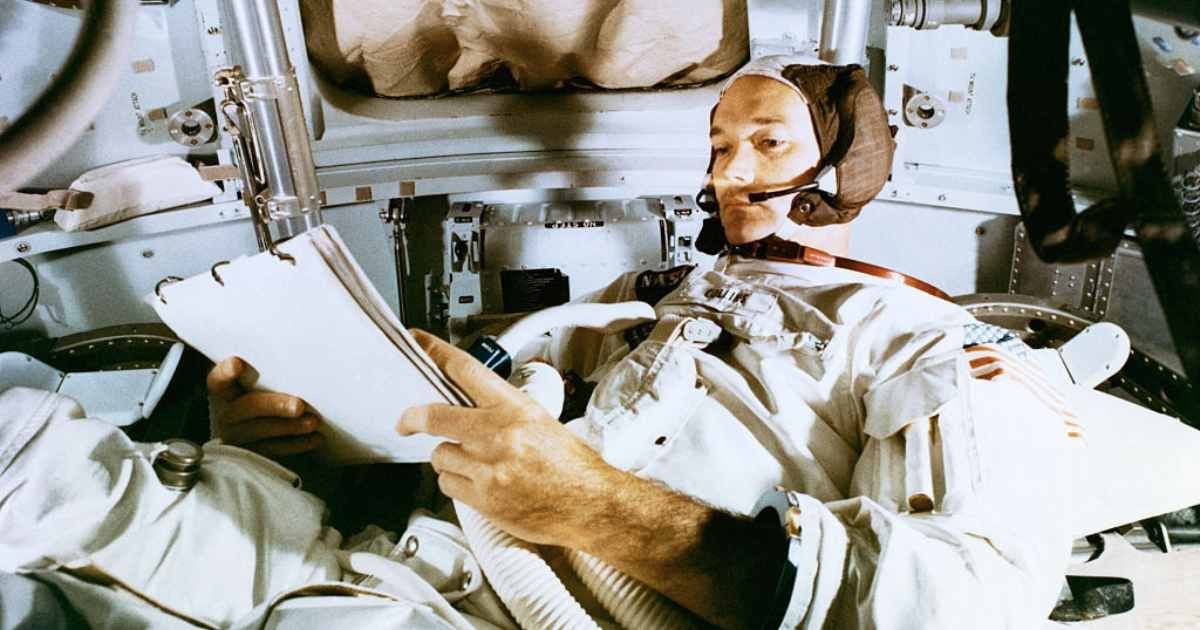
In 1969, while astronauts Neil Armstrong and Buzz Aldrin made their historic Moon landing, another figure quietly made history. As the world watched Apollo 11, Michael Collins, the mission’s third astronaut, orbited the Moon alone, earning the title “the loneliest man in history,” per Express. Collins documented his solitary journey in haunting notes, revealing his thoughts and emotions during the mission.
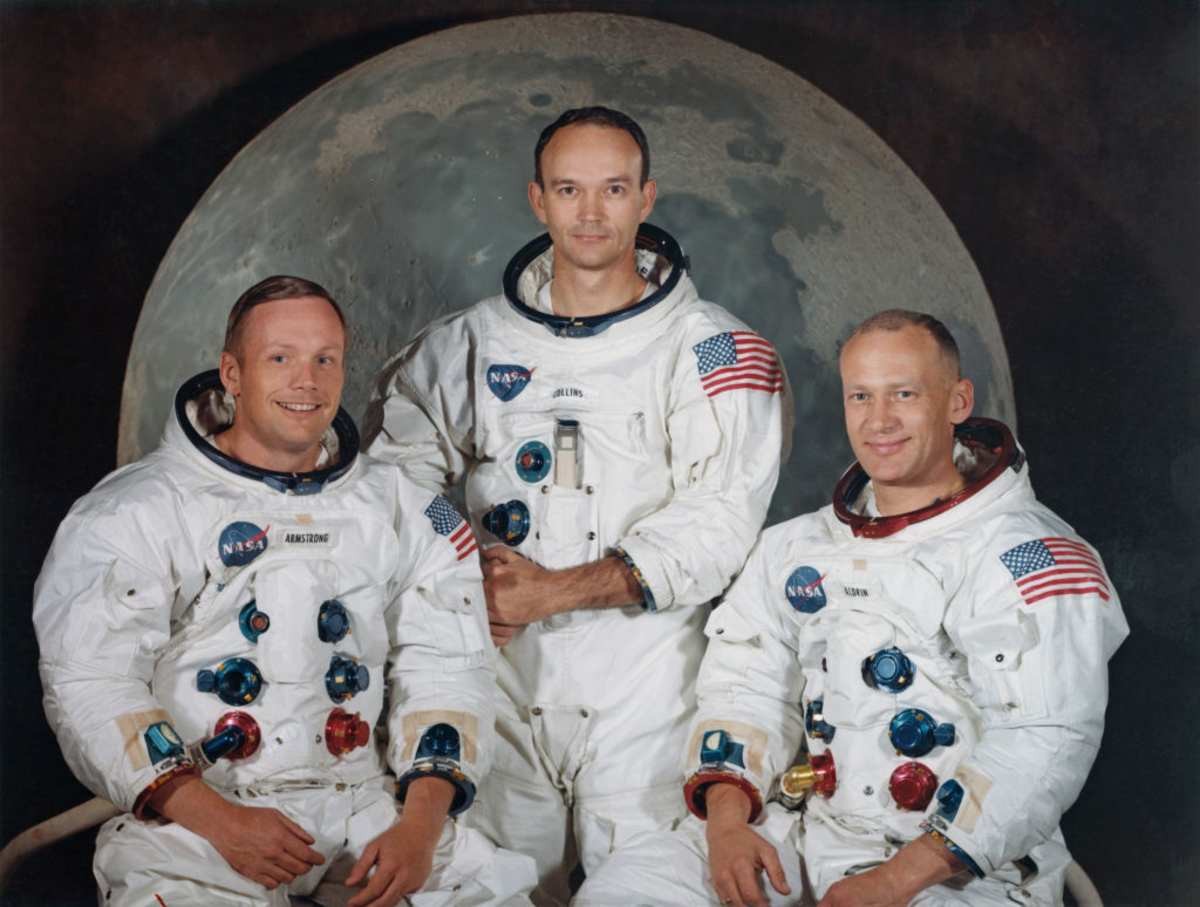
Image Source: The crew members of NASA's Apollo 11 mission pose for a group portrait. From left to right, Neil Armstrong, Michael Collins, and Edwin 'Buzz' Aldrin Jr. (Photo by Space Frontiers/Getty Images)
Collins expressed his fear of returning to Earth alone if the mission failed. While waiting for news of the landing, he compared his stress to that of a “nervous bride.” He wrote, “My secret terror for the last six months has been leaving them on the Moon and returning to Earth alone; now I am within minutes of finding out the truth of the matter. If they fail to rise from the surface or crash back into it, I am not going to commit suicide; I am coming home, forthwith, but I will be a marked man for life and I know it,” Collins wrote.
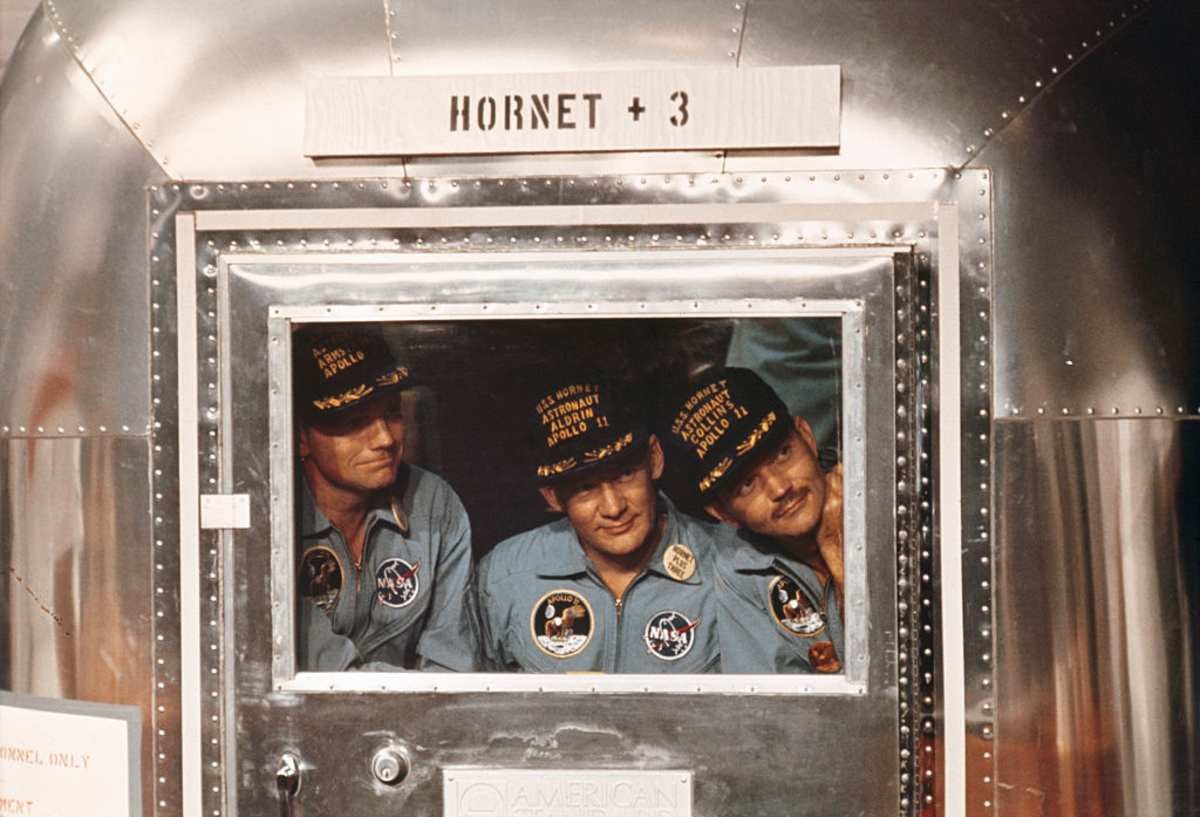
Image Source: Apollo 11 astronauts (L to R): Buzz Aldrin, Lunar Module Pilot; Neil Armstrong, Lunar Module Cmdr.; and Michael Collins, Command Module Pilot
Going forward in his journey alone while Aldrin and Armstrong had each other for support surely felt upsetting. It is one of the striking feelings that Collins noted in his book “Carrying the Fire: An Astronaut’s Journey.” The astronaut, in his note, mentioned, “I am alone now, truly alone, and isolated from any known life. I am it. If a count were taken, the score would be three billion plus two over on the other side of the Moon, and one plus God knows what on this side.” Sharing more about his experience and everything that surrounded it, Collins revealed that the journey was challenging but worth it, per 60 Minutes Australia.
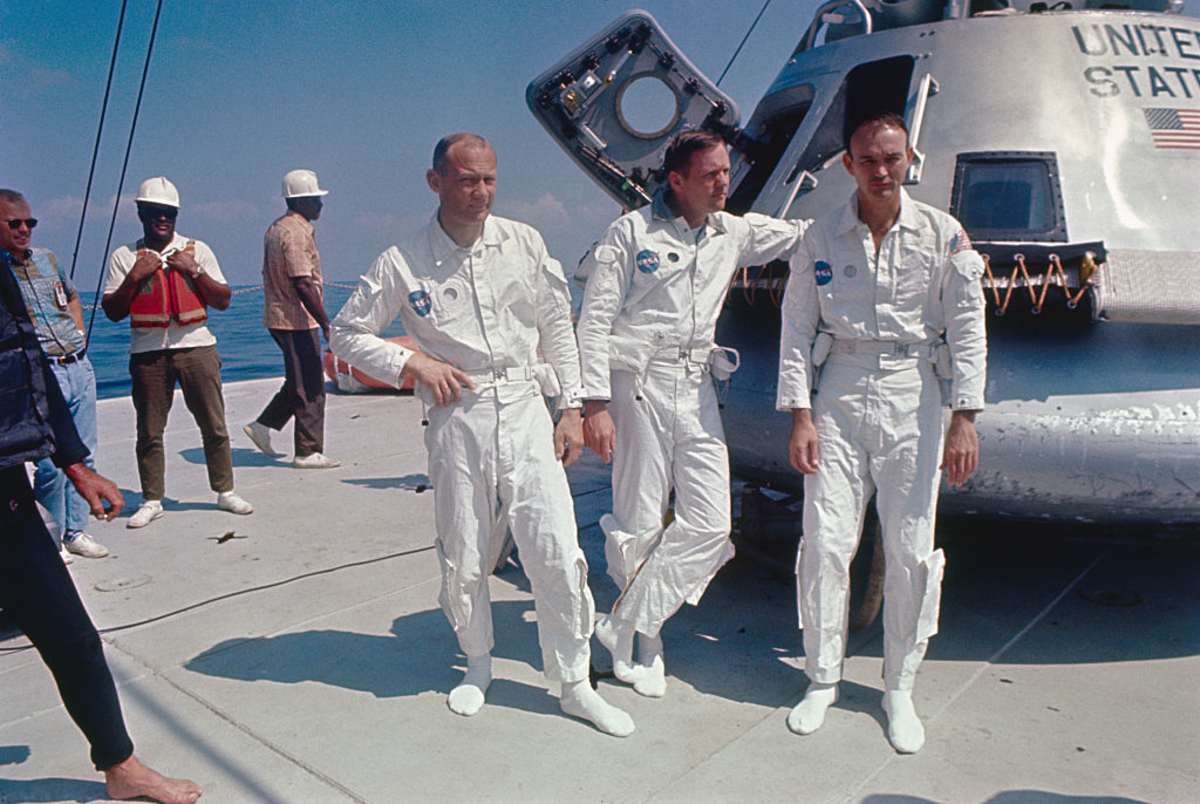
Image Source: Apollo 11 astronauts the day after their successful splashdown in the Pacific. LTR: Neil Armstrong, Buzz Aldrin, and Michael Collins.
“Did I have the best seat on Apollo 11? No. Was I happy with the seat I did have? Yes – I was, and to be any small part of that suited me very, very well. And, besides, I was their ticket home – they couldn’t get home without me,” he mentioned. Though Collins wasn’t given the fame and popularity as Armstrong and Aldrin, he still was a crucial part of the mission and that is a win he’s always acknowledged. It was also mentioned that while the duo impressively collected rocks and explored the moon, Collins was refined to the command module.
Image Source: American former astronaut and test pilot Michael Collins on March 16, 2019 in New York City. (Photo by Omar Vega/Getty Images)
Collins experienced 47 minutes of pitch-black darkness and loneliness. He remarked, “The food was terrible, but I enjoyed my time behind the moon, it’s a more rugged place and not a very comfortable place,” he explained. Collins expressed his blissful love for his planet Earth despite being on the moon and how its “center stage” and magnificent “blue” caught his eye even more from space. “The moon was impressive but even after being so close to it, it was nothing compared to our home planet,” he added.
Assistant Professor of Ecology & Evolutionary Biology, University of Tennessee; Smithsonian Institution
If you’ve ever felt overwhelmed by menu options at a restaurant, cereal varieties at the grocery store or potential partners while scrolling through dating apps, you’ve experienced choice overload.
People aren’t the only ones to have trouble making decisions when confronted with many options simultaneously. In our new study published in the journal iScience, my colleagues and I found similar effects of choice overload in female gray tree frogs when faced with too many calls from males looking for love.
Scientists have observed many species having similar decision-making problems when experiencing choice overload. But we know little about how these kinds of cognitive constraints affect animals in natural settings.
Indecision on the frog dating scene
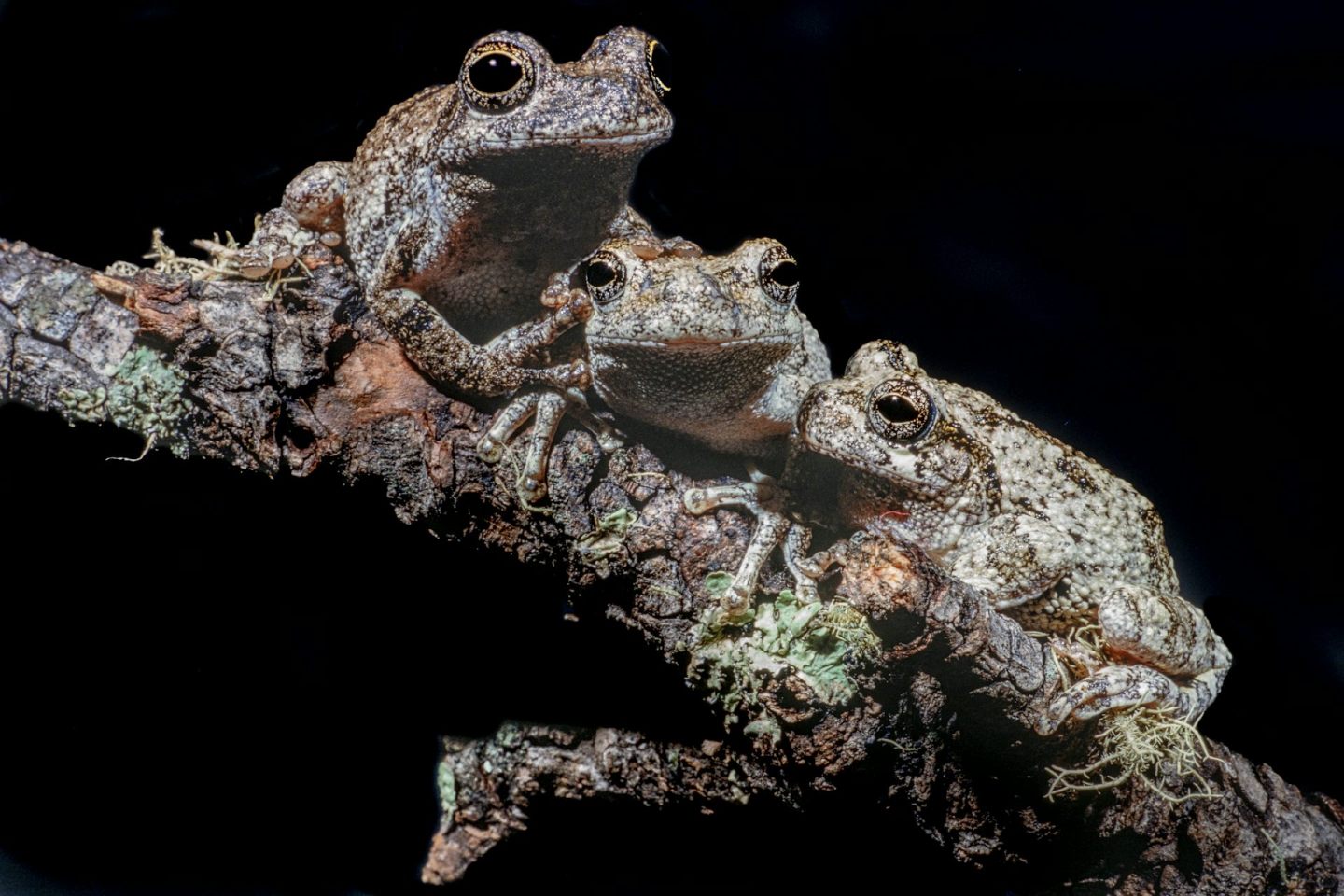
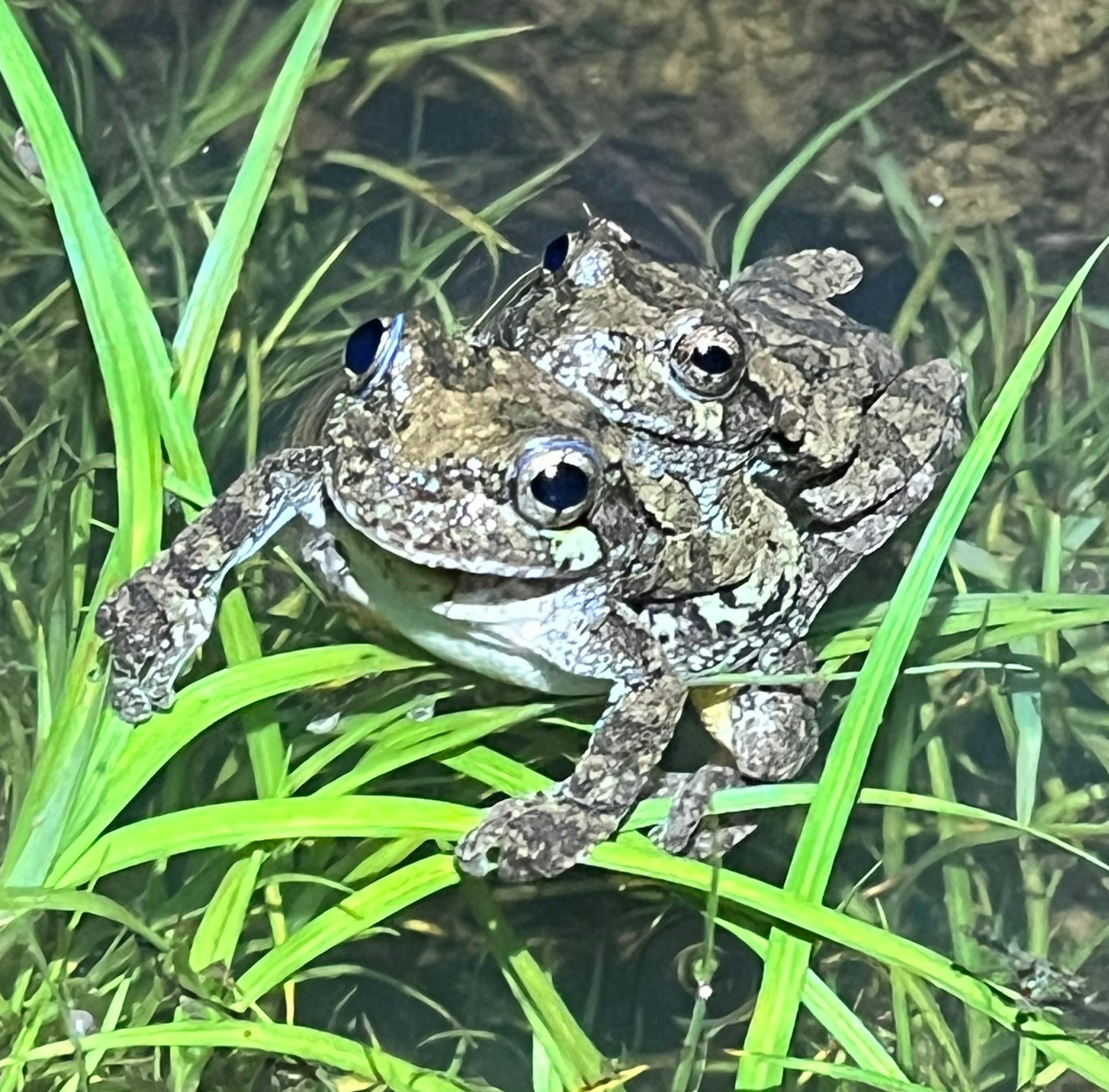
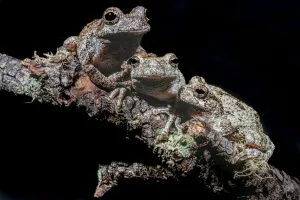
The gray tree frogs we focused on live in wooded areas near sources of water in North America. During the mating season, males gather in choruses and call to attract mates. Females pick mates based on several call attributes, including call length. Longer calls are more attractive.
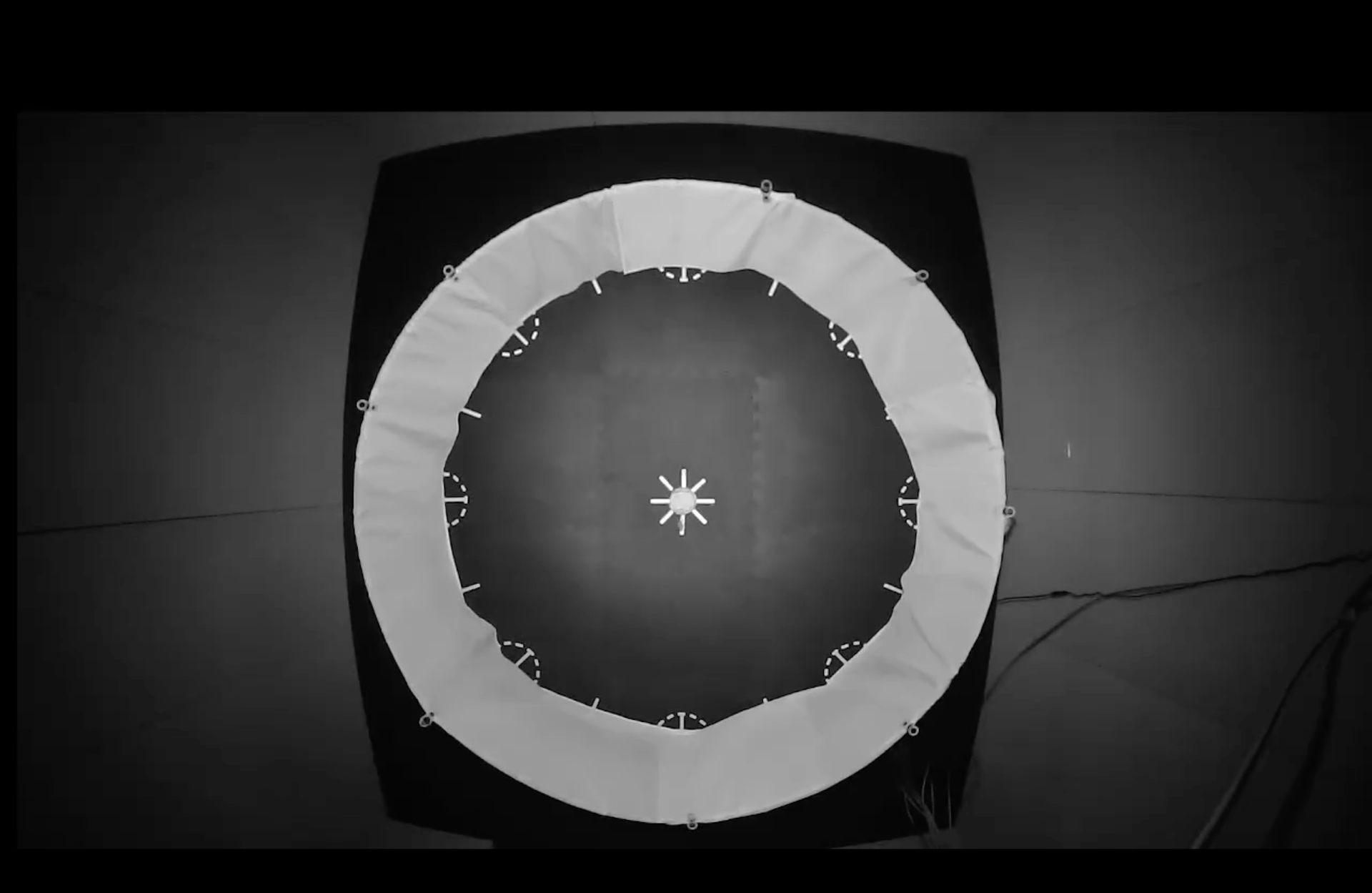
For our experiment, we captured 60 female tree frogs from breeding choruses in East Tennessee and brought them into our lab. Then we played recorded mating calls for each female, giving her a choice between one long, attractive “target” call and one, three or seven shorter, less attractive “distractor” calls.
In the wild, a tree frog breeding chorus can include dozens or even hundreds of calling males. In our lab setup, the calls played sequentially, so they never overlapped.
Females would hop toward the speaker broadcasting the call she preferred. As the number of distractor calls increased, females got worse at picking the attractive call, took longer to decide, and were more likely to defer choosing within the 10-minute window altogether.
View from above of the frog test arena, where researchers would place a female frog in the center and then play various male mating calls from speakers placed around the perimeter.Jessie Tanner
Cognitive confusion
Because we eliminated call overlap entirely, we know this decline wasn’t due to what researchers call energetic masking. That’s the well-documented problem of overlapping signals impairing an individual’s ability to detect and discriminate a signal from noise.
Biologists have long known that female preferences can weaken in choruses and have usually assumed the explanation is energetic masking: Too many overlapping signals create a challenge for the frogs’ perceptual systems. In other words, they can’t detect or discriminate individual calls.
Instead, our study shows that a female’s own cognitive limits can make it hard for her to select her preferred mate. The challenge comes from too many males to choose from, not being unable to hear the males clearly.
When females can’t make the optimal choice
Call traits are linked to offspring fitness in gray tree frogs. If females have trouble recognizing the calls they prefer in a real chorus, they aren’t able to pick the mates with the best genes to pass on. They may end up mating with males they would otherwise reject. These males with less going for them then pass on their less desirable traits, which could have negative consequences for the offspring.
Females’ cognitive overload could be an opportunity for males who might not otherwise get a chance to mate.Jessie Tanner
Our finding raises the possibility that males could exploit this cognitive limitation in females. Less attractive males might do better by joining bigger choruses, where the sheer number of competitors makes it harder for females to discriminate against them. Conversely, more attractive males may benefit from calling in smaller groups, or even in isolation. My colleagues and I hope to investigate some of these possibilities soon.
More options, more opportunities … to a point
We ran our experiments in a simplified lab arena, which allowed us to isolate choice overload from other effects. We removed the real-world clutter of overlapping calls, vegetation and risk from predators that females would face in an actual pond. We also limited female choice to eight calls, though frogs may hear even more in natural settings.
The next step in this research is figuring out how much choice overload matters in a real chorus, where calls do overlap, and where sensory processing and cognitive processing are probably both at play. We’re particularly interested in seeing whether, in natural choruses, decisions do take longer and females really end up mating with less preferable males.
Choice overload isn’t unique to frogs, or even to mate choice. Researchers have seen bees choosing among flowers, ants comparing potential nest sites and mosquitoes selecting egg-laying sites all making worse decisions as the number of competing options increases. And recent research on field crickets and tree frogs has found similar patterns in these animals as they pick mates based on their calls.
Together, this growing body of evidence suggests that cognitive constraints are a general feature of animal decision-making.
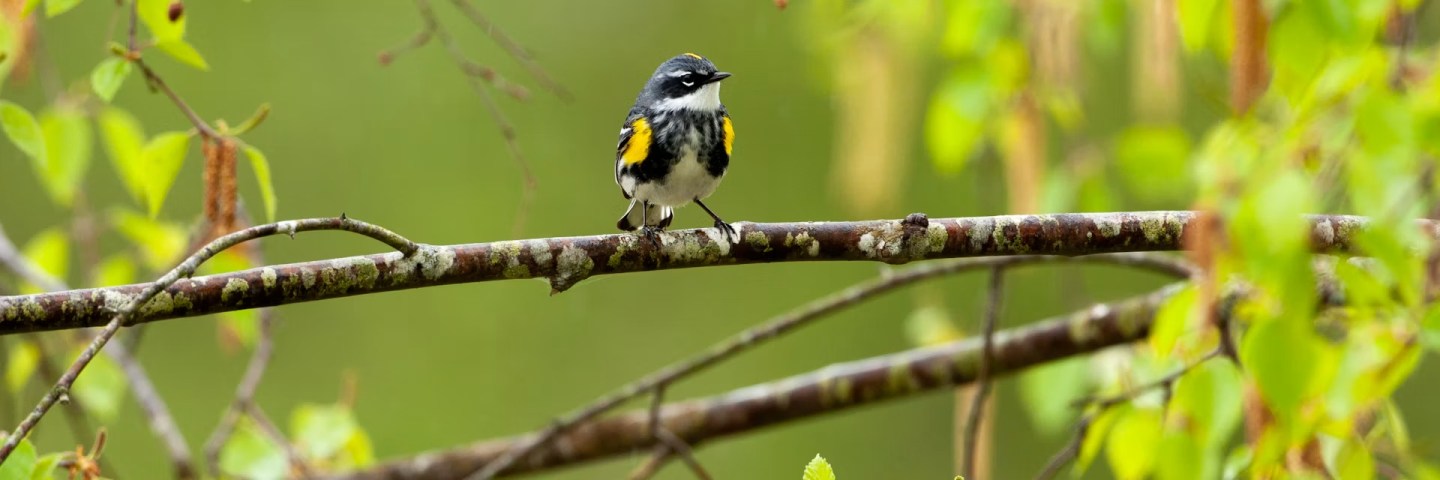
Squinting through my binoculars, I scanned the dense branches of a black spruce, trying my best to catch a glimpse of the thin legs of a small black, white and yellow songbird. I was on the hunt for a yellow-rumped warbler – a bird affectionately called “butter-butt” by bird-watchers after the distinctive buttery yellow patch of feathers above its tail.
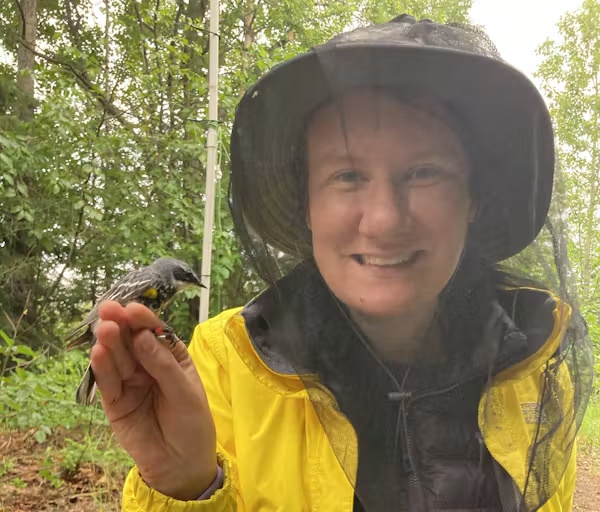
Stephanie Szarmach holds a yellow-rumped warbler that was banded as part of a study.Johanna Beam
Once I spotted a flash of red on one of the bird’s legs, I knew that this individual was special – in fact, it was one that I already knew well. That’s because I had placed identifying bands on it the previous year as part of my Ph.D. research, and it was carrying a very important piece of new technology.
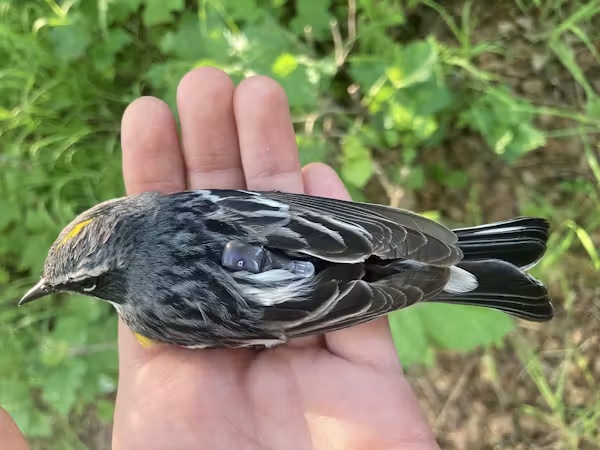
I played the high pitched “warble” of its song through a speaker placed below a mist net of fine, nearly invisible mesh. Thinking another male had intruded on his territory, the bird quickly descended. My tactic worked – he got caught in the net. As I gently removed him, I breathed a sigh of relief as I saw the Tic Tac-size device sitting on his back.
A yellow-rumped warbler wears a multisensor geolocator backpack.Stephanie Szarmach
Over the past year, this warbler carried a multisensor geolocator backpack throughout his migratory journey, recording the long trek from his breeding grounds in Anchorage, Alaska, to a yet unknown winter refuge and back again. Working with my Ph.D. adviser, evolutionary biologist David Toews, I deployed dozens of these cutting-edge tags to illuminate the migratory journeys of these high-latitude breeding warblers at a scale not previously possible for small birds.
Now, after a year of waiting, I finally had the data in hand.
How can scientists track small birds?
Researchers began tracking the movements of migrating birds in the late 1960s using radio telemetry, a technique that requires tagged birds to be physically followed with receiver equipment, sometimes aided by a small aircraft.
Then, as GPS became more widely available in the early 2000s, satellite tags let researchers accurately track birds remotely. However, GPS transmitters are hefty – even just the battery that powers them is too heavy to be carried by the majority of small migratory songbirds, which often weigh less than a spoonful of sugar.
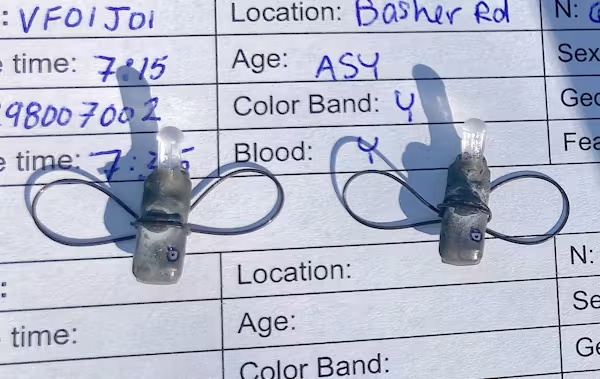
To address this problem, researchers developed ingenious little light-level geolocators. These miniature tags minimize weight by containing only a tiny battery, clock, computer chip and light sensor. They store data internally rather than transmitting it – hence my need to recapture tagged birds a year later. Researchers infer a bird’s locations from the timing of sunrise and sunset, which vary predictably across the globe and throughout the year.
Light-level geolocators have openednew windows into themigrations of small birds, but they also have limitations: Their estimated locations can err by hundreds of miles, and this uncertainty becomes impractically high around the equinoxes, when day length is the same worldwide.
Each harness loop of the multisensor geolocator goes around one of the bird’s legs and the tag sits on the bird’s lower back.Stephanie Szarmach
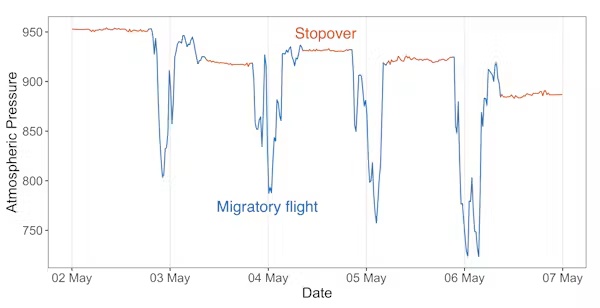
More recently, researchers developed a newer method of geolocation that uses atmospheric pressure to circumvent these limitations. When a bird ascends during a migratory flight, a barometric geolocator records a steep drop in air pressure, capturing the timing of departure and arrival for every stop along a bird’s migration route. In between flights, the pressure the tag records reflects the elevation at the bird’s position.
Knowing the bird’s elevation helps to narrow down possible locations, which researchers can then refine further by comparing the change in pressure over time recorded by the tag to global weather data using the computer program GeoPressureR. The unique pattern of rises and falls in pressure acts as a kind of pressure fingerprint for a specific location. Including light and wind data in the model of the bird’s movements can increase precision even more.
Atmospheric pressure data collected from a multisensor geolocator carried by a yellow-rumped warbler over five days in spring. When the bird is stationary, such as when resting at a stopover site, the measured pressure remains steady. During migratory flights, when the bird ascends into the sky, the pressure drops and fluctuates dramatically.Stephanie Szarmach
New tech answers an old question
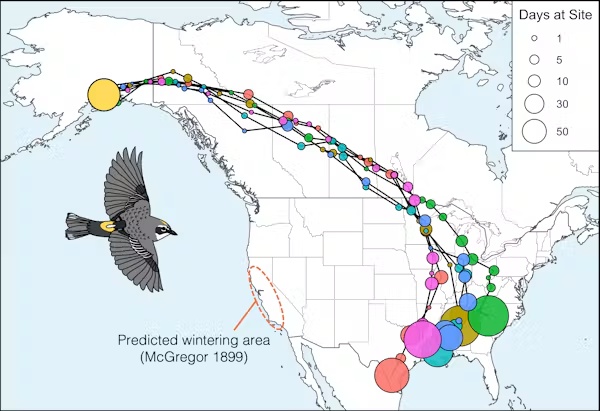
We used these new multisensor backpacks to study the migration patterns of myrtle warblers, the northern subspecies of yellow-rumped warbler, which breed across North America’s boreal forest. Myrtle warblers in the northeast are known to winter along the Atlantic and Gulf coasts, but where northwestern populations migrate has been more of a mystery. In 1899, ornithologist Richard McGregor observed myrtle warblers wintering in coastal California, and hypothesized that these birds might breed in Alaska and British Columbia.
Using these new tags allowed us to test whether warblers breeding in Anchorage, Alaska, actually followed the shortest migration route to winter in California. To our surprise – and probably to McGregor’s as well, if he were still alive – we found that all the birds we tracked traveled east across the boreal forest of Canada before shifting south to the Gulf Coast – certainly not the Pacific Coast route we expected.
All told, this 6,800-mile (10,900-kilometer) round-trip journey was much longer than we anticipated for a species commonly considered a short- or medium-distance migrant.
Researchers tracked the routes six myrtle warblers flew on their fall migration southeast from Anchorage, Alaska.Figure by Stephanie Szarmach. Warbler illustration by Emily Griffith
Why take such a circuitous route?
The long, seemingly suboptimal route taken by our Alaskan myrtle warblers is actually mirrored by some other songbird species tracked from northwestern North America, including blackpoll warblers and Swainson’sthrushes.
Part of this pattern may relate back to the glaciations that isolated ancient populations of birds millions of years ago. The thinking goes that as these glaciers spread, they squashed the ranges of formerly northern species into the south. Then, as the glaciers slowly receded, the forests gradually reexpanded.
As more land opened up, birds moved farther north and west into that habitat. Each season some birds went a little farther as the forest available in their northern breeding grounds expanded. For migratory species such as myrtle warblers, the farther north and west their breeding range expanded, the longer the migration to their southern wintering ground became.
Scientists think migration routes are genetically encoded. The birds’ genes may have traced this expansion front, like Hansel and Gretel putting down breadcrumbs as they journeyed deeper and deeper into the forest. Today’s migration routes still trace that incrementally expanded path, even though the glaciers that shaped the original boundaries are long gone.
We’re still not sure exactly where the California-wintering myrtle warblers spotted in the 1800s are breeding. We suspect that a small proportion of the Anchorage-breeding birds may migrate to California, but that most of them travel from more distant, unstudied regions of Alaska or Yukon. Future research, potentially tagging myrtle warblers directly on the California wintering grounds, will shed more light on this population and why certain individuals follow a different migration route.
Barometric geolocation provides new data
Today, this new geolocation approach improves scientists’ ability to study the migrations of small birds and supports more effective conservation actions across the course of the entire year. More precise location estimates help researchers identify key stopover and wintering sites in need of protection and better understand the threats birds face throughout their journeys. These geolocators also reveal the altitude of migratory flights, which is important for understanding the risk of birds colliding with buildings or wind turbines.
Because these new tags capture pressure data for every migratory flight, they’re especially valuable for studying migration timing. Researchers have combined data from over 50 bird species to understand at what time of day or night different birds migrate. Now, as a postdoctoral researcher at the Smithsonian Migratory Bird Center, I am integrating multisensor geolocator data with satellite imagery to investigate how arrival and departure decisions throughout a bird’s migratory journey relate to seasonal changes in plant growth.
Scientists have now tracked dozens of bird species with multisensor geolocators, and that number increases every year. Each mapped migratory journey improves our understanding of how small birds migrate, what factors shape their movements and how best to protect them.
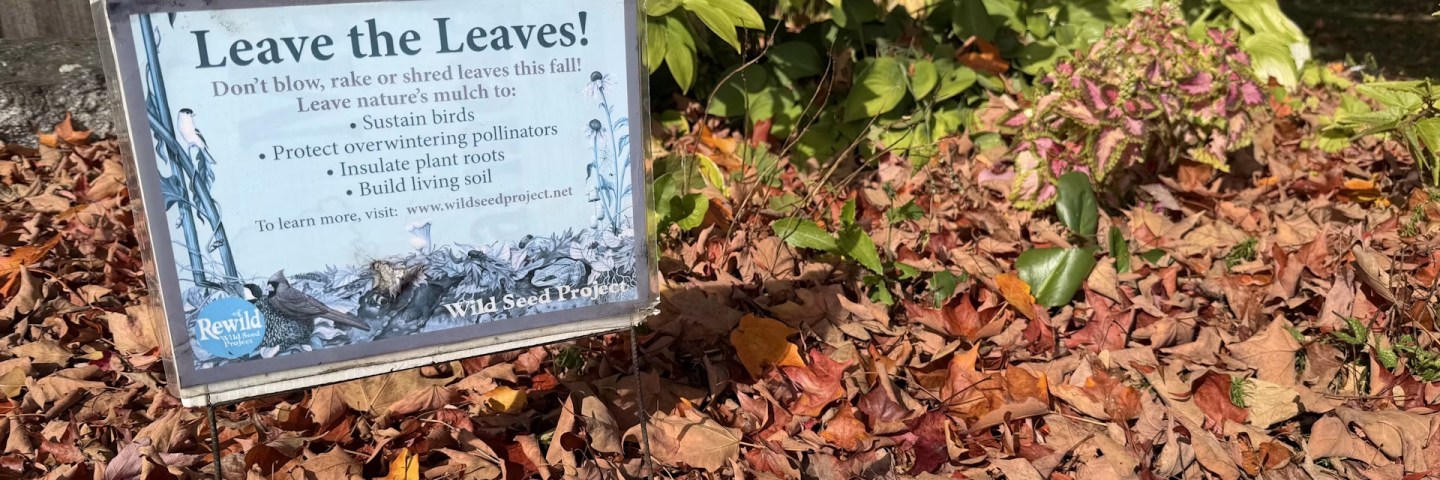
Fallen leaves shelter next spring’s pollinators and feed the soil. A horticulture specialist explains how to make room for both nature and a tidy yard.
Assistant Extension Professor of Horticulture and Ornamental Horticulture Specialist, University of Maine
Every autumn, homeowners and gardeners tend to engage in a familiar ritual. As trees shed their leaves, people drag out rakes, leaf blowers and lawn bags to strip their yards bare before winter arrives.
It is a tidy habit rooted in aesthetics, but ecologically, clearing away fallen leaves strips the very foundation of local ecosystems. Far from dead debris requiring disposal, this fallen foliage forms a dynamic layer and a biological interface that drives nutrient cycling and is essential for soil health and the environment, including biodiversity.
Here is the science behind why the first step of fall yard care could simply be doing less – along with practical ways to keep your yard looking neat while nourishing the ecosystem underneath.
A winter sanctuary for native pollinators
To understand why leaf litter matters, it helps to look closely at what happens beneath the surface as temperatures drop. While honeybees pass the winter in sheltered hives, the vast majority of North America’s native pollinators do not.
Raking, bagging and blowing leaves away destroys this crucial winter nursery.
Many other insects depend on the shelter of fallen foliage:
Moths and butterflies: Species such as the luna moth (Actias luna) and the Isabella tiger moth, whose caterpillar form is the woolly bear, spin cocoons or roll themselves directly inside fallen leaves. Raking or shredding those leaves destroys the next generation.
Fireflies: Adult fireflies lay eggs in moist soil, and their larvae spend up to two years hunting for their food, soft-bodied invertebrates under damp leaf litter. Raking deprives them of moisture and habitat.
In addition to being a shelter, fallen leaves are an evolved biological mechanism for nutrient cycling. Trees actively pump vital elements, including calcium, magnesium, potassium and nitrogen from deep subsoils, into their foliage. When autumn comes and leaves drop, these stored nutrients are deposited back into the soil.
Leaving leaves in place triggers fundamental ecological benefits.
A thick blanket of intact leaves acts as a natural insulator for the ground. Air pockets trapped between overlapping leaves moderate the soil temperature and slow heat transfer, buffering against the freeze-thaw cycles that heave soil, fracture plant roots and expose beneficial soil microbes to lethal cold. The intact leaf blanket also conserves moisture and prevents soil from drying out over the winter.
Adopting a softer approach to fall cleanup does not mean your yard has to look completely untamed or that you have to risk killing your lawn. Here is how to balance suburban expectations with sound ecological science:
Move, don’t remove: Move the leaves from lawns and sidewalks, rake them into garden beds, around ornamental plants or into vegetable plots, using manual rakes or electric leaf blowers. Aim for a layer 2 to 3 inches deep. Leaving leaves in grassy areas can help ticks hide there too, but if you move the leaves to garden beds or spots that are used less, the ticks will be less likely to nest in the grass. Establishing pollinator zones on the property can also help reduce tick populations.
Skip the leaf shredder: Mowing over leaves with a mulching mower is better than sending them to landfills, but high-velocity mower blades still kill overwintering insect eggs, chrysalises and larvae. Leave leaves intact wherever possible in plant beds.
Wait for spring to clean up: Do not cut back hollow-stemmed perennials or clear leaf beds during early, warm spring days. Wait until temperatures consistently stay above 50 degrees Fahrenheit (10 degrees Celsius) so overwintering bees and butterflies have time to safely emerge.
When you bag leaves for disposal and then buy commercial wood mulch or synthetic fertilizers in the spring, you are effectively paying a price for what your trees provided for free. By rethinking the cultural expectation of pristine autumn lawns, it’s possible to transform silent landscapes into vibrant habitat sanctuaries, simply by stepping back and allowing natural processes to take over.