
Even armed with a Ph.D. in developmental psychology, I remember the frightening first moments after bringing my newborn daughter home from the hospital. I wasn’t sure what to do – and not at all confident that I was capable of being the parent she needed me to be. Every little decision about feeding and caring for this helpless human seemed momentous and fraught with anxiety. What if I don’t make it a full year of breastfeeding? Should I turn off the TV whenever she is in the room to avoid passive screen exposure? Is it OK for her to enter full-time day care at five months?

Popular press accounts of parenting and child development research were not particularly helpful, either. Even though as a scientist I knew better, the way the research was translated for the public lacked nuance and easily penetrated my vulnerable state of mind. I fretted that my daughter’s formula consumption would result in lower IQ. I worried that if I was too tired to read to her one evening before bed, she would never learn to read. And, since she’s started elementary school, I have slipped numerous times and called her “smart” instead of more appropriately praising her effort, as so many articles advise.

My personal experiences as a parent are in part why I study the experiences of other parents. In my New Parents Project, an ongoing longitudinal study of nearly 200 dual-earner couples who welcomed their first children in 2008-2009, I have tried to measure this “parenting perfectionism” – that is, holding oneself to impossibly high standards for parenting, and, perhaps even more important, believing that others hold you to impossibly high standards for parenting.

Pressure to be perfect

Mothers – even those in dual-earner families – not only bear the brunt of parenting responsibilities, but also experience the strongest pressure to be perfect parents.

In the latter half of the 20th century, at the same time mothers entered the workforce in greater numbers, norms for mothering evolved toward an “intensive mothering” ideal. This norm dictates that mothers’ parenting should be time-consuming, emotionally absorbing and guided by expert advice. This pressure is particularly intense for middle-class mothers, who may practice a childrearing style called concerted cultivation, an approach identified by Annette Laureau in the early 2000s. This style focuses on deliberately providing children with experiences and activities that will help them develop their intellectual and social skills.

Middle-class parents, especially those toward the upper end of the socioeconomic spectrum, have the human capital resources – time and money – to practice concerted cultivation and do so to ensure their children’s future success.

Social media = stress.
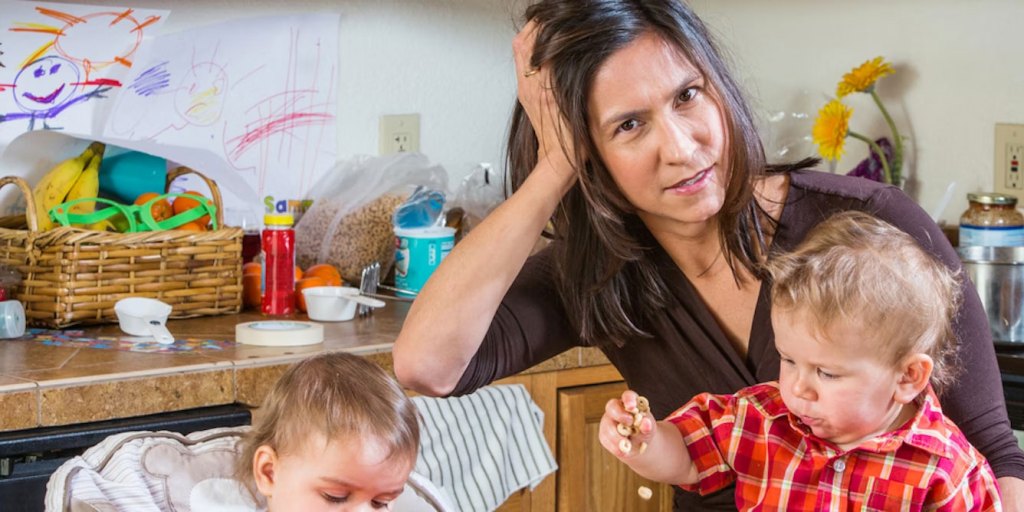
Social media = stress. Mother with laptop via www.shutterstock.com.

Striving for perfection can harm parenting

The quest to be a “perfect” mother may actually harm a mother’s parenting. In my lab’s research on new parents, we found that mothers showed less confidence in their parenting abilities when they were more worried about what other people thought about their parenting.

The popularity of social media has likely exacerbated this phenomenon because parents can look at what other parents are doing – even in ostensibly private moments – and judge themselves in comparison. In fact, recent research has linked greater Facebook use to feelings of depression due to the way individuals tend to compare themselves to others. In my own research, when we asked new parents about their Facebook use, mothers who were more frequent visitors to the site and who managed their accounts more frequently reported higher levels of parenting stress.

The irony is that in seeking perfection in parenting, parents are less likely to actually parent effectively. Worrying about what others think of their parenting saps mothers’ confidence, leading them to experience parenting as less enjoyable and more stressful. When faced with inevitable parenting challenges, mothers with lower confidence and more parenting stress give up more quickly.

Put the laptop down and stop worrying.
Put the laptop down and stop worrying. Mother and child via www.shutterstock.com.

So what does a ‘good’ parent look like?

There may be disagreement among child development experts about issues such as screen time or sleep routines, but there is striking agreement about the key elements of “good” parenting, even if consensus is less likely to make headlines than the latest parenting controversy.

Good parenting has a lot more to do with the “how” than the “what.” Good parents are those who are sensitive to their children’s needs, and “in tune” with their children such that they are able to adjust their parenting as children develop and desire greater independence. Children thrive when their parents are consistent, warm, hold high expectations for children’s behavior, explain the reasons behind their rules and negotiate when appropriate.

Greater stress about parenting further depletes parents’ psychological resources, which may in turn affect their ability to adapt to the changing needs of their children and regulate their own emotions and behavior when parenting their children.

In other words, when you lack confidence and feel chronically stressed about parenting, it is hard to be sensitive, warm and consistent. You are more likely to yell when you intended to explain calmly to your toddler to stop banging her plate on the table for the millionth time. You may find yourself mentally “checked out” when your baby looks at you and gurgles or when your tween wants to tell you all about the latest Disney channel sitcom. You may give in to your preschooler’s endless demands for more Pokemon cards.

So this Mother’s Day, don’t sweat the small stuff. Remember that the big picture is what is important. Be aware that what other mothers post on Facebook may not represent the reality of their parenting experiences any more than it represents yours. View the latest sensational headline about parenting with a skeptical eye. Today – and every day – the best gift you can give yourself and your children may be permission to be imperfect.

This article originally appeared on The Conversation. You can read it here.

  • New York passes SAFE for Kids Act to protect children from social media addiction
    Photo credit: CanvaNew York hopes to improve children's usage of social media.
    ,

    New York passes SAFE for Kids Act to protect children from social media addiction

    New York hopes to curb social media’s access to young kids.

    “Kids and their phones these days” has been a complaint ever since the first cellular phone was introduced. However, there has been growing concern over the amount of time children spend not just on their phone, but scrolling through social media. The state of New York is hoping to address this issue through their finalized SAFE for Kids Act.

    The Stop Addictive Feeds Exploitation (SAFE) for Kids Act aims to hold social media companies more accountable for the time children spend on their apps. It also seeks to limit kids’ exposure to their algorithms. Officials believe that constantly scrolling through social media feeds negatively impacts a child’s sleep and overall mental health.

    What are the restrictions?

    The new law requires social media companies to obey the following rules:

    • No addictive, algorithm-driven feeds for minors without explicit parental consent
    • No notifications about addictive feeds to minors between midnight and 6 a.m. without parental consent
    • No tricky website designs, called “dark patterns,” that manipulate or nag parents into giving consent
    • No degrading service, increasing prices, or retaliating against minors who don’t have parental consent for addictive feeds
    • Use certified age-assurance methods to distinguish minors from adults
    • Immediately encrypt data collected for age verification, use it only for age determination, and delete it immediately after use
    • Hire an accredited, independent third party to test and certify age-assurance methods every year

    Social media companies have until January 25, 2027 to comply. Failure to do so may result in a $5,000 fine per violation.

    New York Governor Kathy Holchul and Attorney General Letitia James made a public announcement to social media companies affected by this law, specifically Instagram, TikTok, YouTube, Facebook, Snapchat, and X.

    “What changes is the default,” said James. “Platforms cannot automatically place minors into feeds engineered to maximize engagement. This is not a question of privacy, this is a question about content. This is not about the First Amendment. Again, this is about protecting children.”

    “Social media companies, you’re now on notice,” said Holchul. 

    Critics and the issues that still need to be addressed

    There are some criticisms of this law, particularly around age-verification. The law offers the option of using government-issued identification along with another proof of identity (such as an email address or an uploaded photo of the user). This complicates things aside from First Amendment rights. It would require millions of adults to share private information to scroll and post on social media after hours. While the law states that the companies must encrypt and erase such information upon age verification, that’s not guaranteed. This is especially concerning as social media companies already deal with users’ private information being hacked and leaked.

    Governor Holchul still believes this criticism isn’t a governmental issue but a business one that social media companies need to resolve.

    “Social media companies tell me, ‘We have no way of knowing whether someone’s under 18 or not,’” Holchul claimed. “I said, ‘You’re smart people. Use [artificial intelligence] to figure it out. Ask how you do it.’ And you’re not supposed to allow underage gaming anyhow—sports betting—so you must have some metric. So don’t tell me you can’t do it. Figure it out.”

    How parents can help their children on social media

    Regardless of where people stand on this law, experts offer some advice for parents who feel social media is negatively affecting their children. They recommend setting personal screen time limits for their children and taking advantage of built-in parental controls on their platforms. Parents limiting their own social media use can also influence how kids use it, too.

    Psychologists also recommend talking with children about how and why they use social media. Specifically, discuss the fantasy that social media showcases from influencers versus the real lives of those people. Talk about why there was a social media post (advertisement, sharing joy, hoping for engagement, etc.) along with the content of it. Asking how they feel after watching or reading content in their feed helps as well. Such practices, along with limiting exposure, creates trust between child and parent without judgement.

    Though how we fix screen and social media addiction is still largely in the air, take comfort knowing brilliant minds are exploring methods to address the growing issue.

  • Oakland officials open ‘play-lending library’ to offset the cost of equipment for youth sports
    Photo credit: CanvaOakland is providing free sports equipment so kids can just play.

    Playing sports has been a common childhood experience that has led to lifelong hobbies, exercise, and forming lasting friendships. However, it’s gotten less common in recent years. Sign-up fees, uniforms, and many other expenses have led to most low-income families unable to afford to have their kids play. With that in mind, the city of Oakland, California believes they found a solution: a library. No, not the book kind.

    Officials are letting children check out soccer balls, footballs, yoga mats, tennis equipment, and other sports supplies at their newly opened Park Play Lending Library. Kids can also check out board games and card games like UNO as well. Using this library located at the Larry E. Reid Sports Center is absolutely free to anyone.

    “Every child deserves the opportunity to play, learn, and thrive,” said Maribel Lopez, City of Oakland Recreation Supervisor said in a press release. “The Park Play Lending Library is an investment in our community and a step toward ensuring that all Oakland residents have access to the recreational resources they enjoy, regardless of their financial situation.”

    Encouraging kids to socialize, play, and grow

    Oakland residents and officials welcome this sports equipment library for a myriad of reasons. It’s not just to allow access to certain activities, but to help address the lack of third places and areas for children to play overall. Whether it’s through sports or games, face-to-face playing helps children’s social skills, combats loneliness, and expands the immediate world around them.

    “We’re aware that sports can lead to social mobility,” Lopez told SFGate. “When kids are familiar with golf, tennis, soccer, and other, you know, games or sports that are more socially mobile, then they have access to different communities, different friend groups, different neighborhoods, and we want to be a vehicle for that. We want kids to be able to speak each other’s language and connect through sports.”

    Expenses in youth sports has become a federal government issue

    Children being priced out of local sports programs due to expense has been a rising issue across the country. It’s to the point where the federal government is looking to intervene.

    Representatives of both Congress and the Senate have introduced the Let Kids Play Act bill to their peers. The purpose of the bill, according to Congressman Pat Ryan and Senator Chris Murphy among other authors, is to limit or outright remove private equity firms’ involvement in youth sports. The representatives state that the cost to participate in youth sports rose by 46% over the last five years. They also claim that many families are paying more than $5,000 per kid so they can play. By removing private equity involvement, the hope is to cut down on junk fees, stay-to-play schemes, data mining, and other issues that are making it harder for families to allow their kids to participate in local organized youth sports.

    While the federal government debates on this issue, a local library or park allowing children access to sports equipment to have pick-up games may be a great first step to renew what was a common American childhood experience.

  • After a field trip for 100 low-income kids was canceled, police officer rents a whole movie theater for them
    Photo credit: CanvaOfficer Reavie opened his wallet and his heart to help kids enjoy a movie in the theater.

    Arizona middle schoolers that were a part of Greenway Middle School’s “After the Bell” summer program were really looking forward to their field trip. However, funding for their end-of-summer field trip fell through. That’s when School Resource Officer Sean Reavie stepped in.

    Using money from his own pocket, Reavie rented out all 144 seats at a local movie theater so the kids could enjoy a screening of Toy Story 5. The movie, the snacks, the sodas, all on him. For many of the kids, it would be their first time ever watching a movie in a theater.

    An act of generosity, an act of community

    After being contacted by the program director, Katie Jenkins, Reavie didn’t hesitate to spend his own money on the theater rental and treats. The cost added up to nearly $2,000.

    “If they needed more, I would have given them more,” Reavie said to 12 News. “You can’t break a promise to a child. They come here knowing that there’s a reward at the end.”

    Reavie understood that this trip to the movies was more than it seemed. Greenway Middle School is a Title one school, meaning that the majority of the students came from low-income households. Several of the students qualified for free breakfast and lunch daily from the school. Going to a movie theater was a luxury that most of the kids’ families cannot afford.

    “Some of them live in a different life than most of us would comprehend, and they just haven’t seen a lot of good things with their own eyes,” said Reavie. “Their family doesn’t have a car. Parents, if they have two, work multiple jobs. Half of them have never been to a water park before. They’ve never been across the other side of the highway before.”

    Prior to the movie, after Officer Reavie explained that he would take care of all expenses, he made just one request to the kids.

    “As you get older in life, help other people, as a payback to me,” he told them. “Would you do that? That’s all I ask of you.”

    Reavie is a superhero (well, dresses like one sometimes)

    This isn’t the first time Reavie helped fund a great experience for local school kids. In 2025, he spent more than $3,000 to take students to Hurricane Harbor water park.

    Reavie spent the early years of his police career as a child crimes detective for six years before taking on his current role. Along with that, Reavie started a superhero-inspired charity that supports teen youth programs and child advocacy.

    “It dawned on me that little kids who were scared responded to superheroes,” he said. “So I started a superhero-based foundation called Put On The Cape: A Foundation For Hope.”

    The Put On The Cape organization has officers and “causeplayers” dress up as superheroes to host events to raise money for children’s causes. Their homepage reads,”Our mission fills the toy closet, food pantry, and clothing wardrobe to the children and their families. This takes the burden off the center so they can focus on healing the child from the trauma they’ve endured.”

    With or without a cape, Officer Reavie is setting a great example of giving in order to plant hope in a generation that could grow up to give back tenfold.

Explore More Society Stories

Public Good

Oakland officials open ‘play-lending library’ to offset the cost of equipment for youth sports

Public Good

After a field trip for 100 low-income kids was canceled, police officer rents a whole movie theater for them

Work

In 1947, a car executive said lazy people are just smart. 79 years later, science backs him up.

Society

America’s friendliest states