Lily Altavena for Chalkbeat

Chromebooks are scattered all around the classrooms of Floyd M. Jewett Elementary School in Mesick, Michigan.

Towers of them are teetering atop bookshelves. They’re piled up in corners of classrooms. They’ve even cropped up in one classroom’s dish rack.

But there’s one place you won’t find them: in students’ hands.

Last month, Mesick Consolidated Schools banned digital devices in its elementary school of about 250 students. The decision wasn’t an agonizing one. The ban came at astonishing speed, almost overnight, after a conversation between Mesick Superintendent Jack Ledford and Jewett Principal Elizabeth Kastl.

Ledford recalled asking Kastl how much teachers read to students in grades K-5. And he recalled her reply: “That has almost vanished.” Kastl’s response helped seal the deal.

Teachers had to have students off devices by the end of the week. School printers went into overdrive. Then the district went cold turkey, Chalkbeat reports.

Mesick’s midyear ban underscores a growing backlash against screen time in school, a battle that parents and educators are taking up nationwide. Fears about digital devices’ impact on learning have fused with ongoing concerns about a multiyear decline in national test scores that predates the pandemic. A stream of government hearings, op-eds, and social media posts has only magnified the sense of urgency.

Ledford and Kastl think the need for drastic action is warranted. About 18% of Jewett’s third graders scored proficient or higher on the state reading test last spring — half the state average and half what it was a decade ago.

In Mesick, a rural town known for its annual mushroom festival, 66% of students are economically disadvantaged. The district has done all the “normal things” to improve persistently low reading scores, Ledford said, like switching to an evidence-based curriculum. But he now views screens as an adversary to learning.

“When we’re competing with screens, we’re going to lose,” he said.

But blanket bans at school won’t affect kids’ screen time at home. And research about how screens affect students is inconclusive, although it does suggest that teachers should exercise caution. Not everyone is convinced that a complete prohibition on screens is the best way to help struggling learners.

Morgan Polikoff, a professor at the University of Southern California’s education school, said he understands the appeal of an all-or-nothing approach, but it avoids the reality that some technology does have a place in the classroom.

“It’s like taking a hammer when you need a scalpel,” he said. “A lot of the use of technology in schools is not appropriate. But rather than sitting down and thinking about, ‘What are appropriate uses of technology in classrooms serving young children,’ this approach would just obliterate all uses.”

Lawmakers in at least 16 states have proposed bills that would limit education technology in public schools, following a spate of state-approved cellphone bans for schools.

Ledford said he’s been influenced by writers like Jonathan Haidt, a New York University psychologist who is a prominent supporter of school cellphone restrictions and has more recently criticized the proliferation of tech in education. At the same time, a mid-March visit to Mesick’s classrooms shows the ed-tech backlash can be somewhat divorced from the reality of a school day.

For some at Jewett, the school day doesn’t feel that different. A few teachers said they hadn’t used screens very much. For others, the routine has changed substantially — and for the better, they believe, with students more engaged and learning less “gamified.”

When asked about her school’s screen ban, a girl wearing a “Lilo & Stitch” shirt in an intervention class for struggling readers just growls. But her intervention instructor, Julie Kearns, said the students are simply adjusting.

The student “definitely seems like she enjoys” reading a book more than wearing headphones and peering at a screen, Kearns said.

As Kearns watched, the girl bounced in her chair while reading a passage about soccer.

Why a school banished screens and bought books

In classrooms, a screen ban for students doesn’t mean all screens are gone.

One Friday in March, third-grade teacher Hanna Brechenser presented images on the Smartboard — the modern-day version of a projector — of Indigenous communities to help foster a classroom conversation. Teachers also still have desktop computers.

This is Brechenser’s fifth year teaching and her second in Mesick. She said she had already tried to limit screentime in the classroom before the ban. Her class mostly used their Chromebooks a few times a week for a math fluency exercise and digital library access.

Both Kastl and Ledford believe teachers may not have been aware of just how much of a crutch screens were in some classes.

Mesick went 1:1 with students and devices around 2015, Ledford said, when schools were under pressure by tech evangelists and politicians to add more technology so students would be prepared for jobs in the digital world. That was the argument at the time, anyway.

“I had started in my walkthroughs just noting, what are the students doing?” Kastl said. “More often than not, I was coming back with a list of students on devices. So the perception of how your day actually looks versus what we were seeing on the data piece are probably disjointed.”

Mesick’s new policy has been helpful for Brechenser because she doesn’t have to police students so much on their devices.

Brechenser’s students have physical books from the “Diary of a Wimpy Kid” series, “Twilight,” and “The Baby-sitter’s Club” stacked on their desks. That’s the other side of Mesick’s new screen ban: The district has set aside $30,000 for physical books to bulk up classroom libraries, along with beanbag chairs so students will have special spaces to read.

Students adjusted quickly, Brechenser said. “At first, they were kind of shocked, but we just have a lot more silent reading time.”

Still, it’s hard to miss signs of the amount of time students spend on screens outside of school: A “K-Pop Demon Hunters” water bottle. A Sonic the Hedgehog T-shirt. The image of a snake Brechenser put on the Smartboard prompted one student, Alaric, to say it reminded him of one in a “Harry Potter” movie he watched before school.

Alaric, who’s 9, said he doesn’t really miss his Chromebook, though he’d been reading something on the online library he can no longer access thanks to the screen ban.

He gets plenty of screen time at home playing Xbox, he said. He hasn’t thought about cutting down on that.

“Because I love Fortnite,” he giggled.

In reading instruction, students get a digital detox

Where Mesick’s screen-free initiative feels most significant is in the 30-minute small group sessions for Jewett’s struggling readers.

Mesick uses Read Naturally, an intervention program designed to build fluency. Before the screen ban, students would read a short passage aloud from a computer, then listen through bulky headphones as the software read the passage back to them. Students would then read the passage to themselves three times before reading it aloud again. Paraprofessionals would go from student to student to assist.

Now, Sharon Brown and other literacy aides sit with their students and work through printed reading passages together. Brown can more easily point out when students stop tracking words with their fingers. She can help sound out words. Though she closely helped students on the computers, she finds herself more thrilled to engage this way, to see progress up close. This is why she is in education.

“It’s our passion to sit and watch these kids go from struggling readers to eventually testing out … and not having to come back and see us,” she said.

With one second grader, she has an engaging conversation about the reading’s topic, mammals, before they begin. He asks if a shark is a mammal and if it evolved from dinosaurs.

Brown can see improvements, particularly with some of her first graders. Students are reading more words per minute, based on data they track every session.

“They are so engaged,” she said. “It’s been amazing to us that we’re going, ‘Wow, this has actually been so fun.’”

The way students use technology is an important consideration when thinking about limiting or banning screens, said Dr. Joanna Parga-Belinkie, a pediatrician and a spokesperson for the American Academy of Pediatrics.

Educators and parents should focus on using technology in ways that are interactive and in group settings, instead of having students looking at screens on their own.

“When you are focusing on screens and technology and the use of them you might be not focusing on human relationships,” she said.

Samantha Daniels, the mother of three children in the district, said that last school year, some of the software the district used would offer students games if they read enough.

She’d watch her son, a first grader, try to rush through the reading to get to the game. He struggled a lot with reading, becoming easily frustrated like many young readers.

“It would be about getting to that, versus us enjoying what we’re reading and what we’re learning,” she said.

But now, he’s starting to pick up books on his own.

There are some difficult practical adjustments to a midyear change as big as this one. A lot of classroom resources are based online or have some kind of online component. Kastl asked teachers to stop using those components.

Ultimately, every hour of screen time represented “an hour that we’ve lost direct teacher instruction where they’re actually getting that responsive feedback from a human,” Kastl said.

“That’s when you move the needle.”

Will eliminating screens help young readers?

Ledford doesn’t think he’s taking a gamble by eliminating screens at the elementary school, even though students take state assessments on computers. He thinks it’s much easier to teach students technology skills than social skills.

In fact, he already has plans to scale back technology use by older students, too.

Ledford moved rapidly to ban screens, but he expects improvements in reading scores to happen more gradually. Still, he’s laser-focused on the connection between screens and literacy. To him, education should unlock the ability to read for students, because it affects everything else the district is trying to do for kids.

“We’re failing in literacy,” Ledford said. “If we fail in literacy, how can we effectively teach science or social studies or any of the subjects?”

Getting rid of screens will not solve all of Mesick’s problems, like a leaky roof or clapped-out HVAC system. Kastl has also observed a deeper potential issue: a drop-off in parent involvement after schools closed during the pandemic.

In many cases, Kastl said, “Parents don’t know what actually happens inside their kids’ school building.”

But parents know about the screen ban, and they’re excited about it. They’ve said they’ve noticed their children take more interest in reading.

Kids are also socializing more during free periods, a bright spot for the principal’s son, Sam Kastl.

Sam, 11, used to spend indoor recess — a regular occurrence in northern Michigan’s severe winters — playing games on his Chromebook. He thought the screen ban was “going to be annoying.” Classmates who used to ask him if his mom would declare a snow day started asking him to convince her to bring back devices.

But those requests went away pretty quickly. Students now play board games together instead of games on their Chromebooks alone — just like how reading intervention students now study in a group instead of solo. Another student taught Sam how to draw. Everyone’s adjusted pretty well, from his vantage point.

On the day Chalkbeat visited their school, Sam and his fifth-grade classmates built a fort out of blankets during class time. Then they climbed inside to read with flashlights.

This story was produced by Chalkbeat and reviewed and distributed by Stacker.
  • I research play – and here’s why recess is much more important than just a fun break
    The amount of time children spend at recess varies considerably. Dan Kenyon/Stock Photos via Getty Images

    Professor of Education, Harvard University

    School recess has long been considered a standard part of children’s education in the United States. But it’s more than just a fun break from sitting at a desk.

    Daily recess is necessary for supporting young children and adolescents’ learning, as well as their physical and mental health.

    It’s so important that the American Academy of Pediatrics notes that reducing the amount of time set aside for playing, running and exploring in order to fit in more academic work could actually be counterproductive.

    But in recent decades many schools have cut back on recess, which many states do not require.

    As a scholar who researches childhood play, I have studied and witnessed the benefits of play in children’s lives, including the significant social, emotional and cognitive impacts it has on students’ overall well-being.

    A group of children play and hang from monkey bars in a yard.
    Most states do not require that schools have recess every day. John P Kelly/Stone via Getty Images

    The many benefits of recess

    The U.S. Centers for Disease Control and Prevention recommends that children and adolescents get at least 60 minutes of physical activity per day.

    The CDC also defines recess as a “regularly scheduled period in the school day for physical activity and play that is monitored by trained staff or volunteers.”

    Recess can look different across various schools – while some kids play outside on play structures or in grassy fields, others might play indoors during inclement weather.

    Research also shows, for example, that children living in lower-income communities have fewer opportunities than their peers in higher-income communities to play outside.

    Unlike physical education classes or participating in organized sports, recess gives students the time to engage in physical activity and interact with their peers however they like.

    This time for unstructured play can offer much-needed relief from the mental focus that students need to maintain throughout the school day. It can also support their cognitive development and overall emotional and physical well-being.

    Research also consistently shows that giving children breaks each day for recess has immense benefits for their mental health and the executive functioning skills that support academic achievement.

    This includes benefits for students’ focus and creativity, as well as their memory and executive function.

    Some states, but not all, require recess

    Most states do not mandate that schools have recess every day or spell out a minimum amount of time students must spend moving their bodies.

    A 2025 report from the Johns Hopkins Bloomberg School of Public Health found that 11 states have laws addressing school recess. This ranges from Arizona’s requirement for 40 minutes of daily recess to Georgia, Indiana and Kentucky all requiring recess, but with no minimum duration.

    Massachusetts is one of the nearly 40 states without any laws regarding recess time. A recent article in The Boston Globe reported schools in Cambridge having 25 minutes of recess, while other schools across the state had only 15 minutes per day.

    Overall, there has been an uptick in state legislation aimed at preserving mandated daily school recess time, thanks partly to a new parent-led advocacy group called Say Yes to Recess. This group is pushing for schools across the country to provide a minimum of 60 minutes of protected school recess time each day.

    Started by three Tennessee moms, Say Yes to Recess has also helped advocate for Tennessee legislation that increased the state’s mandated daily school recess time from 15 to 40 minutes in July 2025.

    A moving target

    During the 2001-02 school year, elementary school students from 349 school districts spent on average 36.8 minutes per day at recess.

    By 2025, the CDC found that students were spending 27 minutes on average in recess each day.

    It’s also hard to track how much physical activity students get at school because public school districts and private schools often do not record and report this information.

    While the benefits of recess are not just isolated to young children, a 2026 international study showed that the amount of daily recess time across U.S. schools declines from a mean of 39.3 minutes per day for 6- to 7-year-olds to 24.5 minutes per day for 12- to 18-year-olds.

    Making way for play

    I conducted research at the Project Zero research center for creativity, ethics and the arts at Harvard University and highlighted the significance of play and the arts within urban public schools.

    This 2024 study showed how play with materials supports both children’s and teachers’ creative learning. As someone who designs and studies children’s play spaces, I worry about what could happen if schools continue to reduce school recess because of staffing issues, budget cuts or prioritization of students’ preparation for high-stakes tests focused solely on literacy and numeracy.

    Research shows that this trend of not prioritizing recess could have significant effects on children’s and adolescents’ mental health, cognitive development and overall enjoyment of school.

    A group of teenagers are seen sitting together on benches outside of a red brick building.
    Older children and teenagers also benefit from getting regular breaks from the academics of a school day. Maskot/Digital Vision via Getty Images

    School are well intended but under strain

    The decline in time for recess comes at a moment when many schools and districts are under increasing pressure as a result of declining student enrollment, pressure to meet state learning standards and budget cuts.

    For some schools, reduced staffing and the costs of maintaining outdoor play equipment to meet safety requirements have made it difficult to offer school recess.

    For other schools, an assumption that more time for instruction equals a higher-quality education may be driving decisions to minimize or eliminate time for unstructured play.

    Another factor that influences recess is when schools deny students recess time as a form of punishment – a policy that some scholars and educators are trying to block through legislation.

    As childhood health, social and cognitive research demonstrates, the amount of time school recess is given matters in children’s development as whole human beings. I believe it is up to schools, districts and parents to advocate for and ensure children’s right to protected school recess time every day.

    This article originally appeared on The Conversation. You can read it here.

  • Remote work made these colleagues more open with each other, not less
    Many employees see having the freedom to work from home as a benefit. DigitalVision/Getty Images
    ,

    Remote work made these colleagues more open with each other, not less

    A study following one company’s shift out of the office found an unexpected benefit in the glimpses colleagues got of one another’s lives.

    Assistant Professor of Management and Organizations, Boston College

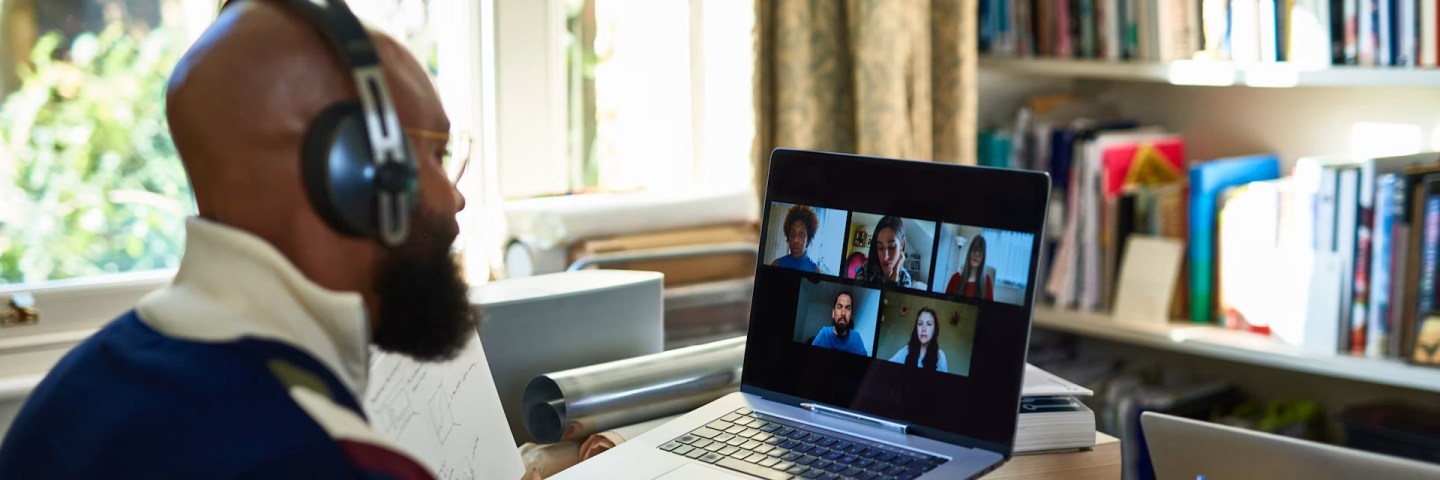
    If you need to participate in video meetings for work, you’ve probably experienced more than one disruption, whether it’s kids darting around or home renovation noise.

    Meetings that use Zoom and similar software are a fixture of remote work, which surged during the COVID-19 pandemic and remains prevalent. As of August 2026, 36% of American workers in management, professional and related occupations did at least some of their work from home, according to the U.S. Bureau of Labor Statistics.

    I’m a management scholar who studies how, when and where people work. Before the pandemic began, I was studying a professional services company. That made it possible for me to follow how its staff transitioned from primarily working in person to mostly remote through 2024, which gave me more insight into how remote work has changed people’s lives.

    The study included 275 interviews and about 330 hours of observation. Most people in the groups I followed ended up working from home four or five days a week, joining meetings by video. What I found was the opposite of what I expected.

    Learning more about colleagues

    Rather than pulling colleagues apart, remote work brought them closer and made them more willing to be open with one another. The findings were peer-reviewed and will be published in an upcoming issue of the management journal Organization Science.

    Before the shift to remote work, I assumed – consistent with the predictions made by many prominent researchers of workplace relationships – that moving people out of the office would break down social connections. But I was wrong.

    In the office, before the shift to remote work, I found that people primarily viewed one another as work colleagues rather than whole people. Reflecting this relationship, workers sometimes said they felt uncomfortable sharing with one another aspects of their lives that might limit their ability to do work.

    For example, one worker I interviewed, Patrick, was afraid to tell his colleagues he could not work late one night because he was helping his mom. All the names I’m mentioning are pseudonyms to protect the privacy of the people involved and their employer.

    “Even though you didn’t sleep last night, you’re expected to show up and smile and be fine,” said Tamara, an exhausted parent with two young children, when she was still commuting regularly to the office.

    Surprisingly, people told me that they learned a lot more about one another once they began to work remotely instead of being together in an office. During my research, I heard about children yelling in the background and pets wandering in front of cameras. A spouse arriving home from work stopped to say hello on screen.

    In team chat channels, people posted photos of their children, their animals and the meals they had cooked.

    “Everyone has noises in the background, or they have something going on or whatever, and so we get to know each other quicker and on a deeper level than we would otherwise,” Tamara told me. In some cases, this increased sense of closeness happened to people who had known each other for years prior to switching to remote work.

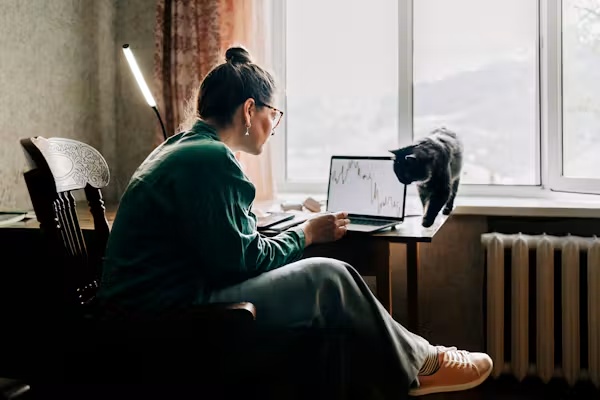
    Woman works from home with a candlestick chart on laptop and cat on her desk.
    When you’re a remote employee, you may get more quality time with your pets. Moment/Getty Images

    Growing psychological safety

    Psychological safety is the sense that you can take an interpersonal risk at work, such as admitting a mistake, asking for help or raising a problem, without being judged negatively.

    Decades of management research tie psychological safety to important outcomes for both workers and organizations, including learning, creativity and speaking up.

    Over time, working remotely seemed to improve psychological safety for many of these co-workers.

    People became “less afraid to talk about the interface of their personal and professional lives,” Leah said. Before, she added, no one would have volunteered that a breakup was affecting them and that they needed a day off to decompress.

    After the company went remote, people told me they felt more comfortable sharing their own challenges as they tried to juggle their work and the challenges they faced in their personal lives.

    Supporting work and nonwork activities

    And as people started sharing these problems with their co-workers, they also told me they felt as if they could then better support one another.

    When one worker’s father fell ill, his colleague, Brooke, took over the tasks the two had planned to do together.

    “I’m just going to take this over for you right now,” Brooke told him. “And then, whenever you can, come back and swoop in.”

    The colleague was able to dedicate time to caring for his father. And importantly, because help circulated this way, Brooke said, a task no longer “stopped dead in the water” when one person could not get to it.

    This deeper collaboration did not seem to come at the expense of getting tasks completed. As an employee I’m calling Charles explained, having co-workers sharing details about their personal lives has “helped us to work more effectively in a lot of ways.”

    Crucially, these improvements were experienced by people with many different living arrangements – young and old, those with and without kids or partners, men and women. And these benefits were positively reinforcing. For instance, sharing more meant learning more about others, which further reinforced psychological safety.

    My findings suggest that remote work can be a benefit that employers and employees may overlook. Rather than treating time out of the office as a cost to social connection among employees, they might treat it as a way to grow personally and get to know co-workers better.

    This article originally appeared on The Conversation. You can read it here.

  • Dog parks are an antidote to the isolation and divisions that social media can fuel
    A group of regulars meet at the Harford dog park in Radnor, Pa. Kevin B. Johnson, CC BY-NC-SA
    ,

    Dog parks are an antidote to the isolation and divisions that social media can fuel

    A shared patch of grass can bring people together across differences, one ordinary encounter at a time.

    Professor of Pediatrics, Biomedical Informatics and Science Communication, University of Pennsylvania

    The case against social media has gotten so well rehearsed that most people can easily merge it into ordinary conversation: It makes people lonely. It sorts them into camps. It hands them a room full of people who already agree with them and calls that a community.

    I’ve given this speech myself, with feeling, having read my phone notifications in the host’s powder room 11 minutes earlier.

    I am a pediatrician, health communicator and researcher at the University of Pennsylvania, and diagnosing is in my blood. Two decades of research, a surgeon general’s advisory on loneliness and Meta’s recent settlement of up to US$17 billion, pending court approval, all describe the same thing. What we recite are the symptoms. The more interesting question is what these symptoms diagnose.

    Simply put, our dependency on social media creates a deficiency disease. It’s not something toxic we’re ingesting; it is something our lives online have stopped us from receiving.

    I figured out that cost while standing in a field in Harford Park with a dog leash wrapped around my ankles.

    A man in sunglasses sits on park bench with small white dog standing on his lap
    The author sits with Chaz, his soft-coated Wheaten Terrier. Kevin B. Johnson, CC BY-NC-SA

    A corner bar without the alcohol

    Harford Park in Wayne, Pennsylvania, is 30 acres of rolling grass and mature trees the township designated for off-leash dogs in 1997.

    I go most afternoons. So do the same 15 or 20 people, which is how I ended up tangled in someone else’s very long leash on a Tuesday, concentrating hard enough on my own feet that I stopped talking and just listened.

    Two conversations were running at once. In one, a regular who is having a rough year was getting gently harassed about the weight he’d put on against his doctors’ advice — first by me, then by three other people who piled on uninvited. In the other, someone was arguing about Dr. Anthony Fauci, and the regulars chimed in on both sides. Gossip, complaints and dogs greeting dogs became the backdrop.

    As I worked to free my ankles, it clicked: The dog park, like the local knitting club or the Saturday pickleball group, does the job a corner bar used to do. There are regulars and running jokes, and once a person is known, a spot in the conversation is reserved for them.

    What makes these places work is that a shared focus on one small part of a life opens into something fuller. Regulars may share a taste in dog breeds or beer, but they are not colleagues, political soulmates or relatives. They differ on favorite restaurants, income, age, religion, values and beliefs. They are together because a golden retriever and a nervous rescue mutt need to run in the morning, and there is a field nearby.

    Chance encounters can increase empathy

    Sociologist Ray Oldenburg called places like this third places and defined them as “public places that host the regular, voluntary, informal, and happily anticipated gatherings of individuals beyond the realms of home and work.” Oldenburg noted the erosion of places that once manufactured accidental encounters, such as main streets, neighborhood pubs, general stores and even the drugstore soda fountain.

    Off-leash parks have been among the fastest-growing amenities in U.S. city park systems for two decades. A study in the Journal of Urban Affairs found dog park users reported higher social capital and neighborhood cohesion.

    The park is not a utopia. It’s a corner bar without the booze.

    Thomas Pettigrew and Linda Tropp’s meta-analysis of 515 studies provides the best evidence for why these accidental connections matter. They found that contact between groups generally reduces prejudice, but the quality and circumstances of that contact matter. The more interesting finding came later, when they tested how it works: The effect runs less through learning facts about the other group than through reduced anxiety, more empathy and more perspective.

    That is exactly what the park does. The man I disagree with about nearly everything hasn’t changed his mind, and neither have I. What changed is that his politics is now maybe the eighth thing I know and appreciate about him, behind his dog’s bad hip, his sense of humor, the awful year he had and his love of what Philadelphians call “wooder ice.”

    That shift, from opinions to a person, is why “just show people the other side” keeps failing online. When sociologist Christopher Bail and colleagues paid Republicans and Democrats to follow bots representing the views of the opposite party on Twitter, the Republicans came out substantially more conservative than they went in. Democrats shifted slightly left, though not significantly. Exposure to opinions is not the same thing as exposure to a person. The feed gave people arguments. The corner bar gives people other people.

    Two men sit on park bench with a dog behind them
    A dog park is a third place, like the neighborhood corner bar, where dogs instead of alcohol serve as a social lubricant. Kevin B. Johnson

    Making room for tolerance and trust

    If the places people gather shape their health, as a growing body of research suggests, then the shift from communities set by geography to communities assembled by algorithm creates a slow burn of intolerance and mistrust.

    There are now decades of research on social media and anxiety, and a growing body of experimental work about what algorithmic curation does to what people see. Almost none of it treats the encounter pattern as a health exposure.

    Social platforms have mastered what German American sociologist Herbert Gans called selective homogeneity. They sort people by interests, identities, tastes and grievances, then make it easy to stay among people who feel familiar.

    They are like virtual Levittowns – the postwar suburban developments outside Philadelphia, among other places in the Northeast, where thousands of identical houses went up on farmland and were sold to buyers screened by price. In early Levittowns, covenants barred Black families outright.

    In 1958, Gans moved into a Levittown in New Jersey and stayed two years doing research on its residents. He found that although original settlers and those who moved in by choice were happy, their rebellious teenage offspring, who had the fewest places to go and the least to do in those communities, were not.

    This was an early, real-life sorting of the type that algorithms would make all too common 60 years later.

    By contrast, repeated, low-stakes, in-person contact like the interactions between regulars at a dog park or corner bar creates room for tolerance and trust. People come back. They notice an absence. They share attention around a task, a place or a dog, rather than around presenting themselves or defending a position.

    Deficiency diseases are easily treatable. Nothing has to be taken away; instead, something has to be given back.

    Read more of our stories about Philadelphia and Pennsylvania, or sign up for our Philadelphia newsletter on Substack.

    This article originally appeared on The Conversation. You can read it here.

Explore More Society Stories

Society

I research play – and here’s why recess is much more important than just a fun break

Society

Remote work made these colleagues more open with each other, not less

Society

Dog parks are an antidote to the isolation and divisions that social media can fuel

Society

Gen Z communicates differently in the workplace, but older colleagues can still decode them