
A new study of the elderly is showing that regular social activity could offset or delay dementia by five years. The study published by the Alzheimer’s Association is showing that just playing games with folks regularly, volunteering, or just having a regular lunch with a friend can significantly slow down cognitive decline.

The researchers at Rush University studied 1,923 dementia-free seniors with an average age of 80 that underwent annual neurological evaluations. Cognitive function was measured through 21 different tests that assessed various types of memory along with perception of speed and visuospatial ability. Out of the total, 545 developed dementia and 695 developed some form of mild cognitive impairment within the five-year analysis. Accounting for other factors and adjustments for analysis, such as age, physical fitness, and other health issues, the results found that the participants that participated in social activities regularly had a slower mental decline or little to no decline at all.

Social activity was measured based on a survey that asked participants if they had participated in six common social activities for their age group within the previous year. Some of the options listed included playing bingo, going out on a day or overnight trip, volunteering, visits with friends or relatives, and going out to restaurants. To put it in percentages, the findings showed that a more regular social life pointed at a 38% reduction in dementia risk and a 21% reduction in mild cognitive impairment compared to those who were the least socially active.
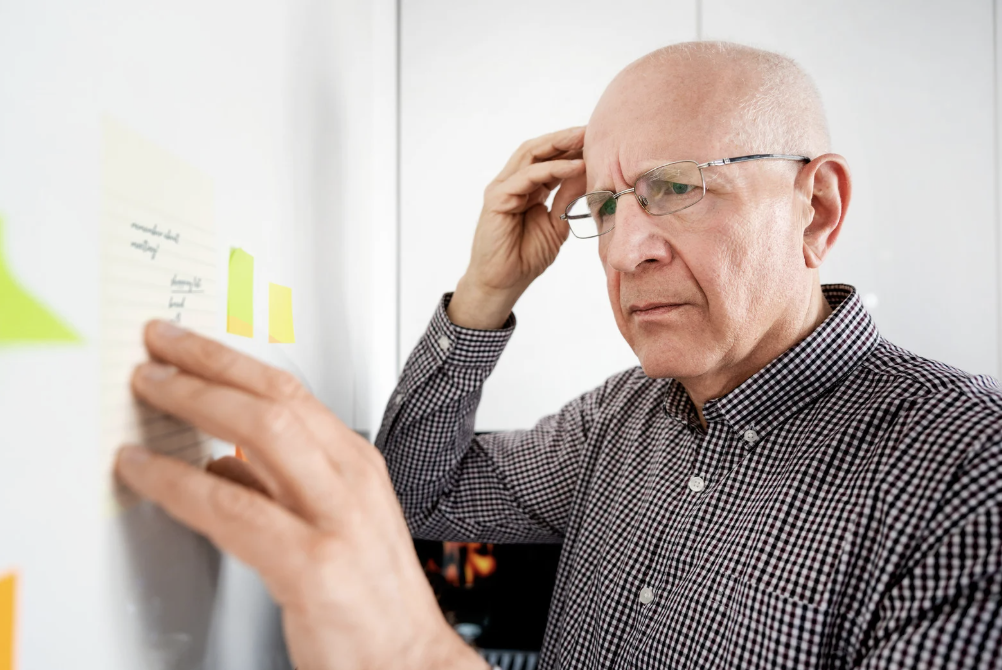
Older man forgetting something.
Being socially active reduces or slows cognitive decline. Photo credit: Canva

So being active as an older person is not only good for the soul, but good for the brain, too. But that’s when we hit a bit of a problem. As you get older, it becomes more and more difficult to develop new friendships and maintain them. In fact, according to the current U.S. surgeon general, we have a loneliness epidemic in this country that impacts the mental and physical health throughout all age ranges, but particularly people in their 30s and 40s. In other words, younger adults should learn how to be more social now in order for themselves to have the skills to develop friendships as they get older, too. For their brains’ sake, and for overall quality of life.

So how do you make friends as an adult? Well, the answer is that there are many ways you can make new friends and maintain treasured relationships, which is a wonderful problem. The problem is that there are so many options, but finding the right ones for you could take a lot of trial and error.
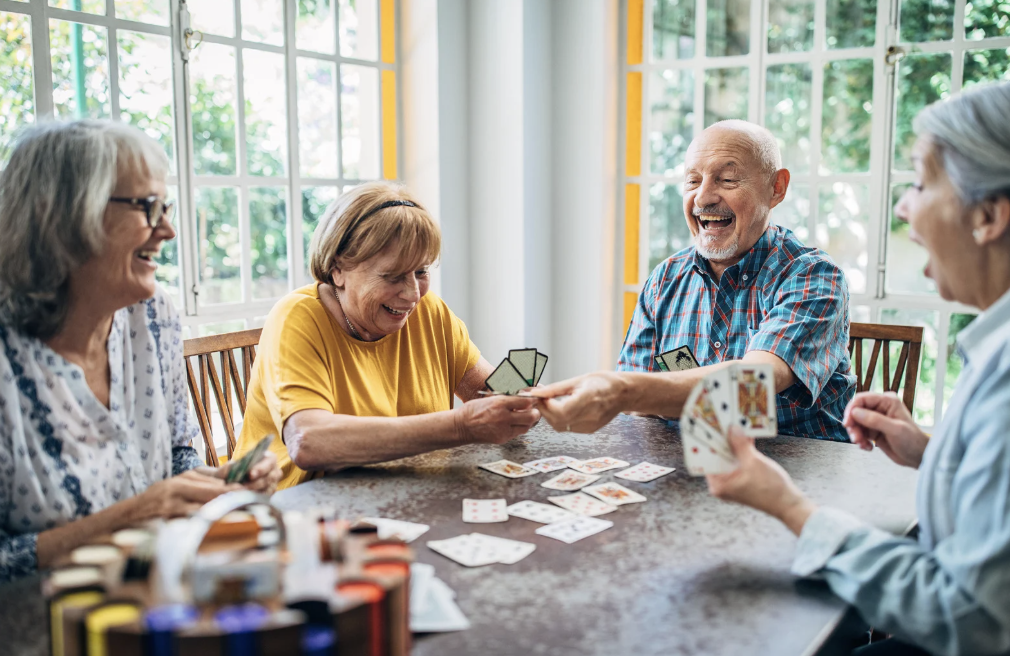
Older people playing poker.
A weekly card game could help keep your brain healthy. Photo credit: Canva

A simple internet search of “how to make friends as an adult” can lead you to many different options that you might be frozen by choice. To winnow it all down, think of the activities you like or causes you care about. Check online to see if there are any local clubs or a Facebook group/social media group to follow regarding events in your area to meet people. Volunteer your time to a cause or public service you support, like a pet shelter or a food pantry. If you just want to go to an Applebee’s, there might just be a group of folks who also just meet up at Applebee’s once a month. If not, maybe you can start one!

If you do have a set of friends or activities, make it a point to show up regularly for them. Have a set appointment to grab lunch with your buddies twice a month. Go to the weekly club meeting, even if you don’t feel like going. Cementing social activities in your routine can help you keep and maintain those connections while providing brain health. If you’re not in the mood, you can even tell yourself “it’s for my brain health” to help motivate you to attend. If not, again, there are other people, clubs, and activities to choose from that might be a better fit for you.

People dining out
Having a regular dinner date out with friends can do wonders for your mental health. Photo credit: Canva

Do your best to keep that dinner date, pick-up game, or movie night. It’ll not only be fun, but it might also keep your brain strong.

  • Scientists ‘bottle the sun’ with a liquid battery that stores sunlight for use at night
    (LEFT) Sun shines on solar panels and (RIGHT) a light bulb glows at night.Photo credit: Canva
    ,

    Scientists ‘bottle the sun’ with a liquid battery that stores sunlight for use at night

    This could help solve one of the fundamental challenges of solar energy.

    Every day, the sun shines more energy on the world than we could ever need. Yet the moment it sets, that power supply disappears—a limitation that challenges green energy sources like solar to keep the lights on after dark.

    Scientists at the University of California, Santa Barbara, now say they can “bottle the sun.” They have developed a new molecule that could free solar power from the constraints of bulky batteries. The tiny structure twists open and closed, allowing sunlight to be stored and later released as heat.

    the sun, eclipse, sunlight, sunshine, solar system
    Photo credit: Canva

    Molecule absorbs light and releases heat

    The major challenge of solar energy has been storage. Massive battery systems, which are inefficient at storing energy over long periods, have posed a costly problem. Researchers reported in Science that they looked to DNA chains to recreate a molecule that changes shape when exposed to sunlight.

    The team of scientists created a synthetic structure that stores and releases energy reversibly. The new material captures sunlight, stores it in chemical bonds for extended periods, and then releases it as heat when needed.

    The molecule acts like a mechanical spring, twisting into a high-energy shape when exposed to sunlight. Even after long periods, it can untwist into its relaxed state, releasing energy as heat.

    “With solar panels, you need an additional battery system to store the energy,” study co-author Benjamin Baker, a doctoral student, told Futurity. “With molecular solar thermal energy storage, the material itself is able to store that energy from sunlight.”

    green energy, forests, green cities, clean energy, alternative energy,
    Photo credit: Canva

    Moving toward green energy

    Around the world, the shift to clean energy isn’t slowing down. Over the next five years, global renewable energy capacity is expected to double, according to the International Energy Agency (IEA). As global energy demand rises, so does the urgency to expand clean energy. The Center for Climate and Energy Solutions found that 32% of electricity was generated from renewables in 2024. Wind and solar are the fastest-growing energy sources in the United States.

    Solar energy has seen massive expansion in Asia, Europe, and emerging markets. It’s driven by global demand, not just wealthy nations. In 2025, more than 30 countries installed record levels of solar in a single year.

    solar panels, alternative energy, science, solar farm
    Photo credit: Canva

    The need for efficient energy storage

    Solar energy output can fluctuate dramatically. Sunny days may generate around 45%, compared to roughly 10% on cloudy days. Storage capacity must scale to meet demand. A 2025 study in the International Journal of Energy Studies reports that solar growth is outpacing our ability to store it.

    There is a growing demand for new and emerging ways to capture and store renewable energy. Systems that store energy as heat, such as hydrogen and thermal-hydro storage, are in high demand. Efforts to develop more efficient and reliable battery solutions remain a key focus of research.

    Life on Earth has always depended on the sun. When it comes to energy, science is working toward a future that doesn’t fade into the night. These emerging technologies are bringing renewable energy storage from the promise of tomorrow into the reality of today.

  • British engineer uses 500 disposable vape batteries to power up electric car
    Combined vape pen batteries can deliver real horsepower.Photo credit: Chris Doel/YouTube

    A British engineer-turned-YouTuber turned heads with a recent invention he created from trash. After building power banks and powering e-bikes with discarded disposable vape pens, Chris Doel transformed 500 vapes into a power source capable of driving a car up to 40 miles per hour.

    On his YouTube channel, Doel documented the experiment. He recovered 500 discarded vape pens and used 3D printing to combine their batteries into a single 50-volt, 2.5-kilowatt battery pack. He then modified it to power a Reva G-Wiz, an early-2000s low-powered electric car. The vape battery pack didn’t just start the G-Wiz; it powered the car enough to travel 18 miles and reach speeds of up to 40 mph.

     “I can’t believe this car has just accepted this crazy Frankenstein battery that I’ve just slapped in it,” Doel said in the video.

    The engineer points out a problem with single-use electronic products

    Doel’s feat wasn’t just a display of ingenuity; it also highlighted a growing problem—specifically, the mounting burden of landfill waste. According to a 2024 report by Wired, 137 billion pounds of e-waste, including vape pens, are generated each year. Only one quarter of that waste is recycled.

    As Doel pointed out, much of this waste isn’t just metal and materials going to waste, but also a loss of reusable energy.

    “Unfortunately we seem to live in some crazy dystopia where buying these single use devices and then chucking them away is totally normalized, despite them having fully rechargeable lithium ion cells inside them,” Doel said.

    @sustainabilitymattersva

    E-waste will continue to become a bigger issue in the future. Be sure to do you part to mitigate the problem by properly disposing of your old electronics📱 #ewaste #landfills #landfill #waste #trash #recycle #wastedisposal #electronics

    ♬ original sound – Sustainability Matters

    Cumulative e-waste isn’t just environmentally harmful; it also poses risks to human health. The World Health Organization warns that much of this waste releases toxic chemicals and materials into soil and water. Prolonged exposure can negatively affect the health of children, pregnant women, and others.

    To reduce the amount of e-waste filling landfills, it’s important to dispose of these products properly. After deleting all personal information, consider donating your electronics to a friend or an organization. Items with lithium-ion batteries, such as vape pens, shouldn’t be thrown in the regular trash.

    You can search online to find a proper e-waste facility in your area. More information on how to properly dispose of or recycle e-waste is available on the United States Environmental Protection Agency website.

  • Scottish children are helping penguins find mating partners with these tiny, painted stones
    Scottish kids are helping penguins get a date.Photo credit: Edinburgh Zoo on Instagram
    ,

    Scottish children are helping penguins find mating partners with these tiny, painted stones

    “I would cry if a penguin picked MY pebble 😭 It’s a life goal”

    During mating season, male gentoo penguins are tasked to find pretty and smooth rocks to present to prospective mates. This is meant as a gesture to woo them and to be used to build a nest with them, too. Well, this season, the penguins at the Edinburgh Zoo in Scotland got some help.

    Kids being supported by the Edinburgh Children’s Hospital Charity gathered together to paint pebbles with vibrant colors for the penguins. The hospitalized children do this every year with the first stone traditionally placed in the penguin enclosure. The children often watch a livestream of the gentoo penguin enclosure to see the penguin pick their favorite rocks that they’ve painted.

    Commenters sound off on the penguins’ pebbling

    The Edinburgh Zoo posted this year’s pebbling pickings on Instagram, delighting the commenters:

    “I would cry if a penguin picked MY pebble 😭 It’s a life goal lol.”

    “This is just brilliant! How wonderful to see a creative health initiative that actively connects the children with a purpose like this!”

    “This is heartwarming ❤️❤️❤️”

    “This is brilliant for the penguins and the children! Can’t wait to see the beautiful nests.”

    “My grandson painted a pebble he’s hoping it gets picked.🤞🤞🤞”

    “Penguin pebble pilfering season is upon us! So pleased it makes so many people (and penguins) happy.”

     “Oh no, now I’m questioning if penguins have favourite colours.”

    “Any that aren’t picked would make an awesome rock garden that kids visiting the zoo could pick from!!”

    “This is the cutest thing I have seen probably ever.”

    Pebbling practices for human relationships

    As mentioned, this mating ritual called “pebbling” is a gesture made by male penguins to their mate to not just build a nest. It’s their version of saying, “I saw this and I thought of you.” In fact, psychologists and couples therapists recommend adopting a version of pebbling for human relationships.

    Now to “pebble” in dating or married relationships doesn’t literally mean giving your partner rocks (unless they’re a geologist that would love that sort of thing). For humans, pebbling your partner means to share or give a small gift like a flower, toy, or object that has some meaning to one or both of you. It doesn’t always have to be a gift either, but it could be a photo, social media post, or a meme you can text them. It’s essentially anything that conveys “I saw this and thought of you” in order to showcase affection to them and initiate closer conversations.

    Pebbling isn’t just for romantic couples either. Many autistic people find it more difficult to navigate socially due to high anxiety, sensory sensitivities, or having trouble interpreting social cues. By texting a GIF to a friend, giving a small flower to their parent during a walk, or other such pebbling, it allows some autistic people the ability to communicate their affection and connection without the pressure of using words.

    Whether it’s a colorful rock or something else, pebbling can be a valid form of communication between friends, partners, or potential mates. It all depends on who you choose to build a nest with.

Explore More Science Stories

Technology

British engineer uses 500 disposable vape batteries to power up electric car

Science

Scottish children are helping penguins find mating partners with these tiny, painted stones

Science

Scientists have created a leather clothing alternative made entirely from mushrooms that looks and feels like the real thing

Environment

Scientists create environmentally friendly plastic replacement from shrimp shells