Childhood activities like playing house, superheroes and villains, the floor is lava, and the classic tea party all involve imagination. We create stories and worlds with rules and roles to play.
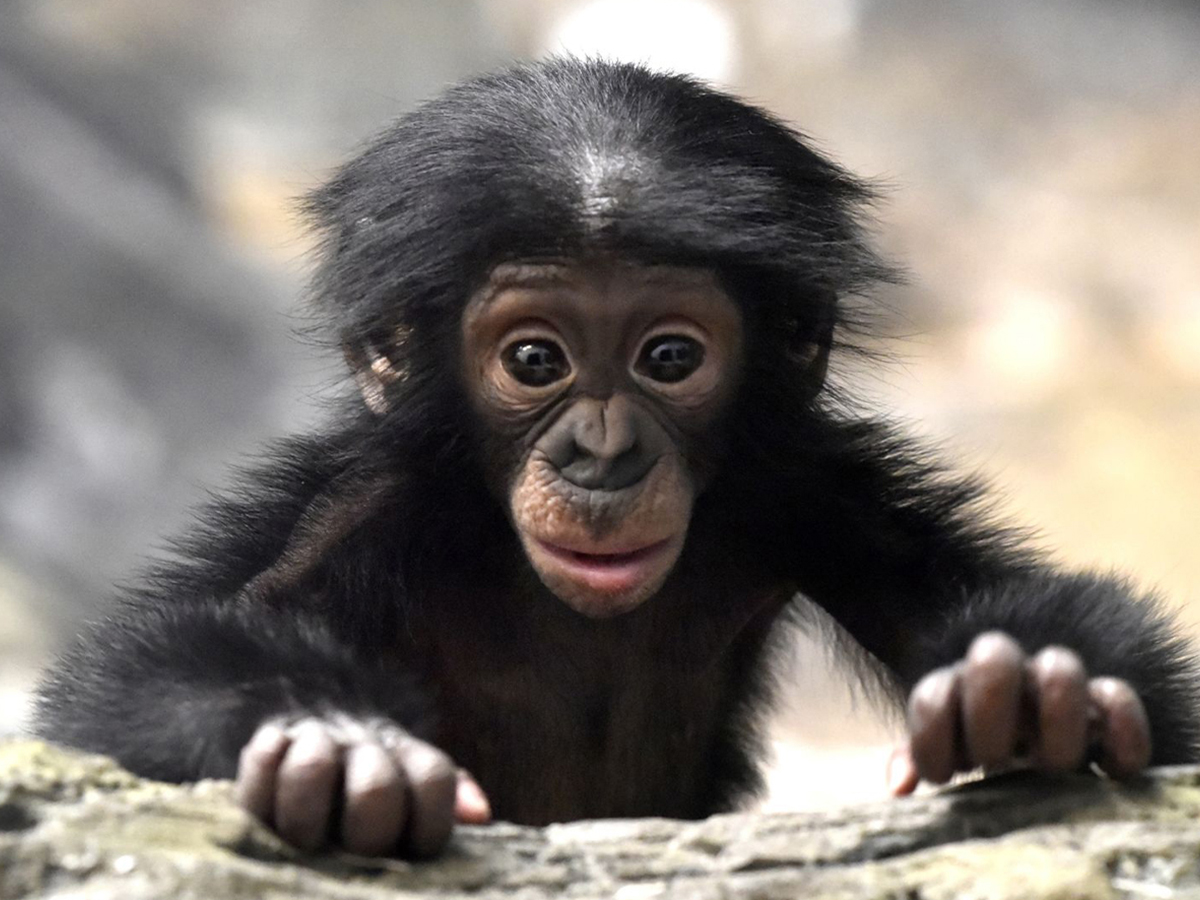
Humans want to believe that our creativity and art make us unique. But a bonobo named Kanzi was part of research that has scientists wondering how different we really are. In three evolving experiments, Kanzi correctly identified pretend objects, demonstrating that he could understand and engage in make-believe situations.
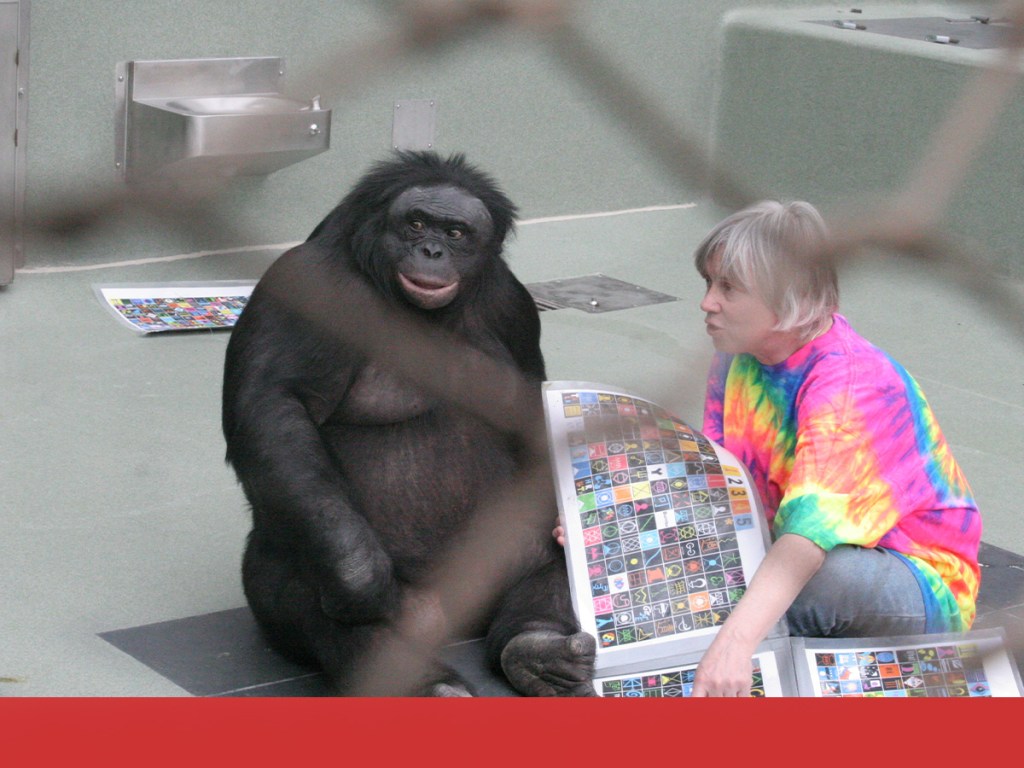
Photo by William H. Calvin, Phd/ Wikimedia Commons (Cropped)
Kanzi has a make-believe tea party
Researchers developed a simple setup using cups, a pitcher, and actions that began as real pouring and gradually shifted into pretend play. The first experiment used real liquids. The second had a combination of real and pretend liquids. The final scenario had no real liquids and relied entirely on imagination.
The scientists used gestures and make-believe to see if Kanzi would react differently depending on what he was being shown. He didn’t react the same way in each setup. His responses showed he was paying attention to more than just the objects, but also to the way the situation was presented.

Photo by William H. Calvin, Phd/ Wikimedia Commons (Cropped)
Animals engaging in fantasy
The experiment revealed that non-human animals can understand and follow along with imaginary situations.
“[It] shows that animals are capable of understanding pretence in a controlled experimental setting, which hadn’t been done before,” Dr. Amalia Bastos, first author of the research from the University of St Andrews, told The Guardian.
Scientists involved in the research are careful about how they describe it. They don’t treat it as proof that bonobos imagine things the same way humans do. Instead, they suggest that animals are capable of responding to situations where meaning is implied rather than directly shown.
Why scientists care about pretend play
Albert Einstein, one of the greatest scientific minds in history, is often credited with the idea that logic gets you from A to B, but imagination can take you everywhere. This study suggests that the more we learn about animals, the more it seems the difference between us may not be as great as we once thought.
Developmental research credits early social and cognitive growth in human children to imagining situations that aren’t physically present. A 2024 meta-analysis found that make-believe is not just entertainment but also directly linked to social understanding and real-world interpretation.
Researchers now describe animal play as more flexible than once believed. A 2025 study of ravens revealed that play included the manipulation of sticks, stones, and other items, suggesting social awareness and responsiveness to context rather than simple instinctive behavior.
Play and imagination may be versatile behaviors no longer seen as uniquely human traits. A broader cognitive toolkit shared across multiple species suggests the gap between humans and animals may be smaller than it once seemed. Things we’ve long believed to be uniquely human may instead exist along a spectrum of abilities expressed in different ways.