Did you know that raising the federal minimum wage from $7.25 to $9.80/hour over the next 3 years and the tipped minimum wage from $2.13 to 70 percent of the regular minimum wage would have a minimal impact on food costs? Even if the entire cost of increased wages is passed on to customers, it will only cost us on average a dime a day.
Right now, 50 percent of food workers earn less than the poverty line for a family of three, and food workers rely on food stamps at 1.5 times the average rate. This means that the people who feed us often have difficulty feeding their own families. Raising the minimum wage would help 8 million low-wage food workers, in addition to 21 million workers in other industries, to meet their basic needs.
You can tell Congress that as a consumer you are willing to pay an extra dime a day in food costs to raise the minimum wage for hard-working low-wage workers and that you want Congress to pass the Fair Minimum Wage Act in 2013! 10 cents! It’s peanuts.
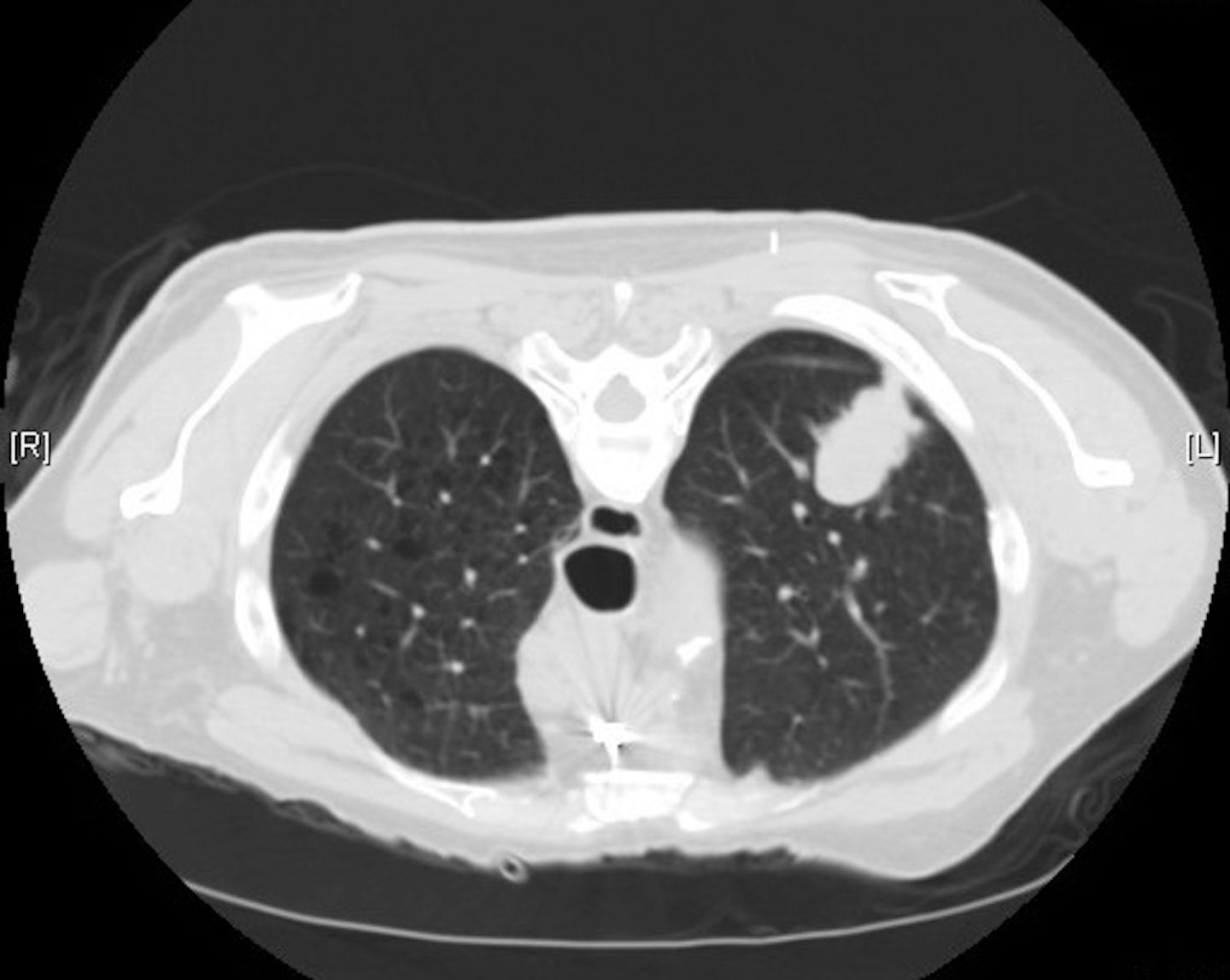
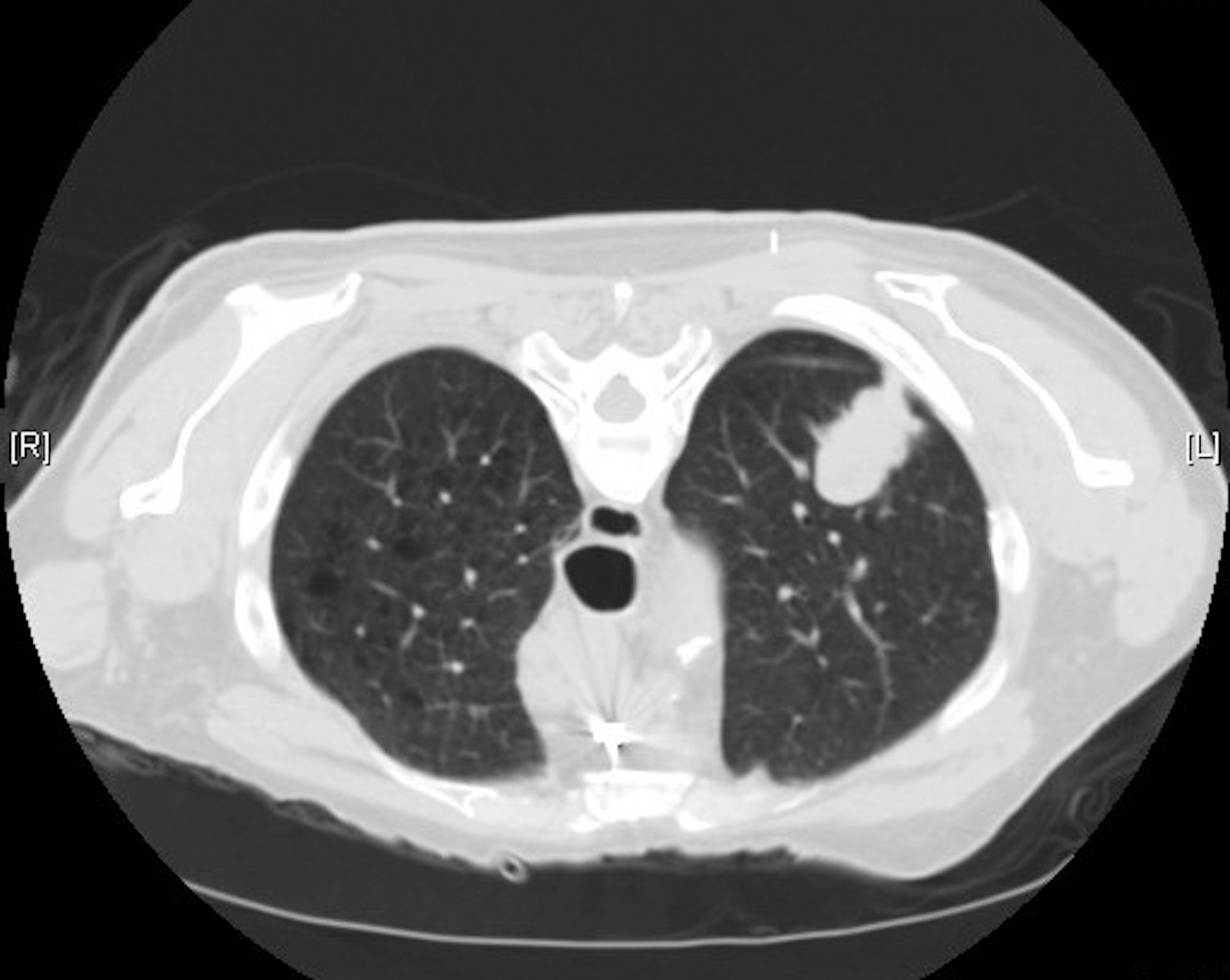
A low-dose CT scan can help with early detection of lung cancer. In this image, the tumor is the white nodule in the upper right corner of the black space. Atlas of Pulmonary Pathology/Flickr, CC BY-SA
When many people think of an average lung cancer patient, they often imagine an older man smoking. But the face of lung cancer has changed. Over the past 15 years, more women, never smokers and younger people are being diagnosed with lung cancer.
In fact, lung cancer is the leading cause of cancer death among women, and more women die from lung cancer than breast, ovarian and colorectal cancer each year. The American Lung Association reports that while lung cancer rates have risen by 79% for women over the last 44 years, they decreased by 43% for men. And for the first time in history, there are more young women than men diagnosed with lung cancer.
News about Pope Leo XIV’s lung cancer diagnosis on Oct. 13, 2026, sparked discussion about increasing rates of the disease among people who have never smoked. Leo reportedly is not a smoker. Potential causes for the disease include environmental exposures and genetics, and recognizing the diverse factors that can increase someone’s risk of lung cancer – regardless of their smoking history – is essential for timely and appropriate screening and treatment.
Cancer that is found at the earliest stages, like that of the pope, can be treated with surgery and cured for both smokers and nonsmokers. The challenge is that people who have never smoked are not currently included in lung cancer screening guidelines, and tumors are often only found by chance.
As a thoracic oncologist, I have seen many younger women and never smokers walk into my clinic with a new diagnosis of lung cancer. Particularly for never smokers, lung cancer is unexpected for both patients and their doctors, which can often lead to delays in diagnosis. Researchers have described this trend of increasing lung cancer rates among women in different parts of the world and are starting to understand why cases are on the rise.
Lung cancer in women
The first explanation of why rates of lung cancer in women have increased is that many started smoking later than men, pushing back their peak in smoking-related lung cancer diagnoses.
Women also started smoking in the years when filtered cigarettes were most commonly used. This led to an increased risk of a type of cancer called adenocarcinoma due to the way cigarette filters distribute tobacco smoke to the outer parts of the lungs. Some studies suggest that women are more susceptible to the carcinogenic effects of exposure to tobacco and cigarette smoke, including second-hand smoke, and may develop lung cancer after fewer years of smoking compared to men.
However, it is important to note that most people diagnosed today with lung cancer are not active smokers. About 20% of women with lung cancer have never smoked – higher than for men with lung cancer who’ve never smoked.
An increasing number of lung cancer diagnoses are among people who never smoked.
Lung cancer risk factors
Besides smoking and secondhand smoke, there are several other lung cancer risk factors. These include a family history of cancer and exposure to asbestos, radon and air pollution.
Exposure to carcinogens in the workplace in the form of inhaled chemicals such as arsenic, beryllium, cadmium, silica and nickel is still a concern in some parts of the world. The potential lung cancer risk of e-cigarette and marijuana smoke is still under study but of potential concern.
Recently, researchers have also found that geneticscan playa role in lung cancer risk in some patients with a strong history of lung cancer. Studies of these families have helped identify potential susceptibility genes for lung cancer and environmental risk factors.
Like BRCA1 and BRCA2 in breast cancer, alterations in genes that promote or protect against tumor development can contribute to lung cancer development. Researchers have yet to identify specific mutations that may predispose individuals to lung cancer. However, studying familial genetic predispositions can help elucidate how lung cancer develops and lead to new biomarkers for early cancer detection in high-risk groups.
Lung cancer screening
In 2021, the United States Preventive Services Task Force updated its lung cancer screening guidelines to include younger patients with less smoking history. Now, lung cancer screening is recommended for adults ages 50 to 80 who have smoked at least one pack per day for 20 years, current smokers and former smokers who quit smoking within the last 15 years. Women at risk for lung cancer can talk to their doctors about ordering a low-dose CT scan for lung cancer screening.
A low-dose CT scan can help with early detection of lung cancer. In this image, the tumor is the white nodule in the upper right corner of the black space.Atlas of Pulmonary Pathology/Flickr, CC BY-SA
Lung cancer diagnosis
In recent years, increasing understanding of the genetic changes that can lead to cancer and how to harness the immune system to treat cancer has led to new targeted therapies and immunotherapies that have improved the prognosis of patients with lung cancer. Women tend to have a better lung cancer prognosis than men, especially if they never smoked and have tumors with molecular changes that can be treated with targeted therapies.
However, lung cancer symptoms may go unrecognized in women. Symptoms of lung cancer can include coughing, shortness of breath, overwhelming fatigue and pain in the back, chest or shoulder, which could be confused for other ailments. Because women tend to be slightly younger when diagnosed than men, patients may be able to tolerate symptoms longer and delay seeking medical attention. Physicians also might not attribute these symptoms to lung cancer due to a patient’s younger age.
Recognizing the early symptoms of lung cancer, expanding lung cancer screening eligibility and testing for genetic biomarkers to select the best therapy are some of the steps that could help address the global epidemic of lung cancer in women.
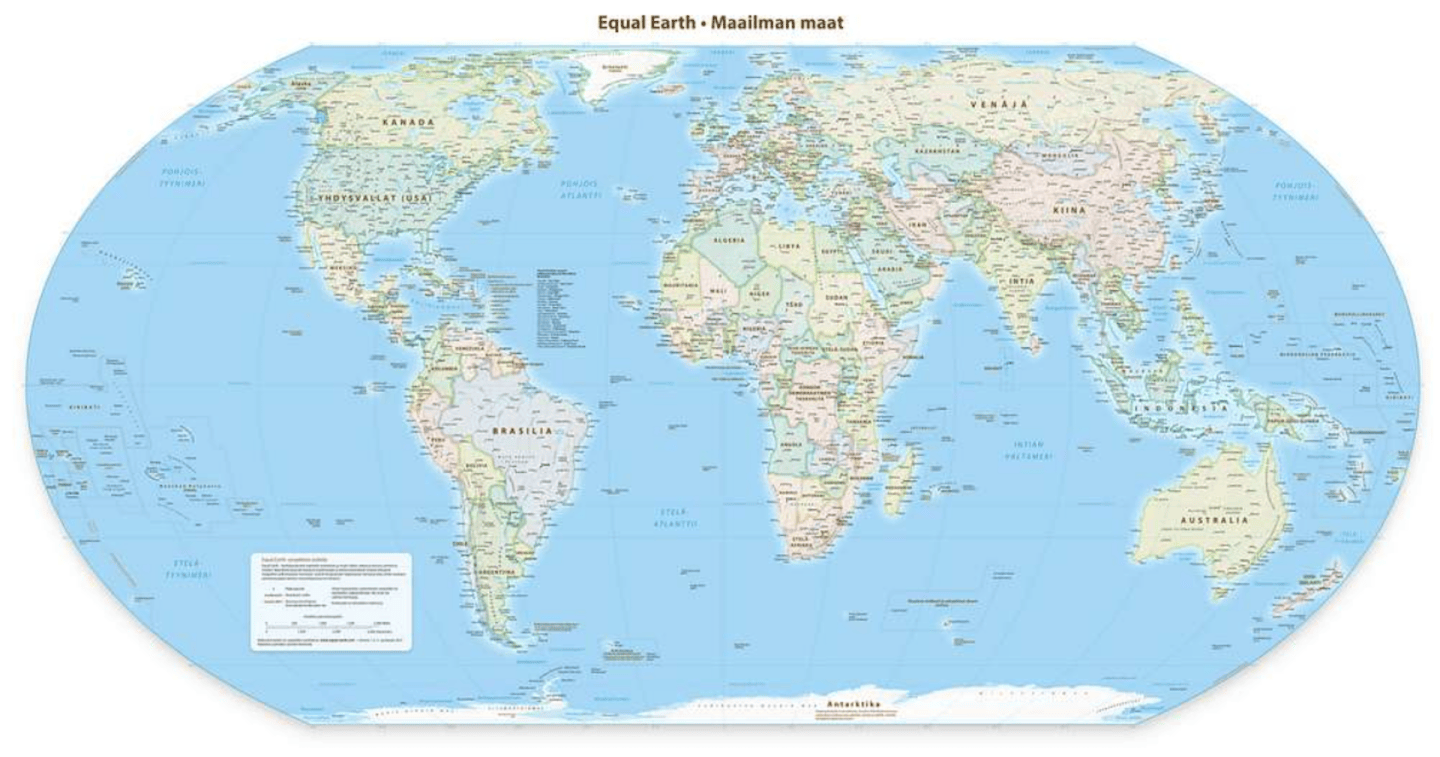
The UN has passed a non-binding resolution to endorse the Equal Earth Projection, a map which more fairly represents the true size of the Earth’s landmasses. The current commonly used projection, called the Mercator Projection, greatly exaggerates land towards the north and south poles, which makes Africa look much smaller. In the Mercator projection, countries near the north and south pole can be anywhere from two to 14 times their true size. In the Equal Earth projection these distortions are minimised, making Africa look larger in comparison.
We asked Jack Swab and Derek Alderman, cartographers and geographers who study the social and communicative power of maps, to explain what’s going on.
What is a map projection?
A map projection is a technique that cartographers (map-makers) use to transform the round, three-dimensional Earth into a flat, two-dimensional map that we see on the wall or on our computer screen. As cartographers flatten the globe, the map becomes distorted, changing shapes and areas. There is no map projection that does not distort the Earth, but some projections are better suited for some uses than others.
A cartographer’s job is to choose from the hundreds of different map projections, and consider where the map is focused and how it is going to be used. No single projection is best for every use. This new Equal Earth projection is better suited than Mercator for producing global scale world maps for educational, public communication and policy purposes.
The Equal Earth supports a more accurate geographic understanding of the relative sizes of countries and continents. It provides a fairer perspective for the public to compare regions in terms of population, environment, development, politics and other global patterns.
Is the Mercator projection still useful?
While the Mercator projection isn’t good for showing the size of the Earth’s landmasses, we won’t see it totally disappear. For example, it’s very useful for navigational purposes as it maintains the accuracy of a compass bearing between two points without having to recalculate it.
This is why most online mapping platforms like Google Maps or Apple Maps rely on a variation of the Mercator projection to provide directions. Using the Equal Earth projection for navigation would not be as effective as the Mercator projection.
How will the Equal Earth projection be used?
Map-making is decentralised and there is no single authority regulating which map projection is used. What the UN did was endorse the broader message that Equal Earth is a fairer projection that more equitably displays the true size of the Earth’s land. And although this action is happening at a global level, there are movements underway in cartographic communities to make the Equal Earth projection the default world map projection.
The UN resolution by itself will not make Equal Earth a globally adopted projection. That requires intentional revision of maps used in textbooks, databases, media productions and diplomatic discussions, which requires labour and financial investment.
The Equal Earth projection was developed by cartographers and is a popular choice among map-makers since it was unveiled in 2018. It’s now possible to buy wall maps with the Equal Earth projection on them, and the projection has already been used in a wide variety of media. That said, individuals will need to opt in to using the Equal Earth projection over other types.
Why has the Equal Earth projection sparked resistance?
Resistance to the Equal Earth projection has been quite limited. There were several abstentions from the United Nations General Assembly vote, but most of this was for other reasons. Ukraine, for example, raised concerns over the depiction of the contested Crimean Peninsula on the map, which the Equal Earth Projection website depicts as contested territory.
This spurred a Russian response, along with points from other nations about contested territory. Given the UN resolution was a vote on how the world is portrayed and not about any specific political boundaries (a point that both Russia and Ukraine agreed on), these discussions amounted to geopolitical posturing about non-map issues.
The lone outlier, and only “no” vote against the Equal Earth projection, came from the United States. It claimed that the proposal was part of a “radical and ideological project” that was not appropriate for the United Nations to be debating. American delegates took issue with language linking Mercator’s distortions to colonial legacies and the marginalisation of Africa. This is not surprising since the current administration denies the existence of structural systems of inequality.
It is hard to miss the hypocrisy at play. The US wants other countries not to discuss the political implications of cartography even as President Trump engages in his own nationalist branding of the map. He has unilaterally renamed the Gulf of Mexico to the Gulf of America and Lake Ontario to Lake America for clear ideological reasons and without international consultation.
How does the new map matter when it comes to changing global views of the world?
The argument that African nations put forward was that the Equal Earth projection is a form of “cognitive justice”. Cognitive justice recognises that people often equate power and value of places with their apparent size on maps. Traditional views of Africa as a smaller continent compared to Europe or North America typically reflect the perceived importance of these parts of the world.
Equal Earth may make it easier to teach, broadcast and discuss a different view of Africa and its prominence in the world. Today, African countries are among the world’s fastest growing economies and fastest growing populations. Map projections alone cannot change people’s attitudes. Yet, as African nations seek to have more influence in international affairs, correcting the mental map of global leaders is an important step in amplifying the continent’s relevance and rights.
Young workers often share values with older colleagues, but the environment where they learned about workplace behavior is different. Sebastian Herrmann on Unsplash, CC BY
Learning Facilitator for Online Master of Business Administration, Boston University
For all the talk about generational differences at work, some of the biggest differences show up in surprisingly ordinary moments.
Take being late for work. A Gen Z employee in her 20s I spoke with works at a small, locally owned café and restaurant run by an older Gen X owner. When she realized she was going to be late one day, she texted him. He was frustrated. To him, being late was serious enough to warrant a phone call, and a text felt too casual and impersonal.
She saw the exact same interaction very differently.
“He’s super busy, so I felt a call was going to take up too much time,” she told me. “So I texted. I thought it was more considerate.”
Both thought they understood what respectful workplace communication looked like. They just had completely different definitions of it.
I study workplace culture and communication, and I see this type of misunderstanding as increasingly common in multigenerational workplaces. And this is becoming more pronounced as Gen Z moves further into the workforce. The oldest members of Gen Z are now approaching 30, while the youngest are in college and high school.
What’s distinctive about the older members of Gen Z is that many went through college, internships or their first jobs during the COVID-19 pandemic, when much of our communication moved online and masks often covered half our faces. And there’s a new twist now, as artificial intelligence changes how we communicate all over again.
The result isn’t necessarily that Gen Z employees communicate better or worse with their bosses and colleagues than previous generations did. I argue that they have simply learned to do so in a very different environment.
When a text means something more
The café example is an easy one to dismiss as younger workers preferring texting and feeling that phone calls are for important occasions only.
But that misses what I think is the more interesting point: The employee wasn’t trying to avoid her boss. She thought she was respecting his time.
For her boss, by contrast, the phone call itself carried meaning. It communicated that she understood the seriousness of being late.
Neither one had explained that expectation to the other.
Managers shouldn’t assume employees attach the same meaning they do to a particular form of communication. If being late requires a phone call, they need to say so. A two-minute conversation about expectations can prevent both people from walking away from an interaction believing the other was disrespectful.
Another common stumble concerns openness, which might feel like oversharing.
One Gen Z worker I spoke with had recently started a job at a large New England company in a blue-collar industry. He was struggling with severe anxiety and decided to tell his baby boomer manager. The manager was sympathetic, but also uneasy.
“It made me feel uncomfortable, if I’m being honest,” the manager told me. “I didn’t want to downplay his anxiety, but I’m not sure I needed to know.”
That distinction matters. His reaction wasn’t that anxiety wasn’t real or that his employee should simply get over it. But he questioned how much of it belonged in their professional relationship.
Many older workers learned that professionalism is about setting clear boundaries between personal and professional life. Members of Gen Z are coming of age during a period when conversations about mental health and personal well-being are considerably more public. What feels like honesty to one person can feel like oversharing to their boss.
This doesn’t mean that managers have to become therapists, and employees don’t have to disclose everything happening in their lives. But both may need to recognize that their comfort level around disclosure isn’t universal.
What younger workers may see as honesty could be seen as oversharing by older colleagues, who tend to keep more boundaries over personal information.Aleksandra Sapozhnikova on Unsplash, CC BY
Learning to read a room when the room disappeared
Some workplace communication is never spoken at all. Think about how people traditionally learned to read a room. They watched faces around a conference table. They noticed a change in a manager’s tone. Someone caught them after a meeting and quietly explained what had just happened.
Now think about someone who was 18 or 19 in 2020.
At exactly the age when many young people would have been developing these skills in college, internships and early jobs, the room disappeared. Classes went online. Internships became remote. When people returned in person, masks sometimes made facial communication more difficult.
That doesn’t mean members of Gen Z can’t read facial expressions, but we should be careful about assuming everyone had the same opportunities to learn the unwritten signals of professional life. If feedback matters, I believe managers should say it. A disappointed expression on a Zoom call is a poor substitute for a conversation.
I thought that was understood
Imagine a manager telling a young employee: “I need this by Friday.” The employee sends it back at 4:30 p.m. that Friday afternoon. The manager is annoyed because they intended to review it that morning, make changes and send it along to someone else.
The employee is equally confused. The deadline was Friday, and they met it.
This deadline mismatch gets at something I have repeatedly encountered in my research with Gen Z workers. In a survey I conducted of 250 Gen Z professionals across industries, clear structural expectations emerged alongside fairness and empathetic engagement as recurring themes.
If an employee wants clarity, it shouldn’t automatically be confused with hand-holding. An employee can want autonomy and still want to know exactly what success looks like. “Friday” and “Friday by 10 a.m. because I need three hours to review this” communicate very different expectations.
Artificial intelligence may make this issue even more important. We can now produce polished emails, summarize meetings and generate information faster than ever. But more communication does not guarantee more understanding.
I believe that may be the larger lesson for every generation working together. We tend to mistake the workplace norms we learned for common sense. They aren’t. They were taught to us by the workplaces, technologies and moments in history in which we began our careers.
Gen Z is learning theirs in a very different world.