
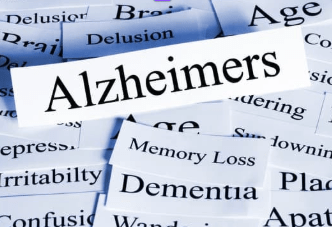
There’s been a new development in the care for and prevention of Alzheimer’s Disease. Worldwide, more than 50 million people have the tragic disease that robs you of your memories. By 2050, more than 130 million people will suffer from Alzheimer’s Disease, according to Alzheimer’s Disease International.

In 2020, researchers Manuel Montero-Odasso, Zahinoor Ismail, and Gill Livingston published a study in Alzheimer’s Research and Therapy that suggests up to one-third of Alzheimer’s cases could be prevented by paying attention to and confronting the risk factors that up a person’s chances of developing the disease. Evidence for prevention comes primarily from the Lancet Commission on Dementia Prevention, Intervention and Care.

According to Science Alert, there are 14 different risk factors that may lead to the development of Alzheimer’s: traumatic brain injury, hypertension, depression, diabetes, smoking, obesity, high cholesterol levels, low physical activity levels, too much alcohol consumption, too little education, vision loss, hearing loss, social isolation, and air pollution. Of course, it can be hard to recall each of those conditions, which led to the development of SHIELD, an easy to remember acronym that stands for Sleep, Head Injury prevention, Exercise, Learning, and Diet.

SHIELD groups together that biggest dementia risk factors in a clear and effective way for people to remember and take an active part in their own prevention.

S is for Sleep

Getting good quality sleep is essential in preventing Alzheimer’s and protecting your brain. According to Science Direct, when you sleep less than five hours per night and wake frequently, it increases the risk of developing Alzheimer’s Disease. Good sleep helps your brain function and improves memory, mood, and our ability to learn. Chronic insomnia leads to the build up of amyloid-beta protein in the brain which may play a part in the development of Alzheimer’s.

And it isn’t just dementia that poor sleep contributes to. It can also increase your likelihood for high blood pressure, obesity, and depression, which are all risk factor for Alzheimer’s.

H and I are for Head Injury

This one seems like a no-brainer, but, weirdly, preventing head injuries is frequently overlooked when talking about dementia. However, there are strong links between concussions, traumatic brain injuries (TBI), and a higher risk for developing Alzheimer’s. (And it isn’t just athletes that get hit in their noggins.)

Steps should be taken to protect your head from injury throughout your life as head injuries play a significant role in brain health and staving off Alzheimer’s, according to a 2020 study in Journal of Alzheimer’s Disease.

Alzheimer's, Alzheimer's Disease, science, dementia, SHIELD
This one seems like a no-brainer but weirdly, preventing head injuries is frequently overlooked when talking about dementia. Canva

E is for Exercise

Exercise is the single most important thing a person can do to reduce the risk of developing Alzheimer’s Disease as it reduces the chances of obesity, high blood pressure, high cholesterol, and depression. Exercise also promotes the growth of new brain cells as wells as supports memory and emotional health, Science Alert reported.

In short, exercise is good for the head, the heart, and all parts of you. Regular exercise, even in small amounts, contributes to better brain aging..

L is for Learning

Learning throughout your whole life is one of the strongest protective actions you can take to avoid Alzheimer’s Disease. Having lower education levels can lead to a greater risk of Alzheimer’s, The Lancet reported. Learning teaches the brain to function despite the damaging effects of age or disease.

People who continued to learn throughout life maintained a better mental function even after they were deep into an Alzheimer’s diagnosis. Learning a new language and doing crossword puzzles are just two of the things you can do to build brain health.

It’s never too early (or too late) to learn another language or to challenge your brain. Boosting your cognitive reserve boosts your brain against AD, The Conversation reported.

D is for Diet

And finally, your diet plays a big role in brain health and the prevention of dementia. There is no one food that wards off dementia, but rather there’s a group of nutrient-rich foods to support the health of your brain according to author and former director of the Rush Institute for Healthy Aging and the MIND Center for Brain Health at Rush University Medical Center in Chicago Dr. Martha Clare Morris. In her book, Diet for the Mind (2017), Dr. Morris notes that a healthy diet lowers the risk of dementia when whole fruits, vegetables, grains, nuts and fish are consumed rather than red meat, processed food and sweets.

The Mediterranean diet, in particular, shows promising results in protecting your brain from cognitive decline. The diet focuses on plant-based foods with olive oil as the primary fat source.


  • Most people don’t know what they don’t know, but think they do – correcting your metaknowledge can make you a better teacher and learner
    Photo credit: Nicolas-André Monsiau/Pushkin Museum of Fine Arts via Wikimedia CommonsThe ability to say ‘I know that I know nothing’ could be considered a sign of wisdom.

    Do you know what the Apple logo looks like?

    Chances are, you think you do. It’s ubiquitous and iconic. How could you not know it?

    But when tested, it turns out very few people can remember all the features of the logo. One study of 85 people found that only about half could pick the correct logo out of a lineup of similar ones. And only one person could correctly draw it.

    This isn’t an isolated example. A classic study from 1979 found that people similarly couldn’t draw a penny accurately or pick out a correctly drawn penny from incorrect ones.

    People aren’t just bad at remembering things they see all the time, but also in actually knowing how they work. In a 2006 study, many people made significant errors when drawing a bicycle, like putting the chain around the front wheel as well as the back wheel. More than just a forgotten detail, putting the chain around both wheels shows a deeper misunderstanding of how a bicycle works. A bicycle with a chain around both wheels wouldn’t be able to turn.

    Illustration of bike with different components labeled
    Do you truly know how a bicycle works? Al2/Grandiose via Wikimedia CommonsCC BY-SA

    It turns out people’s knowledge of how the world works is often fragmented and sketchy at best. They systematically overestimate their understanding of everyday devices and natural phenomena. People will tend to give themselves high ratings on how well they understand something, such as how bicycles or zippers work. But when they’re asked to actually explain the mechanics of these objects, their ratings of their understanding typically drop.

    Just like how your knowledge of the world around you is imperfect, your knowledge about your own knowledge – also called metaknowledge – is often flawed. My field of cognitive science has been uncovering various gaps in human metaknowledge for decades.

    If people are systematically overconfident about how well they understand things, why don’t they notice when they don’t understand something? And what can people do to better recognize the limits of their own knowledge?

    Why you think you know more than you do

    Researchers have identified several factors behind people’s overconfidence in their knowledge.

    One is that people confuse environmental support with understanding: The information is out in the world but not actually in your head. With a bicycle or a zipper, all of the parts are visible to you, and you may confuse this transparency for an internal understanding of how they work. But until you go to use that knowledge by attempting to explain how they work, you may not recognize that you don’t understand how those parts interact.

    A second factor is confusing different levels of analysis. People can often describe how something works at a very high level. You know that the engine of a car makes the car go, and the brakes slow and stop the vehicle. But confidence in your high-level understanding of the car may bias you to think you also have a good grasp of the finer details, like how the engine pistons and brake pads work.

    Additionally, people can be blind to the ways their knowledge shapes their own perception. In one study, researchers had participants tap out the tune to a popular song. On average, the tappers thought listeners would be able to identify the song about 50% of the time. But when listeners had to identify the tapped song, they actually could identify it only 2.5% of the time. The tappers didn’t realize how much their knowledge was making identifying the song seem easy to them.

    A teacher talks to a student before a chalkboard wall filled with equations, chemical structures and graphs
    Intellectual humility can help you see your expert blind spot. Vitaly Gariev/UnsplashCC BY-SA

    This disconnect has consequences beyond whether someone else can understand your Morse code version of a song. When teaching people, whether in formal classroom settings or through casual mentorship, you can sometimes have an expert blind spot: the inability to recognize the difficulties beginners face when learning something you have expertise in.

    Building expertise often involves internalizing knowledge to the point where it becomes invisible to you. You draw on knowledge you don’t realize you have, making it hard to relate to learners who lack this knowledge – and, of course, hard for learners to relate to your teaching. You might have experienced this when you’ve gotten partway through explaining something, only to realize you’ve been using jargon you forgot isn’t common knowledge and lost your listener.

    How to address metaknowledge failures

    Your metaknowledge can fail in two directions: You can think you know more than you do, and you can be blind to how much you’re relying on knowledge you do have. Each calls for a different response to correct it.

    When you’re overconfident in your knowledge, the remedy is using that knowledge. You’ll quickly realize how much you actually understand and dial down your confidence. Challenging yourself to actually try to walk through how something works is a great exercise in intellectual humility – that is, recognizing that you may be wrong – and can keep you from getting out over your skis.

    Building a greater appreciation for what you know is more difficult. You can’t simply unlearn what you’ve internalized. But what this challenge shows is that, to some extent, knowing a subject and knowing how to teach it are two separate skills. Some experts are great teachers, but not simply by virtue of being experts. Recognizing that you have to approach teaching with humility, and that your expertise doesn’t automatically make you a skilled teacher, can go a long way toward making you a better teacher and mentor.

    These aren’t easy and quick fixes to failures of metaknowledge. Both require ongoing intellectual humility and a willingness to distrust your own confidence. But acknowledging the fallibility of your own metaknowledge is a good place to start.

    This article originally appeared on The Conversation. You can read it here.

  • You can change your emotions – but it’s a 2‑step process that takes some effort
    Photo credit: RealPeopleGroup/E+ via Getty ImagesYou don’t need to be stuck on a negative feeling.

    Picture Gigi, having a chat with her boss, when the meeting takes a sharp turn. Gigi’s boss tells her that her work has been lacking recently and that maybe she needs to stay late a couple of evenings to make it up. Surprised by her boss’s remarks, she feels the rumblings of anxiety rising in her mind and body. Psychology research suggests that Gigi feels anxious because she interpreted her boss’s remarks as something threatening that perhaps she can’t handle.

    Just as Gigi starts frantically looking online for new jobs, she spies the “employee of the month” plaque on her desk from last year. She thinks to herself that maybe she can get back to her old form. She has changed her initial view of the situation (need to run away from a threat) to a new one (let’s rise to the challenge), causing her anxiety to subside. Psychologists call this process reappraisal.

    Studies show that reappraising emotional situations is a powerful way to change how you feel. When you find the silver linings in bad situations or give others and yourself the benefit of the doubt, it can help you feel better.

    I’m a psychology researcher who’s interested in how people change their emotions. Gigi may feel a little less anxious in the moment, but does she truly believe that she can make up the work on time and regain her former glory? My colleagues and I set out to investigate whether it’s possible to start the process of reappraisal without going all the way through with it. Are people getting the full benefit from trying to think differently about their emotions?

    Reappraisal has multiple steps

    When my colleague Kateri McRae and I first started thinking about what it means to fully reappraise emotional experiences, we were struck by something we saw in the emotion regulation research. Almost all of the studies treated reappraisal as a one-step process. Researchers would ask participants to “reappraise this to make yourself feel better” and then measure the effects.

    Man with downcast eyes sits with elbows on knees and fists to temples
    Intentionally finding a new way to think about how you’re feeling can help you start changing your emotions. Maskot via Getty Images

    However, theories about how people regulate their emotions suggest that, like any effortful psychological process, reappraisal involves multiple steps.

    When you want to change how you’re feeling, you first generate a reappraisal. You bend and stretch your mind to come up with some alternative way to look at the situation. For Gigi, seeing the employee of the month plaque helped. She could have also thought of her boss’s previous compliments or how it felt to get projects done early.

    After you generate a reappraisal, it might seem like you’re done, but you’re not. That alternative interpretation is fragile and must compete with your original take that’s driving your emotion. Somehow you need to strengthen that reappraisal so it can stick.

    We call this implementation – when you focus and elaborate on that reappraisal to really change your mind about the situation. For Gigi, she may continue to think about all the ways that she can be a great employee so that it lodges firmly in her mind and makes her anxiety truly disappear.

    We tested this idea in a study. We showed 89 undergraduate participants images of negative situations and asked them to first just generate a reappraisal of the image that could help them feel better about it. For example, they might see a picture of a frail man in a hospital bed and tell themselves that the man is getting good treatment and will be better soon. Then, we showed them the image again and asked them to focus and elaborate in their mind on their reappraisal.

    Participants felt a little better after generating a reappraisal, but they felt much better after implementing it by focusing and fleshing out the details. In a follow-up study, we showed that these emotional boosts persisted when viewing the images later.

    Choosing to commit to feeling better

    So we experimentally showed that people reappraise their feelings in two steps. So what? That’s probably what everyone does naturally, anyway, right?

    This was the next question we sought to answer. We conducted a study with 52 undergraduate participants like the earlier one, but with a twist. This time, after participants generated a reappraisal, we gave them a choice to continue the reappraisal process by implementing it or to stop the process by distracting themselves.

    Participants chose to continue reappraising their emotions only about half the time. Even though reappraisal made participants feel better about the emotional images, there were still many times when they stopped the process prematurely and did not enjoy its full benefits.

    Young woman looks out window holding tablet and pen
    Successfully reappraising your emotions calls for not giving up on the process too soon. whitebalance.space/E+ via Getty Images

    In real life

    These studies showing the benefits of fully following through on emotional reappraisals are lab experiments, but they have implications for how people try to help themselves feel better in real life.

    First, it’s hard to intentionally change how you think about something, and people tend to dislike continuing to do hard things. Indeed, in our choice study, people opted to give up on reappraising when they weren’t feeling its benefits early on. Knowing this human tendency might give you the best chance of continuing reappraisal even when it doesn’t feel like it’s working or is hard.

    Second, people often get reappraisals from others, and it’s tempting to think that hearing a new perspective is all you need. Indeed, we have unpublished data that shows that participants feel pretty good when receiving a reappraisal from someone else about their own situation. But other people cannot change your mind for you. You must do that yourself if you want to truly feel better.

    Next time you’re in an unpleasant situation like Gigi’s, don’t just cursorily think that you can rise to the challenge. Really think through the situation and let your new perspective become your only one.

    This article originally appeared on The Conversation. You can read it here.

  • A new therapy is helping people find joy again, and it’s flipping how we treat depression
    Photo credit: CanvaA smiling woman reaches toward the camera.

    There’s a way depression affects people that often goes unspoken because it doesn’t look exactly like sadness. For some, depression isn’t about overwhelming emotion. It’s the baffling, painful absence of feeling anything at all.

    In clinical trials conducted at the Anxiety and Depression Research Center at Southern Methodist University, Positive Affect Treatment (PAT) attempts to address depression with a different methodology. Researchers created a 15-session approach that focuses less on reducing sadness and more on helping people rediscover joy.

    anhedonia, emotional numbness, joy recovery, reward system
    A young woman in despair.
    Photo credit: Canva

    Relearning how to feel good

    Anhedonia affects up to 90% of people suffering from severe depression. This inability to feel pleasure, along with a basic lack of interest in life, is closely linked to chronic mental illness and suicide risk.

    Most depression treatments understandably focus on reducing pain, calming anxiety, and interrupting spiraling thoughts. This approach has helped millions of people and remains important.

    But the researchers behind PAT started asking different questions: What if recovery isn’t about feeling less bad? What if it’s also about relearning how to feel good again?

    mood disorders, burnout, depression therapy, mental wellness
    A couple enjoys a bike ride.
    Photo credit: Canva

    A treatment that targets the brain’s reward system

    The therapy is designed to target the brain’s reward system. By retraining attention to focus more on positive experiences, researchers saw greater improvements than with traditional therapies that focused mainly on reducing negative emotions.

    Culminating more than a decade of research, psychologist Alicia E. Meuret, who co-led the study, believes targeting positive emotions is a more powerful treatment.

    “When people feel hopeless, they don’t believe anything will change. That’s what anhedonia can look like, and taking away negative emotions doesn’t fix it,” Meuret said in a story on the university’s website.

    “Treatment needs to ask: Is this activity meaningful to you? Will it give you joy or a sense of accomplishment? Does it foster connection?” Meuret added.

    Participants who received PAT treatment showed greater improvements and reported feeling interested in life again.

    emotional resilience, anxiety treatment, happiness science
    A couple on an afternoon walk.
    Photo credit: Canva

    Depression is on the rise

    The National Center for Health Statistics reported in 2025 that there has been a sharp increase in the prevalence of depression over the past decade. The COVID-19 pandemic, worsening socioeconomic conditions, social isolation, and increased feelings of loneliness are likely key contributors to America’s growing depression crisis. The demographics most affected are younger adults, women, and financially vulnerable groups.

    In 2025, the Centers for Disease Control and Prevention released youth mental health statistics showing that 40% of high school students in the United States experience persistent sadness and hopelessness. Depression rates among Americans have increased by nearly 60%. Modern lifestyles have left many people feeling stuck, mindlessly doomscrolling, and isolating themselves.

    That’s part of what makes this therapy feel so unexpectedly hopeful. Joy, wonder, and excitement may be skills the brain can rebuild. Teaching people to look forward positively and find gratitude by noticing little things, like sunlight through a window, may seem small. However, the study suggests this simple practice can feel revolutionary.

Explore More Health Stories

Research

How couples divide chores may shape sexual desire in ways you wouldn’t expect

Well-being

59% of Americans worry about sunscreen chemicals. Only 32% understand how sunscreen works.

Well-being

You know exercise is good for you – so why is it so hard to put it into practice?

Health

Photographic memory is a myth – here’s what research really says about remembering