
For decades, astronomers have been watching WOH G64, an enormous heavyweight star in the Large Magellanic Cloud, a galaxy visible with the naked eye from the Southern Hemisphere. This star is more than 1,500 times larger than the Sun and emitting over 100,000 times more energy. For a long time, red supergiant WOH G64 looked like a star steadily reaching the end of its life, shedding material and swelling in size as it began to run out of fuel.

Astronomers didn’t think its final demise would happen anytime soon, because no-one has ever seen a known red supergiant die. But in recent years astronomers – including our team working with the Southern African Large Telescope (SALT) – discovered that this star has started to change, growing dimmer than before and seemingly warmer. This has surprised scientists and suggests the star’s final stages of life may be more complicated, and perhaps unfold faster, than once thought.

Massive stars, more than about eight times the mass of the Sun, produce so much energy, which we see as light, that they run out of fuel within millions of years, instead of the billions of years of the Sun’s lifespan.

Most massive stars become gigantic, cool stars in the final million years or so of their life – so-called red supergiants. All red supergiants blow gaseous winds, losing weight as they do so. Some do this so strongly that the star becomes enveloped in a shroud of the ejected material containing gas and solid particles like tiny sand grains – called dust in astronomy. This makes them look dim in visual light, but very bright in the infrared where the dust shines.

In the 1960s Swedish astronomers Westerlund, Olander and Hedin discovered number 64 in their catalogue of red stars. They thought nothing of it, as it looked like an unremarkable red giant star, something the Sun and most other stars will become later in life. But when in the 1980s Nasa, the UK and The Netherlands launched the InfraRed Astronomical Satellite into space, astronomers Elias, Frogel and Schwering discovered that WOH G64 is the most luminous, coolest and dustiest red supergiant in the entire Large Magellanic Cloud, which harbours over a thousand red supergiants. More observations over the following decades showed the strong, steady modulations of the brightness expected of a pulsating star of that kind.

Then, in 2024, our team (both authors of this article and our collaborators in Germany and the US) succeeded in taking a close-up image of WOH G64 using the European Southern Observatory’s telescopes and revealed a fresh cloud of dust close to the star. It was the sharpest picture of a star in another galaxy ever taken (comparable to being able to spot an astronaut walk on the Moon from Earth). We discovered that in the last decade, unexpectedly, the star had started to eject much more dust than before. At that time, we did not have an idea about why and how.

It turns out, WOH G64 had also become dimmer, possibly because of the dust cloud it had ejected, and started to pulsate less and a little more quickly, suggesting it had shrunk. At the same time, the star seemed to look a lot warmer, leading some to believe it might have entered a new stage of its life – a so-called yellow hypergiant on its final path to doom.

All these phenomena are happening on a human time scale, which is usually not the case when we observe stars. This makes WOH G64 even more special. Is this star offering us an opportunity not to be missed to witness the final death throes of massive stars?

Now, as we start 2026, we have announced that observations we have obtained using the Southern African Large Telescope give us some clues about what is going on with WOH G64. The SALT observations show the overwhelming presence of ions in the vicinity of the star, which means that the gas is heated up to high temperatures by what must be a much hotter star. This should not have surprised anyone as the hot gas had been spotted in the 1980s and ever since. But we also found the imprint of molecules, implying cool gas (because molecules break up at high temperatures) likely in the atmosphere of the red supergiant. It did not appear to have changed into a yellow hypergiant, at least not yet.

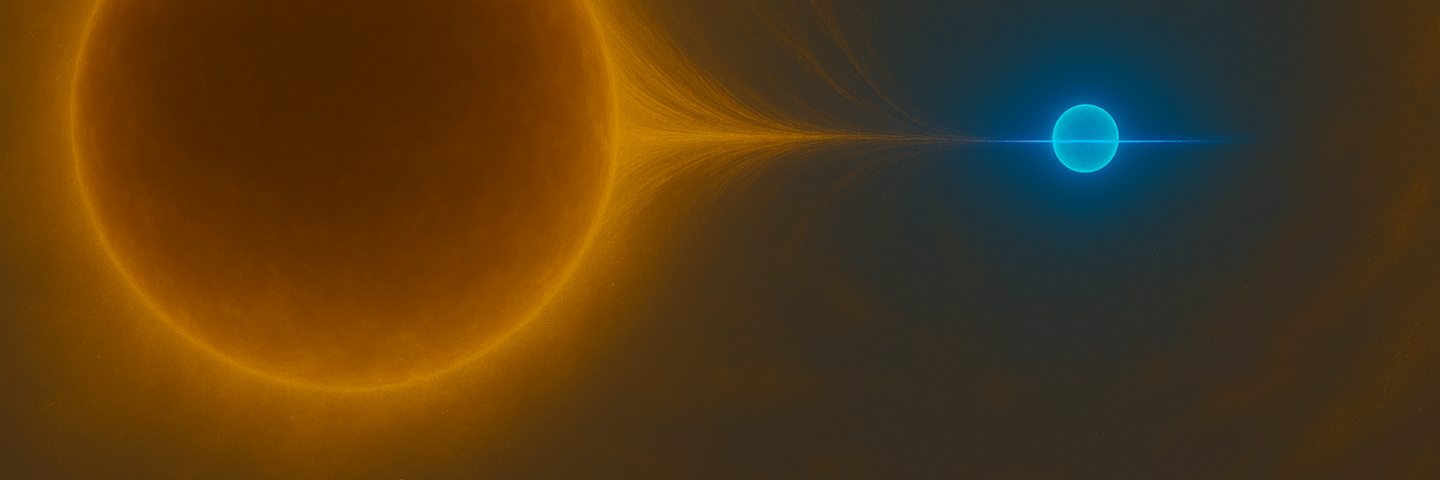
For a long time, astronomers have suspected that the red supergiant has a smaller, hotter twin living alongside it, but they have somehow been reluctant to claim this in publications. And now it looks to be the elephant in the room. One way of making sense of our observations is that this hotter star, looking blue in contrast to its bigger, cooler, red sibling, heats gas it might have captured from the red supergiant’s wind. Now that the red supergiant has faded, the presence of the heated gas has just become more conspicuous.

If the orbit of the blue star is not a circle but quite elongated (Earth’s orbit around the Sun only slightly deviates from a circle), the distance between the blue star and the red supergiant varies. It may have got closer in recent years, and its gravity might have caused the atmosphere of the red supergiant to stretch out. This would make it more transparent overall, allowing us to see the warmer interior, but with cool, dark molecular patches left in places. That would also have made it easier for dust to form further out in its wind.

If that is true, then once the blue star starts to recede again on its orbit, WOH G64 might regain its former red supergiant glory. On the other hand, if it did throw off its coat entirely, then the molecules would disappear, and with it, the dust, and we would gain a clean view of the star. Then again, WOH G64 might do something else unexpected. It certainly teaches astronomers to be humble.

This article originally appeared on The Conversation. You can read it here.
  • Why fall yard care could start with doing less – but not nothing
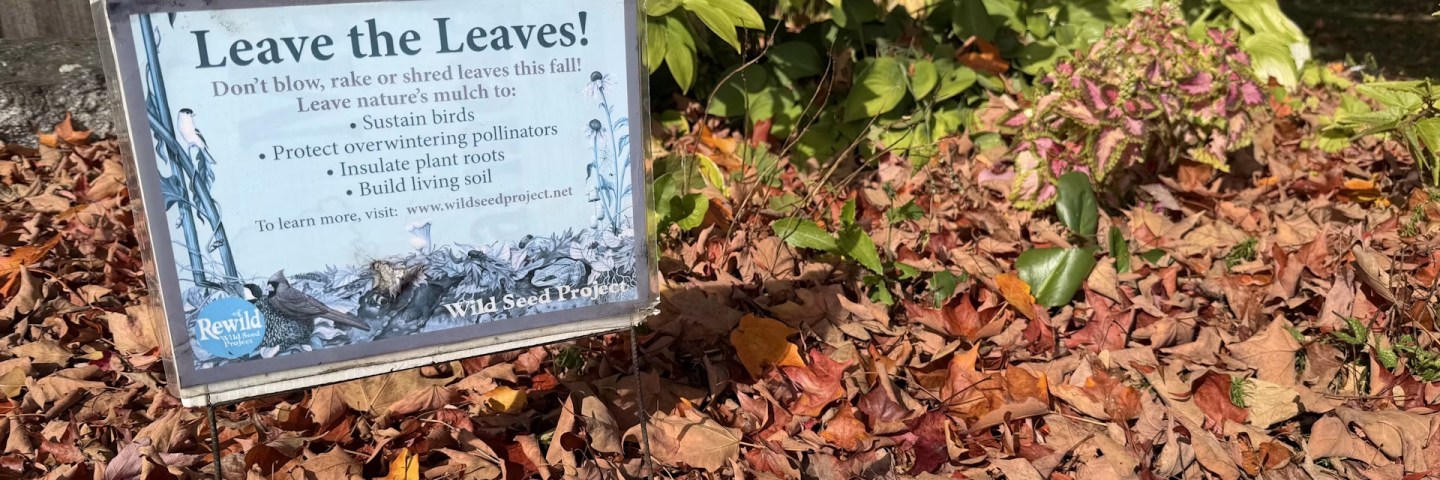
    Leaves on the ground are part of the natural cycle of nutrients. Manjot Sidhu, CC BY-SA
    ,

    Why fall yard care could start with doing less – but not nothing

    Fallen leaves shelter next spring’s pollinators and feed the soil. A horticulture specialist explains how to make room for both nature and a tidy yard.

    Assistant Extension Professor of Horticulture and Ornamental Horticulture Specialist, University of Maine

    Every autumn, homeowners and gardeners tend to engage in a familiar ritual. As trees shed their leaves, people drag out rakes, leaf blowers and lawn bags to strip their yards bare before winter arrives.

    It is a tidy habit rooted in aesthetics, but ecologically, clearing away fallen leaves strips the very foundation of local ecosystems. Far from dead debris requiring disposal, this fallen foliage forms a dynamic layer and a biological interface that drives nutrient cycling and is essential for soil health and the environment, including biodiversity.

    As a researcher of plant growth in yards and gardens, I would recommend leaving leaves on the ground. There, they can provide essential winter habitat for native pollinators – even in places that don’t have freezing temperatures. And they act as a nutrient-dense, natural mulch for the soil.

    Here is the science behind why the first step of fall yard care could simply be doing less – along with practical ways to keep your yard looking neat while nourishing the ecosystem underneath.

    A winter sanctuary for native pollinators

    To understand why leaf litter matters, it helps to look closely at what happens beneath the surface as temperatures drop. While honeybees pass the winter in sheltered hives, the vast majority of North America’s native pollinators do not.

    Up to 70% of native bee species, including many insects’ cocoons and larvae, nest in the ground. Fertilized queen bumblebees burrow just a few inches into the soil or hide under dense leaf mulch to survive the freezing months ahead, to lay eggs in the following spring.

    Raking, bagging and blowing leaves away destroys this crucial winter nursery.

    Many other insects depend on the shelter of fallen foliage:

    Nature’s engineered soil insulator and fertilizer

    In addition to being a shelter, fallen leaves are an evolved biological mechanism for nutrient cycling. Trees actively pump vital elements, including calcium, magnesium, potassium and nitrogen from deep subsoils, into their foliage. When autumn comes and leaves drop, these stored nutrients are deposited back into the soil.

    Leaving leaves in place triggers fundamental ecological benefits.

    A thick blanket of intact leaves acts as a natural insulator for the ground. Air pockets trapped between overlapping leaves moderate the soil temperature and slow heat transfer, buffering against the freeze-thaw cycles that heave soil, fracture plant roots and expose beneficial soil microbes to lethal cold. The intact leaf blanket also conserves moisture and prevents soil from drying out over the winter.

    As fungi, earthworms and micro-arthropods digest fallen leaves through late fall and spring, they break down organic matter into a rich material called humus. This slow-release organic fertilizer boosts soil structure, improves water retention in sandy soils, and prevents erosion and runoff in heavy rains.

    Decaying leaves feed beneficial mycorrhizal fungi in the soil. Those fungi form symbiotic relationships with plant and tree roots, helping the roots collect water and nutrients from the soil to nourish the plants above. A natural layer of leaves also suppresses spring weed seeds organically without needing synthetic chemical herbicides. And the moist, insulated microclimate under leaf litter is also critical for terrestrial amphibians, including frogs and salamanders, to survive freezing temperatures.

    How to ‘leave the leaves’

    Adopting a softer approach to fall cleanup does not mean your yard has to look completely untamed or that you have to risk killing your lawn. Here is how to balance suburban expectations with sound ecological science:

    • Move, don’t remove: Move the leaves from lawns and sidewalks, rake them into garden beds, around ornamental plants or into vegetable plots, using manual rakes or electric leaf blowers. Aim for a layer 2 to 3 inches deep. Leaving leaves in grassy areas can help ticks hide there too, but if you move the leaves to garden beds or spots that are used less, the ticks will be less likely to nest in the grass. Establishing pollinator zones on the property can also help reduce tick populations.

    • Skip the leaf shredder: Mowing over leaves with a mulching mower is better than sending them to landfills, but high-velocity mower blades still kill overwintering insect eggs, chrysalises and larvae. Leave leaves intact wherever possible in plant beds.

    • Wait for spring to clean up: Do not cut back hollow-stemmed perennials or clear leaf beds during early, warm spring days. Wait until temperatures consistently stay above 50 degrees Fahrenheit (10 degrees Celsius) so overwintering bees and butterflies have time to safely emerge.

    When you bag leaves for disposal and then buy commercial wood mulch or synthetic fertilizers in the spring, you are effectively paying a price for what your trees provided for free. By rethinking the cultural expectation of pristine autumn lawns, it’s possible to transform silent landscapes into vibrant habitat sanctuaries, simply by stepping back and allowing natural processes to take over.

    This article originally appeared on The Conversation. You can read it here.

  • New world map makes Africa look bigger: what’s the fuss about? Cartographers explain
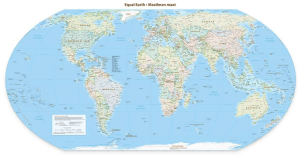
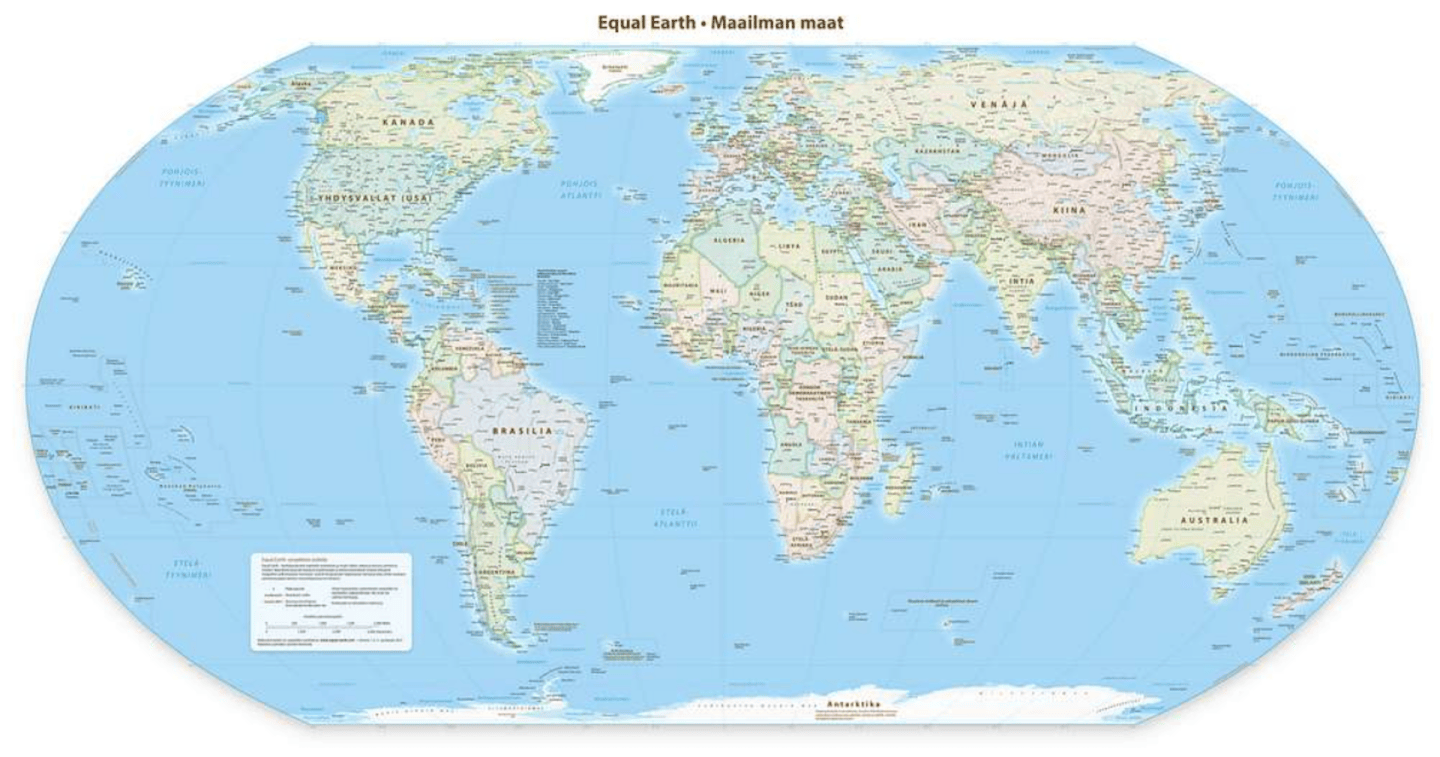
    A political wall map using the Equal Earth projection centred at the prime meridian. Wikimedia Commons

    The UN has passed a non-binding resolution to endorse the Equal Earth Projection, a map which more fairly represents the true size of the Earth’s landmasses. The current commonly used projection, called the Mercator Projection, greatly exaggerates land towards the north and south poles, which makes Africa look much smaller. In the Mercator projection, countries near the north and south pole can be anywhere from two to 14 times their true size. In the Equal Earth projection these distortions are minimised, making Africa look larger in comparison.

    We asked Jack Swab and Derek Alderman, cartographers and geographers who study the social and communicative power of maps, to explain what’s going on.


    What is a map projection?

    A map projection is a technique that cartographers (map-makers) use to transform the round, three-dimensional Earth into a flat, two-dimensional map that we see on the wall or on our computer screen. As cartographers flatten the globe, the map becomes distorted, changing shapes and areas. There is no map projection that does not distort the Earth, but some projections are better suited for some uses than others.

    A cartographer’s job is to choose from the hundreds of different map projections, and consider where the map is focused and how it is going to be used. No single projection is best for every use. This new Equal Earth projection is better suited than Mercator for producing global scale world maps for educational, public communication and policy purposes.

    The Equal Earth supports a more accurate geographic understanding of the relative sizes of countries and continents. It provides a fairer perspective for the public to compare regions in terms of population, environment, development, politics and other global patterns.

    Is the Mercator projection still useful?

    While the Mercator projection isn’t good for showing the size of the Earth’s landmasses, we won’t see it totally disappear. For example, it’s very useful for navigational purposes as it maintains the accuracy of a compass bearing between two points without having to recalculate it.

    This is why most online mapping platforms like Google Maps or Apple Maps rely on a variation of the Mercator projection to provide directions. Using the Equal Earth projection for navigation would not be as effective as the Mercator projection.

    How will the Equal Earth projection be used?

    Map-making is decentralised and there is no single authority regulating which map projection is used. What the UN did was endorse the broader message that Equal Earth is a fairer projection that more equitably displays the true size of the Earth’s land. And although this action is happening at a global level, there are movements underway in cartographic communities to make the Equal Earth projection the default world map projection.

    The UN resolution by itself will not make Equal Earth a globally adopted projection. That requires intentional revision of maps used in textbooks, databases, media productions and diplomatic discussions, which requires labour and financial investment.

    The Equal Earth projection was developed by cartographers and is a popular choice among map-makers since it was unveiled in 2018. It’s now possible to buy wall maps with the Equal Earth projection on them, and the projection has already been used in a wide variety of media. That said, individuals will need to opt in to using the Equal Earth projection over other types.

    Why has the Equal Earth projection sparked resistance?

    Resistance to the Equal Earth projection has been quite limited. There were several abstentions from the United Nations General Assembly vote, but most of this was for other reasons. Ukraine, for example, raised concerns over the depiction of the contested Crimean Peninsula on the map, which the Equal Earth Projection website depicts as contested territory.

    This spurred a Russian response, along with points from other nations about contested territory. Given the UN resolution was a vote on how the world is portrayed and not about any specific political boundaries (a point that both Russia and Ukraine agreed on), these discussions amounted to geopolitical posturing about non-map issues.

    The lone outlier, and only “no” vote against the Equal Earth projection, came from the United States. It claimed that the proposal was part of a “radical and ideological project” that was not appropriate for the United Nations to be debating. American delegates took issue with language linking Mercator’s distortions to colonial legacies and the marginalisation of Africa. This is not surprising since the current administration denies the existence of structural systems of inequality.

    It is hard to miss the hypocrisy at play. The US wants other countries not to discuss the political implications of cartography even as President Trump engages in his own nationalist branding of the map. He has unilaterally renamed the Gulf of Mexico to the Gulf of America and Lake Ontario to Lake America for clear ideological reasons and without international consultation.

    How does the new map matter when it comes to changing global views of the world?

    The argument that African nations put forward was that the Equal Earth projection is a form of “cognitive justice”. Cognitive justice recognises that people often equate power and value of places with their apparent size on maps. Traditional views of Africa as a smaller continent compared to Europe or North America typically reflect the perceived importance of these parts of the world.

    Equal Earth may make it easier to teach, broadcast and discuss a different view of Africa and its prominence in the world. Today, African countries are among the world’s fastest growing economies and fastest growing populations. Map projections alone cannot change people’s attitudes. Yet, as African nations seek to have more influence in international affairs, correcting the mental map of global leaders is an important step in amplifying the continent’s relevance and rights.

    Jack Swab, Assistant Professor Department of Geography & Sustainability, University of Tennessee and Derek H. Alderman, Chancellor’s Professor of Geography, University of Tennessee

    This article originally appeared on The Conversation. You can read it here.
  • Only 17% of people can pass this 3-question IQ test on the first try. Can you?
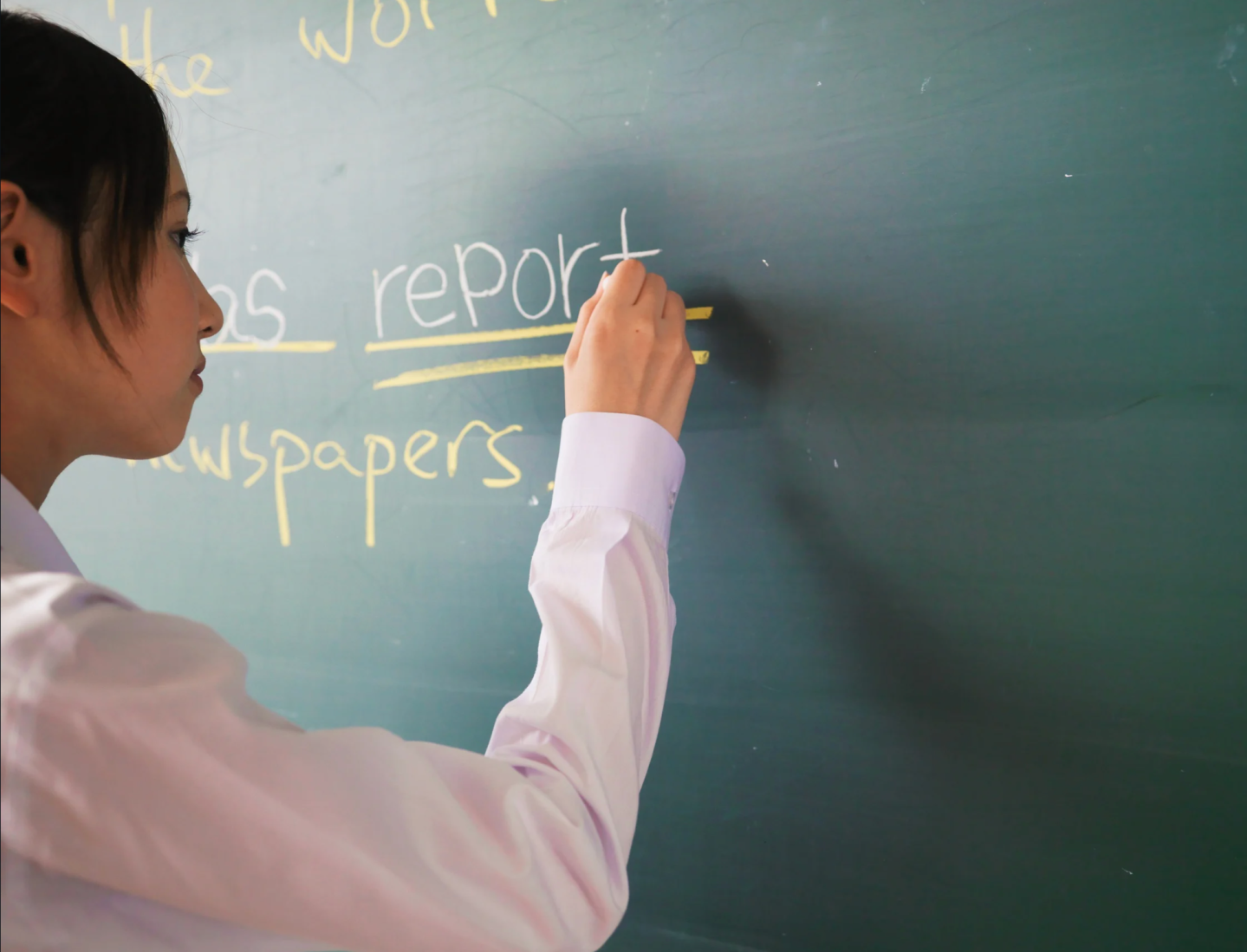
    Photo credit: Canva – A woman writes on a chalkboard
    , ,

    Only 17% of people can pass this 3-question IQ test on the first try. Can you?

    Developed by a Yale professor, this simple test reveals a lot about how you think—and only 17% of people get it right.

    It’s been called the world’s shortest IQ test, and despite its apparent simplicity, only about 17% of people answer all three questions correctly on their first try. The Cognitive Reflection Test (CRT) isn’t about measuring knowledge; it’s about measuring how you think.

    The test was introduced in a 2005 paper in the Journal of Economic Perspectives by Yale professor Shane Frederick. It’s designed to test your ability to override a quick, intuitive gut reaction and engage in deeper, more analytical thought.

    Want to try it yourself?

    IQ test, cognitive reflection test, critical thinking, brain teasers, logic puzzles, psychology, System 1 thinking, problem solving
    Woman sits in front of her computer thinking Canva

    Here are the three questions:

    1. A bat and a ball together cost $1.10. The bat costs $1.00 more than the ball. How much does the ball cost?
    2. If it takes five machines five minutes to make five widgets, how long would it take 100 machines to make 100 widgets?
    3. In a lake, there is a patch of lily pads. Every day, the patch doubles in size. If it takes 48 days for the patch to cover the entire lake, how long would it take for the patch to cover half of the lake?

    The Answers and Why They’re So Tricky

    If you answered 10 cents, 100 minutes, and 24 days, you’re in the majority—and you’ve fallen for the trap. Those are the common intuitive answers. The correct answers are 5 cents, 5 minutes, and 47 days.

    IQ test, cognitive reflection test, critical thinking, brain teasers, logic puzzles, psychology, System 1 thinking, problem solving

    Woman proudly shows testy results Canva

    Here’s the breakdown:

    • The Bat and Ball: If the ball cost 10 cents, the bat (at $1.00 more) would cost $1.10, for a total of $1.20. The correct math shows the ball is 5 cents and the bat is $1.05.
    • The Widgets: The rate of production is one widget per machine every five minutes. Therefore, 100 machines can produce 100 widgets in the same five-minute timeframe.
    • The Lily Pads: Since the patch doubles in size every day, it must have been half its final size just one day before it covered the whole lake—on day 47.

    The Science of Your Brain

    IQ test, cognitive reflection test, critical thinking, brain teasers, logic puzzles, psychology, System 1 thinking, problem solving

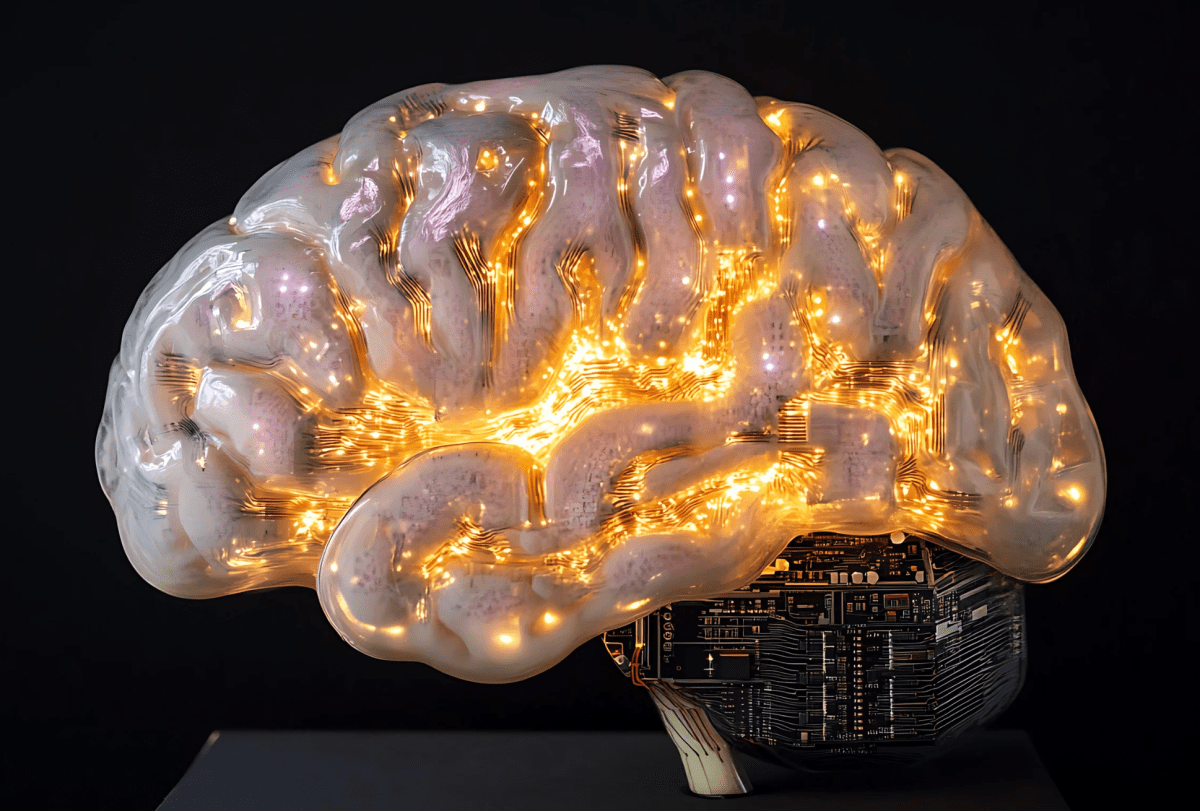
    An artistic representation of the brain Canva

    This test brilliantly illustrates the two modes of thinking identified by Nobel Prize-winning psychologist Daniel Kahneman. System 1 is our fast, automatic, intuitive thinking, which gives us the quick (but wrong) answers. System 2 is our slower, more deliberate, and analytical thinking, which is required to solve the puzzles correctly.

    As Frederick explains, the test measures how we make decisions based on instinct versus analysis. “System 1 thinkers respond spontaneously, often making mistakes, while System 2 thinkers engage in effortful thought processes,” he wrote.

    Frederick’s research found that those with stronger cognitive reflection skills (System 2 thinkers) tend to be more patient and willing to take calculated risks. His work aims to understand the real-world impact of our cognitive styles, noting, “Despite the diversity of phenomena related to IQ, few have attempted to understand—or even describe—its influences on judgment and decision making.”

    So, whether you passed the test or not, it offers a fascinating glimpse into the constant tug-of-war between gut reaction and careful thought that happens inside our brains every day.

    This article originally appeared earlier this year.

    This article originally appeared [time-difference] ago. It has been updated.

Explore More Science Stories

Science

New world map makes Africa look bigger: what’s the fuss about? Cartographers explain

Technology

Only 17% of people can pass this 3-question IQ test on the first try. Can you?

Exploration

Earth’s missing continent rediscovered 375 years after sailors first set foot there

Science

Compared to driving, flying is extraordinarily safe – but why doesn’t it feel that way?