
When was the last time you paid attention to your commute? And I don’t mean a couple of feet in front of you, at the car merging into your lane without a blinker. I mean really paid attention to the route you take.

Did you see the landmarks in the distance that make up the city skyline? Did you drive right past the grocery store you promised to stop by at the corner of this Peachtree Street or that Peachtree Street, a struggle Atlanta locals know well?

“Oops! Force of habit,” you might say to yourself as you miss your turn and begin to think about when and where you can turn around.

Relying on familiarity can either facilitate or impede daily navigation. As a researcher studying memory and navigation, I aim to understand how the brain supports spatial navigation and what happens if the cognitive mechanisms for choosing the best route home begin to decline, such as during stress or with aging.

Humans are creatures of habit – at least that’s what people tell themselves when wary of trying something new. But what if a new route is faster or safer than the one you usually take? Would you try it?

Research from my team suggests that people balance between exploration and habit – that is, trying something new or sticking with the familiar – when deciding what route to take. Which navigation strategy someone chooses depends not only on their spatial abilities but on their network of brain regions that support navigation.

Close-up of side view mirror reflecting city skyline and other cars on the road
When was the last time you paid attention to the scenery of your usual commute? Boonchai Wedmakawand/Moment via Getty Images

A spatial blueprint

Spatial navigation refers to the cognitive ability that helps you travel from one location to another. It may sound simple, but it requires using cognitive functions such as memory, attention, decision-making and assessing potential rewards – never mind the ability to simply perceive the environment itself.

Spatial navigation uses memories of things you consciously experienced. Two types of memory relevant to navigation are what scientists call episodic and semantic.

For example, you might retrieve an episodic memory about a specific event: remembering a detour you took a week ago to drop a package off at the post office, including the traffic and weather that day.

You might also retrieve a semantic memory that’s more factual and knowledge-based: remembering how many blocks away the post office is from the park and the turns you need to make to get there.

Together, these kinds of memory inform your spatial memory, which allows you to retrieve location information. This could be where buildings are in relation to each other or where objects are situated in your house. Spatial memories help form your cognitive map, which is essential for getting around in the world.

Often, these different ways of remembering interact, and you can use one type of memory to inform the other. For example, you’ve become accustomed to your commute to work and know it’s relatively short (semantic memory), but over the past three days you’ve been arriving late due to heavy traffic (episodic memory), so you choose to take a different route next time.

Research from my team has found that disagreements in your brain over possible routes can happen. Different types of memory can come up with different solutions for what route you can take, and this conflict is a big factor in how hard your brain needs to work when navigating an environment.

Responding to new and familiar memories

Habits stem from what researchers call stimulus-response memories. These include the knee-jerk reaction you might have to familiar landmarks – when you perceive these places, your brain signals you to make a turn along your commute without needing to consciously think about it.

Habits are rigid, but they can also be beneficial: By taking care of the navigation for you, habit frees up your brain to have a conversation with someone or plan what to make for dinner when you get home.

When navigating less familiar routes or environments, where habit doesn’t kick in automatically, you rely on brain regions such as the hippocampus to call on detailed memories from recent experiences to help guide the way.

Aerial view of a busy intersection in a city, crowds of people milling about and buildings lit with animated billboards
When visiting a new city, you might rely on your existing mental map of urban environments. Francesco Riccardo Iacomino/Moment via Getty Images

But let’s say you’re shopping at a new grocery store where most things are where you expect them to be, even though you’ve never been in this particular store before. What happens when your brain experiences both something new and something familiar about an environment?

Researchers have shown that when something about an environment is familiar and aligns with your prior experiences, the prefrontal regions of your brain – those responsible for executive functions such as decision-making – become more active. They can bypass or even inhibit your hippocampus’s ability to form new memories about specific events.

In other words, your brain can weave information about a new experience into your database of existing knowledge, rather than storing it as completely new information with little relation to the past. This process may help fast-track your understanding about new experiences.

Updating cognitive maps

Researchers know that cognitive maps of the environment depend on the hippocampus and its database of memories about specific events. However, I and other researchers argue these maps can also function as a schema – a collection of memories made up of associations between environmental details. You can add new information to these collections and use it to infer new relationships.

Say a new pedestrian bridge is built between the park and the post office. Your brain can more easily weave this new route information into your existing memories compared with learning a new environment from scratch. Similarly, if you just moved to a new town and know very little about the spatial layout, you might rely on your past experiences of towns to infer where something is.

Using neuroimaging techniques as well as virtual reality programs designed to test a participant’s ability to navigate different routes, my team found that there is likely an interdependent relationship between the brain areas that store memories of specific events and areas that store related information across memories when planning to navigate less familiar places.

New routes are more difficult to follow when they differ from your prior experiences. Thus, a stronger schema helps integrate your knowledge of the spatial relationships between locations and landmarks (such as the distance between the post office and the park) with more general knowledge (such as prior route difficulty). This all informs how you choose to navigate.

Navigating daily life

These memory principles help explain why inconsistencies with your previous experiences can make it so difficult to navigate many aspects of daily life.

Imagine you woke up tomorrow and the GPS on your smartphone was no longer available. How will you plan your route to get to your destination?

You might be used to navigating north from your home to the grocery store – but have you ever tried to navigate to that grocery story from a different location? It’s much harder!

Factors such as stressaging and general cognitive decline can affect brain function and human behavior. Imagine how much harder that new route to the grocery store is for an older adult.

Relating new information to your prior experiences may help strengthen your schema and make navigation easier. And understanding what processes the brain needs to go through to solve these navigation problems can help you understand why getting around can be challenging.

This article originally appeared on The Conversation. You can read it here.
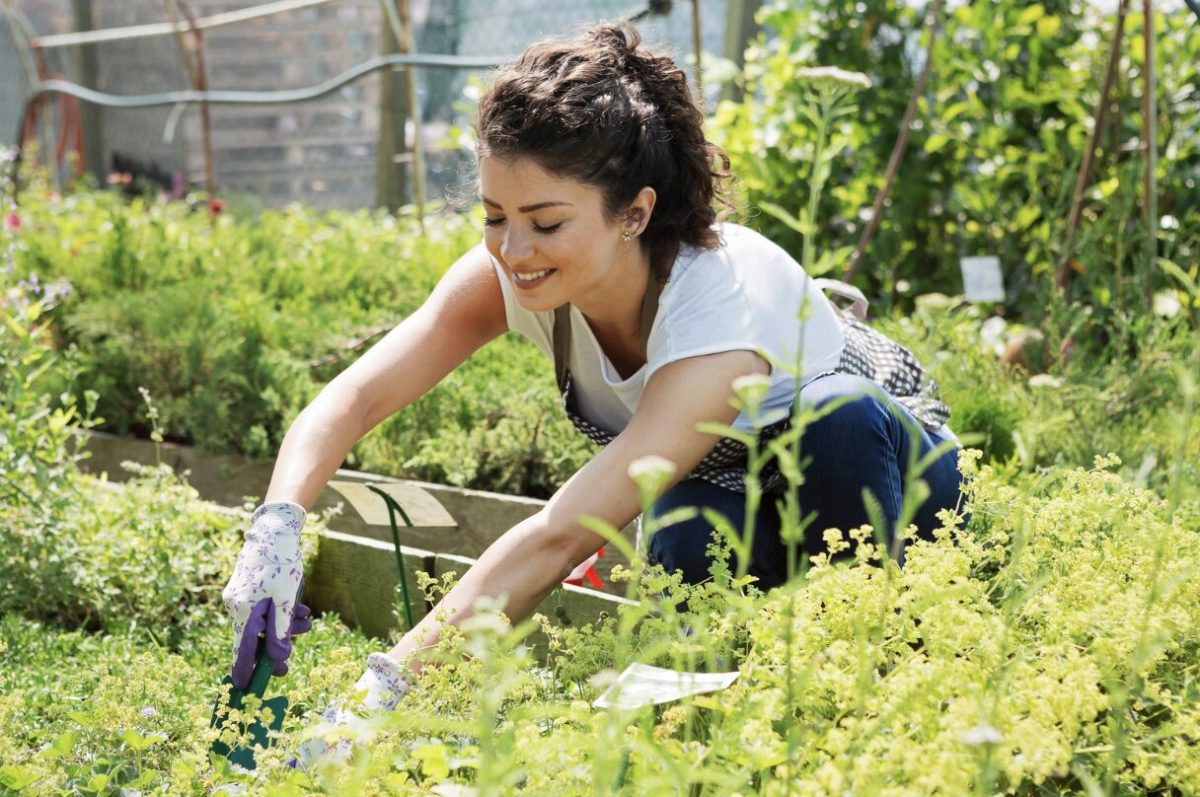
  • How D.C.’s ‘humanure’ fertilizer creates lush gardens and big profits while improving the environment
    Photo credit: CanvaWhat you flush away could help your garden grow.

    The District of Columbia Water and Sewer Authority—now known as D.C. Water—has long provided water and sewer services to Washington, D.C. But for the past decade, the utility has also had an unexpected side hustle: turning human wastewater into fertilizer with flourishing results.

    At most wastewater treatment plants, flushed water is cleaned, while the remaining solid matter is hauled away for disposal. Over time, transporting and disposing of that waste can cost millions of dollars while increasing carbon emissions from the trucks carrying it. A decade ago, however, D.C. Water decided to invest in transforming the solid waste into “humanure” rather than throwing it away.

    Growin’ grass and makin’ gas

    At the end of the wastewater treatment process, the collected human waste solids are processed into biosolid fertilizer using technology developed by Norwegian company Cambi. The process doesn’t just produce high-quality fertilizer—it also generates biogas that can be put to good use.

    “So you get up to 40% more biogas,” Cambi CEO Eirik Fadnes said. “That biogas can be used to generate electricity to be used elsewhere in the wastewater-treatment plant or put on the grid and sold.”

    D.C. Water sells the biosolid fertilizer under the brand name Bloom, and it’s already proving to be a success. Bloom has been used throughout the Washington, D.C., area by customers including Catholic University, Mount Olivet Cemetery, and the Franciscan Monastery. It’s also used on numerous lawns, school grounds, community gardens, and golf courses.

    Success by the numbers

    The numbers underscore D.C. Water’s success. To date, nearly 400,000 tons of Bloom have been sold across Washington, D.C., Maryland, Pennsylvania, and Virginia, generating $13.6 million in revenue. D.C. Water originally estimated it would take 20 years for Bloom to pay off its investment. But thanks to strong demand from institutions, landscapers, and local garden centers, the utility is now on pace to recoup that investment in just 12 years.

    Bloom is also helping D.C. Water meet its environmental goals. By turning waste into a useful product instead of hauling it away for disposal, the utility has reduced its carbon footprint by roughly 50,000 metric tons of CO₂ emissions each year—the equivalent of taking more than 11,700 gas-powered cars off the road annually. The process also produces biogas, which can be converted into electricity to help offset the energy costs of wastewater treatment.

    Human waste works wonders

    None of this would matter if human biosolids weren’t effective at improving soil. “Humanure,” a term coined by Joseph Jenkins, refers to compost made from properly treated human waste. Because human feces can contain disease-causing pathogens, it must be handled carefully. After all, we call it “waste” for a reason.

    When human waste is composted correctly, naturally occurring microbes break down the organic material while generating enough heat to destroy harmful pathogens. Over time, the result is a nutrient-rich compost that can improve soil health. Some farmers even build specialized outdoor composting toilets to create humanure for use on their land.

    Should D.C. Water continue on this path of simultaneous profitability and environmental improvement, it’s likely other wastewater treatment plants will follow its lead.

  • A Spanish park has been free of wildfires for over a decade thanks to 18 donkeys
    Photo credit: CanvaDonkeys and other livestock could help prevent mass wildfires.

    According to NASA, wildfires have doubled worldwide due to climate change. Throughout the globe, governments and environmentalists have been trying to find ways to curb the fires. One particular national park in Spain has found a solution that has been keeping them fire-free for over a decade: donkeys.

    Since 2014, the Firefighting Donkey Battalion unit consisting of 18 donkeys has been preventing wildfires in Doñana National Park in Doñana, Spain. The mission these donkeys do is simple: eat the dry brush that usually sparks and fuels wildfires. The donkeys spend up to seven hours a day using their voracious appetites to graze and clear a 130 by 50 feet area of dried grass, scrub, and other vegetation.

    Why donkeys?

    While humans can do this type of clearing out of dry brush, using donkeys for this work is arguably more effective. While it is a slower process, it is consistent and thorough. Donkeys are able to quietly patrol in areas that are inaccessible to vehicles. In exchange for the feasting, the donkeys get about eight gallons of water and rest. No money or fuel needed.

    The donkeys’ bodies are also pretty much built for this kind of environmental work, too. Their stomachs are built to eat the same rough and dry grass repeatedly without issues. These daily grazings slowly but surely remove potential origin sources for fires. As a bonus, the donkeys are naturally disposing of the dried vegetation whereas humans would have to find a different way to dispose of it.

    Having donkeys or other livestock graze in such areas was once more common in agriculture prior to modern farming. Some argue that the machinization of farming and urbanization have reduced the number of grazing animals. This in turn allows more vegetation growth that become dry spots for more wildfires to occur.

    The method expands

    This method has been so successful that other areas of Spain have adopted it. In 2020, Tivissa launched the Burros Bomberos project with three donkeys to so much success they’ve expanded. They now have 40 donkeys grazing and clearing nearly 400 hectares of land.

    The Andrea Association in Allariz uses a team of donkeys to clear and maintain nearly 1,000 hectares of a biosphere reserve. Using GPS to monitor the donkeys’ activity, the group of grazers travel 19 kilometers per day to feed. Similar initiatives have since started in Basque Country, Catalonia, and Galicia, too.

    Other ways to combat wildfires

    In the United States, California has been using goats in a similar function. The group Fire Grazers Inc. has been contacted throughout California to bring hundreds of goats to eat dried vegetation. Much like donkeys, goats are built to eat rough and dry brush. This includes certain plants such as star thistle that are painful for human hands to grab.

    It’s important to note that donkeys or other animals that eat dry scrub are the primary solution to wildfires. The same folks behind these initiatives also advocate proper forest planning and land management. This includes reducing the amount of easily flammable species of plants and trees such as pine. It takes thought, care, work, and maybe a bunch of donkeys to make a difference.

  • Spanish zoo study suggests that giraffes can do basic math
    Photo credit: CanvaA study is showing giraffes could be using math.
    ,

    Spanish zoo study suggests that giraffes can do basic math

    These hoofed mammals can understand addition.

    The results of an experiment done in a Barcelona zoo suggest that giraffes are capable of doing basic mathematics.

    A group of researchers from the University of Leipzig, the Max Planck Institute for Evolutionary Anthropology, and the University of Barcelona published their study observing four giraffes at the Barcelona Zoo. The experiment involved the giraffes observing containers that had different amounts of carrot pieces inside.

    How did this experiment work?

    The researchers showed each giraffe the two yellow containers and the amount of carrots within each one. After a few seconds, they closed the containers, keeping the carrots out of sight. They then showed each giraffe a green container which had extra carrots inside. Researchers took the carrot pieces from the green container and placed them into one of the closed yellow containers. They then let each giraffe independently choose which of the two closed yellow containers they preferred, without them seeing the total number of carrot pieces within each box.

    The results found the giraffes would choose the container that had the most carrot pieces around 68% of the time. This suggests to the scientists that the giraffes were mentally adding the carrots up in each container before making their choice. After all, there have been past studies suggesting that other hoofed mammals, such as horses, had similar capability of basic quantity tracking.

    The researchers did the experiment again. Only this time they subtracted the amount of carrots in each container. The giraffes were mostly unsuccessful at finding the container with the most pieces. So while giraffes showed signs of knowing addition, they don’t quite process all forms of arithmetic.

    Math = Survival

    Scientists believe that this understanding of addition helped giraffes survive in the wild. They cite that acacia trees, a dietary staple for wild giraffes, can be spread far apart in Africa. Being able to figure out which area has the most trees and the most leaves can help them decide where to graze next.

    Giraffes also live in flexible groups that often change in size. One grouping can mix in with another group and then branch off or away. This means that the giraffes often have to keep track of those currently within their group and surroundings to survive.

    Can other animals do math?

    Giraffes are just the latest animal species known to have some form of mathematical skill. Chimpanzees displayed similar abilities to count as giraffes in a similar experiment that involved them picking the bowl with the most chocolate pieces rather than carrots. Chickens and black bears also showed aptitude in quantity tracking, too. 

    Scientists theorize that most of the animals that can do this basic math through evolutionary survival. After all, the animal that can deduce where more food is tends to live longer.

    One species that displays remarkable mathematical ability are Tunisian desert ants. An observation of their navigational skills of finding their way to food and back to their nest suggests they use the sun as a compass in combination with mentally keeping track of the number of steps they take in a three-dimensional space. In short, these desert ants possess basic geometric and trigonometry skills.

    While you wouldn’t want wild animals to calculate your taxes, it’s interesting to see how rudimentary math is a language that goes beyond species.

Explore More Science Stories

Environment

How D.C.’s ‘humanure’ fertilizer creates lush gardens and big profits while improving the environment

Environment

A Spanish park has been free of wildfires for over a decade thanks to 18 donkeys

Science

Spanish zoo study suggests that giraffes can do basic math

Environment

Beyond birds and mice, free‑ranging cats eat a surprising number of insects