Donald Trump has never touched alcohol, puffed a joint, or even smoked a cigarette. Surprised? I was too when I first found out.

Yet the origins of that straight-edge lifestyle may explain every infuriating, bizarre, and unhealthy manifestation of his oversized personality—much more so than the stream of armchair diagnoses trickling down your news feed.


To some, he’s an unrepentant narcissist. To others, he’s an antisocial sociopath. Some have even gone so far as to suggest he’s living with the late stage degenerative effects of syphilis or early onset dementia. Despite the 1974 instatement of the Goldwater Rule making it “unethical for psychiatrists to give a professional opinion about public figures they have not examined in person,” there are more than a few mental health professionals who’ve publicly entertained what’s so deeply wrong with the leader of the free world.

[quote position=”full” is_quote=”true”]Trump has said that ‘Freddy’s’ lifelong habit of drinking and subsequent years of decline had a ‘profound impact’ on his personality.[/quote]

But there’s one explanation I haven’t seen yet: One that helps us truly grasp how his mind works, and (stay with me here) maybe even helps us find some empathy. If you really want to understand Trump’s contradictions—from his combative, yet people-pleasing manner to a superhero complex with a weakness for constant affirmation—“The Donald” narrative has to be flipped from one focused on lavish greed to one of desperately unfulfilled need.

Trump’s older brother Fred Jr. died tragically of complications from alcoholism at the age of 43 in 1981 when Donald was just 35. Trump has said that Freddy’s lifelong habit of drinking and subsequent years of decline had a “profound impact” on his personality. I’d argue it shaped the inner turmoil feeding his worldview: deep insecurities, brutal, codependent relationships, and an insatiable need for approval;

Simply put, Donald Trump is an untreated Al-Anon.

Wait—what’s an “Al-Anon”?

Back in 1951, Lois Wilson was at a crossroads. Her husband Bill had found a solution for his crippling drinking problem and also risen to national acclaim as the co-founder of Alcoholics Anonymous. While “Bill W”’s success with AA was (and still is) a life-saving achievement, the reality for Lois and others like her was more complicated. While her husband flourished, she still carried the trauma from his years of emotionally abusive behavior. Lois herself was not an alcoholic, so making another appearance at her husband’s AA meetings wasn’t helping her pain. What’s more, she said being forced to listen to a room full of heavy drinkers tell war stories risked triggering even more resentment.

Wanting to “strive for her own personal growth” Lois soon founded Al-Anon, an organization dedicated to offering, “a program of recovery for the families and friends of alcoholics.” Al-Anon meetings are independent, but they lean heavily on the AA model, including an emphasis on sharing personal stories as a primary form of support and following the The Twelve Steps as outlined in Bill W’s Big Book.

No individuals are alike, of course, but there are some defining traits of an untreated Al-Anon:

As a longtime member of a Twelve-Step group. I’ve spent hundreds, if not thousands, of hours in the shared company of people recovering from substance abuse and addictive behaviors, many of whom attend Al-Anon meetings. When I first saw Trump talk about his brother’s death, I’d never heard him speak with such obvious sincerity and vulnerability in his voice — before quickly veering into another rage-filled talking point. It hit me instantly: This man belongs in Al-Anon.

[quote position=”right” is_quote=”true”]It hit me instantly: This man belongs in Al-Anon.[/quote]

At Twelve-Step meetings, members are asked to avoid discussing “outside issues” (politics, religion, etc.) and instead are asked to focus on their recovery. But, in the aftermath of the election, every meeting I attended began and ended with someone compulsively venting about how the election had affected them personally. It was clear the president-elect had invaded the psyche of us all, maybe none more so than those who share his hidden pain. Privately, I began pointing out to a few friends in recovery that they actually have something specific in common with our new president: He doesn’t drink or do drugs, and he watched a beloved family member slowly kill himself through addiction. The unfolding displays of horrific disbelief followed by reluctant empathy was something I’ll never forget.

“When I heard he was a teetotaler I thought ‘Of course,’” says Dr. Greg Cason, a behavioral psychologist in Los Angeles.

Cason says research has shown that both alcoholics and defiant straight edges often exhibit the same personality disorders stemming from trauma. “They typically had abusive, authoritarian parents,” Cason says. “Whether or not they attempted to treat that with substance, the root symptoms remain the same.” While one brother turned to drinking and the other abstained in response, they were both taking extreme measures to avoid dealing with underlying issues like narcissistic tendencies and impulse control.

Cason shocked his colleagues in late 2016 when he gave the keynote address to the Lesbian and Gay Psychotherapy Association. It was just days after the 2016 election and Cason focused his remarks on how and why his colleagues must empathize with Trump voters. His argument was built around what he calls deep psychological wounds that have hit middle-aged, lower-income, white men without college degrees in recent years, creating a connective tissue between them and the billionaire real estate mogul. “I looked at a map showing where the most severe trends of addiction and suicide rates were spiking across the country,” Cason said. “They were all Trump states.”

However, when it comes to Trump himself, Cason doesn’t hesitate to speak more critically, saying Trump exhibits many of the common traits of a narcissist. Though he doesn’t attempt to formally diagnose Trump, he says new research argues that people like Trump exhibiting those traits weren’t necessarily born that way. Instead, it’s possible their emotional development was stunted after a traumatic, life-changing event. “If you see him as an 8-year-old boy, it’s very clear,” says Cason. “He thinks the world revolves around him, and he hasn’t learned to master his basic emotions. These behaviors (narcissism, codependent traits and maybe even psychopathy) were passed along from his domineering father, escalated by his brother’s drinking, and aided by his family’s abundant financial resources.

What Trump’s childhood reveals

[youtube ratio=”0.5625″ position=”standard” ]

“I want to thank my brother, my late brother, Fred. What a fantastic guy. I learned so much from Fred. Taught me more than just about anybody. Just probably about even with my father, a fantastic guy. So I want to thank Fred. He’s up there and he’s looking down also.”

Donald Trump at a campaign rally after winning the New Hampshire Republican primary, February 9, 2016.

Donald Trump was—and always will be—his father’s second son. Fred Trump Sr. was a domineering bully who never acknowledged the success of his attention-seeking son. By the time Donald became “The Donald” and plastered the family name all over Manhattan high-rises and Atlantic City casinos, Fred was suffering from dementia and unable to convey the affirmation Trump so desperately craved.

Fred Jr., Trump’s older brother, was supposed to be the true heir to the family dynasty. Tall, handsome, stylish, and funny, Fred Jr. carried himself with the natural grace that Donald has spent decades poorly trying to emulate. “He was a great guy, a handsome person. He was the life of the party. He was a fantastic guy, but he got stuck on alcohol,” Trump said in an interview during the campaign. He was so seemingly smooth that when he walked away from the family business, it was to become an airline pilot, something Trump would later bitterly dismiss as being “like a bus driver in the sky.” But Fred Jr. also carried the disease of addiction. When he rejected taking his place by his father’s side, his relationship with Donald became strained. As Michael D’Antonio, author of Never Enough: Donald Trump and the Pursuit of Success, said in a recent interview: “Instead of becoming nicer because he observed his brother’s fine qualities, Donald became tougher. Instead of becoming more trusting, I think Donald became more paranoid.”

[quote position=”full” is_quote=”true”]He thinks the world revolves around him and he hasn’t learned to master his basic emotions.[/quote]

What happens to untreated Al-Anons like Trump

There’s a saying in Twelve-Step fellowships like Al-Anon that your disease isn’t cured, it’s in the other room doing push ups. The implication being that someone who doesn’t address their behavioral challenges will not only fail to get better, but will actually get worse over time.

The early days of Trump’s presidency show not someone at the height of narcissistic control, but someone on the perilous verge of collapse.

Comparing nearly 40 years of Trump television interviews is like watching a melting sulfurous candle. In 1980 a 33-year-old Trump uses many of the same rhetorical techniques he does today but his conversational tone is steady, measured and often thoughtful. Eight years later, Trump talks to Oprah Winfrey about trade policy and world powers like China. It’s closer to his bombastic style of today, but he’s still offering more nuanced takes and even praising Democrats like Jesse Jackson. By the time we get to 2005’s leaked Access Hollywood audio we’re in the company of the unhinged Trump. Even if you don’t believe Trump committed actual acts of sexual assault, it’s clear he’s willing to boast about such acts in order to desperately seek the approval of someone else, anyone else. Even Billy Bush.

We can’t know if Trump has ever considered getting help after his brother’s death, but it’s statistically unlikely. Al-Anon doesn’t keep hard numbers, but its membership is reportedly 85 percent female. That doesn’t mean men like Trump wouldn’t be welcomed there. In fact, if he was serious about changing his behavior, it might just be the perfect place for him to drastically change his relationships with others, especially women.

“All of the worst parts of his personality would actually become assets if he worked on them,” Jess A., an Al-Anon member, told me, explaining in the Twelve-Step philosophy all “defects of character” are actually positive traits when brought down to the right size. “He’d fit right in.”

Calling Donald Trump an untreated Al-Anon isn’t a joke meant to ridicule him. It’s a way to finally understand his behaviors and how other people, sometimes for good, but more often not, continue to manipulate him.

It’s a way to move beyond the cries of racism, sexism, or undiagnosed mental illness that makes us feel better in the moment, but does nothing to change our reality.

I’m not writing this to get Trump into treatment. A cry for help for a man unwilling and incapable of asking for help himself accomplishes nothing. I wrote it because it helped me understand where I believe he’s coming from, and maybe it will help you, too. This isn’t for him, it’s for us.

If his presidency doesn’t end with impeachment or resignation, it should start with an intervention.

  • Can’t stop endlessly scrolling? Tips to help you take back control
    Photo credit: milorad kravic/Getty Images
    ,

    Can’t stop endlessly scrolling? Tips to help you take back control

    Social media is designed to be addictive, but there are ways to break free.

    It’s called the infinite scroll – a design feature on social media, shopping, video and many other apps that continuously loads content as you reach the bottom of the page. Handy? Yes. Clever? Also yes. Devious? Very much so. The infinite scroll is likely the main reason you find it so hard to stop scrolling once you begin.

    To understand why this design feature is so devious, we need to understand the psychology and behaviours it taps into.

    First, the infinite scroll takes away a natural stopping point – where you might decide that’s enough social media for today. For example, Instagram feeds once stopped after all chronologically new posts from followed accounts had been viewed, and even told us we were “all caught up” for the day. Now, algorithmic feeds combined with the infinite scroll mean there’s no way to ever be caught up with it all.

    The second reason you find it so hard to stop scrolling is the promise of something good that might be just about to pop up in your feed. The algorithm “knows” what you like. So, hand-in-hand with the infinite scroll, it keeps feeding you all those tasty tid-bits.

    Putting it bluntly, these features help create an addiction of sorts. The promise of a little hit of dopamine when we see content we love. And addictions are hard to beat – but not impossible.

    Here are some quick wins and longer-term solutions if you want to break free from the grip of the scroll.

    The quick wins

    Create a break

    Your device might be the problem, but it can also be part of the solution. Start by using your phone’s screen time features – such as Android’s Digital Wellbeing or Apple’s Screen Time.

    You can also install a more sophisticated third-party app that forces you to break the patterns of mindless scrolling behaviour.

    Apps such as One SecScreenZenOpal and Freedom can short-circuit the automatic habits associated with scrolling in various ways. These include putting mandatory pauses before social media apps open, or applying colour filters (like grayscale) to make apps less appealing.

    They can even hard-block apps for specific periods of time if you really need a tough love approach.

    Remove social media apps

    This one’s usually met with an audible gasp when I suggest it, but you might find you adapt to not having social media at your fingertips faster than you’d imagine. You’re not deleting your accounts – just making it harder to open them and scroll.

    Schedule some scrolling time

    If you can’t imagine life without scrolling, schedule time each day for just that activity. It could be in your lunch break or when you get home from work: give yourself the freedom to scroll for the amount of time you set (say, 15 minutes) and don’t feel guilty about it. Just remember you still have to close the apps and get on with your life as soon as the time is up.

    The hard work

    The above might limit your scrolling in the short term, but long-term benefits (and emotional freedom) will likely take a bit more work.

    The “easy” tips often work for a little while, when you’re motivated to change and feeling optimistic. But time and the pressures of life can start to erode your convictions.

    So, to gain true freedom from scrolling, think about social media and whether it’s a relationship that serves you well. If you feel like it’s controlling you far more than you are controlling it, here are some things to consider. Be warned, they might not be easy.

    What’s the deeper reason?

    Think deeply about why you’re scrolling so much in the first place. Is it a lack of willpower? Are you avoiding something or someone? Are you suppressing feelings that you would prefer not to acknowledge?

    All of these things can be reasons why we seek distraction. You might be avoiding a big thing (the state of a relationship) or a small thing (cooking dinner), but either way, scrolling is the symptom, not the disease. So, consider if scrolling might be part of a bigger problem you need to deal with instead.

    Who’s benefiting whom?

    Consider how much you really “need” social media. Do you actively use it in a way that benefits you (for example, as a business platform) or did you sign up out of curiosity years ago and have never really questioned why you’re still using it?

    If it’s the latter, apply a critical lens to the platforms you use and how they serve you. On average, Australians use six to seven different social media platforms regularly. Think about what you might gain from spending less time scrolling, but also think about whether your life would be worse without some of them.

    If you can’t think of a really compelling reason as to why it would be worse, it might be time to say goodbye to a few.

    These “hard” options will take time and effort, and require you to reflect on your habits. But, like with most things, the reward for effort is likely to be greater, and last longer.

    This article originally appeared on The Conversation. You can read it here.

  • Goodbye, knee pain. In a medical first, scientists have found a way to regrow damaged cartilage.
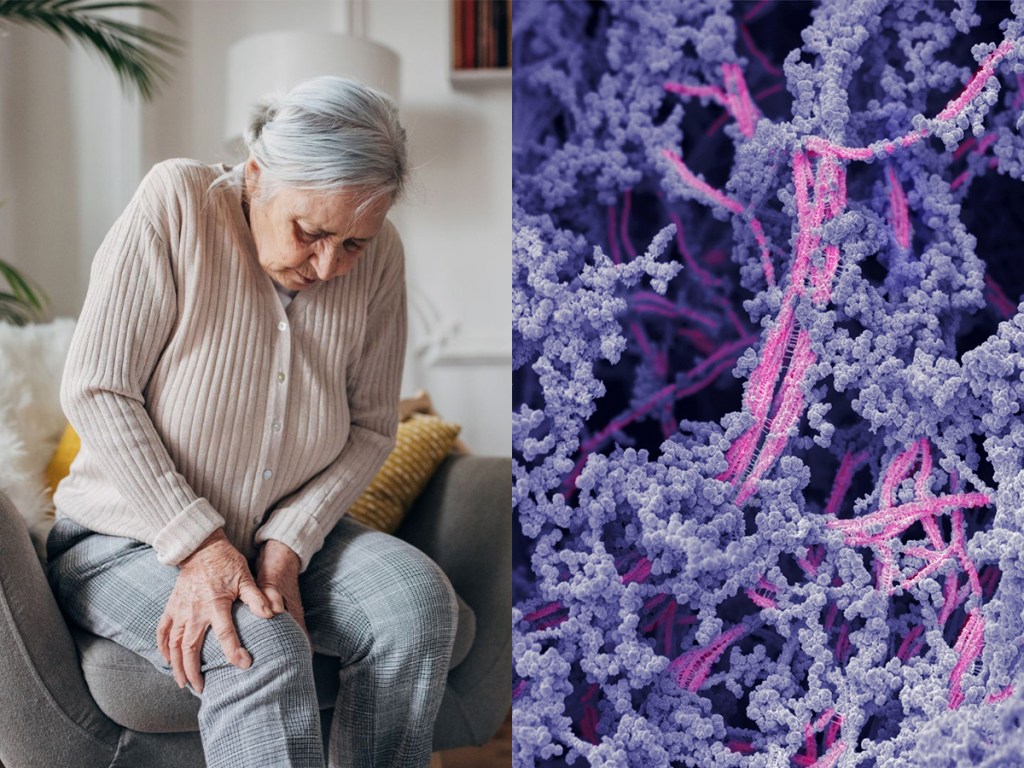
    (LEFT) Person with knee pain and (RIGHT) new bioactive material.Photo credit: Canva & Samuel I. Stupp/Northwestern University
    ,

    Goodbye, knee pain. In a medical first, scientists have found a way to regrow damaged cartilage.

    “Our new therapy can induce repair in a tissue that does not naturally regenerate.”

    Science might be closer than ever to solving your aching knee problems. Researchers at Northwestern University have created a rubbery goo that can regrow cartilage in damaged knees.

    Cartilage cushions joints, keeps movement smooth and pain-free, and reduces pressure on bones—from standing still to a vigorous hike. However, when it’s damaged by injury or simple wear and tear, the road to recovery can be extremely challenging. Cartilage has a very limited ability to regrow and heal itself.

    research, regrow cartilage, recovery, tissue, regeneration
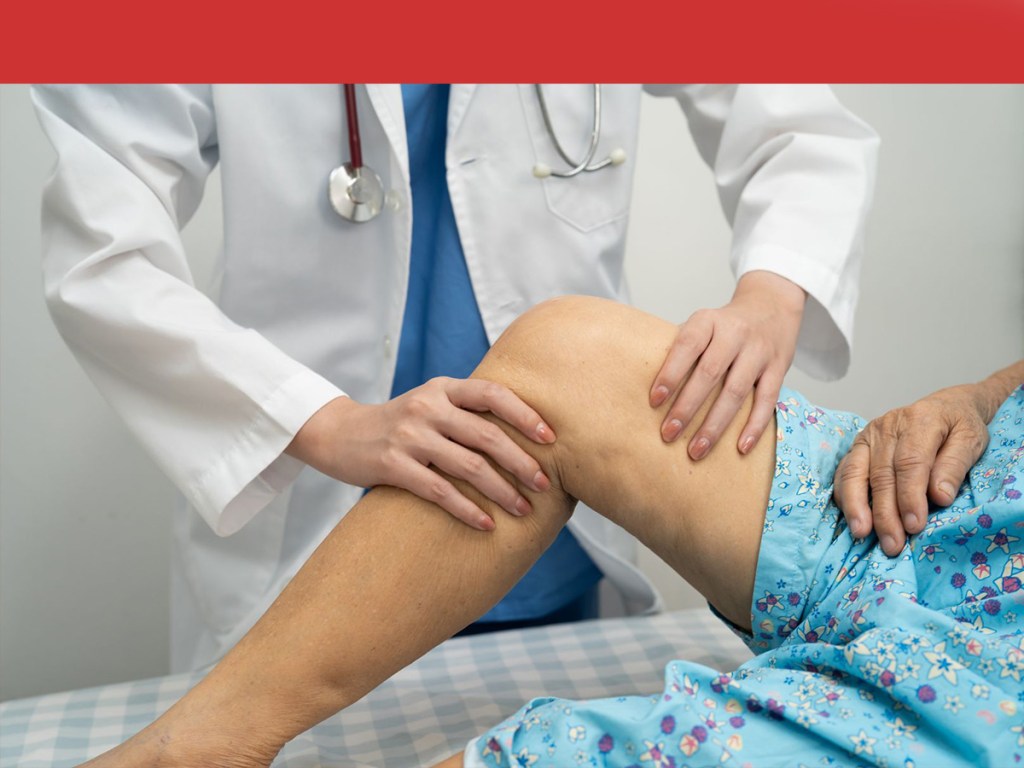
    A doctor examines a knee.
    Photo credit: Canva

    Regrowing cartilage with a rubbery goo

    This breakthrough bioactive material doesn’t just passively sit in the body, it binds to and integrates with surrounding tissue, promoting cartilage regeneration. The substance forms a network of components that imitate the body’s natural environment. A scaffold-like structure allows cells to connect and rebuild cartilage tissue.

    “The problem is that, in adult humans, cartilage does not have an inherent ability to heal,” said Samuel I. Stupp, who led the study. “Our new therapy can induce repair in a tissue that does not naturally regenerate. We think our treatment could help address a serious, unmet clinical need.”

    protein, sheep, bioactive material, damaged tissue, protein fragments
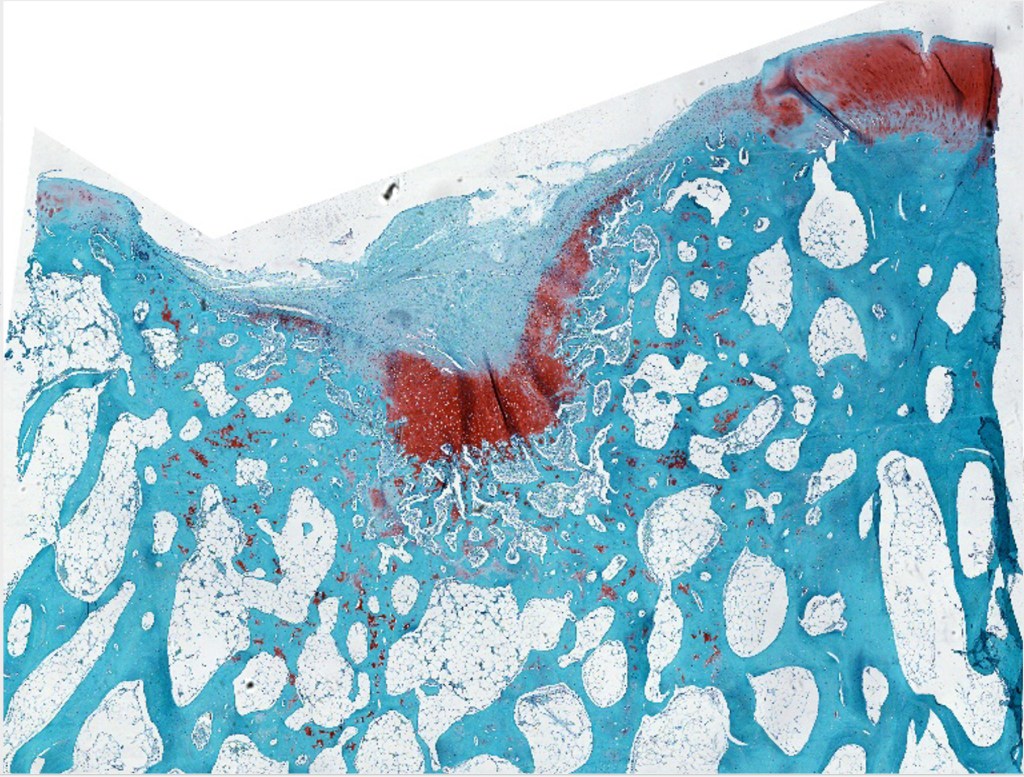
    Damaged cartilage stained red.
    Photo credit: Samuel I. Stupp/Northwestern University

    Bioactive material regenerates high-quality cartilage

    In the study, Stupp and his team applied the material to damaged cartilage in sheep. These animals have weight-bearing loads comparable to human knees.

    The biomaterial, made from short protein fragments and a modified version of hyaluronic acid, behaves similarly to naturally occurring cartilage in the body. Stupp explained the reasoning behind using hyaluronic acid, saying, “It’s also naturally found in many tissues throughout the human body, including the joints and brain. We chose it because it resembles the natural polymers found in cartilage.”

    After fewer than six months, the new cartilage showed high-quality regeneration and strong indications that the repair could work in humans.

    hyaluronic acid, cartilage repair, natural polymers, structure, surgery, regrow cartilage
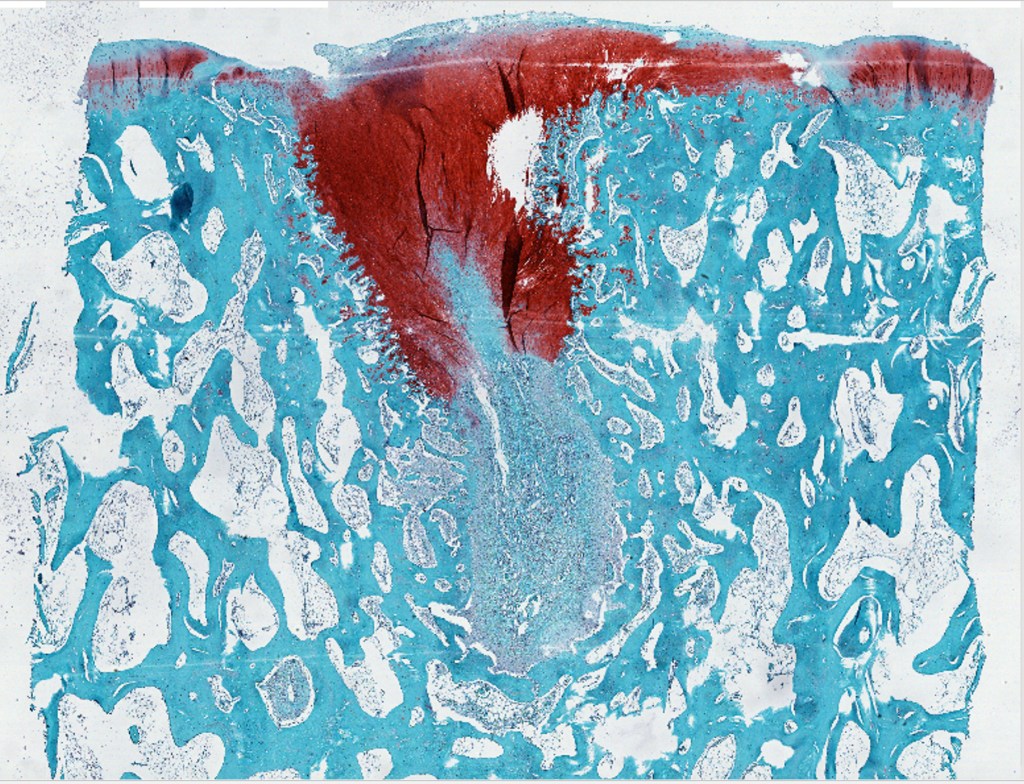
    Treated cartilage stained red shows repair.
    Photo credit: Samuel I. Stupp/Northwestern University

    Limited solutions to damaged knees

    Cartilage damage is unfortunately very common, affecting more than 500 million people worldwide. For decades, the message has been discouraging: once cartilage is damaged or disappears, it’s gone for good.

    A 2025 study found that current treatments, such as surgery, cell implants, and microfracture, may help in the short term but often produce weaker cartilage soon after. Failure rates for microfracture surgery have led to as many as 41% of patients requiring total knee replacement. Finding reliable, long-lasting solutions is still a work in progress.

    A 2025 study on cartilage repair found that, although many people felt better after surgery, up to 48% developed arthritis over time. Only 17–20% returned to playing sports, and some required additional surgeries, including knee replacement.

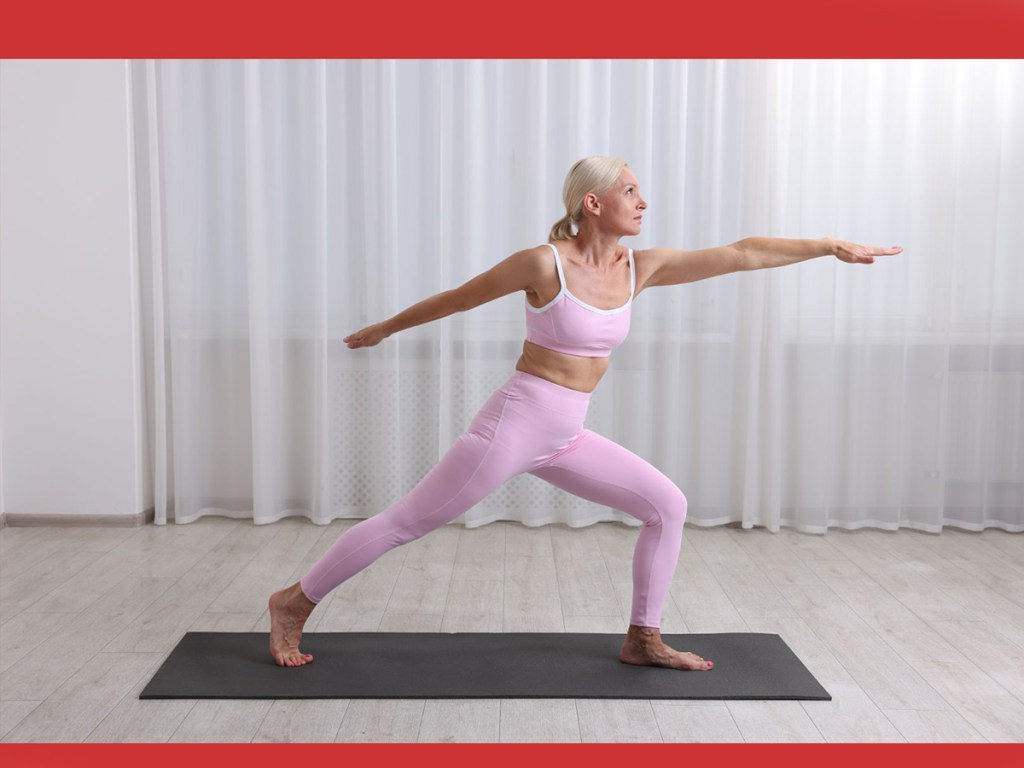
    yoga, exercise, standard care, arthritis, goo-like material,
    A woman practices yoga.
    Photo credit: Canva

    Study hopes to change the standard of care

    Researchers believe the bioactive material could be used in most joint surgeries. With these promising findings, the goo-like substance could one day make a meaningful difference for anyone hoping to move without pain again.

    “By regenerating hyaline cartilage, our approach should be more resistant to wear and tear, fixing the problem of poor mobility and joint pain for the long term while also avoiding the need for joint reconstruction with large pieces of hardware,” Stupp said.

  • Menstrual pads and tampons can contain toxic substances – here’s what to know about this emerging health issue
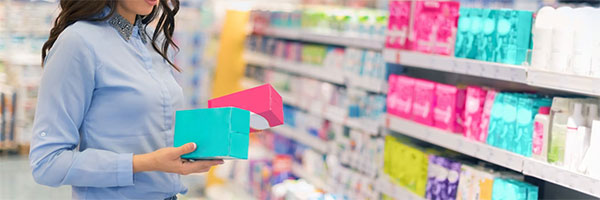
    Studies have found small amounts of toxic heavy metals and other potentially harmful substances in some menstrual pads and tampons.Photo credit: zoranm/E+ via Getty Images

    About half of the global population menstruates at some point in their lives. Disposable products, such as tampons and pads, are some of the most popular products used around the globe to manage menstrual flow.

    Unfortunately, studies have shown that many personal care products, including shampoo, lotion, nail polish and menstrual products, contain hazardous chemicals. Items used in or near the vagina are of particular concern because they are in contact with vaginal mucous membranes – the moist tissue lining the inside of the vagina that secretes mucus. These tissues can absorb some chemicals very efficiently.

    People use menstrual products 24 hours a day for multiple days monthly, over the course of many years. Tampons, which are used internally, are surrounded by the permeable vaginal mucous membrane for up to eight hours at a time.

    I am an environmental epidemiologist, and I study chemical exposure, its sources and its health effects. As a person who menstruates, I also must make my own decisions around menstrual products and manage the challenge of finding accurate information about women’s health risks, which receive less research attention and funding than men’s health.

    In 2024, I co-authored the first paper that detected metals in tampons, including toxic metals like lead and arsenic. My colleagues and I also wrote a review paper that surveyed the scientific literature and found about two dozen studies measuring chemicals in menstrual products.

    The various chemicals that these studies detected were typically at concentrations low enough to make their health impact unclear. However, they included chemicals known to disrupt the endocrine system, which makes and controls hormones that are essential for bodies to function.

    How contaminants get into menstrual products

    The first modern tampon in the U.S. was patented in 1931. Nearly a century later, tampons still are made primarily from cotton, rayon or a blend of the two.

    Chemicals may get into tampons and other menstrual products in a number of ways. Some chemicals, like heavy metals, are present in soil, either naturally or due to pollution, and may be absorbed by cotton plants.

    Other chemicals, such as zinc, may be intentionally added to menstrual products to prevent the growth of harmful bacteria. Still others, such as phthalates – synthetic chemicals used to manufacture plastics – may leach into menstrual products from plastic packaging or be added as part of a fragrance.

    Research suggests that these chemicals are present in a large proportion of menstrual products – we found lead present in all 30 tampons we tested. What we don’t yet know is if these chemicals can get into people’s bodies in a high enough concentration to cause health effects in either the reproductive system or elsewhere in the body.

    Limited federal regulations

    The U.S. Food and Drug Administration regulates tampons, menstrual cups and scented menstrual pads as Class II medical devices, which carry moderate to medium risk. Unscented menstrual pads are Class I medical devices, which are considered low-risk. These categories are based on the risk the device may present to a consumer who uses it in the intended way.

    FDA guidance for Class II devices offers only a few general guidelines with respect to chemicals. For menstrual tampons and pads, it recommends – but does not require – that products should not contain two specific dioxin products or “any pesticide and herbicide residues.” Dioxins are a chemical by-product of the bleaching process to whiten cotton, and they are associated with cancer and endocrine disruption. Using non-chlorine bleaching methods can reduce dioxin formation.

    The most stringent regulation of tampons in the U.S. occurred after an illness called toxic shock syndrome became a public concern in the 1970s and 1980s. Menstrual toxic shock syndrome occurs when the bacteria Staphlococcus aureus grows in the vagina on inserted menstrual products and releases a toxin called TSST-1. This substance can be absorbed through the vaginal mucosa and cause a variety of symptoms, including fever, high blood pressure, shock and even death.

    During this epidemic, in which at least 52 cases were recorded and seven people died over a period of eight months, tampons were associated with the syndrome – especially a highly absorbent tampon called Rely, which was pulled from the market.

    In response, the FDA created a task force that recommended standardizing the tampon absorbencies and advised consumers to use the lowest absorbency for their flow. This is why tampons in the U.S. now come in a range of absorbencies, from light through regular to super and ultra, so that users can choose the level they need while minimizing risk of toxic shock.

    Living in a ‘soup of chemicals’

    Just because a chemical is present in a menstrual product doesn’t mean it can get into the body. However, chemicals like lead and arsenic are known threats to human health. So it’s important to study whether harmful chemicals present in menstrual products could contribute to health problems.

    Humans in the modern world live in what expert toxicologist Linda Birnbaum, former director of the National Institute of Environmental Health Sciences, calls a “soup of chemicals.” Simply being present on Earth means being exposed to many chemicals, at different concentrations, all at once. This makes it difficult to unravel the relationship between a single chemical exposure and health.

    Nonetheless, science has shown that chemical exposure from at least one menstrual product – vaginal douches – does affect health. Vaginal douching is the process of washing or cleaning the inside of the vagina with water or other fluids.

    The American College of Obstetricians and Gynecologists recommends avoiding this process, which can harm healthy bacteria in the vagina, increasing the risk of vaginal infections and other diseases.

    In addition, a 2015 study found that women who use vaginal douches have higher concentrations of a chemical called monoethyl phthalate in their urine. Exposure to this substance is associated with reproductive health problems, such as reduced fertility and increased pregnancy risk.

    Can these chemicals be absorbed?

    Scientists are working now to determine what concentrations of metals and other chemicals can leach out of tampons and other menstrual products. One 2025 study estimated that volatile organic compounds, a group of chemicals that vaporize quickly, can be absorbed through the vaginal mucosa. Volatile organic compounds may be added to menstrual products as part of fragrances, adhesives or other product components.

    My team and I are now shifting our focus to the relationship between menstrual product use, various chemicals, and menstrual pain and bleeding severity. We want to see whether some chemicals will be elevated in menstrual blood, whether these chemical levels are higher in people who use tampons, and whether the chemicals are associated with greater menstrual pain and bleeding.

    States are starting to act on this issue. For example, in 2024, Vermont became the first U.S. state to ban multiple chemicals from disposable menstrual products. California bans PFAS, a widely used group of highly persistent chemicalsfrom menstrual products. New York adopted a law in December 2025 barring multiple toxic chemicals from menstrual products.

    California also enacted a law in October 2025 that requires manufacturers of disposable tampons and pads to measure concentrations of arsenic, cadmium, lead and zinc in their products, and to share those measurements with the state, which can publish them. More information like this will help support informed choices for millions of consumers who rely on menstrual products every month.

    This article originally appeared on The Conversation. You can read it here.

    conversationpixel

Explore More Health Stories

Health

I’m a philosopher who tries to see the best in others – but I know there are limits

Health

GLP‑1 drugs may fight addiction across every major substance, according to a study of 600,000 people

Well-being

Expert shares ancient monk’s mindset for keeping your composure when life ‘bumps’ you

Health

The Tsimané people of Bolivia have almost no dementia. Scientists say modern life is our problem.