The fashion industry has routinely been characterized as frivolous and superficial, but it isn’t always rooted in materialistic consumption. In fact, fashion has often reacted to and reflected its social and political environments.

Laid-back hippie counterculture bloomed in the 1970s in resistance to stricter, more tailored fashions of the 1960s, reflecting the era’s emphasis on self-expression and freedom, as well as mounting disapproval of American involvement in the Vietnam War. Aggressive punk style also surfaced in the ’70s, rising alongside its synonymous music scene, and was bold and deliberately offensive. It reflected the attitudes of young people who were frustrated with conservatism, the establishment, and materialism. Grunge was birthed from the anticonsumer, antifashion, nonconformist movement of the 1990s. Popularized by bands like Nirvana and Pearl Jam—whose lyrics spoke of detachment, loneliness, angst, and fear—artists dressed in inexpensive clothing from thrift and army surplus stores, in attempts to separate themselves from the glamour normally associated with musicians and strive instead for authenticity.


And so, early in January, British fashion designers continued this very tradition during the London Fashion Week Men’s Fall 2017 presentations, debuting politically charged collections emblematic of current turbulent and divided times, marked by deteriorating race relations, anti-immigration sentiment, growing income inequality, and even the worrisome rise of fake news.

Daniel W. Fletcher

On June 11, 2016, just weeks before the European Union referendum took place, designer Daniel W. Fletcher staged an anti-Brexit protest outside the venue of his Spring/Summer 2017 show, where models donned baseball caps and tracksuit jackets emblazoned with “STAY” and carried flags and posters urging citizens to vote to remain in the European Union. The results did not favor Fletcher’s plea, and he followed up this season with a collection designed for the post-Brexit world. Leather patchwork—a metaphor for unity in a broken and divided social and political landscape—is a recurring design in his ‘70s-inspired collection. Another highlight was a series of inverted suits that Fletcher imagined as an unorthodox uniform for the next generation of young activists. Models stood on elevated platforms surrounded by flyers from Fletcher’s promotional campaign—carrying messages for today’s disenfranchised youth—which stressed the gravity of sustaining and bolstering efforts in youth political involvement. “After such a turbulent year in politics—and all of the xenophobia—I wanted to send out a positive message,” Fletcher explained to Vogue.

Wales Bonner

Rising rapidly in the ranks of the fashion industry, Jamaican-British designer Grace Wales Bonner offered up a celebration of diversity for her much anticipated sophomore collection, titled “Spirituals II.” Her work often references her mixed racial identity, and Bonner has been touted as a radical designer redefining the way we think about gender and race. For “Spirituals II,” she presented black masculinity in a delicate and poetic manner that is seldom seen—both on the runway and in media. In addition to drawing from her south London upbringing, Bonner was also inspired by the streets of Senegal—where she had stayed on a retreat at the Josef Albers Foundation—and Renaissance portraiture. The result was a mix of billowy white robes, Renaissance-inspired head coverings—made in collaboration with British milliner Stephen Jones—and loosely cut suits. A diverse cast of models dashed down the runway to a jarring soundtrack by Elysia Crampton, a Bolivian-American experimental electronic musician whose politically influenced work explores queer identity, spirituality, colonialism, and transformation. Even the stereos blaring Crampton’s music were consciously curated, borrowed from the Notting Hill Carnival—an annual event that celebrates Afro-Caribbean cultures and traditions. In the final walkthrough, models pinned their hands to their chests—a small, but impactful gesture symbolizing honor and dignity. At a time when diversity is often nothing more than a publicity stunt for some brands, Bonner’s show—by contrast—was earnest and beautiful, which may help explain her quickly accumulating acclaim.

Matthew Miller

Anti-establishment, anarchistic designer Matthew Miller’s collection, titled “Fear Itself,” was a bleak response to a time when appeals to emotion and prejudice trump factual information. As such, Miller’s parachute harnesses, leather motorcycle jackets, and quilted bombers provide the modern-day armor necessary for survival in a tumultuous political and social climate. “It’s about how a generation are a product of fear politics in a post-truth world,” Miller said to Vogue. “It has created a collection of individuals who are afraid to act.” Models faces were painted red to mimic blood, which—paired with red accessories—added a bold thrust of color into an otherwise neutral palette. Closing out the show, models carried monstrous black and red flags down the runway.

Christopher Shannon

“How can it not affect me?” asked designer Christopher Shannon after his Fall/Winter runway show, referencing the results of the EU referendum. The collection, an ode to ‘90s sportswear, included satirical sweat suits, puffer jackets, shredded denim, and flyaway jeans. Models wore flags—created in collaboration with design duo James Theseus Buck and Luke Brooks of Rottingdean Bazaar—to mask their faces, which was inspired by soccer fans who paint their faces to express unbridled pride and support for their teams. The flags were shredded to represent disintegrating international relations of our post-Brexit reality. Parodying brands like Calvin Klein, Timberland, and Hugo Boss International, Shannon replaced the iconic CK logo with “CS” for Constant Stress, “Tumbleweed” for Timberland, and “LOSS International” in place of Boss International. The tongue-in-cheek imitations shed light on deepening feelings of anxiety, stress, and loss of control, which are sure to be amplified in an era where racism, xenophobia, homophobia, Islamophobia, and nationalism are on the rise.

And beyond the Brits, creative director Demna Gvasalia presented Balenciaga Men’s Fall/Winter 2017 last week during Paris Fashion Week. Inspired by “the subject of corporate dressing,” some looks from the collection even paid homage to Bernie Sanders—the anti-Establishment, self-proclaimed democratic socialist. Sanders’ unmistakable presidential campaign logo was present on Gvasalia’s designs, but “Balenciaga 2017”—rather than the politician’s name—was adorned on t-shirts, jackets, pins, and scarves.

And so, as the practice of designers drawing inspiration from politics continues, we’d do well to keep an eye on the runway, since it seems designers will have an abundance of inspiration, for better or worse.

Photos courtesy of Flickr user Gage Skidmore (left) and Instagram user bespoke.ben (right)
  • Overpackers love this simple ‘5-4-3-2-1’ packing rule that makes travel way easier
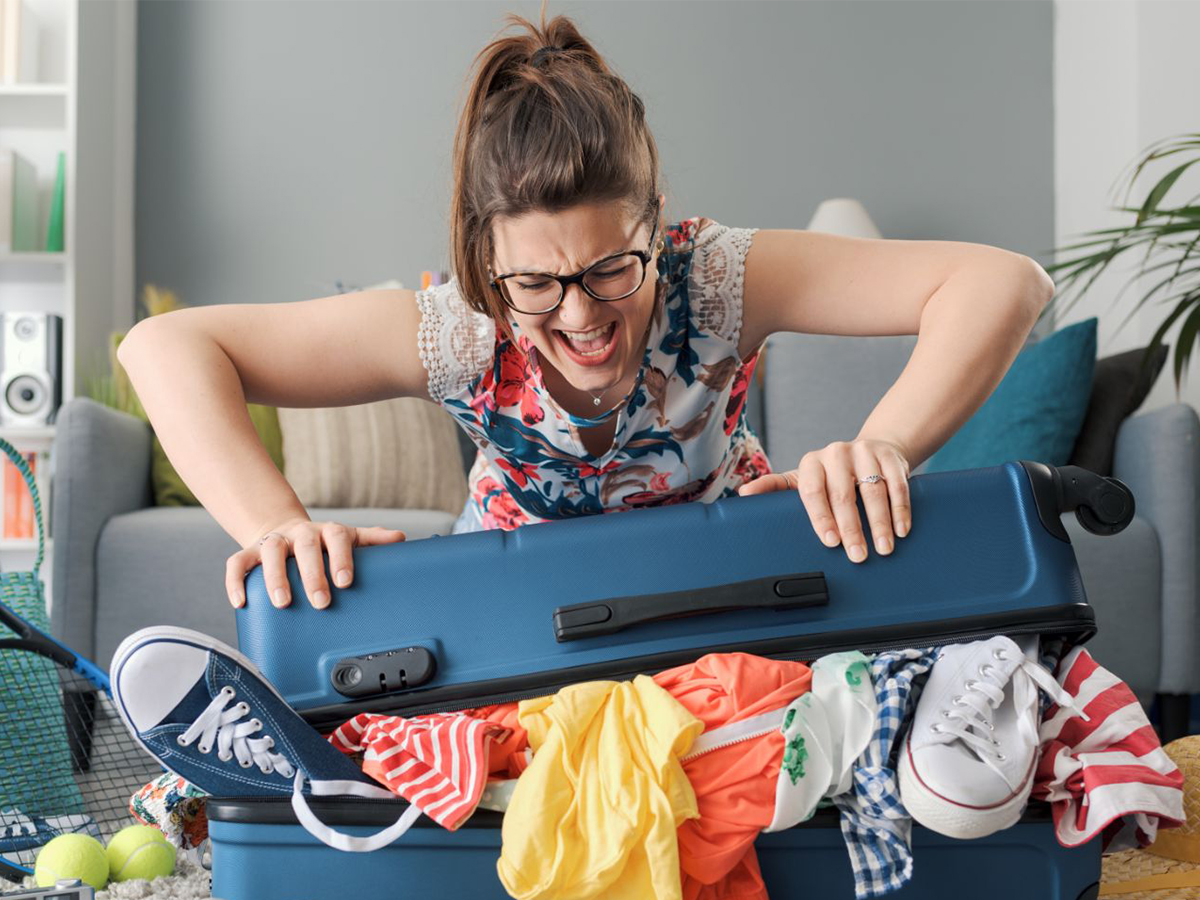
    An obvious overpack for travel.Photo credit: Canva
    ,

    Overpackers love this simple ‘5-4-3-2-1’ packing rule that makes travel way easier

    When it comes to travel, packing efficiently is a skill acquired through experience. Lifestyle and content creator Alison Lumbatis shares a helpful 5-4-3-2-1 method designed to take the stress out of packing for both seasoned travelers and first-timers. Trying to pack light while still remembering everything you need can feel a little daunting. A simple…

    When it comes to travel, packing efficiently is a skill acquired through experience. Lifestyle and content creator Alison Lumbatis shares a helpful 5-4-3-2-1 method designed to take the stress out of packing for both seasoned travelers and first-timers.

    Trying to pack light while still remembering everything you need can feel a little daunting. A simple trick is knowing exactly what’s necessary, making your bag lighter and more practical.

    @alisonlumbatis

    Calling all overpackers—this one’s for you! ✈️🧳 The 5-4-3-2-1 packing method is one of my favorites because it’s totally customizable. Prefer dresses? Swap a top and bottom for a dress. Love skirts? Sub them in for pants! These pieces should last you 1-2 weeks, depending on your access to laundry. 🔗’s to everything in bio! #outfitformulas #packinglight #styleconfidence #wardrobemadeeasy #travelcapsule #dailyoutfits #closetconfidence #vacationstyle #fashionover40 #smartstyle

    ♬ original sound – Alison Lumbatis

    Putting The ‘5-4-3-2-1 Packing Method’ Into Action

    In her trending TikTok post, Lumbatis shares a packing system she claims to be “as easy as it sounds.” Here are the basics of the 5-4-3-2-1 packing method:

    • 5 TOPS
    • 4 BOTTOMS
    • 3 SHOES
    • 2 LAYERS
    • 1 MISCELLANEOUS

    Lumbatis explains, “So all you got to do is pick out 5 tops, 4 coordinating bottoms, 3 pairs of shoes, 2 layering pieces, and 1 of anything else. Like a dress, pajamas, a hat, a belt, or any other accessories that you might need. And then of course pack as many undergarments and toiletries as you need.”

    The strategy isn’t just about simplifying and maximizing the number of items you bring on a trip. It’s also about function. “The key is to pick versatile pieces that can mix and match so you can pair them up for whatever activities you have planned for your trip.”

    minimalism, versatile pieces, functionality, packing
    Packing the necessary items
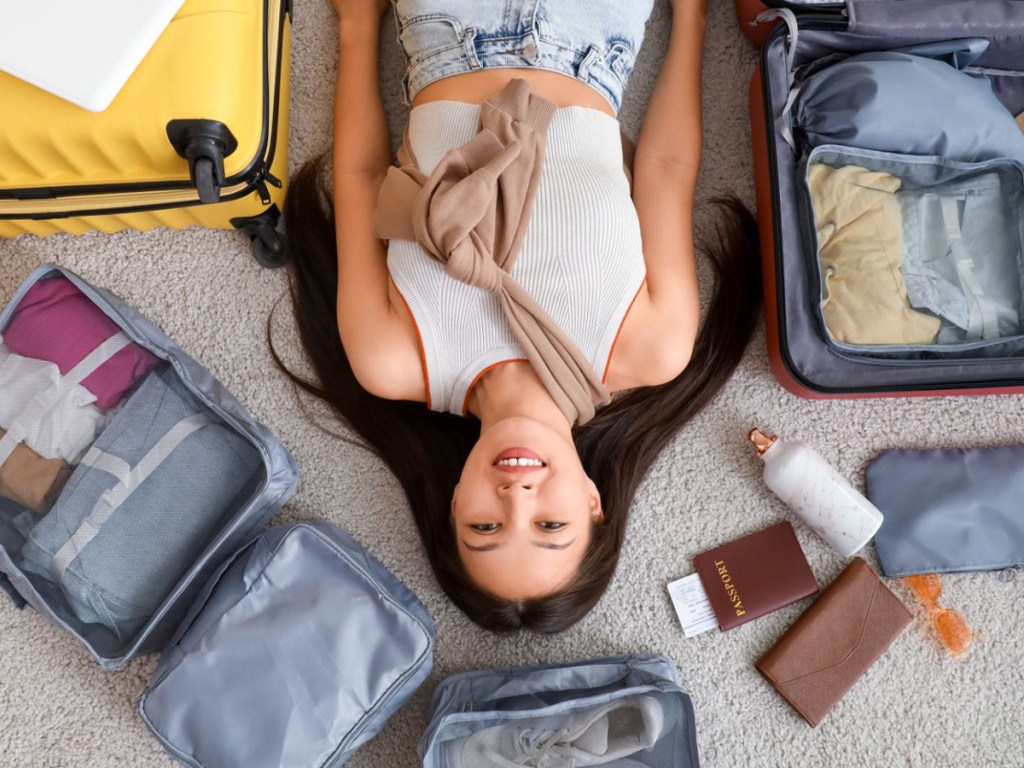
    Photo credit Canva

    Taking Pictures Can Help Plan Ahead

    Another helpful step is taking photos of your outfits to remember how everything fits together. Lumbatis offers, “You can even take pictures of the outfits with you wearing them or flat lays of the pieces and keep them on your phone or in your Notes App — So you can refer back to it on your trip.”

    Is the 5-4-3-2-1 packing method effective? These were some of the thoughts in the comments from readers hopeful to put the plan into action:

    “Great tip for me. Hate packing and never wear all the clothes I bring.”

    “Heading to Japan and I was just going to my closet to put it together. I overpack so this is sooo helpful.”

    “I’m dreading how to not over pack for such a variety of occasions, heat, and limited washing facilities. Ugh.”

    “I struggle with under packing so this is super helpful!”

    travel, adventure, alleviate stress, preparation
    Soaking up the adventure.
    Photo credit Canva

    The Science Behind Good Preparation

    Traveling is a great way to alleviate the stress and burdens of our daily lives. A 2025 study in Springer Nature Link showed travel helped people improve their long-term resilience by creating positive emotions while ecouraging self reflection. National Geographic found the benefits of travel begin even before the trip begins.

    However, preparation can have a powerful effect on the simple stresses a person might acquire during traveling. A 2025 study revealed that planning reduced anxiety and helped people prepare for delays or unexpected changes. Research in 2025 reported by AP News found that even making a simple checklist reduced anxiety and helped make for smoother trips.

    Lumbatis claims, “If you struggle with overpacking and want to create a great capsule wardrobe packing list, you’ve got to try this method.”

    People hope that traveling will relieve stress more than generate it. The 5-4-3-2-1 packing method offers a clear and simple way to pack just what you need. Careful preparation helps prevent last-minute chaos and produces a more enjoyable trip. Hopefully, this method can help you spend less time worrying and more time soaking in the adventure.

    Watch this YouTube video on incredible vacation destinations to inspire your next trip:

  • People are cheering woman’s refusal to accept the latest trend in hotel bathrooms
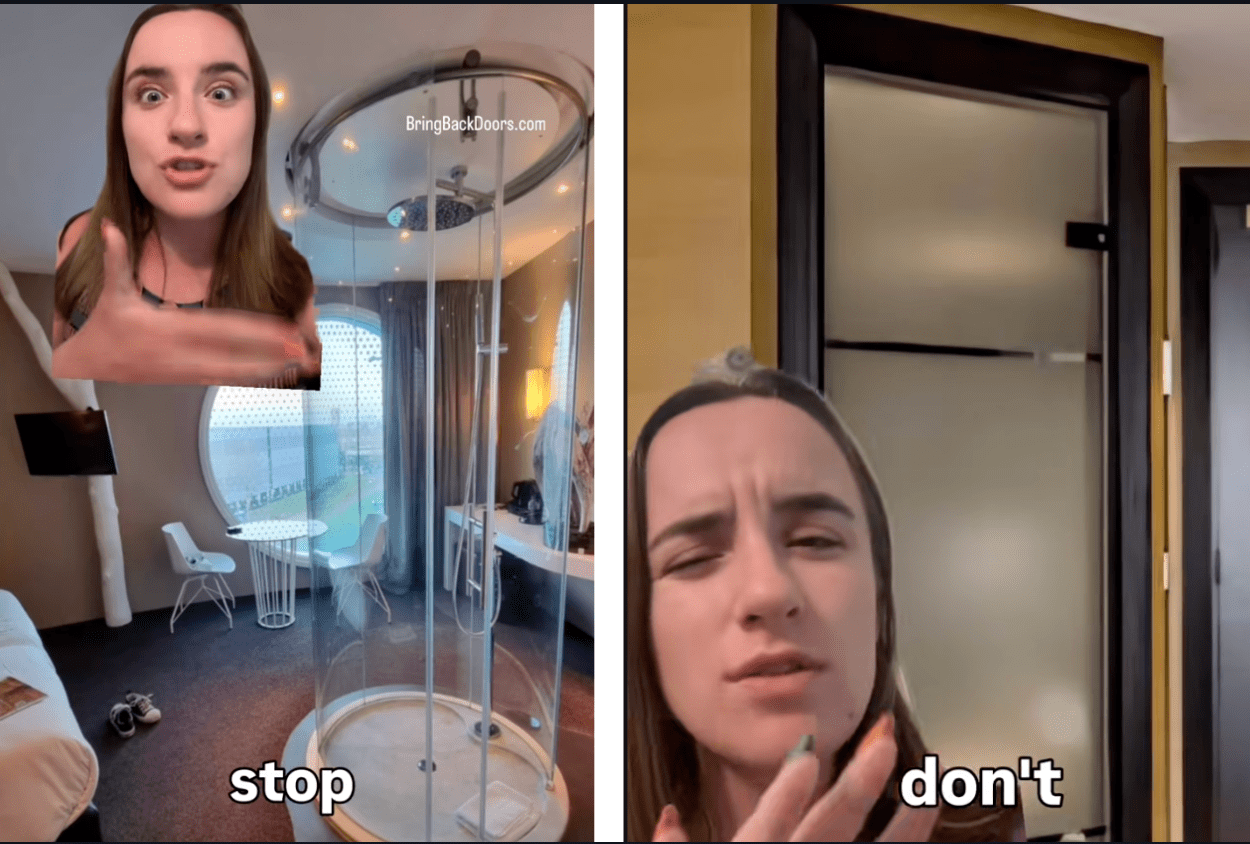
    Sadie has declared war on non-private hotel bathrooms.Photo credit: @bring_back_doors

    People are cheering woman’s refusal to accept the latest trend in hotel bathrooms

    “I HATE how hotels started thinking going to the bathroom is a shared experience.”

    It can be frustrating seeing change for change’s sake in the world. To be more specific, changes that are said to be done in the name of innovation and design, but are in truth ways for companies to save a buck.

    One example that is getting attention is the bathroom doors in hotels… or the lack thereof, actually. One TikToker has had enough and has taken it upon herself to save regular bathroom doors in hotels and to point out why open-space bathrooms and glass doors just don’t cut it.

    On her @bring_back_doors TikTok account, Sadie has a collection of videos highlighting the flaws in hotel bathroom designs, with the most prominent being the lack of a regular door to the bathroom. In one viral TikTok, Sadie discussed a hotel that reached out to her, explaining that they have “foggy” glass doors to their bathroom to provide privacy. She was quick to point out that it still doesn’t provide adequate privacy. “Yes you can see through these,” Sadie said, adding that “glass doors do not close properly.”


    @bring_back_doors

    Hotel name: Alexander Hotel, Noordwijk aan Zee, Netherlands I need to be clear. Glass doors are not private. And making them foggy does not make them private. I am once again sitting here saying screw you to all bathroom doors that are not solid and close fully. And I am providing alternative hotels with guaranteed doors at bringbackdoors.com Check your hotels door situation before you book or risk your privacy. Door submitted by @mmargaridahb, DM me to submit your own bad doors. #bathroomdoors #hotel #travel #fyp Bathroom doors | bathroom design | hotel design | bad hotel design | travel fail | travel memories | travel inspo | door design | hotels with privacy

    ♬ original sound – Bring Back Bathroom Doors

    The comments rallied behind Sadie’s bathroom-door crusade

    The commenters joined in with Sadie, demanding the return of solid, closing, and lockable doors to bathrooms in hotels:

    “I HATE how hotels started thinking going to the bathroom is a shared experience.”

    “I hate how you can’t turn the bathroom light on without disturbing the other person in the room.”

    “The foggy ones are almost worse, you just get a hazy fleshy silhouette hunched over on the crapper like some kind of sack of ham.”

    “I just don’t get it, NOBODY wants this, even couples. I won’t be more likely to book two separate rooms for me and my friend/sibling/parent, I’ll just book another hotel.”

    “Love this campaign, I do not want a romantic weekend listening to the other person poo.”


    @bring_back_doors

    Hotel Names⬇️⬇️ Citizen M South Hotel (first pics) and Fletcher Hotel (third pic) both in Amsterdam. As part of this project, I’ve been emailing hotels around the world to put together an easy to reference list for people to find hotels with guaranteed doors at BringBackDoors.com And I did notice that in Amsterdam a lot of hotels were saying they don’t have doors. It wasn’t the worst city (that honor goes to Barcelona, so far I’ve only found TWO that have said yes to all doors), but it was still bad. Then I went into the comments. And kept getting people mentioning these hotels in Amsterdam. And I realized that clearly the city has a designer or architect on the loose who has a thing for test tubes. It’s horrible. Luckily, I was able to find 6 hotels in Amsterdam that all have bathroom doors in every room and have them all listed on BringBackDoors.com These hotels were submitted by so many people I couldn’t name them all. But to submit your own bad hotel bathroom send me a DM with hotel photo, name, and location! #hotel #bathroom #hoteldesignfail Bathroom doors | hotel bathrooms | hotel privacy | no privacy | travel problems | hotel issues | travel | hotel design | hotel design fail | hotel designers | design fail | hotel concept | bathrooms | Citizen M | Hotel Fletcher | Hotels in Amsterdam | Visit Amsterdam | Amsterdam

    ♬ original sound – Bring Back Bathroom Doors

    A great way to save a buck—er, I mean, ‘create a modern look’

    As many commenters asked, why do hotels have glass doors — or, worse, no doors at all—in their bathrooms? Well, this has been a growing trend in modern hotels over the past decade as a means to create a sleek aesthetic and to allow glass partitions to bring more daylight into otherwise darker sections of the room.

    At least that’s what’s being promoted to the customer. In reality, skimping on solid doors for glass ones or none at all gives the illusion that the room is bigger than it is while requiring fewer building materials. It does bring in more daylight, but mostly with the hope that you’ll cut down on electricity use for lights in an otherwise enclosed space. These reasons are also why some hotels don’t have solid walls around their bathroom areas at all.

    TikTok · Bring Back Doors

    TikTok u00b7 Bring Back Doors www.tiktok.com


    Tired of the lack of privacy? Check out the database

    To combat this trend, Sadie has developed a database at bringbackdoors.com for her and her followers to report which hotels have true, solid, private bathrooms in their accommodations and which ones do not, so people can properly plan where to stay and have true privacy during their most vulnerable moments.

    “I get it, you can save on material costs and make the room feel bigger, but what about my dignity?,” Sadie wrote on her website. “I can’t save that, when you don’t include a bathroom door.”

    Over time, the hope is that sanity and dignity can be restored as hotels realize that their glass “features” don’t have any real benefit when they don’t allow basic privacy.

  • MIT’s super-fast camera can capture light as it travels
    ArrayPhoto credit: assets.rebelmouse.io

    MIT’s super-fast camera can capture light as it travels

    It has a resolution rate of one frame per trillionth of a second.

    A camera developed at MIT can photograph a trillion frames per second. Compare that with a traditional movie camera which takes a mere 24. This new advancement in photographic technology has given scientists the ability to photograph the movement of the fastest thing in the Universe, light. In the video below, you’ll see experimental footage of light photons traveling 600-million-miles-per-hour through water.

    The actual event occurred in a nano second, but the camera has the ability to slow it down to twenty seconds. For some perspective, according to New York Times writer, John Markoff, “If a bullet were tracked in the same fashion moving through the same fluid, the resulting movie would last three years.”


    It’s impossible to directly record light so the camera takes millions of scans to recreate each image. The process has been called femto-photography and according to Andrea Velten, a researcher involved with the project, “There’s nothing in the universe that looks fast to this camera.”


    This article originally appeared seven years ago.

Explore More Design Stories

Design

People are cheering woman’s refusal to accept the latest trend in hotel bathrooms

Design

MIT’s super-fast camera can capture light as it travels

Articles

Kelsey Wells’ Side-By-Side Photos Prove That Weight Doesn’t Equal Health

Articles

No one noticed what this woman was staring at when they chose her for their label