In March, NASCAR driver Josh Wise received an email from a member of the social-networking service Reddit about a crowdfunding campaign to sponsor his car for a May race at Talladega Superspeedway. At the time, Wise’s team was only eight strong—this on a circuit in which the biggest stars have hundreds of staff and millions of dollars’ worth of sponsors. Earlier that month, at the Food City 500, Wise had driven an unsponsored car. He needed at least $70,000 to get his crew to Talladega.

The fundraiser was collecting money not in U.S. dollars but in something called dogecoin. All the coins were being deposited into a digital “wallet,” and they all had a dog’s face on them.


[quote position=”left” is_quote=”true”]Bitcoin investors have been known to hoard their coins with the hope of selling them when the value rises, while dogecoin users are better known for sharing.[/quote]

“Honestly, I was very confused,” Wise says. “I was like, is this electronic money? Is it real money? I don’t get it.”

Wise doesn’t think of himself as a tech-savvy person. The 31-year-old from Huntersville, N.C., had never even heard of Reddit, let alone virtual currency. He learned quickly.

In just a week, Wise’s fans in the dogecoin community raised the equivalent of $55,000, which they then exchanged into U.S. dollars and donated to his team. Wise plastered the dogecoin mascot, a quizzical-looking Shiba Inu, on his No. 98 Chevrolet. A few weeks later, his backers helped him beat Danica Patrick in a fan vote to earn the final spot in the NASCAR Sprint All-Star Race, a May showcase for which Wise would otherwise have had no chance of qualifying. His finish in that race (15th) earned $120,000 for his NASCAR team, Phil Parson Racing.

“That was a really big deal,” Wise says.

To keep up the “Dogecar” sponsorship, the community—whose members affectionately refer to themselves as shibes, a warmhearted abbreviation of Shiba Inu—bought thousands of dogecoin pit-crew shirts from Wise’s fundraising site and continued to donate. Their efforts vaulted Wise into NASCAR relevance and earned national attention for the young cryptocurrency. Wise and his team credit the shibes for affecting his career in ways he never could have imagined. And he hasn’t even met any of them.

***

Cryptocurrency can be an intimidating subject. At its core, it’s a digital medium of exchange that is enciphered for security and anticounterfeiting measures. Dogecoin is a type of cryptocurrency. Unlike virtual currencies such as Facebook Credits, which have a set value in the real world, cryptocurrencies are speculative. Their value fluctuates depending on supply and demand.

Bitcoin is the world’s best-known and most widely used cryptocurrency. Created in 2009, it has fluctuated in value from $100 to more than $1,000 a coin. To “mine” for coins, computers perform computations to crack extremely large mathematical problems. When those problems are solved, coins are made available to the user. Bitcoins can be spent anywhere that accepts them (a rapidly growing list of businesses that includes the dating site OkCupid, the travel site Expedia, and the ticket office of the NBA team the Sacramento Kings), and they can be sold and converted into real-world currency. An online public ledger anonymously posts all transactions.

While one bitcoin’s current value is more than $630, one dogecoin is worth a fraction of a penny. The low value is a deliberate feature in the currency’s code—there is no hard limit on how many dogecoins can exist. Its inventors’ goal is to get around 100 billion coins in circulation (right now there are about 86 billion). In comparison, bitcoin’s circulation will cap out at 21 million. The high supply and low value encourage shibes to give their coins away. Read a funny tweet or hear about an inspiring charity? Why not cough up a few tenths of a cent?

Bitcoin has attracted serious financial investors, in it for profit. Dogecoin attracts people who enjoy Photoshopping a dog’s face onto inanimate objects. As a result, bitcoin investors have been known to hoard their coins, with the hope of selling them when the value rises, while dogecoin users are better known for sharing.

***

The real “doge” is an 8-year-old canine named Kabosu. In 2010 her owner, kindergarten teacher Atsuko Sato, just happened to photograph her in a moment when she looked particularly skeptical and posted the picture on her blog. Something about Kabosu’s expression captured the internet’s imagination. She looked like a dog processing a dozen thoughts at once, a perfect canvas for the type of internal-monologue captions that mischievous meme-makers had recently started applying to grimacing pictures of Elijah Wood.

Members of the message board website 4chan, a notorious hub for trolls and hackers, found the picture and began doing just that, colorfully imagining the dog’s thoughts, always in the oft-ridiculed Comic Sans font. The meme quickly spawned two Tumblrs that extended the joke, shibaconfessions.tumblr.com and (the now-defunct) fuckyeahdoge.tumblr.com. Even YouTube joined the fun (search “doge meme”). Kabosu became doge, and doge became a star.

One of Kabosu’s fans was Jackson Palmer, a co-creator of dogecoin. The 26-year-old self-described geek from Sydney, Australia, works in San Francisco as a product-marketing manager for Adobe. The day I meet him, he’s wearing a Keyboard Cat T-shirt—a reference to the keyboard-playing orange tabby that went viral in 2009. Palmer is a man of memes. A favorite of his is Actual Advice Mallard, in which life advice is superimposed over a photo of a duck.

[quote position=”full” is_quote=”true”]Dogecoin is now eight months old, and the community is increasingly known for building massive support for “the underdoge”—overlooked individuals, groups, and communities fighting uphill battles.[/quote]

Near the end of 2013, Palmer came up with the idea for dogecoin by accident. That December, new cryptocurrencies seemed to be launching every day. The doge meme was spreading across the internet. Palmer put the two together in a tweet. “I’m going to invest in dogecoin as the next big thing,” he joked.

Then something unexpected happened. Palmer started receiving dozens of messages from people who loved the idea. So he and his friend Billy Markus decided to make dogecoin a real thing. They haphazardly coded it in a few hours using the code base of an existing cryptocurrency, litecoin, and launched it shortly thereafter. In the first month, more than 1 million people visited the dogecoin website Palmer had set up. A subreddit dedicated to dogecoin attracted thousands of users. At the moment I’m writing this, more than 85,000 people are active in that group—mining, buying, tipping, and spending doge.

Palmer was sure the joke would lose momentum and fade after a week. But dogecoin is now eight months old, and the community is increasingly known for building massive support for “the underdoge”—overlooked individuals, groups, and communities fighting uphill battles.

The shibes have successfully rallied behind the Doge 4 Water campaign, which raised more than $50,000 to supply the most impoverished regions in Kenya with clean drinking water. They’ve funded campaigns for victims of the Washington landslide, assisted Minnesota families of terminally ill children with housing payments, and raised money for Doge 4 Kids, an initiative that pairs service dogs with disabled children.

Not that the community has ever lost its sense of humor. Josh Mohland, the creator of Dogetipbot (a service that lets users tip one another on Reddit), created the Dogecoin Fundation, a ludicrous half-brother to dogecoin’s official philanthropic foundation. The Fundation hosts the Scotch4Mohland fundraiser, in which people can donate doge to help Mohland buy Scotch for himself. There’s also the Nachos4Jackson fund, where all contributions go toward nachos for Palmer.

Most dogecoin transactions take place through these types of tipping donations. Mohland’s tipbot allows users to make instant dogecoin micropayments to one another using tweets and Reddit comments, the virtual equivalent of throwing change at a person. The service itself is free, and users have to make only a negligible transaction payment called a miners fee. The tipbot recognizes certain commands and automatically processes the transactions.

Compare this with more classic modes of exchange, where transaction fees can deter people from donating very small amounts of money to charities. The same goes for services like PayPal.

“In the past, a charity wouldn’t care about a 50-cent donation,” says Matt Conn, the San Francisco–based video game developer who started the LGBTQ gaming convention GaymerX, and who dabbles in cryptocurrencies. “But it matters when you have 80,000 people on Reddit who are all donating 50 cents, because that’s $40,000. It’s strength in numbers.”

“It’s also more satisfying to give,” Conn says. “Bitcoin is worth so much that if I wanted to give you $5 now, it would be like 0.001 of a bitcoin, so you wouldn’t feel like that was anything. If I want to give you $5 in dogecoin, that’s like 3,000 dogecoin, so it feels more substantial.”

As the community continues to grow and fund new campaigns, Palmer makes a point to emphasize dogecoin’s humble roots. At the end of the day, he explains, the meme is the message. “You can’t do anything bad with that,” he says. “If you’ve got this Shiba Inu face looking at you, you can’t take yourself too seriously, right?”

This sense of low stakes defines the community’s character, but it also completes the joke. Dogecoin skewers the future-of-the-global-economy hype surrounding cryptocurrencies by satirizing such self-importance. The shibes relish campaign-based silliness and impact that takes surprising, frequently meaningful, often hilarious directions because none of it quite makes sense. A crypto-joke that helps landslide victims? The lack of logic is a deliberate evasion of a clean media narrative. Shibes don’t want to be on the cover of Newsweek.

“A lot of people like fighting for the same thing, even if they don’t always know why,” says Conn. “It’s fun. It’s really fun.”

Correction: A previous version of this story referred to Kabosu as a male dog. She is a female.

Illustrations by Will Bryant
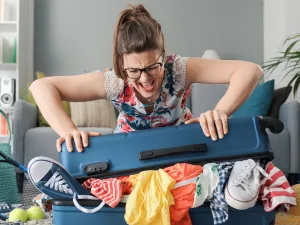
  • Overpackers love this simple ‘5-4-3-2-1’ packing rule that makes travel way easier
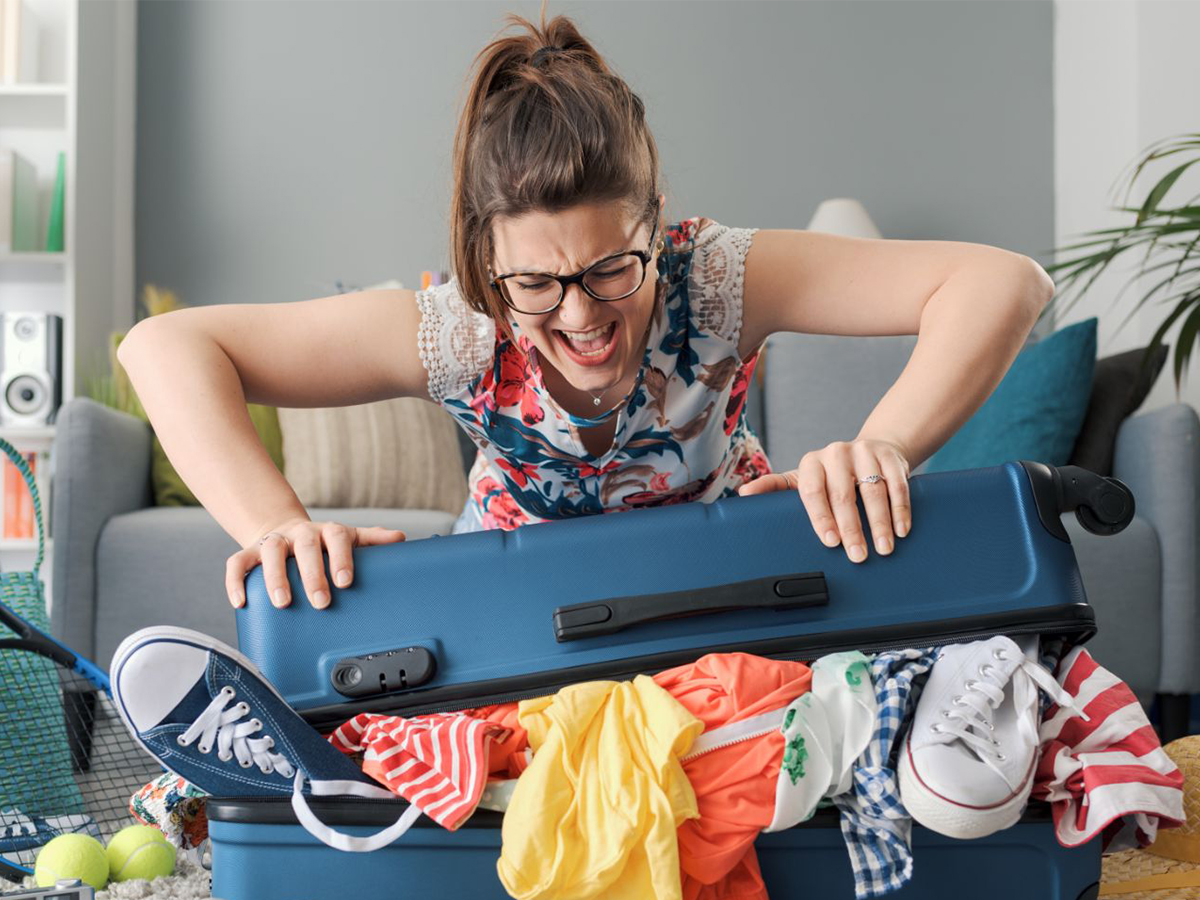
    An obvious overpack for travel.Photo credit: Canva
    ,

    Overpackers love this simple ‘5-4-3-2-1’ packing rule that makes travel way easier

    When it comes to travel, packing efficiently is a skill acquired through experience. Lifestyle and content creator Alison Lumbatis shares a helpful 5-4-3-2-1 method designed to take the stress out of packing for both seasoned travelers and first-timers. Trying to pack light while still remembering everything you need can feel a little daunting. A simple…

    When it comes to travel, packing efficiently is a skill acquired through experience. Lifestyle and content creator Alison Lumbatis shares a helpful 5-4-3-2-1 method designed to take the stress out of packing for both seasoned travelers and first-timers.

    Trying to pack light while still remembering everything you need can feel a little daunting. A simple trick is knowing exactly what’s necessary, making your bag lighter and more practical.

    @alisonlumbatis

    Calling all overpackers—this one’s for you! ✈️🧳 The 5-4-3-2-1 packing method is one of my favorites because it’s totally customizable. Prefer dresses? Swap a top and bottom for a dress. Love skirts? Sub them in for pants! These pieces should last you 1-2 weeks, depending on your access to laundry. 🔗’s to everything in bio! #outfitformulas #packinglight #styleconfidence #wardrobemadeeasy #travelcapsule #dailyoutfits #closetconfidence #vacationstyle #fashionover40 #smartstyle

    ♬ original sound – Alison Lumbatis

    Putting The ‘5-4-3-2-1 Packing Method’ Into Action

    In her trending TikTok post, Lumbatis shares a packing system she claims to be “as easy as it sounds.” Here are the basics of the 5-4-3-2-1 packing method:

    • 5 TOPS
    • 4 BOTTOMS
    • 3 SHOES
    • 2 LAYERS
    • 1 MISCELLANEOUS

    Lumbatis explains, “So all you got to do is pick out 5 tops, 4 coordinating bottoms, 3 pairs of shoes, 2 layering pieces, and 1 of anything else. Like a dress, pajamas, a hat, a belt, or any other accessories that you might need. And then of course pack as many undergarments and toiletries as you need.”

    The strategy isn’t just about simplifying and maximizing the number of items you bring on a trip. It’s also about function. “The key is to pick versatile pieces that can mix and match so you can pair them up for whatever activities you have planned for your trip.”

    minimalism, versatile pieces, functionality, packing
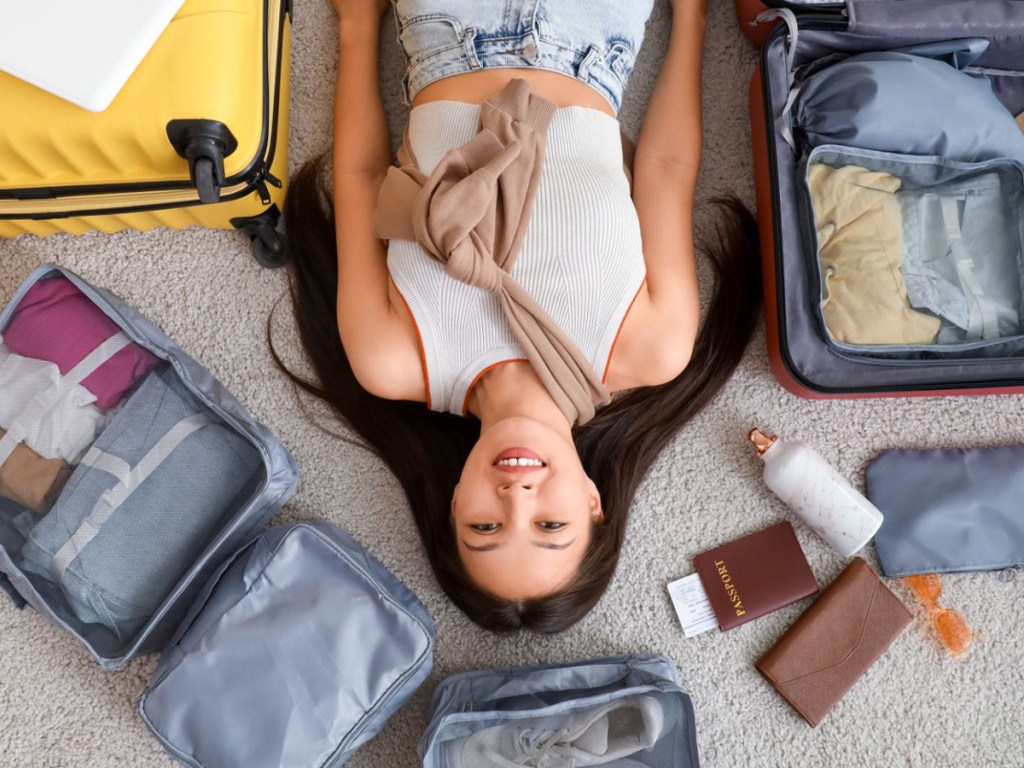
    Packing the necessary items
    Photo credit Canva

    Taking Pictures Can Help Plan Ahead

    Another helpful step is taking photos of your outfits to remember how everything fits together. Lumbatis offers, “You can even take pictures of the outfits with you wearing them or flat lays of the pieces and keep them on your phone or in your Notes App — So you can refer back to it on your trip.”

    Is the 5-4-3-2-1 packing method effective? These were some of the thoughts in the comments from readers hopeful to put the plan into action:

    “Great tip for me. Hate packing and never wear all the clothes I bring.”

    “Heading to Japan and I was just going to my closet to put it together. I overpack so this is sooo helpful.”

    “I’m dreading how to not over pack for such a variety of occasions, heat, and limited washing facilities. Ugh.”

    “I struggle with under packing so this is super helpful!”

    travel, adventure, alleviate stress, preparation
    Soaking up the adventure.
    Photo credit Canva

    The Science Behind Good Preparation

    Traveling is a great way to alleviate the stress and burdens of our daily lives. A 2025 study in Springer Nature Link showed travel helped people improve their long-term resilience by creating positive emotions while ecouraging self reflection. National Geographic found the benefits of travel begin even before the trip begins.

    However, preparation can have a powerful effect on the simple stresses a person might acquire during traveling. A 2025 study revealed that planning reduced anxiety and helped people prepare for delays or unexpected changes. Research in 2025 reported by AP News found that even making a simple checklist reduced anxiety and helped make for smoother trips.

    Lumbatis claims, “If you struggle with overpacking and want to create a great capsule wardrobe packing list, you’ve got to try this method.”

    People hope that traveling will relieve stress more than generate it. The 5-4-3-2-1 packing method offers a clear and simple way to pack just what you need. Careful preparation helps prevent last-minute chaos and produces a more enjoyable trip. Hopefully, this method can help you spend less time worrying and more time soaking in the adventure.

    Watch this YouTube video on incredible vacation destinations to inspire your next trip:

  • People are cheering woman’s refusal to accept the latest trend in hotel bathrooms
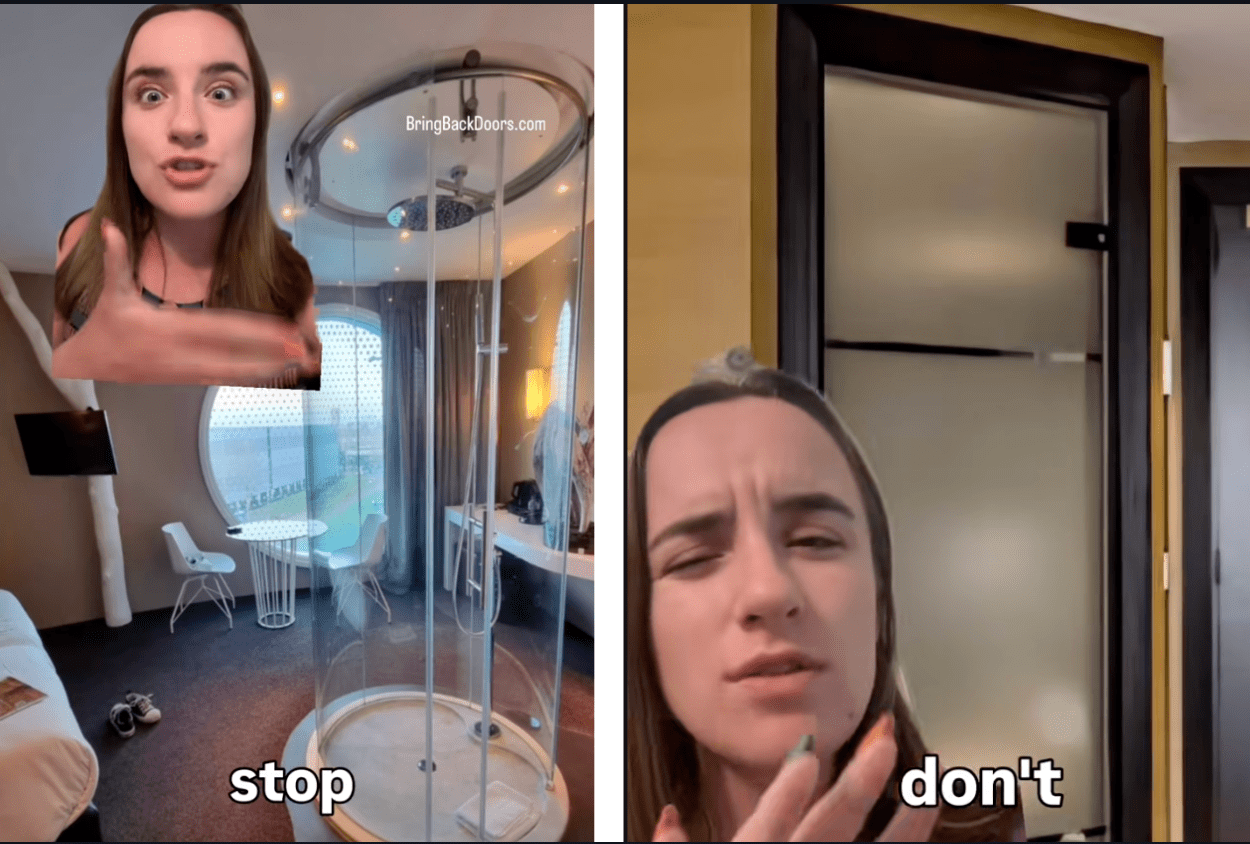
    Sadie has declared war on non-private hotel bathrooms.Photo credit: @bring_back_doors

    People are cheering woman’s refusal to accept the latest trend in hotel bathrooms

    “I HATE how hotels started thinking going to the bathroom is a shared experience.”

    It can be frustrating seeing change for change’s sake in the world. To be more specific, changes that are said to be done in the name of innovation and design, but are in truth ways for companies to save a buck.

    One example that is getting attention is the bathroom doors in hotels… or the lack thereof, actually. One TikToker has had enough and has taken it upon herself to save regular bathroom doors in hotels and to point out why open-space bathrooms and glass doors just don’t cut it.

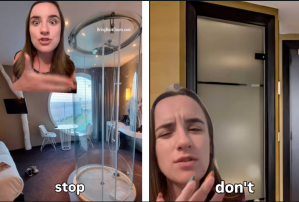
    On her @bring_back_doors TikTok account, Sadie has a collection of videos highlighting the flaws in hotel bathroom designs, with the most prominent being the lack of a regular door to the bathroom. In one viral TikTok, Sadie discussed a hotel that reached out to her, explaining that they have “foggy” glass doors to their bathroom to provide privacy. She was quick to point out that it still doesn’t provide adequate privacy. “Yes you can see through these,” Sadie said, adding that “glass doors do not close properly.”


    @bring_back_doors

    Hotel name: Alexander Hotel, Noordwijk aan Zee, Netherlands I need to be clear. Glass doors are not private. And making them foggy does not make them private. I am once again sitting here saying screw you to all bathroom doors that are not solid and close fully. And I am providing alternative hotels with guaranteed doors at bringbackdoors.com Check your hotels door situation before you book or risk your privacy. Door submitted by @mmargaridahb, DM me to submit your own bad doors. #bathroomdoors #hotel #travel #fyp Bathroom doors | bathroom design | hotel design | bad hotel design | travel fail | travel memories | travel inspo | door design | hotels with privacy

    ♬ original sound – Bring Back Bathroom Doors

    The comments rallied behind Sadie’s bathroom-door crusade

    The commenters joined in with Sadie, demanding the return of solid, closing, and lockable doors to bathrooms in hotels:

    “I HATE how hotels started thinking going to the bathroom is a shared experience.”

    “I hate how you can’t turn the bathroom light on without disturbing the other person in the room.”

    “The foggy ones are almost worse, you just get a hazy fleshy silhouette hunched over on the crapper like some kind of sack of ham.”

    “I just don’t get it, NOBODY wants this, even couples. I won’t be more likely to book two separate rooms for me and my friend/sibling/parent, I’ll just book another hotel.”

    “Love this campaign, I do not want a romantic weekend listening to the other person poo.”


    @bring_back_doors

    Hotel Names⬇️⬇️ Citizen M South Hotel (first pics) and Fletcher Hotel (third pic) both in Amsterdam. As part of this project, I’ve been emailing hotels around the world to put together an easy to reference list for people to find hotels with guaranteed doors at BringBackDoors.com And I did notice that in Amsterdam a lot of hotels were saying they don’t have doors. It wasn’t the worst city (that honor goes to Barcelona, so far I’ve only found TWO that have said yes to all doors), but it was still bad. Then I went into the comments. And kept getting people mentioning these hotels in Amsterdam. And I realized that clearly the city has a designer or architect on the loose who has a thing for test tubes. It’s horrible. Luckily, I was able to find 6 hotels in Amsterdam that all have bathroom doors in every room and have them all listed on BringBackDoors.com These hotels were submitted by so many people I couldn’t name them all. But to submit your own bad hotel bathroom send me a DM with hotel photo, name, and location! #hotel #bathroom #hoteldesignfail Bathroom doors | hotel bathrooms | hotel privacy | no privacy | travel problems | hotel issues | travel | hotel design | hotel design fail | hotel designers | design fail | hotel concept | bathrooms | Citizen M | Hotel Fletcher | Hotels in Amsterdam | Visit Amsterdam | Amsterdam

    ♬ original sound – Bring Back Bathroom Doors

    A great way to save a buck—er, I mean, ‘create a modern look’

    As many commenters asked, why do hotels have glass doors — or, worse, no doors at all—in their bathrooms? Well, this has been a growing trend in modern hotels over the past decade as a means to create a sleek aesthetic and to allow glass partitions to bring more daylight into otherwise darker sections of the room.

    At least that’s what’s being promoted to the customer. In reality, skimping on solid doors for glass ones or none at all gives the illusion that the room is bigger than it is while requiring fewer building materials. It does bring in more daylight, but mostly with the hope that you’ll cut down on electricity use for lights in an otherwise enclosed space. These reasons are also why some hotels don’t have solid walls around their bathroom areas at all.

    TikTok · Bring Back Doors

    TikTok u00b7 Bring Back Doors www.tiktok.com


    Tired of the lack of privacy? Check out the database

    To combat this trend, Sadie has developed a database at bringbackdoors.com for her and her followers to report which hotels have true, solid, private bathrooms in their accommodations and which ones do not, so people can properly plan where to stay and have true privacy during their most vulnerable moments.

    “I get it, you can save on material costs and make the room feel bigger, but what about my dignity?,” Sadie wrote on her website. “I can’t save that, when you don’t include a bathroom door.”

    Over time, the hope is that sanity and dignity can be restored as hotels realize that their glass “features” don’t have any real benefit when they don’t allow basic privacy.

  • MIT’s super-fast camera can capture light as it travels
    ArrayPhoto credit: assets.rebelmouse.io

    MIT’s super-fast camera can capture light as it travels

    It has a resolution rate of one frame per trillionth of a second.

    A camera developed at MIT can photograph a trillion frames per second. Compare that with a traditional movie camera which takes a mere 24. This new advancement in photographic technology has given scientists the ability to photograph the movement of the fastest thing in the Universe, light. In the video below, you’ll see experimental footage of light photons traveling 600-million-miles-per-hour through water.

    The actual event occurred in a nano second, but the camera has the ability to slow it down to twenty seconds. For some perspective, according to New York Times writer, John Markoff, “If a bullet were tracked in the same fashion moving through the same fluid, the resulting movie would last three years.”


    It’s impossible to directly record light so the camera takes millions of scans to recreate each image. The process has been called femto-photography and according to Andrea Velten, a researcher involved with the project, “There’s nothing in the universe that looks fast to this camera.”


    This article originally appeared seven years ago.

Explore More Design Stories

Culture

Overpackers love this simple ‘5-4-3-2-1’ packing rule that makes travel way easier

Design

People are cheering woman’s refusal to accept the latest trend in hotel bathrooms

Design

MIT’s super-fast camera can capture light as it travels

Articles

Kelsey Wells’ Side-By-Side Photos Prove That Weight Doesn’t Equal Health