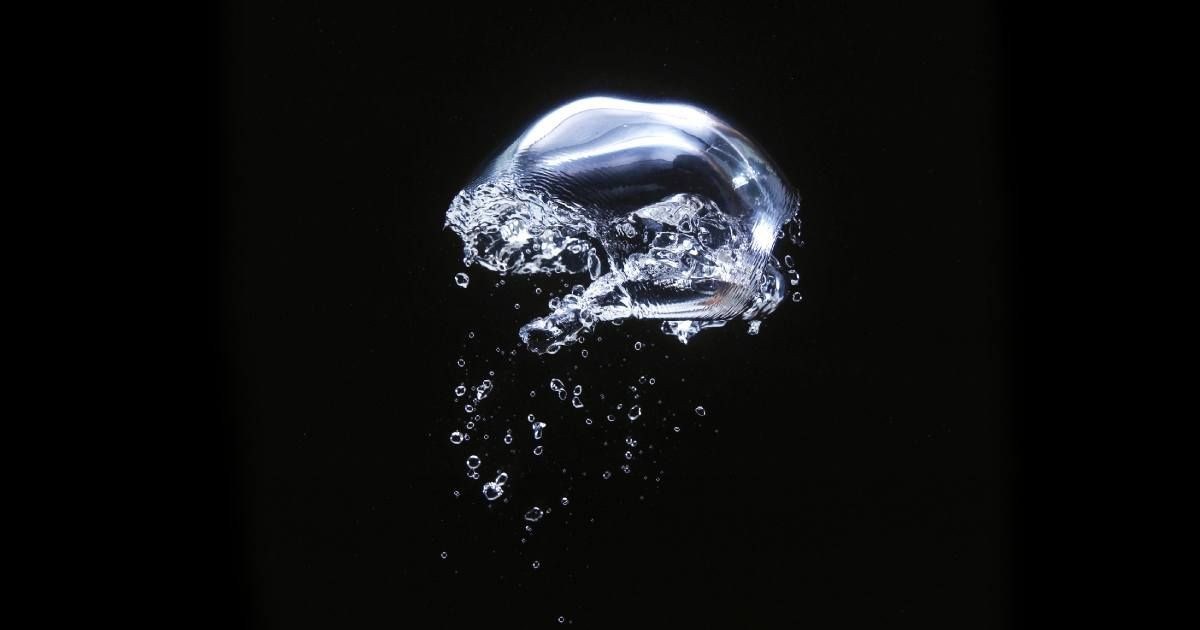
In the 2015 movie “The Martian,” when Matt Damon, playing an astronaut stranded on Mars extracts water by burning leftover rocket fuel and adding oxygen. In a recent study, published in the Proceedings of the National Academy of Sciences, researchers at Northwestern University used a similar method to create water using the rare metallic element, palladium as the catalyst.
They witnessed the ethereal reaction that produced tiny, nano-sized bubbles of water. The breathtaking footage of this chemical reaction was published on YouTube. The breakthrough was achieved while researchers were busy investigating the properties of palladium and how it generates water. Researchers have known since the early 1900s that palladium can react with gases to generate water, but achieving the reaction was a mystery. So, when they witnessed the little water bubbles popping out, it was nothing less than astonishing. The study was led by Vinayak Dravid, lead researcher and Abraham Harris Professor of Materials Science and Engineering at Northwestern’s McCormick School of Engineering and founding director of the Northwestern University Atomic and Nanoscale Characterization Experimental (NUANCE) Center.
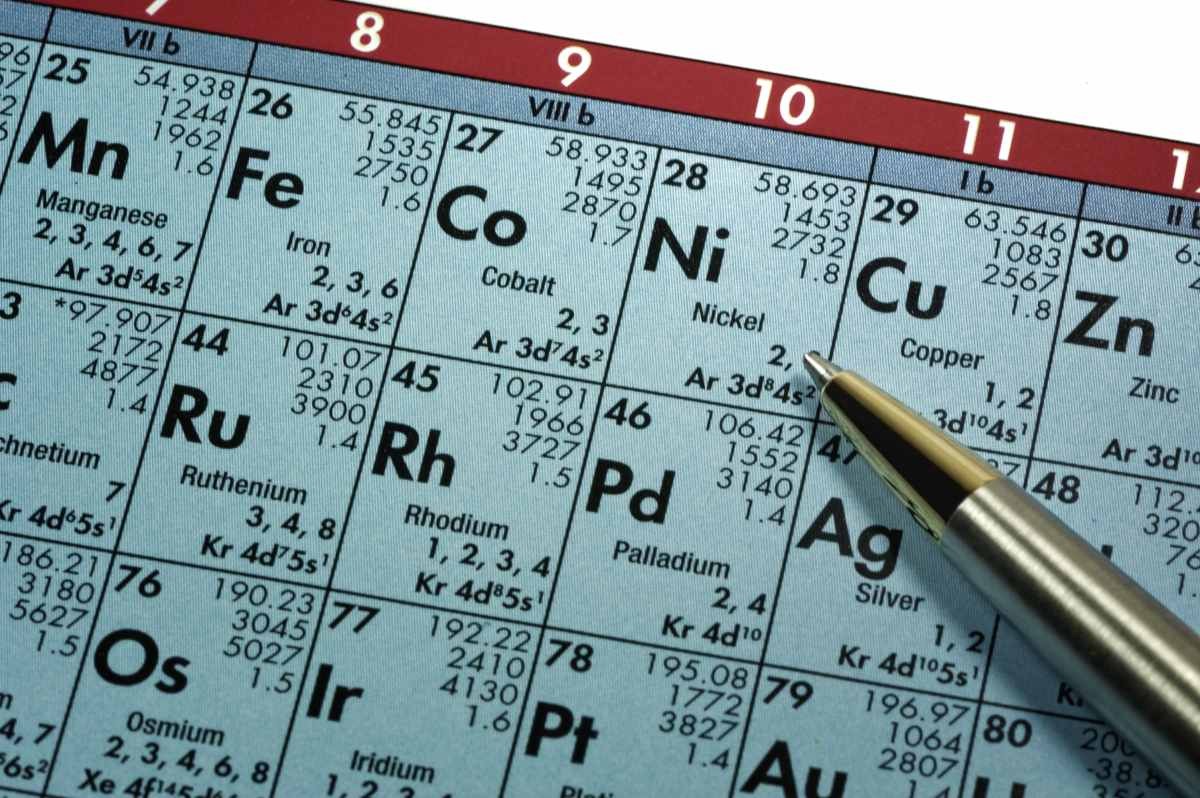
“It’s a known phenomenon, but it was never fully understood,” said Yukun Liu, the study’s first author and a Ph.D. candidate in Dravid’s laboratory. In a university press release, Liu added, “Because you really need to be able to combine the direct visualization of water generation and the structure analysis at the atomic scale in order to figure out what’s happening.”
The footage in question displays a hydrogen atom making its way inside the palladium molecule. Since hydrogen atoms are so small, they can easily squeeze themselves inside the palladium molecule, causing its lattice to expand, and soon a tiny little water bubble pops out in an unreal manner. “We think it might be the smallest bubble ever formed that has been viewed directly,” Liu said. “It’s not what we were expecting. Luckily, we were recording it, so we could prove to other people that we weren’t crazy.”
Witnessing this reaction in real-time was next to impossible until January 2024 when Dravid’s team published another study, revealing a groundbreaking method to capture gas molecules. The team crafted an ultra-thin glassy membrane that could hold gas molecules in honeycomb-shaped nonreactors, from where they viewed these through high-vacuum transmission electron microscopes. They used the same electron microscope method to capture the footage of this palladium molecule. IFL Science explains that this method is similar to the one that India’s Chandrayaan-1 used to detect water on the Moon.
In a first, scientists witnessed—in real time and at the nanoscale—hydrogen and oxygen atoms merge to form tiny water bubbles.
Researchers also noted in the study that the hydrogen oxidation rate catalyzed by palladium is significantly affected by the sequence in which the gases are introduced. They added, “These nanoscale insights help identify the optimal reaction conditions for Pd-catalyzed hydrogen oxidation, which has substantial implications for water production technologies. The developed understanding also advocates a broader exploration of analogous mechanisms in other metal-catalyzed reactions.” If water can indeed be generated by palladium, then astronauts on space missions would be able to create water in space outside Earth, and probably in the realms beyond.
The urban monkeys in New Delhi are so bold they’ll steal the lunch right off your plate. If you’ve spent time in New York, you’ve probably seen squirrels try to do the same. Sydney’s white ibises got the nickname “bin chickens” for stealing trash and sandwiches.
This brazen behavior isn’t normal for most species in the countryside, yet it shows up in urban wildlife, and not just in these cities.
Studies show that animals living in urban environments around the world exhibit common sets of behaviors. At the same time, these urban animals are losing traits they would need in the wild. This process of urban animals’ behavior becoming more similar is known as “behavioral homogenization,” and it accompanies the loss of species diversity with urbanization.
Squirrels in New York’s Central Park have no qualms about rifling through your belongings and stealing your food. Keystone/Getty Images
Cities, despite their local differences, share many of the same features worldwide: They are warmer than the surrounding countryside, noisy, polluted by light and, most importantly, dominated by people.
Cities drive evolution as well. Humans and the changes we’ve brought to cities have led to the survival of bolder animals, and those bolder animals pass on their traits to future generations. In genetics, scientists refer to this as the environment “selecting” for those traits.
It’s not just sandwich-stealing that is more common among city wildlife; urban birds also sound more alike.
Why? Cities are loud and filled with traffic noise, so those who can effectively communicate in that environment are more likely to survive and pass on those traits.
Animals may behave similarly in cities because they learn from each other how to exploit novel human food sources. For instance, the cockatoos in Sydney have learned to open trash bins. In Toronto, the raccoons are in a race to outwit humans as urban wildlife managers try to design animal-proof trash bins.
The buildings and bridges in cities become home to bats, birds, and other urban dwellers, at the cost of learning to use more natural nesting sites. Roads and culverts modify how and where animals move.
While rural animals may forage at a variety of places and eat a variety of foods, urban animals may concentrate on garbage bins or rubbish dumps where they know they can find food, but they end up eating a potentially unhealthy diet.
Consequences of similar behaviors
The loss of behavioral diversity is happening everywhere that humans increase their footprint on nature. This is worrisome on several levels.
At the population level, behavioral variation may reflect genetic variation. Genetic variation gives species the ability to respond to future environmental change. For example, for animals that have evolved to breed at a specific time of the year, urban heat islands can select for earlier breeding.
Reducing genetic variation leaves populations less able to respond to future changes. In that sense, having genetic variation resembles a diversified investment portfolio: Spreading risk across a variety of stocks and bonds lowers the risk that a single shock will wipe out everything.
Moreover, as animals become tamer, new conflicts between animals and humans may emerge. For instance, there may be more car crashes, animal bites, property damage and zoonotic disease transmission. Such conflicts cost money and may harm both the animals and humans.
Losing behavioral diversity is also troubling for conservation.
When a species loses behavioral diversity, it loses resilience against future environmental change in the wild, making reintroducing urban animals to the wild harder.
Losing behavioral diversity also risks erasing socially learned, population-specific behaviors, such as local migration routes, foraging techniques, tool-use traditions or vocal dialects.
For example, Australia’s regent honeyeater populations have been shrinking and are critically endangered. The isolation of having fewer of their own species around has disrupted normal song-learning behavior, making it harder for male birds to sing attractive songs that help them find mates and breed successfully.
Ultimately, behavioral homogenization is making wildlife in cities such as Los Angeles, Lima, Lagos and Lahore behave in similar ways despite living in different environments and having different evolutionary histories.
Many of these behaviors influence survival and reproduction, so understanding this form of diversity loss is important for successful wildlife conservation, as well as future urban planning.
Since 2015, the Comedy Wildlife Photography Awards, created by photographers and conservationists Paul Joynson-Hicks and Tom Sullam, have been delivering laugh-out-loud moments through the lens of nature. With a mission to entertain while raising awareness about wildlife conservation, the competition celebrates the charming and comical side of the animal kingdom.
Let’s take a joyful stroll down memory lane with some of the most funniest entries from the 2019 contest (and if you’re feeling inspired, you’ll also learn how to submit your own wild and witty shots for future competitions).
OVERALL WINNER, CREATURES OF THE LAND WINNER: “Grab Life By the…”
You don’t think about how hard it would be to be the parent of a small, curious creature with massive, sharp claws. Let’s all take a moment to be grateful that even though it’s very hard to have a human baby, they don’t have super sharp claws. That would make things ten times worse.
CREATURES IN THE AIR WINNER: “Family Disagreement”
I think if I were an otter, I too would constantly clutch my face in disbelief. “I can’t possibly be this cute, can I? Cute nose, fuzzy head, tiny little eyes? That can’t be! Oh, but it is! I really am this adorable! I am! I am!”
Have you seen those videos of foxes diving headfirst into the snow to catch prey? It’s hilarious and fascinating, and I think this fox forgot that there was no snow. His friend is really trying to help him not hurt himself, but his buddy insists on being dumb. Oh, foxes!
“And then Carol was like, ‘You otter come over for dinner sometime!’ Get it? Get it? Man, Carol’s hilarious. So I went over for dinner and she had like, this whole seafood spread. Crabs, clams, mussels…the whole shebang. Anyway, I think I’m going to marry her.”
Just think about how much poise it took for this photographer to take this photo. Not only is the shark sneaking up on this poor fish, but there’s a person behind that camera! Presumably, the photographer escaped unscathed, since he was able to enter this photo in the contest.
It’s clearly not just human women who have to put up with the incessant nagging conversation from dudes we have no interest in talking to. See the look on that bird’s face? Staring straight out just willing him to go away? Tell me you haven’t made that face. Yeah, that’s what I thought.
“O Romeo, Romeo, wherefore art thou, Romeo?” No one really knows this, but squirrels are generally huge Shakespeare fans. They saw him put up a play in Europe centuries ago and have just carried that love for his words through generations and generations of squirrels.
I relate to this bear hard. Anyone who has had to get up and go to work after a long weekend knows this feeling. Sometimes, you just don’t want to deal with anything. Sometimes, you just want to lie on the ground, cover your face with your hands, and nap for a little while longer.
I love this photo so much. Because not only is it a picture of a penguin farting, but it’s a picture of a penguin who is clearly trying to hide the fact that he’s farting and play it off like he’s doing absolutely nothing. He’s just standing there twiddling his wings. He has no idea what that big bubble under his butt is.
There seems to be a whole genre of “Small rodents holding flowers” photos, and I am a sucker for every single one of them. I’m pretty sure this comes up when you look up “cute” in the dictionary. It’s just so pure.
“Hi there! Welcome to my flower. So glad you could make it! It’s a little cold and wet right now, but once the sun comes up we’ll be in business. Help yourself to a dewdrop. They’re especially fresh this morning.”
“And then my friend Steve, the otter, told me that Carol said to him, ‘You otter come over for dinner!’ Get it? Get it? Because they’re otters! So it’s funny. Hey, where’d you go?”
These poor monkeys were just trying to get it on. Their kids were finally out of the tree, they had some peace and quiet, and then they were so rudely interrupted by a photographer. Although mom looks like she was kinda zoning out anyway.
This little chimp is living the life! He’s got it all figured out, and from the looks of him, he’s still a tiny baby. He’s just looking out at the jungle, thinking about all that milk he’s going to drink later.
I bet that when you’re a Snowy Owl and it finally snows, you are just so ecstatically happy. I mean, it’s right there in your name. Look at her face! It’s full of such pure joy.
Like this little monkey, I, too, usually save my existential crises for bath time. There’s something about the weightlessness of floating in the water that makes you question everything you know to be true about yourself and the world.
Who’s calling this snapping turtle slow? He’s just “taking his time.” On another note, I think turtles are probably the most prehistoric-looking creatures that still exist. If you really take the time to look at them, they’re so crazy.
Imagine playing hide and seek on a block of ice as a polar bear. On one hand, there aren’t too many places to hide. On the other hand, you’re looking for white on white, and that’s not easy.
I don’t know if you knew this, but rodents love ABBA. Here is one getting down to “Dancing Queen.” Because they’re so small, they really feel the music down to their bones. Raise your hand if you would watch an all-rodent adaptation of Mamma Mia! Yeah, me too.
If you want to enter next year’s competition, follow the link here to sign up for mailing list updates!
This article originally appeared six years ago. It has been updated.
A common saying among pet owners is that the hardest thing about loving a dog is saying goodbye. Having a senior dog, especially one raised from a puppy, can be difficult not just because of the inevitable, but also because the pet may be going through age-related ailments or disease before crossing over. It’s a hard thing to experience anyway, but especially when you remember how they were in their prime. Well, veterinary scientists are testing a daily pill that extends a dog’s lifespan while also maintaining their quality of life.
Loyal, a biotech company based in San Francisco, has been trying to develop anti-aging drugs for dogs ever since it was founded. After years of research and testing, they have developed LOY-002, a beef-flavored daily prescription pill for senior dogs aged 10 and older that weigh over 14 pounds. Early testing shows that the pill can add years to a dog’s life, especially larger breeds.
What does this dog lifespan pill do?
The pill interacts and manipulates IGF-1 (Insulin-Like Growth Factor 1), a hormone that’s key to a dog’s cellular growth and metabolism. IGF-1 helps a dog grow in both size and calorie consumption. This hormone helps make young puppies become strong adult dogs. However, it also continues and accelerates aging at a cellular level when a dog is fully grown.
This explains why many larger breeds of dogs tend to live shorter lives than smaller ones. Their IGF-1 levels are higher. It moves them faster towards age-related diseases and discomfort than smaller dogs.
By reducing the excessive IGF-1, LOY-002 reduces the speed of a larger dog’s biological clock. It doesn’t just make them “feel” younger. Slowing everything down adds years to their life and curbs the risk of age-related organ dysfunction, disease, and early death. After thorough testing, LOY-002 cleared two out of the three sections of acceptance before being fully vetted by the Food and Drug Administration.
“Since founding Loyal six years ago, my goal has always been to get the first drug FDA approved for lifespan extension. This safety acceptance brings us very close to achieving that vision,” said Loyal Founder and CEO Celine Halioua. “We are well on our way to bringing the first dog longevity drugs to market.”
How can a senior dog live longer?
Should Loyal receive that final approval, the LOY-002 drug should go to market before the end of 2026. However, veterinarians and dog care experts have some tips on how to help your older dog live longer and healthier.
Visit your dog’s veterinarian often for checkups and keep them notified of any changes in their behavior. They may recommend a specific diet for your dog at their advanced age. Similar to humans, older dogs are encouraged to follow a healthy diet. They should exercise regularly (through walks or playtime) to keep a healthy weight and keep joints strong.
If your dog has joint trouble, your vet may recommend some supplements to help the dog’s mobility and comfort. No matter the issue, it is best to consult with a veterinarian before making lifestyle changes for your dog.
Such advice can help both you and your dog live full lives together. It may also add a few more years of furry companionship along the way, too.