This article originally appeared on 05.07.19


Grieving in the technology age is uncharted territory.

I’ll take you back to Saturday, June 9, 2012. At 8:20 a.m., my 36-year-old husband was pronounced dead at a hospital just outside Washington, D.C.

By 9:20 a.m., my cellphone would not stop ringing or text-alerting me long enough for me to make the necessary calls that I needed to make: people like immediate family, primary-care doctors to discuss death certificates and autopsies, funeral homes to discuss picking him up, and so on. Real things, important things, time-sensitive, urgent things.

Doctor consoling a loved one.
Photo from Pexel. | Doctor consoling a loved one.

At 9:47 a.m., while speaking to a police officer (because, yes, when your spouse dies, you must be questioned by the police immediately), one call did make it through. I didn’t recognize the number. But in those moments, I knew I should break my normal rule and answer all calls. “He’s dead??? Oh my God. Who’s with you? Are you OK? Why am I reading this on Facebook? Taya, what the heck is going on?”

Facebook? I was confused. I hadn’t been on Facebook since the day before, so I certainly hadn’t taken the time in the last 90 minutes to peek at the site.

“I’ll call you back”, I screamed and hung up. I called my best friend and asked her to search for anything someone might have written and to contact them immediately and demand they delete it. I still hadn’t spoken to his best friend, or his godsister, or our godchild’s parents, or a million other people! Why would someone post it to Facebook SO FAST?

While I can in no way speak for the entire planet, I certainly feel qualified to propose some suggestions — or, dare I say, rules — for social media grieving.

How many RIPs have you seen floating through your social media stream over the last month? Probably a few. Death is a fate that we will each meet at some point. The Information Age has changed the ways in which we live and communicate daily, yet there are still large voids in universally accepted norms.

This next statement is something that is impossible to understand unless you’ve been through it:

There is a hierarchy of grief.

Yes, a hierarchy. It’s something people either don’t understand or understand but don’t want to think or talk about — yet we must.

There is a hierarchy of grief.

Hierarchy is defined as:

  1. a system or organization in which people or groups are ranked one above the other according to status or authority, and
  2. an arrangement or classification of things according to relative importance or inclusiveness.

What does this mean as it relates to grief? Let me explain. When someone dies — whether suddenly or after a prolonged illness, via natural causes or an unnatural fate, a young person in their prime or an elderly person with more memories behind them than ahead — there is one universal truth : The ripples of people who are affected is vast and, at times, largely unknown to all other parties.

A death is always a gut punch with varying degrees of force and a reminder of our own mortality. Most people are moved to express their love for the deceased by showing their support to the family and friends left behind.
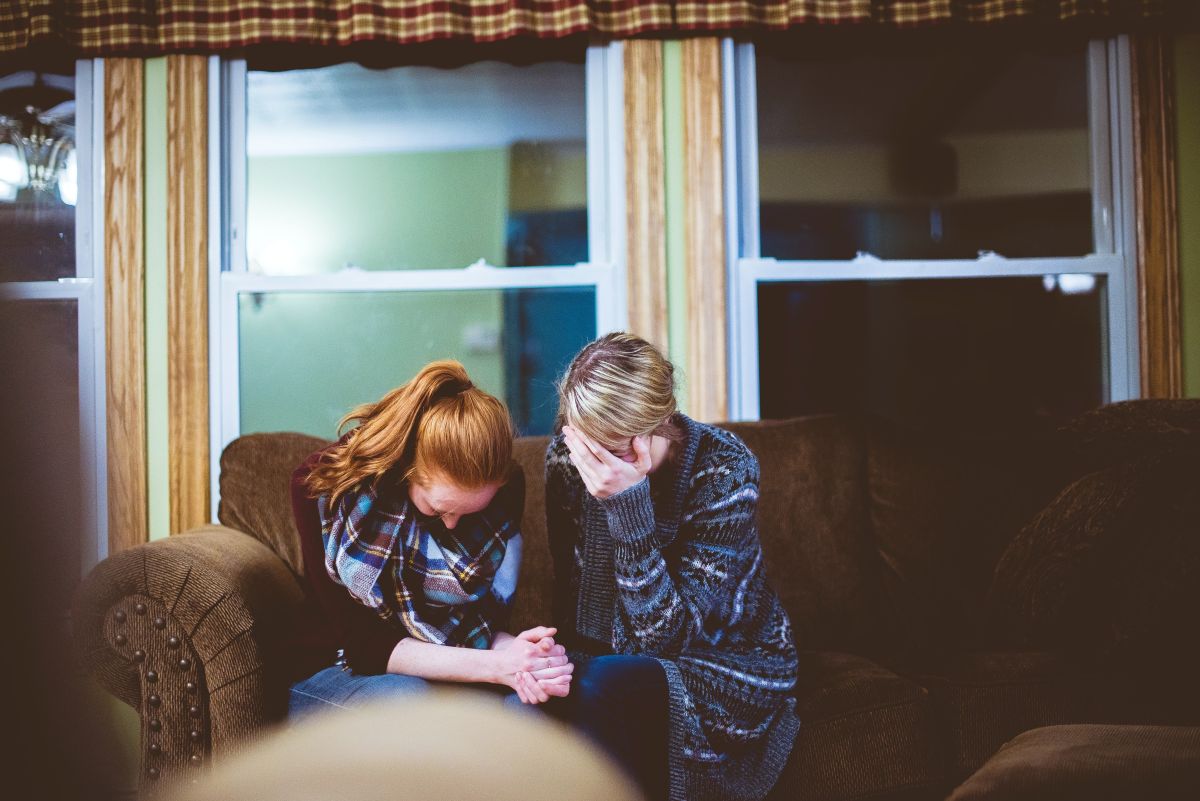
Trying to cope with grief.
Photo by Ben White on Unsplash. | Trying to cope with grief.

In the days before social media, these expressions came in the form of phone calls, voicemail messages, and floral deliveries.

If you were lucky enough to be in close proximity to the family of the newly deceased, there were visits that came wrapped with hugs and tears, and deliveries of food and beverages to feed all the weary souls.

Insert social media. All of those courtesies still occur, but there is a new layer of grief expression — the online tribute in the form of Facebook posts, Instagram photo collages, and short tweets.

What’s the problem with that? Shouldn’t people be allowed to express their love, care, concern, support, and prayers for the soul of the recently deceased and for their family?

Yes.

And no.

Why? Because there are no established “rules,” and people have adopted their own. This isn’t breaking news, and you’re not trying to scoop TMZ. Listen, I know you’re hurt. Guess what? Me too. I know you’re shocked. Guess what? Me too. Your social media is an extension of who you are. I get it. You “need” to express your pain, acknowledge your relationship with the deceased, and pray for the family.

Yes.

However…

Please give us a minute.

We are shocked.

We are heartbroken.

Give the immediate family or circle a little time to handle the immediate and time-sensitive “business” related to death. In the minutes and early hours after someone passes away, social media is most likely the last thing on their minds. And even if it does cross their mind, my earlier statement comes into play here.

There is a hierarchy of grief.

Please pause and consider your role and relationship to the newly deceased. Remember, hierarchy refers to your status and your relative importance to the deceased. I caution you to wait and then wait a little longer before posting anything. This may seem trivial, silly, and not worth talking about, but I promise you it isn’t.

If the person is married, let the spouse post first.

If the person is “young” and single, let the partner, parents, or siblings post first.

If the person is “old” and single, let the children post first.

If you can’t identify the family/inner circle of the person, you probably shouldn’t be posting at all.

Do you get where I’m going with this?

In theory, we should never compare grief levels, cast the grief-stricken survivors into roles, or use words like status and importance. But maybe we need to at this moment (and for the next few weeks and months).

The “RIP” posts started hitting my timeline about an hour after my husband’s death, and I certainly didn’t start them. This created a sense of confusion, fear, anxiety, panic, dread, and shock for the people who knew me, too. What’s wrong? Who are we praying for? Did something happen? Did someone pass? Why are there RIPs on your wall and I can’t reach you? Call me please! What’s going on?

That’s a small sample of messages on my voicemail and text inbox. I had to take a minute in the midst of it all to ask a friend to post a status to my Facebook page on my behalf.

A lighted candle in dark room.
Photo by Sixteen Miles Out on Unsplash | A lighted candle in dark room.

Your love and expressions of support are appreciated and needed, but they can also be ill-timed and create unintended additional stress.

The person is no less dead and your sympathy no less heartfelt if your post, photo, or tweet is delayed by a few hours. Honestly, the first couple of hours are shocking, and many things are a blur. Most bereaved people will be able to truly appreciate your love, concern, prayers, and gestures after the first 24 hours.

I’ve learned this from the inside — twice within the last four years. And I assure you that if we each adopted a little patience and restraint in this area, we would help those who are in the darkest hours of their lives by not adding an unnecessary layer of stress.

A few extra hours could make all the difference.

More on Good.is

Should There Be a Statute of Limitations on Offensive Social Media Posts?

Data Shows that Positive Content Does Better on Social Media

Exhausted mom posts a letter begging husband for help. And then it went viral.

Taiwanese model speaks out about the meme that ruined her life. – GOOD
A guy asked why his dog had suddenly become so protective of his wife — the Internet guessed the right reason. – GOOD

  • Hero son’s split-second warning saves sunbathing mom’s life
    Photo credit: CanvaA child is in the pool while the mother sunbathes
    ,

    Hero son’s split-second warning saves sunbathing mom’s life

    A mom was relaxing poolside reading a book when her son spotted a massive tree falling toward her and yelled “Run mom!” and the video is absolutely wild.

    Shocking footage taken in Alpharetta, Georgia shows a mother relaxing by a pool while her two sons play in the water. The peaceful scene quickly turned into a terrifying near-miss when one of the boys noticed something alarming overhead: a massive tree about to fall in their direction.

    According to the video, the mother was lying poolside in a lounge chair, reading a book, while her sons splashed in the pool nearby. Suddenly, a cracking sound echoed through the yard.

    “I was sitting at the pool relaxing and reading a book while watching my two sons swim, when I heard a tree cracking and then my son yelled ‘Run mom!’ so I bolted out of my chair right before a huge tree fell right on the chair I was sitting on,” the mother said, according to Viral Hog.

    The tree crashed down with enormous force, splintering the chair and narrowly missing the spot where she had been seated just seconds before. Footage captured the dramatic moment, showing how a child’s quick thinking likely averted a tragedy.

    falling tree, kid saves mom, backyard accident, viral video, quick thinking kids
    A fallen tree against a destroyed roof after a storm. Photo credit: Canva

    The source of the falling tree wasn’t immediately clear, but heavy spring rainfall in the region may have weakened its roots or trunk. Incidents involving falling trees are more common during storms or after long periods of moisture saturation, especially in areas with older or unmaintained trees.

    falling tree, kid saves mom, backyard accident, viral video, quick thinking kids
    An uprooted tree after a storm. Photo credit: Canva

    The boy’s awareness and ability to respond so quickly stunned viewers of the video. Many praised him online for noticing the danger and warning his mom without hesitation—an instinct that proved life-saving.

    The family has not released additional details, but the video has since gone viral, viewed thousands of times on social media platforms.

    This article originally appeared four years ago. It has been updated.

  • Stunning photo taken from Artemis II commander Reid Wiseman has rebooted the world’s love of space
    Photo credit: NASA/Reid Wiseman (cropped image)Artemis II Commander Reid Wiseman took this picture of Earth from the Orion spacecraft's window

    Commander Reid Wiseman’s photo, taken from Artemis II as it pushed away from Earth and races toward the Moon, reveals the majestic blue planet we all call home. NASA released the image shortly after liftoff, instantly turning it into one of the defining visuals of the mission so far.

    It’s been more than 50 years since man last traveled to the moon on Apollo 17 in 1972. For younger generations, the Artemis II flyby and the eventual Artemis IV landing, might be the first time space exploration feels less like science and more like a shared human experience.

    NASA’s mission to the moon

    Artemis II has a simple yet extremely complicated mission to fly around the moon. Expected to take around 10 days, the crew of 4 will fly aboard NASA’s Orion spacecraft.

    After orbiting twice around the Earth to ensure everything is working properly, they will perform a propulsion move called the transluna injection burn. This will send the Orion 4,600 miles beyond the far side of the moon. During the rest of the journey, the crew will test emergency procedures, conduct some science experiments, evaluate the radiation shelter, and observe the Moon.

    For the return leg home, the Orion spacecraft will rely on Earth’s gravity to pull them back. Orion is scheduled to splash down in the Pacific Ocean on April 10th. There, it will be picked up by the U.S. Navy.

    NASA shared in their Mission Overview, “Through Artemis, NASA will explore more of the Moon than ever before and create an enduring presence in deep space, while simultaneously preparing to land the first astronaut – an American – on Mars.”

    NASA inspires people to dream big

    For many Americans, this is the first time humanity has ventured this far from Earth in their lifetime. The Artemis II mission feels less like a run-of-the-mill space mission and more like the return of a dream we had quietly abandoned.

    A 2025 study in Frontiers showed that experiencing awe about space can make people feel more like “science people,” sparking their curiosity about learning more science in the future. During the total 2024 solar eclipse, when the moon completely blocks the sun, people remained in awe and felt inspired even 6 months later.

    Nature Reviews Psychology shared a 2024 study that showed experiencing awe can make people feel smaller in a good way. Individuals become less focused on themselves and more connected to the world. Awe has a positive influence upon thinking, motivation, social interactions, and well-being.

    This most recent mission by NASA proves that humanity can still commit to projects bigger than the daily news cycle. Some achievements are worth pursuing not for immediate gratification, but because they expand the young minds that will shape our future.

    NASA, spacecraft window, Reid Wiseman, Orion, astronaut
    Image from Artemis II window looking back to Earth.
    Image Credit: NASA

    People are inspired to talk about Artemis II

    A Reddit post, First photo taken from Artemis commander Reid Wiseman had people excitedly sharing on the momentous achievement. Several people seemed inspired, others tried to be funny, and many seemed appreciative of the experience itself. These are a small collection of thoughts from the comments:

    “In outer space you develop an instant global consciousness, a people orientation, an intense dissatisfaction with the state of the world, and a compulsion to do something about it.’

    “You think any astronaut at one point did the finger pinchy thing where they’re crushing the planet?”

    “Unlike watching from near-Earth orbit, this image has not been seen by human eyes in over fifty years. Mankind is able to do great things, when we all work together!”

    “Lot of water/earth in front of me on that photo”

    “That’s here. That’s home. That’s us. On it everyone you love, everyone you know, everyone you ever heard of, every human being who ever was, lived out their lives.”

    “HELLO WORLD !!!”

    “Flat-earthers gonna be upset. Lol”

    “That beautiful silver line of the atmosphere the shines across the border of the globe is so surreal. Literally looks like a magic border in fantasy novels…”

    NASA astronauts, mission specialist, Launch Complex, journey to Moon, rockets
    From right to left, NASA astronauts Christina Koch, mission specialist; Reid Wiseman, commander; Victor Glover, pilot; and CSA (Canadian Space Agency) astronaut Jeremy Hansen.
    Image Credit: NASA

    10 days to bring our astronauts home

    NASA’s 4 astronauts are only beginning the long journey that carries hope, wonder, and promise of future space discoveries. Mission specialist Christina Koch, commander Reid Wiseman, pilot Victor Glover, and fellow astronaut Jermey Hansen are already gathering information that can lead to eventual Moon landings and even a trip to Mars.

    Weisman’s photo so beautifully captures the fragile yet powerful planet we live on. It’s a spectacular image that highlights so much of a planet most of us will see far too little of in our lifetimes. Mission specialist Koch expressed the effect of witnessing Earth from space, saying,

    “… you see the Earth as it exists with the whole universe in the background. You see the thin blue line of the atmosphere, and then when you’re on the dark side of the Earth, you actually see this very thin green line that shows you where the atmosphere is. What you realize is every single person that you know is sustained and inside of that green line and everything else outside of it is completely inhospitable. You don’t see borders, you don’t see religious lines, you don’t see political boundaries. All you see is Earth and you see that we are way more alike than we are different.”

  • Dog missing for 11 years ‘acts like he’s a puppy again’ after emotional reunion with owner
    Photo credit: CanvaA woman pets a pit bull.
    ,

    Dog missing for 11 years ‘acts like he’s a puppy again’ after emotional reunion with owner

    She kept his microchip information up to date for over a decade after he went missing from her backyard.

    When Jourdyn Koziak got a phone call saying her lost dog had been found, she thought it was a sick joke. After all, her pit bull, Forty-Cal, had gone missing 11 years earlier, back when she lived in Philadelphia. Since then, she had gotten married, had another child, and moved to Luzerne County, Pennsylvania. Yet when she took a chance and drove to the Philly shelter, there he was.

    “I am overwhelmed. I am shocked. I am in disbelief,” Koziak told Fox 29 News. “I had tunnel vision of him walking down that hallway.”

    How the lost pit bull was found

    Back in 2015, Forty-Cal and another of Koziak’s dogs went missing from their backyard, presumably stolen. While the other dog was found, Forty-Cal never returned home. Despite this, Koziak never stopped putting up missing signs and kept Forty-Cal’s microchip information up to date.

    “I never gave up hope because, obviously, I’m relentless,” Koziak told CBC Radio.

    Apparently, Forty-Cal walked up to a little girl in Philadelphia and befriended her. The girl and her parents took him home, fed him hot dogs, and called Animal Control. The shelter then used the information from Forty-Cal’s microchip to contact Koziak and reunite them after more than a decade.

    The shelter warned Koziak and her family that Forty-Cal might be overwhelmed and that it could take time for him to recognize them. However, it took only moments for Forty-Cal to realize he was back home.

    “We put our hands out, he sniffed us, and then proceeded to pull us towards the door, like, ‘Let’s go,’” said Koziak.

    While what happened to Forty-Cal over the past eleven years remains a mystery, Koziak is just grateful that he appears to have been cared for. When Forty-Cal was found, he was clean and well-fed. He was also friendly enough to approach the young girl who found him.

    “He acts like he’s a puppy again,” she said. “He wants to go for a walk. He’s wagging his tail…I had other animals in the house, as well, that were family pets, but Forty was my dog. I paid for him with my own money at 16 years old.”

    Now that he’s back home, both Forty-Cal and Koziak are making up for lost time.

    “I’m over the moon,” she said. “It’s like Christmas morning every day.”

    Tips to prevent lost dogs

    This reunion wouldn’t have been possible if Koziak hadn’t had Forty-Cal microchipped and kept the information up to date. It’s important to have your dog microchipped and registered for this reason, among others.

    There are other ways to help prevent a dog from becoming lost, as well as simple ways to find them should the worst happen. When outdoors, keep your dog leashed and within your line of sight at all times. Make sure your pup is also well trained and responsive to your commands.

    @thehannahestelle

    ❤️‍🩹 with how common this apparently is, I wanted to share all the resources we used to find our girl. Relieved doesn’t even begin to cut it. Safe to say miss Fifi is never leaving our side again. #lostdog #dallaspets #lostpets #24petconnect #petcolovelost #dogsofdallas #dogsofinstagram #lostdogfound #dallaspetsalive

    ♬ original sound – hannahestelle

    Along with microchipping your dog and keeping their tags up to date, there are additional collar options to consider. A bright, vibrant collar can help your dog stand out in the dark and among trees and bushes. A Martingale collar is also recommended, as it stays secure on a dog’s neck without choking them. Lastly, there are collars with built-in GPS systems, as well as devices like the Apple AirTag, which you can attach to a collar to track and pinpoint your dog’s location.

    This story is a reminder that sometimes a reunion between a lost pet and its owner takes determination, community, and patience.

Explore More News Stories

News

Hero son’s split-second warning saves sunbathing mom’s life

News

Stunning photo taken from Artemis II commander Reid Wiseman has rebooted the world’s love of space

Local

Dog missing for 11 years ‘acts like he’s a puppy again’ after emotional reunion with owner

Nation

10 boys and 10 girls were left alone in separate houses. The results were shockingly different.