A just-released study in JAMA Internal Medicine found that female doctors practicing in hospitals achieved significantly lower 30-day mortality and readmission rate than their male counterparts, despite earning less pay than men do.
The study reviewed 1.5 million cases of 30-day elderly hospitalizations between 2011 and 2014. Among those subject, those treated by women had a lower mortality rate (11.07% vs. 11.49% for men) and a lower readmission rate (15.02% vs. 15.57%).
Those might seem like very narrow discrepancies, but extrapolated for the population as a whole, that translates to 32,000 fewer 30-day deaths under the care of female doctors.
While this particular study doesn’t examine the causes for the gap, earlier studies have examined the differences in practice between male and female medical profession, which demonstrate women are more likely to follow clinical guidelines, offer proactive, rather than reactive care, and offer psychological treatment to patients. Further, the authors state that female doctors “have a more patient- centered communication style, are more encouraging and reassuring, and have longer visits than male physicians.”
Even without clarity of context, many find the results to be compelling based on stats alone:
Using their findings as a springboard, the researchers behind the study also took pains to point out, via an editorial, that not only are practicing female doctors earning less, but female academic physicians do, too.
It’s only fitting that their academic findings would be tied to the pay inequality issue, which they state thusly:
These findings that female internists provide higher quality care for hospitalized patients yet are promoted, supported, and paid less than male peers in the academic setting should push us to create systems that promote equity in start-up packages, career advancement, and remuneration for all physicians.
While it’s unlikely that direct action on the pay front will stem from this study alone, it’s yet another reminder of the systematic inequality that doesn’t just affect equal doctors, but in this case, possibly better doctors.
It’s called the infinite scroll – a design feature on social media, shopping, video and many other apps that continuously loads content as you reach the bottom of the page. Handy? Yes. Clever? Also yes. Devious? Very much so. The infinite scroll is likely the main reason you find it so hard to stop scrolling once you begin.
To understand why this design feature is so devious, we need to understand the psychology and behaviours it taps into.
First, the infinite scroll takes away a natural stopping point – where you might decide that’s enough social media for today. For example, Instagram feeds once stopped after all chronologically new posts from followed accounts had been viewed, and even told us we were “all caught up” for the day. Now, algorithmic feeds combined with the infinite scroll mean there’s no way to ever be caught up with it all.
The second reason you find it so hard to stop scrolling is the promise of something good that might be just about to pop up in your feed. The algorithm “knows” what you like. So, hand-in-hand with the infinite scroll, it keeps feeding you all those tasty tid-bits.
Putting it bluntly, these features help create an addiction of sorts. The promise of a little hit of dopamine when we see content we love. And addictions are hard to beat – but not impossible.
Here are some quick wins and longer-term solutions if you want to break free from the grip of the scroll.
The quick wins
Create a break
Your device might be the problem, but it can also be part of the solution. Start by using your phone’s screen time features – such as Android’s Digital Wellbeing or Apple’s Screen Time.
You can also install a more sophisticated third-party app that forces you to break the patterns of mindless scrolling behaviour.
Apps such as One Sec, ScreenZen, Opal and Freedom can short-circuit the automatic habits associated with scrolling in various ways. These include putting mandatory pauses before social media apps open, or applying colour filters (like grayscale) to make apps less appealing.
They can even hard-block apps for specific periods of time if you really need a tough love approach.
Remove social media apps
This one’s usually met with an audible gasp when I suggest it, but you might find you adapt to not having social media at your fingertips faster than you’d imagine. You’re not deleting your accounts – just making it harder to open them and scroll.
Schedule some scrolling time
If you can’t imagine life without scrolling, schedule time each day for just that activity. It could be in your lunch break or when you get home from work: give yourself the freedom to scroll for the amount of time you set (say, 15 minutes) and don’t feel guilty about it. Just remember you still have to close the apps and get on with your life as soon as the time is up.
The hard work
The above might limit your scrolling in the short term, but long-term benefits (and emotional freedom) will likely take a bit more work.
The “easy” tips often work for a little while, when you’re motivated to change and feeling optimistic. But time and the pressures of life can start to erode your convictions.
So, to gain true freedom from scrolling, think about social media and whether it’s a relationship that serves you well. If you feel like it’s controlling you far more than you are controlling it, here are some things to consider. Be warned, they might not be easy.
What’s the deeper reason?
Think deeply about why you’re scrolling so much in the first place. Is it a lack of willpower? Are you avoiding something or someone? Are you suppressing feelings that you would prefer not to acknowledge?
All of these things can be reasons why we seek distraction. You might be avoiding a big thing (the state of a relationship) or a small thing (cooking dinner), but either way, scrolling is the symptom, not the disease. So, consider if scrolling might be part of a bigger problem you need to deal with instead.
Who’s benefiting whom?
Consider how much you really “need” social media. Do you actively use it in a way that benefits you (for example, as a business platform) or did you sign up out of curiosity years ago and have never really questioned why you’re still using it?
If it’s the latter, apply a critical lens to the platforms you use and how they serve you. On average, Australians use six to seven different social media platforms regularly. Think about what you might gain from spending less time scrolling, but also think about whether your life would be worse without some of them.
If you can’t think of a really compelling reason as to why it would be worse, it might be time to say goodbye to a few.
These “hard” options will take time and effort, and require you to reflect on your habits. But, like with most things, the reward for effort is likely to be greater, and last longer.
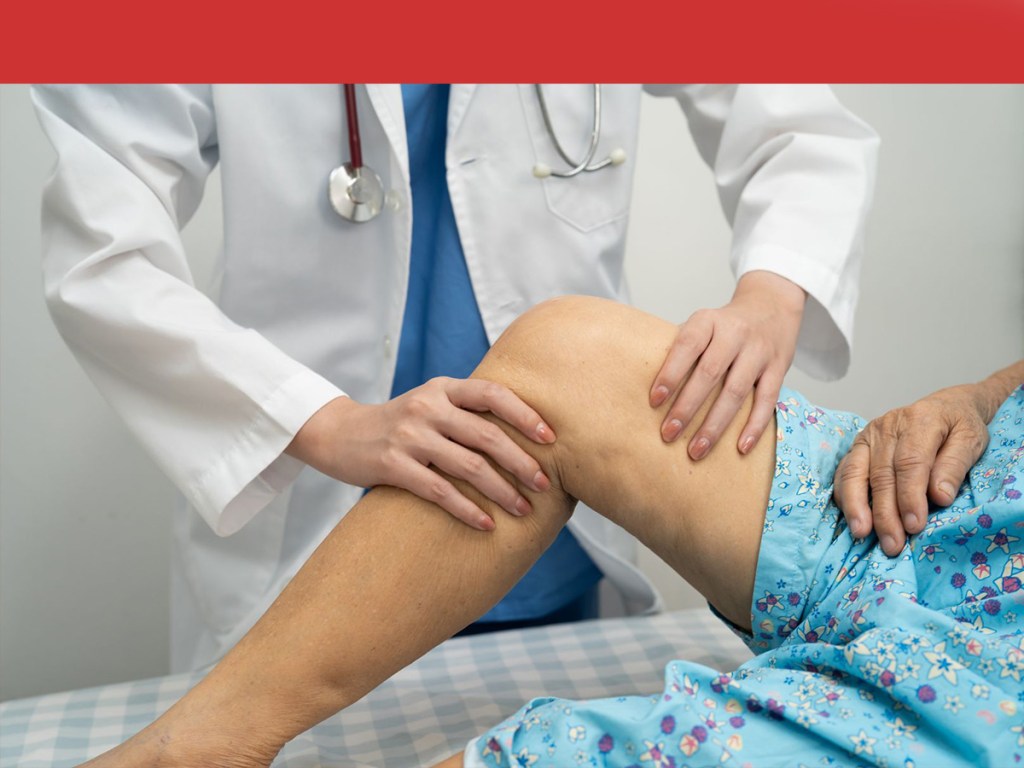
Science might be closer than ever to solving your aching knee problems. Researchers at Northwestern University have created a rubbery goo that can regrow cartilage in damaged knees.
Cartilage cushions joints, keeps movement smooth and pain-free, and reduces pressure on bones—from standing still to a vigorous hike. However, when it’s damaged by injury or simple wear and tear, the road to recovery can be extremely challenging. Cartilage has a very limited ability to regrow and heal itself.
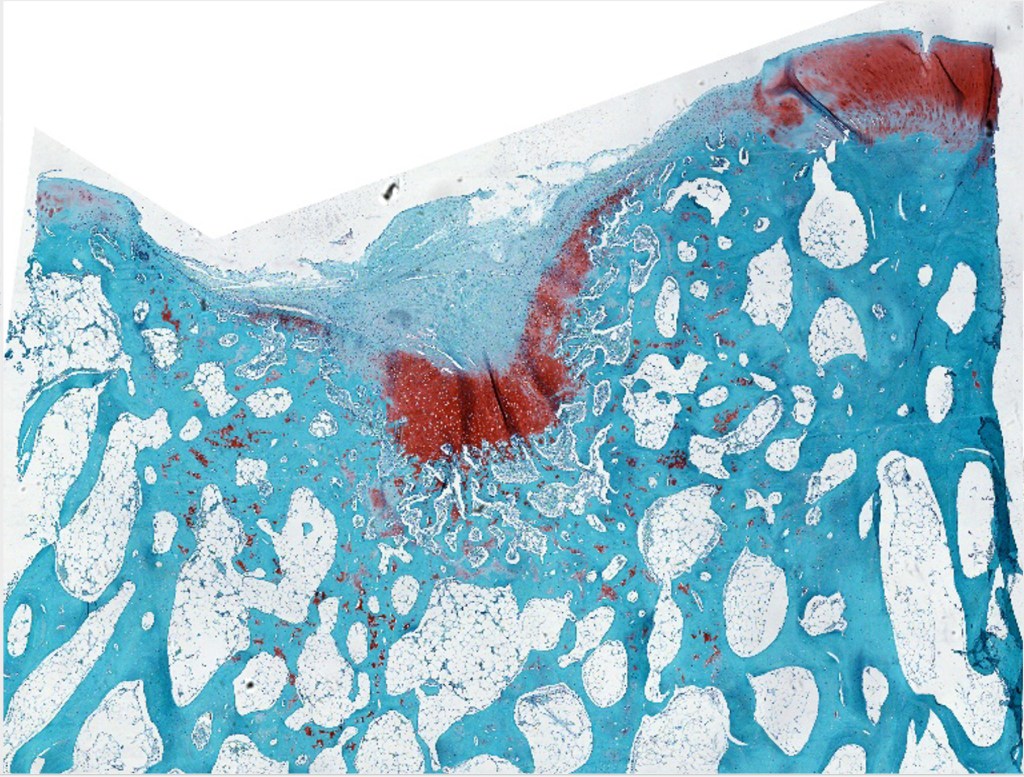
This breakthrough bioactive material doesn’t just passively sit in the body, it binds to and integrates with surrounding tissue, promoting cartilage regeneration. The substance forms a network of components that imitate the body’s natural environment. A scaffold-like structure allows cells to connect and rebuild cartilage tissue.
“The problem is that, in adult humans, cartilage does not have an inherent ability to heal,” said Samuel I. Stupp, who led the study. “Our new therapy can induce repair in a tissue that does not naturally regenerate. We think our treatment could help address a serious, unmet clinical need.”
Bioactive material regenerates high-quality cartilage
In the study, Stupp and his team applied the material to damaged cartilage in sheep. These animals have weight-bearing loads comparable to human knees.
The biomaterial, made from short protein fragments and a modified version of hyaluronic acid, behaves similarly to naturally occurring cartilage in the body. Stupp explained the reasoning behind using hyaluronic acid, saying, “It’s also naturally found in many tissues throughout the human body, including the joints and brain. We chose it because it resembles the natural polymers found in cartilage.”
After fewer than six months, the new cartilage showed high-quality regeneration and strong indications that the repair could work in humans.
Cartilage damage is unfortunately very common, affecting more than 500 million people worldwide. For decades, the message has been discouraging: once cartilage is damaged or disappears, it’s gone for good.
A 2025 study found that current treatments, such as surgery, cell implants, and microfracture, may help in the short term but often produce weaker cartilage soon after. Failure rates for microfracture surgery have led to as many as 41% of patients requiring total knee replacement. Finding reliable, long-lasting solutions is still a work in progress.
A 2025 study on cartilage repair found that, although many people felt better after surgery, up to 48% developed arthritis over time. Only 17–20% returned to playing sports, and some required additional surgeries, including knee replacement.
Researchers believe the bioactive material could be used in most joint surgeries. With these promising findings, the goo-like substance could one day make a meaningful difference for anyone hoping to move without pain again.
“By regenerating hyaline cartilage, our approach should be more resistant to wear and tear, fixing the problem of poor mobility and joint pain for the long term while also avoiding the need for joint reconstruction with large pieces of hardware,” Stupp said.
Studies have found small amounts of toxic heavy metals and other potentially harmful substances in some menstrual pads and tampons. – Photo credit: zoranm/E+ via Getty Images
Unfortunately, studies have shown that many personal care products, including shampoo, lotion, nail polish and menstrual products, contain hazardous chemicals. Items used in or near the vagina are of particular concern because they are in contact with vaginal mucous membranes – the moist tissue lining the inside of the vagina that secretes mucus. These tissues can absorb some chemicals very efficiently.
People use menstrual products 24 hours a day for multiple days monthly, over the course of many years. Tampons, which are used internally, are surrounded by the permeable vaginal mucous membrane for up to eight hours at a time.
I am an environmental epidemiologist, and I study chemical exposure, its sources and its health effects. As a person who menstruates, I also must make my own decisions around menstrual products and manage the challenge of finding accurate information about women’s health risks, which receive less research attentionand funding than men’s health.
In 2024, I co-authored the first paper that detected metals in tampons, including toxic metals like lead and arsenic. My colleagues and I also wrote a review paper that surveyed the scientific literature and found about two dozen studies measuring chemicals in menstrual products.
The various chemicals that these studies detected were typically at concentrations low enough to make their health impact unclear. However, they included chemicals known to disrupt the endocrine system, which makes and controls hormones that are essential for bodies to function.
How contaminants get into menstrual products
The first modern tampon in the U.S. was patented in 1931. Nearly a century later, tampons still are made primarily from cotton, rayon or a blend of the two.
Research suggests that these chemicals are present in a large proportion of menstrual products – we found lead present in all 30 tampons we tested. What we don’t yet know is if these chemicals can get into people’s bodies in a high enough concentration to cause health effects in either the reproductive system or elsewhere in the body.
Limited federal regulations
The U.S. Food and Drug Administration regulates tampons, menstrual cups and scented menstrual pads as Class II medical devices, which carry moderate to medium risk. Unscented menstrual pads are Class I medical devices, which are considered low-risk. These categories are based on the risk the device may present to a consumer who uses it in the intended way.
FDA guidance for Class II devices offers only a few general guidelines with respect to chemicals. For menstrual tampons and pads, it recommends – but does not require – that products should not contain two specific dioxin products or “any pesticide and herbicide residues.” Dioxins are a chemical by-product of the bleaching process to whiten cotton, and they are associated with cancer and endocrine disruption. Using non-chlorine bleaching methods can reduce dioxin formation.
The most stringent regulation of tampons in the U.S. occurred after an illness called toxic shock syndrome became a public concern in the 1970s and 1980s. Menstrual toxic shock syndrome occurs when the bacteria Staphlococcus aureus grows in the vagina on inserted menstrual products and releases a toxin called TSST-1. This substance can be absorbed through the vaginal mucosa and cause a variety of symptoms, including fever, high blood pressure, shock and even death.
During this epidemic, in which at least 52 cases were recorded and seven people died over a period of eight months, tampons were associated with the syndrome – especially a highly absorbent tampon called Rely, which was pulled from the market.
In response, the FDA created a task force that recommended standardizing the tampon absorbencies and advised consumers to use the lowest absorbency for their flow. This is why tampons in the U.S. now come in a range of absorbencies, from light through regular to super and ultra, so that users can choose the level they need while minimizing risk of toxic shock.
Living in a ‘soup of chemicals’
Just because a chemical is present in a menstrual product doesn’t mean it can get into the body. However, chemicals like lead and arsenic are known threats to human health. So it’s important to study whether harmful chemicals present in menstrual products could contribute to health problems.
Nonetheless, science has shown that chemical exposure from at least one menstrual product – vaginal douches – does affect health. Vaginal douching is the process of washing or cleaning the inside of the vagina with water or other fluids.
Scientists are working now to determine what concentrations of metals and other chemicals can leach out of tampons and other menstrual products. One 2025 study estimated that volatile organic compounds, a group of chemicals that vaporize quickly, can be absorbed through the vaginal mucosa. Volatile organic compounds may be added to menstrual products as part of fragrances, adhesives or other product components.
My team and I are now shifting our focus to the relationship between menstrual product use, various chemicals, and menstrual pain and bleeding severity. We want to see whether some chemicals will be elevated in menstrual blood, whether these chemical levels are higher in people who use tampons, and whether the chemicals are associated with greater menstrual pain and bleeding.
California also enacted a law in October 2025 that requires manufacturers of disposable tampons and pads to measure concentrations of arsenic, cadmium, lead and zinc in their products, and to share those measurements with the state, which can publish them. More information like this will help support informed choices for millions of consumers who rely on menstrual products every month.