
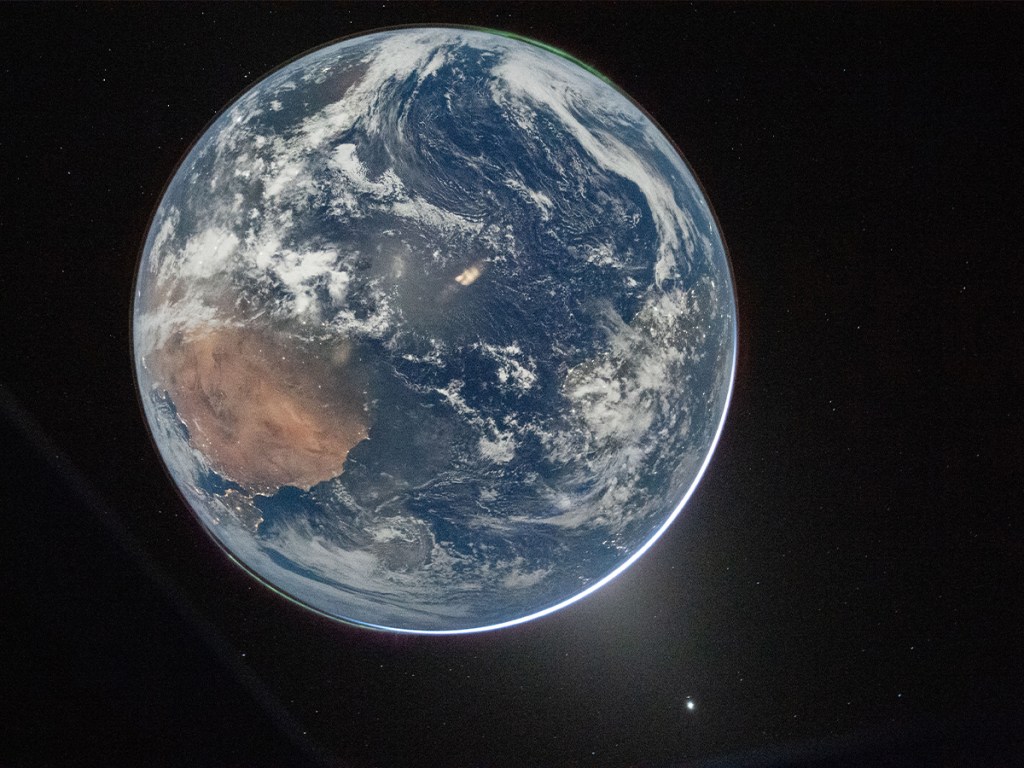
Commander Reid Wiseman’s photo, taken from Artemis II as it pushed away from Earth and races toward the Moon, reveals the majestic blue planet we all call home. NASA released the image shortly after liftoff, instantly turning it into one of the defining visuals of the mission so far.
It’s been more than 50 years since man last traveled to the moon on Apollo 17 in 1972. For younger generations, the Artemis II flyby and the eventual Artemis IV landing, might be the first time space exploration feels less like science and more like a shared human experience.
NASA’s mission to the moon
Artemis II has a simple yet extremely complicated mission to fly around the moon. Expected to take around 10 days, the crew of 4 will fly aboard NASA’s Orion spacecraft.
After orbiting twice around the Earth to ensure everything is working properly, they will perform a propulsion move called the transluna injection burn. This will send the Orion 4,600 miles beyond the far side of the moon. During the rest of the journey, the crew will test emergency procedures, conduct some science experiments, evaluate the radiation shelter, and observe the Moon.
For the return leg home, the Orion spacecraft will rely on Earth’s gravity to pull them back. Orion is scheduled to splash down in the Pacific Ocean on April 10th. There, it will be picked up by the U.S. Navy.
NASA shared in their Mission Overview, “Through Artemis, NASA will explore more of the Moon than ever before and create an enduring presence in deep space, while simultaneously preparing to land the first astronaut – an American – on Mars.”
NASA inspires people to dream big
For many Americans, this is the first time humanity has ventured this far from Earth in their lifetime. The Artemis II mission feels less like a run-of-the-mill space mission and more like the return of a dream we had quietly abandoned.
A 2025 study in Frontiers showed that experiencing awe about space can make people feel more like “science people,” sparking their curiosity about learning more science in the future. During the total 2024 solar eclipse, when the moon completely blocks the sun, people remained in awe and felt inspired even 6 months later.
Nature Reviews Psychology shared a 2024 study that showed experiencing awe can make people feel smaller in a good way. Individuals become less focused on themselves and more connected to the world. Awe has a positive influence upon thinking, motivation, social interactions, and well-being.
This most recent mission by NASA proves that humanity can still commit to projects bigger than the daily news cycle. Some achievements are worth pursuing not for immediate gratification, but because they expand the young minds that will shape our future.
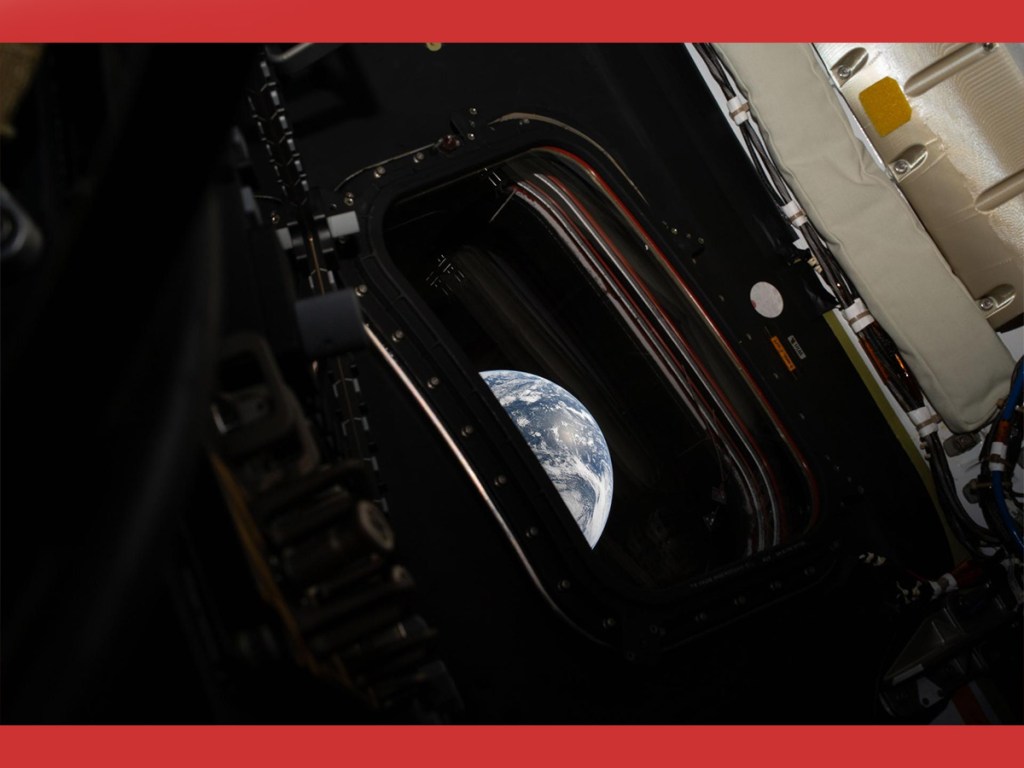
Image Credit: NASA
People are inspired to talk about Artemis II
A Reddit post, First photo taken from Artemis commander Reid Wiseman had people excitedly sharing on the momentous achievement. Several people seemed inspired, others tried to be funny, and many seemed appreciative of the experience itself. These are a small collection of thoughts from the comments:
“In outer space you develop an instant global consciousness, a people orientation, an intense dissatisfaction with the state of the world, and a compulsion to do something about it.’
“You think any astronaut at one point did the finger pinchy thing where they’re crushing the planet?”
“Unlike watching from near-Earth orbit, this image has not been seen by human eyes in over fifty years. Mankind is able to do great things, when we all work together!”
“Lot of water/earth in front of me on that photo”
“That’s here. That’s home. That’s us. On it everyone you love, everyone you know, everyone you ever heard of, every human being who ever was, lived out their lives.”
“HELLO WORLD !!!”
“Flat-earthers gonna be upset. Lol”
“That beautiful silver line of the atmosphere the shines across the border of the globe is so surreal. Literally looks like a magic border in fantasy novels…”
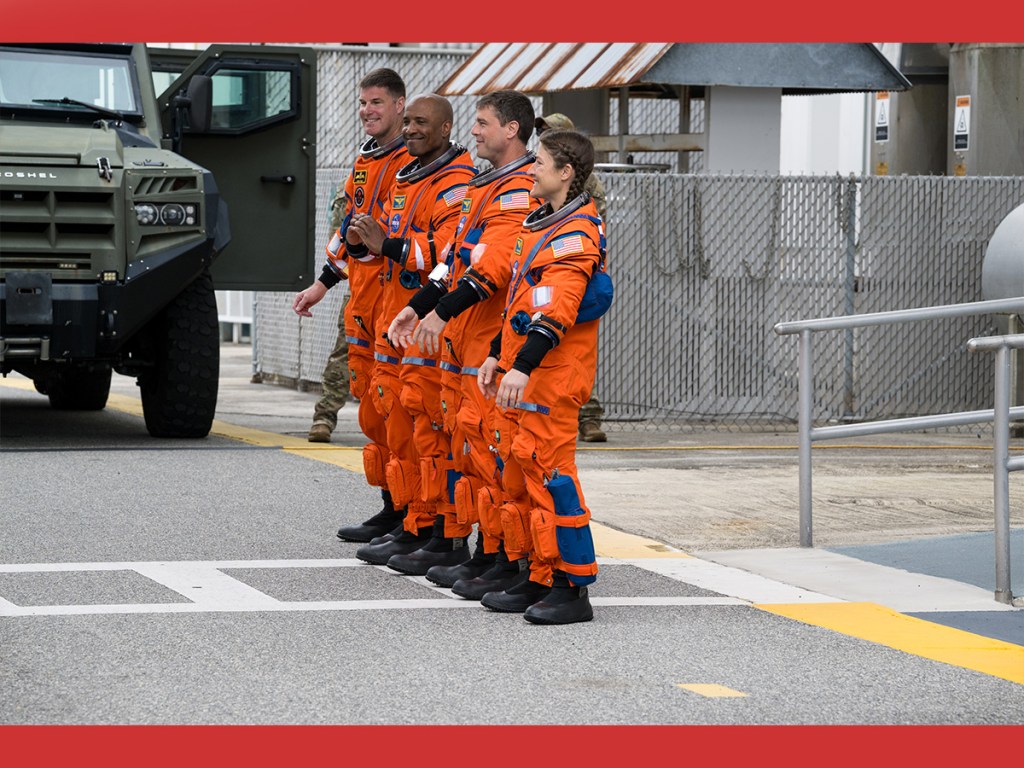
Image Credit: NASA
10 days to bring our astronauts home
NASA’s 4 astronauts are only beginning the long journey that carries hope, wonder, and promise of future space discoveries. Mission specialist Christina Koch, commander Reid Wiseman, pilot Victor Glover, and fellow astronaut Jermey Hansen are already gathering information that can lead to eventual Moon landings and even a trip to Mars.
Weisman’s photo so beautifully captures the fragile yet powerful planet we live on. It’s a spectacular image that highlights so much of a planet most of us will see far too little of in our lifetimes. Mission specialist Koch expressed the effect of witnessing Earth from space, saying,
“… you see the Earth as it exists with the whole universe in the background. You see the thin blue line of the atmosphere, and then when you’re on the dark side of the Earth, you actually see this very thin green line that shows you where the atmosphere is. What you realize is every single person that you know is sustained and inside of that green line and everything else outside of it is completely inhospitable. You don’t see borders, you don’t see religious lines, you don’t see political boundaries. All you see is Earth and you see that we are way more alike than we are different.”












.jpg)