A collaboration between GOOD and Column Five Media.
Tags
advertisement
More for You
-
Remote work made these colleagues more open with each other, not less
A study following one company’s shift out of the office found an unexpected benefit in the glimpses colleagues got of one another’s lives.
Assistant Professor of Management and Organizations, Boston College
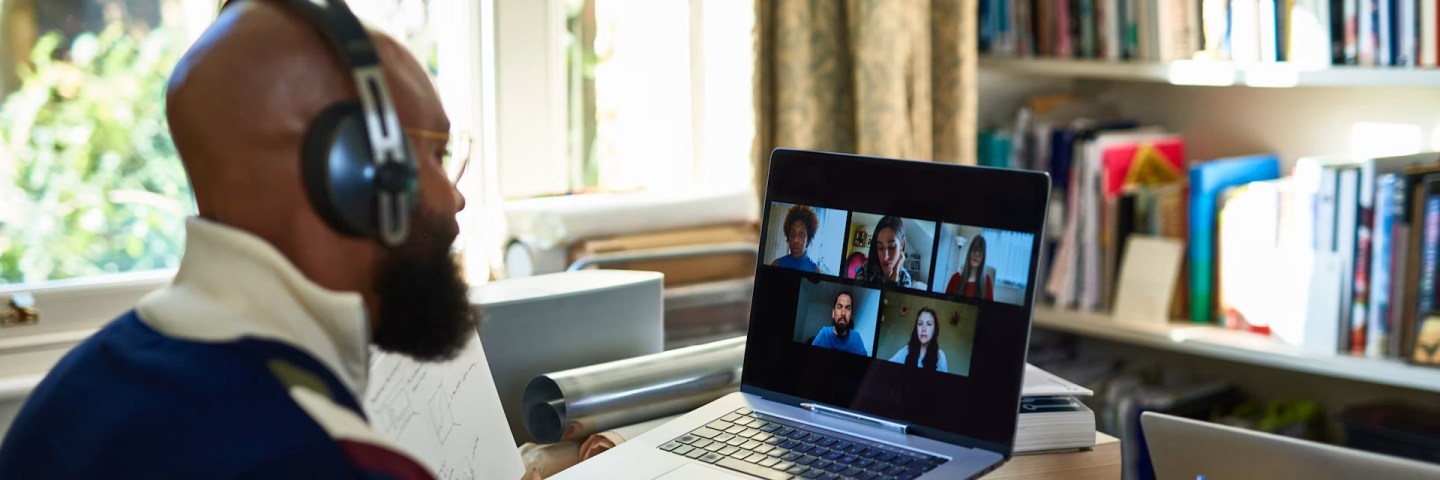
If you need to participate in video meetings for work, you’ve probably experienced more than one disruption, whether it’s kids darting around or home renovation noise.
Meetings that use Zoom and similar software are a fixture of remote work, which surged during the COVID-19 pandemic and remains prevalent. As of August 2026, 36% of American workers in management, professional and related occupations did at least some of their work from home, according to the U.S. Bureau of Labor Statistics.
I’m a management scholar who studies how, when and where people work. Before the pandemic began, I was studying a professional services company. That made it possible for me to follow how its staff transitioned from primarily working in person to mostly remote through 2024, which gave me more insight into how remote work has changed people’s lives.
The study included 275 interviews and about 330 hours of observation. Most people in the groups I followed ended up working from home four or five days a week, joining meetings by video. What I found was the opposite of what I expected.
Learning more about colleagues
Rather than pulling colleagues apart, remote work brought them closer and made them more willing to be open with one another. The findings were peer-reviewed and will be published in an upcoming issue of the management journal Organization Science.
Before the shift to remote work, I assumed – consistent with the predictions made by many prominent researchers of workplace relationships – that moving people out of the office would break down social connections. But I was wrong.
In the office, before the shift to remote work, I found that people primarily viewed one another as work colleagues rather than whole people. Reflecting this relationship, workers sometimes said they felt uncomfortable sharing with one another aspects of their lives that might limit their ability to do work.
For example, one worker I interviewed, Patrick, was afraid to tell his colleagues he could not work late one night because he was helping his mom. All the names I’m mentioning are pseudonyms to protect the privacy of the people involved and their employer.
“Even though you didn’t sleep last night, you’re expected to show up and smile and be fine,” said Tamara, an exhausted parent with two young children, when she was still commuting regularly to the office.
Surprisingly, people told me that they learned a lot more about one another once they began to work remotely instead of being together in an office. During my research, I heard about children yelling in the background and pets wandering in front of cameras. A spouse arriving home from work stopped to say hello on screen.
In team chat channels, people posted photos of their children, their animals and the meals they had cooked.
“Everyone has noises in the background, or they have something going on or whatever, and so we get to know each other quicker and on a deeper level than we would otherwise,” Tamara told me. In some cases, this increased sense of closeness happened to people who had known each other for years prior to switching to remote work.
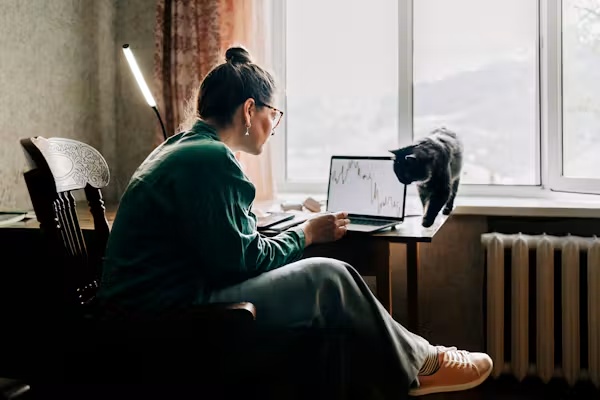
When you’re a remote employee, you may get more quality time with your pets. Moment/Getty Images Growing psychological safety
Psychological safety is the sense that you can take an interpersonal risk at work, such as admitting a mistake, asking for help or raising a problem, without being judged negatively.
Decades of management research tie psychological safety to important outcomes for both workers and organizations, including learning, creativity and speaking up.
Over time, working remotely seemed to improve psychological safety for many of these co-workers.
People became “less afraid to talk about the interface of their personal and professional lives,” Leah said. Before, she added, no one would have volunteered that a breakup was affecting them and that they needed a day off to decompress.
After the company went remote, people told me they felt more comfortable sharing their own challenges as they tried to juggle their work and the challenges they faced in their personal lives.
Supporting work and nonwork activities
And as people started sharing these problems with their co-workers, they also told me they felt as if they could then better support one another.
When one worker’s father fell ill, his colleague, Brooke, took over the tasks the two had planned to do together.
“I’m just going to take this over for you right now,” Brooke told him. “And then, whenever you can, come back and swoop in.”
The colleague was able to dedicate time to caring for his father. And importantly, because help circulated this way, Brooke said, a task no longer “stopped dead in the water” when one person could not get to it.
This deeper collaboration did not seem to come at the expense of getting tasks completed. As an employee I’m calling Charles explained, having co-workers sharing details about their personal lives has “helped us to work more effectively in a lot of ways.”
Crucially, these improvements were experienced by people with many different living arrangements – young and old, those with and without kids or partners, men and women. And these benefits were positively reinforcing. For instance, sharing more meant learning more about others, which further reinforced psychological safety.
My findings suggest that remote work can be a benefit that employers and employees may overlook. Rather than treating time out of the office as a cost to social connection among employees, they might treat it as a way to grow personally and get to know co-workers better.
This article originally appeared on The Conversation. You can read it here. -
Dog parks are an antidote to the isolation and divisions that social media can fuel
A shared patch of grass can bring people together across differences, one ordinary encounter at a time.
Professor of Pediatrics, Biomedical Informatics and Science Communication, University of Pennsylvania
The case against social media has gotten so well rehearsed that most people can easily merge it into ordinary conversation: It makes people lonely. It sorts them into camps. It hands them a room full of people who already agree with them and calls that a community.
I’ve given this speech myself, with feeling, having read my phone notifications in the host’s powder room 11 minutes earlier.
I am a pediatrician, health communicator and researcher at the University of Pennsylvania, and diagnosing is in my blood. Two decades of research, a surgeon general’s advisory on loneliness and Meta’s recent settlement of up to US$17 billion, pending court approval, all describe the same thing. What we recite are the symptoms. The more interesting question is what these symptoms diagnose.
Simply put, our dependency on social media creates a deficiency disease. It’s not something toxic we’re ingesting; it is something our lives online have stopped us from receiving.
I figured out that cost while standing in a field in Harford Park with a dog leash wrapped around my ankles.
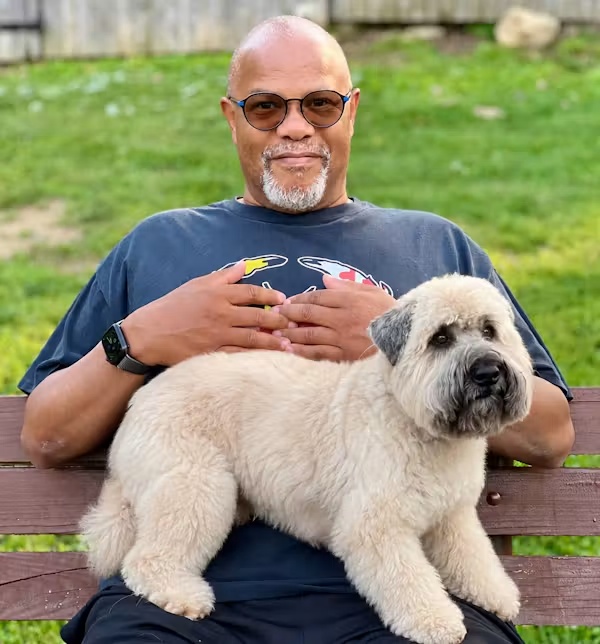
The author sits with Chaz, his soft-coated Wheaten Terrier. Kevin B. Johnson, CC BY-NC-SA A corner bar without the alcohol
Harford Park in Wayne, Pennsylvania, is 30 acres of rolling grass and mature trees the township designated for off-leash dogs in 1997.
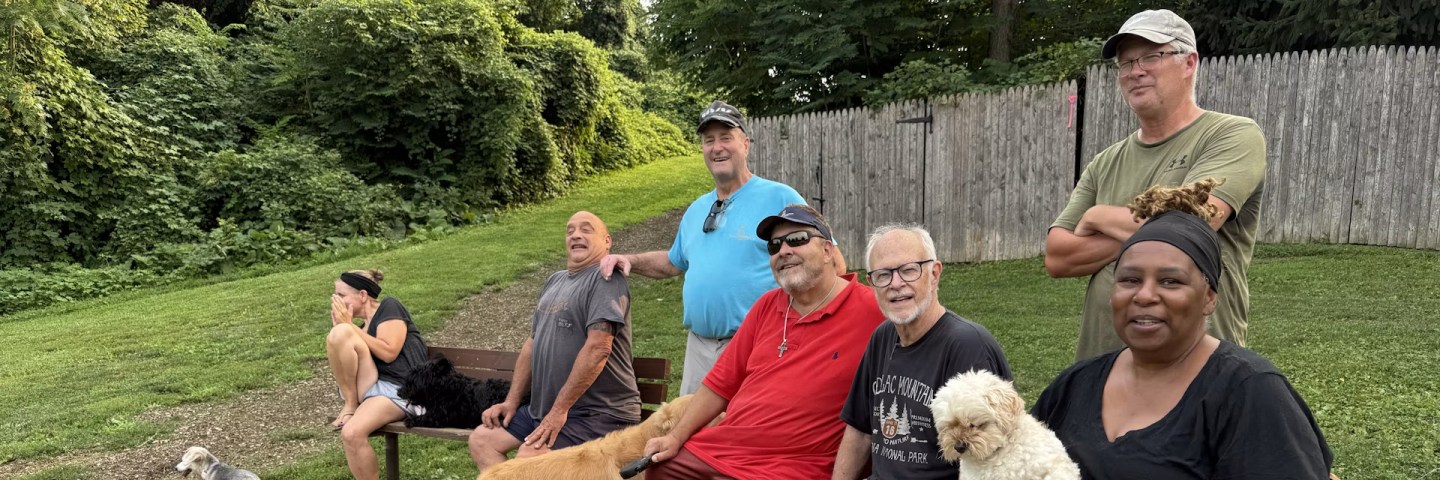
I go most afternoons. So do the same 15 or 20 people, which is how I ended up tangled in someone else’s very long leash on a Tuesday, concentrating hard enough on my own feet that I stopped talking and just listened.
Two conversations were running at once. In one, a regular who is having a rough year was getting gently harassed about the weight he’d put on against his doctors’ advice — first by me, then by three other people who piled on uninvited. In the other, someone was arguing about Dr. Anthony Fauci, and the regulars chimed in on both sides. Gossip, complaints and dogs greeting dogs became the backdrop.
As I worked to free my ankles, it clicked: The dog park, like the local knitting club or the Saturday pickleball group, does the job a corner bar used to do. There are regulars and running jokes, and once a person is known, a spot in the conversation is reserved for them.
What makes these places work is that a shared focus on one small part of a life opens into something fuller. Regulars may share a taste in dog breeds or beer, but they are not colleagues, political soulmates or relatives. They differ on favorite restaurants, income, age, religion, values and beliefs. They are together because a golden retriever and a nervous rescue mutt need to run in the morning, and there is a field nearby.
Chance encounters can increase empathy
Sociologist Ray Oldenburg called places like this third places and defined them as “public places that host the regular, voluntary, informal, and happily anticipated gatherings of individuals beyond the realms of home and work.” Oldenburg noted the erosion of places that once manufactured accidental encounters, such as main streets, neighborhood pubs, general stores and even the drugstore soda fountain.
Off-leash parks have been among the fastest-growing amenities in U.S. city park systems for two decades. A study in the Journal of Urban Affairs found dog park users reported higher social capital and neighborhood cohesion.
The park is not a utopia. It’s a corner bar without the booze.
Thomas Pettigrew and Linda Tropp’s meta-analysis of 515 studies provides the best evidence for why these accidental connections matter. They found that contact between groups generally reduces prejudice, but the quality and circumstances of that contact matter. The more interesting finding came later, when they tested how it works: The effect runs less through learning facts about the other group than through reduced anxiety, more empathy and more perspective.
That is exactly what the park does. The man I disagree with about nearly everything hasn’t changed his mind, and neither have I. What changed is that his politics is now maybe the eighth thing I know and appreciate about him, behind his dog’s bad hip, his sense of humor, the awful year he had and his love of what Philadelphians call “wooder ice.”
That shift, from opinions to a person, is why “just show people the other side” keeps failing online. When sociologist Christopher Bail and colleagues paid Republicans and Democrats to follow bots representing the views of the opposite party on Twitter, the Republicans came out substantially more conservative than they went in. Democrats shifted slightly left, though not significantly. Exposure to opinions is not the same thing as exposure to a person. The feed gave people arguments. The corner bar gives people other people.
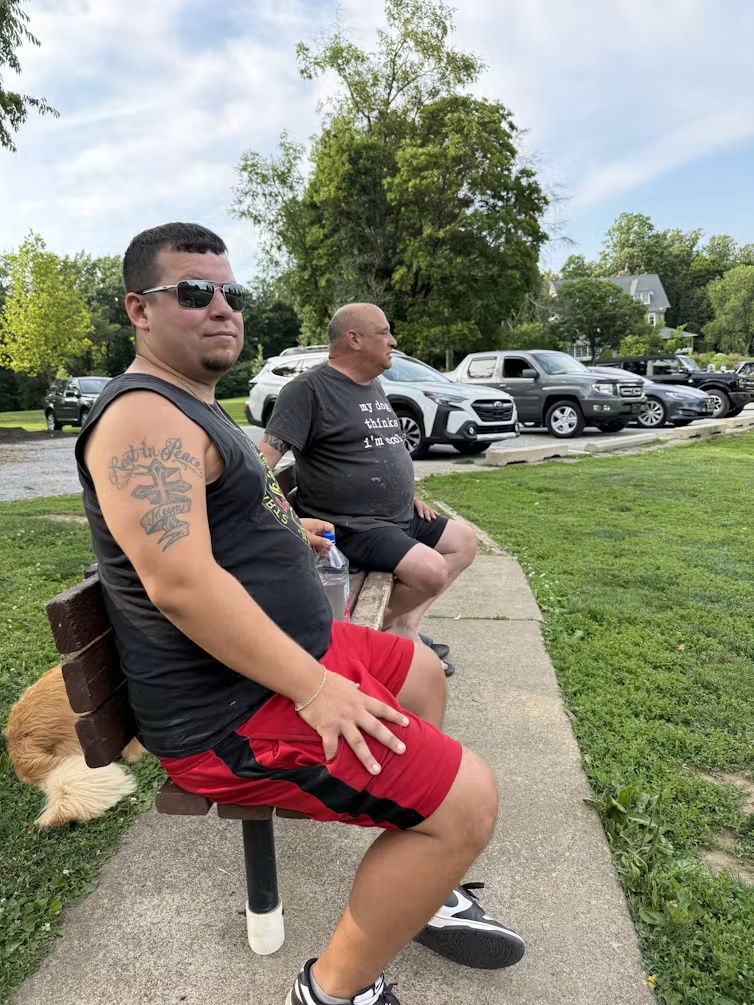
A dog park is a third place, like the neighborhood corner bar, where dogs instead of alcohol serve as a social lubricant. Kevin B. Johnson Making room for tolerance and trust
If the places people gather shape their health, as a growing body of research suggests, then the shift from communities set by geography to communities assembled by algorithm creates a slow burn of intolerance and mistrust.
There are now decades of research on social media and anxiety, and a growing body of experimental work about what algorithmic curation does to what people see. Almost none of it treats the encounter pattern as a health exposure.
Social platforms have mastered what German American sociologist Herbert Gans called selective homogeneity. They sort people by interests, identities, tastes and grievances, then make it easy to stay among people who feel familiar.
They are like virtual Levittowns – the postwar suburban developments outside Philadelphia, among other places in the Northeast, where thousands of identical houses went up on farmland and were sold to buyers screened by price. In early Levittowns, covenants barred Black families outright.
In 1958, Gans moved into a Levittown in New Jersey and stayed two years doing research on its residents. He found that although original settlers and those who moved in by choice were happy, their rebellious teenage offspring, who had the fewest places to go and the least to do in those communities, were not.
This was an early, real-life sorting of the type that algorithms would make all too common 60 years later.
By contrast, repeated, low-stakes, in-person contact like the interactions between regulars at a dog park or corner bar creates room for tolerance and trust. People come back. They notice an absence. They share attention around a task, a place or a dog, rather than around presenting themselves or defending a position.
Deficiency diseases are easily treatable. Nothing has to be taken away; instead, something has to be given back.
Read more of our stories about Philadelphia and Pennsylvania, or sign up for our Philadelphia newsletter on Substack.
This article originally appeared on The Conversation. You can read it here. -
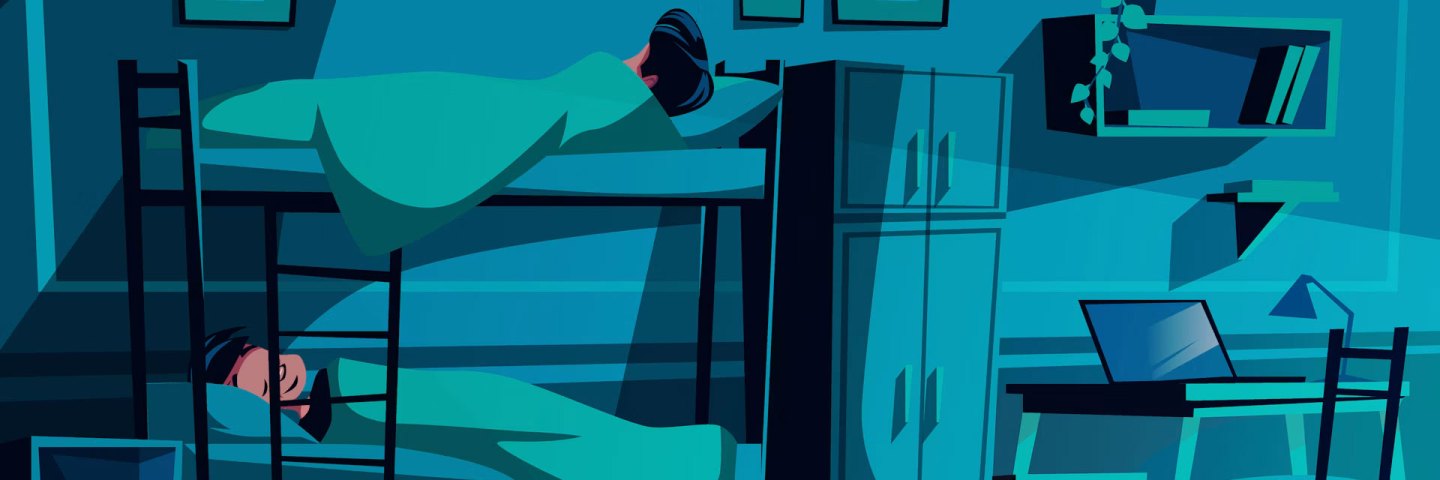
We paid college students about $5 a night to sleep at least 7 hours – and their grades quickly improved
A university experiment tested whether small, immediate rewards could help students follow through on their intentions to get more rest.
Paying college students about US$5 a night to sleep seven hours got them a quarter more nights of adequate sleep – and better grades.
That is what we found in a study we published in July 2026.
We gave more than 1,100 undergraduates at University of Pittsburgh a Fitbit – a wearable activity tracker that looks similar to a watch – and an app that sent bedtime reminders and morning feedback. We randomly chose 468 students and paid them about $5 for every night they slept at least seven hours, over the course of four weeks. We verified how much they slept using the device they wore.
The students were about 19 years old, on average, and half of them were first-year students. Roughly 72% of them were women. About 55% were white, 28% Asian, 9% Black and 4% Hispanic.
Our study shows that offering an immediate financial reward can help students meet a seven-hour sleep goal, and that those effects can persist up to a month beyond when the students are paid.
Not just a student problem
About one-third of American adults sleep less than seven hours a night, and a similar share say they wish they slept more. Among adolescents and young adults, roughly two-thirds routinely fall short of getting seven hours of sleep a night – the amount of shut-eye that health authorities recommend.
One prominent sleep researcher has called sleep deprivation the most prevalent high-risk behavior.
Short sleep is linked to obesity, diabetes, high blood pressure, heart disease, stroke and early death.
Irregular sleep predicts mortality risk even more than sleep duration does. Sleep loss shows up in decision-making, even when it comes to issues like whether people vote.
Students are running on empty
Before we changed anything, the average student in our study slept 6.6 hours a night.
Half were going to bed after 1 a.m. on average – a quarter after 2 a.m.
Students got the recommended seven hours of sleep on a typical weeknight on only 43% of their nights, and more than 85% fell short at least once a week.
They also did not know how much sleep they were getting. Two-thirds told us they usually slept seven hours – the trackers showed only about one-third of students slept that much on even three nights out of five.
And 94% said their ideal night of sleep was longer than the one they were getting.
What the money bought
The 468 students we offered nightly payments reached seven hours of sleep on 26% more nights than 380 students who were not offered the money. That is a large shift for a group in which fewer than half were hitting the mark to begin with.
Students receiving the monetary incentive slept 19 more minutes per school night, roughly the difference between closing the laptop at 11:40 p.m. or at midnight.
Among students receiving the payment incentive, their GPA rose by about 0.08 points that semester – roughly a quarter of the gap between students who arrived with above-average and below-average high school grades.
Once the payments stopped after four weeks, students who had received the money were still sleeping about eight minutes longer per night for the remaining three to four weeks of the study. The effect was smaller than during our study, but our findings suggest that some of the change in sleep habits persisted for up to a month after the end of the incentive.
The effects of the intervention on sleep and GPA were largest among first-term freshmen, whose routines are not yet necessarily fixed.
Rewards work – if they come right away
Timing mattered too: Delivering the payment as a lump sum at the end of the semester, rather than every morning, produced only about two-thirds of the effect on sleep.
The effects of the intervention on GPA faded over a couple of academic terms. Grades remained higher in the following semester, but two semesters later we could no longer detect an effect.
Bedtime reminders and morning feedback on their own – with no money attached – had little effect. Students who received them slept only marginally more. The problem was not motivation: Nearly all said they wanted more sleep than they were getting. The challenge was following through on that intention night after night.
Investing in sleep
Our results show that universities should look at how the environment they create fosters or discourages good sleep habits.
Late evening deadlines to submit assignments and early classes can both make it harder for students to get enough sleep. Changing some of these features costs little compared with many academic support programs, and it may be worth testing alongside other interventions aimed directly at students.
Reminders and feedback might also work better if they change over time, rather than becoming familiar and easy to tune out.
Very few universities or students treat sleep as part of an investment in education, or ask whether the schedules and incentives schools create make adequate sleep harder. Our results suggest they should.
This article originally appeared on The Conversation. You can read it here.


advertisement



Health
We paid college students about $5 a night to sleep at least 7 hours – and their grades quickly improved


Sign Up for the Daily Good!
By subscribing, you accept beehiiv's Terms of Use & Privacy Policy. Our site's Privacy Policy applies.
Advertisement