Photo credit: Cover Image Source: Left: Photo by Alex Livesey/Getty Images for European Athletics Right: Photo by Kent Phillips/Walt Disney World Resort via Getty Images – Array
Dutch athlete superstar Femke Bol has hit new heights in her sporting career after she went to secure a gold in the recently concluded World Athletics Indoor Championships 2024 in Glasgow. However, the Dutch champion has garnered attention online for something rather unusual. In a post-game interview, Femke Bol and her teammate Lieke Klaver were spotted sharing their thoughts on the victory. However, as soon as Bol was handed over the mic to speak, the focus went on the voice of the athlete, with many claiming her voice to be similar to “Mickey Mouse”, a famous Disney cartoon character, reported The Poke. As bizarre as it sounds, the internet community raced to spare their thoughts on the matter.
Image Source – Getty Images I Photo by Sam Mellish
An X(formerly Twitter) user named Bairdric(@Bairdric1) posted a video of the interview and also shared the part where Bol was spotted sharing her thoughts on the win. The post with the caption, “I swear if you close your eyes, you could convince yourself Mickey Mouse has just broken the 400m indoor world record for the Netherlands” has garnered over 23 million views and has a flurry of comments to the post.
BUDAPEST, HUNGARY – AUGUST 24: Femke Bol of Team Netherlands celebrates winning the Women's 400m Hurdles Final during day six of the World Athletics Championships Budapest 2023 at National Athletics Centre on August 24, 2023 in Budapest, Hungary. (Photo by Patrick Smith/Getty Images)
I swear if you close your eyes, you could convince yourself Mickey Mouse has just broken the 400m indoor world record for Netherlands… pic.twitter.com/GyEbYSYn3H— Bairdric (@Bairdric1) March 3, 2024
X users flocked to share their thoughts not only on her famous record win but also on the uncanny resemblance of her voice to Mickey Mouse. One user named Grumpy(@grumpymunster) went on to appreciate Bol for her talent but also expressed the fact that the post was funny, “She’s an extraordinary athlete and from what I know of her, a lovely person. But… that doesn’t mean this post isn’t funny af.”
On the flip side, the X post also received some flak from other users as some of them did not appreciate the humor and gave a piece of their mind in the comment section. The author of the post did mention that the video should be taken in light humor and not as an offensive post. The whole comment read :
Gonna have to mute this so I and my phone can rest. For those that took this joke in the way it was intended, I salute you. For those that didn’t, have a lovely week and don’t step on any Lego… One love.— Bairdric (@Bairdric1) March 3, 2024
Funny or not, this latest post on X was shared with the purpose of entertainment and not as an effort to harm someone’s image. At the same time, it is vital to recognize the context and intent behind such ‘funny’ videos as humor can often be subjective and not intended to be taken seriously or to offend. Moving on, Bol emerged as one of the stars of track and field with a sensational win at the 2024 World Athletics Indoor Championships on Saturday. The Dutchwoman has had a successful 24 months so far as she went on to lift the 400m hurdles and ran a sensational anchor leg to secure women’s 4x400m relay gold for the Netherlands at last year’s Budapest World Championships and now this year she broke her world record to take the 400m title in Glasgow after she completed the 400m hurdle in a record 49.17 seconds beating her previous record of 49.24. Bol has singlehandedly raked up medals for her country and her newest record will become a memorable part of the history of the sport. Since her latest win in Glasgow, the internet has already hailed her as a ‘legend’ after all her achievements were no mean feat by any standards.
An elderly woman in Wichita, Kansas who was experiencing hard times has now found hope in the kindness of others. It first started when a local landscaper decided to mow and clean up her overgrown lawn for free. Since then, she’s been given $625,000 in donations (and counting!) to help address her needs and raise her spirits.
It all started with Spencer B. of SB Mowing, a lawn care and pressure washing company. Spencer (who wishes his last name be omitted) runs his business both as a mower and as a content creator. He often offers his services for free to the elderly and veterans who cannot afford the upkeep of their lawns.
Spencer visited the elderly woman, Debbie, after Zach, her Uber driver, contacted him. Zach had seen how much she was struggling on her own and wanted to help. As Spencer and his dad cut Debbie’s lawn and cleared debris, they heard her story.
Debbie’s grief and relief
Debbie had been the full-time caregiver for her ailing husband until he died from stage four pancreatic cancer. Since then, her grief and other factors had prevented her from keeping up her home, lawn, and her own health. Struggle upon struggle was placed upon her.
“While she was grieving, she was also being taken advantage of,” Spencer wrote on Debbie’s GoFundMe. “A contractor took a $2,000 deposit for tree work and never showed up. A neighbor wrecked her car and didn’t pay for it. She fell three months behind on rent, put off dental and health care she genuinely needs, and there were days when she and her dogs went without food because she simply couldn’t afford it.”
Aside from free lawn care, Spencer decided to help Debbie get back on track. He and his dad bought everything from Debbie’s yard sale and donated it all to Habitat for Humanity to get her some cash in hand. Spencer also paid three months of Debbie’s back rent through his non-profit organization SB Mow It Forward.
Strangers donated to Debbie
Spencer then set up a GoFundMe for Debbie and shared her story. Within three days, friends and strangers alike donated over $625,000. Donations continue to roll in as of this writing. All of the money will be put into a trust for Debbie to use for essentials, medical care, dental care, and to help her transition to a senior living community when she is ready.
Spencer shared a video of him telling Debbie this news. She was floored when she found out that around 40 million people had seen the video of Spencer cleaning up her yard, and she had no idea he had set up a GoFundMe.
“I thought you already helped me,” Debbie said, welling with emotion. “I can’t believe it. How can people be so generous to help a stranger?”
With tears in her eyes, Debbie thanked Spencer, Zach, and all the 13,000 people who had donated to help her. Spencer even made a video to highlight Zach, as he was the one who brought Debbie’s troubles to Spencer’s attention.
This isn’t the only time Spencer’s deeds have made headlines. In 2024, he had raised $242,000 for a pet rescue that treated a cat he found while mowing a lawn. In 2025, he raised $850,000 to help Beth, an elderly woman in need of financial aid and accessibility care.
A lot of good can happen if we check in on our neighbors (and maybe offer to cut their lawns) every once in a while.
In Minnesota, 68-year-old Kathryn Woessner got out of her van and fell into a puddle beside it. The pool of mud was so deep that Woessner couldn’t get herself out; she compared it to quicksand. She was almost completely submerged, stuck in it for three days until two men spotted her and saved her life.
The two men, Adam Sandbeck and Mike Gravalin, were riding their all-terrain vehicles nearby. On a whim, the two friends decided to ride on a trail that they hadn’t explored before that had been flooded. That’s when they spotted Woessner’s van in a clearing.
‘Help me’
Sandbeck and Gravalin went in to get a closer look. Next to the van, they saw what they thought was a corpse buried in the mud except for part of the face poking upward. That’s when they heard Woessner’s weak voice say, “Help me.”
Shocked at first, Sandbeck and Gravalin quickly went into action. It took them less than half an hour to pull Woessner out of mud and check in on her. They then called 911 to get volunteer firefighters, paramedics, and police to the scene for help. The tracking device on one of their vehicles helped provide coordinates to their location. Woessner explained to her saviors that she was stuck on her back, resulting in a serious sunburn on her face as she tried to yell for help for days.
Woessner was taken to Essentia Health-St. Joseph’s Medical Center where she is expected to make a full recovery. The Douglas County Sheriff’s Office and Woessner’s family were relieved, as she was officially reported missing for three days. The Douglas County Sheriff’s Office thanked the other agencies that aided in the search and rescue of Woessner in a Facebook post.
The two friends were ‘guided’ there
While they were rightfully praised for their actions, Gravalin and Sandbeck say they were at the right place at the right time. In fact, they almost wouldn’t have found Woessner at all. Had they decided to take their vehicles on their usual routes, Woessner might not have survived.
“We ain’t heroes,” Sandbeck told KARE 11 News. “We’re just two guys that were out there riding, enjoying the day together, making fun of each other all day long like we always do, like buddies, but I have no doubt the hand of God was there guiding us there. Because that trail that we found her on, we actually drove past it.”
“We’ve driven past it for the last eight years and never went down,” added Gravalin. “And it was like, let’s go check that out,” Sandbeck added. “So we actually turned around and drove back down it.”
Regardless of reason, it was good for Woessner that they decided to take a detour.
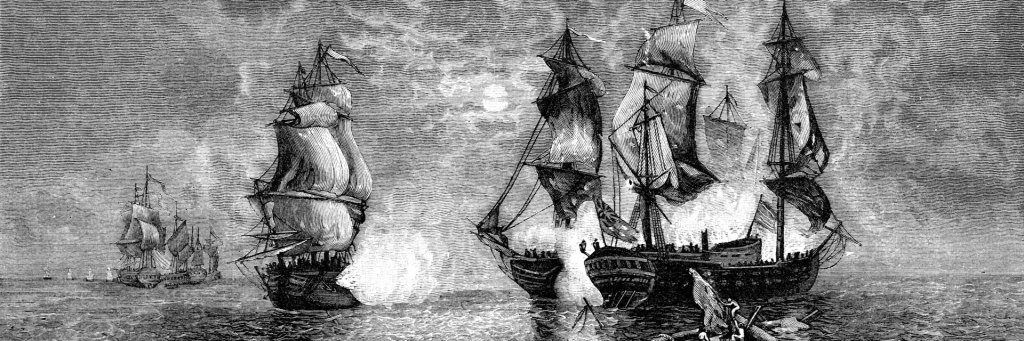
George Washington knew his forces could not win the American Revolutionary War without some measure of sea power. “It follows then as certain as that night succeeds the day,” he later wrote in a letter, “that without a decisive naval force we can do nothing definitive, and with it everything honorable and glorious.”
The problem was that the American commander did not have a navy.
As a professor of early American history, I have taught courses on the American Revolution for more than 20 years and have written two books on its maritime dimensions. Washington’s solution wouldn’t come from a French shipyard or a congressional committee. It would come from a group of angry, out-of-work New England fishermen.
Supplying the army from the sea
In 1775, American ground forces managed to lay siege to the British army in Boston, but Washington needed provisions and military stores to sustain pressure on this key commercial hub. Looking out across the Atlantic Ocean, he noticed supply ships arriving in droves from Great Britain – unescorted – to supply the British army in Boston with guns and ammunition.
Unbeknownst to them, the British had already handed the American commander the ships and mariners he needed to capture those resources.
The Sons of Liberty, a network of political activists, had angered the British government by resisting taxes and commercial regulations – from the 1765 Stamp Act, which taxed printed documents, to the 1773 Tea Act, which controlled what tea leaves made their way into North American cupboards.
To punish rebels for their treason, Parliament passed the Restraining Act of 1775, banning New Englanders from fishing on the Atlantic Ocean. Overnight, thousands of skilled mariners – men who spent their lives wrestling 100-pound cod out of the freezing, storm-tossed North Atlantic – were out of a job. They weren’t just unemployed; they were furious. These fishermen left their work tools and ships behind, picked up weapons and joined the siege of Boston alongside American farmers.
Ashley Bowen, who lived and worked in Marblehead, Massachusetts, the principal fishing port in America at the time, recorded in his journal on May 22, 1775, “the fishermen are enlisting quite quick.”
A letter from a French diplomat to the foreign minister in Paris confirmed the news a couple of weeks later: “4,800 sailors seeing they were going to be deprived of their fishing rights, deserted their ships and joined their compatriots under arms.”
Washington, commissioned by Congress as commander in chief of all American armed forces in June 1775, saw an opportunity. He didn’t wait for Congress to build new frigates. Instead, he reached out to John Glover, a fish merchant from Marblehead and a commissioned officer under his command.
Washington’s plan was simple: Take the sturdy, salt-stained schooners used for fishing and turn them into armed, seagoing predators.
The first of these was Glover’s own fishing vessel and trade ship, Hannah. She wasn’t a formidable man-of-war but a 78-ton workhorse that spent summers at the Grand Banks and winters hauling rum and sugar from the Caribbean. Washington armed the trade ship with a few cannons, manned her with fishermen and sent her out to hijack British supply ships to help his army win the siege of Boston.
Just two days after the Hannah was underway, her crew captured the Unity, a sloop loaded with naval stores and lumber, supplies sorely needed by British forces in Boston.
Between August and October 1775, Washington outfitted a fleet of schooners at Congress’ expense to intercept British supply ships off the coast of New England. These vessels and crews, whose wages were paid by the American government, constituted what many historians consider America’s first navy. Washington reminded each captain that they sailed “at the Continental Expense.” These orders from Washington and the payments made by Congress made these ships official American warships, operating under the authority of what would become the federal government.
These recruits didn’t need nautical training; they were seasoned seafarers who had battled rough waters and gale force winds. On Oct. 13, 1775, George Washington wrote to his brother, John Augustine Washington, that the fishermen were “soldiers … who have been bred to the sea.”
In 1776, Washington informed the governor of Connecticut, who had asked to draft seamen from Washington’s regiments for his own naval expedition, that he could not spare any. “I must depend chiefly upon them for a successful opposition to the Enemy,” Washington explained.
Because the British navy was spread too thin, with too few warships available to police the Atlantic coastline, the armed fishing vessels were able to disrupt supply lines and keep the Revolution alive through its infancy. By the time the British realized the threat, the damage was done.
On Feb. 26, 1776, just a few months after Washington launched his fleet, British Admiral Molyneux Shuldham wrote in a report to his superiors that his forces in Boston were low on everything from naval supplies to weapons. What little they could find had to be purchased “at the most extravagant prices.”
The British government had not assigned military convoys to trans-Atlantic shipments at the start of the conflict in 1775. Now, Shuldham recommended arming the supply ships themselves, since valuable stores were being intercepted by rebels in small vessels, “however attentive our Officers to their Duty.”
He concluded the report with an ominous note, explaining that he simply did not have the resources to do everything that was being asked of him – support the army, blockade rebel ports and protect British ships bound for Boston: “I must beg leave to observe to you the very few Ships I am provided with to enable Me to Co-operate with the Army, Cruize off the Ports of the Rebels to prevent their receiving Supplies, or protect those destined to this place from falling into their hands.”