A century ago, you probably wouldn’t have spent your Saturday morning lugging local produce back from a farmers’ market because chances were, like the other 95 percent of America, you lived on a farm. But today the numbers are flipped: Now most of our country’s population lives in cities, and less than 1 percent of our population are farmers. For any major city, it’s the same story: As our food production slips further and further afield, our urban residents have suffered—physically and economically—from a lack of access to fresh fruits and vegetables. Luckily, according to a story about farmers’ markets in our 12th issue, the number of markets nationwide is almost 5,000 (up from 1,755 in 1994) which certainly demonstrates that demand for local, fresh food has increased. I don’t know about you, but I’ve never seen my local farmers’ market so crowded. But even as a cultural shift has occurred in our relationship with food, the open-air farmers’ market as we know it hasn’t changed all that much in the last 30 years. How will these local farmers continue to supply our urban demands?

Thirty years ago, Vance Corum was one of the founders of the first authorized farmers’ market in California, which opened in Gardena in 1979. The weekly, open-air market became a model for farmers’ markets across the state and rippled inland. “Farmers’ markets are coming of age. Customers want beautiful, abundant marketplaces and farmers need large crowds of people,” he says. “Farmers have plenty of production; the challenge is for us to create strong markets in cities and towns across America that recreate and improve upon the local food systems of the past.” But to serve those crowds, the traditional market is begging for innovation at every stage, from pieces that can aid the loading, packing, and transporting of foods, as well as the vending systems, which Corum says farmers have been ingeniously building themselves. “What would be especially valuable is a compact, easy to assemble, interlocking table and display system that is flexible, strong and rigid to show off two or three tiers of product on a slant.”


Due to the locations and accessibility of farmers’ markets, fresh fruits and vegetables aren’t always reaching the often-underserved communities who most need affordable, healthy produce. Mobile produce vehicles are finding their ways into cities as a cheap and efficient way to bring produce to the people. The Greener Grocer’s Veggie Van delivers its wares on the streets of Columbus, Ohio, and is equipped with technology to accept credit cards and EBT credit, the electronic equivalent of food stamps. Small business advocates Mercy Corps worked with the branding agency Saatchi & Saatchi helped to design food carts in Jakarta to help vendors make healthy snacks as attractive as ice cream trucks. And there are many farm-to-school programs like the one in Santa Monica, California where the public school district has bought farmers’ market produce for their salad bars for 11 years. Corum says even kids really do know the difference: “When really fresh farmers’ market produce was substituted for produce from the wholesale terminal, the number of kids choosing the salad bar quintupled from eight percent to forty percent.”

Even if farmers can get their produce to a local, temporary market they’re still selling at smaller scales—farmers’ markets themselves only move about 1% of the food consumed in the United States—and their audience is mostly single families and chefs for smaller restaurants. Websites like Foodzie—an online farmers market where small food producers and growers can sell their product—might help, but for farmers who want to move larger quantities of produce, getting local tomatoes made into local tomato sauce, for example, is extremely difficult. “Currently the potential supply of local food is restricted by an economically monolithic system of production, processing and distribution,” says Vanessa Zajfen, program manager for The Urban & Environmental Policy Institute at Occidental College in Los Angeles. So, especially for large metropolitan areas, there’s the need for a “hub,” or terminal, for local farmers to deliver, distribute and process their produce.

“We need market designs that will provide year-round direct marketing opportunities for farmers and create vibrant public spaces with food at its core,” says Zajfen, who points to a space like the Santa Caterina Market in Barcelona, Spain, which received a beautiful renovation and shimmery ceramic roof by Enric Miralles and Benedetta Tagliabue in 2005. The Barcelona market functions as not only a wholesale terminal, but a beloved retail and dining destination where local food is processed into delectable tapas served under the same roof. “This is the oldest market in Barcelona; it was opened in 1848,” she says. “Its modern redesign has kept this market relevant and functional.” (For more innovative permanent market designs, see Peter Smith’s story on GOOD: “The Public Market Renaissance.”)

A contemporary answer to Barcelona’s example might be the New City Market, a concept by Vancouver-based citylab, that will create a 21,000 sq. ft. year-round indoor-outdoor farmers market, wholesale food distribution, commercial processing facility, business development, local food advocacy and, conference space, and will also push the form when it comes to sustainability. A market like this could be at the center of a sustainable food policy for a city, like the one recently unveiled in San Francisco. Instead of the traditional farmers’ market channel, farmers would have multiple options to sell to consumers, says Zafjen. “A shift in our system of food delivery to an increased variety of direct marketing methods would be an important step in the development of a sustainable regional food system.”

Of course, another option is bringing those rural farms closer to the people. Dickson Despommier’s Vertical Farms concepts, towering skyscraper greenhouses in high-density areas, and the The Science Barge (above), a floating sustainable farm in New York, are both non-traditional ways that family farmers could produce and deliver their food to growing city populations. And there are hundreds of outdoor classrooms across the country that bring food production right into schools, the most famous being Alice Waters’s Edible Schoolyard in Berkeley, California. These teaching gardens tap the engaged expertise of community chefs, producing local food that can be given back or sold to neighborhood restaurants. And they might even be recruiting a few future farmers along the way.

Can you design a better way to bring locally-produced food to urban residents? Enter our Redesign Your Farmers’ Market contest by September 1.
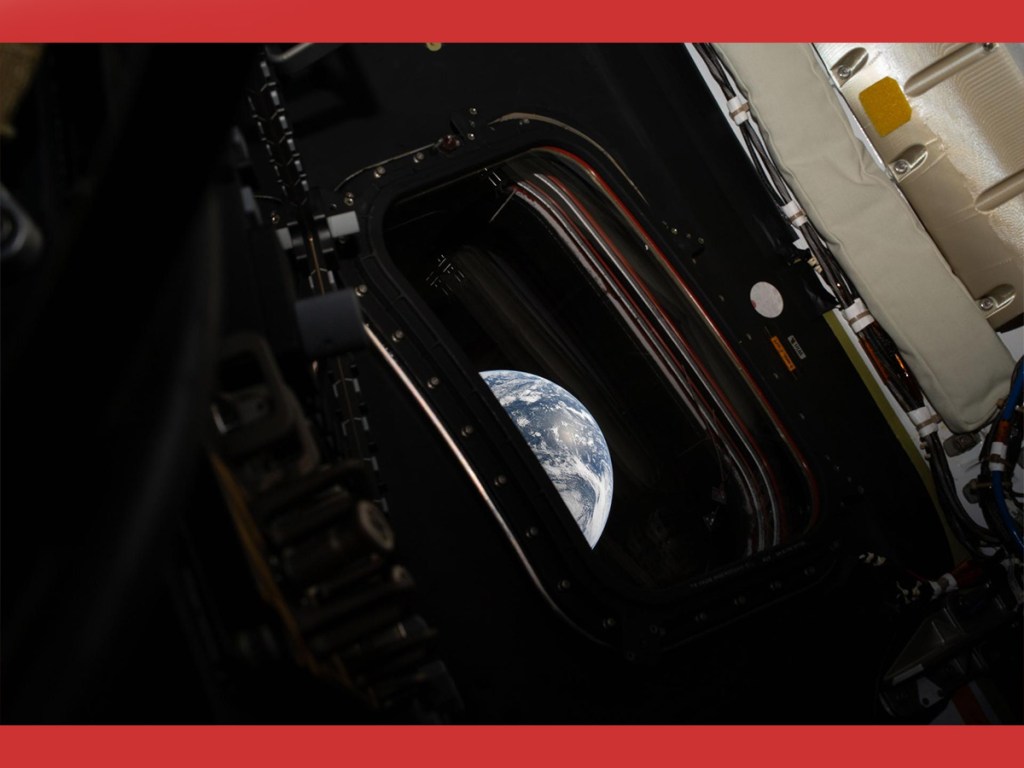
  • Stunning photo taken from Artemis II commander Reid Wiseman has rebooted the world’s love of space
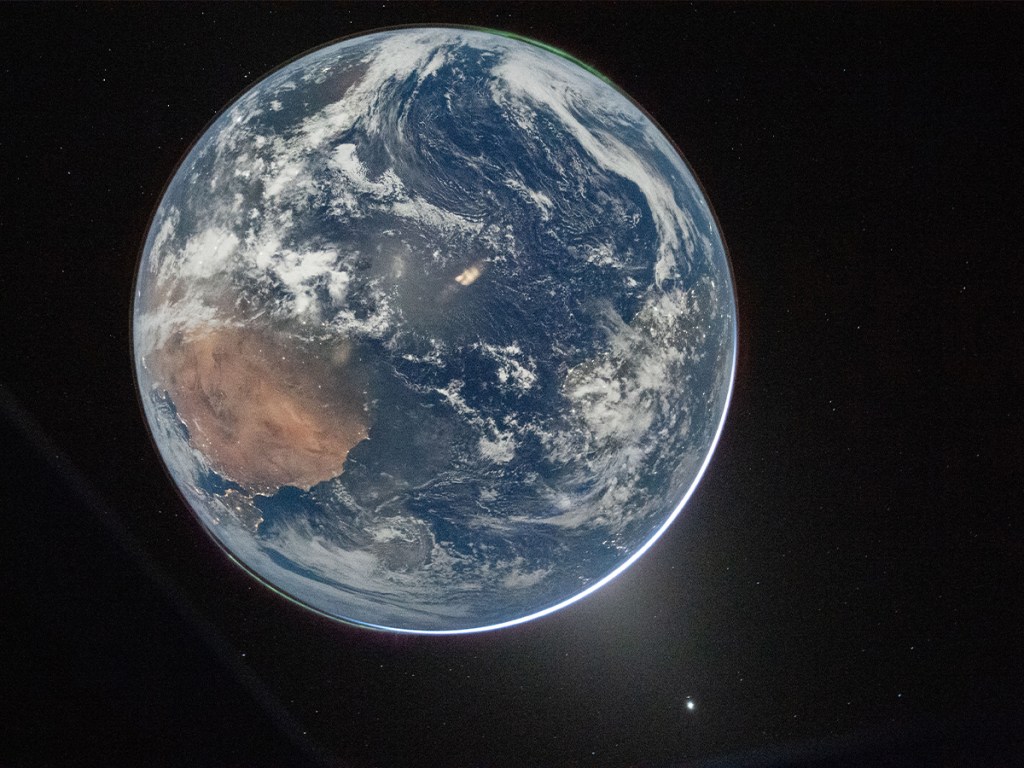
    Artemis II Commander Reid Wiseman took this picture of Earth from the Orion spacecraft's windowPhoto credit: NASA/Reid Wiseman (cropped image)

    Commander Reid Wiseman’s photo, taken from Artemis II as it pushed away from Earth and races toward the Moon, reveals the majestic blue planet we all call home. NASA released the image shortly after liftoff, instantly turning it into one of the defining visuals of the mission so far.

    It’s been more than 50 years since man last traveled to the moon on Apollo 17 in 1972. For younger generations, the Artemis II flyby and the eventual Artemis IV landing, might be the first time space exploration feels less like science and more like a shared human experience.

    NASA’s mission to the moon

    Artemis II has a simple yet extremely complicated mission to fly around the moon. Expected to take around 10 days, the crew of 4 will fly aboard NASA’s Orion spacecraft.

    After orbiting twice around the Earth to ensure everything is working properly, they will perform a propulsion move called the transluna injection burn. This will send the Orion 4,600 miles beyond the far side of the moon. During the rest of the journey, the crew will test emergency procedures, conduct some science experiments, evaluate the radiation shelter, and observe the Moon.

    For the return leg home, the Orion spacecraft will rely on Earth’s gravity to pull them back. Orion is scheduled to splash down in the Pacific Ocean on April 10th. There, it will be picked up by the U.S. Navy.

    NASA shared in their Mission Overview, “Through Artemis, NASA will explore more of the Moon than ever before and create an enduring presence in deep space, while simultaneously preparing to land the first astronaut – an American – on Mars.”

    NASA inspires people to dream big

    For many Americans, this is the first time humanity has ventured this far from Earth in their lifetime. The Artemis II mission feels less like a run-of-the-mill space mission and more like the return of a dream we had quietly abandoned.

    A 2025 study in Frontiers showed that experiencing awe about space can make people feel more like “science people,” sparking their curiosity about learning more science in the future. During the total 2024 solar eclipse, when the moon completely blocks the sun, people remained in awe and felt inspired even 6 months later.

    Nature Reviews Psychology shared a 2024 study that showed experiencing awe can make people feel smaller in a good way. Individuals become less focused on themselves and more connected to the world. Awe has a positive influence upon thinking, motivation, social interactions, and well-being.

    This most recent mission by NASA proves that humanity can still commit to projects bigger than the daily news cycle. Some achievements are worth pursuing not for immediate gratification, but because they expand the young minds that will shape our future.

    NASA, spacecraft window, Reid Wiseman, Orion, astronaut
    Image from Artemis II window looking back to Earth.
    Image Credit: NASA

    People are inspired to talk about Artemis II

    A Reddit post, First photo taken from Artemis commander Reid Wiseman had people excitedly sharing on the momentous achievement. Several people seemed inspired, others tried to be funny, and many seemed appreciative of the experience itself. These are a small collection of thoughts from the comments:

    “In outer space you develop an instant global consciousness, a people orientation, an intense dissatisfaction with the state of the world, and a compulsion to do something about it.’

    “You think any astronaut at one point did the finger pinchy thing where they’re crushing the planet?”

    “Unlike watching from near-Earth orbit, this image has not been seen by human eyes in over fifty years. Mankind is able to do great things, when we all work together!”

    “Lot of water/earth in front of me on that photo”

    “That’s here. That’s home. That’s us. On it everyone you love, everyone you know, everyone you ever heard of, every human being who ever was, lived out their lives.”

    “HELLO WORLD !!!”

    “Flat-earthers gonna be upset. Lol”

    “That beautiful silver line of the atmosphere the shines across the border of the globe is so surreal. Literally looks like a magic border in fantasy novels…”

    NASA astronauts, mission specialist, Launch Complex, journey to Moon, rockets
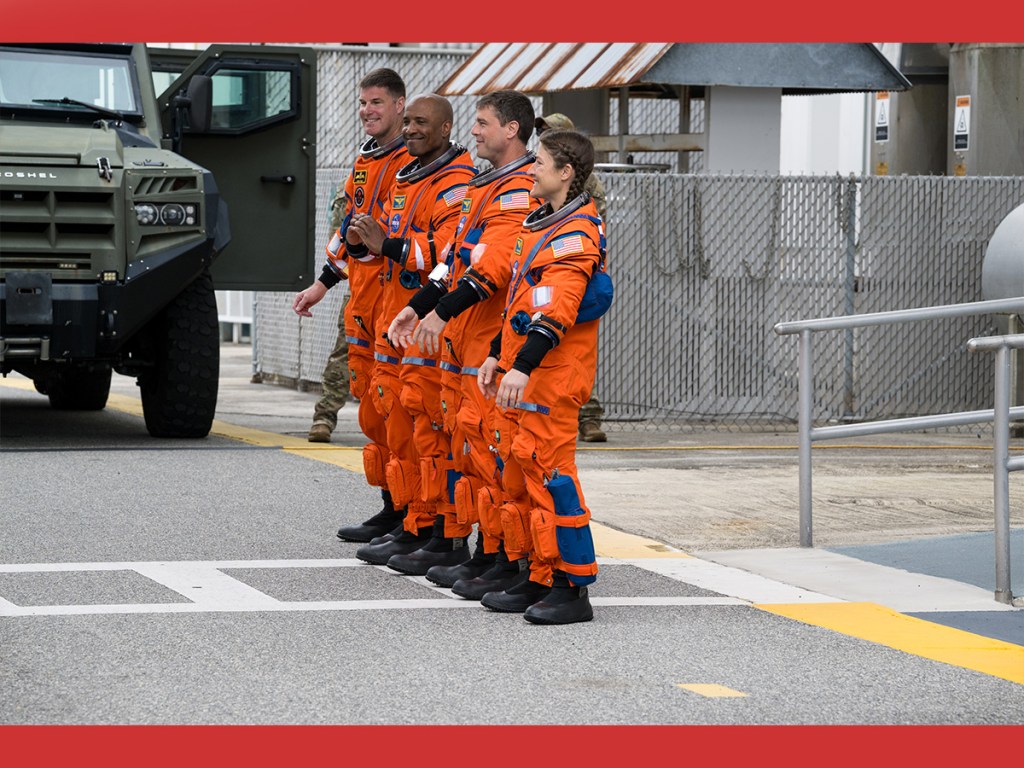
    From right to left, NASA astronauts Christina Koch, mission specialist; Reid Wiseman, commander; Victor Glover, pilot; and CSA (Canadian Space Agency) astronaut Jeremy Hansen.
    Image Credit: NASA

    10 days to bring our astronauts home

    NASA’s 4 astronauts are only beginning the long journey that carries hope, wonder, and promise of future space discoveries. Mission specialist Christina Koch, commander Reid Wiseman, pilot Victor Glover, and fellow astronaut Jermey Hansen are already gathering information that can lead to eventual Moon landings and even a trip to Mars.

    Weisman’s photo so beautifully captures the fragile yet powerful planet we live on. It’s a spectacular image that highlights so much of a planet most of us will see far too little of in our lifetimes. Mission specialist Koch expressed the effect of witnessing Earth from space, saying,

    “… you see the Earth as it exists with the whole universe in the background. You see the thin blue line of the atmosphere, and then when you’re on the dark side of the Earth, you actually see this very thin green line that shows you where the atmosphere is. What you realize is every single person that you know is sustained and inside of that green line and everything else outside of it is completely inhospitable. You don’t see borders, you don’t see religious lines, you don’t see political boundaries. All you see is Earth and you see that we are way more alike than we are different.”

  • Happiness expert’s refreshing take that the best friendships are useless
    Women laughing on scooters.Photo credit: Canva
    ,

    Happiness expert’s refreshing take that the best friendships are useless

    “If you want to be happier you need more useless.”

    As Americans have become more tribal, isolated, and downright lonely, the need for quality friendships is at an all-time high. Yet, some of the most important relationships begin when we aren’t looking for them. Sometimes something seemingly insignificant, like a simple hobby or a mutual love, slowly grows into a real connection.

    Dr. Arthur Brooks shared his insights into friendships on the Mighty Pursuit podcast. He explains that there are three types of friendships, and the one that matters most is a useless friendship.

    Aristotle believed friendship was the secret to happiness

    (Discussion begins at 1 hour into the video.) Brooks traces the value and importance of friendship back to the famous philosopher Aristotle. He explains that Aristotle believed the ultimate secret behind a happy life was friends. Brooks says, “In the Nicomachean Ethics, he [Aristotle] said there’s three levels of friendship that bring more happiness. And if you get stuck at lower levels, it’s going to be a problem for your life.”

    The first type of friendship is transactional. These are people with whom you do business or have a casual acquaintance. You don’t really know them on a personal level. The relationship is friendly, but if business or a reason for interacting stops, so does the friendship.

    Brooks describes transactional friendships, saying, “There’s nothing wrong with it, it’s just incomplete.” He continues, “If that’s all you have you’re going to be hopelessly lonely.”

    The second type is friendships of beauty. They are chosen out of admiration. These are people we want to be around. Brooks describes it as, “You’re magnetic. It could be because of your physical beauty, your sense of humor, your intelligence, or your success.”

    Relationships built on admiration are better than transactional, but Brooks warns, “If that beauty goes away, so does that friendship.”

    sporting events, transactional friends, admiration, everyday connextion
    Fans at a sporting event.
    Photo credit Canva

    Useless friends are the best

    Aristotle described the friendship that brings the most satisfaction as Atelic, meaning it has no specific end or goal. Brooks calls it “Useless. It’s cosmically, beautifully useless. And so if you want to be happier, you need more useless people you just love.”

    Describing the characteristics of this type of friend, Brooks shares, “you’re walking together, shoulder to shoulder, into the future and looking at something you both love mutually.” He continues, “There’s always a third love in these perfect friendships.”

    Examples offered by Brooks might be a couple loving their children or best friends who love a sports franchise. Brooks says, “It can be dumb, or it can be cosmic. But the whole point is that third love is the glue that makes that, that useless relationship beautiful and perfect to you.”

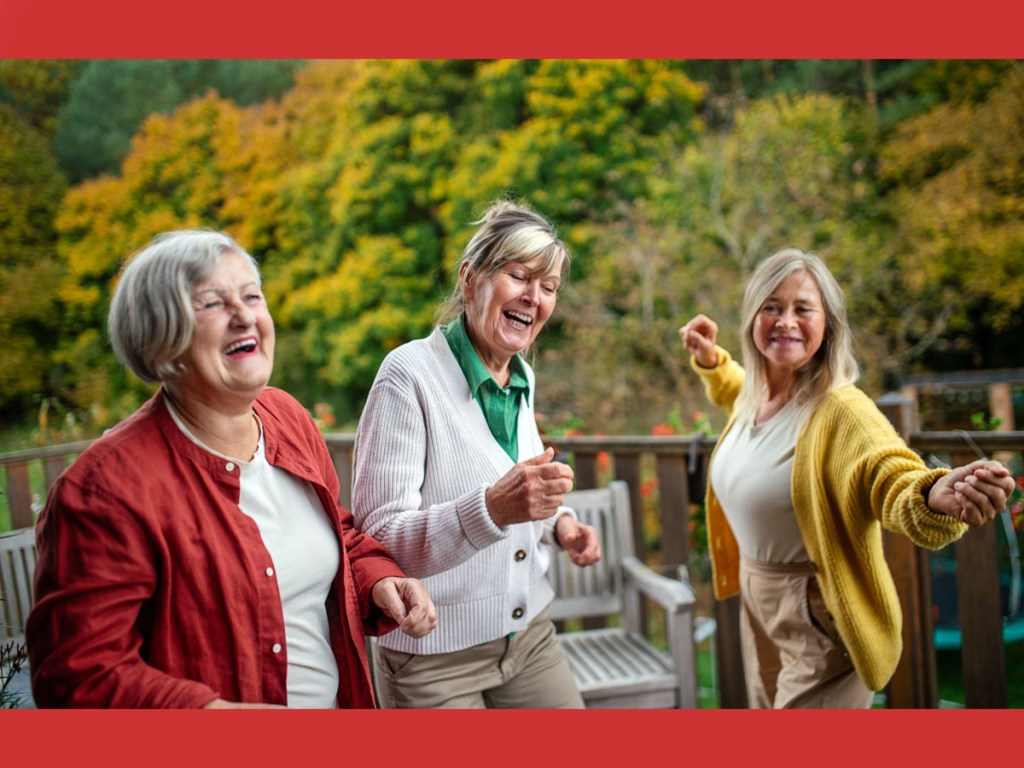
    laughing friends, kinship, well-being, companionship
    Women laughing and dancing.
    Photo credit Canva

    Science loves a useless friendship

    Research supports Aristotle’s belief that having a friendship without an agenda makes for a richer and happier life. A 2023 study in Frontiers found that friendships valued for the stimulating companionship and shared activities predicted higher well-being, life satisfaction, and personal growth. Best friends aren’t based on networking or usefulness.

    A 2024 study in the National Library of Medicine found that high-quality best friendships lowered loneliness and boosted self-esteem. Meaningful relationships can begin with a shared love, but over time, become a part of who the friends actually are.

    hobbies, mutual interests, shared space, proximity relationships
    Friends enjoy drinks together.
    Photo credit Canva

    A 2022 study at Cornell University revealed that repeated physical proximity and similar interests strongly increased the likelihood of friendship formation regardless of background or social differences. Activities like walks, hobbies, sports, and creative interests offered a shared space where even unlikely friendships grow.

    Brooks suggests the most important friends come from connecting over the smallest things. They don’t happen because we need them; more so, they exist for their own sake. These “useless friendships” are grounded in mutual joy and common loves. They may seem small or incidental at first, but the Atelic relationship shapes our happiness the most.

  • Benefits of mindfulness meditation go far beyond relaxation – here’s what it is and how to practice it
    Mindfulness meditation is a process of noticing difficult thoughts and feelings rather than shutting them out.Photo credit: Marco VDM/E+ via Getty Images
    ,

    Benefits of mindfulness meditation go far beyond relaxation – here’s what it is and how to practice it

    Yuval Hadash J. David Creswell magine being asked to sit alone in a quiet room for 15 minutes with nothing to do – no phone, no music, no external distraction. In a well-known 2014 study, many participants found that task so challenging that they chose to press a button to give themselves an unpleasant electric shock instead…

    magine being asked to sit alone in a quiet room for 15 minutes with nothing to do – no phone, no music, no external distraction. In a well-known 2014 study, many participants found that task so challenging that they chose to press a button to give themselves an unpleasant electric shock instead of continuing to sit with their thoughts and sensations.

    Because being with their own thoughts, emotions and bodily sensations can be so difficult, people often turn away from them. Smartphones offer constant distraction from boredom or stress, allowing users to disengage from their present-moment sensations and thoughts with a quick swipe or tap.

    But avoiding unpleasant internal experience can backfire. Studies show that doing so is associated with a range of mental health problems, including anxiety and depression.

    We are psychological scientists who study mindfulness and how it affects stress, health and well-being.

    Mindfulness is a mental state that people can learn to cultivate through training. When people are mindful, they direct their attention toward their moment-to-moment bodily sensations, emotions and thoughts, and they meet those experiences with an attitude of curiosity and open acceptance.

    Mindfulness can be cultivated through “mindful moments” in daily life, moments in which people intentionally stay present with what they do, hear, see or feel. However, formal mindfulness meditation involves sustained practice that systematically trains attention and acceptance. Our research shows that training acceptance during mindfulness meditation can substantially improve your emotional well-being.

    Tuning into experience can be hard – and helpful

    Popular culture often portrays mindfulness as a way of relaxing. But we’ve found that mindfulness practice can often feel surprisingly difficult. In one of our studies, participants who directed their attention to their thoughts and feelings during a 20-minute mindfulness meditation noticed six times more unpleasant experiences than pleasant ones.

    This doesn’t mean they were doing it wrong. Turning your attention inward can feel challenging. Often, it brings you into contact with experiences that you normally try to push away, such as feeling bored, uncomfortable or agitated. However, we’ve also found that facing difficult experiences during mindfulness training can have positive effects.

    In particular, adopting an accepting attitude toward your experiences seems to drive many of the positive effects of mindfulness. Our research shows that developing the capacity for acceptance through mindfulness meditation can reduce feelings of loneliness and increase positive emotions, such as happiness. It also reduces stress hormones and helps people notice more positive experiences during stressful situations.

    In these studies, we have found that acceptance is the critical driver. When acceptance is removed from mindfulness training, these benefits largely disappear.

    The power of learning to accept experience

    A key part of mindfulness practice involves turning toward difficult experiences, such as like stress, boredom and pain, rather than seeking distractions or pushing those experiences away. It means noticing feelings and thoughts as they arise, sensing how they show up in the body, and approaching them with an attitude of acceptance rather than judgment or resistance.

    A helpful way to think about this comes from the “two arrows” metaphor, which is rooted in East Asian Buddhist traditions. It teaches that there are two types of suffering, which can be likened to being struck by two arrows.

    The first arrow is the unavoidable unpleasant experience that comes with being human – for example, feeling exhausted after a poor night’s sleep. The second arrow is how we react to that unpleasantness: tensing up, resisting it, replaying it in our mind, criticizing ourselves or trying to escape it. Often this second arrow adds more suffering than the original unpleasant experience.

    In mindfulness practice, the goal is not to stop having unpleasant sensations and feelings. Instead, mindfulness helps people accept the unavoidable difficulties of that first arrow and to soften the second arrow by letting go of struggle with those experiences and reactions that make them worse.

    For example, let yourself feel bored without immediately reaching for distraction. Acknowledge anxiety, sadness or grief with openness, instead of trying to suppress those feelings or fueling them with harsh self-criticism.

    Practicing mindfulness in everyday life

    One way to cultivate this attitude is to treat thoughts, emotions and sensations as guests in your inner landscape. Instead of fighting them or clinging to them, notice when they arise. Acknowledge and welcome them, and when they naturally change, let them go. Some people find it helpful to imagine holding a difficult feeling as they would a crying baby, with a touch that’s steady, supportive and kind.

    If you want to try this in daily life, the next time you feel a challenging experience, pause and open to the experience for a moment. Notice what you are feeling. Where does it show up in your body – a tightness in the chest or heaviness in the stomach? Can you allow it to be there, even briefly, without trying to fix it or distract yourself from it?

    A driver's hand tightly grips a steering wheel with traffic visible ahead.
    Mindfulness means acknowledging and accepting challenging feelings, such as stress and frustration from unexpected delays. LB Studios/Connect Images via Getty Images

    Then observe what happens. Does the challenging experience change over time in any way? Do your reactions shift or soften with repeated practice? Remember that a brief practice is unlikely to produce instant relief, and expecting quick results can actually make it harder to stay open to your experience as it is.

    Rather, our findings suggest that meaningful change comes through consistent, ongoing practice. Every small step matters. Over time, brief moments of responding to stress or discomfort with mindfulness can reshape how you relate to challenges and provide greater resilience and ease.

    In the study where people chose electric shocks over sitting alone with their thoughts, being with their inner experience felt almost intolerable. Mindfulness offers a different path: not escaping that experience but learning to stay with it. In doing so, what once felt unbearable can become something you can meet with greater emotional balance and well-being.

    This article originally appeared on The Conversation. You can read it here.

Explore More Stories

Well-being

She was afraid that becoming paralyzed would end her marriage. He refused to leave.

Well-being

Can’t stop endlessly scrolling? Tips to help you take back control

Science

How dolphins communicate – new discoveries from a long‑term study in Sarasota, Florida

Research

Goodbye, knee pain. In a medical first, scientists have found a way to regrow damaged cartilage.