If the debate over climate change is closed, why is John Coleman, the founder of the Weather Channel, still trying to prove it’s all a scam?

Well over a quarter-million weathercasts-that’s the ballpark figure the 74-year-old founding father of the Weather Channel guesses he’s probably performed in his 55 years in the business. Today, as for the past 15 years, he’s chalked up another weathercast like it’s his job, because it is. This, he tells me, is the best time of his career.Which seems odd, because in the past few years, he’s admittedly become mad as hell. Coleman is angry because he believes we have been brainwashed into thinking we’re ruining our own planet. He wants to let us off the hook, and give us some good news for a change, because, you see, John Coleman says that climate change is a scam.If you consume mainstream media, odds are you’re not hearing much debate about climate change these days. We’re told the debate is effectively over. Scientists say so, too. It’s our consumption that continues to ruin our planet’s environmental health, so there’s no longer time to debate-it’s time to act. Every time we do anything, like flip on a light switch or charge an iPod or turn on the A/C, we’re contributing to the release of greenhouse gases, and so the oceans rise and that’s a problem for the polar bears and, well, you know-something like that. It may be difficult to explain, but we know the state of the environment is bad. Most recently, in fact, we were told that the effects of man-made climate change are all but irreversible.

John Coleman has dedicated his life to studying weather and the science that creates it-so shouldn’t we at least hear him out?

So, yes, the debate is over. And yet for some reason, somewhere outside the fray, the weather sage John Coleman decided it shouldn’t be. That we’d been hoodwinked. That it was still worth talking about. So a year and a half ago, determined he’d heard enough of the noise and the Al Gore and the polar bears, he threw his voice into the conversation.When Coleman posted his first climate change brief online, he was surprised by the attention it got. “I thought I was the only one,” he says. “I started finding that there were plenty of people out there, it’s just that the media was ignoring them and the place to find them was on these little corners of the internet.” In May, 2008, an organization called the Oregon Institute of Science and Medicine released a petition at the National Press Club, with the signatures of 31,000 scientists rejecting the U.N. consensus of man-made climate change. Nine thousand of the names reportedly belong to Ph.Ds.Encouraged, he delivered a speech last March at the International Conference on Climate Change in New York where he said that Al Gore and others selling carbon credits should be sued for fraud. His hope, he said, was that the publicity from such a suit would potentially debunk climate change in a court room instead of waiting for the media to do its supposed due diligence.So is he a crank-Willard Scott with an agenda that goes beyond hooky old-school weatherman shtick? Coleman’s life has been dedicated to studying and presenting weather and the science that creates it-so shouldn’t we at least hear him out? He thinks we should, and he has supporters. He says the science we’ve digested is erroneous.


Coleman’s still got a steady gig, and he doesn’t feel he personally has much to lose in allowing himself to be one of the most prominent climate-change naysayers. He’s already lost his baby-the Weather Channel-and, he says, TWC is a perpetrator of the scam along with all the other mainstream media organizations. Coleman doesn’t like what his baby has grown into. When I ask him about the current product, he doesn’t skip a beat. “Everything. The Weather Channel is terrible. Pathetic.”Long estranged from the Weather Channel, Coleman has been living out his golden years and serving up sunny local weather for KUSI in San Diego, California, what he refers to as his “retirement job,” since 1994. San Diego wasn’t on Coleman’s radar after his ousting from TWC. First, he tried New York for about a year, then back to Chicago for a few years. Then, when things dried up in Chicago, in 1993, he looked around and, he says, nobody wanted him, so he wound up in the desert–Palm Springs. “No station in the world wants an old, has-been weatherman in his fifties,” he says. Coleman was 56 at the time. “Old’s a curse.” Coleman spent less than a year in Palm Springs–he’s been getting older in San Diego ever since.Coleman says being in San Diego is “like living in heaven without dying.” In San Diego you’ve got your occasional Santa Anas, a little El Niño and La Niña, some night and morning low cloud patterns, but most of the time you’ve just got sunshine and the breeze. The weather in San Diego itself is why Coleman’s KUSI website bio begins with the quote: “Being a TV weatherman in San Diego is an outrageous scam.” The bio, incidentally, was written well before John Coleman made a few headlines, calling climate change warming a scam.

Coleman saw An Inconvenient Truth on DVD and he says he made it all the way through, but “not without screaming.”

Among other things, it took drowning polar bears and the internet to get John Coleman firing on all cylinders. “Gradually there’s this build-up, this hysteria about global warming,” he says. “The Al Gore book comes out. The Al Gore movie comes out and starts winning awards. The U.N.’s Intergovernmental Panel on Climate Change gets headline news status and starts issuing its predictions. The media is clamoring aboard and the next thing I know, it’s headline news every day, everywhere. And I’ve been studying it, reading stuff, and looking at it, and can’t figure out what the heck they’re talking about.”What “they” are talking about, and we have heard much about is that climate change is one of greatest challenges we face in our lifetime and that humankind is generally fucking up everything imaginable involving air, water, and land. John Coleman says it’s perpetrated by the media who loves it some Gore. “You’ve got Al Gore. You’ve got the environmentalists. And then all the networks come aboard, because they love gloom and doom, the-end-is-near,” he says. “From Y2K to killer bees-God, give us something to tell people their lives are coming to an end-cancer scare, HIV, whatever we’ve got-let’s go, Man, scare the hell out of people,” he says. “This is awful. Shame on them, scaring people. That’s deplorable.”According to Coleman, the media is biased and sloppy and perpetuates the climate change myth. “Has Larry King called me? Oh no. Has 60 Minutes been interested in our side of the story? Oh no. 20/20? Oh no.” Coleman continues: “I’ve been totally ignored by ABC, NBC, CBS-put down by CNN.” He has been interviewed by FOX News and also by Glenn Beck, who, he says, “used me as part of his rant.”Coleman saw An Inconvenient Truth on DVD and he says he made it all the way through, but “not without screaming.” Gore’s film won two Oscars-one for best documentary-and in October, 2007, Gore and the U.N.’s Intergovernmental Panel on Climate Change won the Nobel Peace Prize. (“I have a friend who calls the Nobel Peace Prize the Liberal of the Year Award,” Coleman tells me.) Coleman seethed. Soon thereafter, he posted a missive on KUSI.com’s “Coleman’s Corner.””So I get indignant and I write that blog and throw it on the website,” he says. “That’s kind of totally absorbed my life since.”Sitting at our table overlooking Montgomery Field, a regional airport, just a few miles north of downtown San Diego late last spring. With the distant whir of single-engine props in the background, John Coleman tells me that all anyone really needs to know about the climate change scam is carbon dioxide.”Environmentalists, they think CO2 is a pollutant,” he says, and then makes an act of exhaling. “There’s a little pollution for you,” he says, and then points in the general vicinity of vegetation that isn’t looking all that vibrant (unless brown is vibrant). “See that bush beside you there? It’d be dead without CO2.” Without CO2, he says, “We wouldn’t have any food. Humans couldn’t exist. CO2 is vital to life.” He pauses for a moment and then raises his voice an octave. “My God! Calling that a pollutant? Ridiculous.”Coleman acknowledges that carbon dioxide continues to build up in the atmosphere. In 1958, he says, the CO2 atmospheric level was 315 parts per million. Today CO2 is 385 parts per million-more than a 20 percent increase. If you’re making a case for a direct correlation between increased atmospheric CO2 levels and climate change, you’re saying the increased CO2 is causing changes in ocean chemistry, which in turn is changing the entire climate equation.”It’s a trace. How does that destroy the planet?” says Coleman. “And they publish their papers and scream and the media says, Oh God, the end is near! And it’s all baloney; there isn’t anything to it. It turns out to be sheer folly. But it all comes back to CO2-they haven’t got anything else.””Have temperatures gone up? No. Is global warming sweeping the planet? No. Is the ice melting at the poles? No. Is there any proof that it’s creating significant impact? No. Can you produce a computer model that predicts that it will? Oh yeah, anyone can manipulate a computer model, and they have.”Of course, the prevailing wisdom is that yes, temperatures have gone up, that ice is melting, and that the scientists assessing climate data aren’t doing so with malicious intent. Attempting to debunk those who are attempting to debunk climate change, as it turns out, is complicated.To get some sort of definitive explanation, I talked to Kerry Emmanuel, who is a professor of Atmospheric Science at M.I.T. He agrees with Al Gore that the debate is over (although he does think the movie has some “scientific flaws”). “I would not take anything that John Coleman says too seriously,” Emmanuel tells me. Emmanuel says he could relatively quickly give me a “good feeling for the evidence.” But, he says, to bring me up to speed on the physics behind the greenhouse effect, “you’d have to take a semester class.” On top of that, he says, “The models are even difficult for the professionals to understand.” So the problem, as Emmanuel presents it, is that scientists often expect the general public to accept conclusion “as an article of faith” because the explanation can be so intricate and difficult to communicate. “Therein lies a problem,” says Emmanuel. “You have to take my word for that.”John Coleman has had a thing about being heard for a long time. “I was the fifth of five children,” he tells me. He grew up in south Texas during the Depression and says, “My parents hardly had any time for me, or any interest. Life was busy and hard. Who needed another kid?”Coleman observed that his parents did pay attention to the radio. “So I decided I better get on the radio,” he says. As an eighth grader, he spent a lot of time reading in front of the mirror, developing The Voice. He started hanging around WCIL radio in Carbondale, Illinois, and even as a high school freshman, was pretty close to being a full-time employee-on-air from the beginning. “Sure enough, my parents listened,” he recalls. “Pretty cool.”Coleman’s father was a college professor who had a habit of going on evening walks. On these walks Claude Coleman would look at the sky and predict the next day’s weather. Sometimes John tagged along. “So I learned something about predicting the weather by looking at the sky with my dad.” In college, John parlayed his radio experience into doing weather on TV, a new medium he was determined to conquer.At 18, John Coleman was a local celebrity. “I was brash and pretty much a jerk,” Coleman recalls, with a deep laugh.The ride to the top for Coleman had some stops. Bloomington to Peoria. Then to Omaha, where he once worked through 30 days straight of tornado warnings. Then came Milwaukee. When Coleman arrived in Chicago, he became a member of the first-ever local Eyewitness News team. He’d hit the weather big time. “Chicago is the Broadway of weather,” he says.Forecasting Chicago weather with Eyewitness news led to a big-time national gig in 1975. Being the first-ever weatherman on Good Morning America was certainly a big darn deal-national weather on a national stage. “I was getting up at 3:30 in the morning, busting my tail to predict all 50 states.”

“I would not take anything that John Coleman says too seriously,” says Kerry Emmanuel, professor of Atmospheric Science at M.I.T.

Coleman says his GMA job was ultimately made untenable by conflict with co-host David Hartman. “So now what am I gonna do?” he recalls thinking. “I wanted to do weather on television and I wanted to do it right.” John Coleman wanted more weather and less teasing segments. Coleman figured his viewers might want more weather too. Coleman had a big idea.While hanging in at GMA, Coleman began his push in 1977 to get financial backing for the first-ever 24-hour weather cable channel. HBO was newly minted and Ted Turner had recently launched 24-hour news with CNN. Coleman figured his network would be so good that local stations would give up doing weather. “I assumed it would be a huge success,” he tells me. “So I made a business plan and went out to find $14 million to start it up,” he says, then pauses for a moment. “And I got laughed at coast-to-coast.”Joe D’Aleo, a prominent climate change dissenter who Coleman calls “the greatest meteorologist alive” and who was the first Director of Meteorology for the Weather Channel, can attest to Coleman’s fire in the early days. While working under him as a forecaster at GMA, D’Aleo says, “John, often after the show, would fly from Chicago to New York or Denver to talk to venture capitalists or potential financial backers about the Weather Channel. He would fly back in the evening, go home, grab a different suit and drive back in at midnight and then work with us overnight getting ready for the morning,” he says.Coleman’s tirelessness finally paid off when he convinced media and newspaper giant Landmark Communications to come on as an investor. The deal was, they’d put up the money and Coleman would get almost complete control of the network. He’d receive no salary, but he’d get a 20 percent stake in the company.While he was in Atlanta starting the Weather Channel, Coleman continued to appear on GMA via satellite feed. Hartman and the expense of the satellite hookup apparently sealed the end for Coleman at GMA in January, 1983, when his contract with ABC expired. This, Coleman tells me, is when things began to go wrong. Six months later, he got bounced from the Weather Channel.”Sure enough, I got screwed,” he says. “They kicked me out and that was the end of that.” The network had been on-air for just over a year and was reportedly running $7 million in the red. Landmark exercised a contract option that allowed them to oust Coleman-the chairman, president, and founder of the network-after a year on-air. Coleman had a month to scramble to find investors, this time for $4 million, and he couldn’t find any takers.Turns out, it would have been a good investment. The Weather Channel began turning profit in 1985 and was sold in 2008 to a consortium, headlined by NBC Universal, for $3.5 billion. Twenty percent of $3.5 billion, even after taxes, would be enough for Coleman to trade his Mercury Grand Marquis in for a pimped-out brand new Grand Marquis (miles per gallon: 16 city/24 highway).Rolling in the Coleman Grand Marquis back to KUSI, A/C on, the Weather Grand Marquis himself turns up the volume on a CD he’s got in the player. It’s the artistry of fellow KUSI weather colleague, who moonlights as a jazz composer. In the backseat there are small plastic bottles of red Gatorade and a case of Diet Coke. A box of Kleenex was riding shotgun before I displaced it.Back in the heart of KUSI, a warehouse-like facility north of downtown San Diego, Coleman introduces me to Dave Scott, jazz musician. Scott is having a difficult time getting a temperature reading for Tijuana up onto his computer weather map.”Working with John is like working with the Walter Cronkite of weather,” Scott says to me, in front of Coleman.”He’s alive, isn’t he?” Coleman asks.The on-air John Coleman is different from off-air John Coleman. “You have to be a personality that people want to tune into,” he explains. “You gotta have pizzazz. People laugh at my shtick, but it gets noticed. And it works and it grows on people.”Coleman is green screening like it’s 1981, but he’s doing it backed by the latest weather forecasting technology, because he’s determined to do the weather right. And, he doesn’t want to freak his audience out.

“I got screwed. The Weather Channel kicked me out and that was the end of that,” says Coleman.

“The newscast producers and news directors love to put me on at the beginning of the broadcast when a storm is coming, to tell people that we’re going to flood and have mudslides and we’re all going to lose our homes and we’re all going to die,” he says. “And I come on and say, ‘We’ll have a pretty decent storm, but we’ve had storms like this before and nobody died and I suspect nobody will die this time. But you should know it’s going to rain an inch-and-a-half and the wind’s going to blow 60 miles-an-hour, there’s going to be some trees coming down, there’ll be a few mudslides. So be careful out there. That’s it.”Climate change hysteria, from Coleman’s perspective, is an extension of today’s amped-up weathercasts-it gets ratings, but does it in the end deliver?John Coleman lives in a 55-plus community with Linda, his wife of nine years. Life is good. He spends time with friends-plays poker, goes out to dinner-and goes to plays, concerts, and some movies. At the time we met, Coleman was about halfway through Michael Crichton’s State of Fear (which takes on climate change). Coleman doesn’t watch much television, he says. “I get all my news online.” He says he spends time everyday online doing climate change research.Coleman gives speaking engagements he says are well received, but won’t accept invitations from the petroleum industry. “They all invite me, because they are so tired of being the bad boys of global warming. So they want to have me come tell them they’re not bad boys,” he says. “And they want to give me money.” Coleman says he’s pro-alternative energy, because it’s a natural progression-not because of climate change, he says.When I ask him whether he talks climate change with his grandkids (he has five), who are college-aged, he says, “They don’t care about the topic one way or another, seems like. Their lives are off doing other stuff.” And what about his two children? “I’ve talked to them about it, but they kind of glaze over,” he says.Being a climate change dissenter isn’t sexy. Climate change has Hollywood, says Coleman. Climate change has Al Gore and Barack Obama and most of the other politicians. This is a star-driven society, Coleman says. “I can’t be a star, I’m too old,” he says. “We need somebody young, dynamic. Where are they? Hello, I’m looking for you. I wish I could be the star, but I see all the guys who could be the star climbing aboard the bus with Al Gore.”For now, John Coleman is the guy who started the Weather Channel who says climate change is a scam. “I want to have the last laugh. Which means I’ll have lived another twenty years,” he says-a deep laugh pushing a bit more CO2 into the atmosphere.Photos by Brian Paumier
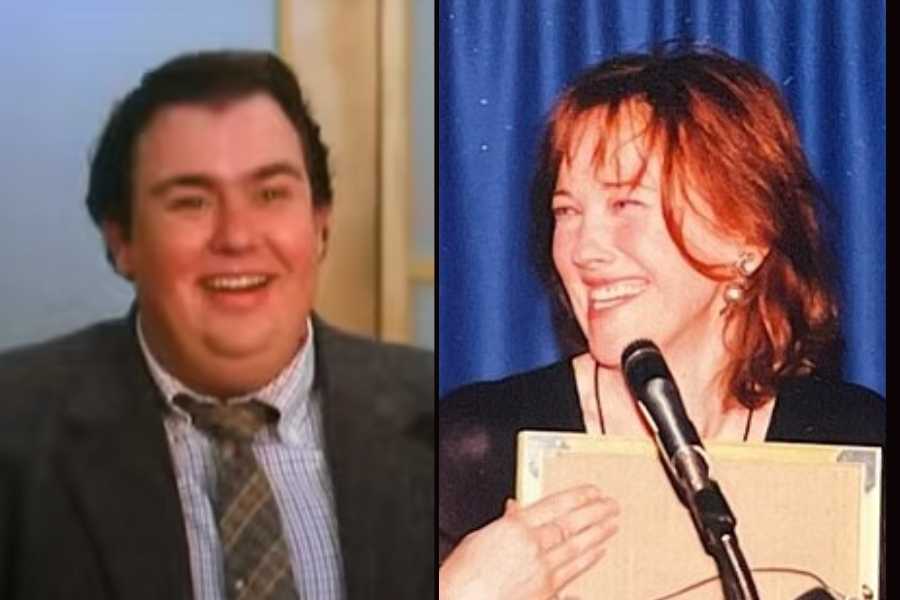

  • Catherine O’Hara’s tear-jerking eulogy for John Candy was a master class in memorializing a true friend
    ,

    Catherine O’Hara’s tear-jerking eulogy for John Candy was a master class in memorializing a true friend

    Now that O’Hara has also passed, the beautiful words she spoke for Candy resonate in a new and painful way.

    The comedy world lost two of its great lights decades apart. John Candy in 1994, and Catherine O’Hara on January 30, 2026. But O’Hara left something behind from that first loss: a nine-minute eulogy that remains one of the most moving tributes one friend has ever paid another.

    Candy was the big-hearted comic-actor best known for his string of charismatic film roles in the 1980s and early 1990s, from Stripes to Planes, Trains, and Automobiles to Uncle Buck. He died at just 43 in 1994, following a heart attack. O’Hara, his close friend and collaborator from SCTV, Second City Toronto, and Home Alone, delivered the eulogy at his memorial service in Toronto, and in nine minutes she managed to capture everything that made him irreplaceable.

    She opened the beautiful eulogy by summarizing all of the ways he “enriched” other people’s worlds, including so many small acts of kindness.

    “I know you all have a story,” she says in the clip. “You asked him for his autograph, and he stopped to ask you about you. You auditioned for Second City, and John watched you smiling, laughing. And though you didn’t get the job, you did get to walk away thinking, ‘What do they know? John Candy thinks I’m funny.’ You walked behind John to communion. You carried his bags up to his hotel room, and he said, ‘Hey, that’s too heavy. Let me get that for you.’ And then he tipped you. Or was that a day’s pay?…you caught a John Candy scene on TV one night, right when you needed to laugh more than anything in the world.” 

    Meeting John Candy

    O’Hara also shares her own story of meeting Candy in 1974, when he was director of the Second City touring company.

    “When I joined him in the main cast, he drove us all the way to Chicago to play their Second City stage,” O’Hara recalls. “And I had a crush on him, of course, but he was deeply in love with [his wife, Rosemary]. So I got to be his friend, and I closed the Chicago bars with him, just to be with him. We did SCTV together. When we all tried to come up with opening credits that would somehow tell the audience exactly what we were trying with the show to say about TV, it was John who said, ‘Why don’t we just throw a bunch of TVs off a building?’”

    The whole eulogy is filled with lovely details, as O’Hara reflects on Candy’s graciousness, his collaborative spirit, and the overall sparkle of his comedy.

    “His movies are a safe haven for those of us who get overwhelmed by the sadness and troubles of this world,” she says. “As if he knew he’d be leaving us soon, John left us a library of fun to remember him by.”

    And she ends with a moving note to illustrate their closeness: “God bless, dear John, our patron saint of laughter. God bless and keep his soul. I will miss him. But I hope and pray to leave this world too some day and to have a place near God—as near as any other soul, with the exception of John Candy.” 

    The Candy legacy

    After the eulogy video resurfaced on Reddit, dozens of fans shared their emotions.

    “I was eight years old when he passed, and to this day no celebrity death has ever hit me harder,” one user wrote. “How could such a bright light be gone so early? She’s right, his films are a safe haven for the soft-hearted. RIP.” Another added, “John Candy died over 30 years ago, but it still stings like it was yesterday. He left such an incredible and rare cultural mark.”

    Candy was also the subject of the 2025 Amazon Prime documentary John Candy: I Like Me, directed by Colin Hanks and produced by Ryan Reynolds, in which O’Hara herself appears alongside other friends and collaborators. Conan O’Brien has talked frequently about how much he loved the SCTV star; he once talked to Howard Stern about his impactful meeting with Candy back in 1984, when O’Brien was a 21-year-old student at Harvard University (and president of the Harvard Lampoon).

    “We ended up hanging out,” O’Brien recalled, “and what I remember most clearly is that he was everything I wanted him to be. He was John Candy.” 

    This article originally appeared last year. It has been updated.

  • Menstrual pads and tampons can contain toxic substances – here’s what to know about this emerging health issue
    Studies have found small amounts of toxic heavy metals and other potentially harmful substances in some menstrual pads and tampons.Photo credit: zoranm/E+ via Getty Images

    About half of the global population menstruates at some point in their lives. Disposable products, such as tampons and pads, are some of the most popular products used around the globe to manage menstrual flow.

    Unfortunately, studies have shown that many personal care products, including shampoo, lotion, nail polish and menstrual products, contain hazardous chemicals. Items used in or near the vagina are of particular concern because they are in contact with vaginal mucous membranes – the moist tissue lining the inside of the vagina that secretes mucus. These tissues can absorb some chemicals very efficiently.

    People use menstrual products 24 hours a day for multiple days monthly, over the course of many years. Tampons, which are used internally, are surrounded by the permeable vaginal mucous membrane for up to eight hours at a time.

    I am an environmental epidemiologist, and I study chemical exposure, its sources and its health effects. As a person who menstruates, I also must make my own decisions around menstrual products and manage the challenge of finding accurate information about women’s health risks, which receive less research attention and funding than men’s health.

    In 2024, I co-authored the first paper that detected metals in tampons, including toxic metals like lead and arsenic. My colleagues and I also wrote a review paper that surveyed the scientific literature and found about two dozen studies measuring chemicals in menstrual products.

    The various chemicals that these studies detected were typically at concentrations low enough to make their health impact unclear. However, they included chemicals known to disrupt the endocrine system, which makes and controls hormones that are essential for bodies to function.

    How contaminants get into menstrual products

    The first modern tampon in the U.S. was patented in 1931. Nearly a century later, tampons still are made primarily from cotton, rayon or a blend of the two.

    Chemicals may get into tampons and other menstrual products in a number of ways. Some chemicals, like heavy metals, are present in soil, either naturally or due to pollution, and may be absorbed by cotton plants.

    Other chemicals, such as zinc, may be intentionally added to menstrual products to prevent the growth of harmful bacteria. Still others, such as phthalates – synthetic chemicals used to manufacture plastics – may leach into menstrual products from plastic packaging or be added as part of a fragrance.

    Research suggests that these chemicals are present in a large proportion of menstrual products – we found lead present in all 30 tampons we tested. What we don’t yet know is if these chemicals can get into people’s bodies in a high enough concentration to cause health effects in either the reproductive system or elsewhere in the body.

    Limited federal regulations

    The U.S. Food and Drug Administration regulates tampons, menstrual cups and scented menstrual pads as Class II medical devices, which carry moderate to medium risk. Unscented menstrual pads are Class I medical devices, which are considered low-risk. These categories are based on the risk the device may present to a consumer who uses it in the intended way.

    FDA guidance for Class II devices offers only a few general guidelines with respect to chemicals. For menstrual tampons and pads, it recommends – but does not require – that products should not contain two specific dioxin products or “any pesticide and herbicide residues.” Dioxins are a chemical by-product of the bleaching process to whiten cotton, and they are associated with cancer and endocrine disruption. Using non-chlorine bleaching methods can reduce dioxin formation.

    The most stringent regulation of tampons in the U.S. occurred after an illness called toxic shock syndrome became a public concern in the 1970s and 1980s. Menstrual toxic shock syndrome occurs when the bacteria Staphlococcus aureus grows in the vagina on inserted menstrual products and releases a toxin called TSST-1. This substance can be absorbed through the vaginal mucosa and cause a variety of symptoms, including fever, high blood pressure, shock and even death.

    During this epidemic, in which at least 52 cases were recorded and seven people died over a period of eight months, tampons were associated with the syndrome – especially a highly absorbent tampon called Rely, which was pulled from the market.

    In response, the FDA created a task force that recommended standardizing the tampon absorbencies and advised consumers to use the lowest absorbency for their flow. This is why tampons in the U.S. now come in a range of absorbencies, from light through regular to super and ultra, so that users can choose the level they need while minimizing risk of toxic shock.

    Living in a ‘soup of chemicals’

    Just because a chemical is present in a menstrual product doesn’t mean it can get into the body. However, chemicals like lead and arsenic are known threats to human health. So it’s important to study whether harmful chemicals present in menstrual products could contribute to health problems.

    Humans in the modern world live in what expert toxicologist Linda Birnbaum, former director of the National Institute of Environmental Health Sciences, calls a “soup of chemicals.” Simply being present on Earth means being exposed to many chemicals, at different concentrations, all at once. This makes it difficult to unravel the relationship between a single chemical exposure and health.

    Nonetheless, science has shown that chemical exposure from at least one menstrual product – vaginal douches – does affect health. Vaginal douching is the process of washing or cleaning the inside of the vagina with water or other fluids.

    The American College of Obstetricians and Gynecologists recommends avoiding this process, which can harm healthy bacteria in the vagina, increasing the risk of vaginal infections and other diseases.

    In addition, a 2015 study found that women who use vaginal douches have higher concentrations of a chemical called monoethyl phthalate in their urine. Exposure to this substance is associated with reproductive health problems, such as reduced fertility and increased pregnancy risk.

    Can these chemicals be absorbed?

    Scientists are working now to determine what concentrations of metals and other chemicals can leach out of tampons and other menstrual products. One 2025 study estimated that volatile organic compounds, a group of chemicals that vaporize quickly, can be absorbed through the vaginal mucosa. Volatile organic compounds may be added to menstrual products as part of fragrances, adhesives or other product components.

    My team and I are now shifting our focus to the relationship between menstrual product use, various chemicals, and menstrual pain and bleeding severity. We want to see whether some chemicals will be elevated in menstrual blood, whether these chemical levels are higher in people who use tampons, and whether the chemicals are associated with greater menstrual pain and bleeding.

    States are starting to act on this issue. For example, in 2024, Vermont became the first U.S. state to ban multiple chemicals from disposable menstrual products. California bans PFAS, a widely used group of highly persistent chemicalsfrom menstrual products. New York adopted a law in December 2025 barring multiple toxic chemicals from menstrual products.

    California also enacted a law in October 2025 that requires manufacturers of disposable tampons and pads to measure concentrations of arsenic, cadmium, lead and zinc in their products, and to share those measurements with the state, which can publish them. More information like this will help support informed choices for millions of consumers who rely on menstrual products every month.

    This article originally appeared on The Conversation. You can read it here.

    conversationpixel

  • I’m a philosopher who tries to see the best in others – but I know there are limits
    Interpreting someone’s thoughts or actions can mean balancing their agency against the good.Photo credit: Kateryna Kovarzh/iStock via Getty Images
    ,

    I’m a philosopher who tries to see the best in others – but I know there are limits

    ​There’s only so much you can see when you look at things from the other side.

    Understanding one another can be hard. There is a big difference between someone snapping at you out of contempt, and calling you out for a mistake because they believe in you and know you can do better. One of these cases calls for anger, but the other for humility or even embarrassment. Or maybe they are only snapping because they’re “hangry” – they might just need a Snickers bar.

    And that’s just with people we know. What about strangers, people across the political divide, or even those with very different backgrounds and cultures than your own?

    My field, philosophy, offers a tried-and-true answer to what we need to do in order to understand people and texts from very different backgrounds and cultural assumptions than our own. We need to be charitable.

    Charity in this sense isn’t a matter of giving money to those who need it more. Instead, it’s seeing others in a favorable light – of seeing the best in them. In my work, I think of this as seeing other people as protagonists: characters who “do their best” with the predicament in which they find themselves. Interpreting someone charitably doesn’t require agreeing with them. But it does require doing our best to find merit in their point of view.

    Of course, people and ideas don’t have unlimited merit. We can err by failing to see the merit of someone’s point of view – or we can err by finding merit that isn’t really there.

    But the idea of charity is that it’s worse to make the first kind of error because it prevents us from getting along and learning from one another. By seeing the best in someone else and in their ideas, we can learn productively from engaging with them. Protagonists are people we can learn from and cooperate with.

    Taking them seriously

    It doesn’t take a genius to observe that we are all better at seeing the best in the people we agree with – and worse with those across the political divide. Political discussions on social media are often dominated by competing attributions of more and more insidious motives to people on the other side. We see them not as protagonists, but as antagonists.

    By seeing the worst in someone else’s ideas, we let ourselves off easy. We dismiss them when instead we need to be taking them seriously.

    So why, if charity requires seeing the best in others, are we so often tempted to see the worst in them?

    A better understanding of charity provides the answer. Seeing the best and the worst in others are not opposite ways of interpreting someone, but simply two sides of the same coin. Here’s why:

    Charity, Philosophy, Ethics, Conflict, Virtues, Understanding, Interpretation, Disagreements, Motives, Character virtue
    Part of charity is sifting out the signal from the noise.Photo credit: Maskot/Getty Images

    Interpretation trade-offs

    Interpreting someone isn’t all about figuring out their motives. Sometimes it’s about sorting out what is signal and what is noise. If I snap at you, you could spend a lot of time fixating over whether to be angry or embarrassed. But sometimes the right move is just to pass me a Snickers bar and move on. Our moods and actions are influenced by hunger, hormones, alcohol and lack of sleep, just to name a few. Overinterpreting a snap after I missed breakfast treats as signal what is really just noise.

    Overlooking a thing or two when I am hangry can be the best way to see the best in me. When you interpret my snap as merely the result of missing a meal, you don’t really see it as coming from me, the protagonist; but as the result of my predicament. You will judge me, not by whether I am hangry, but by how I overcome that. Your interpretation sees me in a more positive light, by taking away some of my agency.

    By “agency,” I mean the extent to which someone gets credit for what they do. You have greater agency over something that you do on purpose, and less if was a foreseen but accepted side effect of your plan. You have less agency if it was an accident, but more if the accident was negligent; less agency if you just snapped because you’re hangry, but more if you know you get hangry and chose to skip lunch anyway.

    A perfect agent wouldn’t be affected by hormones and hunger. They would simply make rational choices that advance their goals. But humans aren’t like that. We are imperfectly embodied agents, at best. So interpreting one another well sometimes requires seeing the good in one another, at the cost of agency. In other words, it has to balance agency against the good, as I have argued in my recent work.

    But you can’t find the best in someone by just ignoring more and more until all the bad things are trimmed away and only something good is left. Your interpretation has to fit with the facts of what they do and say.

    And sometimes the trade-offs between agency and the good go the other way – we interpret each other in ways that attribute more agency but less good. If passing me a Snickers bar seems to calm me down, you might try it again the next time I snap. But one day you realize that you have started carrying extra Snickers bars everywhere you go in case you run into me, and a different interpretation presents itself: Maybe instead of being a decent but mood-challenged friend, I have just been using you for your candy bars.

    Charity, Philosophy, Ethics, Conflict, Virtues, Understanding, Interpretation, Disagreements, Motives, Character virtue
    Truly angry, just hangry, or taking advantage of your chocolate supply?Photo credit: Deagreez/iStock via Getty Images Plus

    This creates tipping points for charitable interpretation. When we cross the tipping point, you switch from seeing someone as an imperfectly embodied protagonist to seeing them as an antagonist.

    Charity without a cost

    All of this is a way of arguing that it is sometimes right to see the worst in others. Sometimes other people really are the worst, and understanding them requires understanding their agency, not what is good about them. Protagonists and antagonists are just two sides of the same coin: The very same interpretive process can lead us in either direction.

    Unfortunately, this means there is no simple test for when you are doing well enough at seeing the best in others. In particular, there is no test that we can agree about across our political differences. Interpreting someone charitably requires looking hard enough for good in them, but part of what we disagree with one another about is precisely what is good. So we are bound to disagree with one another about who is being sufficiently charitable.

    But as a personal aspiration, a little more charity can go a long way. We can be generous not just with money, but in how we interpret others. But unlike giving money away, we don’t lose anything when we try harder to see the best in someone else.

    This article originally appeared on The Conversation. You can read it here.

Explore More Stories

Health

GLP‑1 drugs may fight addiction across every major substance, according to a study of 600,000 people

Ideas

Persuasion expert shares the one strategy that’s actually effective at changing people’s minds

Local

Dog missing for 11 years ‘acts like he’s a puppy again’ after emotional reunion with owner

Science

Researchers capture sperm whales headbutting on camera, validating what sailors have said for centuries