Saying goodbye to the consummate language columnist.

If you enjoy this language column-or any language column at all, anywhere-then you should take a minute to remember William Safire, who died Sunday of pancreatic cancer at 79. The Nixon speechwriter was a prolific and Pulitzer-winning conservative columnist, the author of four novels, and chairman of the Dana Foundation, which funds research in neuroscience, but he was best known as the word nerd who paved the way for lucky people like me to turn their obsession into an actual job. As the author of the New York Times


When news of Safire’s death broke, testimonials and praise from the language-loving crowd poured in, and that faucet isn’t going to stop soon. Grant Barrett recalled Safire’s kindness, while Ben Zimmer remembered his ethics and humor: “He was always quick to give credit where credit was due, and he also enjoyed coming up with warm-spirited epithets for those who helped him. (I was on the receiving end of ‘that etymological Inspector Javert,’ ‘netymologist,’ and ‘longtime capo of the Phrasedick Brigade’- sobriquets that I will always treasure.)” Even frequent Safire critics such as Stephen Dodson could become a fan after working with the man, in this case on Safire’s Political Dictionary.

By email, Zimmer confirmed my suspicion that “Safire was indeed like Cronkite the anchorman, in that he quickly embodied the role of language columnist like no one else, though he wasn’t the first to fit that description.” Safire had a reputation for being a stern prescriptivist, but Zimmer says that pre-Safire language guys such as Esquire‘s John Simon and pundit Edwin Newman were far more dour, unscientific, and English-is-going-to-hell-y. Says Zimmer: “…when you think about what Americans were being subjected to with the rants of Simon and Newman, you can appreciate Safire’s moderate approach all the more.”

As befits the most well-known word nerd of our time, a few words have attached themselves to Safire, including “language maven” and “The Lexicographical Irregulars,” as he called his unofficial group of researchers. Appropriately, Safire is quoted many times in the Oxford English Dictionary, in comments that demonstrate the use of terms such as “schmooze,” “wordsman,” “academese,” and “dweeb,” which Safire dryly used back in 1982: “Synonyms for earnest students, or ‘pre-professional dweebs’, are proliferating.” Weirdly, he is quoted only once in the Yale Book of Quotations, though it is a beauty: “A man who lies, thinking it is the truth, is an honest man, and a man who tells the truth, believing it to be a lie, is a liar.” A few of his speechwriting phrases have been fondly remembered, especially two written for Vice-president Spiro Agnew: “hopeless, hysterical hypochondriacs of history” and “nattering nabobs of negativism.” He also wrote a lunar eulogy that was happily unnecessary.

I never had any contact with Safire, but his name was enormous in my world. When trying to explain what I do to baffled folks, all it would take is one mention of William Safire to get the reaction, “Oh! So that’s a language columnist.” Anyone writing about words on a regular basis owes the guy a huge thank you, for making “language columnist” seem like a reasonable thing for a newspaper or magazine to have. Not sure if that makes him the Walter Cronkite, Babe Ruth, or Empire State Building of language columnists: He’s probably all three, and I’m happy to be the William Safire of GOOD.

Illustration by Will Etling
  • How one World Cup superfan bought a giant, rare FIFA soccer ball that barely fits in his car
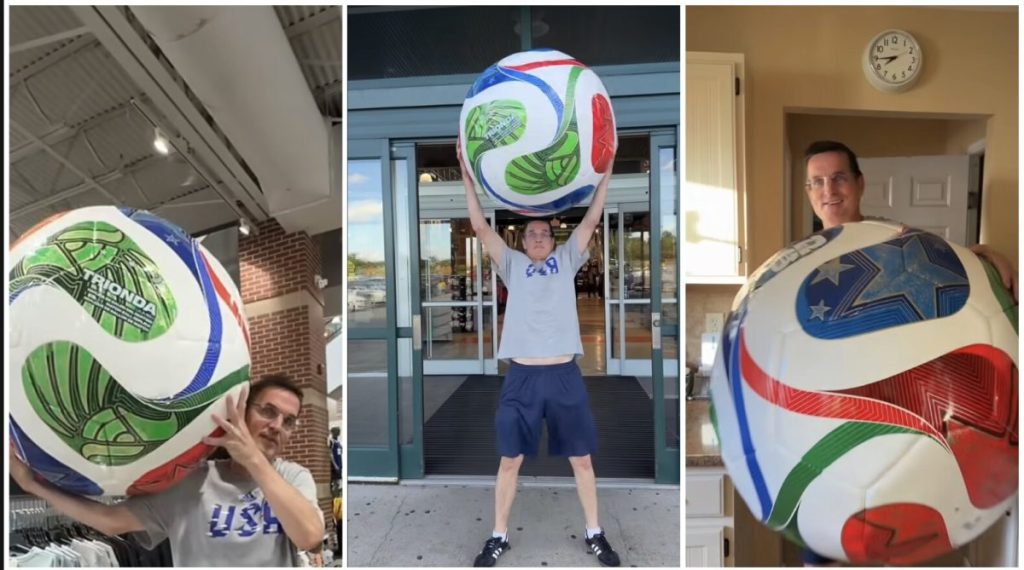
    Photo credit: @kickballdad on YouTubeKickball Dad gets the ultimate World Cup ball.

    The 2026 FIFA World Cup brings out a wild streak in footie fans. For one fan though, his passion for the sport led him to pursue the ultimate piece of memorabilia for months. Then, it happened: to the envy of every FIFA fan, the fan was able to purchase a giant World Cup soccer ball.

    Kevin Cronin, better known as Kickball Dad online, was excited to see an Adidas Trionda Jumbo soccer ball. The massive 31.5-inch ball was part of a store’s display. 

    “We need one of those,” said Cronin.

    Upon seeing it, Cronin immediately asked if he could buy it. The store said it was for display only. The cost of the sold-out ball typically goes for $320.00, but would likely be higher in price since Cronin was lucky enough to find it in the secondary market. That didn’t stop him.

    The store management was unprepared for Cronin’s determination and fandom. For months, he would come in and visit the store, asking again and again if he could buy the incredibly large soccer ball. He was told again and again that it wasn’t for sale.

    Until it was.

    He got the ball!

    One day, Cronin found the right store manager willing to sell him the ball. Cronin excitedly checked out the ball at the cash register. In a video of the purchase, Cronin’s daughter Alyssa can be heard giggling the entire time as Cronin triumphantly lifts the ball into the air.

    “I’m like Atlas,” said Cronin. “I got the World Cup on my shoulders!”

    Buying the giant ball was one massive task, but soon came the next one: trying to fit the ball into Cronin’s small four-door car. This gave everyone, including Cronin, second thoughts. But Cronin’s will was strong.

    “Why did we buy this?” asked Cronin’s son.

    “Because we have W.C.F.,” Cronin replied. “World Cup Fever.”

    Cronin was able to squeeze the massive soccer ball into the backseat and drive it home. He pried the ball out of the car and into his house, where his wife greeted him with laughter.

    “We got it,” he said victoriously as he placed it on the kitchen counter.

    Soccer fans and brands alike congratulated him

    Cronin’s video went viral on Instagram with many soccer fans commenting on his determination:

    “This is a triumph a man dreams about.”

    “Never give up!!!!!!”

    “It’s meant to be 💞

    Even major brands reached out to give their kudos:

    “Some display pieces are just too awesome to leave behind.” said Lego.

    “The look on your wife’s face = priceless. What’s next? 🤣 quipped Adidas Football.

    “Mission accomplished 🏆 shared Dick’s Sporting Goods.

    Who is ‘Kickball Dad’?

    This isn’t the first time Kevin Cronin/Kickball Dad has made waves online. Cronin has become an avid content creator known for his fandom of most sports—specifically his kids’ sports games and Miami Dolphins football. Fans see videos of him shopping at the grocery store, going to sporting events, sharing his sports takes, and even birding. His daughter Alyssa shoots and edits the videos, leading to a fun family side hustle as content creators.

    As the 2026 World Cup starts, it’ll be fun to see fans all over the world show their enthusiasm whether it’s through loud cheers with their families or creating fun videos starring a hard-won giant soccer ball.

  • Actor shares with Harrison Ford that he was her late dad’s favorite actor. His reply was perfect.
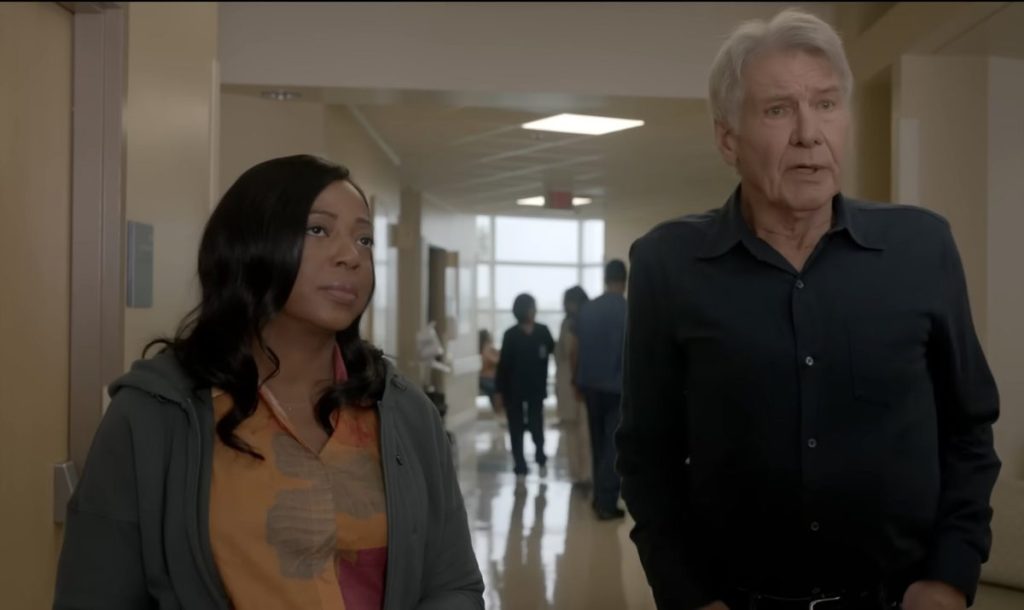
    Photo credit: Apple TV on YouTubeMimi Fletcher acting next to her father's favorite actor.

    Mimi Fletcher has the prototypical origin of a successful working actor: moving out from the Midwest to Los Angeles to become a star. She got her start doing background gigs and now is doing recurring guest roles on television. However, one acting gig she’ll treasure forever was when she got to work with Harrison Ford.

    Ford is a part of the main cast of Shrinking, an Apple+ show starring him and Jason Segel. The show is about a therapist (Segel) who, motivated by grief, takes a more proactive and candid approach with his patients. Ford plays Paul, a senior therapist at the practice who suffers from Parkinson’s disease.

    When Fletcher met Ford

    In 2023, Fletcher got to do scenes with Ford and Segel. It would be one of the biggest highlights of her career so far. However, recently on Threads, Fletcher shared that it was also a highlight of her life that she’ll never forget.

    Fletcher shared that her father was a big fan of Harrison Ford. Her dad was also a big fan of his daughter and very encouraging of her acting dream. She shared how her father supported and believed in her, even when she made decisions that her dad wouldn’t approve of. Her dad passed away in 2005 before Fletcher truly “made it” as a Hollywood actor. She wishes she was able to make him proud.

    Before going on set, Fletcher was waiting in the holding room with both Harrison Ford and Jason Segel. As they were all waiting, Fletcher thought of her father. She approached Ford and said:

    “You know, Harrison, my Dad was a big fan of yours. I remember him taking me to see Witness when I was a little girl. I did some things that I know disappointed him, but he still supported me. He never got to see me do any professional acting, but I’d like to think that today, he’d be proud of me.”

    Harrison Ford’s perfect response

    Fletcher tried to keep it professional, but the tears she was holding back spilled out. Immediately, Ford rushed to give her a hug.

    “He wrapped me in his arms, and held me as I cried. He then kissed my forehead and said, ‘Your dad’s here, he sees you, and he’s proud of you.’”

    In sharing the story, Fletcher expressed her gratitude to Ford and everyone on Shrinking. Fletcher felt compelled to tell this story since her father passed away over twenty years ago this June. And since June is also when we celebrate Father’s Day, he’s been on her mind. While Fletcher still mourns her loss, she treasures this happy memory.

    Fletcher was able to get comfort from a person her father respected even when Ford didn’t have to do anything more than say, “Thanks for sharing.”

    “A little bit of my broken heart was healed that day, through the goodness of Harrison Ford…” she wrote. “I miss and love you, Dad.”

  • Voice actor explains why Americans instantly trust people with British accents, even if they’re lying
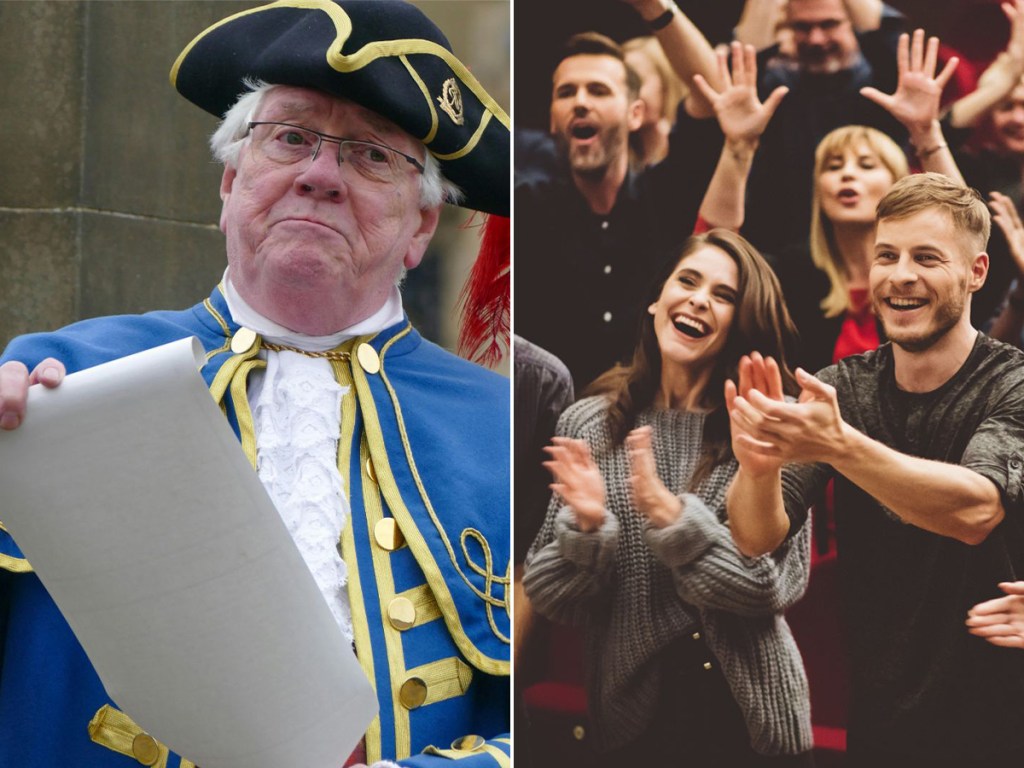
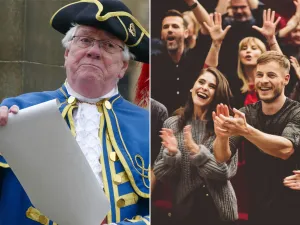
    Photo credit: CanvaA traditional town crier, left, and a happy, applauding audience, right.

    Americans have this strange love of British accents—so much so that even when someone is speaking absolute gibberish, we find ourselves transfixed and absurdly trusting them.

    Tawny Platis, a professional voice actor and content creator, expertly captured the phenomenon in her YouTube video, “Why Americans Love This Accent.” In the video, she analyzes why Americans find Billy Butcher’s voice so compelling despite the character’s violent and morally chaotic behavior on the TV show The Boys.

    Americans trust and love rough, working-class British masculinity

    “So Karl Urban is a New Zealander doing a Cockney, working-class, East End London accent,” Platis explained. Regardless of how well the actor nails the accent for his character, Butcher, Americans buy right into it anyway. “That’s because working-class English masculinity is coded in American media as authenticity,” she added.

    She goes on to give examples to help substantiate her point: “Every Guy Ritchie movie, British gangster film, and working-class antihero from Michael Caine to Tom Hardy has trained American audiences to hear that voice as unfiltered and honest.”

    A 2024 study published in SAGE Journals found that listeners unconsciously form social biases based on accents. People rapidly make assumptions about personality and identity.

    decision making, accents, familiarity, credibility
    A young businessman speaks into a microphone.
    Photo credit: Canva

    Make ordinary information sound important

    The accent becomes a shortcut the brain uses to make immediate decisions about intelligence, honesty, confidence, warmth, and even competence. When it comes to characters like Butcher, the key detail isn’t so much the “Britishness” itself—it’s the association.

    “Butcher is using the working-class Brit voice to showcase honesty,” Platis said. “Butcher is a liar who manipulates Hughie, hides things from his team, and is willing to take out children. But the audience keeps forgiving him because his voice sounds like a man who’s earned the right to do all that, when he very much hasn’t.”

    Psychologists believe part of this effect comes from something called “processing fluency.” A 2023 study published in Scientific Reports found that increased exposure to certain accents reduced listeners’ cognitive effort. As a result, people made more positive social judgments about the speaker.

    Accents that feel familiar after years of movies, television, and media unconsciously influence people. Audiences automatically attach credibility and trustworthiness to them. Simply put, people mistake familiarity for truth.

    A 2024 study found that Americans rate the standard British accent most positively, strongly associating it with traits like intelligence, status, and competence. The Northern English accent is viewed slightly less favorably. Scottish accents are considered strong and friendly. Meanwhile, the Welsh accent falls somewhere in the middle, depending on how well the listener recognizes it.

    factual, educated, casual interactions, performance
    Blocks spell out the words “fact” and “fake.”
    Photo credit: Canva

    Accent bias sways people’s opinions

    The same instinct that makes one accent sound “trustworthy” can also make another sound “unreliable.” In real-world interactions, working-class accents can be perceived as less intelligent or less educated. This can affect hiring decisions and even workplace promotions.

    A 2024 study focusing on “Americanness” found that accented speakers were perceived as “less American.” In simulated hiring scenarios, they were less likely to be hired, demonstrating that an accent can override other judgments.

    When a person speaks, people instantly begin building a story about who they are. Many decide whether a voice sounds trustworthy long before consciously realizing it. Platis points out that a lifetime of exposure to social media, movies, and television has shaped that perspective.

    “Butcher’s accent is the most effective because it’s the only one many viewers don’t even recognize as a performance,” Platis said. Which basically means somewhere out there right now, a confident British accent is talking nonsense that feels totally believable.

Explore More Culture Stories

Film & TV

Actor shares with Harrison Ford that he was her late dad’s favorite actor. His reply was perfect.

Culture

Voice actor explains why Americans instantly trust people with British accents, even if they’re lying

Internet

Italian man claims to be ‘human cheetah’ with lightning-fast reflexes

Culture

Despite all the likes, literallys and dropped g’s, English isn’t decaying before our eyes