A lot more goes into creating a book than just writing. Book designers work relentlessly perusing a variety of typography palettes and experimenting with different typesetting formats to make the book appeal just right. All of this is done not only to set the perfect mood for the reading experience but also to balance the toll that the aesthetics of the book might take on the enviornment.

Image Source: First typescript with notes and manuscript of 'Claraboya', early novel of the Portuguese writer Jose Saramago, exposed at Casa de America during the presentation of the novel on March 1, 2012 in Madrid, Spain (Photo by Quim Llenas/Getty Images)
Image Source: First typescript with notes and manuscript of 'Claraboya', an early novel of the Portuguese writer Jose Saramago, exposed during the presentation of the novel on March 1, 2012, in Madrid, Spain (Photo by Quim Llenas/Getty Images)

HarperCollins Publishers, one of the leading publishing houses in the industry has ventured on a mission to save trees. Their design team conducted extensive research to curate a collection of eco-friendly fonts that use less ink, improving opacity and readability. With thoughtful layouts and design tweaks to conserve paper usage, their eco-friendly font project has saved more than 200 million pages so far, which is equivalent to preserving 5,618 trees.

Representative Image Source: Pexels | anete lusina

This project started when HarperCollins’ Christian Publishing developed NIV Comfort Print® typeface in 2017. Changing to a compact typeface helped the company save over 100 million pages. If stacked up, these pages would be four times the height of the Empire State Building. This Christian publishing division is called “Zondervan Bibles,” according to FastCompany.


[iframe https://www.linkedin.com/embed/feed/update/urn:li:share:7170444270414225408 allowfullscreen=”allowfullscreen” frameborder=”0″ height=”619″ title=”Embedded post” width=”504″]

Tracey Menzies, the VP of creative operations and production at HarperCollins wanted to see if they could extend these fonts to other kinds of books apart from Bibles, including novels and nonfiction. “When we first started thinking about this, it was a bit of an upheaval,” she says. “You’re taking something that people have done for their entire careers and telling them to think about it in an entirely new way.”

Image Source: Title page of a manuscript of The Book of One Hundred Chapters (Stoglav), 1551. Found in the collection of State Open-air Museum of the Trinity Lavra of St. Sergius, Sergyev Possad (Photo by Fine Art Images/Heritage Images/Getty Images)

The team started testing different fonts on the books with more than 600 pages in their catalog. They created fifty different versions by using different fonts. In the end, they curated a list of 15 fonts they found the most compact and, therefore, eco-friendly. The usage of these fonts, with slight tweaks in the layouts could save a lot of white space. For instance, the same text set to Garamond Pro resulted in many more words on the page compared to Bembo. “The goal is to make these changes without the reader even seeing the difference,” says Menzies.


via GIPHY


But the goal of saving trees didn’t have to be on the cost of compromising on the reading appeal. The readability still had to be neat and clear. Whether it is plain-old serif font “Centaur” for a novel, or the lunchbox-nostalgia style “Schoolbell” required for a comic storybook. “It was simply a different approach that didn’t sacrifice aesthetics. Now, our designers are constantly questioning how we do things and thinking about ways to make things more sustainable,” says Menzies.

Representative Image Source: Pexels | element digital

“Ultimately, this ended up with finding fonts that used less ink, in addition to less paper, which is also better for the planet,” said Leah Carlson-Stanisic, associate director of design at HarperCollins. This is not the first time HarperCollins has shown its utmost awareness and responsibility toward sustainability. In June 2023, according to PRNewswire, HarperCollins Publishers India partnered with Vedanta Ltd. to launch a nationwide plantation drive, “Plant a Tree; Grow a Future” on the occasion of World Environment Day.
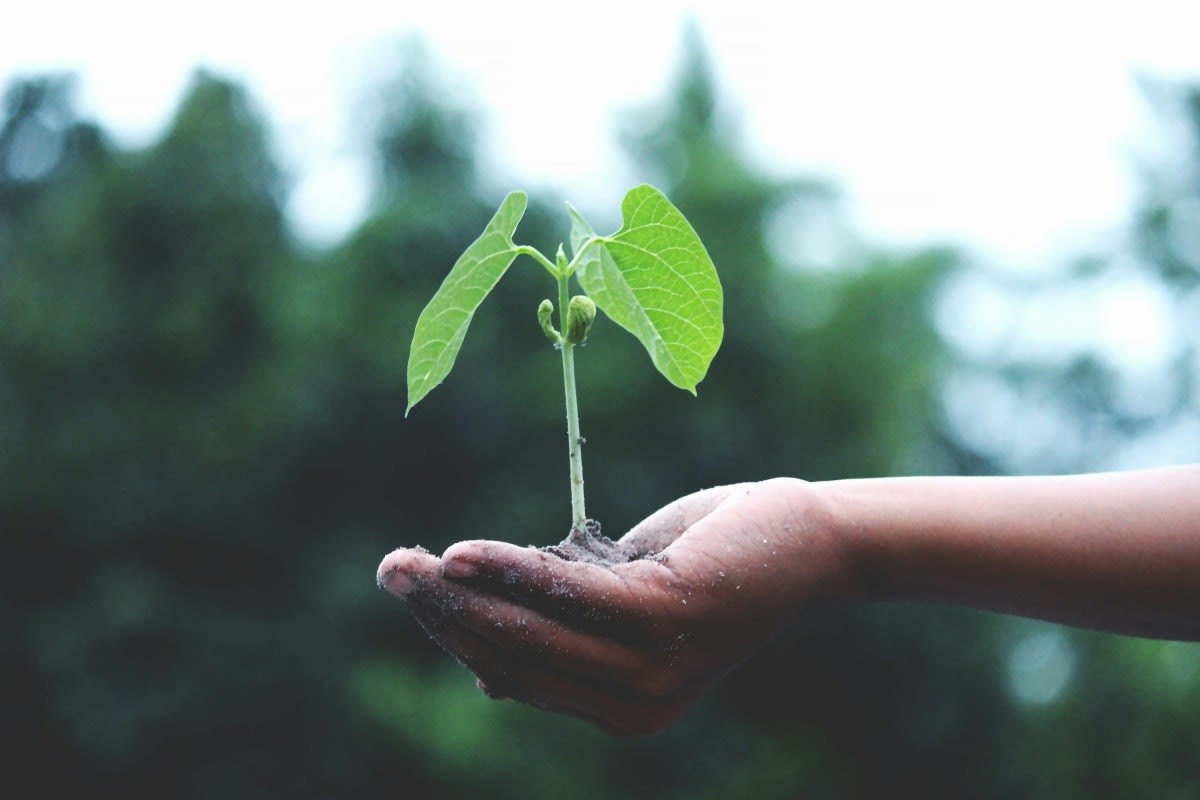
Representative Image Source: Pexels | akil mazumder

Through this initiative, they planted 10,000 saplings in school premises, taking a pledge for a greener Earth. Ananth Padmanabhan, Chief Executive Officer at HarperCollins Publishers India, said, “Trees are an investment for future generations, providing cleaner air and natural shade. At HarperCollins, we promote sustainability through various practices and initiatives, be it the paper we use or the drives we organize.”

Editor’s note: This article was originally published on April 4, 2024. It has since been updated.
  • As climate change causes flooding in London, experts found an effective, low-cost solution: beavers
    Photo credit: CanvaBeavers are solving several climate issues.

    West London’s Greenford Tube station had an ongoing problem. Due to climate change, the station would often flood during heavy rains. The rain would cause a nearby creek to overflow, flooding the ticket office and beyond. But in 2023, officials tried a natural method to help offset the flooding. All they had to do was bring back a vanished species to the area: beavers.

    A family of five beavers was released through the Ealing Beaver Project to act as “nature’s engineers” and help solve London’s flooding problem. Within weeks, the beavers built a dam in the creek, causing it to pool into a pond. Along with that, the beavers created new pathways and tributaries that further diverted water from the main creek. The small group of beavers not only built seven dams in their first year but also expanded biodiversity near populated areas.

    The combination of rerouting water and felling trees has brought new animals and species into the area. Some of the new additions inhabiting the creek are freshwater shrimp, two types of bats, a rare brownstreak butterfly species, and eight new species of birds. A whole new nature preserve is forming remarkably close to urban areas. In fact, the beavers are working just 100 meters behind a McDonald’s.

    What happened to the original beavers?

    The whole project is addressing the changing climate, but also undoing another man-made issue. The Eurasian beaver had been hunted to extinction in England and Wales more than 400 years ago. At the time, beavers were a valuable source of meat, fur for coats, and castoreum. Castoreum is a secretion from beavers that was used to enhance perfumes and flavor food. Had beavers still thrived, one could argue that the climate change-related flooding might not have occurred in the first place.

    The Ealing Beaver Project is one of several efforts to bring beavers back to the United Kingdom. One of the first attempts to repopulate beavers occurred in Scotland, where Norwegian beavers were introduced to Inverness-shire. Norwegian beavers were chosen because scientists determined they were the most genetically similar to the extinct U.K. beaver population.

    This beaver introduction hasn’t just solved a climate-related flooding problem, but it has also brought other benefits. Visitors and residents enjoy the newly biodiverse nature reserves by going on “beaver safaris” to see the creatures at work in person. Then there is the obvious benefit of the beavers solving these flooding problems effectively free of charge.

    Beavers are an international solution

    The U.K. isn’t the only place using beavers to address climate issues. Beavers were brought in to create dams and conserve river water during droughts in Utah. Similarly, beaver reintroduction into California’s streams and rivers was so beneficial that it was codified into state law.

    This shows that something as funny-looking as a swimming rodent with buck teeth and a paddle tail can make a huge difference in whether a place has enough natural water or too much. Humans just have to give a dam about them.

  • Wildlife reserves and gardens alike can be regrown thanks to dogs wearing backpacks with seeds
    Photo credit: Photo credt: @wilderlife8107 on YouTubeNative plants can be regrown thanks to dogs.

    Whether it’s a forest recovering from a wildfire or our own backyards, nature can use some help. Spreading seeds to ensure grass or wildflower growth can be a time-intensive process. However, there is one way that can be fun, quick, and help your dog get some exercise: strapping a backpack full of seeds onto them.

    The practice has been popularized internationally by sisters Francisca and Constanza Torres with their three dogs. Many forested areas of their native Chile were devastated by wildfires. The sisters came up with a plan to help reseed and regrow what had been burned down. The two would strap backpacks filled with grass and wildflowers seeds onto their border collies. The backpack had a small opening that would allow the seeds to fall out and spread as their dogs ran, jumped, and played throughout the area. 

    This helped the forests regrow while also providing the dogs exercise. The dogs were also able to walk into nooks and crannies human planters normally can’t access.

    An idea goes international

    The idea spread past countries and coastlines as a nature reserve in Lewes, East Sussex, England offered dog walkers backpacks with seeds. The walkers would strap the packs onto their furry friends as they went on nature walks to help rewild the area.

    “We’re really interested in rewilding processes, but they often involve reintroducing big herbivores like bison or wild horses,” said the project’s manager Dylan Walker to The Guardian in 2024. “In a smaller urban nature reserve it’s really hard to do those things. So, to replicate the effect that those animals have on the ecosystem we aimed to utilize the vast number of dog walkers that are visiting the nature reserve daily.”

    The concept itself was taken from nature. For centuries, wolves would have seeds caught in their fur. Over time, movement, and grooming, the seeds would be spread throughout other areas of the forest. The wolves acted as natural carriers for seeds much like bees are for pollen.

    Reseed your garden with Rover

    This technique doesn’t have to be reserved for wildfire recovery or regrowing public gardens. Your yard could benefit from it, too. While you could find a pack for your pup and fill it with seeds, there’s another way. Gardener Patrick Vernuccio suggests just filling a tea strainer with seeds and clipping it onto your dog’s collar. It should perform the same effect.

    If you have your dog help seed your yard, be sure that the plants you hope to grow are dog-friendly. Use non-toxic seeds for dogs such as roses, marigolds, and pansies among others. The ASPCA has a full list of plants that are unsafe for dogs to refer to when you’re unsure.

    Man’s best friend can also be man’s best gardening buddy.

  • How the ‘fog harvesting’ women of Morocco are influencing how desert areas get drinking water
    Photo credit: Canva/Liu277339840 via Wikimedia CommonsClean drinking water can be collected from fog.

    According to UNICEF, over two billion people live in an area with water scarcity. Climate change, data centers, and other factors are impacting the amount of drinkable water available. However, for the last ten years the women of Morocco have been implementing a water collecting technology that could be useful in other dry areas.

    For centuries, the people of Aït Baamrane in Morocco relied on rain and groundwater from wells for drinking and irrigation. It is reported that women of the town would walk four hours to fetch 50-gallon drums of water to carry back. However, intense drought and desertification have made the region even more difficult to live in. Now, they primarily rely on “fog harvesting” for water, with technique showing remarkable success since they started in 2010.

    The women-led NGO Dar Si Hmad built what is now the world’s largest operational fog-water harvesting system. This not only has successfully provided an average of 6,300 liters of potable water for more than 400 people in five villages in the area, but significantly reduced the time and physical cost of carrying water.

    How fog harvesting works

    Fog harvesting is the collection of water droplets from wind-driven fog. While Morocco is a dry area, it does have fog near its mountains and coastal regions. The fog collection system is typically constructed in the form of a mesh net set up and pulled taut between two posts. The net is spread out at an angle that’s perpendicular to the direction of the wind carrying the fog. Freshwater droplets are formed as the fog passes through the net, dripping into a gutter that leads to a storage tank.

    The fog-water collected in this particular system goes through a thorough UV, sand, and cartridge filtering process. The system is also solar powered, making it environmentally sound and cheaper than other methods. Since the collected water is pure from the sky, it is free of most contaminants and pollutants.

    Fog harvesting expanding

    Fog-harvesting/fog-catching has since expanded to other areas of the world. Movimiento Peruanos Sin Agua (Movement of Peruvians without Water) haven’t just built fog-catching nets in Peru, but in rural communities in Colombia, Bolivia, and Mexico. Fog-collectors in Spain collect droplets and water to help offset dry vegetation wildfires on the Canary Islands. Chilean fog harvesters are looking into expansion to help provide water for the poorest communities and dry urban areas.

    Other water collecting methods are being tested

    Scientists are also trying to find other methods to quickly and effectively draw water from the atmosphere. Researchers at MIT have developed a salt-based hydrogel that collects moisture from water vapor at night between glass panels. These panels create condensation of pure water when they are heated by sunlight. There is also research going into a sonic device that can quickly “shake water out of the atmosphere.”

    While scientists are in the midst of finding ways to obtain and conserve water in our future, there are steps people can take today. In terms of water conservation in the United States, the Environmental Protection Agency has some resources that can help. Like collecting fog, collecting folks willing to pitch in can do wonders for the community.

Explore More Environment Stories

Environment

As climate change causes flooding in London, experts found an effective, low-cost solution: beavers

Environment

Wildlife reserves and gardens alike can be regrown thanks to dogs wearing backpacks with seeds

Environment

How the ‘fog harvesting’ women of Morocco are influencing how desert areas get drinking water

Science

How much is a bat worth? Protecting these tiny insect‑eaters isn’t just good for farms – their deaths cost taxpayers and the wider economy