In Quebec last week, 20-year-old artist Jennifer Pawluck was arrested for Instagramming a photo of street art to her personal account. The item in question was a wheat pasted image of Montreal’s police spokesman Ian Lafrenière, a bullet to his head and the tag “ACAB,” which, according to Hyperallergic, is “a popular graffiti acronym which stands for ‘all cop[per]s are bastards.’” Pawluck included the hashtags #ianlafreiere #police #montreal. Little did she know that a few days later Montreal police would come knocking with an arrest warrant accusing her of threatening Lafrenière.

Pawluck was charged with intent to harass, and a spokesman for the police department told La Presse in French that, “What I can say is that a person has been arrested this morning in connection with threats on the internet. This person was met by investigators.” Pawluck said she thinks the whole thing is ridiculous.

Pawluck’s case goes to court on April 17. Until then she can’t go within 1,000 yards of police headquarters or Lafrenière’s residence. In the meantime, Pawluck has kept the photo up on her account. As of today it has 155 likes along with comments from all over the world like, “Don’t sweat the fascist solidarity, from Los Angeles,” “Peace from Hawaii,” “All the support and love from Michigan,” “Support from Switzerland!” “Greetings from Israel,” “Cheers from Hong Kong,” “Solidarity from Oslo, Norway.”

The other day in Berlin I Instagrammed a picture I saw of graffiti that read “F#$k da cops.” Coming from America, I was interested to see that this anti-police sentiment extended beyond borders, what the comments on Pawluck’s photo seem to back up. Hopefully German authorities will also find my upload “interesting” rather than a threat.


What do you think? Was Pawluck’s arrest was warranted? Will this make you think twice about what you upload to your own social media accounts?

Image via Hyperallergic

  • Ghost stories don’t just scare us – they remind us of historical injustices
    What makes a ghost story unforgettable? Maskot/Maskot via Getty Images
    ,

    Ghost stories don’t just scare us – they remind us of historical injustices

    Behind some unforgettable hauntings are memories of exploitation, violence and people whose stories official histories overlooked.

    Professor of English, University of Maine

    Along with the pumpkins and costumes, the candles and cobwebs, Halloween is all about storytelling. From tales of haunted houses to accounts of demonic possession, ghost stories are part of the holiday’s appeal.

    As a professor at the University of Maine who specializes in ghost stories, I’ve thought a lot about what makes one unforgettable. My field research has taken me from the coast of Maine to the Amazon jungle, but some factors remain constant in an unforgettable tale.

    One factor is what I call “creep value,” which includes the scare factor but also the elements of a story that might be simply unsettling or uncanny.

    Take, for starters, the ghost of Catherine’s Hill along the Blacks Woods Road in Maine. The story warns that, against all intuition, even a lone driver at night must always stop and offer the phantom woman a ride. If not, as the story goes, she will appear when least expected in the back seat of the car to cause a fatal accident.

    But there is more to account for than creep value in an unforgettable ghost story. These stories can keep alive the memory of a dark past. In my research I have come across tales that preserve memories of injustices that might otherwise have been forgotten.

    Dark histories

    One story, about a ghost ship that can be heard but never seen, preserves the little-known history of the smuggling of enslaved people.

    A black and white photograph showing a full moon and its reflection in a body of water with silhouettes of trees along the shore.
    A full moon over Seal Harbor. Marcus Librizzi

    The legend goes that on foggy nights, during the full moon, those standing at the Cooksey Drive Overlook in Seal Harbor, just outside Acadia National Park, can hear the slaves in the hold of a sinking ship crying for help.

    The story goes back to the Pride of the Seas, a ship that smuggled enslaved Africans into the United States after the trans-Atlantic slave trade had been abolished but slavery remained legal. The account specifies that the smugglers scuttled the ship to evade the law. In ghost stories that circulate by word of mouth on Mount Desert Island, the screams of those left behind can still be heard.

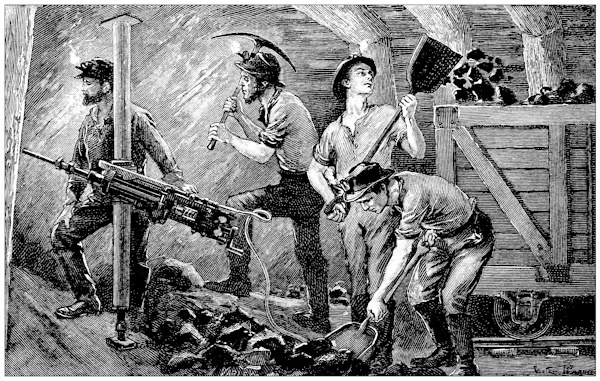
    Pennsylvania coal miners offer another example of past grievances passed down in the form of ghost stories. At the sites of deadly accidents, people have reported the sound of a pickaxe or the groans of a dying man. An extensive archive contains multiple accounts of coal miners witnessing ghostly knocking, disembodied voices and apparitions of mangled men. One story involves an innocent coal miner, condemned to death in 1877, who left a handprint in his cell at the Carbon County Jail that no amount of sanding or paint has been able to erase.

    An engraving depicting miners using picks and shovels.
    Coal miners endured brutal work conditions in the 19th and 20th centuries. ilbusca/DigitalVision Vectors via Getty Images

    Today, it is widely known that coal miners of the 19th and early 20th centuries experienced ruthless exploitation and hazardous working conditions. Years ago, their plight went unrecognized in official histories and government policies, but ghost stories helped keep these experiences in the collective memory.

    A South American perspective

    When I collected ghost stories in South America, the same pattern held true: Some tales preserved history that would otherwise be lost.

    In the Amazon jungle of northern Brazil, I traveled to a gloomy site where people, over several generations, have claimed to see the spirits of young men in the murky water. These stories keep alive injustices from the 19th century involving enslavement of Indigenous people. The location was a former sugarcane plantation notorious for cruelty, and accounts of apparitions in the water are a reminder of this history.

    In Rio de Janeiro a well-known ghost story involves the apparition of a young girl in a mansion known as the Castelinho do Flamengo. All the accounts of her story agree that this young heiress, named Maria de Lourdes Fernandes, witnessed the deaths of her parents; her guardian then locked her up and drove her to suicide to get her inheritance.

    Her soul is said to remain in the mansion she tried to escape. The tale is not just about an individual tragedy but one that exposes inequities involving the mistreatment of juveniles and the corrupting influence of power.

    The past that isn’t past

    Ghost stories don’t simply recount memories – they can revive them and bring the past back into the present.

    The unsolved 1898 murder of a 52-year-old woman, Sarah Ware, in Bucksport, Maine, illustrates how ghost stories can have historical significance and flood the present with the past.

    In the 1980s a woman and her daughter began having nightmares about a long-haired woman in a long dress struggling to rise from the bottom of a lake. When they realized they were having the same recurring dream, they partnered with an author, and their research led them to a conclusion that the apparition was the ghost of Ware.

    Official records document that when Ware’s body was recovered it was badly decomposed and her head had completely detached. Her head remained in the courthouse until the 1990s, when it was buried in Ware’s grave. According to local lore, however, Ware’s headless body is not in that grave but instead in her original grave, now located at the bottom of Silver Lake. In the oral history of the area, workers moved only the tombstones when they flooded the paupers’ graveyard – the cemetery for the poor – to make a reservoir in the 1930s.

    Ware’s ghost is believed to have appeared again in 2006. When a young woman went scuba diving in Silver Lake in Bucksport, she reported seeing a woman in a long dress struggling to rise from the bottom of the lake. When she swam over to help, the figure’s hair floated back with the movement of the water to reveal she was a faceless apparition. The sighting of the faceless ghost revived the history of the unsolved murder all over again.

    Ware’s case highlights the violence and injustice and their connection to gender and social class in 19th-century Maine. Missing evidence and recanted testimonies suggest that powerful men might have interfered with the investigation to hide their own complicity in the murder. As an independent woman of the time, Ware was the subject of gossip, and the treatment of her body shows how social class affects even the honoring of the dead. As a ghost story, the history of Sarah Ware is not past but rather part of the here and now.

    So when you’re out and about telling ghost stories this Halloween, remember that the unforgettable ones are all about creep value in the context of a dark history that flows back in again like the tide.

    This article originally appeared on The Conversation. You can read it here.

  • A scuff on your bag, a dent in your mug – and suddenly it feels like time for a new one
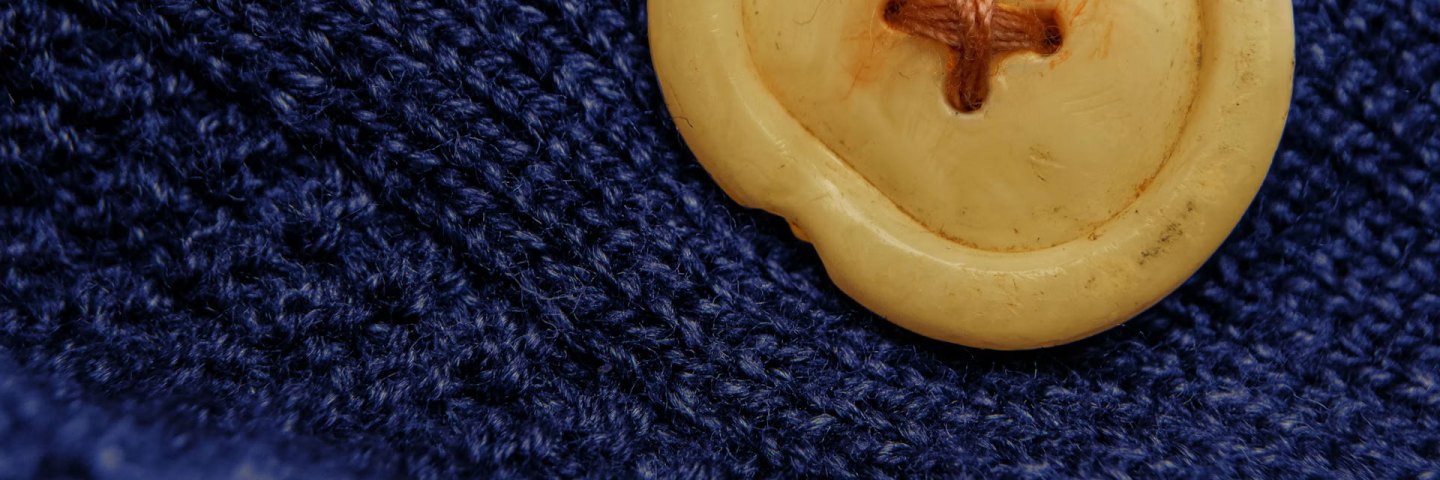
    Photo credit: 500px/Getty Images – Would this bother you?
    ,

    A scuff on your bag, a dent in your mug – and suddenly it feels like time for a new one

    Small flaws can push us to replace things that still work. New research explores the urge for flawless possessions and the value of imperfection.

    Imagine you have a bag you really like. It felt like “the one” when you bought it.

    Over time, it starts to look worn. There are some scuffs on it. Nothing is actually wrong with the bag, and it still works exactly as it should. Yet, once you notice those imperfections, you start thinking about buying a new one to replace it.

    Consumers do this all the time. They replace phones that still work, furniture with a scratch and sweaters with a small snag. Often, what has changed is how people see these items.

    We are marketing researchers who study why people buy, use and get rid of stuff. This obsession with perfection began when one of us, Aprajita Gautam, moved from India to the U.S. in 2019. She was struck by how different the culture of buying and owning things was in the two countries.

    In our peer-reviewed research paper, published in August 2026 in the Journal of Consumer Research, we identified one reason for this pattern: Some people care much more than others about having flawless things. We call this penchant a desire for perfect products.

    Not the same as perfectionism

    We began by interviewing 17 people in Austin, Texas, in 2023. They included real estate agents, entrepreneurs, stay-at-home mothers and people employed by an nonprofit that promotes reuse. We asked them about their possessions and what made things seem perfect or imperfect. We then surveyed about 540 more people, some online and some in a university research lab.

    The results suggested that people who strongly preferred flawless items had more elaborate ideas about what their ideal product was and were sensitive to even small deviations from those ideas. Their standards also kept rising. Seeing something better than what they owned could raise the bar further for them.

    Next, we developed questions to assess how much people care about having flawless possessions. We used people’s answers to determine how strongly they desired perfect products.

    We also found that this tendency is related to but distinct from perfectionism. While perfectionists hold themselves to high or even impossible standards, people who want perfect stuff hold what they buy and own to lofty standards. You might easily shrug off a bad day at the office but be far less forgiving of a scratch on your new coffee table.

    For people who feel they have to own perfect products, even a small imperfection can overshadow everything else they like about something they own.

    Finally, we conducted 12 experiments where we recruited participants – University of Texas at Austin students and online workers participating in crowdsourcing marketplaces – to test the behavioral effects of the desire for perfect possessions.

    It can affect how you shop

    In our first online experiment, we asked 402 consumers across the country to imagine booking a hotel in California’s Napa Valley using filters like those on travel websites, such as star rating, Wi-Fi or a spa.

    Consumers who desired perfect products used more filters and set higher cutoffs, narrowing their search to hotels that came closer to meeting their standards.

    Newness itself also had value for them.

    In another online experiment with 301 consumers, those who cared most about owning flawless possessions were quicker to upgrade to the latest iPhone, even when it offered little real improvement over the previous one.

    This urge can be costly. It can mean paying extra for something new when the old one works fine, or spending more time searching for a product that meets every standard that may not actually matter.

    Makes people less open to repairs

    This preference also affects what people do with the stuff they already own.

    In our next online experiment, we asked 1,004 U.S. participants to chose between two options: an insulated coffee mug and an insulated water bottle. When told that the product they chose had a small dent on the bottom, those who were most bothered by flaws in their possessions were more likely to swap it for the other option.

    We found a similar pattern with repairs. In an online experiment with 601 consumers, we found that those who want to own perfect products were less interested in fixing a broken keyboard when the replacement key wouldn’t match the color of the other keys.

    This highlights a problem with repairs that isn’t usually part of discussions about sustainable consumption: Fixing something can restore its function without necessarily making it look as good as new.

    A factor for donations

    Consumers with exacting standards for their things also applied their high standards to items they were getting rid of.

    In an experiment we conducted in a university behavioral lab, we asked 339 students to help with a “Clean Out Your Closet” drive. They examined pieces of clothing that others had discarded and sorted them into two bins: one to donate and one to recycle.

    Those who strongly preferred flawless items were less likely to donate imperfect but still usable clothing. This attitude can shorten a product’s useful life.

    That finding has implications for sustainability. Much of the academic research about sustainable consumption focuses on what people buy. But another way to consume less is to keep products in use longer.

    That becomes harder if small imperfections make otherwise useful products seem less valuable.

    Learning to value imperfection

    Our research suggests that how someone responds to flaws in their possessions can vary depending on what those flaws mean to them. We were inspired in part by the Japanese concept of wabi-sabi, which finds beauty and value in imperfection and change.

    In our final online experiment, 1,203 consumers learned about hoodies with subtle variations in color and pattern. When those variations were described as making each hoodie unique, consumers who love having perfect products responded less negatively to them.

    A mark on a well-used object can be seen as a flaw, but it can also become part of its history. And replacing products because of minor imperfections can lead consumers to waste their money.

    None of this means consumers should keep everything forever. Mugs break and clothing and shoes get worn out. Sometimes people simply want something new.

    But consider that bag again. Its scuffs could mean it is no longer the perfect bag you originally bought. Or they could mean you’ve carried it hundreds of times because you like it.

    This article originally appeared on The Conversation. You can read it here.
  • Your cells keep a record of every workout you’ve ever done – and those gains persist even after a break from exercise
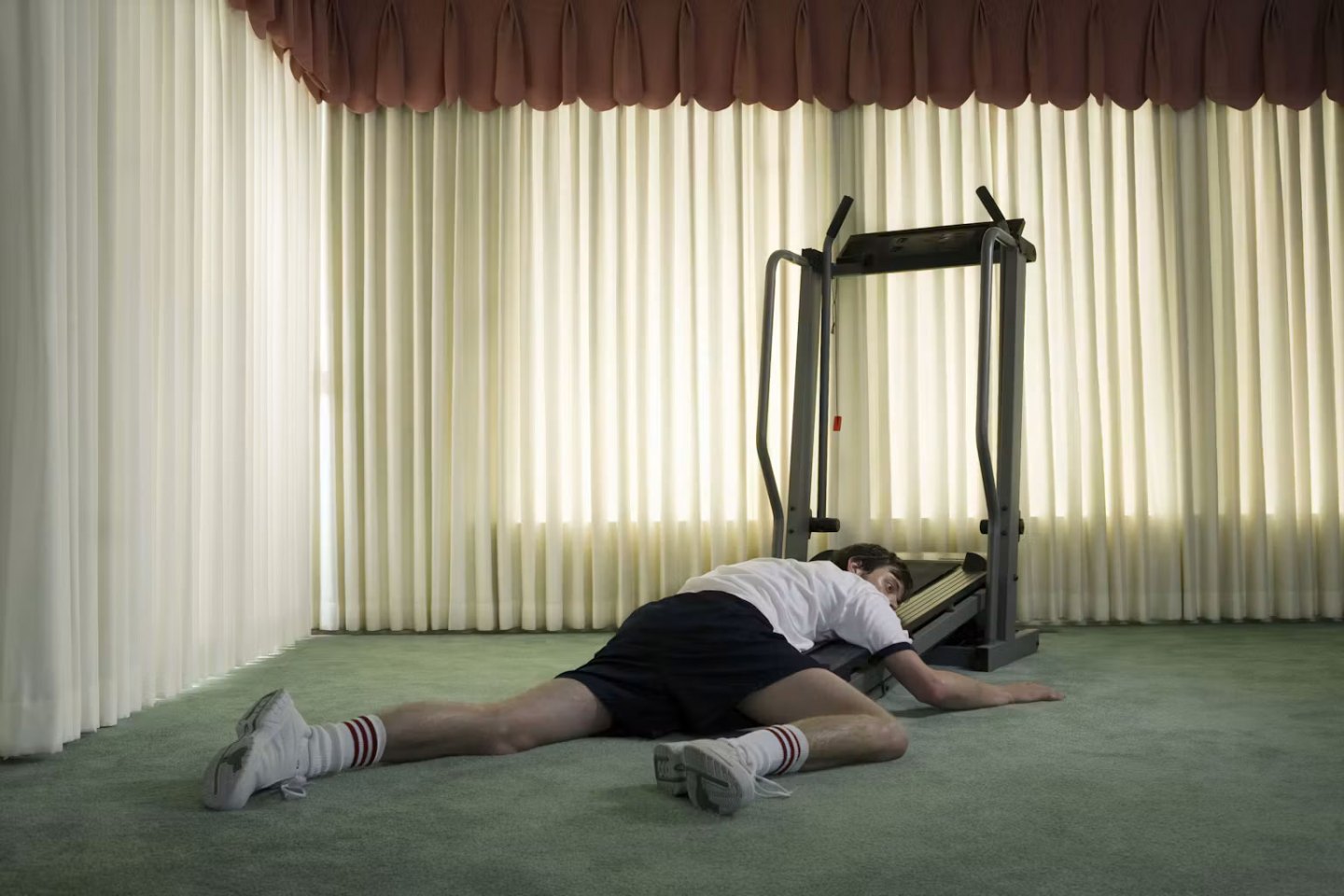
    Photo credit: Williams+Hirakawa/The Image Bank via Getty Images – Your body retains the benefits of exercise even when you need to hit pause.
    ,

    Your cells keep a record of every workout you’ve ever done – and those gains persist even after a break from exercise

    New research suggests muscle and liver cells retain a memory of exercise, offering hope when injury or life interrupts a workout routine.

    Have you ever taken months off training – maybe due to an injury, a new baby or crushing work deadlines – and come back convinced you were starting from zero?

    Research from our team has some good news: At the cellular level, you probably weren’t.

    We found that muscle and liver cells store memories from every training session in ways that may help improve endurance, control blood sugar levels and even slow weight regain after inactivity.

    Use it or lose it? Maybe not

    For most of the past century, long before fad diets and fancy workout trends took off, exercise was considered one of the most effective lifestyle changes to lower the risk of heart disease, Type 2 diabetes, several cancers and early death for people of all ages. But people typically understood exercise as something whose beneficial effects fade away over time: You use it or lose it.

    When you stop training, your maximum oxygen uptake, muscle gains and insulin sensitivity drift back to where they started, often within weeks. Physical activity guidelines are built on this fact, which is why they emphasize consistency above all else.

    Consistency, however, is a luxury that roughly 3 in 4 American adults aren’t able to enjoy. People can experience injuries, illness, pregnancy or jobs that limit their time for or ability to exercise. If adaptation really resets, every time you step into the gym would be as if you’ve never been there before. But that scenario doesn’t match what coaches and returning athletes typically describe: In practice, people who have trained before can get fit again faster than those who haven’t undergone similar training.

    In recent years, however, scientists have started challenging the concept of “use it or lose it.” New research hints that your cells might keep a record of your training history so all of your gains are not completely lost.

    More than muscle

    We are exercise physiologists who study how cells remember exercise. Our lab and others have shown that the body is able to store a form of exercise memory across different organs.

    To study how this exercise memory works, our team of researchers use an ON-OFF-ON exercise training protocol in mice, which involves an initial four- to eight-week training period, followed by detraining – a period of no exercise – and a second training bout. This method allows us to examine how cells form a memory of exercise, maintain a record of exercise through detraining, and recall memories of prior training when exposed again to exercise.

    Using this strategy, our team found that skeletal muscle memory accelerates muscle growth. Compared to mice with no training history, mice who retrained grew bigger muscles, and the individual muscle fibers inside those muscles grew too. Larger muscle fibers meant that the working cells were themselves getting bigger, rather than the surrounding tissue.

    Looking more closely at these muscle cells, we found that retrained muscle is better at matching energy production to demand – meaning, the muscles were better at drawing from energy stores when it’s needed most – and this ability persists without further exercise. This memory held even when the mice ate a high-fat diet, suggesting that prior training can still offer benefits even when diet is working against those gains.

    Muscle isn’t the only body part that learns from exercise. Working muscle needs fuel, and the liver supplies it during and after training sessions.

    My colleagues and I found that liver cells also store exercise memory and uses it to feed muscle more efficiently. In both mice and people who trained, stopped, then trained again, their livers released higher levels of a family of enzymes called carboxylesterases. These enzymes chop up lipids circulating in the blood, delivering fat in a form that muscle can take up and burn as it grows.

    A record that outlives you

    Recorded cellular memories of exercise may even be passed down to future generations.

    In mice, we found that three to four weeks of maternal and paternal endurance exercise can have a lasting effect on their offspring. Compared to offspring born to sedentary parents, parental exercise granted protection against poor blood sugar levels and excess weight gain for an entire year after birth.

    Researchers have hypothesized numerous ways that prenatal exercise may affect offspring. For example, maternal exercise might allow offspring to spend more time developing in the womb or lead parents to producer higher quality milk.

    But there remains much to be discovered on how parents influence the health of their children and whether their lifestyle could provide a fitness advantage across generations.

    Every cell remembers

    Biology has traditionally granted memory to a short list of cells. Neurons store memory in the connections between them. Immune cells store memory so they can recognize pathogens faster and more strongly the next time they encounter them.

    Researchers previously considered all other cells to be memoryless; a cell responds to a signal, then returns to baseline without keeping a record of that interaction. But that assumption is now coming apart.

    Skin stem cells can keep a record of inflammation, allowing them to heal a new wound faster months later. Human fat cells keep a record of obesity that persists even after substantial weight loss, which may account for why you gain weight faster when switching back to a high-calorie diet – the so-called yo-yo effect.

    We propose that every cell in the body remembers exercise, regardless of how little or how much someone trains. The question is how long these records are stored and whether researchers could prolong or expand each cell’s storage capacity. Better understanding of how cells learn and remember exercise, where they store memories and how those memories are preserved could help improve exercise guidelines for those who cannot exercise for prolonged or consistent periods of time.

    To be clear, none of these findings are evidence for skipping the gym; nothing in our data suggests the effects of past training can substitute for present training. But there is hope that the work you put into getting in shape isn’t completely lost over time.

    Somewhere, deep in your cells, there is a record waiting to be replayed the next time you lace up your running shoes, pick up a pair of dumbbells or want to fulfill a New Year’s resolution.

    This article originally appeared on The Conversation. You can read it here.

Explore More Stories

Science

New world map makes Africa look bigger: what’s the fuss about? Cartographers explain

Society

Gen Z communicates differently in the workplace, but older colleagues can still decode them

Society

Generous paternal leave policies improve maternal and newborn health, family finances and workplace equality

Health

Why does your brain mix up memories? A new study examines how memories are misplaced in your brain’s filing cabinets