
Green flags women should look for while dating

Representative Image Source: Pexels | Jep Gambardella:

When dating, some signs can indicate whether the person is your potential partner or not. Commonly known as “green flags,” these signs indicate the likelihood a partner will deal with a relationship in a healthy and emotionally mature manner. In a thread posted on AskReddit, people hopped in to discuss their favorite green flags that women should look for when entering into a relationship with a new man. Here are the top ten of these green flags:

1.  He is kind to service staff

Representative Image Source: Pexels | cottonbro studio

“When they treat servers well – bonus points for organizing the table before leaving.”- u/jinjiarts. “Politeness, especially to food service/hospitality people.”- u/oniontruck. “The way someone treats service workers especially if something minor goes wrong.” –u/innocentbystandernz. “Tipping well and being kind to waitstaff and service workers.” –u/bi-ti-lly

2.  He listens and is open to difficult conversations

Representative Image Source: Pexels | nataliya vaitkevich

“When a dude actively listens and remembers the little details from your convos.” –u/averiekings. “Listening to understand… and then acting kindly on the information they learn.” –u/rtconsult2. “Just listening when you are talking about something you’re interested in. He could have no clue what you’re talking about, but just listening and at least pretending like he cares means so much. Have had so many people just look at their phones and just go ‘mmm’ when you’re trying to talk to them about something you love is the worst feeling ever.” –u/_eliotto_. “He understands you and listens to you enough in convos to remember facts about you like fav candies, fav games, fav songs, and stuff of that nature.” –u/dry-resolution4580.

3.  He is family-oriented

Representative Image Source: Pexels | nicole michalou

“Treats his mother well.” –u/catsbygallimaufry. “One of the things I admire most about my partner is the fact that he makes time every single week to eat dinner with his parents. He does manual labor around their house, and just generally was raised right. It’s extremely attractive.” –u/sugarplumbuttfluck. “When he has respect for his mother or just his family in general.” –u/sleepwalkas. “Being family oriented. Also, I know a guy who is an adult whose mother is a widow and he lives with her so she won’t be alone. Living with parents isn’t always a turnoff, men, so don’t feel self-conscious about it” –u/shot_mirror5748.

4.  He has a great sense of humor

Representative Image Source: Pexels | j carter

“He has a great sense of humor.” –u/hellosunshine2. “An ability to laugh at themselves,” –u/frank-sarno. “To add to this humor doesn’t translate well across cultures. It isn’t a dealbreaker if you don’t laugh at my jokes or mannerisms, just don’t fake a laugh as it is very easy to tell when someone is fake laughing.” –u/themonoclerogue.

5.  He is independent and has his hobbies

Representative Image Source: Pexels | andrea piacqualio

“He has a job and can take care of himself, He’s confident and knows what he wants out of a relationship/life in general.” –u/plutoforprez. “Good manners. Thoughtfulness. Unique comments.” –u/plain_chacalaca. “Has and follows a budget.” –u/accurate_ad_3104. “Having a non-monetized hobby that takes up a reasonable amount of their time.” –u/son_of_toucan_sam.  

6.  He loves animals
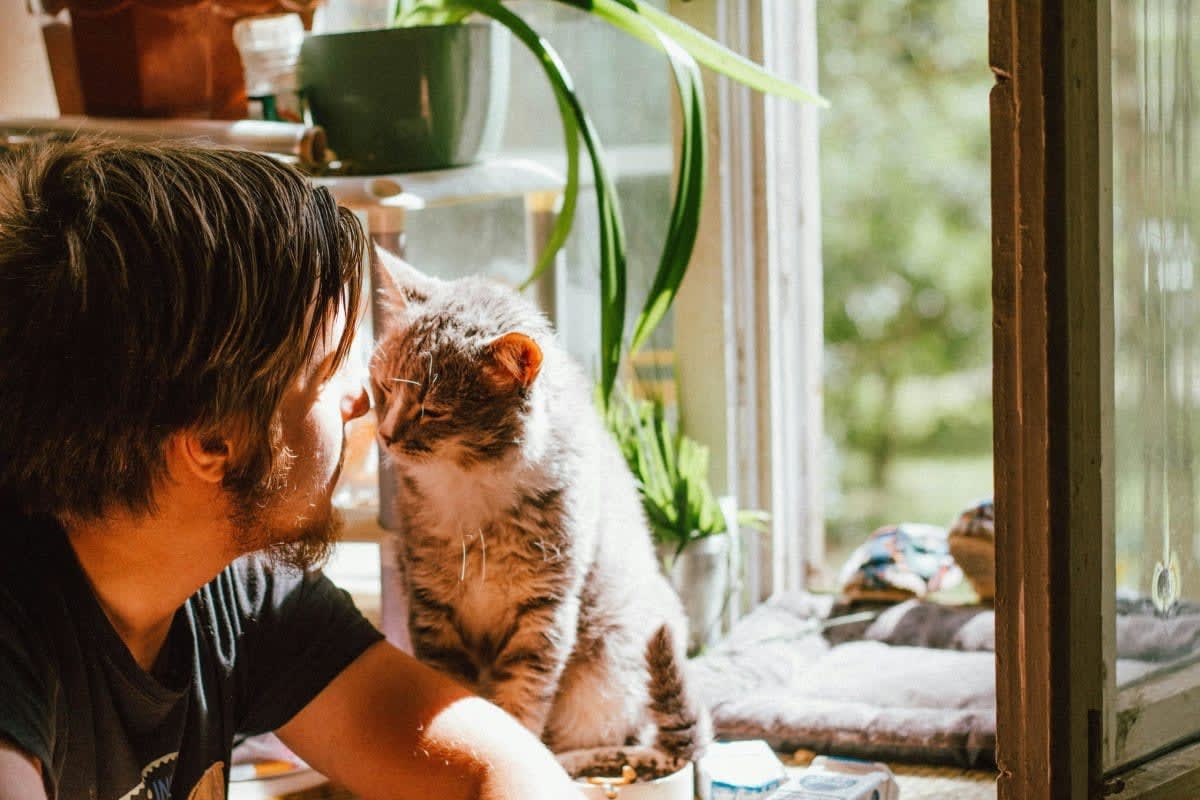
Representative Image Source: Pexels | yuliya kota

“When I met my now-husband one of the first things I noticed was how kind he was to animals. He was fostering a dog and would go on special dates with her, etc. If being mean to animals is a red flag, then being good to them is the exact opposite.” –u/psychobabble0. “During one of our first dates, my now husband pulled over and moved a turtle across the road. Sealed the deal for me.” –u/hk630. “My mom said one of the main reasons she married my dad is because of how nice he was to the cat he had when they were dating.” –u/mrsjakeblues. “Liking animals. I hate when a guy doesn’t like animals at all or ‘only likes dogs.’ A man who can get down with kitty snuggles or cuddle small animals sends all the ‘good mate that can raise children’ vibes.” –u/mrsketchup.

7.  He is true to his values

Representative Image Source: Pexels | klaus nielsen

“Upholding his ideals and morals in his daily life without knowing if you’ll see it or not. Basically being genuine and not putting on a show in front of you.” –u/tornteddie. “They have actual realistic dreams/desires and are working toward them.” –u/allisongivler. “When they treat people how they would like to be treated… good old fashioned chivalry.” –u/cityshep.  

8.  He appreciates little things about his woman

Representative Image Source: Pexels | andrea piacquadio

“Compliments your tiny creations. For example, if you like to knit, they are like ‘Cute scarf, how’d you make it?’” –u/imnicewhennothungry. “Those random ‘Are you okay? I had a weird feeling as if something happened to someone’ texts.” –u/durbldor

9.  He is sensitive, vulnerable and empathetic

Representative Image Source: Pexels | ric rodrigues

“Being sensitive and vulnerable, remembering little details about a person, being good or happy around kids would ring alarm bells with girls if they thought the guy was unattractive. Pretty privilege, halo effect, whatever you wanna call it.” –u/project_jormagandr. “For guys or gals, empathy. Sometimes you need a good hug after getting a kick in the teeth, y’know?” –u/mister_moho. “Reacts with compassion and empathy when you’re anxious or takes precautions instead of getting offended or mocking you.” –u/raaqu. “He’s not ashamed to cry in front of you or to tell you when something hurts him.” –u/honiedhylian.

10. He understands accountability and responsibility

Representative Image Source: Pexels | jopwell

“Doing the things they say they’re going to do.” –u/anywherebutarizona. “Knows what responsibility means.” –u/nosyhearth. “Offers to fix something…… means he isn’t afraid of a challenge, can problem solve, and is confident.” –u/midniteog. “When he acknowledges and tries to learn from his mistakes, no matter how trivial.” –u/dongwaterdouche.


  • Neuroscientist reveals the 3 dead giveaways someone is pretending to be smarter than they really are
    Are they full of it or not?Photo credit: Canva

    Neuroscientist reveals the 3 dead giveaways someone is pretending to be smarter than they really are

    And one way to have a great intellectual conversation that doesn’t turn into a fight.

    Getting information through quality conversation can be enjoyable or a struggle. Figuring out solutions and fielding valuable expert opinions can be difficult to discern when the person you’re talking to (or debating with) seems suspect. Fortunately, a neuroscientist online has laid out what to look out for to see if your conversation partner is actually intellectual or just talking out of their…well, you know.

    Neuroscientist turned musician/comedian Alex Riordan discussed how to spot pseudo-intellectuals and how they differentiate themselves from actual intellectuals. For Riordan, who spends ample time with his colleagues at Princeton University as well as his degree-less intellectual friends (because you don’t need to go to college to be intelligent), he’s identified three signs that helped him separate the fake-it-til-you-make-its from actually thoughtful individuals.

    https://www.tiktok.com/@alex_riordan_/video/7163445028688301354

    Pseudo-intellectuals will talk past you

    Riordan mentions that pseudo-intellectuals will often go out of their way to use colorful rhetoric and terms to try to talk past you and get you to talk past them. To expand on Riordan’s point, the purpose is a means to bait you into an argument by cutting you off before fully explaining your point or trying to move the conversation past your points to focus in on their own point. They may use tactics such as whataboutism, a tactic that asks, “But what about ______?” to shift the focus of the conversation from one issue to another in order to distract or deflect from initial point.

    They aim to ‘win,’ not aim to understand

    The folks that aim to appear smarter than they truly are don’t have any interest in coming to an understanding with their conversation. They want to win. This is common in what Riordan calls “debate bro tactics.”. Being right isn’t as important as appearing right, regardless of any logical holes or pushback that they cannot rationally defend.

    The Dunning-Kruger effect

    Riordan briefly mentions the Dunning-Kruger effect as a way to spot if someone is talking nonsense. The Dunning-Kruger effect is a cognitive bias in which people overestimate their knowledge and/or abilities in a specific area. When they encounter a new subject, they immediately think they have a complete grasp of it and lack the self awareness to see their own limitations. Once they read an article by an actual expert that conflicts with their understanding, they reject it and assume they’re right despite their lack of education, skills, or actual knowledge.

    @aliabdaal

    Why smart people think they’re not smart ? The Dunning-Kruger effect is real. The more you know, the more you realise how much you don’t know – and it can make you feel like you’re falling behind, even when you’re not. Meanwhile, those with less knowledge often feel more confident because they’re unaware of what they’re missing. Classic case of small fish, big pond vs big fish, tiny puddle ? Ever felt this way? Let me know in the comments ?

    ♬ original sound – Ali Abdaal – Ali Abdaal

    If a person in a conversation demonstrates those behaviors, you may want to politely shut it down. However, even if with a person who knows what they’re talking about, conversations can get heated and people can devolve into these pseudo-intellectual behaviors. Fortunately, Riordan shared one great way he and his colleagues keep the conversation focused on understanding and respect.

    Ask clarifying questions

    Asking clarifying questions is a habit Riordan and his colleagues and friends practice to curb any pseudo-intellectualism and arguments that might arise from it. They do so because asking for clarification goes against all of the previously mentioned tactics of fake know-it-alls. It doesn’t claim to know everything, it’s aimed for understanding rather than “winning,” and acknowledges that you may not know everything about the subject at hand.

    Asking clarifying questions, especially the right ones, shows your conversation partner that you’re curious about them and their thoughts, which encourages them to feel more connected with you. If you disagree with a person’s point and respond with a clarifying question it allows you to see where they’re coming from, find common ground, or learn something you hadn’t considered before. In some cases, answering clarifying questions helps your conversation partner to notice errors or discrepancies in their own thinking that may change their conclusions to line up with yours.

    Some examples of clarifying questions include:

    – What did you mean about ____?

    – Could you further elaborate on that?

    – I heard you say ____, am I interpreting that correctly?

    – Are there specifics about ____?

    – Can you break that down into detail for me?

    Whether you’re conversing about politics, the universe, or what the best pizza topping is, leading with curiosity can ensure that everyone is not only enjoying the conversation, but are learning legitimate truths as well.

  • Therapist explains ‘Admin Nights’ hack for turning tedious ‘to do’ lists into a brilliant game night
    Having friends around can help you get boring work done.Photo credit: Canva

    It can be hard to commit to the routines of exercise, housekeeping, and the other to-dos of your day-to-day life, but for many people the hardest part is the “household admin work.” This is the boring, drudging, and often bureaucratic tasks of answering emails, paying bills online, cancelling subscriptions, making appointments, etc. But what if you could make it a party?

    This concept has led to a growing trend called “Admin Nights” in which people gather their friends together for snacks, drinks, and hanging out while working on administrative household tasks. Admin Nights have quickly turned the chore of household admin work into a weekly or monthly chill hangout with friends.

    @maddyagers

    I am LOVING the idea of admin nights. Especially in a high inflation year. MAKE BUREAUCRACY SEXY ? #friends #admin #economic #inflation #tiktokbudgetingcontest

    ♬ Pursue what you like – LMS

    Admin Nights have other benefits aside from making digital decluttering more enjoyable, such as forging closer bonds with your friends.

    “I love this trend because most of us wish we had more time to spend with friends, so turning administrative tasks into an opportunity to do something we long to do is a great life hack,” licensed therapist Anindita Bhaumik tells GOOD. “An admin night is a great idea for a low-cost friend hang. You can catch up with each other while checking tasks off your list.”

    “It will likely spur on important updates that friends might not get around to sharing, such as the health concerns behind the appointment they’re making, how work is going, or how they’re doing financially. This can be an organic way to practice authenticity with one another and support each other,” Bhaumik added.

    @nvmoss

    When admin night makes it out the group chat ? ✨

    ♬ frank christmas – cam

    With the understanding you’ll need to establish some ground rules to stay on task, Admin Nights could make you more efficient in your mundane administrative tasks. Bhaumik and others state that Admin Nights are a form of “body doubling” which could ensure that you get everything done with more focus. Body doubling is a psychological hack in which most people tend to stay on task when someone else is in the same room as them, even if they don’t interact with one another. It’s partially why many work offices have open floor plans.

    “The beautiful thing about body doubling is it works both ways,” said Bhaumik. “One person isn’t responsible for the other; rather, both (or the group) benefit from working on tasks together. This can even be accomplished virtually, by holding admin nights on a video call, for example.”

    @nicolecappetta

    monthly admin date NEW YEAR edition ✨ using my NEW Admin Date Planner ✨ we set goals for the year and a support structure to help us reach those goals. 2026 is gonna be a good year ! also bagels are from Sincerely Bagel which is the best bagel I’ve had in PDX to date. I get the kimchi cheddar with scallion cream cheese ? . . . #TikTokCreatorSearchInsightsIncentive

    ♬ EVERLASTING LOVE – GROWS

    If you want to try to host a successful Admin Night, it’s fortunately pretty simple. Shoot out texts or emails to friends you think would like this concept, figure out a date, go simple with snacks or ordering a pizza, and make sure your home has plenty of couches, blankets, etc. to keep the vibe comfy. Depending on your friend group and how they work, you may want to investigate various “Chill Music to Study To” playlists to have on while you all concentrate on your tasks.

    Admin Nights could just change the game and turn boring or anxiety-ridden work into the most fun and relaxing day of your week.

  • Communications expert reveals 3-step method to ensure people always follow your instructions
    Know that your instructions are clear and will be followed.Photo credit: Canva

    Communications expert reveals 3-step method to ensure people always follow your instructions

    The “what, when, and why” framework to succeed in instruction.

    It’s not easy leading people, whether it’s a team at work or just getting your kid to wash the dishes correctly. It can be easily frustrating when someone forgets your instructions or, worse, plainly ignores them because they don’t see the point in them. Well, an expert on inclusive communication found an easy three-step process to ensure that your instructions are followed thoroughly.

    Author, educator, and consultant Ettie Bailey-King shared on Instagram the framework that helps instructors get their instructions followed, including those who struggle with ADHD. Crediting her friend Ellie Middleton for the method, Bailey-King suggests that we approach instructions with the “what by when and why” framework. Let’s break down the framework, piece by piece.

    What

    Bailey-King explains that being clear about the task you want done—also known as the “what”—communicates the request and the expectation plainly.

    Example: “Could you get this report completely filled out and finished?”

    When

    Bailey-King notes that giving a specific and legitimate deadline helps remove ambiguity, encourages focus, and reinforces expectations.

    Example: “Could you get this report completely filled out and finished then email it to me today before 5:00 p.m. Eastern Standard Time, please?”

    This is much clearer and sticks harder than “Email the report before the end of day” or “It’s due next week.”

    Why

    This factor is arguably the most important for several reasons. Bailey-King explains that neurodivergent people, such as those with ADHD, tend to follow instructions more effectively when they understand why the task matters and why they’re being asked to do it.

    So our complete example in the “who, what, and why” framework could look like:

    Could you get this report completely filled out and finished then email it to me today before 5:00 p.m. Eastern Standard Time so I can share the results with our boss and they can create a budget?”

    Why the “Why” is important

    Whether a person is neurodivergent or neurotypical, both academics and business consultants think that providing a “why” or a “because” along with your instructions helps ensure that they are closely followed. This helps the person being instructed understand the reasoning behind the request and the stakes if the instructions aren’t followed. It lets them feel included in the process rather than simply taking orders blindly.

    In education, explaining the “why” behind assignments helps students better understand the material and see the value of the work they’re being asked to do. In business, including the “why” in workplace manuals, whether it’s part of the job’s function or safety, helps information stick better and boosts morale far more than “because the boss said so.”

    @ms_tati_

    Literally me reading through instructions when I need to build something. Why? ??☠️ #Meme #MemeCut #CapCut #Why #instructions

    ♬ original sound – Kim Dyer

    On top of that, asking the “why” helps you streamline your instructions by examining the purpose of each task. If you can’t identify a clear reason for doing something a certain way, it may reveal unnecessary steps and refocus the process on what truly needs to be done to achieve the desired result. So including the “why” in the framework isn’t just helpful for the person receiving the instructions—it benefits the instructor as well.

    The next time you ask someone to do a task, remember to include the “what, when, and why.” It won’t eliminate every headache or guarantee that your teen will do the dishes, but it will make your expectations clearer and make communication easier overall.

Explore More Ideas Stories

Ideas

Neuroscientist reveals the 3 dead giveaways someone is pretending to be smarter than they really are

Ideas

Therapist explains ‘Admin Nights’ hack for turning tedious ‘to do’ lists into a brilliant game night

Ideas

Communications expert reveals 3-step method to ensure people always follow your instructions

Ideas

Big tech geniuses say the best way to learn complex subjects is to think like a kindergartner