The human brain is a complex and capable organ. We put it through many troubling exercises, which might include thinking about work, play, what we have to do, what we can’t get to, and, probably, even thinking about thinking. T. Alexander Puutio, Ph.D., a teacher at Harvard and Columbia, shared with Psychology Today five habits that are making us dumber every day.

One of the first rules of problem-solving is understanding what’s causing the problem. Only then can we uncover the proper solutions. “Brain rot” can be linked to five common offenders that prevent us from reaching our fullest potential.

sleep deprivation, sleep, cognitive performance, decision-making, brain, brain health
A woman deprived of her sleep. Image via Canva – Photo by Prostock-studio

5 major mental mistakes we make and the uncommon solutions:

1. Sleep deprivation

Getting enough sleep is extremely important for our health. Having a good night’s sleep tonight has direct effects on your cognitive abilities tomorrow—and even decades later. The National Heart, Lung, and Blood Institute reported on a study in 2024 that found adults in their ’30s and ’40s who had trouble sleeping showed poorer cognitive performance even a decade later. This decline wasn’t just from poor sleep quality but also the duration of poor sleep. “Skip it, and you degrade performance in measurable ways where our executive function dulls and our decision-making falters,” said Puutio. “Other research shows that even modest nightly sleep restriction impairs attention, working memory, mood, and judgment.”

Solution: Take time to be bored

The brain can restore itself in a ‘default state,’ according to Ashok Seshadri, M.D. of Mayo Clinic Health System. This is the normal way of recuperation, where we can internally reflect and encourage imagination. When the brain is extremely focused and performing an intense activity, it consumes large amounts of energy. The constant stimulation can be extremely hard on our nervous system. Taken in small doses, boredom is a helpful counterbalance to the highly stimulating and intense technological lives we live today. PsyPost shared on the benefits of finding moments for boredom, saying, “We need to embrace the pause. It is a space where creativity can prosper, emotions can be regulated, and the nervous system can reset.”

2. A fixed idea on how smart we are

It’s sometimes easy to get lost in an idea that we are only a certain level of smart. Even though we may learn new things, we think we have a limited bandwidth. Puutio writes, “By far the most performance-reducing habit is treating the brain as if it’s a fixed fixture. Psychologists call this the entity theory of intelligence, which is simply the belief that ability is innate and unchangeable.” We have a lifetime of learning behind us that suggests these thoughts just aren’t true.

Solution: The frustration zone

Proving this “fixed intelligence” idea wrong can be as simple as basic puzzle solving. The brain can reorganize and strengthen connections in response to hard tasks. Stepping just a little bit out of your intellectual comfort zone can have dramatic, positive effects. Occupational Therapist Sarah Bence wrote for Verywell Health, “Long-term brain-training activities can improve your working memory, verbal memory, and global functioning. Challenging yourself to try new activities can also improve brain functioning through a process called neuroplasticity.”

Science Direct published a study in July of 2025 about neuroplastic brain breakthroughs. It found that, “A deeper understanding of neuroplasticity—encompassing synaptic, structural, and functional adaptations—has dramatically expanded therapeutic possibilities.” And that, “… neuroplasticity-based interventions offer unprecedented opportunities for recovery, learning, and even cognitive enhancement…”

3. Our brains are lacking structure

You might have heard the term scatterbrained. Merriam-Webster dictionary defines it as, “Having or showing a forgetful, disorganized, or unfocused mind.” The brain prefers and flourishes doing the exact opposite of this. Puutio writes, “Our brains thrive on structure, purpose, and deadlines. Without them, we drift unfocused, sabotaging any spark of creativity we hoped to ignite.” He continues, “… even the most brilliant thinkers need disciplined structure to function at full capacity.”

Solution: Engaged in “single tasking”

It is a common belief that multitasking is not only an important ability but a true sign of intelligence. However, your brain cannot engage two cognitive tasks at once. It shifts focus back and forth between the two subjects. Carlos Alós-Ferrer, Ph.D., shared in Psychology Today that many modern techniques center around concentrating on one task at a time. Multitaskers are way less productive. A 2024 study in the National Library of Medicine found significant cognitive costs when people were task-switching. Tackling one obstacle at a time optimizes human performance and leads to improved cognitive function.

4. Filling our brains with low-grade distractions

Puutio writes, “It’s the mental equivalent of leaving candy on your desk when you’re on a diet.” He continues, “Place it in a steady drip of bad inputs, gossip, outrage, and low-grade distraction, and it will inevitably adapt downward.” Your brain is adaptive and will shift toward exactly where you send it. Scrolling through unhealthy images and engaging with toxic trolls on the Internet will inevitably cause you problems. Stimulating your mind with images just because you can, or you’re feeling lazy, can be a real energy drain.

Solution: Take a thought walk

think walks, low-grade distractions, rhythmic stride, inhibitory control, walking, Alzheimer's disease, Looney Tunes
A Looney Tunes classic. media3.giphy.com

Mindful walking has important, positive effects on the brain. One specific technique can be establishing a rhythmic stride. A study in 2021 in the National Library of Medicine found that establishing a consistent pace supported short and long-term cognitive benefits. Participants in the study showed improvements in inhibitory control, selective attention, and overall executive function. Science Daily reported a 2023 study on walking that found regular walks strengthened the connections “in and between” brain networks. Taking a “thought walk” has also been shown to slow the onset of Alzheimer’s disease in older adults.

5. Alcohol

If you’ve had more than a few glasses of alcohol, you know exactly how it can change your thought patterns. Heavy drinking causes literal damage to the brain. Alzheimer’s disease is 41% more common in heavy drinkers, according to an autopsy-based study referenced by Puutio in his aforementioned Psychology Today article. Heavy drinkers were shown to have significantly higher odds of developing vascular brain lesions (as much as 133% higher probability). “Alcohol is perhaps the most obvious form of self-sabotage,” said Puutio. “[People] consuming eight or more alcoholic drinks per week is linked to clear markers of brain injury.”

Solution: Have a mocktail instead

The habit of not drinking has been a growing trend since the pandemic. A 2025 Gallup Poll shared by NPR found that only 50% of Americans aged 18 to 34 say they drink alcohol. And, 66% believe drinking even in moderation has harmful effects. According to the World Health Organization, scientists believe ‘any’ amount of alcohol can increase the risk of cancer, lead to depression and anxiety, and show negative effects on general health.

According to a story in the Houston Chronicle, restaurant franchises like Taco Bell are implementing a mocktail menu. The company hopes to boost its beverage sales to five billion dollars by the year 2030 by offering energy drinks and agua frescas of strawberry passion fruit, dragon fruit, berry, and mango peach. Business Insider reported that traditional bars will have to serve non alcoholic options to remain competitive. With more people consuming fewer alcoholic drinks or stopping completely, restaurants looking to maintain sales margins will have to adapt.
complex organ, alcohol, mocktails, brain function, positive habits, age related disease, anxiety, depression
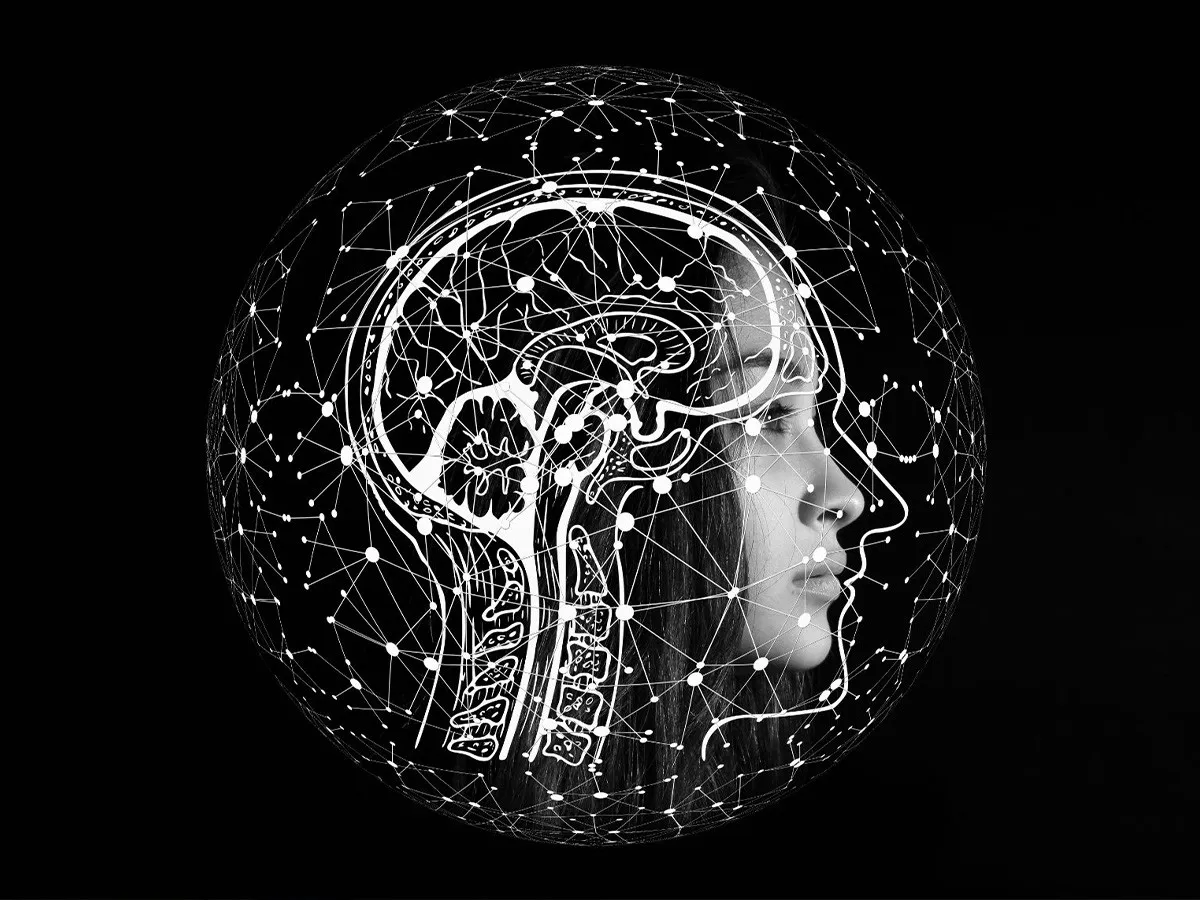
Artist's rendering of a brain overlaid a woman's head. Image via Canva – Photo by geralt

The brain is a very complex organ that requires attention and positive habits to maintain healthy function. Many of the diseases that afflict the brain as we get older can be avoided or more successfully navigated through positive actions today. Every person has their own experiences when it comes to mental health and brain function, but the professionals seem to agree: treat yourself well or face the consequences.


  • Woman says her husband keeps ‘ruining’ romance novels by acting them out before she reads them
    Photo credit: CanvaA nightly seduction.
    ,

    Woman says her husband keeps ‘ruining’ romance novels by acting them out before she reads them

    “I genuinely don’t deserve him and also he is ruining my books.”

    Sometimes people reveal the climactic scene in a great book we’re reading before we even get there. It may be annoying, but most of the time, the ruined moment happens by accident.

    One woman shared this challenge in her Reddit thread, My husband is spoiling the spicy scenes in my romance books by acting them out before I get to them. Is it all a weird coincidence, or is their real genius hidden behind one man’s romantic gesture?

    My husband is acting differently in the bedroom

    A woman writing under the Reddit tag u/Embarrassed-Friend-8 shared she loves romance novels. Enough to consume four to five a month. Recently, her husband of 11 years started acting differently in the bedroom with what she describes as “themed” nights. She explains, “I’ll think ‘okay, that was fun and a little random’ and move on.” But then the real unexpected twist occurs. She continues, “A few days later I’ll be reading my book, hit a spicy scene and actually have to put my Kindle down bc it’s the same scene. Like, the same vibe, the same moves, occasionally almost the same setup.”

    She thinks he might be reading ahead and playing a fun little prank. But then the story beneath the story begins to reveal itself.

    “I read on my Kindle. He’d have to get into my account, figure out where I am in each book, read ahead, and then coordinate. He’s a big tech/numbers guy, so if he’s doing this I guarantee there’s a spreadsheet involved somewhere.   I’m honestly not even mad. Genuinely if this is what’s happening it might be the most unhinged romantic gesture anyone has ever done for me. But he is technically spoiling the books??”

    husband, wife, reddit post, role-play, dinner date
    A sexy dinner date.
    Photo credit Canva

    People love a good role-play story

    As this story started to gain traction, the comments section filled up fast with amused, confused, and thoroughly invested people. It’s hard to resist a great story that begins with, “11 years and he’s still out here finding new ways to be surprising. I genuinely don’t deserve him and also he is ruining my books.” These are some of the Redditors’ thoughts:

    “Made the mistake of reading this post to my husband and I think I actually saw a light bulb turn on above his head — gonna start locking my Kindle…”

    “Book mark your favorite scenes…give him a selection so there’s still an element of surprise.”

    “You made me laugh so hard this morning!”

    “Yes, but ruining them in the BEST possible way!”

    “Absolute legend behavior, but you’re right, he needs to drop some DLC that isn’t in the source material for the real surprises.”

    “This is adorable and also sweet and romantic!”

    “I mean, the husband is looking at this as ‘ok, challenge accepted!’”

    “Girl, start reading some spicier stuff!”

    mystery, Kindle, spreadsheets, fun surprise
    A woman looks through a spyglass.
    Photo credit Canva

    The mystery is uncovered in a Reddit update

    In an update to the original post, the woman shared that she was very appreciative of the comments and support from readers of her posting. “Turns out you all were right. He had access to my shared Kindle library and got this idea for a prank, but once he did it a few times he really got ‘invested.’” She continues, “He’s going to stop spoiling my books but we did come up with another arrangement, also thanks to the comments here. I’m going to give him a list of pre-approved spicy scenes and he’ll choose (in no specific order) which he wants to surprise me with.”

    This husband was willing to go the extra mile to keep their relationship moving in a healthy direction. And yet, there was one more little update she had to add in, “YES there was a spreadsheet. Chili pepper emojis for spice levels. A column for notes (needs wine, links to Spotify playlists, etc). Color coding. Multiple tabs. More organization than even I was expecting. It will be ongoing and is now shared so I can drop in my own chili peppers and notes.”

    sunsets, sexy moments, healthy intimacy, romance readers
    A romantic couple as the sun sets.
    Photo credit Canva

    Romance novels are not just for the ladies

    Romance novels aren’t simply a niche. It’s one of the most widely read genres worldwide. It’s not just casual reading either. Romance readers are voraciously digesting an average of five novels per month. A 2021 study in Humanities & Social Sciences Communications found that most readers are in relationships and looking for little escape and relaxation. Writing that is exciting, easy, and fun to read matters more than the sexual content.

    What might be surprising is that romantic literature appeals to male readers more than you might think. In a 2025 survey conducted with fans of romance books by Talker Research, 63% of the men considered themselves die-hard fans. Also, men spend 364 hours annually reading romance compared to women, who spend 312 hours.

    couples, dates, relationships, passion, fun
    A couple eats watermelon together.
    Photo credit Canva

    A little bit of romance matters

    Research shows that doing something new together can reignite connection. A 2024 study in Science Direct found that passion and intimacy are directly related to overall relationship satisfaction. And it’s not the big swings at romance that matter most. It’s the small, attentive actions that bring more intimacy.

    A 2023 review in the National Library of Medicine found that in the psychology of a romantic relationship, responsiveness, emotional attunement, and mutual investment build a stronger, lasting connection.

    Romance might seem like something we’re all supposed to instinctively know how to do. This husband is willing to invest time and creativity into his marriage, even if his first attempts didn’t land perfectly. What she thought was a small frustration slowly turned into a stronger connection. All of this good started by simply trying and reading a little ahead.

  • It’s never too late to learn a language – adults and kids bring different strengths to the task
    Photo credit: Bulat Silvia/iStock/Getty Images PlusAdult language learners have an understanding of grammar that can help them learn a new language. But they are also likely to feel more self-conscious as they do so.

    There’s a common assumption that if someone starts learning a language when they are very young, they will quickly become fluent.

    Many people also assume that it will become much harder to learn a language if they start later in life.

    Research into language learning shows that how old someone is when they learn a language does matter, but there is no point at which the ability to learn a language switches off.

    While a young language learner can more easily acquire a native accent, adults retain the ability to learn new languages well into later life. Anyone can continue to learn and refine their vocabulary and grammar. Other factors, like motivation, can also play a role for learners of all ages.

    I am a linguist and the author of a forthcoming book, “Beyond Words: How We Learn, Use, and Lose Language,” which looks at how language is learned, used and lost across a lifespan — and why age alone does not set hard limits on our linguistic abilities.

    Instead, the strategies learners use, the outcomes they achieve most easily, and how others judge their progress can all change over time.

    How age shapes language learning

    Someone’s age can influence their language learning ability in a variety of ways.

    Scientists sometimes talk about sensitive periods, or an early development window in which the brain is especially receptive to certain kinds of input.

    When it comes to language, babies and children are particularly sensitive to the sound patterns of speech. They can also pick up on subtle phonetic distinctions that adults struggle to perceive or reproduce.

    This helps explain why children who grow up bilingual often sound native in both languages. Accents, more than vocabulary or grammar, are where age-related differences are most pronounced.

    Sensitive periods are found in other animals, too, especially birds, which have an early sensitive period for learning their species-specific song from an adult tutor.

    After this window closes, learning a new language is still very much possible. But it usually takes more conscious effort and practice.

    Studies also show that children exposed to a second language early, roughly before puberty, are more likely to develop nativelike pronunciation and intonation.

    Brain imaging research shows that people who learn two languages early in life tend to process both languages in the same parts of the brain. Those who learn a second language later often use slightly different brain areas for each language.

    In practical terms, early bilinguals are more likely to switch between languages effortlessly. Later learners may have to more consciously work through their second language, especially at first.

    Two boys sit next to each other at a desk in a classroom filled with other children at desks.
    Second grade students do classwork during a Spanish-only, dual immersion class in University Hill Elementary School in Boulder, Colo., in 2022. Glenn Asakawa/The Denver Post via Getty Images

    Benefits to learning a language as an adult

    Pronunciation is only one part of language proficiency. Adults bring their own strengths to the task.

    Unlike young children, adult learners already have a fully developed first language. They also have skills in reasoning and pattern recognition, as well as an awareness of how language works.

    This allows adults to learn in a more deliberate way, as they study grammar rules and consciously compare languages. Adults are also more likely to rely on deliberate strategies, such as memorization, to learn a language.

    In classroom settings, adults often outperform children in early stages of learning, particularly in reading and writing.

    Language learning never truly stops. Even in adulthood, people continue to develop and refine their first language, shaped by their education, work and social environment, and how they use it day to day.

    While it may be harder for adults to acquire a nativelike accent later in life, the good news is that grammar, vocabulary and fluency remain well within reach for most adult learners.

    Benefits of learning a language as a kid

    Children, meanwhile, tend to learn languages implicitly, through immersion and interaction, often without conscious attention to rules.

    Social and emotional factors also play a major role in successfully learning a language.

    Children are generally less self-conscious than adults and more willing to take risks when speaking.

    Adults, by contrast, are often acutely aware of mistakes and may hesitate to speak for fear of sounding foolish or being judged.

    Research consistently shows that being willing to communicate is a strong predictor of success in learning a new language. Anxiety, inhibition and negative feedback from others can significantly slow progress, regardless of age.

    Accent, bias and social pressure

    Other factors, like social pressure and discrimination, matter as someone tries to learn a new language.

    Research into language and identity shows that listeners frequently associate accented speech with lower intelligence or competence, despite there being no connection between accent and cognitive ability.

    Non-native speakers often experience stigmatization, discrimination and prejudice from native speakers.

    This bias can discourage adult learners and reinforce the false belief that successful language learning means sounding native.

    Motivation and aptitude matter, too

    Motivation is another key factor that affects learners of all ages.

    People learn new languages for many reasons: a new country, work, school, relationships or interest in another culture.

    Research distinguishes between the different reasons people learn a language. Some are practical, like advancing a career or passing a test. Others are personal, such as wanting to connect with a community, culture or family.

    Learners who feel a strong personal or emotional connection to the language are more likely to keep going even when it gets difficult, and they often reach higher levels of fluency than those without this connection.

    Other people have a natural aptitude for learning a language and can pick it up easily. Perhaps they quickly notice sound patterns, or they can remember new vocabulary after hearing it once or twice.

    Language aptitude is different from intelligence and varies from person to person. Aptitude makes success in learning a language more likely, but it doesn’t guarantee it.

    Learners with average aptitude can still become very proficient in new languages as adults if they have consistent exposure, practice and motivation.

    Different ages, different strengths

    So is it better to learn a second language as a child or as an adult? Research suggests the more useful question is which aspects of language learning, such as pronunciation, fluency or long-term mastery, matter most.

    Learning a new language early makes it easier to sound like a native speaker and to use the language smoothly, without having to think about the rules.

    Learning that language later in life draws on adult strengths, such as planning, problem-solving and focused practice.

    Ultimately, some people pick up languages quickly while others struggle, regardless of how old they are.

    Beliefs about language learning shape education policy, parenting choices and how multilingual speakers are treated in everyday life.

    When adults are told they’ve missed their chance to learn a language, many never bother to try. When foreign accents are treated as flaws, capable speakers can be unfairly discriminated against.

    In fact, research shows that learning a language is possible at any age – it’s a lifelong, achievable journey, rather than a race against the clock.

    This article originally appeared on The Conversation. You can read it here.

  • What does the appendix do? Biologists explain the complicated evolution of this inconvenient organ
    Photo credit: Sebastian Kaulitzki/Science Photo Library via Getty ImagesMost people get acquainted with their appendix when it’s inflamed and about to rupture.
    ,

    What does the appendix do? Biologists explain the complicated evolution of this inconvenient organ

    It may be inconvenient, but the appendix is no evolutionary mistake.

    Most people know only two things about the appendix: You don’t need it – and if it bursts, you need surgery fast.

    That basic story traces back at least to Charles Darwin, the English naturalist who developed the theory of natural selection. In “The Descent of Man,” he described the appendix as a vestige: a leftover from plant-eating ancestors with larger digestive organs. For more than a century, that interpretation shaped both textbook and casual medical wisdom.

    But the evolutionary story of the appendix turns out to be much more complicated.

    Along with our colleague Helene M. Hartman, a student preparing for a career in health care, we combined our expertise in behavioral ecologybiology and history to review the scientific literature on the appendix, expecting a simple answer.

    Instead, we found an organ that evolution kept reinventing, more interesting than most people imagine.

    How did the appendix evolve?

    The appendix is a small pouch branching off the first section of the large intestine. Its shape and structure vary widely across species – a clue that evolution may have tinkered with it more than once.

    Some species, including certain primates such as humans and great apes, have a long, cylindrical appendix. In others, including several marsupials such as wombats and koalas, the appendix appears shorter or more funnel-shaped. Still others, including some rodents and rabbits, have differently proportioned or branching structures. This structural diversity suggests that evolution has modified the organ under different ecological conditions.

    Diagram of a segment of the small intestine with fingers of the appendix oriented in various degrees
    The appendix can be oriented in the body in multiple ways. Mikael Häggström, M.D./Wikimedia Commons

    That suspicion is supported by evolutionary analyses. Comparative studies show that an appendix-like structure evolved independently in at least three distinct lineages of mammals – marsupials, primates and glires, a group that includes rodents and rabbits. A broader evolutionary survey found that the appendix evolved separately at least 32 times across 361 mammalian species.

    When a trait evolves repeatedly and independently, biologists call this convergent evolution. Convergence does not mean a structure is indispensable. But it does suggest that, under certain environmental conditions, having that structure provided a consistent enough advantage for evolution to favor it again and again.

    In other words, the appendix is unlikely to be a useless evolutionary accident.

    What does the appendix do?

    The appendix supports the immune system. It contains gut-associated lymphoid tissue – immune cells embedded in the intestinal wall that help monitor microbial activity in the gut. In early life, this tissue exposes developing immune cells to intestinal microbes, helping the body learn to distinguish between harmless symbionts and harmful pathogens.

    The appendix is particularly rich in structures called lymphoid follicles during childhood and adolescence, when the immune system is still maturing. These immune components participate in mucosal immunity, which helps regulate microbial populations along the intestinal lining and other mucosal surfaces. Lymphoid follicles produce antibodies, such as immunoglobulin A, to neutralize pathogens.

    Researchers have also proposed that the appendix acts as a microbial refuge. Some have suggested that biofilms – thin, structured communities of bacteria – line the appendix. During severe gastrointestinal infections that flush much of the gut microbiome from the colon, beneficial bacteria sheltered within these biofilms may survive and help repopulate the intestine afterward. Those beneficial microbes assist with digestioncompete with pathogens and interact with the immune system in ways that reduce inflammation and promote recovery.

    These hypotheses motivated a question our team explored: If the appendix helps preserve microbial stability, could removing it subtly affect reproductive fitness?

    Older clinical concerns suggested that appendicitis or appendectomy might impair fertility by causing inflammation and scarring – known as tubal adhesions – in the fallopian tubes. Such scarring could physically obstruct the egg’s passage to the uterus. But several large studies have since found no decrease in fertility after appendectomy – in some cases, researchers found a small increase in pregnancy rates.

    The appendix appears to have multiple functions, including immune and microbial ones. Affecting fertility, however, does not seem to be one of them.

    Evolutionary importance and modern life

    While the appendix has an interesting past, with evolution continually reinventing it, its modern importance is modest at best. Darwin underestimated the organ’s history, but his instinct wasn’t far off in the medical present: Some parts of human biology mattered more in the environments people evolved in than in the lives they lead today.

    Early humans lived in environments with little sanitation and strong social contact – perfect conditions for outbreaks of pathogens that cause diarrhea. An appendix that quickly restored the microbiome after infection could significantly improve survival. But over the past century, clean water, improved sanitation and antibiotics have sharply reduced deaths from diarrheal diseases in high-income countries.

    As a result, the evolutionary pressures that once favored the appendix have largely disappeared. Meanwhile, the medical risks of keeping the appendix – most notably appendicitis – remain. Modern surgery typically treats an infected appendix by removing it. A structure that was once a global evolutionary advantage is now more of a medical liability.

    This mismatch between past adaptations and present environments illustrates a core principle in evolutionary medicine: Evolution optimizes for survival and reproduction in ancestral environments, not for health, comfort or longevity in modern ones.

    Evolution operates at the level of populations over generations, favoring traits that increase average reproductive success, even if those traits sometimes harm individuals. Medicine works the other way around – helping individuals thrive in the present world rather than survive the past one.

    The appendix is not an IKEA spare part included “just in case,” but neither is it essential today. Human biology has many traits that were once beneficial, now marginal – and understanding them allows medicine to make better modern decisions.

    This article originally appeared on The Conversation. You can read it here.

Explore More Technology Stories

Science

Veterinary scientists develop a daily pill that’s giving senior dog owners hope

Science

Probability underlies much of the modern world – an engineering professor explains how it actually works

Technology

Tech company helps dementia patients live independently with memory-prompting smart glasses

Technology

Scientists ‘bottle the sun’ with a liquid battery that stores sunlight for use at night