

Every year, malaria kills more than 600,000 people worldwide. Most of them are children under 5 in sub-Saharan Africa. But the disease isn’t confined to poor, rural areas – it’s a global threat that travels with people across borders.

For decades, the fight against malaria has felt like running in place. Bed nets and drugs save lives, but the family of parasites that cause malaria, called Plasmodium, keeps evolving new ways to survive. These parasites transmitted to humans through the bites of infected mosquitoes.

But something is shifting. As a malaria researcher working on my Ph.D., I study how the malaria parasite develops resistance to drugs. I know what malaria feels like. I’ve had it, and I’ve lost a family member to it. That experience drove me into this field.

When I started this work in 2023, few good options existed for protecting the youngest children – the group most likely to die from malaria. Now, for the first time in my career, I’m watching real breakthroughs happen simultaneously: new vaccines, powerful antibodies and genetic surveillance tools that can predict resistance before it spreads.

2 new vaccines for children

In 2023, the World Health Organization approved two malaria vaccines for children: one called RTS,S/AS01, also known as Mosquirix, and another referred to as R21/Matrix-M. Given in four doses starting around 5 months of age, they’re the first vaccines ever shown to prevent severe malaria.

These vaccines don’t provide perfect protection. They reduce the incidence of clinical malaria cases in vaccinated children by about 75% in the first year after receiving the primary dose, and the protection they offer fades over time. But when combined with bed nets and preventive drugs, they’re already preventing thousands of deaths. As of late 2025, about 20 countries, primarily in Africa where malaria burden is highest, have introduced these vaccines into childhood immunization programs.

In the past two years, two malaria vaccines have become available for babies starting at 5 months of age. ER Productions Limited/DigitalVision via Getty Images

This matters enormously because children under 5 years old do not have fully developed immune systems and haven’t built up any natural resistance to malaria. A single infection can turn deadly within hours.

The vaccine is effective because it contains a molecule that mimics a key protein on the parasite’s surface, called circumsporozoite protein. This molecule trains the immune system to recognize the parasite upon infection after a mosquito bite, before the parasite can hide inside human cells.

Discovering a parasite’s hidden weak spot

In January 2025, researchers found something surprising about how the malaria parasite invades cells.

To invade liver cells, the parasite must shed a dense surface protein that acts as a protective shield. This briefly exposes specific hidden spots of proteins, called epitopes, that were previously invisible. That momentary unmasking could give the immune system a chance to recognize the parasite and stop the invasion.

Because this vulnerability is exposed only for a split second, most immune responses miss it. However, scientists discovered an antibody called MAD21-101 that is precise enough to catch it.

An antibody is essentially a microscopic security tag produced by the immune system that can stick to invaders. While standard antibodies fail to latch because of the parasite’s protein shield, MAD21-101 waits for the unmasking moment and locks directly onto the exposed spot.

In lab tests, this action blocked the parasite from entering liver cells, stopping the infection completely. Scientists envision turning this antibody into a treatment that prevents infections in high-risk infants, potentially to be used alongside existing vaccines to strengthen protection against malaria.
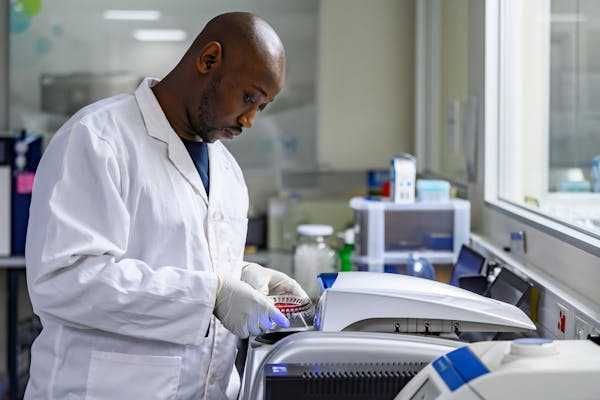
By exploiting vulnerabilities in the malaria parasiteu2019s defense system, researchers hope to develop a treatment that blocks the parasite from entering cells. wilpunt/E+ via Getty Images

Protecting and treating the youngest patients

Because of their undeveloped immune systems, infants have historically faced a double gap: limited ways to prevent malaria, and almost no safe treatments formulated for their tiny bodies when they inevitably got sick.

In 2022, the WHO began recommending a malaria prevention strategy called perennial malaria chemoprevention for babies starting at 2 months. Infants receive a full dose of a standard antimalarial medication, such as sulfadoxine-pyrimethamine, during their routine vaccination checkups. The treatment clears out parasites and provides temporary prevention, regardless of whether the child has a fever or other symptoms.

A new treatment has recently become available. Coartem Baby, approved by Swiss regulators in 2025, is the first malaria treatment designed specifically for infants weighing as little as 4.4 pounds. Unlike older drugs, this formula safely accounts for a baby’s immature metabolism. It contains one ingredient, artemether, which acts fast to reduce the parasite count immediately, and a second ingredient, lumefantrine, which stays in the blood longer to mop up any survivors.

Tracking parasite evolution around the globe

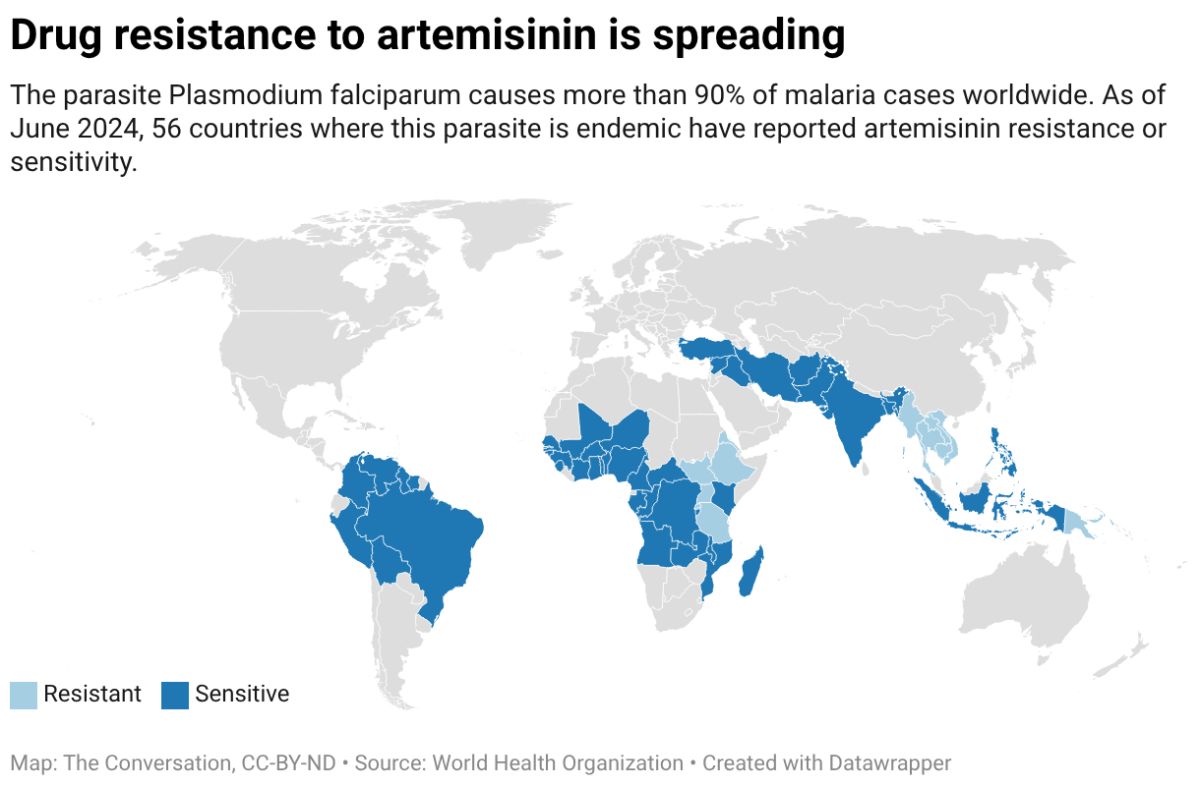
The malaria parasite has an uncanny ability to rewrite its genetic code under pressure, allowing it to adapt and withstand the very medicines designed to destroy it. This adaptability is now threatening the drug artemisinin, the backbone of global malaria treatment, which is starting to fail in parts of Africa and Southeast Asia. But researchers like me are getting a clearer picture of how resistance develops and how it might be interrupted.
One of the parasite’s tricks is to make extra copies of the genes that help it survive antimalarial drug treatment. In my research, I use a high-precision technique that counts the number of genes to estimate a sort of resistance score: A parasite with more copies is far better equipped to survive treatment than a parasite with only one.

Scientists around the world are using molecular scanning tools to hunt for specific mutations – single-letter changes in the parasite’s DNA – that make the parasite more resistant to the drug. For example, researchers in my lab are working to pin down the parasite’s genetic code as it’s in the act of changing, in order to catch dangerous mutations while they’re still rare. That would give researchers time to deploy alternative treatments before children start dying from drug-resistant infections.

These tracking tools allow epidemiologists to create early warning systems that can identify where drug resistance is emerging and predict where it might spread next, as the pathogen hitchhikes across continents in travelers’ bloodstreams. Based on those warnings, health officials can switch treatment strategies before a drug fails completely. What’s more, knowing exactly which genes the parasite modifies may enable researchers to block those changes to prevent resistance from emerging.

Malaria research is entering a new era where, although the parasite adapts, scientists like me can now adapt faster. A malaria-free childhood isn’t guaranteed yet, but for the first time in my career, it feels like a realistic goal rather than a distant dream.

This article originally appeared on The Conversation. You can read it here.

  • Who are hospital ethics consultants, and why should you care?
    Photo credit: LPETTET/E+/Getty Images End-of-life decisions can be complicated, and ethics consultants may help families and care teams navigate them.
    ,

    Who are hospital ethics consultants, and why should you care?

    Helping families face the hardest medical choices.

    Imagine the following scenarios:

    A surgeon prepares to amputate a patient’s foot to save his life, but the patient refuses the procedure. His decline in thinking and memory raises doubts about his ability to consent, and he has no family or friends to help with the decision.

    A 17-year-old declines a liver transplant, while her mother insists on going forward with the lifesaving surgery.

    Siblings stand divided at the bedside of their 85-year-old mother with dementia, one rejecting a feeding tube, the other calling it a basic human necessity.

    I am a hospital ethics consultant, and these are the kinds of situations my colleagues and I regularly encounter. Yet many people are unaware that hospital ethics consultants even exist – or that they can ask for one.

    Who are hospital ethics consultants?

    Healthcare ethics consultants are trained to help patients, families and clinicians navigate difficult medical decisions.

    They could be called in situations where healthcare staff struggles with providing procedures such as cardiac resuscitation that are unlikely to benefit the patient and might even cause more pain and suffering. They could also be called when it is unclear who has authority to consent for a patient’s care, or when end-of-life decisions are complicated and resources are limited – such as ICU beds and ventilators during COVID-19.

    Ethics consultants come from a range of disciplines: physicians, nurses, social workers, chaplains, lawyers and philosophers who have specialized training and experience in clinical ethics. Since 2018, ethics consultants are increasingly pursuing formal certification through the American Society for Bioethics and Humanities.

    What is their origin?

    The modern field of bioethics emerged from the 1947 Nuremberg Doctors’ Trial, where Nazi physicians were prosecuted for conducting brutal medical experiments on imprisoned people.

    This led to the 1947 framework outlining ethically acceptable human research called the Nuremberg Code, written by a panel of American judges. The 1979 Ethical Principles and Guidelines for Protections of Human Subjects of Research, called the Belmont Report, followed the Nuremberg Code. The Belmont Report turned the ethical ideals of respect for persons, beneficence – to do good – and justice into a regulatory framework to protect vulnerable and marginalized medical research participants in the U.S.

    In the 1980s, many of these ethics protections moved from the research lab to the patient bedside. During this time, lifesaving technologies such as the ventilator, dialysis machine and organ transplantation created new, difficult ethical questions: When should life support end? Who decides? And what happens when there aren’t enough resources?

    A series of court cases and laws expanded patients’ rights, with the Patient Self-Determination Act, a 1990 law which upheld patient rights to refuse or accept medical treatment, marking the key turning point.

    A ventilator connected to a patient shows vital readings on a blue screen in a hospital room.
    Lifesaving technologies have revolutionized medicine, but they also raise ethical questions about who receives care when resources are scarce. Jackyenjoyphotography/Moment via Getty Images

    High-profile court cases exposed the ethical dilemmas around end-of-life care and patient self-determination. The 1976 case, In re Quinlan, involved Karen Ann Quinlan, a young woman in a persistent vegetative state whose family sought permission from the court to withdraw her ventilator.

    Following In re Quinlan was the 1990 case, Cruzan v. Director, Missouri Department of Health, which affirmed that adults have the right to refuse life-sustaining treatment.

    Both cases became touchstones for how ethics consultants and care teams navigate the life‑and‑death decisions that have become routine in an era of life‑sustaining technology.

    Today, most hospitals have some formal process for addressing ethical concerns in patient care.

    What do ethics consultants actually do?

    A member of the healthcare team usually requests an ethics consult when they face conflict or uncertainty about the care of a patient. Patients and families can also request an ethics consultation, but in reality, few know this option exists or feel empowered to use it.

    The ethics consultant’s first task is to gather as much information as possible from everyone involved to understand the full context of the case. Importantly, ethics consultants do not make treatment decisions; they assist the people who do.

    Imagine a loved one with advanced dementia who is in the intensive care unit with respiratory failure and is on a ventilator. The physician believes further treatment will prolong suffering; the family is not willing to let him go.

    An ethics consultant would be called by the family or healthcare team to slow things down, provide space to reflect, and help navigate the situation. The ethics consultant will often meet with everyone involved to ensure that all voices are heard and that the patient’s wishes remain central to the discussion.

    As part of the ethics review, the ethics consultant would draw on their knowledge of policies, laws and ethical precedent about withdrawing life-sustaining treatment to provide some guardrails for the situation. In this case, a legal guardrail might be that the physician cannot remove the ventilator without the family’s consent.

    Rather than making a decision, the ethics consultant would then outline the ethical options available from which the patient, family, and healthcare team can choose.

    Why are ethics consultants a valuable resource?

    Ethics consultants are trained to help people work through not just the medical facts, but the deeply human questions beneath them: What counts as an acceptable quality of life? How do we weigh hope against suffering? How can we know what a patient would want if they cannot speak for themselves?

    In these moments, decisions can feel urgent and heavy, and communication can easily break down. Ethics consultants don’t take decisions away from patients or families, and they don’t replace the role of clinicians. Instead, they help ensure that everyone understands the situation, that different perspectives are heard and that the conversation stays grounded in the values and goals of the patient.

    They also bring something that families often don’t realize they need until tensions rise: a calm, measured presence. By clarifying misunderstandings, naming sources of conflict and guiding difficult conversations, they help families and care teams find a way forward together.

    The choices may still be painful – and there may be no perfect answer – but with the right support, those decisions can feel more thoughtful, more shared and more aligned with what matters most.

    This article originally appeared on The Conversation. You can read it here.

  • Gen Z and Millennials are ditching dating and finding fulfillment through ‘solo-maxxing’ trend
    Photo credit: CanvaYounger adults are choosing to spend more time on themselves than on dates.

    As the economy is in flux, the price of everything is increasing, including dating. According to some reports, an average night out has risen to nearly $200. For this reason and others, a new trend is forming for Millennials and Gen Z that’s been dubbed “solo-maxxing.” While these solo-maxxers are doing activities without a partner, they’re not lonely. In fact, they’re thriving.

    Solo-maxxing is one of several “maxxing trends” that have become popular points of discussion on social media. In short, “maxxing” is slang for maximizing and optimizing a specific part of life to its fullest potential. For example, “looksmaxxing” is trying to enhance a person’s physical appearance through beauty routines, exercise, and the like. A person who takes melatonin, puts on a white noise machine, has full blackout curtains in their bedroom, etc. could be “sleepmaxxing.”

    What makes a person a solo-maxxer?

    In this case, solo-maxxing is a similar maxxing self-care trend that has people reframing singlehood. While the higher price tags for dates and dating apps are a motivator, these solo-maxxers’ main motivation is to achieve contentment through independence without a partner. It’s making living the single life one that is desirable and by choice. Whether it’s burnout from dating or the expense, a survey of 14,380 adults aged 18 to 34 found that life was “more peaceful” when not in a relationship.

    The appeal of solo-maxxing is multi-faceted. There is a sense of stability and independence in that you’re on your own. While a person still has to worry about their own finances, goals, happiness, etc., there is no pressure or distraction to shift focus onto another person’s situation as well. Eyes on their own paper. Many of these solo-maxxers are using their non-dating time to learn a new skill, try a new hobby, and/or pursue a passion. They are dedicating their time and resources to make themselves a complete person without needing another half.

    Solo-maxxing vs. loneliness

    While this is all well and good, it can be easy to just adopt the term solo-maxxing to hide a loneliness issue. The high cost of dating also contributes to the high loneliness epidemic among Gen Z. Other reasons for this loneliness include less physical third-spaces, overall expenses, and social media. 

    This loneliness shouldn’t be confused with solo-maxxing. After all, maximizing yourself as an unattached person doesn’t mean you’re physically by yourself, you’re just self-focused. Solo-maxxing can look like going to cooking classes so you don’t have to rely on anyone for delicious meals. It can mean signing up at a dojo to learn a martial art. If what you are doing is helping build confidence and isn’t just avoiding people, it is likely a positive solo-maxxing activity.

    It is important to fully analyze and be honest with yourself when participating in this trend. If you’re masking loneliness and depression with a solo-maxxing label, you may want to reconsider and seek help. However, solo-maxxing is an option if you are burnt out by the dating scene, don’t want to waste money on potential dates that go nowhere, and have goals that a relationship might hinder. 

    Who knows? Maybe during a solo-maxxing activity you meet a fellow solo-maxxer and later decide to become duo-maxxers. Even if not, you can still feel confident and complete in life just on your own.

  • Scientists discover how long it takes for the brain to alter and change during meditation
    Photo credit: CanvaMeditation's benefits can peak in the brain as quickly as seven minutes.

    Meditation has been a practice for thousands of years, as early as 5,000 to 3,500 BCE. While typically a spiritual practice, meditation has since become a method to enhance mental and physical wellness. Many use meditation to lower stress and anxiety to feel more calm and grounded. Some practitioners meditate for hours at a time to achieve this, but, according to recent scientific research, they may only need seven minutes.

    A study conducted by the National Institute of Mental Health and Neuro Sciences in Bengaluru, India found that while meditation can alter and change the brain over multiple sessions, it only takes around seven minutes for that mental change to peak per session.

    “Meditation research has traditionally compared broad states such as ‘rest’ versus ‘meditation,’ but we still know surprisingly little about when changes in the brain actually emerge after meditation begins,” said researcher Malipeddi Saketh to PsyPost. “Many people assume meditation effects require long sessions, yet little work has examined the moment-to-moment temporal dynamics of brain activity during meditation.”

    Studying the brain while it’s meditating

    For the study, Saketh and his colleagues separated 103 participants into three groups. The groups were separated by their meditation experience, from novices to regular practitioners. In a sound-proof room, they had the participants individually engage in a 15-minute breath-watching meditation. During these sessions, the researchers analyzed their brain activity at a rate of 1,000 measurements per second. They did this using a specialized net of 128 electrodes placed across the scalp. 

    The researchers also looked at a transitional band called theta-alpha, which ranges from 6 to 10 hertz. This band is said to reflect a calm, focused state when both alertness and relaxation overlap. This is in contrast to 8 to 12 hertz alpha waves, a state of relaxation in which a person is wide awake with their eyes closed.

    To track changes in brain activity over time, the researchers compared the data collected during successive one-minute segments against the baseline, which was the first 30 seconds of the meditation session. They also ran a separate analysis comparing a period of eyes-closed rest to the participant’s meditative state.

    The results were promising, especially for newbies to meditation. The researchers found that brain changes during meditation were found within the first two to three minutes. They also found that regardless of experience, these brain changes peaked in intensity within the first seven to ten minutes. This means someone could get the benefits of meditation in less time than it takes to watch a YouTube video. 

    Effective meditation requires less time than previously thought

    “From a mental well-being perspective, this is encouraging because many people feel they lack sufficient time to meditate or believe they need to practice for very long durations to experience benefits,” Saketh noted. “Our findings suggest that even brief periods of intentional mental training may begin engaging brain processes related to attention and internal awareness.”

    This study means that even if you have little time in your schedule, you can benefit from meditation. According to the Mayo Clinic, meditation can help a person manage symptoms of a wide assortment of ailments. This can range from IBS to high blood pressure. In general, meditation is seen as a good practice for stress management.

    While there are several videos online and various venues for professional meditation sessions, beginners don’t necessarily need those at the start. They may not even need them at all.

    Meditation tips for newbies

    Experts have a few tips to get begin meditating regularly. Set some time aside for meditation, either in the morning to get your day off to a good start or later in the evening to let go of the day’s tension. Meditate in a relaxing, distraction-free spot while seated in a comfortable, upright position. Then, with your eyes closed, focus on the words “breathe in” and “breathe out” as you do so. While you might peak at seven minutes like in the study, you might want to have a full 20-minute meditation session.

    If your mind wanders during your session, just acknowledge that it wandered and continue focused breathing. You may want to initially practice mindfulness as you begin your session. Notice what you are feeling, smelling, and what your other senses are engaged with.

    This practice can take time to master. Some professionals highlight best practices to help you find what’s most effective for you. It should also be noted that meditation is not a replacement for medical treatment. It’s best to consult your doctor and/or psychiatrist to see if meditation can help you with specific needs.

    Meditation may or may not work for you. However, based on this study, it wouldn’t hurt to give it a try for at least seven minutes.

Explore More Health Stories

Well-being

Gen Z and Millennials are ditching dating and finding fulfillment through ‘solo-maxxing’ trend

Well-being

Scientists discover how long it takes for the brain to alter and change during meditation

Health

Is rubbing your eyes bad for you? 2 eye specialists explain what’s behind the urge to rub and what to do about it

Well-being

Therapist shares 5 ways to be ‘less annoying’ in conversations and it’s a must-watch