
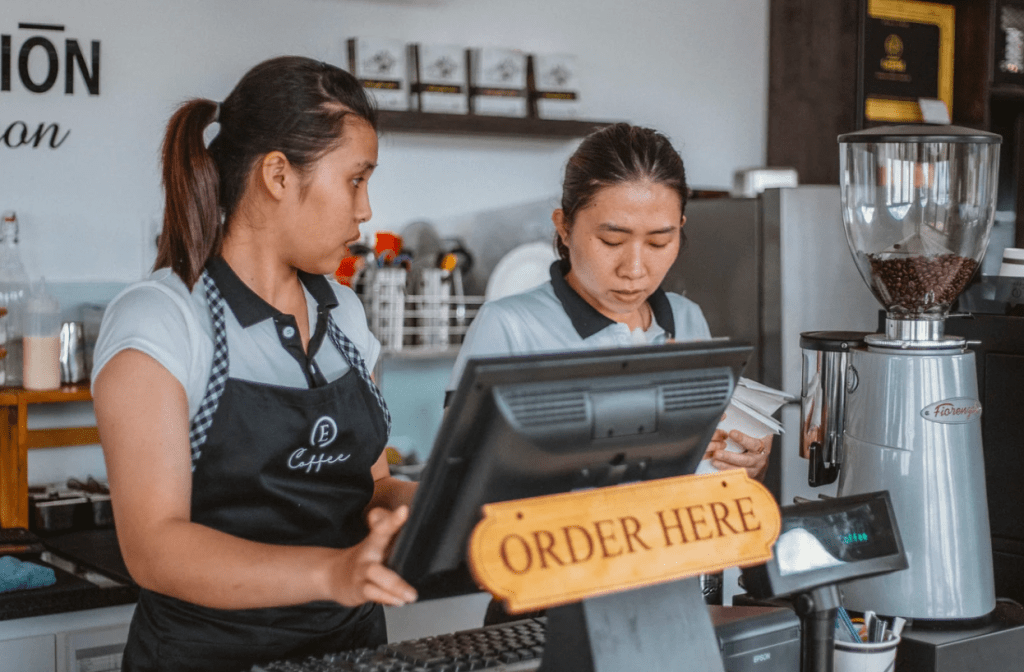
Many people have been a cashier at a business at some point in their lives. In fact, the U.S. Bureau of Labor Statistics says there are over three million cashiers working in the country today—and they all have stories. If you’ve ever worked behind the register, you might have some stories, too. Annoying stories about customers who irritated you, yelled at you, or were just jerks. Or positive stories like the time a customer bought you a coffee or offered a, “Have a nice day!” every time they showed up. Then, there’s the other category: the odd stories.

For every hundred stories of an angry customer who brought an expired coupon or a customer that kindly bought the groceries of the person in line behind them, there is one bizarre tale from the world behind the counter. It could be a case of an odd but happy happenstance, over-the-top bad customers, acts of heroism, or just plain weird interactions that aren’t typically a part of a cashier’s day-to-day experience.

Here are ten of the most bizarre cashier stories that folks have shared on Reddit and other spots online:

10 of the Weirdest Cashier Stories

1. The money spit

“Worked in a small corner shop, after a longish wait in line, the guy had apparently become so bored that he’d decided to put all his loose change in his mouth. When it was his turn he looked really embarrassed and sheepish when he spit all of it out into his hand. I was disgusted on various levels. The only upside was that it was the exact amount.”

2. “Please do not give your cat a can of Red Bull for breakfast.”

“A woman comes in wanting to feed her cat raw food. I explain how you can buy X or Y brand, but you need to buy specific supplements because there isn’t any taurine in it (a needed nutrient for heart/eye health in cats). She pauses a moment before asking, ‘Like in Red Bull?’

‘Yeah, similar.’

‘So I can just like…open a can of Red Bull on it?’

‘…No. Please do not give your cat a can of Red Bull for breakfast.’”

“She left without buying anything because it would be ‘too hard.’” 

3. How mom met grandad

“Not me, but my mom worked at a grocery store for a few years. There was this strange older man who would come in a few days a week. He would walk over, pick a book up off the shelf, and just stand there reading for countless hours, only to eventually leave before closing without purchasing a thing. He came in fairly often to read, and everyone thought it was odd, but they just ignored him as he wasn’t causing any harm.”

“Fast forward a year or two, my mom met my dad and they started dating. After they dated for a while, my mom finally went over to meet my dad’s parents, and as it turns out, that strange man that stood there reading for hours on end in the middle of the aisle? Well, he was soon to be my mom’s father in law, and is now my grandfather.”

4. A sticky situation at a phone shop

“A guy walked in and was very unhappy that he used up all of his mobile data while streaming movies tethered to his TV. This was back in 2014 or so, high data plans for this kind of thing were expensive and he had a contract with only a few gigs of data on there for about £15 per month or so with just a SIM plan… When he came in, he demanded more data or a cancellation of the contract and we had some policy for stores that meant cancellations could only go through the customer service line so we couldn’t help with that anyway. But he realized that we couldn’t just refresh his data or give him more for free so he literally pulled out a tube of super glue and poured it all over his hand and stuck it to the card machine.”

“He said, ‘As you can see, I am not leaving this store until this is resolved.’”

“We were amazed at the guy to be honest, so we unplugged the card machine and he walked out with it, still stuck to his hand with security.”

5. A literal nothing burger

“When I worked at a fast food restaurant, a girl came up and very smugly ordered a burger without the meat, bread, ketchup, mustard, or pickles. That’s right. She ordered a few pieces of lettuce and a couple slices of tomato. No matter the rationale, I hate her. She could have bought a head of lettuce and a tomato for the same price at a grocery store.”

6. The friendly thieving tourist

“I worked at a hotel in Oregon and some guy came in and got a room. He is staying for about a week so he asks about some sights around the city/little shops for souvenirs. We told him some and gave him some maps so he wouldn’t get lost. Over the course of the next few days he goes to these places and always reports back, which isn’t too strange because we gave him the recommendation so it was nice to hear he enjoyed it.”

“The day he is supposed to check out, I come into work to see the police and my manager talking. I come to find out that this guy has not only gone to each place, but robbed each place and has been using the hotel as a base of operations. Because I have had a good relationship with the guy, I was tasked with going up and knocking on his door for a ‘wellness check’ before he checked out. When he answered the door, the police pushed me out of the way and tackled the guy to the ground. He was stashing the money in the ceiling above the bathtub. He was cooperative with the officers and didn’t seem too upset about being caught, even thanked us for his stay as they were walking him out.”

7. “Act like you’re my mom, this lady is following me.”

As reported in Amplify Upworthy, a ten-year-old boy was being followed by a stranger. Afraid that he could be abducted, the boy ran into a local shop that he recognized. He walked up to the 17-year-old cashier and asked her to “Act like you’re my mom, [because] this lady is following me.”

The cashier, named Hannah, played along and got between the woman and the boy, and was able to shut and lock the door to the shop. This quick action kept the boy safe and scared off the stranger. Definitely not the typical work day for Hannah.

8. Which fabric is the best against wrinkles and death rays?

“Let’s just skim over the guy who bought about 10 yards of black fabric, all different kinds (cotton, felt, etc.), and when I (trying to make pleasant conversation while cutting) asked what he was doing with all that black fabric, he explained that the black fabric absorbed the death rays that THEY were aiming at him. He was experimenting with different kinds of fabric to see if one had better absorbency. Oookay.”

9. They didn’t appreciate “pyramid power”

“A guy comes in wearing a wire pyramid on his head and proceeds to lecture the cashier, the bagger, and other customers in line on pyramid power. He kept talking about how wearing the pyramid made him smarter, but apparently it didn’t make him smart enough to realize everyone thought it looked ridiculous and we were all trying our best not to laugh in his face.”

10. The day Dillons employees became duck chaperones

“I was a cashier at a Dillons grocery store in the Bible belt when I was a kid. One day a woman came up to my counter and, in a quiet voice, said, ‘Excuse me, you’ve got some ducks out in the parking lot. Um, they’re mating, and everyone can see it.’”

“I didn’t know what the f**k she was talking about, so I just kinda joked about it being that time of year or something, but she continued. ‘Everyone can see what those ducks are doing, you need to send someone out there right now.’ The lady was serious. She wanted an employee to go outside and c**kblock a duck so kids wouldn’t know what banging was. I rolled it to my supervisor, who sent a cartpusher to make the lady feel better and ruin some ducks’ big day.” 

This article originally appeared last year. It has been updated.
  • Parents trust report cards more than test scores, with consequences for kids
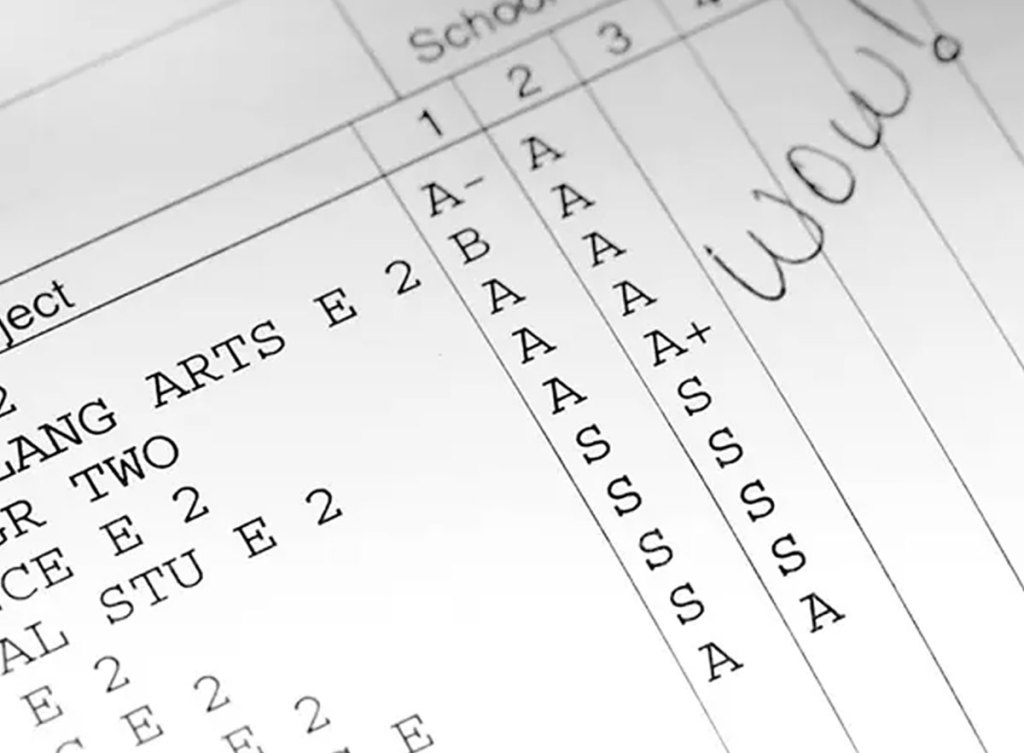
    A school report card showing straight A's.

    Jill Barshay for The Hechinger Report

    Parents trust report cards more than test scores, with consequences for kids

    Most parents want to help their children succeed. We check report cards, ask about homework and try to help our kids study. When that fails, we sometimes hire tutors. But in an era of rising grades, it’s easy to be misled.

    A new study reviewed by The Hechinger Report found that parents often assume everything is fine when their child’s report card shows mostly A’s, even when standardized test scores slide. That assumption may underestimate the help and guidance their child needs.

    In an online experiment, researchers at Oregon State University and the University of Chicago created hypothetical fifth graders, whom they called Stacey and Robert, and asked more than 2,000 parents how they would advise the children’s parents to respond to different scenarios of grades and test scores. Test scores were expressed as percentile ranks on standardized tests, such as the annual state tests that public school children take each spring, so that parents could compare Stacey and Robert with those of other children nationwide. And study participants were given an imaginary $100 per week to “spend” however they wished. Options included enrolling the child in an after-school program, hiring a tutor or saving the money for a vacation or bills. They could also invest their own time, such as helping with homework or reading together.

    Parents advised increasing time and money spent when both grades and test scores were low. Parents were less likely to provide extra help or resources when grades were high and only test scores were low. The researchers found that parents were more likely to step in when grades were low but test scores were higher.

    More than 70% of the parents said they trust grades more than tests for making decisions about their own child, and fewer than 9% said they had more confidence in tests.

    The findings appear in a draft paper that has not yet been published in a peer-reviewed journal and may still be revised. It was publicly circulated by the Becker Friedman Institute for Economics at the University of Chicago this month.

    As test scores have fallen nationwide while grades have risen, the researchers believe that parents may be underinvesting in their children. “Parents are the key to children’s success,” said Ariel Kalil of the University of Chicago. “What you need is for parents to be making investments in their kids’ skill development, and you need that parental effort to be happening early and often. Anything that depresses parent investment is a problem.”

    Kalil is concerned that this underinvestment in children is more pronounced in low-income communities, where, she said, high grades are often issued for below-grade-level skills. After the COVID-19 pandemic, schools struggled to persuade families to enroll in free tutoring and summer programs to make up for months of disrupted instruction. Many report cards showed solid grades, reducing the urgency for parents to act.

    Paired with other recent research on long-term academic and economic consequences, this study strengthens the case that grade inflation isn’t harmless. Inflated grades may feel encouraging, but they can send false signals both to students, who may study less, and to parents, who may see less reason to step in. Ultimately, it not only hurts individuals but also American labor force skills and future economic growth, the researchers argue.

    Kalil, a behavioral scientist, believes that parents have more confidence in grades because they are familiar and easier to understand. Meanwhile, score reports are complicated, and even many well-educated parents are confused about scaled scores and percentile rankings.

    A survey that accompanied the online experiment revealed that a sizable share of parents don’t trust standardized tests. Forty percent of the parents in the study said that tests were biased. Almost 30% thought student scores were a reflection of family income. Fewer than 20% of parents thought tests captured their children’s skills.

    Kalil says there’s another psychological phenomenon at play even for parents who understand and value standardized tests: the tendency to ignore bad news when it is paired with good news. “If the report card is all A’s, there’s a cognitive bias towards sticking your head in the sand and rejecting the bad information,” said Kalil.

    There were hints in the data that Hispanic families were most trusting of grades and least trusting of test scores, while Asian families were more willing to heed test results. But few Hispanic and Asian parents participated in the survey, so these patterns were not statistically significant. (Almost 70% of the respondents were white and 20% Black.) Parents with at least a bachelor’s degree also paid more attention to standardized exams.

    Solving the problem won’t be easy. The researchers say schools can do more to explain what test scores measure and how to interpret them, but better communication alone may not shift parents’ instincts. Reversing grade inflation would be the most direct solution, but that would require a broader shift across schools — something that is unlikely to happen quickly.

    In the meantime, the burden is on parents to read report cards with a critical eye. When grades and test scores don’t align, it’s worth asking why. A strong report card can be reassuring, but it may not always tell the full story of what a child knows — or what help they might need.

    This storywas produced by The Hechinger Report, a nonprofit, independent news organization focused on inequality and innovation in education, and reviewed and distributed by Stacker.

  • Spanish town shaded from punishing summer heat thanks to senior knitters and their colorful blankets
    Photo credit: GreatBigStory/YouTubeElderly knitters are helping their community fight summer heat waves.

    The Spanish coastline during the summer can have unbearable heat, especially due to rising temperatures caused by climate change. As a result, towns such as Alhaurín de la Torre are bombarded with dangerous levels of heat for residents and tourists. However, there is relief in the town’s shopping district thanks to a growing group of knitting grannies.

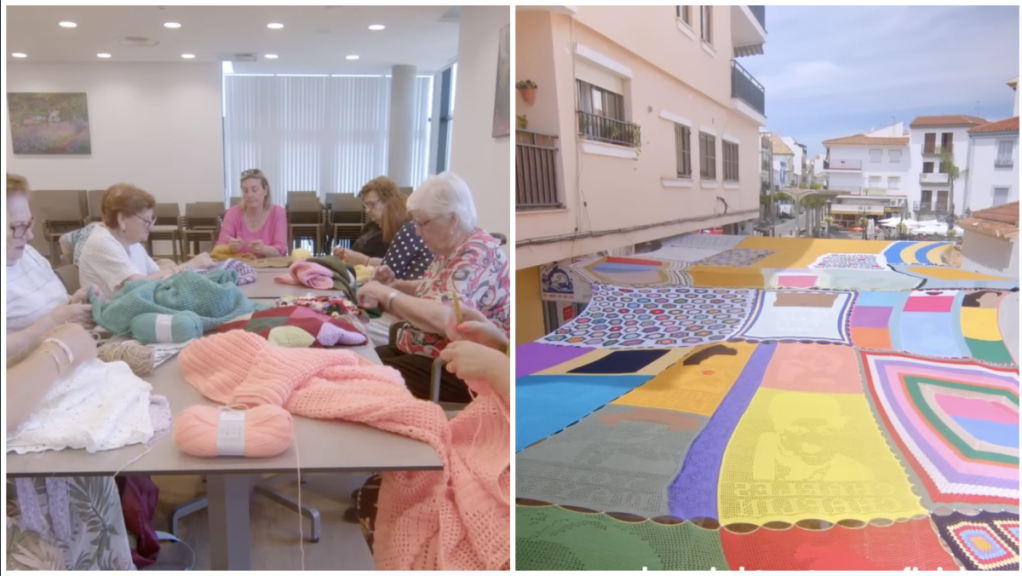
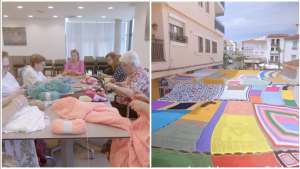
    In 2019, Eva Pacheco partnered with the Senior Citizens’ Social Center to knit a multi-quilt awning to shade the popular Malaga Street from the sun. The heat had been a growing issue for Spain’s tourist industry, especially along the coast. It was important to protect citizens and visitors alike from sunburn, heat stroke, or worse.

    A different kind of community project

    Every Wednesday, 40 elderly women from the community would gather, socialize, knit, and crochet for three hours. They would then stitch all of their creations together to create a colossal quilt. In the end, they created a 500-square-foot awning so residents and tourists could shop on Malaga Street while being protected from the sun. To say it was a success would be an understatement.

    The shade provided by the giant blanket lowered the temperature by as much as ten degrees. It also shielded folks underneath from harmful UV rays. Since the knitted awning was primarily made from water-resistant synthetic yarn, it wouldn’t absorb water during rainy days.

    Lastly, it was reusable. The awning could be taken down after the summer months. This way, it could be washed, repaired, and reinstalled every year.

    The awning that keeps giving

    It not only improved the lives of the shoppers outside, but also those of the knitters and crocheters. The majority of the team that created the massive quilt were older widows who didn’t have many social outlets for making friends. Along with that, according to AARP, knitting can also help stave off Alzheimer’s, among other health benefits.

    Since its initial creation, the colorful, shade-producing blanket has dramatically increased in size. It is currently over 13,000 square feet and features many more colorful designs. In 2024, the group started creating knitted blankets and quilts featuring the faces of celebrities like Tom Cruise, Antonio Banderas, and many others. While intended to protect tourists while shopping, the awning has become a tourist attraction itself.

    Other places take notice

    Their success has since inspired many other communities to create their own quilted canopies to provide shade. The residents of the nearby city of Coín have also created quilt barriers to protect against the sun’s heat. La Línea de la Concepción has a similar series of canopies, but they are made of mandalas rather than blankets. It has also inspired New Iberia, a sister city of Alhaurín de la Torre, to make its own “crochet ceilings.”

    Over time, there will hopefully be other methods to cool down our streets. There is something to be said for the fact that it took creativity, community, and a little bit of fun to come up with a quality solution.

  • What makes a good teacher? Ask a Republican and a Democrat, and they are likely to agree
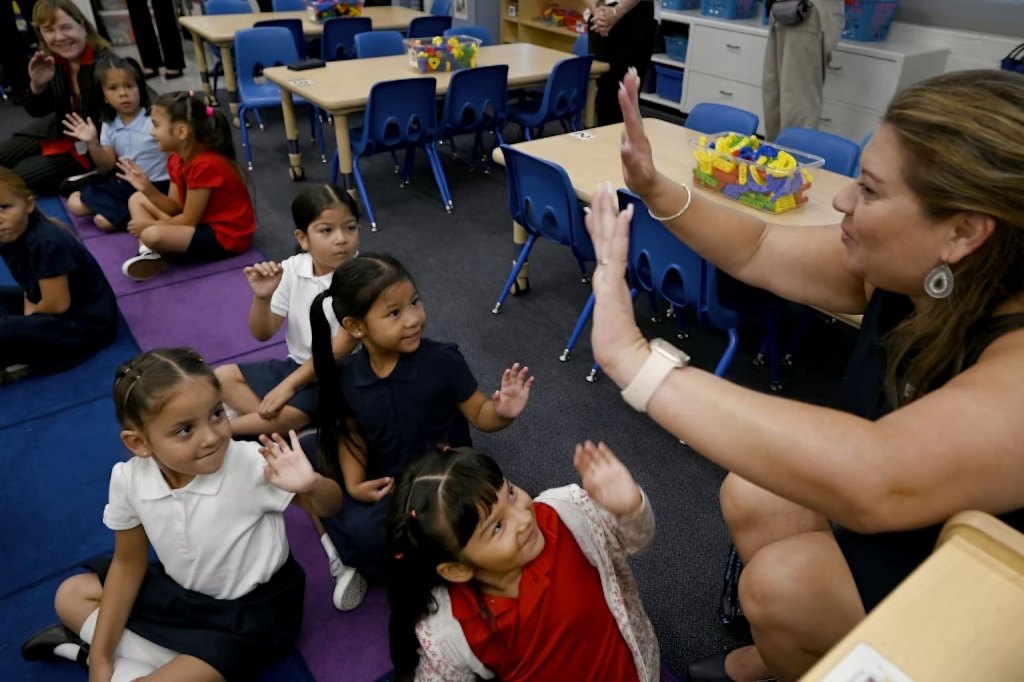
    Photo credit: Brittany Murray/MediaNews Group/Long Beach Press-Telegram via Getty ImagesSupport for students is one value that both Democrats and Republicans alike value in a teacher.

    If you follow the headlines, it can seem like K-12 schools in the United States are a political battlefield.

    Some conservative parents and advocacy groups are lobbying to remove certain books from classrooms and libraries, most often those that highlight LGBTQ+ issues or race and racism.

    Some civil liberties groups, librarians and progressive parents, meanwhile, are pushing back against book bans, saying they are a form of unnecessary censorship.

    Parents and school boards also are clashing over a range of other issues, ranging from how transgender and nonbinary students are treated and which bathrooms they can use, to whether teachers should use artificial intelligence in the classroom.

    Beyond this evidence of political polarization, though, there’s another, less divisive reality. Ask people to name their best teacher, and regardless of their political affiliation, they will likely offer a similar answer. Most people will say that they learned a lot from a teacher who knew them, cared about them and made learning relevant to their lives.

    Over five years, from 2020 through 2025, we asked more than 2,000 Americans, including Democrats, Republicans and independents, what makes a very good teacher. We expected deep partisan divides. Instead, we found something rare: genuine, cross-partisan agreement.

    How we ran the study

    We began in 2020 with a nationally representative survey of 334 adults, asking them to recall a teacher they learned a lot from. We then asked the survey participants to look at 10 statements that might describe a good teacher and rank them from most to least important.

    Five of the statements we offered focused on relationships – like caring about students, making educational lessons relevant and giving students individualized support. The other five focused on whether teachers covered a lot of material, rewarded top performers with grades or prizes, and whether they applied rules consistently to all students.

    Respondents generally focused on highlighting the same seven out of 10 statements, giving us a vision of how they perceived a very good teacher. People prioritized the same factors – how much the teachers cared about their students and whether they supported them – regardless of their age, race, gender or political affiliation. Republicans and Democrats were indistinguishable in their descriptions of effective teaching.

    People did not prioritize whether teachers covered a lot of material, made students compete or ran a strict and disciplined classroom.

    In 2022, we conducted a similar survey of 179 teachers in Arizona and California. The results echoed our 2020 survey participants’ view: Teachers also defined very good teachers as ones who emphasized relationships, made lessons relevant and knew the subject matter.

    Given the prominence of politically charged education debates, we were a bit surprised by our results. We began to wonder: Do people privately agree on what it means to be a good teacher, but change their opinion if their image of good teaching is associated with an ideological orientation they disagree with?

    A woman with blonde hair hugs a girl wearing a backpack, and they both smile as a man wearing a tie looks at them and also smiles.
    A student gets a hug from a teacher at a Garden Grove, Calif., elementary school on the first day of class in September 2024. Paul Bersebach/MediaNews Group/Orange County Register via Getty Images

    Adding a partisan label

    To explore this question in late 2024 and early 2025, we ran a third experiment with a nationally representative sample of 1,562 adults from a range of political backgrounds.

    We gave all participants the same description of a very good teacher, identified in our previous experiments. We then randomly noted if these descriptions of a good teacher were endorsed by Democrats, Republicans or people with no political affiliation.

    When the participants read the teacher descriptions without any political labels attached, about 85% of Democrats, Republicans and independents agreed with the description of a very good teacher.

    When we added a note saying that a political party the survey participant did not identify endorsed a particular description of a good teacher, they became less likely to support the statement.

    The effect was sharpest among Republicans: Support fell from 85% to 64% when the description was tied to Democrats. Democrats’ agreement slipped less, from 86% to 76%, when the description was tied to Republicans.

    Even with these caveats, nearly two-thirds of Republicans and Democrats still agreed on what it means to be a good teacher.

    Political scientists call this affective polarization: How we react to an idea depends not just on the idea, but on who we think supports it.

    At the national level, education is often framed as an intractable partisan conflict.

    Yet at the individual level, many Americans continue to express confidence in their own local schools. Our findings suggest that part of this gap may be driven by how issues are framed rather than by fundamentally incompatible beliefs.

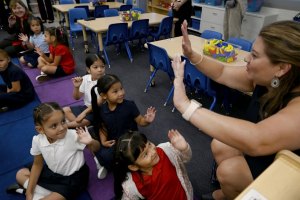
    A man wears a tie and gives a thumbs up as a group of children seated at desks raise their hands.
    Regardless of political affiliation, people are less likely to prioritize whether teachers cover a lot of material or ran a strict and disciplined classroom. Paul Bersebach/MediaNews Group/Orange County Register via Getty Images

    This matters more than you might think

    Federal and state education policy over the past four decades, including laws like No Child Left Behind, which mandated routine federal testing in reading and math, emphasize testing and competition. These priorities don’t always match what Americans across the political spectrum say they value most.

    Americans continue to differ on many important education questions, including what children should learn in schoolthe role of school boards and other issues.

    But these disagreements coexist with a shared beliefs about what good teaching looks like in practice.

    Recognizing this gap could open new possibilities for education reform. When debates focus exclusively on disagreements, they can obscure areas of agreement that might otherwise serve as starting points for collaboration.

    We encourage readers to go ahead and run a similar, small experiment: Ask people about their best teacher, then listen to what they say. The answer, it turns out, is likely more unifying than you expect.

    This article originally appeared on The Conversation. You can read it here.

Explore More Society Stories

Public Good

Parents trust report cards more than test scores, with consequences for kids

Public Good

Spanish town shaded from punishing summer heat thanks to senior knitters and their colorful blankets

Society

What makes a good teacher? Ask a Republican and a Democrat, and they are likely to agree

Public Good

Air Force graduate tears up when friend steps in to ‘tap him out’ during graduation