Artificial Intelligence is pushing boundaries of creativity that were once unimaginable. Perhaps you’ve seen some outrageous AI memes. Maybe there’s a new movie trailer that isn’t actually real, but a bizarre AI creation you’ve scrolled across. And now with music, we’re entering uncharted territory—and it raises questions we can’t ignore.
AI is generating music in a way that lets humans create remarkable songs without needing technical knowledge or the years of practice required to become proficient. With a music-creating AI app, some prompts on mood, genre, and lyrical themes make anyone a musical artist.
Is this real or another AI creation?
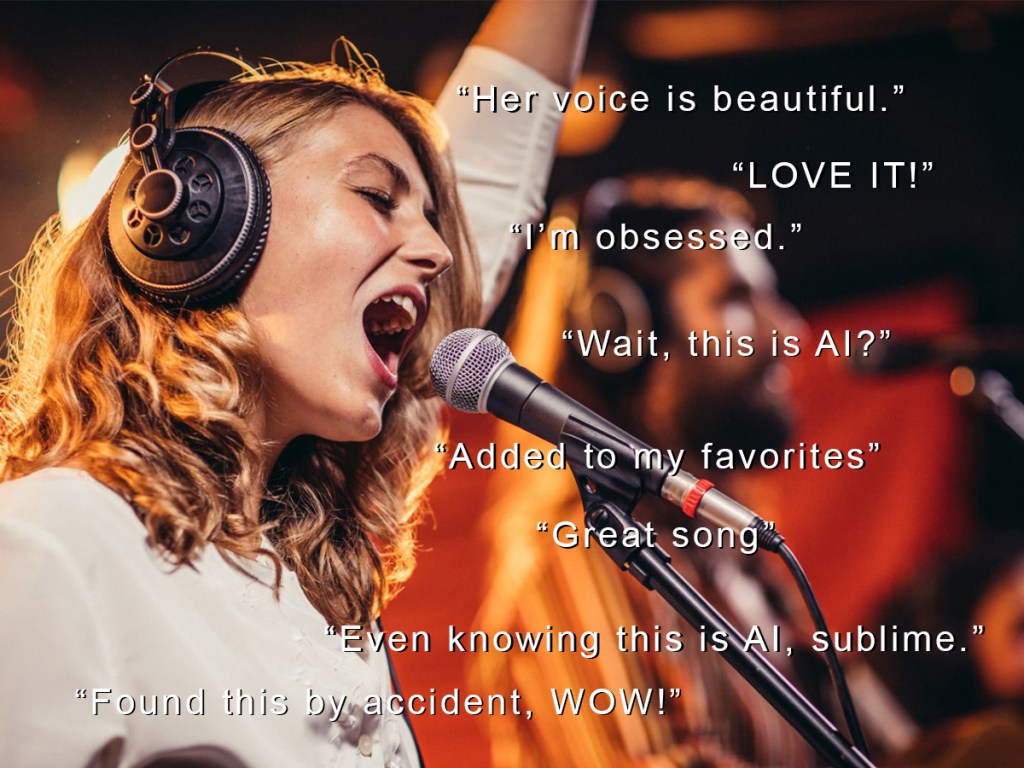
Believe it or not, Enily Blue (Video Above) is 100% NOT human and a complete AI fabrication. Created by songwriter Thong Viet, “Through My Soul” debuted at #44 on the Emerging Artists chart. Billboard also reported it debuted at #15 on Rock Digital Song Sales with 1,000 downloads sold.
But what does the typical audience think of AI music? What happens if they believe it’s a real artist? What happens when they find out it’s not?
Here are some of the comments from the Enily Blue YouTube video, which has reached over 10 million views in only six months.
“Kind of music that make you close the eyes and just feel the music”
“Found this song by sheer accident wow just beautiful wow”
“Absolutely crazy how good AI is becoming — such a great blues song”
“Great vibe .i cant stop listening to this”
“What a voice!!!!”
“One of the best songs made by AI , i love it”
“Now this is what you call music and she got a good voice.”
Reading through some of the comments, it’s hard not to believe many people don’t know this is AI. However, those who did seemed to love the music anyway.
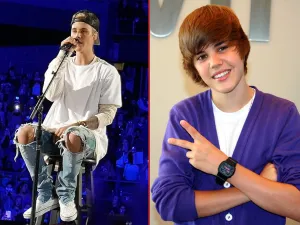
Edie Dalton’s song “Another Day Old” is a manufactured AI artist. This video has 1.5 million views and over 34,000 likes.
What does AI tell us about why we listen to music?
Why are so many of us drawn to music? A simple dopamine release, emotional arousal, and a feeling of connection to something bigger than ourselves can all drive people toward its rhythmic architecture.
A 2024 study in Nature Reviews Psychology confirmed that every culture responds emotionally to the rhythm and melody that music weaves together. We are hardwired to musical feeling itself, not necessarily the artist creating it.
A 2024 study in Scientific Reports found that novelty and creative surprises shape whether we enjoy music. This tension created between what’s familiar and what feels new is something AI can mimic well.
Does it matter to listeners whether the artist behind the music is actually a human or just something digital? Experts believe the way we connect to music makes for a more complicated answer.
AI artist Breaking Rust has 24 million views on YouTube with the song, “Livin’ on Borrowed Time.”
Translational research scientist Dr. Lauren Jessell believes music has never just been about quality or the artist. “I’m not surprised that AI generated songs are drawing a lot of attention and popularity right now; music reflects our culture and AI is very much a part of our culture now.”
Seema Sharma, a traumatologist and therapist, has written several papers on Consciousness of Music. She told GOOD, “AI Music or not, we listen to music because it is a form of connection as old as time. It allows us to feel and tap into a non-verbal form of connection.” Sharma continues, “Songs are impactful due to the way we resonate with it. It is all about the meaning we make of it. If there wasn’t an emotional connection to the song, we would not find it memorable.”
Traditional artist concerns and rights
The conflict with AI may not be about making music people love. The battle surrounds the fact that the artists whose style, voices, and art that shaped the music are being copied and fabricated. A 2024 peer-reviewed study at Cornell University surveyed over 400 artists on ownership, disclosure practices, compensation, and labor concerns. The majority believed creators should have rights.
Sony, Universal, and Warner sued music apps Suno and UDIO for training their music models on copyrighted recordings without permission or compensation. Branching into individual settlements, Universal licensed an AI music partnership with UDIO. According to The Verge, Sony and Universal are in a deadlock with Suno. There are vastly different opinions on whether AI-generated songs should be freely shared outside of the app.
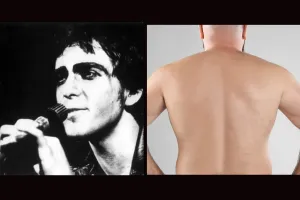
GHhostwriter – “Heart on my sleeve” featuring Drake ft. The Weeknd (Remastered AI Song) has over 1 million views.
It’s hard to simply label AI-generated music as good or bad. Signs of successful human-made music such as popularity and recognition by charts and experts are being awarded to AI songs. Listeners continue to respond to the melody and emotions created in the very framework of a song, regardless of who (or what) created it.
AI can make music that feels personal, strikes perfect chords, and forms spectacular melodies. Without being outright told it’s AI, most people couldn’t tell the difference. As artists raise urgent questions about consent and ownership, this moment drives us toward a cultural reckoning. Is creativity solely defined by who makes a piece of art? Or the art itself? Or does it rely solely on whether or not it moves us in the first place? AI may be challenging us to rethink what we’ve always believed art to be in the first place.